An Avalanche of Novels, Films and Other Works of Art Will Soon Enter the Public Domain: Virginia Woolf, Charlie Chaplin, William Carlos Williams, Buster Keaton & More
There may be no sweeter sound to the ears of Open Culture writers than the words “public domain”—you might even go so far as to call it our “cellar door.” The phrase may not be as musical, but the fact that many of the world’s cultural treasures cannot be copyrighted in perpetuity means that we can continue to do what we love: curating the best of those treasures for readers as they appear online. Public domain means companies can sell those works without incurring any costs, but it also means that anyone can give them away for free. “Anyone can re-publish” public domain works, notes Lifehacker, “or chop them up and use them in other projects.” And thereby emerges the remixing and repurposing of old artifacts into new ones, which will themselves enter the public domain of future generations.
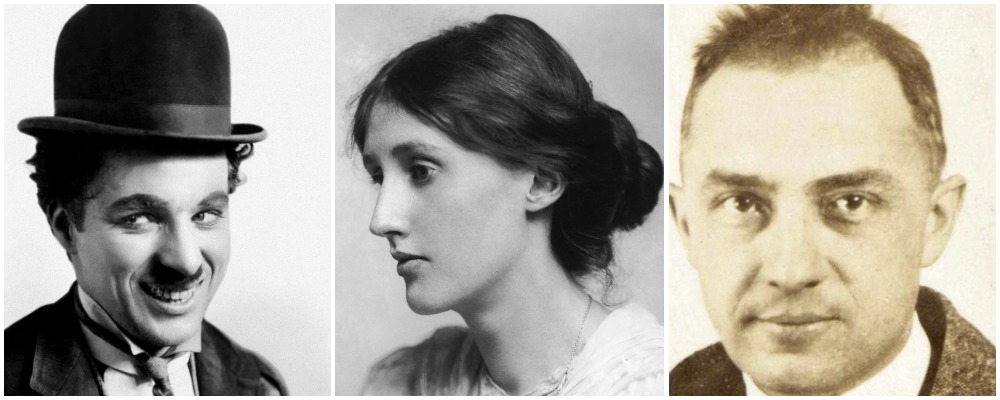
Some of those future works of art may even become the next Great American Novel, if such a thing still exists as anything more than a hackneyed cliché. Of course, no one seriously goes around saying they’re writing the “Great American Novel,” unless they’re Philip Roth in the 70s or William Carlos Williams (top right) in the 20s, who both somehow pulled off using the phrase as a title (though Roth’s book doesn’t quite live up to it.) Where Roth casually used the concept in a light novel about baseball, Williams’ The Great American Novel approached it with deep concern for the survival of the form itself. His modernist text “engages the techniques of what we would now call metafiction,” writes literary scholar April Boone, “to parody worn out formulas and content and, ironically, to create a new type of novel that anticipates postmodern fiction.”
We will all, as of January 1, 2019, have free, unfettered access to Williams’ metafictional shake-up of the formulaic status quo, when “hundreds of thousands of… books, musical scores, and films first published in the United States during 1923” enter the public domain, as Glenn Fleishman writes at The Atlantic. Because of the complicated history of U.S. copyright law—especially the 1998 “Sonny Bono Act” that successfully extended a copyright law from 50 to 70 years (for the sake, it’s said, of Mickey Mouse)—it has been twenty years since such a massive trove of material has become available all at once. But now, and “for several decades from 2019 onward,” Fleishman points out, “each New Year’s Day will unleash a full year’s worth of works published 95 years earlier.”
In other words, it’ll be Christmas all over again in January every year, and while you can browse the publication dates of your favorite works yourself to see what’s coming available in coming years, you’ll find at The Atlantic a short list of literary works included in next-year’s mass-release, including books by Aldous Huxley, Winston Churchill, Carl Sandburg, Edith Wharton, and P.G. Wodehouse. Lifehacker has several more extensive lists, which we excerpt below:
Movies [see many more at Indiewire]
All these movies, including:
- Cecil B. DeMille’s (first, less famous, silent version of) The Ten Commandments
- Harold Lloyd’s Safety Last!, including that scene where he dangles off a clock tower, and his Why Worry?
- A long line-up of feature-length silent films, including Buster Keaton’s Our Hospitalityand Charlie Chaplin’s The Pilgrim
- Short films by Chaplin, Keaton, Laurel and Hardy, and Our Gang (later Little Rascals)
- Cartoons including Felix the Cat(the character first appeared in a 1919 cartoon)
- Marlene Dietrich’s film debut, a bit part in the German silent comedy The Little Napoleon; also the debuts of Douglas Fairbanks Jr. and Fay Wray
Music
All this music, including these classics:
- “King Porter Stomp”
- “Who’s Sorry Now?”
- “Tin Roof Blues”
- “That Old Gang of Mine”
- “Yes! We Have No Bananas”
- “I Cried for You”
- “The Charleston”—written to accompany, and a big factor in the popularity of, the Charleston dance
- Igor Stravinsky’s “Octet for Wind Instruments”
Literature
All these books, and these books, including the classics:
- Mrs. Dalloway by Virginia Woolf
- Cane by Jean Toomer
- The Prophet by Kahlil Gibran
- The Ego and the Id by Sigmund Freud
- Towards a New Architecture by Le Corbusier
- Whose Body?, the first Lord Peter Wimsey novel by Dorothy L. Sayers
- Two of Agatha Christie’s Hercule Poirot novels, The Murder of Roger Ackroyd and The Murder on the Links
- The Prisoner, volume 5 of Marcel Proust’s In Search of Lost Time (note that English translations have their own copyrights)
- The Complete Works of Anthony Trollope
- George Bernard Shaw’s play Saint Joan
- Short stories by Christie, Virginia Woolf, H.P. Lovecraft, Katherine Mansfield, and Ernest Hemingway
- Poetry by Edna St. Vincent Millay, E.E. Cummings, William Carlos Williams, Rainer Maria Rilke, Wallace Stevens, Robert Frost, Sukumar Ray, and Pablo Neruda
- Works by Jane Austen, D.H. Lawrence, Edith Wharton, Jorge Luis Borges, Mikhail Bulgakov, Jean Cocteau, Italo Svevo, Aldous Huxley, Winston Churchill, G.K. Chesterton, Maria Montessori, Lu Xun, Joseph Conrad, Zane Grey, H.G. Wells, and Edgar Rice Burroughs
Art
These artworks, including:
- Constantin Brâncuși’s Bird in Space
- Henri Matisse’s Odalisque With Raised Arms
- Marcel Duchamp’s The Bride Stripped Bare By Her Bachelors, Even (The Large Glass)
- Yokoyama Taikan’s Metempsychosis
- Work by M. C. Escher, Pablo Picasso, Wassily Kandinsky, Max Ernst, and Man Ray
Again, these are only partial lists of highlights, and such highlights…. Speaking for myself, I cannot wait for free access to the very best (and even worst, and weirdest, and who-knows-what-else) of 1923. And of 1924 in 2020, and 1925 and 2021, and so on and so on….
via The Atlantic
Related Content:
The Public Domain Project Makes 10,000 Film Clips, 64,000 Images & 100s of Audio Files Free to Use
List of Great Public Domain Films
Josh Jones is a writer and musician based in Durham, NC. Follow him at @jdmagness
Read More...Watch Roxy Music Play Live with Brian Eno in Early Groundbreaking Performances (1972)
Just what, exactly, is Roxy Music? Those encountering the band for the first time when their self-titled debut came out in 1972 had questions. Were these 50s R&B throwbacks? Ziggy Stardust/Slade/T‑Rex like glam rockers? Experimental art-rock-retro-futurists dressed like a Stax funk band on acid? Yes, yes, yes, and then some. The album, “at once postmodern, strange, sensual and thrilling,” writes Chicago Tribune’s Greg Kot, “mapped out a new frontier, even as bands like the Rolling Stones and Led Zeppelin dominated the rock landscape.”
In the very same year that Bowie’s Ziggy landed to re-make rock in its image, Brian Ferry and his virtuoso band—including standouts Phil Manzanera on guitar and Brian Eno on synths, tape effects, and various “treatments”—prefigured a somehow even sexier, weirder, funkier, more disturbing future for pop, charting the territory for bands like Duran Duran, the Cars, Eurythmics, Pulp, and too many more to name. Roxy Music was so effortlessly original that once Bowie exhausted his space alien phase, he turned to Ferry and Eno for inspiration.
Like Bowie, Roxy Music favored saxophones, courtesy of Andy Mackay, who also played… the oboe? Manzanera’s psychedelic flights were reminiscent of The Doors’ Robby Krieger, with a Latin American flavor from his early days playing revolutionary Cuban folk songs. Paul Thompson’s rhythmic pounding and smooth, country-ish grooves improbably married Moe Tucker and Kenny Buttrey.
Graham Simpson played the bass with “an exuberant rush,” writes Kot. “They were specialists in their field,” remarks Ferry,” who himself drew from the rockers every British child of the 50s loved, but was also obsessed with Charlie Parker, Lester Young, Billie Holliday, Kurt Weill, the Beats, T.S. Eliot, Fred Astaire, and Cole Porter.
And Eno? “With his deep interest in experimental music,” says Ferry, Eno turned raunchy retro-fusion rock ‘n’ roll into soundtracks for spaceships, his synth lines swooping wildly and burbling ominously behind Ferry’s quavering melisma. “Those textures,” the singer recalled recently, “the synth sounds were washes, colours, textures, mood enhancers, and so on.” Arriving fully-formed in 1972, they “sounded as if they had just beamed down from outer space and brought along the music of the spheres,” Dangerous Minds’ Paul Gallagher writes. “Roxy Music was the sound of the future—but we just didn’t realize it then. Roxy was so overwhelmingly new. No one knew what to think.”
“Try to imagine,” writes Gallagher, “how insane this TV footage looked” at the time. Imagine tuning in to Top of the Pops and catching them playing their debut single “Virginia Plain” (top), a song “named after a packet of cigarettes.” (Read about how they recorded those motorcycle sounds.) Imagine seeing Mackay dressed like a Flash Gordon villain, playing oboe over Eno’s sci-fi synth washes in the intro to “Ladytron” on the Old Grey Whistle Test, or seeing the band confidently stomp through “Re-make/Re-model,” “Ladytron,” and “Grey Lagoons,” on the BBC’s Full House, further up.
In that later 1972 live televised performance, Roxy Music was already delivering the sound of its future with “Grey Lagoons” from the following year’s brilliant For Your Pleasure, the final album to feature Eno, who would go on to even stranger things in his solo work. Now imagine you happened to tune in to The Old Grey Whistle Test in ’73 just in time to catch that album’s “In Every Dream Home a Heartache,” a warbly, sinister, Ballardian love song written for a blow-up doll.
Related Content:
The Brian Eno Discography: Stream 29 Hours of Recordings by the Master of Ambient Music
The Story of Ziggy Stardust: How David Bowie Created the Character that Made Him Famous
Meet the World’s Worst Orchestra, the Portsmouth Sinfonia, Featuring Brian Eno
Josh Jones is a writer and musician based in Durham, NC. Follow him at @jdmagness
Read More...What Made Studio Ghibli Animator Isao Takahata (RIP) a Master: Two Video Essays
Among the many acclaimed animated films of Studio Ghibli — and indeed among recent Japanese animated films in general — those directed by the outspoken, oft-retiring-and-returning Hayao Miyazaki tend to get the most attention. But even casual viewers overlook the work of the late Isao Takahata (1935–2018), the older animator formerly of Toei with whom Miyazaki founded the studio in 1985, at their peril. Though he most often played the role of producer at Ghibli, he also directed several of its films, first and most memorably 1988’s Grave of the Fireflies, the story of an orphaned brother and sister’s struggle for survival at the very end of the Second World War.
“Grave of the Fireflies is an emotional experience so powerful that it forces a rethinking of animation,” wrote Roger Ebert in 2000, adding the picture to his “Great Movies” canon. “When anime fans say how good the film is, nobody takes them seriously. [ … ] Yes, it’s a cartoon, and the kids have eyes like saucers, but it belongs on any list of the greatest war films ever made.”
No Western critic would frame it quite the same way now, with the implicit disclaimer about the nature of Japanese animation, thanks in no small part to what animators like Takahata have done to show the entire world the true potential of their medium since.
The quarter-century after Grave of the Fireflies saw Takahata direct four more features, Only Yesterday, Pom Poko, My Neighbors the Yamadas, and his visually unconventional, long-in-the-making final work The Tale of Princess Kaguya. You can get a sense of Takahata’s distinctive sensibilities and sensitivities as an animation director in the Royal Ocean Film Society video essay “Isao Takahata: The Other Master” at the top of the post. It gets into the questions of why Takahata chose to tell essentially realistic, drawn-from-life stories in a form most know for its way with the fantastical, and how the visual exaggerations in his films somehow imbue them with a more solid feel of reality.
Just above, “Isao Takahata Doesn’t Get Enough Respect (A Retrospective),” by Youtuber Stevem, goes in other directions, exploring the director’s technique as well as his career, life, and personality, drawing not just from his work with Ghibli but the considerable amount he did before the studio’s foundation as well. Still, Grave of the Fireflies may well remain most filmgoers’ gateway into his filmography for the foreseeable future, not least because of its still-refreshing “anti-Hollywood” qualities. “Hollywood will have you believe that heroes are needed when times are tough,” says writer on Japanese culture Roland Kelts in a recent BBC piece on the movie. “Isao Takahata shows us the humble opposite, that when times are tough what you need most is humility, patience and self-restraint. That’s how one survives.”
Related Content:
Insanely Cute Cat Commercials from Studio Ghibli, Hayao Miyazaki’s Legendary Animation Shop
Software Used by Hayao Miyazaki’s Animation Studio Becomes Open Source & Free to Download
How the Films of Hayao Miyazaki Work Their Animated Magic, Explained in 4 Video Essays
Based in Seoul, Colin Marshall writes and broadcasts on cities and culture. His projects include the book The Stateless City: a Walk through 21st-Century Los Angeles and the video series The City in Cinema. Follow him on Twitter at @colinmarshall or on Facebook.
Read More...Stream Kendrick Lamar’s DAMN, Winner of the 2018 Pulitzer Prize In Music
Yesterday, Kendrick Lamar won the Pulitzer Prize in Music for his 2017 album, DAMN, a “virtuosic song collection,” writes the Pulitzer board, “unified by its vernacular authenticity and rhythmic dynamism that offers affecting vignettes capturing the complexity of modern African-American life.” This is the first time (since its inception in 1943) that the prize has gone, notes NPR, “to an artist outside of the classical or jazz community.” Other recipients have included Aaron Copland, Wynton Marsalis, and Ornette Coleman. You can stream DAMN, which comes with a Parental Advisory warning, on Spotify or right below.
If you would like to support the mission of Open Culture, consider making a donation to our site. It’s hard to rely 100% on ads, and your contributions will help us continue providing the best free cultural and educational materials to learners everywhere. You can contribute through PayPal, Patreon, and Venmo (@openculture). Thanks!
Read More...Eminent Philosophers Name the 43 Most Important Philosophy Books Written Between 1950–2000: Wittgenstein, Foucault, Rawls & More
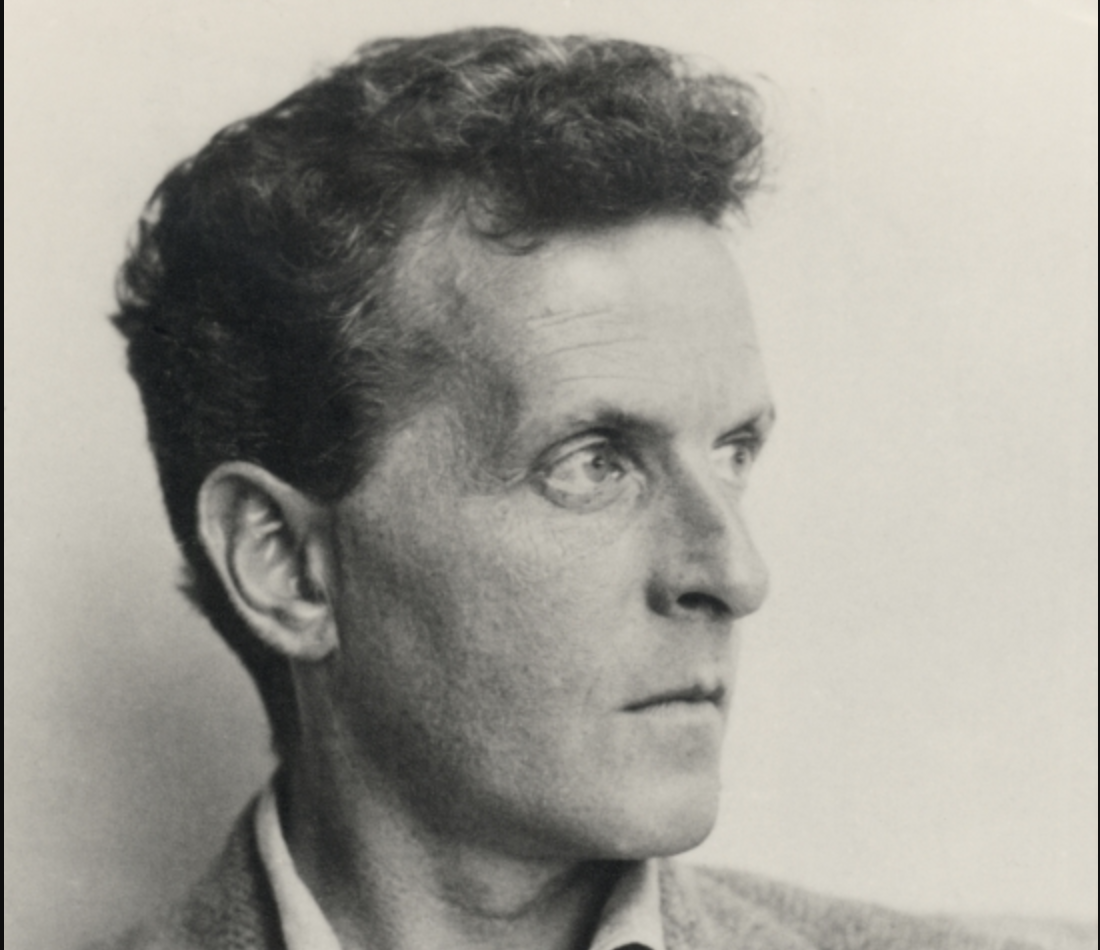
Image by Austrian National Library, via Wikimedia Commons
Faced with the question, “who are the most important philosophers of the 20th century?,” I might find myself compelled to ask in turn, “in respect to what?” Ethics? Political philosophy? Philosophy of language, mind, science, religion, race, gender, sexuality? Phenomenology, Feminism, Critical theory? The domains of philosophy have so multiplied (and some might say siloed), that a number of prominent authors, including eminent philosophy professor Robert Solomon, have written vehement critiques against its entrenchment in academia, with all of the attendant pressures and rewards. Should every philosopher of the past have had to run the gauntlet of doctoral study, teaching, tenure, academic politics and continuous publication, we might never have heard from some of history’s most luminous and original thinkers.
Solomon maintains that “nothing has been more harmful to philosophy than its ‘professionalization,’ which on the one hand has increased the abilities and techniques of its practitioners immensely, but on the other has rendered it an increasingly impersonal and technical discipline, cut off from and forbidding to everyone else.” He championed “the passionate life” (say, of Nietzsche or Camus), over “the dispassionate life of pure reason…. Let me be outrageous and insist that philosophy matters. It is not a self-contained system of problems and puzzles, a self-generating profession of conjectures and refutations.” I am sympathetic to his arguments even as I might object to his wholesale rejection of all academic thought as “sophisticated irrelevancy.” (Solomon himself enjoyed a long career at UCLA and the University of Texas, Austin.)
But if forced to choose the most important philosophers of the late 20th century, I might gravitate toward some of the most passionate thinkers, both inside and outside academia, who grappled with problems of everyday personal, social, and political life and did not shy away from involving themselves in the struggles of ordinary people. This need not entail a lack of rigor. One of the most passionate of 20th century thinkers, Ludwig Wittgenstein, who worked well outside the university system, also happens to be one of the most difficult and seemingly abstruse. Nonetheless, his thought has radical implications for ordinary life and practice. Perhaps non-specialists will tend, in general, to accept arguments for philosophy’s everyday relevance, accessibility, and “passion.” But what say the specialists?
One philosophy professor, Chen Bo of Peking University, conducted a survey along with Susan Haack of the University of Miami, at the behest of a Chinese publisher seeking important philosophical works for translation. As Leiter Reports reader Tracy Ho notes, the two professors emailed sixteen philosophers in the U.S., England, Australia, Germany, Finland, and Brazil, asking specifically for “ten of the most important and influential philosophical books after 1950.” “They received recommendations,” writes Ho, “from twelve philosophers, including: Susan Haack, Donald M. Borchert (Ohio U.), Donald Davidson, Jurgen Habermas, Ruth Barcan Marcus, Thomas Nagel, John Searle, Peter F. Strawson, Hilary Putnam, and G.H. von Wright.” (Ho was unable to identify two other names, typed in Chinese.)
The results, ranked in order of votes, are as follows:
1. Ludwig Wittgenstein, Philosophical Investigations
2. W. V. Quine, Word and Object
3. Peter F. Strawson, Individuals: An Essay in Descriptive Metaphysics
4. John Rawls, A Theory of Justice
5. Nelson Goodman, Fact, Fiction and Forecast
6. Saul Kripke, Naming and Necessity
7. G.E.M. Anscombe, Intention
8. J. L. Austin, How to do Things with Words
9. Thomas Kuhn, The Structure of Scientific Revolutions
10. M. Dummett, The Logical Basis of Metaphysics
11. Hilary Putnam, The Many Faces of Realism
12. Michel Foucault, The Order of Things: An Archaeology of the Human Sciences
13. Thomas Nagel, The View From Nowhere
14. Robert Nozick, Anarchy, State and Utopia
15. R. M. Hare, The Language of Morals and Freedom and Reason
16. John R. Searle, Intentionality and The Rediscovery of the Mind
17. Bernard Williams, Ethics and the Limits of Philosophy, Descartes: The Project of Pure Enquiry and Moral Luck: Philosophical Papers 1973–1980
18. Karl Popper, Conjecture and Refutations
19. Gilbert Ryle, The Concept of Mind
20. Donald Davidson, Essays on Action and Event and Inquiries into Truth and Interpretation
21. John McDowell, Mind and World
22. Daniel C. Dennett, Consciousness Explained and The Intentional Stance
23. Jurgen Habermas, Theory of Communicative Action and Between Facts and Norm
24. Jacques Derrida, Voice and Phenomenon and Of Grammatology
25. Paul Ricoeur, Le Metaphore Vive and Freedom and Nature
26. Noam Chomsky, Syntactic Structures and Cartesian Linguistics
27. Derek Parfitt, Reasons and Persons
28. Susan Haack, Evidence and Inquiry
29. D. M. Armstrong, Materialist Theory of the Mind and A Combinatorial Theory of Possibility
30. Herbert Hart, The Concept of Law and Punishment and Responsibility
31. Ronald Dworkin, Taking Rights Seriously and Law’s Empire
As an addendum, Ho adds that “most of the works on the list are analytic philosophy,” therefore Prof. Chen asked Habermas to recommend some additional European thinkers, and received the following: “Axel Honneth, Kampf um Anerkennung (1992), Rainer Forst, Kontexte der Cerechtigkeit (1994) and Herbert Schnadelbach, Kommentor zu Hegels Rechtephilosophie (2001).”
The list is also overwhelmingly male and pretty exclusively white, pointing to another problem with institutionalization that Solomon does not acknowledge: it not only excludes non-specialists but can also exclude those who don’t belong to the dominant group (and so, perhaps, excludes the everyday concerns of most of the world’s population). But there you have it, a list of the most important, post-1950 works in philosophy according to some of the most eminent living philosophers. What titles, readers, might get your vote, or what might you add to such a list, whether you are a specialist or an ordinary, “passionate” lover of philosophical thought?
via Leiter Reports
Related Content:
A History of Philosophy in 81 Video Lectures: From Ancient Greece to Modern Times
Oxford’s Free Introduction to Philosophy: Stream 41 Lectures
Introduction to Political Philosophy: A Free Yale Course
Free Online Philosophy Courses
44 Essential Movies for the Student of Philosophy
Josh Jones is a writer and musician based in Durham, NC. Follow him at @jdmagness
Read More...Frank Zappa Debates Whether the Government Should Censor Music in a Heated Episode of Crossfire: Why Are People Afraid of Words? (1986)
“The biggest threat to America today is not communism. It’s moving America toward a fascist theocracy, and everything that’s happened during the Reagan administration is steering us right down that pipe.”
That’s Frank Zappa, a self-declared “conservative” battling a theocrat and two establishment pundits on this clip from a 1986 episode of political debate show Crossfire. It was one of many TV interviews Zappa did during the mid-‘80s when the “Parent Music Resource Center” headed by what he called “Washington Wives” got themselves overly concerned about rock music lyrics and, as usual, thought of the children. (One of those Wives was Tipper Gore, then-wife of Al Gore). There were congressional hearings, one of the only times Zappa was on the same team as Twisted Sister’s Dee Snyder and soft-folkie John Denver).
The whole kerfuffle was one and a piece with the rise of the Religious Right under Reagan’s administration, and eventually boiled down to a “Parental Advisory” sticker slapped on LP and CD covers. Zappa saw the move as a cynical ploy to introduce moralistic censorship to the arts while burnishing the careers of up-and-coming senators like Al Gore (and that certainly worked out for him).
The 20 minute clip is notable for the differences compared to the present. Watching this contentious debate between four men all sitting very close to each other is rare nowadays—the closest we get is on Bill Maher’s weekly show, whereas the rest of cable news is a collection of talking heads beaming in from separate studios. The mendacity and vitriol directed towards Zappa is also surprising, especially as Zappa’s own lyrics weren’t the ones being attacked—those of Madonna and Prince were instead. The hotheaded blather out of religious zealot John Lofton is a wonder to behold, a man so theocratic he later railed against Ann Coulter and Sarah Palin for leaving the kitchen and getting into politics. “I love it when you froth” quips Zappa, although even his stoicism is undone at one point. “Tell you what—kiss my ass!” Zappa blurts out after Lofton calls him an idiot.
Both Tom Braden and Robert Novak are stodgy beltway brothers, ostensibly on the left and right, and can’t help crack up a bit when Zappa points out Lofton’s lunacy. Nobody wins the debate; America and your own brain cells lose.
Zappa would later dedicate several songs and a whole album (Frank Zappa Meets the Mothers of Prevention) to the charade. The music industry acquiesced and required warning labels that probably had zero percent effectiveness apart from uglying up album artwork, and a decade later mp3s would implode the industry.
Nobody frets about lyrics any more—how quaint!—but fear mongering and moral panic continue, including the recent non-starter issue over video game violence. Words are just words, Zappa says. That battle now appears to be taking place on Twitter instead between the left and the right, and Republicans have dropped all pretenses over foul language having nominated Trump. (Even the evangelicals seem to be okay with it.)
And then there’s this brief moment from the clip, which feels like part of a radio signal beaming into the present:
“What I tell kids, and I’ve been telling kids for quite some time,” says Zappa, “is first, register to vote, and second, as soon as you’re old enough, run for something.”
If that doesn’t sound like 2018 to you, I’ve got a W.A.S.P. CD to sell you.
Related Content:
Hear the Musical Evolution of Frank Zappa in 401 Songs
Frank Zappa Explains the Decline of the Music Business (1987)
Ted Mills is a freelance writer on the arts who currently hosts the FunkZone Podcast. You can also follow him on Twitter at @tedmills, read his other arts writing at tedmills.com and/or watch his films here.
Read More...Radiooooo: Discover the Musical Time Machine That Lets You Hear What Played on the Radio in Different Times & Places
Radio has always been a fairly transportive medium.
During the Great Depression, entire families clustered round the electronic hearth to enjoy a variety of entertainments, including live remote broadcasts from the glamorous nightclubs and hotels where celebrity bandleaders like Count Basie and Duke Ellington held sway.
1950s teens’ transistors took them to a head space less square than the white bread suburbs their parents inhabited.
During the Vietnam War, South Vietnamese stations played homegrown renditions of the rock and soul sounds dominating American airwaves.
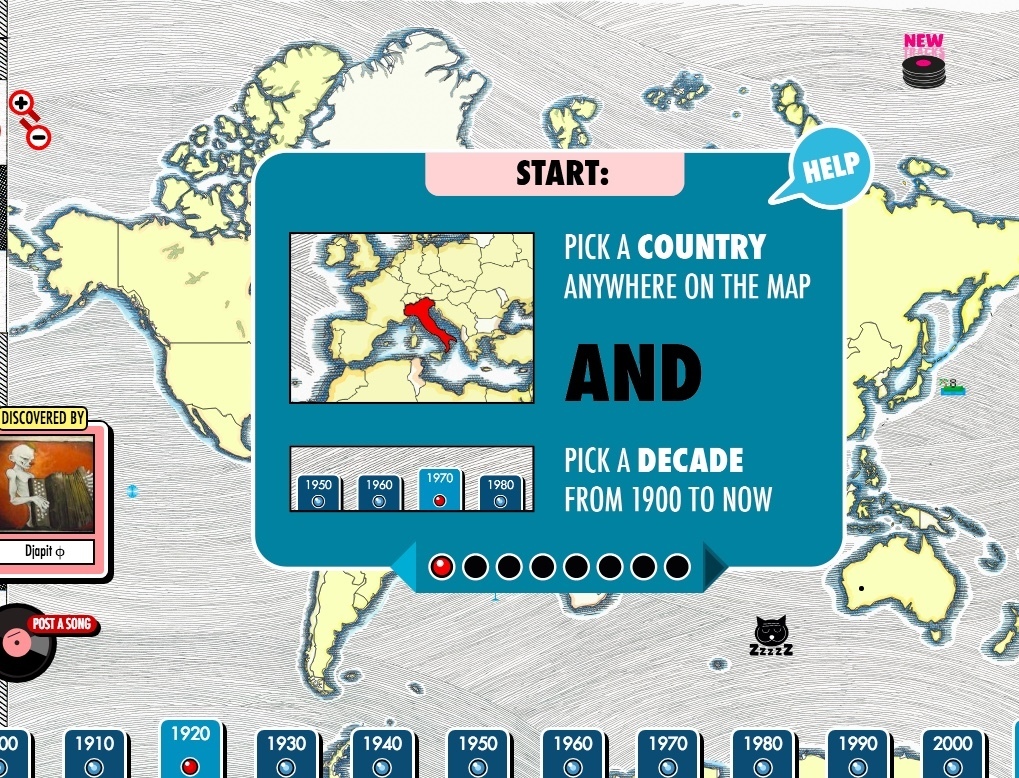
The Radiooooo.com site (there’s also a version available for the iPhone and Android) allows modern listeners to experience a bit of that magical time traveling sensation, via an interactive map that allows you to tune in to specific countries and decades.
The content here is user-generated. Register for a free account, and you too can begin sharing eccentric faves.
Find a user whose tastes mirror your own? Click their profile for a stat card of tracks they’ve favorited and uploaded, as well as any other sundry details they may feel like sharing, such as country of origin and age.
There are fun awards to be earned here, with the most sought after pelts going to the first to upload a song to an empty country, or upload a track from 1910–1920. (Cameroon, 1940 … go!)
As with an actual radio, you are not selecting the actual playlist, though you can nudge the needle a bit by toggling to your desired mood—slow, fast and/or weird.
And you need not limit yourself to a single destination. Embark on a strange musical trip by using Radiooooo’s taxi function to carry you to multiple countries and decades. (I closed my eyes and wound up shuttling between Ukraine and Mauritania in the 60s and 80s.)
Dotted around the map are island icons, where the ever-growing collection is sorted according to themes like Hawaii, Neverland (“for children big and small”), and 8‑Bit video game music. Le Club, floating midway between Europe and North America, contains brand new releases from contemporary labels.
The Now Playing window includes an option to buy, when possible, as well as the artist’s name and album artwork. Share, like, get your groove on…
And stay tuned for Radiooooo’s latest baby, Le Globe, an interactive 3‑D map of the world and a decade selector dial mounted on a “beautiful connected object.”
The boundaries are extremely permeable here.
Have a browse through Radiooooo’s Instagram feed for a feast of cover art or head to France for one of their in-person listening parties. (There’s one next week in the secret listening room of Paris’ Grand Hotel Amour.)
Readers, if your explorations unearth an exceptional track, please share it in the comments, below.
Download the Radioooo app for Mac or Android here, or listen on the website. (You may need to fool around with various browsers to find the one that works best for you.)
Related Content:
Hear 1,500+ Genres of Music, All Mapped Out on an Insanely Thorough Interactive Graph
Google’s Music Timeline: A Visualization of 60 Years of Changing Musical Tastes
Ayun Halliday is an author, illustrator, theater maker and Chief Primatologist of the East Village Inky zine. Her radio dial is set to Romania 1910 in anticipation of the third installment of her literary-themed variety show, Necromancers of the Public Domain , Monday, April 23 at the New York Society Library. Follow her @AyunHalliday.
Read More...The Famous Schrodinger’s Cat Thought Experiment Comes Back to Life in an Off-Kilter Animation
Schrödinger’s Cat is one of the more famous thought experiments in modern physics, created by Austrian physicist Erwin Schrödinger back in 1935. The Telegraph summarizes the gist of the experiment as follows:
In the hypothetical experiment … a cat is placed in a sealed box along with a radioactive sample, a Geiger counter and a bottle of poison.
If the Geiger counter detects that the radioactive material has decayed, it will trigger the smashing of the bottle of poison and the cat will be killed.
The experiment was designed to illustrate the flaws of the ‘Copenhagen interpretation’ of quantum mechanics, which states that a particle exists in all states at once until observed.
If the Copenhagen interpretation suggests the radioactive material can have simultaneously decayed and not decayed in the sealed environment, then it follows the cat too is both alive and dead until the box is opened.
The University of Nottingham’s Sixty Symbols YouTube channel provides a more complete explanation. But with or without any further introduction, you can watch the off-kilter animation, above, which imagines the origins of the original experiment. It was created by Chavdar Yordanov for an animation show in London.
Note: An earlier version of this post appeared on our site early last year.
If you would like to support the mission of Open Culture, consider making a donation to our site. It’s hard to rely 100% on ads, and your contributions will help us continue providing the best free cultural and educational materials to learners everywhere. You can contribute through PayPal, Patreon, and Venmo (@openculture). Thanks!
Related Content:
80 Free Online Physics Courses
When a Cat Co-Authored a Paper in a Leading Physics Journal (1975)
Animations of 6 Famous Thought Experiments
Read More...How Sampling Transformed Music and Created New Tapestries of Sound: An Interactive Demonstration by Producer/DJ Mark Ronson
We know the origin story of hip hop as the product of an enterprising subculture of young, mostly African-American, West Indian, and Latino tastemakers in the Bronx (or first in Brooklyn, according to an alternate history). We’ve seen at least one of the dozens of documentaries and dramatizations centered on this pivotal moment in musical history in the late 70s/early 80s—when pioneers like DJ Kool Herc and Grandmaster Flash began using two turntables and a mixer to splice together bars of disco, soul, funk, and many other kinds of music to turn them into an entirely new form.
In time, sampling became the provenance of dedicated digital machines, which, in concert with drum machines and classic turntable techniques, formed the basis of the sound of hip hop, dance, and pop music as we know them today. From local NYC roots came a global phenomenon—which has taken “center stage on Netflix’s original music programming,” as Forbes notes, with the streaming company investing millions in new hip hop-themed content. Still, even with the music’s mainstreaming and global reach, it’s a bit odd to see the pivotal role of sampling explained by English DJ and pop producer Mark Ronson, on a TED Talk Stage, through a remix of a few dozen other TED talks.
But Ronson turns this clever presentation into an immersive example of the ways that sampling allows creators to become part of a “shared event” and to make new narratives or alter the old ones. “That’s what the past 30 years of music has been,” he says, “that’s the major thread.” Sampling, he argues, is not about “hijacking nostalgia wholesale,” but about creating new tapestries of sound. “Albums like De La Soul’s 3 Feet High and Rising and the Beastie Boy’s Paul’s Boutique,” he notes, “looted from decades of recordings to create these sonic, layered masterpieces that were basically the Sgt. Pepper’s of their day.”
I think Ronson’s right—no these weren’t pioneering, experimental rock albums, as purists might point out, but the comparison is valid for the sheer variety, inventiveness, and sonic complexity of the arrangements. (And like The Beatles, these artists were involved in their share of lawsuits, though in their case for copyright infringement.) Artists making albums built primarily out of samples aren’t “too lazy to make their own music,” Ronson says, or “trying to cash in on the familiarity of the original stuff.” Most artists and producers, indeed, look for the most obscure samples they can find, with some pretty obvious exceptions.
Rather, Ronson argues, like the influence of the Delta blues on British invasion rockers, sampling is a way for artists to pay tribute to music that moves them and to take its distinctiveness and make it their own, “to co-opt that music for the tools of their day.” To put it in other terms, sampling is both a form of love and theft. Ronson follows his argument with some personal history of his own musical journey, then gets back behind his DJ rig for a demonstration of Doug E. Fresh and Slick Rick’s “La Di Da Di,” the fifth most sampled song of all time, as re-appropriated by The Notorious B.I.G. and “cultural tour-de-force” (he says with tongue in cheek), Miley Cyrus.
Like it or not, sampling is here to stay, now the source of virtually every building block of many popular genres, from snare drums and cymbals to guitars and effects. But maybe this isn’t just a new phenomenon of the digital age or a specific artifact of the hip hop revolution, but just another example of Kirby Ferguson’s cultural theory of everything in his four part video essay series, Everything is a Remix.
Related Content:
Josh Jones is a writer and musician based in Durham, NC. Follow him at @jdmagness
Read More...Watch Ancient Ruins Get Restored to their Glorious Original State with Animated GIFs: The Temple of Jupiter, Luxor Temple & More

The “seven wonders of the world”: all of us have all heard the phrase so many times, but can we name the specific wonders to which it refers? Though the list took its final form in the Renaissance, it originates all the way back with the ancient Greeks who wanted a sense of the most majestic man-made landmarks that lay within their territory. These were eventually narrowed down to the Great Pyramid of Giza, the Hanging Gardens of Babylon (whether they really existed or not), the Temple of Artemis at Ephesus, the Statue of Zeus at Olympia, the Mausoleum at Halicarnassus, the Colossus of Rhodes, and the Lighthouse of Alexandria.

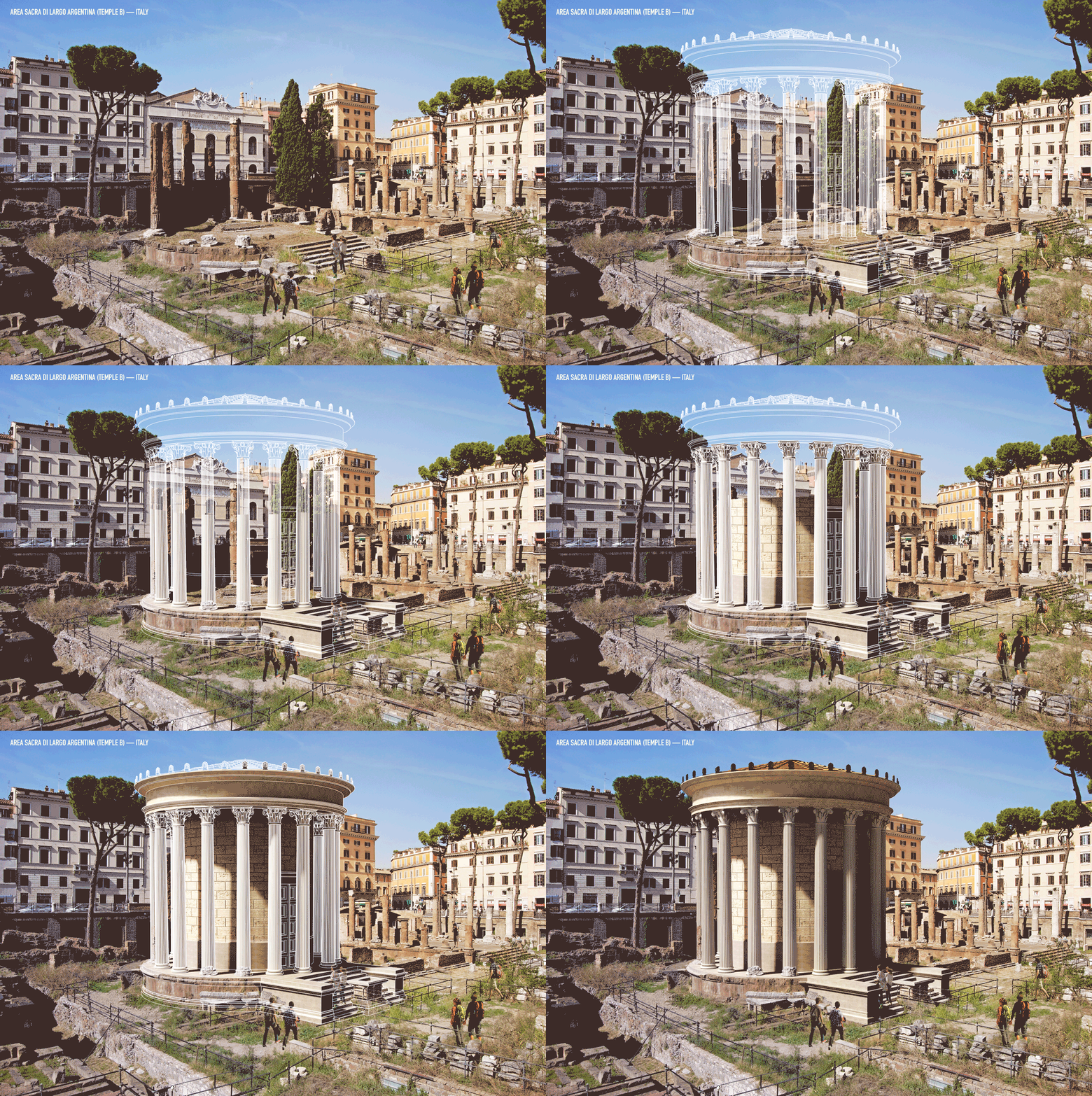
Today we offer you an alternative set of ancient wonders, made even more wondrous by a technology wholly unimaginable to ancient Greeks: the animated GIF. You see here four of the set, which in total includes the Parthenon in Greece, the Pyramid of the Sun and the Nohoch Mul Pyramid in Mexico, the Temple of Lago Argentina in Rome, the Temple of Luxor in Egypt, the Temple of Jupiter in Italy, and Hadrian’s Wall in England.
The GIFS, which trace the lines of the original structures over the ruins and then fill them in photorealistic detail, are the work of husband-wife team Maja Wrońska and Przemek Sobiecki.

“Despite their ‘ruinous’ condition, these structures have influenced many of history’s great architects, and continue to be an inspiration today,” writes Designboom’s Rob Reuland. “These sites have been depleted by time and by conquest, parts are reused, others just fall away with neglect. Seeing them restored is a bit like hopping in the Delorean and cranking the flux capacitor, and reversing their slow decay.” And as a commenter adds below, “the next thing would be this in combination with AR-glasses while visiting the site” — the ongoing collaboration, in other words, of the wonders of the ancient world and the wonders of the modern one. See all seven of the animated GIFs here.

via Expedia/designboom
Related Content:
How the Egyptian Pyramids Were Built: A New Theory in 3D Animation
Rome Reborn: Take a Virtual Tour of Ancient Rome, Circa 320 C.E.
Based in Seoul, Colin Marshall writes and broadcasts on cities and culture. His projects include the book The Stateless City: a Walk through 21st-Century Los Angeles and the video series The City in Cinema. Follow him on Twitter at @colinmarshall or on Facebook.
Read More...Support Us
We're hoping to rely on loyal readers, rather than erratic ads. Please click the Donate button and support Open Culture. You can use Paypal, Venmo, Patreon, even Crypto! We thank you!

About Us

Open Culture scours the web for the best educational media. We find the free courses and audio books you need, the language lessons & educational videos you want, and plenty of enlightenment in between.
Advertise With Us

FREE UPDATES!
GET OUR DAILY EMAIL
Get the best cultural and educational resources on the web curated for you in a daily email. We never spam. Unsubscribe at any time.
FOLLOW ON SOCIAL MEDIA

Open Culture editor Dan Colman scours the web for the best educational media. He finds the free courses and audio books you need, the language lessons & movies you want, and plenty of enlightenment in between.
Advertise With Us