George Orwell’s 1984 Staged as an Opera: Watch Scenes from the 2005 Production in London
Should we have any doubt about the malleability of George Orwell’s dystopian 1948 novel 1984, we need look no further than its most recent, very loose incarnation in a coming film titled Equals, which Variety’s Peter Debruge writes “should resonate most with the arthouse-going segment of the ‘Twilight’ fanbase.” That’s not a description that fills me with hope for a film project that might have brought us a worthy update of Orwell’s classic, as relevant as ever in a world full of high-tech surveillance states, technologically-enabled post-factualism, and choose-your-own creeping totalitarian political scenarios. These are concerns that deserve, nay beg, for a mature cinematic treatment, and a sophisticated new film adaptation of 1984 might be just the thing we need to grasp the moment. Instead, we may have to settle for glossy, Orwell-esque teen romance.
On the other hand, we might consider what should presumably be a sophisticated treatment of the novel in a recent adaptation that premiered in 2005 at London’s Royal Opera house. Composed by New York Philharmonic conductor Lorin Maazel, with a libretto by poet and critic J.D. McClatchy and Tony-award winning writer Thomas Meehan, the 1984 opera would seem to offer much more than an entertaining diversion. The work is Maazel’s first production, and he told the BBC, “I found that once I got into the material I was very inspired, very motivated, by the breadth of the story, by the challenge of making this extraordinary novel come alive in a different frame and context.”
As Maazel points out, and as the coming Equals movie exploits, the novel’s plot does indeed turn on a romance, among other potentially theatrical elements. Maazel says he “found within [it] the true stuff of opera—doomed love affair, political intrigue—very much like Don Carlos, or Fidelio, or Tosca.” How successful were Maazel and his writers at translating the dark political plotting of the novel to the brightly-lit stage of the Royal Opera? Well, you’ll notice that the “Press Articles” section of the opera’s website is tellingly thin, perhaps because the critics were not kind to the production, many calling it a vanity project, given that Maazel had financed it himself (with a company called Big Brother Productions). Nonetheless, the New York Times praised the libretto as “an effective treatment of George Orwell’s complex and iconic novel” that honors Orwell’s “themes and characters,” though they found the music in general much less compelling.
Widespread critical disparagement did not seem to impact ticket sales, however; the performance nearly sold out for three nights in a row. Opera houses everywhere, struggling as they are to attract new audiences and patrons, may yet consider reviving the work for its popularity. In the meanwhile, curious fans of opera, the novel, or both, can purchase a DVD of the production and see several clips here. At the top of the post, hear the overture and below it, see the love duet of Winston (Simon Keenlyside) and Julia (Nancy Gustafson). Further down, hear audio of the hymn “All Hail Oceana,” and just above, see the production’s finale. Speakers of Italian may find this brief television segment on the production of interest as well. While neither Maazel’s ambitious opera nor the upcoming, very loose commercial film adaptation seem to offer the contemporary 1984 we need, I for one hold out hope for a treatment that can effectively crystalize our fraught political present and Orwell’s disturbingly imagined future.
Related Content:
George Orwell Explains in a Revealing 1944 Letter Why He’d Write 1984
Josh Jones is a writer and musician based in Durham, NC. Follow him at @jdmagness
Read More...Hear Flannery O’Connor’s Short Story, “Revelation,” Read by Legendary Historian & Radio Host, Studs Terkel

Images via Wikimedia Commons
Flannery O’Connor’s surgical satire has the ability to strip away the pretensions of not only those characters we are already predisposed to dislike, but also those with whom we may sympathize—that is, educated people with broadly humanist views who think they see right through the self-important prejudices and provincialism of people like Mrs. Hopewell in “Good Country People” or Mrs. Chestny in “Everything that Rises Must Converge.” Both stories dramatize generational tensions in the form of mother/child pairs at odds. In the former, superficial, condescending Mrs. Hopewell and her daughter Joy—a miserable, graduate-educated amputee who prefers to call herself Hulga—battle over their conflicting moral philosophies, only to both be taken in by a devious bumpkin posing as a Bible salesman.
In the latter story—also the title of O’Connor’s most widely read collection, published posthumously in 1965—a mother and son pair present us with two kinds of intolerance. Mrs. Chestny is an overt bigot whose self-importance depends on her sense of herself as a descendent of a proud, if decayed, Southern aristocracy. Julian, her unemployed son, a despairing recent college-grad with designs of becoming a writer but with no real prospects, thinks himself above his mother’s ugly racism and desires nothing more than that she learn her lesson: “The old world is gone,” he says, “You aren’t who you think you are.” When she finally gets her comeuppance at the end of the story (on the way, comically, to a “reducing class”) it may have come, to Julian’s dismay, at the cost of her life. Though we are inclined to sympathize at first with the bitterly ironic son, as the story progresses, the narrator reveals his motivations as hardly more elevated than his mother’s hate and fear.
These are not characters we fall in love with, but we never forget them either. Through them we come to see that none of us is who we think we are, that the human capacity for self-deception is boundless. This is the lesson common to each of O’Connor’s stories, one she offers anew with wit and variety each time, and each time through a kind of revelation. Her stories draw us into points of view that reveal themselves—through sudden epiphanies and gradual unfoldings—to be inadequate, deluded, profoundly limited. And though O’Connor’s Southern Catholic pessimism has astonishingly universal reach, the regional grounding of her stories and novels present us with particularly American versions of the petty meanness and conceit common to the human species.
In “Revelation,” another story from Everything Rises Must Converge—read above by Studs Terkel—O’Connor lays bare some particularly American race and class biases in the character of Mrs. Turpin, another older Southern lady whose prejudices are more vicious and spiteful than both Mrs. Hopewell and Mrs. Chestny put together. The story achieves a subtle examination of some very unsubtle attitudes, and the reading by Terkel, in his Chicago-accented radio voice, does it justice indeed. Terkel read the story on his radio show, The Studs Terkel Program, in 1965, the year of its publication and a little over a year after O’Connor’s death. See a complete transcript of the broadcast at the Terkel show’s Pop Up Archive. The audio above has been kindly enhanced for us by sound designer Berrak Nil.
As an added treat, hear “Everything that Rises Must Converge” read above by Academy Award-winning actress Estelle Parsons, who became known in her later years for playing an overbearing mother like the story’s Mrs. Chestny in the TV sitcom Roseanne. Despite the quaintness of O’Connor’s characterizations, we are not far at all from the world she depicted, given the stubborn persistence of human bigotry, selfishness, and blind self-regard. For more classic O’Connor, hear the sharp-tongued writer, who died too soon of complications from her lupus at age 39, read her story “A Good Man is Hard to Find” here.
The reading above can be found in our collection, 1,000 Free Audio Books: Download Great Books for Free.
Related Content:
Studs Terkel Interviews Bob Dylan, Shel Silverstein, Maya Angelou & More in New Audio Trove
Rare 1959 Audio: Flannery O’Connor Reads ‘A Good Man is Hard to Find’
Flannery O’Connor’s Satirical Cartoons: 1942–1945
Josh Jones is a writer and musician based in Durham, NC. Follow him at @jdmagness
Read More...Anatomy of a Scene: 100+ Filmmakers Like Wes Anderson, Tim Burton & Ridley Scott Break Down a Scene from Each of Their Films
Of all the technological innovations happening around me as I grew up in the 1980s and 90s, none excited me more than the DVD director’s commentary. Yes, LaserDisc diehards, I know commentary tracks didn’t begin with the advent of DVDs, but they unquestionably came into their own as a form on that format. A promising-enough director’s commentary — one featuring a funny filmmaker, or one full of fascinating stories, or one wonky enough to get as deep into the nuts and bolts of the craft as time allowed — could by itself convince me to rent or even buy a disc, whether or not I cared for or had even heard of the movie itself.
And so I found it a bit dismaying that, as online streaming began to displace disc-watching as the home-theater technology of choice, director’s commentary tracks — or commentary tracks by anyone else, for that matter — looked like a soon-to-be thing of the past. But as we’ve learned, especially this century, technology tends to open a window when it closes a door. At the New York Times, internet video has opened another window onto the mind of the modern filmmaker with Anatomy of a Scene, a series of clips that each take just one scene from a film and have the film’s director explain in depth, DVD-commentary-style, what went into that scene.
At the top of the post, you can hear Wes Anderson, a director long known for his mastery of a certain aesthetic, explain some of the techniques that make up that aesthetic as he and his collaborators used them in The Grand Budapest Hotel. Below that, Tim Burton, who grew famous using an equally distinctive but wholly different visual vocabulary from Anderson’s, talks about a scene from Big Eyes, his film about the life of painter Margaret Keane. Keane’s paintings feature heavily in the background, which gives Burton the opportunity to talk about how they captivated him in childhood: “I found them quite disturbing, and the color schemes were quite lurid” — and so he explains how those lurid colors provided the color scheme for the movie itself.
The directors of Anatomy of a Scene tend to talk about their recent films, and in recent years we’ve seen a fair few high-profile Hollywood movies dealing with outer space and the worlds beyond Earth: Christopher Nolan’s Interstellar, for instance, whose scene of its astronauts hurtling into the great unknown provides the material for its Anatomy of a Scene video. Ridley Scott, always a stimulating commenter, has also done one on The Martian, his own latest space movie which came out this year. Scott talks over the scene where his film’s astronaut, marooned and seeking any tool of survival, digs NASA’s Pathfinder out of the Martian sands, about how, as “one of those primitives who can actually draw,” he storyboards everything in detail: “By the time I start the movie, I’ve kind of ‘filmed’ it on paper, and when I get there, it gives me the confidence to feel free to allow the actors and everybody else to do their thing.”
But Anatomy of a Scene doesn’t just invite household names. I used to live in Los Angeles and still keep up with movies that examine the city, and so I found fascinating indeed their video with Dan Gilroy on Nightcrawler, my favorite Los Angeles movie of this past year (maybe alongside Paul Thomas Anderson’s Thomas Pynchon adaptation Inherent Vice, a scene from which also gets anatomized). The Times has put together over a hundred of these videos, all of which you can watch at their Anatomy of a Scene page or on Youtube. They’ve included scenes from the work of such auteurs as Olivier Assayas, Noah Baumbach, Richard Linklater, and Lukas Moodysson (as well as scenes from such, er, other sorts of pictures as Zack Snyder’s Man of Steel). If the commentary is dead, well, long live the commentary.
Related Content:
Moviedrome: Filmmaker Alex Cox Provides Video Introductions to 100+ Classic Cult Films
Director Robert Rodriguez Teaches The Basics of Filmmaking in Under 10 Minutes
Filmmaking Advice from Quentin Tarantino and Sam Raimi (NSFW)
Based in Seoul, Colin Marshall writes and broadcasts on cities and culture. He’s at work on a book about Los Angeles, A Los Angeles Primer, the video series The City in Cinema, and the crowdfunded journalism project Where Is the City of the Future? Follow him on Twitter at @colinmarshall or on Facebook.
Read More...Striking Poster Collection from the Great Depression Shows That the US Government Once Supported the Arts in America
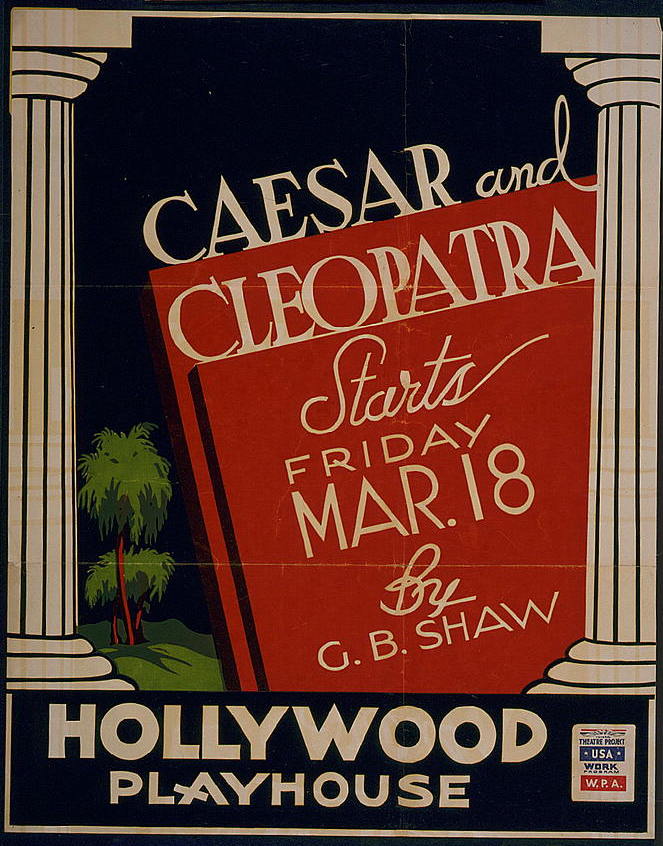
Of the rare and extraordinary times in U.S. history when the U.S. government actively funded and promoted the arts on a national scale, two periods in particular stand out. There is the CIA’s role in channeling funds to avant-garde artists after the Second World War as part of the cultural front of the Cold War—a boon to painters, writers, and musicians, both witting and unwitting, and a strange way in which the intelligence community used the anti-communist left to head off what it saw as more dangerous and subversive trends. Most of the highly agenda-driven federal arts funding during the Cold War proceeded in secret until decades later, when long-sealed documents were declassified and agents began to tell their stories of the period.
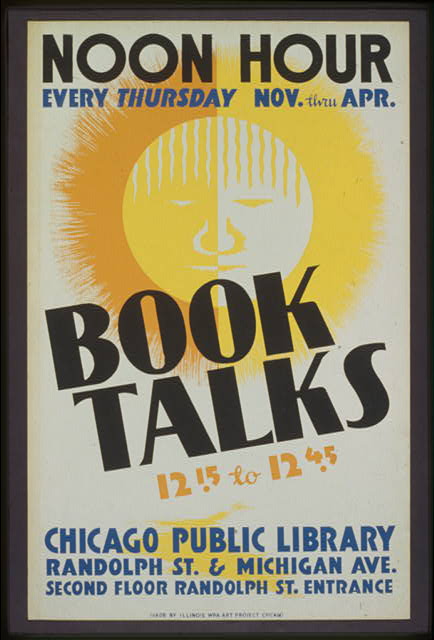
Of a much less covertly political nature was the first major federal investment in the arts, begun under Franklin Delano Roosevelt’s New Deal and championed in large part by his wife, Eleanor. Under the 1935-established Works Progress Administration (WPA)—which created thousands of jobs through large-scale public infrastructure projects—the Federal Project Number One took shape, an initiative, write Don Adams and Arlene Goldbard, that “marked the U.S. government’s first big, direct investment in cultural development.” The project’s goals “were clearly stated and democratic; they supported activities not already subsidized by private sector patrons… and they emphasized the interrelatedness of culture with all aspects of life, not the separateness of a rarefied art world.”
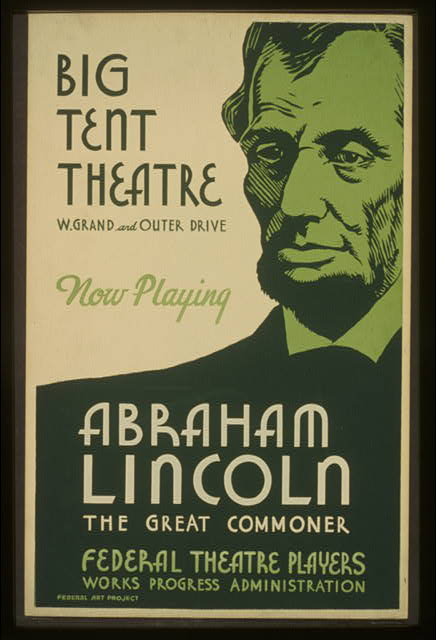
Under the program, known simply as “Federal One,” Orson Welles made his directorial debut, with a hugely popular, all-Black production of Macbeth; Walker Evans, Dorothea Lange, and others documented the Great Depression in their now iconic photographic series; Diego Rivera painted his huge murals of working people; folklorists Alan Lomax, Stetson Kennedy, and Harry Smith collected and recorded the popular music and stories of South; Zora Neale Hurston conducted anthropological field research in the Deep South and the Caribbean; American writers from Ralph Ellison to James Agee found support from the WPA. This is to name but a few of the most famous artists subsidized by the New Deal.
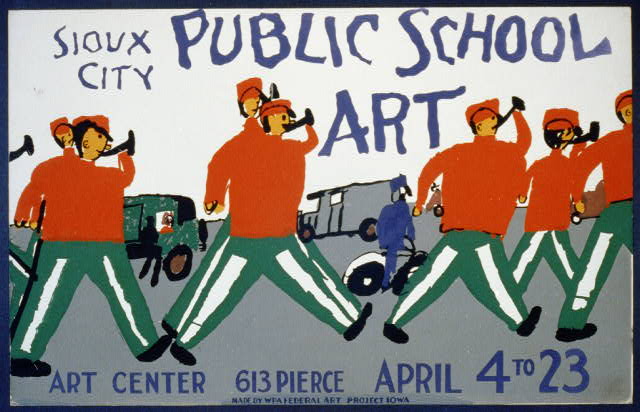
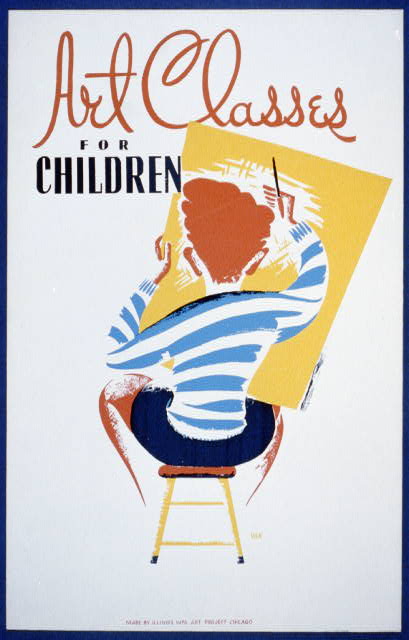
Thousands more whose names have gone unrecorded were able to fund community theater productions, literary lectures, art classes and many other works of cultural enrichment that kept people in the arts working, engaged whole communities, and gave ordinary Americans opportunities to participate in the arts and to find representation where they otherwise would be overlooked or ignored. Federal One not only “put legions of unemployed artists back to work,” writes George Washington University’s Eleanor Roosevelt Papers Project, “but their creations would invariably entertain and enrich the larger population.”
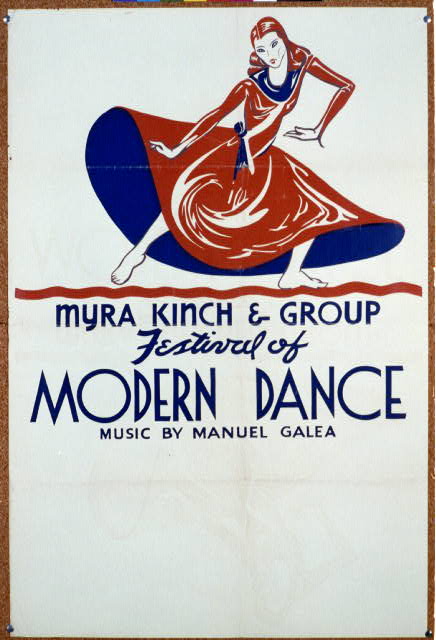
“If FDR was only lukewarm about Federal One,” GWU points out, “his wife more than made up for it with her enthusiasm. Eleanor Roosevelt felt strongly that American society had not done enough to support the arts, and she viewed Federal One as a powerful tool with which to infuse art and culture into the daily lives of Americans.”

Now, thanks to the Library of Congress, we can see what that infusion of culture looked like in colorful poster form. Of the 2,000 WPA arts posters known to exist, the LoC has digitized over 900 produced between 1936 and 1943, “designed to publicize exhibits, community activities, theatrical productions, and health and education al programs in seventeen states and the District of Columbia.”
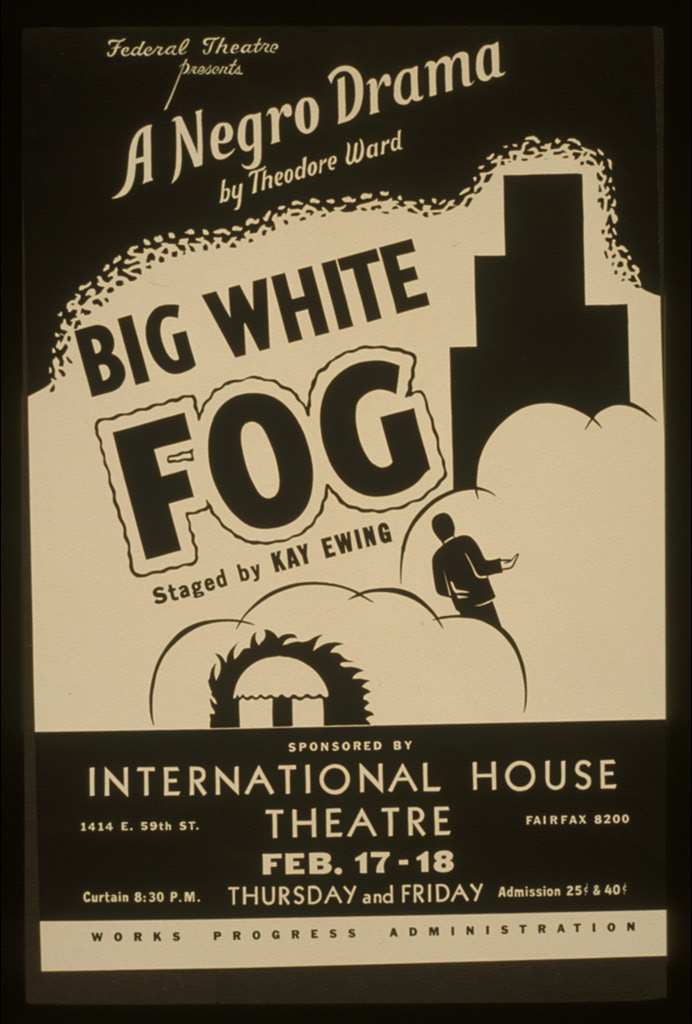
These posters, added to the Library’s holdings in the ‘40s, show us a nation that looked very different from the one we live in today—one in which the arts and culture thrived at a local and regional level and were not simply the preserves of celebrities, private wealth, and major corporations. Perhaps revisiting this past can give us a model to strive for in a more democratic, equitable future that values the arts as Eleanor Roosevelt and the WPA administrators did. Click here to browse the complete collection of WPA arts posters and to download digital images as JPEG or TIFF files.
Related Content:
Yale Launches an Archive of 170,000 Photographs Documenting the Great Depression
Josh Jones is a writer and musician based in Durham, NC. Follow him at @jdmagness
Read More...Take a Virtual Tour of Machu Picchu, One of the New 7 Wonders of the World

Image by Draceane, via Wikimedia Commons
Briefly noted: Google will now let you pay a virtual visit to one of my favorite places on the planet — Machu Picchu, the great Inca ruins located in the Andes in Peru. There’s nothing like visiting Machu Picchu in person. But if you can’t get there, you can do worse than take this tour.
Take a train ride through the Andes, to this historic site. And once you’re there, visit the Historic Sanctuary of Machu Picchu, including The Temple of the Three Windows, the Temple of the Sun, the Astronomical Observatory, and the Sacred Rock, among others parts of this UNESCO World Heritage Site. You can also explore more Inca artifacts over at the Museo Machupicchu at Casa Concha, which holds the largest collection of such artifacts in the world. Happy travels.
Related Content:
Take a 360° Virtual Tour of Taliesin, Frank Lloyd Wright’s Personal Home & Studio
Rome Reborn: Take a Virtual Tour Through Ancient Rome, 320 C.E.
Prize-Winning Animation Lets You Fly Through 17th Century London
Read More...
Marcel Marceau Mimes the Progression of Human Life, From Birth to Death, in 4 Minutes
What do you think of when you hear the word “mime.”
A cheeky, stripe-shirted, invisible ladder-climbing public nuisance?
The solitary practitioner Dustin Hoffman wordlessly toppled in the 1982 film Tootsie?
Or Marcel Marceau?
Ah ha, and what does the name “Marcel Marceau” bring to mind?
The cheeky, stripe shirted, butterfly chasing Bip (who maybe causes you to cringe a little, despite his creator’s reputation as a great artist)?
I was surprised to learn that he was a former French Resistance fighter, whose first review was printed in Stars and Stripes after he accepted an American general’s spur of the moment invitation to perform for 3,000 GIs in 1945 Frankfurt.
The film above documents a 1965 performance of his most celebrated piece, Youth, Maturity, Old Age, and Death, given at 42, the exact midpoint of his life. In four abstract minutes, he progresses through the seven ages of man, relying on nuances of gait and posture to convey each stage.
He performed it countless times throughout his extraordinary career, never straying from his own precisely rendered choreography. The playing area is just a few feet in diameter.
Observe the 1975 performance that filmmaker John Barnes captured for his series Marcel Marceau’s Art of Silence, below. Nothing left to chance there, from the timing of the smallest abdominal isolations to the angle of his head in the final tableau.
Time’s effects may have provided the subject for the piece, but its perennially lithe author claimed not to concern himself with age, telling the New York Times in 1993 that his focus was on “life-force and creation.”
Later in the same interview, he reflected:
When I started, I hunted butterflies. Later, I began to remember the war and I began to dig deeper, into misery, into solitude, into the fight of human souls against robots.
This would seem to support the theory that maturity is a side effect of age.
His alter ego Bip’s legacy may be the infernal invisible ropes and glass cages that are a mime’s stock in trade, but distilling human experience to its purest expression was the basis of Marceau’s silent art.
In a recent appreciation published in the Paris Review, author Mave Fellowes considers the many stages of Marceau, from the formative effects of childhood encounters with Charlie Chaplin films to his death at 84:
He feels his advancing age and fears that the art of mime will die with him. It’s a transitory, ephemeral art, he explains, as it exists only in the moment. As an old man, he works harder than ever, performing three hundred times a year, teaching four hours a day. He is named the UN Ambassador for Aging. Five nights a week he smears the white paint over his face, draws in the red bud at the center of his lips, follows the line of his eyelid with a black pencil. And then takes to the stage, his sideburns frayed, his hair dyed chestnut and combed forward, looking like a toupee.
His body is as elastic as ever, but the old suit of Bip hangs loose on him now. Beneath the whitened jawline is a baggy, sinewy neck. With each contortion of his face, the white paint reveals deep lines. At the end of his show, he folds in a deep bow and the knobs of his spine show above the low cut of Bip’s Breton top.
Related Content:
Édith Piaf’s Moving Performance of ‘La Vie en Rose’ on French TV, 1954
David Bowie Launches His Acting Career in the Avant-Garde Play Pierrot in Turquoise (1967)
Klaus Nomi: The Brilliant Performance of a Dying Man
Ayun Halliday is an author, illustrator, and Chief Primatologist of the East Village Inky zine. In college, she earned a hundred dollars for appearing as a mime before a convention of hungover glassware salesmen, an experience briefly recalled in her memoir, Job Hopper. Follow her @AyunHalliday
Read More...
Musicians Play Bach on the Octobass, the Gargantuan String Instrument Invented in 1850
Take a look at the live performance above of a Johann Sebastian Bach chaconne. See that monstrous stringed instrument in the back? The one that looks like a movie prop? It’s real, and it’s called the octobass, a triple bass made in 1850 by prolific French instrument maker and inventor Jean-Baptiste Vuillaume, whom German violin maker Corilon calls “the most significant violin maker of modern times.”
The huge instrument can play a full octave below the standard double bass and create sound down to 16 Hz, at the lowest threshold of human hearing and into the realm of what’s called infrasound. The octobass is so large that players have to stand on a platform, and use special keys on the side of the instrument to change the strings’ pitch since the neck is far too high to reach. (See this photo of a young boy dwarfed by an octobass for scale.)
One of two playable replicas of the original three octobasses Vuillaume made resides at the Musical Instrument Museum (MIM) in Phoenix, AZ. In the video below, MIM curator Colin Pearson gets us up close to the gargantuan bass, created, he tells us, to “add a low end rumble to any large orchestra.” That it does.
The description of the video just below advises you to “turn up your subs” to hear the demonstration by Nico Abondolo, double bass player of the LA Chamber orchestra. (Abondolo is also principle bass for several Hollywood orchestras, and he came to MIM to record samples of the octobass for the Hunger Games soundtrack.) As you’ll see in the video, the octobass is so massive, it takes five people to move it.
Abondolo plays the octobass with both his fingers and with the 3‑stringed instrument’s specially made bow, and demonstrates its system of keys and levers. “Playing the instrument is a twofold, or maybe threefold physical exertion,” he remarks. It’s also a journey into a past where “people were as crazy, or crazier about music than we are now.” Perhaps needless to say, the instrument’s bulk and the awkward physical movements required to play it mean that it cannot be played at faster tempos. And if the first thing that comes to mind when you hear Abondolo strum those low bass notes is the theme from Jaws, you’re not alone.
A number of other musicians visiting the octobass at MIM took the opportunity to goof around on the comically oversized bass and play their versions of the ominous shark approach music (above). You won’t get the full effect of the instrument unless you’re listening with a quality subwoofer with a very low bass response, and even then, almost no sub—consumer or pro—can handle the lowest pitch the octobass is capable of producing. But if you were to stand in the same room while someone played the huge triple bass, you’d certainly feel its lowest register rumbling through you.
Related Content:
The Story of the Bass: New Video Gives Us 500 Years of Music History in 8 Minutes
100 Great Bass Riffs Played in One Epic Take: Covers 60 Years of Rock, Jazz and R&B
Jazz Legend Jaco Pastorius Gives a 90 Minute Bass Lesson and Plays Live in Montreal (1982)
The Neuroscience of Bass: New Study Explains Why Bass Instruments Are Fundamental to Music
Josh Jones is a writer and musician based in Durham, NC. Follow him at @jdmagness
Read More...Vintage Footage Shows a Young, Unknown Patti Smith & Robert Mapplethorpe Living at the Famed Chelsea Hotel (1970)
Here at Open Culture, we can’t get enough of the Chelsea Hotel, which means we can’t get enough of the Chelsea Hotel in a certain era, at the height of a certain cultural moment in New York history. Though it struggled as a business for years after it first opened as an apartment building in 1884 and changed hands left and right until the 1970s, it hit its stride as an icon when a certain critical mass of well-known (or soon to be well known) musicians, writers, artists, filmmakers, and otherwise colorful personalities had put in time there. One such musician, writer, artist in other media, and colorful personality indeed has an especially strong association with the Chelsea: Patti Smith.
You may remember our post back in 2012 featuring Smith reading her final letter to Robert Mapplethorpe, which she included in Just Kids, her acclaimed memoir of her friendship with the controversial photographer.
For a time, Smith and Mapplethorpe lived in the Chelsea together, and in the footage above, shot in 1970 by a German documentary film crew, you can see them there in their natural habitat. “The Chelsea was like a doll’s house in The Twilight Zone, with a hundred rooms, each a small universe,” Smith writes in Just Kids. “Everyone had something to offer and nobody seemed to have much money. Even the successful seemed to have just enough to live like extravagant bums.”
These fifteen minutes of film also includes glimpses into a variety of other lives lived at the Chelsea as the 1970s began. If you’d like to see more of the place at its cultural zenith — made possible by the state of 70s New York itself, which had infamously hit something of a nadir — have a look at the clip we featured in 2013 of the Velvet Underground’s Nico singing “Chelsea Girls” there. Just after the 70s had gone, BBC’s Arena turned up to shoot a documentary of their own, which we featured last year. Smith has long since left the Chelsea, and Mapplethorpe has long since left this world, but even now, as the hotel undergoes extensive renovations that began in 2011, some of those “extravagant bums” remain.
via Please Kill Me
Related Content:
New York’s Famous Chelsea Hotel and Its Creative Residents Revisited in a 1981 Documentary
Nico Sings “Chelsea Girls” in the Famous Chelsea Hotel
Iggy Pop Conducts a Tour of New York’s Lower East Side, Circa 1993
Patti Smith Reads Her Final Words to Her Dear Friend Robert Mapplethorpe
Based in Seoul, Colin Marshall writes and broadcasts on cities and culture. He’s at work on a book about Los Angeles, A Los Angeles Primer, the video series The City in Cinema, and the crowdfunded journalism project Where Is the City of the Future? Follow him on Twitter at @colinmarshall or on Facebook.
Read More...Hear All Three of Jack Kerouac’s Spoken-World Albums: A Sublime Union of Beat Literature and 1950s Jazz

Image by Tom Palumbo, via Wikimedia Commons
At the epicenter of three explosive forces in 1950s America—the birth of Bebop, the spread of Buddhism through the counterculture, and Beat revolutionizing of poetry and prose—sat Jack Kerouac, though I don’t picture him ever sitting for very long. The rhythms that moved through him, through his verse and prose, are too fluid to come to rest. At the end of his life he sat… and drank, a mostly spent force.
But in his prime, Kerouac was always on the move, over highways on those legendary road trips, or his fingers flying over the typewriter’s keys as he banged out the scroll manuscript of On the Road in three feverish weeks (so he said). After the publication of On the Road, Kerouac “became a celebrity,” says Steve Allen in introduction to the Beat writer on a 1959 appearance, “partly because he’d written a powerful and successful book, but partly because he seemed to be the embodiment of this new generation.”
After a little back-and-forth, Allen lets Kerouac do what he always did so well, whether on television or on record—embody the rhythms of his writing in his voice, his phrasing always musical, whether he read over jazz hot or cool or over meditative silence. He did a lot of both, recording with Allen and many other jazzmen, and “experimenting with a home reel-to-reel system, taping himself to see whether his spontaneous prose outbursts had the musical rhythms F. Scott Fitzgerald considered the hallmark of all great writing.” So writes historian David Brinkley in the liner notes (remember those?) to the compilation album Jack Kerouac Reads On the Road, a rare collection of haunting poetry readings, playful crooning, and experiments with voice and music. Brinkley describes how Kerouac, the French Canadian from Lowell, Massachusetts, developed his “bop ear” by hanging out at Minton’s Playhouse in Harlem in the 40s, watching Thelonious Monk, Charlie Parker, and Dizzy Gillespie invent what he called a “goofy new sound.”
The sound stayed with him, as he turned his immersion into American literary and musical counterculture into On the Road, The Subterraneans, The Dharma Bums, etc, and throughout all the writing, there was the music of his reading, captured on the albums Poetry for the Beat Generation with Steve Allen, Blues and Haikus with Al Cohn and Zoot Sims—both in 1959—and, the following year, Readings by Jack Kerouac on the Beat Generation. Kerouac’s reading style did not come only from his internalization of bebop rhythms, however, but also from “the discovery of the extraordinary spoken-word albums of poets Langston Hughes, Carl Sandberg, and Dylan Thomas,” Brinkley tells us. The writer became “convinced that prose should be read aloud in public, as it had been in Homer’s Greece and Shakespeare’s England.” The albums he recorded and released in his lifetime bear out this conviction and explore “the possibilities of combining jazz and spontaneous verse.”
These records became very difficult to find for many years, but you can now purchase an omnibus CD at a reasonable price (vinyl will set you back a couple hundred bucks). Alternately, you can stream all three Kerouac albums free on Spotify, above in chronological order of release. If you don’t have Spotify, you can easily download the software here. And if you’d rather hear Kerouac’s readings on CD or on the original vinyl medium, that’s cool too. However you experience these readings, you should, at some point, experience them. Like all the very best poetry, Kerouac’s work is most alive when read aloud, and most especially when read aloud by Kerouac himself.
Related Content:
Download 55 Free Online Literature Courses: From Dante and Milton to Kerouac and Tolkien
Jack Kerouac’s 30 Beliefs and Techniques For Writing Modern Prose
Jack Kerouac Lists 9 Essentials for Writing Spontaneous Prose
The First Recording of Allen Ginsberg Reading “Howl” (1956)
Watch Langston Hughes Read Poetry from His First Collection, The Weary Blues (1958)
Josh Jones is a writer and musician based in Durham, NC. Follow him at @jdmagness
Read More...
The Life & Times of Buckminster Fuller’s Geodesic Dome: A Documentary
In the early 20th century, the visionary inventor Buckminster Fuller started looking for ways to improve human shelter by:
- Applying modern technological know-how to shelter construction.
- Making shelter more comfortable and efficient.
- Making shelter more economically available to a greater number of people.
And what he came up with (read more here) was the “geodesic” dome.” This dome held appeal for two main reasons: 1.) its surface would be “omnitriangulated,” meaning built out of small triangles, which would give the overall structure unparalleled strength. And 2.) domes by their very nature enclose the greatest volume for the least surface area, which makes them very efficient.
Fuller developed the mathematics for the geodesic dome and helped make it an architectural reality. You can find instances where these domes served as auditoriums, weather observatories, and storage facilities in the US and Canada. And then above, you watch a documentary called A Necessary Ruin: The Story of Buckminster Fuller and the Union Tank Car Dome. Shot by Evan Mather in 2010, the documentary tells the story of the dome built in Baton Rouge, LA in 1958. At 384 feet in diameter, the Union Tank Car Dome was the world’s largest free-span structure then in existence. Mather’s documentary includes ” interviews with architects, engineers, preservationists, media, and artists; animated sequences demonstrating the operation of the facility; and hundreds of rare photographs and video segments taken during the dome’s construction, decline, and demolition.” It was funded by a grant from the Graham Foundation for Advanced Studies in the Fine Arts, and you can now find it our collection of Free Documentaries, a subset of our collection, 4,000+ Free Movies Online: Great Classics, Indies, Noir, Westerns, Documentaries & More.
Visit handcraftedfilms.com for more info on Mather’s film and/or to purchase the DVD.
Related Content
Everything I Know: 42 Hours of Buckminster Fuller’s Visionary Lectures Free Online (1975)
Watch an Animated Buckminster Fuller Tell Studs Terkel All About “the Geodesic Life”
Bertrand Russell & Buckminster Fuller on Why We Should Work Less, and Live & Learn More
Read More...Support Us
We're hoping to rely on loyal readers, rather than erratic ads. Please click the Donate button and support Open Culture. You can use Paypal, Venmo, Patreon, even Crypto! We thank you!

About Us

Open Culture scours the web for the best educational media. We find the free courses and audio books you need, the language lessons & educational videos you want, and plenty of enlightenment in between.
Advertise With Us

FREE UPDATES!
GET OUR DAILY EMAIL
Get the best cultural and educational resources on the web curated for you in a daily email. We never spam. Unsubscribe at any time.
FOLLOW ON SOCIAL MEDIA

Open Culture editor Dan Colman scours the web for the best educational media. He finds the free courses and audio books you need, the language lessons & movies you want, and plenty of enlightenment in between.
Advertise With Us


