Three minutes of time lapse video distills six weeks of footage showing the Space Shuttle Discovery getting ready for launch. It moves you from the Orbiter Processing Facility to the launching pad, and everywhere in between. Air & Space has more details on the whole shebang. Props to Joshua for sending this video our way.
Martin Gardner: A Video Remembrance
This past weekend, Martin Gardner, a gifted and prolific popularizer of mathematics and science, passed away at 95. During his life, Gardner published more than 70 books and wrote the popular “Mathematical Games” column for Scientific American magazine for 25 years. As The New York Times obit notes, his mathematical writings “intrigued a generation of mathematicians,” and he earned the admiration of many leading intellectuals, including W. H. Auden, Arthur C. Clarke, Stephen Jay Gould, Vladimir Nabokov, and Carl Sagan. Not bad for a man who never took a college-level math course. Above, you will find a 46-minute video profile of Gardner from David Suzuki’s CBC television series “The Nature of Things.” It’s a great introduction to Gardner and his unique approach to math and science.
Thanks goes to Mike for sending the video our way.
Letters with Literary Character
Ben Greenman, a fiction writer and editor at the New Yorker, has a short story collection coming out this June. What He’s Poised To Do makes letters and letter-writing a thematic focus, and even before its official publication, Greenman’s collection has inspired a blog that encourages everyday people to write letters to great literary characters. The sample below gives you the gist of the project … and then some. If so inspired, send your own letter to: Le******************@***il.com.
Ernest Hemingway | The Sun Also Rises | 1926
Dear Brett,
I find myself in the horrible position of telling you what a truly terrible human being you are. I know what you’re doing with Jake and Robert when you’re very much engaged to Michael. Now, don’t give me any sob story about how you lost your “only true love” at such a young age. This gives you NO right to be a tramp. Also, half the women in Paris would agree that you are NOT charming when you are drunk like you think you are. In fact I would go as far as to say you are repulsive in all forms of the word. Occasionally, I cringe when you speak because it is always to use someone. You’re despicable. Disgusting. You’re a pedantic weenie.
Sincerely,
Alexandria Smith
Clouds, Stars and Meteors Over the Cotopaxi Volcano
The Greek Crisis Explained
On a lighter note, and while we’re on the subject of economic crisis, we offer you an animated (and not so serious) explanation of the financial crisis in Greece. The saga continues with Episode 2.
Thanks Eren, aka @Gulfi
Economic Crisis and Globalization
The news isn’t good. The Euro is losing value daily. Countries are slipping into “sovereign debt crises” – meaning they’re going broke. And the markets are swooning once again. We’re watching the proverbial other shoe drop.
Throughout this crisis, many Americans have directed their anger at Wall Street (and deservedly so). But few have wondered whether there’s anything basically wrong with American-style capitalism. And, if anything, the only organized protest movement (The Tea Party) has asserted that we need more capitalism in our lives, not less.
In some rare quarters of academe, capitalism still doesn’t get off so easy. And that brings us to three new online courses taught by the economist Richard D. Wolff at The New School in NYC. Above, we feature the first lecture from Economic Crisis and Globalization, a course that takes a less orthodox view of how we’re managing the Great Recession. (Find the other seven lectures here.) His other courses, both on Marxian economics, appear in our collection of Free Online Courses under Economics.
Writing the U.S. Constitution (in Tweets)
 223 years ago today, the Constitutional Convention started meeting secretly in Philadelphia. Several months later, the meetings ended with the signing of the US Constitution. Starting today, the National Constitution Center will use Twitter to reenact the events of the Convention. You can follow @SecretDelegate, a mysterious insider, who will show you what happened inside the private proceedings. The “Twitter Convention” will conclude on September 17, when the Constitution was signed, and only then will the true identity of @SecretDelegate be revealed. You can be among the first to follow these tweets.
Looking for more Open Culture? Find us on Twitter at @openculture.
Can Monkeys Talk?
If we believe that Homo sapiens (a.k.a. people) and monkeys evolved from a common ancestor, then it makes sense to ask: Can monkeys use language like we do? Do they make mere sounds? Or do they use specific sounds to communicate a range of different intended things? Robert Seyfarth, a professor at the University of Pennsylvania, uses the case of the Vervet Monkeys to answer these questions. You can read more about his work in The New York Times.
Sir Ken Robinson: Bring on the Learning Revolution!
Some months ago, we asked you to name your favorite TED Talk. And, more than a few of you flagged Sir Ken Robinson’s presentation from 2006, Do Schools Kill Creativity? You’re in good company. The talk remains one of TED’s most popular videos of all time. Today, TED has released Robinson’s sequel (of sorts). Recorded this past February, Bring on the Learning Revolution! “makes the case for a radical shift from standardized schools to personalized learning — creating conditions where kids’ natural talents can flourish.” Give it some time. Perhaps it’s another talk for the ages.
Mark Twain Finally to Publish Autobiography
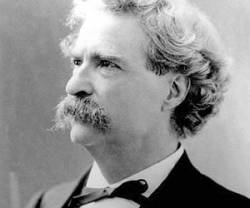 File this under “better late than never.” Mark Twain spent his last decade writing his memoirs, producing some 5,000 unedited pages. However, he stipulated that they couldn’t be published for at least a century following his death. (Apropos see this very rare footage recorded by Thomas Edison showing Twain in his last year.) Fast forward to 2010. We have now clocked 100 years. And this November, UC Berkeley will publish the first volume of Twain’s manuscript. The Independent tells you more about this literary event, and suggests why Twain wanted to keep his autobiography under wraps. Get the full article here.
via @ebertchicago
James Joyce Encoded in Venter’s Artificial Life
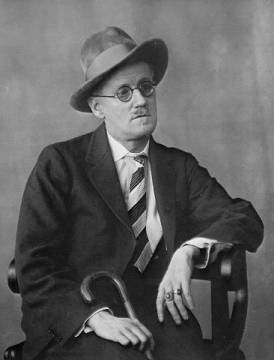 You may have heard the news last week: J. Craig Venter and a team of scientists created the first living organism – a “synthetic cell” – by way of a computer-generated genome. We’re now seeing the beginnings of artificial life. And it’s a big story, with many far-reaching implications. But where does James Joyce fit into this picture? Let me add this little factoid to the mix: According to The Christian Science Monitor, Venter’s team inserted DNA watermark codes into the genome so that they can distinguish between natural and synthetic bacteria moving forward. And when this code is translated into English, it will “spell out the names of the 46 researchers who helped with the project, quotations from James Joyce, physicist Richard Feynman and J. Robert Oppenheimer, and a URL that anyone who deciphers the code can e‑mail.” Lots of smarts packed into the tiniest of packages.
UPDATE: The quotes in watermark apparently read: “TO LIVE, TO ERR, TO FALL, TO TRIUMPH, TO RECREATE LIFE OUT OF LIFE.” — James Joyce’s A Portrait of the Artist as a Young Man; “SEE THINGS NOT AS THEY ARE, BUT AS THEY MIGHT BE.”-A quote from an Oppenheimer biography, American Prometheus; “WHAT I CANNOT BUILD, I CANNOT UNDERSTAND.” — Richard Feynman.
Support Us
We're hoping to rely on loyal readers, rather than erratic ads. Please click the Donate button and support Open Culture. You can use Paypal, Venmo, Patreon, even Crypto! We thank you!

Great Lectures
About Us

Open Culture scours the web for the best educational media. We find the free courses and audio books you need, the language lessons & educational videos you want, and plenty of enlightenment in between.
Advertise With Us
Archives
- August 2026
- July 2026
- June 2026
- May 2026
- April 2026
- March 2026
- February 2026
- January 2026
- December 2025
- November 2025
- October 2025
- September 2025
- August 2025
- July 2025
- June 2025
- May 2025
- April 2025
- March 2025
- February 2025
- January 2025
- December 2024
- November 2024
- October 2024
- September 2024
- August 2024
- July 2024
- June 2024
- May 2024
- April 2024
- March 2024
- February 2024
- January 2024
- December 2023
- November 2023
- October 2023
- September 2023
- August 2023
- July 2023
- June 2023
- May 2023
- April 2023
- March 2023
- February 2023
- January 2023
- December 2022
- November 2022
- October 2022
- September 2022
- August 2022
- July 2022
- June 2022
- May 2022
- April 2022
- March 2022
- February 2022
- January 2022
- December 2021
- November 2021
- October 2021
- September 2021
- August 2021
- July 2021
- June 2021
- May 2021
- April 2021
- March 2021
- February 2021
- January 2021
- December 2020
- November 2020
- October 2020
- September 2020
- August 2020
- July 2020
- June 2020
- May 2020
- April 2020
- March 2020
- February 2020
- January 2020
- December 2019
- November 2019
- October 2019
- September 2019
- August 2019
- July 2019
- June 2019
- May 2019
- April 2019
- March 2019
- February 2019
- January 2019
- December 2018
- November 2018
- October 2018
- September 2018
- August 2018
- July 2018
- June 2018
- May 2018
- April 2018
- March 2018
- February 2018
- January 2018
- December 2017
- November 2017
- October 2017
- September 2017
- August 2017
- July 2017
- June 2017
- May 2017
- April 2017
- March 2017
- February 2017
- January 2017
- December 2016
- November 2016
- October 2016
- September 2016
- August 2016
- July 2016
- June 2016
- May 2016
- April 2016
- March 2016
- February 2016
- January 2016
- December 2015
- November 2015
- October 2015
- September 2015
- August 2015
- July 2015
- June 2015
- May 2015
- April 2015
- March 2015
- February 2015
- January 2015
- December 2014
- November 2014
- October 2014
- September 2014
- August 2014
- July 2014
- June 2014
- May 2014
- April 2014
- March 2014
- February 2014
- January 2014
- December 2013
- November 2013
- October 2013
- September 2013
- August 2013
- July 2013
- June 2013
- May 2013
- April 2013
- March 2013
- February 2013
- January 2013
- December 2012
- November 2012
- October 2012
- September 2012
- August 2012
- July 2012
- June 2012
- May 2012
- April 2012
- March 2012
- February 2012
- January 2012
- December 2011
- November 2011
- October 2011
- September 2011
- August 2011
- July 2011
- June 2011
- May 2011
- April 2011
- March 2011
- February 2011
- January 2011
- December 2010
- November 2010
- October 2010
- September 2010
- August 2010
- July 2010
- June 2010
- May 2010
- April 2010
- March 2010
- February 2010
- January 2010
- December 2009
- November 2009
- October 2009
- September 2009
- August 2009
- July 2009
- June 2009
- May 2009
- April 2009
- March 2009
- February 2009
- January 2009
- December 2008
- November 2008
- October 2008
- September 2008
- August 2008
- July 2008
- June 2008
- May 2008
- April 2008
- March 2008
- February 2008
- January 2008
- December 2007
- November 2007
- October 2007
- September 2007
- August 2007
- July 2007
- June 2007
- May 2007
- April 2007
- March 2007
- February 2007
- January 2007
- December 2006
- November 2006
- October 2006
- September 2006

