An Australian podcast that explores the mental universe — neuroscience really — and takes a clear look at everything from addiction to artificial intelligence
A podcast about human societies and the environment in the past. The periodic programmes feature interviews with people working in the field, reports on conferences and discussions about the use and methods of environmental history.
Dr. Charles Lee and Dr. Frank Ling take an in-depth look at recent events in the world of science and technology, and examine the effects of recent discoveries on our daily lives.
NPR Science Correspondent Robert Krulwich demystifies what’s dense and difficult — even if you feel lost when it comes to science. Coverage that can be delightful, moving, funny, perhaps even upsetting.
Every week Jet Streaming brings an insider’s look at the weather and climatology. It’s everything you wanted to know about the weather, but were afraid to ask.
“See the natural world like never before through the eyes of National Geographic adventurers, scientists, researchers, and the extraordinary Crittercam.”
Nature, a highly respected peer-reviewed science journal, offers well produced podcasts that feature scientists talking about their cutting-edge research.
Science Talk: The Podcast of Scientific AmericaniTunesFeedWeb Site
The host, Steve Mirsky, explores the latest developments in science and technology through interviews with leading scientists and journalists.
Want to know more about black holes? Or progress in the cure for cancer? Learn about the latest news and trends in science, medicine and the environment from the reporters and editors of the popular Science Times section of The New York Times. David Corcoran is your host.
The story of technological progress is one of drama and intrigue, sudden insight and plain hard work. Explore technology’s spectacular failures and many magnificent success stories.
A weekly podcast that explores the world of the paranormal and fringe science. It’s hosted by Dr. Steven Novella is an academic neurologist on full-time faculty at Yale University School of Medicine.
Self describes as: “A weekly science and technology radio show presenting a humorous and irreverent look at the week in science and tech. Each week TWIS discusses the latest in cutting edge science news on topics such as genetic engineering, cybernetics, space exploration, neuro science, and a show favorite Countdown to World Robot Domination.”
A weekly podcast hosted by two Professors from Columbia University. “We talk about viruses — the kind that make you sick. The podcast covers how viruses work, how they make you sick, and the latest in news about viruses.” You can find it at
From the US Geological Survey, CoreCast brings you straight science insight on natural hazards; climate change; satellite imagery and monitoring; water quality; human health and wildlife disease; and much more. Tune into CoreCast. It’s natural science from the inside out.
From Scientific American, leading science journalists offer a brief commentary on the latest developments in the world of science. Presented by Scientific American.
Leading science journalists provide a weekly one-minute commentary on the latest developments in the science of brain and behavior. Presented by Scientific American.
A History Department Bans Citing Wikipedia as a Research Source
“…the Middlebury history department notified its students this month that Wikipedia could not be cited in papers or exams, and that students could not “point to Wikipedia or any similar source that may appear in the future to escape the consequences of errors.
With the move, Middlebury, in Vermont, jumped into a growing debate within journalism, the law and academia over what respect, if any, to give Wikipedia articles, written by hundreds of volunteers and subject to mistakes and sometimes deliberate falsehoods.“ See full article from The New York Times
Princeton has assembled a collection of public affairs lectures, panels and events from academic institutions all over the world. You can find podcasted lectures here from some of the world’s leading thinkers.
As part of Yale’s Tercentennial celebration in 2001, the university presented a series of 15 lectures on the condition and prospects of American democracy. The series, captured in video, features some ofYale’s leading scholars.
This online site, run by the Yale Center for the Study of Globalization, has numerous video interviews with major international leaders and thinkers — for example, Thomas Friedman, Mohamed ElBaradei, Lawrence Summers and former President Clinton.
Below, you’ll find iTunes’ ranking of the top 25 educational podcasts. For your convenience, we’ve included links to the feed for each podcast so that you can access it any way you like. We’ll aim to
update this list twice per month and highlight what’s new and worth listening to.
China is the 800 pound gorilla among the new emerging world powers Its economy, says Goldman Sachs, may outsize every economy except the United States by 2016, and even surpass the US as soon as 2039. There is no point in belaboring things. China will be a force to be reckoned with.
According to yesterday’s New York Times, the hottest language being studied right now by business travelers is Mandarin, and quite rightly so. Mandarin is the official language of China and Taiwan, and it’s also spoken in Singapore. (Cantonese is widely spoken in Hong Kong.) As the Times article notes, speaking a little Mandarin can translate into new business opportunities, and so it could be worth spending some time getting conversant in the language. You could spend $2,500 for a week-long Mandarin course. However, if you’d like to do it on the cheap, we have some solid, free resources for you.
To get up and running, you’ll want to check out the well-reviewed podcast called Chinese Lessons with Serge Melnyk (iTunesFeedWeb Site). Put together by an English speaker who studied Mandarin Chinese for almost 20 years (and who has lived in Beijing and Shanghai for 12 years), the free podcast currently offers 55 lessons that last between 20 and 30 minutes on average. A second option, which also gets very high marks, is Chinesepod.com (iTunesFeedWeb Site). Produced by native speakers, these daily audio podcasts, each 10 to 20 minutes in length, will immerse you in colloquial (read: useful) Mandarin. Both of these podcasts are free, and the freely available material will keep you busy for some time. However, each podcast also offers additional resources for a reasonable fee, although you can certainly get by without them.
Beyond these podcasts, you may want to check out a couple other free alternatives: Think and Talk Like the Chinese (iTunesWeb Site) and Chinese Learn Online (iTunesFeedWeb Site). Also, if you’re looking for more systematic approaches to learning Mandarin, we’ve included some options in our new Amazon store.
Also, one of our readers asked us to through this one into the mix: Chinese-Tools.com
Please see the previous installments in this series:
Most of the outside world didn’t care. They didn’t even know what Steve Jobs was talking about. But within tech circles it was a big deal, a landmark moment. Jobs’ s anti-DRM manifesto, Thoughts on Music, moved us all closer to the day when music would be set free. (DRM = Digital Rights Management. Get more info here.) The reaction in the tech press was, of course, jubilant. Here’s a quick sample reaction from the major tech blog, Gizmodo:
“Steve Jobs dropped a big one on us today, and no it wasn’t a new MacBook. Instead it was his anti-DRM Manifesto, a state of the union for the music industry so to speak. In a nutshell, he advised the music industry to give up on DRM. It won’t work. There are smart people circumventing this stuff, and with all the CDs being ripped in the world, just give up on it.
Amazing to hear the man speak without the PR mouthpiece, without regards to anything but what he feels is right for the world. He even throws the iPod/iTunes monopoly to the wind with these notions.”
Now before we start a petition to canonize Jobs, it seems worth reflecting for a moment on whether St. Steve found religion, or whether Jobs was just being a brilliant CEO … yet again. And that’s why its worth giving a listen to Robert X. Cringely’s recent podcast article DRM Catcher (iTunes — Feed). (You can also read the text version here.) Cringely is a particularly astute observer of how technology trends dovetail with business strategies, and he’s right to see Jobs’ manifesto as driven less by ideals than by what makes the most business sense for Apple at this particular moment. DRM helped put Apple into its market leadership position. Now, having a lock on 75% of the market, the best way to sell more iPods is to drop DRM. It’s smart business thinking that you see at work here, not altruism. You can bet on that.
Give the podcast some of your time, and be sure to listen to the part about Google’s ambitious web strategy, which ties into his recent thinking (see this piece) about the big plans that Google has on the horizon.
If you take even the slightest time to read the newspaper these days, you’ll know that the two
most important emerging powers are India and China. Goldman Sachs maintains that India has positioned itself to become a dominant global supplier of manufactured goods and services, and, in the coming decades, it’s economy will likely grow faster than any other. Within 30 years, you can expect India to have the third largest economy overall, right behind the US and China. Watch out for India.
Among India’s huge population of 1.1 billion people, Hindi is the dominant and official language. Yet it’s important to note that, as a result of Britain’s long colonial involvement in India, an estimated 4% of the populace speaks English. This might not sound like much, but when you do the math, it turns out that you’re actually talking about 40+ million people, which makes India one of the largest English speaking countries in the world. And the impact is only amplified when you consider that English is spoken mainly by the country’s economic elite.
Although the prevalence of English is itself contributing to India’s economic growth (just think of how many American call-center jobs have migrated to India in recent years), and although English will likely remain the lingua franca of the business community, it seems logical to assume that Hindi, spoken by 40% of the country, will become more important as the country grows into the third largest economy.
At the moment, there’s not exactly a plethora of podcasts that will teach you Hindi. However, the most prominent one is perhaps the most conceptually cool. It’s called Learn Hindi from Bollywood Movies (iTunesFeedWeb Site). Bollywood is the informal name given to India’s Hindi-language film industry. And the idea here is that you can pick up some Hindi as they play and explain selected clips from well-known Bollywood films. So far, they’ve put together 21 episodes, which are a bit kitsch, often bizarrely humorous, and not particularly slick when it comes to sound quality. If you want to sample it, check out this segment which will teach you how to get a traveler’s visa. Finally, if Bollywood is your thing, you’ll want to check out this English-speaking podcast, PodMasti — Everything You Ever Wanted to Know about Bollywood & India (iTunes — Feed — Web Site).
In terms of other free Hindi language resources, we’d recommend reviewing this web page that has collected and categorized a host of web-based resources for learning Hindi. It will point you in a lot of good directions. Otherwise, if you want a more comprehensive approach, you can take a look at the several items that we’ve placed in our new Amazon store. Given the dearth of free options, these may be worth exploring.
Tomorrow, we end with Chinese, where we have lots of free podcasts in store for you. If you missed Parts 1 & 2, you can catch them here.
The only downside to using a feed reader (Bloglines, Google Reader, MyYahoo, etc.) to access Open Culture
is that you won’t be able to see our podcast directories which reside
in our left nav bar. To assist you, we have pasted links below that
will give you direct access to the podcast collections. We’ll post this reminder from time to time.
Along with Brazil, Russia is the other junior member of the BRICs (see Part 1 for more on the BRIC concept.)
While it’s not necessarily the country that’s first on America’s list of future economic competitors, it’s expected to be a player. And, if Goldman Sachs is right, Russia, a resource-rich nation, will overtake Italy’s economy in 2018; France’s in 2024; the UK’s in 2027 and Germany’s in 2028 — that’s assuming that none of its underlying problems (a declining population, Vladimir Putin’s heavy-handed politics, environmental deterioration, etc.) become too severe.
Throughout the Cold War, the Russian language was very in vogue. When the Wall fell in 1989, it faded. Now, if the economic predictions hold true, it could become the language of the future yet again. As of this moment, there’s no shortage of good podcasts that can get you speaking a little Russian. First, we’ll point you to A Spoonful of Russian (iTunes — Feed — Web Site). This well-reviewed podcast gives you a chance to learn conversational Russian from a native Russian speaker (Natalia Worthington), and when it comes to teaching the alphabet, they use video to teach Cyrillic letters.
Next, if you’re looking to do business in Russian, this podcast is for you. Simply called
Business Russian (iTunesFeedWeb Site) this series, presented by the UCLA Center for World Languages, teaches students, as you could guess, the essentials of Russian business communication. Finally, to give things a little more of an intellectual twist, we present
Russian Literature (iTunesFeed), another UCLA podcast that lets users improve their
comprehension and vocabulary by listening to excerpts from Tolstoy,
Gogol, Chekhov and other Russian literary greats.
Finally, if you’re looking for a more comprehensive approach to learning Russian, we’ve listed several products on the market in our new Amazon store.
According to a much discussed report by Goldman Sachs, the economies of Brazil, Russia, India, and China — or what they collectively call the BRICs— are rapidly growing and could overshadow today’s major economic powers (including the US) by 2050. What does that mean for you? One thing is for sure: To stay competitive in our globalized world, you’ll need to know more than English. And you’ll be particularly well served if you can speak the languages of the BRICs.
Over the coming week, we’ll point you to podcasts that will teach you some Portuguese, Russian, Hindi and Chinese. The podcasts are all free, and they make learning convenient and fun. Our coverage will start with Brazil and work its way through the acronym.
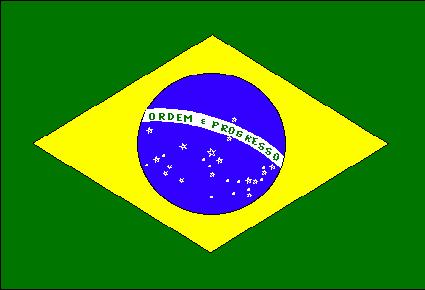
Brazil is South America’s sleeping giant. Expectations of this large, resource-rich country
have always been high, and while the optimistic scenarios haven’t panned out so far, the country’s fortunes may be about to change. According to the Goldman Sachs report, Brazil’s economy could overtake Italy by 2025; France by 2031; and the UK and Germany by 2036. There may be obstacles and detours along the way. But, for now, things seem to be inching in the right direction. And, no matter how things go, Brazil remains an outstanding place to travel, and, for that reason alone, it’s a good idea to pick up some Portuguese.
Once a colony of Portugal, Brazil is the only South American country that officially speaks Portuguese. But because Brazil’s population is so large (182,000,000), it turns out that Portuguese is the dominant language on the continent, although just barely. (51% speak Portuguese v. 49% Spanish.) The Portuguese spoken by Brazilians is not quite the same as the version spoken in Portugal itself. You’ll find differences in pronunciation, intonation, spelling, vocabulary, grammar, etc.
Today, we’re highlighting three series of podcasts/mp3’s that will get you up to speed:
First, we haveBrazilian Portuguese. It’s a homegrown introduction to Brazilian Portuguese, which will teach you the differences between the language spoken in Brazil and that in Portugal, and it will also give you an introduction to Brazilian culture. Mp3s for lessons 1–16 can be found here; audio files for lessons 17 and beyond can be accessed here. (The latter ones can also be located on iTunes.) Just as a general note, the podcast quality improves as the lessons get more advanced. So keep that in mind.
Second, we amazingly stumbled upon series of introductory lessons, collectively called Portuguese Programmatic Course, that was put together by the US Foreign Service, and they’re apparently now in the public domain. From this page, you can download pdf text files that accompany related audio files that you’ll need to download and unzip. The Foreign Service approach to teaching languages is generally very well regarded. Language lovers will definitely want to check out the full collection of Foreign Service language lessons here.
Third, we have “Ta Falado: Brazilian Portuguese Pronunciation for Spanish Speakers” (iTunesFeedWeb Site). This podcast is produced by the Language Technology Center in the Department of Spanish and Portuguese at UT-Austin, and it helps students who know some Spanish make the transition to speaking Portuguese.
Finally, if you’d like to take things to the next level, then you can always check out some more comprehensive language learning systems out on the market. We’ve listed a few in our Amazon store.
Even if you don’t agree with its Euro conservative posture, The
Economist always comes off as
eminently rational and sensible when
grappling with political issues, and certainly unwilling to put spin
ahead of good reporting, which separates it from many of its American
counterparts. This judiciousness comes across in a talk given last week
by John Micklethwait, the magazine’s newly appointed Editor-in-Chief. (Access audio versions here.) Interviewed by Orville Schell, Dean of the Graduate School of Journalism at
UC-Berkeley,
Micklethwait covers a lot of ground, but spends a good deal of time
contemplating America’s role in the world, and particularly whether
America’s international leadership is now irretrievably broken. His common sense answers provide no red
meat for anyone on the left or right. But they’re thoughtful, and worth your time. (Just as an fyi, his talk doesn’t get started until about 10 minutes in, and he doesn’t get to international affairs until about the 29th minute.) Finally, on a related note, you may want to explore The Economist’s relatively new series of podcasts: iTunesFeed
We're hoping to rely on loyal readers, rather than erratic ads. Please click the Donate button and support Open Culture. You can use Paypal, Venmo, Patreon, even Crypto! We thank you!
Open Culture scours the web for the best educational media. We find the free courses and audio books you need, the language lessons & educational videos you want, and plenty of enlightenment in between.
 Below, you’ll find iTunes’ ranking of the top 25 educational podcasts. For your convenience, we’ve included links to the feed for each podcast so that you can access it any way you like. We’ll aim to
 Most of the outside world didn’t care. They didn’t even know what Steve Jobs was talking about. But within tech circles it was a big deal, a landmark moment. Jobs’ s anti-DRM manifesto,