Above you’ll find find a clip from Wired In, a television show produced in the early eighties meant to orient viewers in the midst of that heady era of technological innovation. Alas, the program never aired; only a demo reel and some raw footage survive. But those remains feature no less a comedic luminary than Bill Murray, who even 32 years ago must have been quite a catch for a pilot like this. Though not known for his tech savvy, he has built a reputation for making anything sound hilarious by virtue of his persona alone. This skill he applies to a parody of the everyman’s anti-technology diatribe, as commonly heard then as it is today — or as it no doubt was 32 years before the shoot, or will be 32 years from now. “Who thinks up all this high-tech stuff anyway?” Murray demands. “They start with the digital watches. Tells you the time in numbers, the exact time to the second. 3:12 and 42 seconds. Who needs to know that stuff? I don’t!”
Keep watching, and that Wired In clip heads to Las Vegas to demonstrate for us the wonder of solid-state cartridge software for the Texas Instruments Home Computer. But if you’d rather marvel at more of Murray’s particular kind of craft, watch the full seven minutes of rant takes above. His riffs, seemingly scripted as well as improvised, of varying moods and pitched at varying energy levels, take him from those digital watches to automated car factories to R2-D2 to talking dashboards to the one idea he does like, robots that ride alongside you in your car’s passenger’s seat. “You know what?” he concludes, “They’ll never do it — because it makes too much sense.” The makers of Wired In clearly had a presciently sardonic attitude about the coming waves of tech-related anxiety; the pilot also includes a jab at the notion of video game addiction from “Pac-Man freak” Lily Tomlin.
Colin Marshall hosts and produces Notebook on Cities and Cultureand writes essays on literature, film, cities, Asia, and aesthetics. He’s at work on a book about Los Angeles, A Los Angeles Primer. Follow him on Twitter at @colinmarshall.
In a previous post, we brought you what is likely the only appearance on film of Sir Arthur Conan Doyle—an interview in which he talks of Sherlock Holmes and spiritualism. Although Conan Doyle created one of the most hardnosed rational characters in literature, the author himself later became converted to a variety of supernatural beliefs, and he was taken in by a few hoaxes. One such famous hoax was the case of the so-called “Cottingley Fairies.” As you can see from the photo above (from 1917), the case involved what Conan Doyle believed was photographic evidence of the existence of fairies, documented by two young Yorkshire girls, Elsie Wright and her cousin Frances Griffiths (the girl in the photo above). According to The Haunted Museum, the story of Doyle’s involvement goes something like this:
In 1920, Conan Doyle received a letter from a Spiritualist friend, Felicia Scatcherd, who informed of some photographs which proved the existence of fairies in Yorkshire. Conan Doyle asked his friend Edward Gardner to go down and investigate and Gardner soon found himself in the possession of several photos which showed very small female figures with transparent wings. The photographers had been two young girls, Elsie Wright and her cousin, Frances Griffiths. They claimed they had seen the fairies on an earlier occasion and had gone back with a camera and photographed them. They had been taken in July and September 1917, near the Yorkshire village of Cottingley.
The two cousins claimed to have seen the fairies around the “beck” (a local term for “stream”) on an almost daily basis. At the time, they claimed to have no intention of seeking fame or notoriety. Elsie had borrowed her father’s camera on a host Saturday in July 1917 to take pictures of Frances and the beck fairies.
Elsie’s father, a skeptic, filed the photos away as a joke, but her mother, Polly Wright, believed, and brought the images to Gardner (there were only two at first, not “several”), who circulated them through the British spiritualist community. When Conan Doyle saw them in 1920, he gave each girl a camera and commissioned them to take more. They produced three additional prints. The online Museum of Hoaxesdetails each of the five photos from the two sessions with text from Edward Gardner’s 1945 Theosophical Society publication The Cottingley Photographs and Their Sequel.
These photos swayed thousands over the course of the century, but arch-skeptic James Randi seemingly debunked them for good when he pointed out that the fairies were ringers for figures in the 1915 children’s book Princess Mary’s Gift Book, and that the prints show discrepancies in exposure times that clearly point to deliberate manipulation. The two women, Elsie and Frances, finally confessed in the early 1980s, fifty years after Conan Doyle’s involvement, that they had faked the photos with paper cutouts. Watch Randi and Elsie Wright discuss the trickery above.
The daughter and granddaughter of Griffiths possess the original prints and one of Conan Doyle’s cameras. Both once believed that the fairies were real, but as the host explains, they were not simply credulous fools. Throughout much of the twentieth century, people looked at the camera as a scientific instrument, unaware of the ease with which images could be manipulated and staged. But even as Frances admitted to the fakery of the first four photos, she insisted that number five was genuine. Everyone on the show agrees, including the host. Certainly Conan Doyle and his friend Edward Gardner thought so. In the latter’s description of #5, he wrote:
This is especially remarkable as it contains a feature quite unknown to the girls. The sheath or cocoon appearing in the middle of the grasses had not been seen by them before, and they had no idea what it was. Fairy observers of Scotland and the New Forest, however, were familiar with it and described it as a magnetic bath, woven very quickly by the fairies and used after dull weather, in the autumn especially. The interior seems to be magnetised in some manner that stimulates and pleases.
I must say, I remain seriously unconvinced. Even if I were inclined to believe in fairies, photo number five looks as phony to me as numbers one through four. But the Antiques Roadshow appearance does add a fun new layer to the story and an air of mystery I can’t help but find intriguing, as Conan Doyle did in 1920, if only for the historical angle of the three generations of Griffiths who held onto the legend and the artifacts. Oh, and the appraisal for the five original photos and Arthur Conan Doyle’s camera? Twenty-five to thirty-thousand pounds—not too shabby for an adolescent prank.
Josh Jones is a freelance writer, editor, and musician based in Washington, DC. Follow him @jdmagness
What is entering the public domain in the United States? Nothing. Once again, we will have nothing to celebrate this January 1st. Not a single published work is entering the public domain this year. Or next year. In fact, in the United States, no publication will enter the public domain until 2019. Even more shockingly, the Supreme Court ruled in 2012 that Congress can take back works from the public domain. Could Shakespeare, Plato, or Mozart be pulled back into copyright? The Supreme Court gave no reason to think that they could not be.
The Center then goes on to enumerate the works that would have entered the commons had we lived under the copyright laws that prevailed until 1978. Under those laws, “thousands of works from 1956 would be entering the public domain. They range from the films The Best Things in Life Are Free, Around the World in 80 Days, Forbidden Planet, and The Man Who Knew Too Much, to the Phillip K. Dick’s The Minority Report and Eugene O’Neill’s Long Day’s Journey into Night, to seminal articles on artificial intelligence.” Have a look at some of the others, several of which appear in the mosaic above.
Ask a photographer from the century that just passed to name his or her favorite film, and the answer, very often, will be Kodachrome.
The crisp emulsion, beautifully saturated colors and archival stability of Kodachrome made it a sentimental favorite among photographers long after other, more practical color films had all but pushed it out of the marketplace. The problem was, the very qualities that made the film special stemmed from a highly cumbersome technical process. Kodachrome was a “non-substantive” film, meaning the dye couplers were not built into the emulsion, as they are in other color films, but had to be added during development. The process was complex, and few labs could afford to offer it. Even before the digital revolution, Kodachrome was an endangered species.
So while it came as an emotional shock to many photographers, it was no real surprise when the Eastman Kodak Company announced in 2009 that it was halting production of Kodachrome. One of the photographers who had long-since moved on to digital imaging but who was saddened by the demise of Kodachrome was Steve McCurry, an award-winning photojournalist for National Geographic who is best known for his haunting 1984 image (shot on Kodachrome) of a 12-year-old Afghan refugee girl with piercing green eyes. When McCurry heard the news, he arranged to obtain the very last roll of Kodachrome to come off the assembly line at the Kodak plant in Rochester, New York. The challenge, then, was this: What do you do with the last 36 exposures of a legendary film?
The half-hour documentary above from National Geographic tells the story of that roll and how McCurry used it. The filmmakers followed the photographer on an odyssey that began at the factory in Rochester and ended at a laboratory (the last Kodachrome lab open) in a small town in Kansas. Over the course of about six weeks, from late May to early July, 2010, McCurry traveled halfway around the world to make those final 36 exposures. The resulting photographs iclude street scenes in New York and Kansas, portraits of a movie star (Robert De Niro) in New York, intellectuals and ethnic tribesmen in India, colleagues in Turkey and New York, and one of himself. It’s a remarkable take. Although a few of the shots appear spontaneous, most are the result of careful planning. McCurry donated all 36 slides to the George Eastman House International Museum of Photography and Film, but you can see almost all of the photos online at the Vanity Fair Web site. As McCurry tells the magazine:
I’ve been shooting digital for years, but I don’t think you can make a better photograph under certain conditions than you can with Kodachrome. If you have good light and you’re at a fairly high shutter speed, it’s going to be a brilliant color photograph. It had a great color palette. It wasn’t too garish. Some films are like you’re on a drug or something. Velvia made everything so saturated and wildly over-the-top, too electric. Kodachrome had more poetry in it, a softness, an elegance. With digital photography, you gain many benefits [but] you have to put in post-production. [With Kodachrome] you take it out of the box and the pictures are already brilliant.
Ornithologists and bird watchers rejoice. After a dozen years, The Cornell Lab of Ornithology’s Macaulay Library has fully digitized its nearly 150,000 audio recordings (a total running time of 7,513 hours), representing close to 9,000 different species, such as the very unsettling-sounding Barred Owl (above). While the collection also includes the sounds of whales, elephants, frogs, primates, and other animals, the primary emphasis here is on birds (it is a Lab of Ornithology, after all), and there is an incredible range of calls. Cornell recommends some of the highlights below:
Earliest recording: Cornell Lab founder Arthur Allen was a pioneer in sound recording. On a spring day in 1929 he recorded this Song Sparrow sounding much as they do today
Most likely to be mistaken for aliens arriving: Birds-of-paradise make some amazing sounds – here’s the UFO-sound of a Curl-crested Manucode in New Guinea
Whether you’re an enthusiastic birder, practicing scientist, or sound-sample hunter, you’ll find something to blow your mind at the extensive collections of the Macaulay Library. Both amateur and professional naturalists, for example, can acquire, visualize, measure, and analyze animal sounds with a free version of the Cornell Lab’s proprietary interactive sound analysis software, Raven.
And admirers of the astonishing variety and beauty of the bird-of-paradise should stay tuned for the Bird-of-Paradise Project website, launching this month. Sign up to receive an email when the full site launches. Meanwhile, watch the project’s spellbinding trailer below.
If you only know John Hodgman as the earnestly inept “P.C.” of those “I’m a Mac” Apple television commercials, you may wonder why you’d go to him for writing advice. Or maybe you’ve read his books The Areas of My Expertise, More Information Than You Require, and That is All. But just because a man can pen three satirical volumes of made-up knowledge doesn’t mean he can teach you how to properly cast your own ideas into print. No, to do that, Hodgman draws on his shadowy past as a literary agent, “a bold seven-year attempt to convince myself I didn’t want to be a writer.” Remembering that stint spent reading through piles upon piles of submissions, “the most elaborate procrastination technique that I came up with to avoid writing,” he confirms what we all suspect: a great many people want to write for a living, “but luckily, very few of them are sane.” And among that same minority, the “medium- to low-talented but persistent” succeed where the “merely super-talented” don’t.
Here we have an adaptation of a theory I’ve often heard, living as I do in Los Angeles, applied to film and television: while millions of hopefuls turn up every year trying to make it in The Industry, most of them are idiots. Hodgman delivers his version of these sage words with a newish look, miles away from the deliberately stodgy, poorly-tailored appearance with which he pitched the dubious virtues of the P.C. Behind his ascot, rounded mustache, and orange-tinted aviator glasses, he looks like nothing so much as a faintly disreputable Hollywood mogul of the seventies. But the subtle outlandishness of his self-presentation belies the sense of his advice. Whatever your level of talent, put yourself in the running with “the people who keep submitting and keep doing and keep making.” And make sure that, while writing what you know, you also know what you know.
Colin Marshall hosts and produces Notebook on Cities and Cultureand writes essays on literature, film, cities, Asia, and aesthetics. He’s at work on a book about Los Angeles, A Los Angeles Primer. Follow him on Twitter at @colinmarshall.
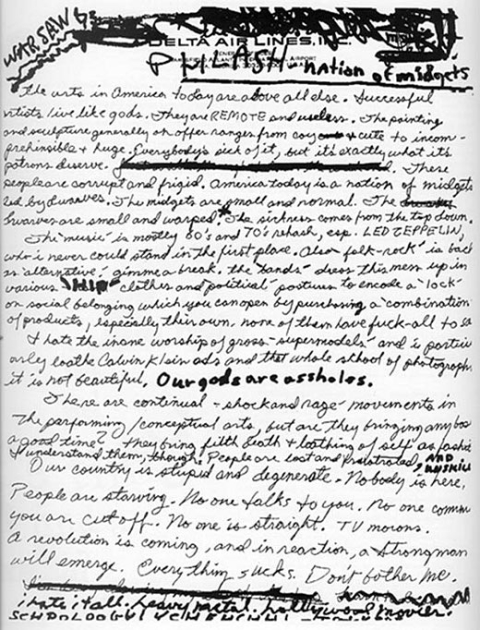
In 1974 Donald Sherman, whose speech was limited by a neurological disorder called Moebius Syndrome, used a new-fangled device designed by John Eulenberg to dial up a pizzeria. The first call went to Dominos, which hung up. They were apparently too busy becoming a behemoth. Mercifully, a humane pizzeria — Mr. Mike’s — took the call, and history was made. It all plays out above, and we hope that Mr. Mike’s is still thriving all these years later.…
Nichelle Nichols played Lt. Uhura on the original Star Trek series (1966–1969). During the days when African-Americans were still fighting for legal equality in America, her role took on special importance. Her inclusion on the Enterprise pointed to a future when Americans could live and work together, putting race aside. And Nichols made history when Lt. Uhura and Captain Kirk embraced in the first inter-racial kiss on American television.
We can partly thank Martin Luther King, Jr. for all of this. As Nichols explains below, she gave considered leaving Star Trek at the end of Season 1, hoping to pursue a broadway career. But MLK asked her to reconsider. A big fan of the show, Dr. King underscored the importance of her character, of what it meant to future African-Americans, of how her character, through the power of TV, was opening a door that could never be closed. Needless to say, he persuaded her to stay on the show, and the rest is glorious history.
If you would like to sign up for Open Culture’s free email newsletter, please find it here. It’s a great way to see our new posts, all bundled in one email, each day.
If you would like to support the mission of Open Culture, consider making a donation to our site. It’s hard to rely 100% on ads, and your contributions will help us continue providing the best free cultural and educational materials to learners everywhere. You can contribute through PayPal, Patreon, and Venmo (@openculture). Thanks!
The reading from Cuban-American poet Richard Blanco at President Barack Obama’s second inauguration ceremony today follows a tradition that began 52 years ago, when John F. Kennedy invited his fellow New Englander Robert Frost to read at his inaugural.
Frost was an early supporter of Kennedy. On his 85th birthday (March 26, 1959) he was asked by a reporter about the decline of New England’s cultural influence in America. “The next President of the United States will be from Boston,” replied Frost, according to Poets.org. “Does that sound as if New England is decaying?” At that time Kennedy had yet to formally announce his candidacy, so Frost was asked to explain who he was talking about. “He’s a Puritan named Kennedy. The only Puritans left these days are the Roman Catholics. There. I guess I wear my politics on my sleeve.” When President-elect Kennedy invited the 86-year-old poet to read a poem at his inauguration, if it was not too arduous, Frost cabled his response:
IF YOU CAN BEAR AT YOUR AGE THE HONOR OF BEING MADE PRESIDENT OF THE UNITED STATES, I OUGHT TO BE ABLE AT MY AGE TO BEAR THE HONOR OF TAKING SOME PART IN YOUR INAUGURATION. I MAY NOT BE EQUAL TO IT BUT I CAN ACCEPT IT FOR MY CAUSE–THE ARTS, POETRY, NOW FOR THE FIRST TIME TAKEN INTO THE AFFAIRS OF STATESMEN.
Frost wrote a new poem, “Dedication,” especially for the occasion. But conditions on inauguration day conspired against the old poet. A heavy blanket of snow fell on Washington the night before, and the sunlight that day was intense. In the harsh glare from the sun and snow, Frost found that he couldn’t read the typescript of his new poem. Kennedy had earlier asked Frost, if he wasn’t going to write a new poem, to consider reading his poem on American history, “A Gift Outright.” So when Frost found that he couldn’t read the new poem, he recited “A Gift Outright” from memory.
In the video above, we hear Frost reading the poem, which was written in the late 1930s and first published in 1942. Although some have said the audio is from the Kennedy inauguration, it apparently is not, because Frost reads the original text. For the inauguration, the poet reportedly agreed to Kennedy’s request to make a change in the final line. The phrase “Such as she would become” was changed to a more optimistic “Such as she will become.” (You can read the full text of the poem in a new window.) Sometime after the event, Kennedy put Frost’s inaugural appearance in perspective:
I asked Robert Frost to come and speak at the inauguration because I felt he had something important to say to those of us who are occupied with the business of government, that he would remind us that we were dealing with life, of hopes and fears of millions of people. He has said it well in a poem called “Choose Something Like a Star,”in which he speaks of the fairest star in sight and says, “It asks little of us here./It asks of us a certain height./So when at times the mob is swayed/to carry praise or blame too far,/we may choose something like a star/ to stay our mind on and be stayed.”
Some twenty-five years ago, my acting class spent an entire semester on the plays of Anton Chekhov. At the time, it felt very vital, but like so much else I studied in college, what I wound up retaining is sadly piecemeal. One thing I do remember is the youngest of the Three Sisters breakdown upon realizing that they’ll never make it to Moscow. At the heart of this freak-out is her despair that she, and everyone who matters to her, is aging, a condition she defines as diminishment. It seemed a bit over-the-top to me at the time. For god’s sake, she’s only 24. So what if she can’t remember a few words of schoolgirl Italian? Two and a half decades out, I was misremembering her name as Anya, a momentary confusion easily righted on my third Google search.
(IRINA. (Sobbing.) Where? Where has it all gone? Where is it? Oh my God, my God! I have forgotten everything, forgotten everything… Everything is confused in my head… I can’t remember what is the word forwindowin Italian, or for ceiling… I am forgetting everything, I forget more every day, and life flies past and never returns, never, and we will never go to Moscow… I see now that we will never go…)
I flashed on this long ago meltdown while watching “Forgetfulness,” the lovely animation of the Billy Collins poem, above. As Collins lists the seemingly inconsequential things lost, it occurred to me that the central “you” could stand for anybody: you, me, an elderly relative, Chekhov’s Irina. (Not Anya. If we’re to make it to Moscow, we better get cracking.)
We’re lucky to have artists like Chekhov, Collins, and by extension, animator Julian Grey, all possessed of the ability to imbue one of mankind’s most depressing and timely realities with tenderness and lyricism. Perhaps you’ll remember someone with whom to share “Forgetfulness”.
Some pictures from the silent era, like F.W. Murnau’s Nosferatu, couldn’t look more clearly like ancestors of the modern horror film. Tracing the distant origins of other forms — of documentary, say — proves a trickier task. Hence the value of a movie like Benjamin Christensen’s Häxan, also known as Witchcraft Through the Ages, which not only mounts a nonfictional investigation into humanity’s perception of “witches” throughout the ages, but does so with the aid of dramatic sequences as eerie as any of Count Orlok running amok. Given that Christensen’s meticulously researched historical creation demanded a larger budget than any other Scandinavian film to that point, you could also view it as an antecedent of today’s visually elaborate, spectacle-intensive blockbusters. Like many well-known silent films, Häxan has undergone multiple releases, each running different lengths, with different scores. You see above the 1968 version, which reduces Christensen’s original 104-minute cut to a brisk 77 minutes and accompanies it with a jaunty, richly incongruous five-piece jazz score by Daniel Humair.
Atop the music we hear the history of the persecution of “witches,” from the primitive era to medieval times to then-modern times, when the idea of the “hysterical woman” gained purchase in the zeitgeist. Narrating this story in the 1968 version is none other than writer and Beat icon William S. Burroughs, who, despite his flamboyantly artistic personality, delivers an ultimately sober analysis. The film takes the position that witchcraft, far from a reality in and of itself, arises and re-arises as an invention of the superstitious, the irrational, and those disinclined to understand the nature of mental illness. If that subject sounds more suitable for an academic paper, remember that this research comes delivered by the bold visual strokes of proto-horror silent film, close reading of the fifteenth-century inquisitor’s treatise Malleus Maleficarum, and the man who wrote Naked Lunch.
Colin Marshall hosts and produces Notebook on Cities and Cultureand writes essays on literature, film, cities, Asia, and aesthetics. He’s at work on a book about Los Angeles, A Los Angeles Primer. Follow him on Twitter at @colinmarshall.
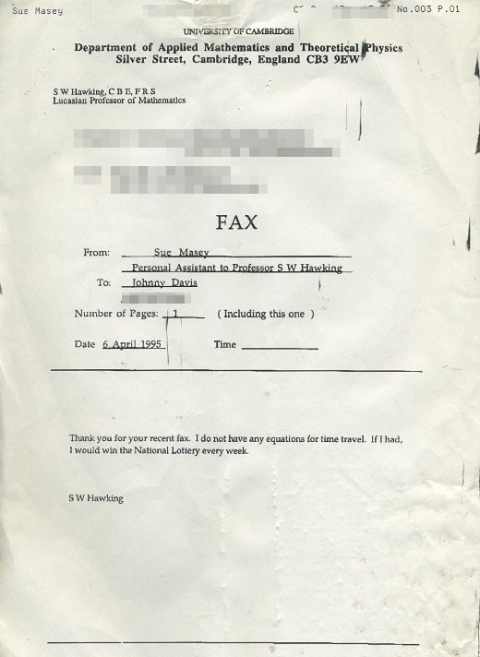
We're hoping to rely on loyal readers, rather than erratic ads. Please click the Donate button and support Open Culture. You can use Paypal, Venmo, Patreon, even Crypto! We thank you!
Open Culture scours the web for the best educational media. We find the free courses and audio books you need, the language lessons & educational videos you want, and plenty of enlightenment in between.

