What’s surprising about Everest Base Camp is the color. It’s a flinty, gray place littered with shards of Himalayan sandstone and shale. Here and there appears a vivid green pool of alpine water. And then there’s the red, blue and green prayer flags hung by Himalayans to blow blessings in the wind.
Google Street View’s latest project, the World’s Highest Peaks, takes us to Everest and two other mountains included in the Seven Summits—the highest mountains on each of the seven continents.
Teams of mountaineers toted digital cameras on treks to the top of each mountain and integrated their images into Google maps so we can trek along with them from the comfort of our laptops, iPhones or Android devices. Like Google Street View’s Ocean gallery, the mountain images bring us to places we may never see with our own eyes.
It’s easy to imagine the dry, cold climate at Camp Colera, where hikers wait for the weather to permit a climb of Aconagua, the highest mountain in the Andes. The views of Tanzania from Arrow Glacier are breathtaking. Hikers camp here before making the treacherous ascent to Uhuru—the “rooftop of Africa” and the summit of Mt. Kilimanjaro.
One of the things Google does really well is create galleries of images that are the kind we might take ourselves, not filtered-lens professional shots that belong on calendars. We see mountaineers resting and hanging out at the frosty Casa de Piedra, on the way up to Aconagua, hikers picnicking at Lemosho Glades as they switch from jeep to foot on the climb up Kilimanjaro, and the weird, abandoned diesel barrels that serve as shelter for folks climbing Mount Elbrus in Russia.
As usual, Google lets us in on the process of collecting all these images with a fun blog written by the photographers.
Which best describes your museum-going experience? Inspiration and spiritual refreshment? Or a soul crushing attempt to fight your way past the hoards there for the latest blockbuster exhibit, with a too-heavy bag and a whining, foot sore companion in tow?
Wouldn’t it be wonderful to lose yourself in contemplation of a single work? What about that giant one at the top of the Metropolitan Museum of Art’s Grand Staircase? For every visitor who pauses to take it in, another thousand stream by with hardly a glance.
The above commentary by curator of Italian paintings, Xavier Salomon, may well turn Giovanni Battista Tiepolo’s The Triumph of Marius into one of the Met’s hottest attractions. It’s often difficult for the average museum-goer to understand what the deal is in one of these densely populated, 19th century oils. Salomon supplies the needed historical context—general Gaius Marius parading captive Numidian king Jugurtha through the streets upon his triumphal return to Rome.
Things get even more interesting when he translates the Latin inscription at the top of the canvas: “The Roman people behold Jugurtha laden with chains.” In other words, you can forgo the hero worship of the title and concentrate on the bad guy. This, Salomon speculates, is what the artist had in mind when swathing Jugurtha in that eye-catching red cape. Jugurtha may be the loser, but his refusal to be humbled before the crowd is winsome.
As is 82nd and 5th, an online series that aims to celebrate 100 transformative works of art from the museum’s collection before year’s end. In addition to Salomon’s compelling thoughts on The Triumph of Marius, some pleasures thus far include Melanie Holcomb, Associate Curator of Medieval Art and The Cloisters, geeking out over illustrated manuscript pages and fashion and costume curator Andrew Bolton recalling his first encounter with one of designer Alexander McQueen’s most extreme garments. Each video is supplemented with a tab for further exploration. You can also find the talks collected on YouTube.
Brilliantly conceived and executed, these commentaries provide virtual museum-goers with a highly personal tour, and can only but enrich the experience of anyone lucky enough to visit in the flesh.
Thelonious Monk’s personality was as quirky and original as his piano playing. An elusive, insular figure, Monk was nevertheless persuaded in late 1967 to allow a camera crew to follow him around over an extended period of time for a West German television documentary. The film, Monk (shown above in its entirety), is a fascinating up-close look at one of the giants of Jazz.
The 55-minute movie was shot by the American filmmakers Michael and Christian Blackwood for the networks NDR (North German Broadcasting) and WDR (West German Broadcasting). The Blackwood brothers had unprecedented access to Monk over a six-month period in late 1967 and early 1968, as he and his quartet performed and recorded in New York, Atlanta and Europe. The quartet includes Charlie Rouse on tenor saxophone, Larry Gales on bass and Ben Riley on drums. Although there are a few brief passages of untranslated German narration, the film is basically a cinéma vérité piece on Monk (who speaks English) and his remarkable music.
The Blackwood brothers’ footage, which Stephen Holden of The New York Times called “some of the most valuable jazz sequences ever shot,” later became the nucleus of a longer 1988 documentary produced by Clint Eastwood. You can watch that film and learn more about it in our 2011 post, “Thelonious Monk: Straight No Chaser.”
The story above—from our old friend James Grime of Numberphile and Cambridge University—has all the makings of weirdo Americana: bad amateur science, commercial ventures based upon the same, and a state legislature eager to embrace it all. In 1897, an amateur mathematician named Edwin Goodwin believed he’d solved an ancient problem ruled insoluble fifteen years earlier. He thought that he had squared the circle and could reasonably copyright Pi as 3.2. Yes, that’s right, after his “discovery,” Goodwin, a native of Indiana, decided to copyright his proof so that anyone using it outside of the state would have to pay him royalties.
But kindly, in a gesture of nativist goodwill (or political opportunism), Goodwin decided he would let his home state of Indiana use his proof for free for educational purposes. In fact, he said as much when he introduced a bill to the Indiana House of Representatives to rule his proof correct and grant him sole proprietorship. And, as sometimes happens in stories like this, the bill passed, unanimously, and the legislators were impressed. But one man wasn’t. By sheer chance, a professor of mathematics happened to be in attendance. While he declined to meet mathematics hero Edwin Goodwin, he did take it upon himself to warn the Indiana Senate of what was coming its way. Luckily for the state’s schoolchildren, the Senate threw the bill out, but not before a half-hour spent mocking its silliness.
But is the idea of squaring a circle ridiculous? Dr. Grime cites one Indian mathematician who proposed a somewhat feasible solution. And what exactly does it mean to “square a circle”? If you don’t know (and I don’t), you’ll have to wait till next time on Numberphile, when Grime and his team promise to explain it to us rubes.
Growing up, I didn’t think about all the individual qualities that make a great movie. I just thought of Blade Runner. Whatever Ridley Scott’s 1982 adaptation of Philip K. Dick’s Do Androids Dream of Electric Sheep had, it made for high cinematic quality indeed. As naive as it sounds, it doesn’t fall much short of modern critical and target-audience consensus. Visually, intellectually, and technically, Blade Runner has endured the decades almost effortlessly; how many other tales of humans real and artificial in a dystopian future megalopolis can you say the same about, at least with a straight face? Yet back in the early eighties, you would have had to call the picture, which opened to a weekend of only $6.15 million in ticket sales against its $28 million budget, a flop. Nor could critics come up with much praise: “A waste of time,” said Gene Siskel of Siskel & Ebert. (“I have never quite embraced Blade Runner,” Ebert wrote 25 years later, “but now it is time to cave in and admit it to the canon.”)
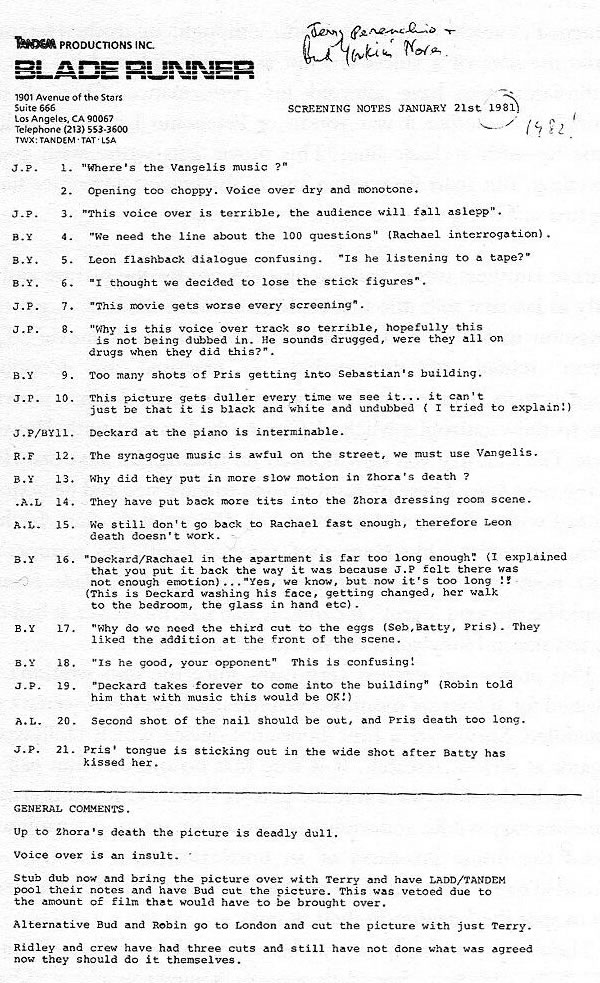
Have a look at the sheet of screening notes above (or click here to view a larger image), and you’ll find that even the studio executives didn’t like the movie. Some Blade Runner fans blame the poor initial reception on the cut that 1982’s critics and audiences saw, which differs considerably from the version so many of us revere today. They cite in particular a series of deadeningly explanatory voice-overs performed after the fact by star Harrison Ford, which sounds like a classic demand by philistine “suits” in charge until you read the notes from one executive referred to as J.P.: “Voice over dry and monotone,” “This voice over is terrible,” “Why is this voice over track so terrible.” And under “general comments”: “Voice over is an insult.” But with the offending track’s removal, the replacement of certain shots, tweaks in the plot, and the simple fullness of time, Blade Runner has gone from one of the least respected science fiction films to one of the most. Yet part of me wonders if some of those higher-ups in the screening ever made peace with it. A certain A.L., for instance, makes the fourteenth point, and adamantly: “They have to put more tits into the Zhora dressing room scene.”
What entered the public domain in the US in 2013? It’s not a long answer, because the answer is .… nothing.
Now here’s a question that yields a longer answer. What books would have entered the public domain if we were still operating under reasonable, pre-1978 copyright laws? Here’s a little list that comes from Duke University’s Center for the Study of the Public Domain:
Winston Churchill, A History of the English-Speaking Peoples
Philip K. Dick, Minority Report
Ian Fleming, Diamonds are Forever (a James Bond novel)
Fred Gibson, Old Yeller
Billie Holiday, Lady Sings the Blues
Alan Lerner, My Fair Lady
Eugene O’Neill, Long Day’s Journey into Night
John Osborne, Look Back in Anger
Dodie Smith, 101 Dalmatians
You can also add films to the list, like:
Hitchcock’s The Man Who Knew Too Much
The Searchers (directed by John Ford and starring John Wayne)
The Ten Commandments (1956 version by Cecil B. DeMille, who also directed a similar film in 1923)
Around the World in 80 Days
Godzilla, King of the Monsters!
The Best Things in Life are Free
And we shouldn’t fail to mention that we could have had the first issue of MAD magazine, with Alfred E. Neuman gracing the cover.
In the meantime, if you’re wondering what will hit the public domain in 2014, the answer is “nothing.” And you can keep repeating that answer until 2019! That’s the next time something new will enter America’s creative commons. Yet one more reason Congress’ approval rating deserves to sit at 15%.
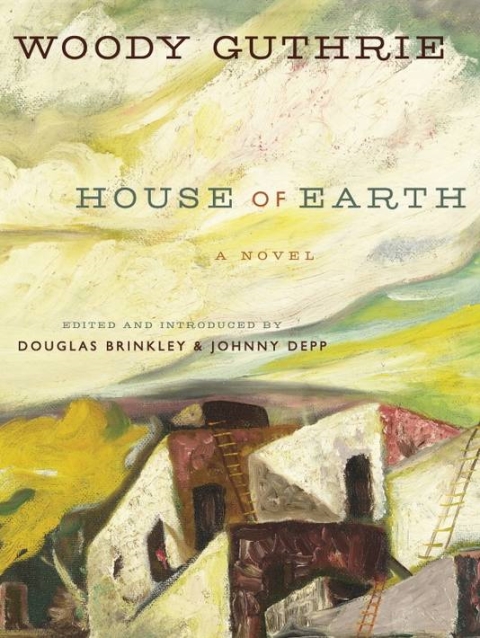
Woody Guthrie may have written as many as 3,000 folk songs, but he didn’t limit himself there. He also managed to write a novel called House of Earth, which only last month saw the light of day. To whom do we owe the pleasure of reading this previously unknown addendum to the prolific singer-songwriter’s career? Why, to historian Douglas Brinkley, actor Johnny Depp, and Guthrie’s daughter Nora. Researching a forthcoming biography of Bob Dylan, Brinkley spotted a mention of House of Earthsomewhere deep in the files of famous folk-music recordist Alan Lomax. He traced the manuscript to the University of Tulsa library, which had it in storage. Depp had recently started his own publishing imprint, Infinitum Nihil, and Brinkley passed along this promising piece of material. (The two had known each other for years, having initially met through that great literary connector, Dr. Hunter S. Thompson.)
With House of Earth, Guthrie wrote a Dust Bowl novel, but one very much in tune with his own sensibilities. Unlike John Steinbeck’s The Grapes of Wrath, Guthrie’s story follows not the farm families who fled west, but those who remained on the Texas plains. “Pitched somewhere between rural realism and proletarian protest,” write Brinkley and Depp in a New York Times Book Review essay, “somewhat static in terms of narrative drive, ‘House of Earth’ nonetheless offers a searing portrait of the Panhandle and its marginalized Great Depression residents. Guthrie successfully mixes Steinbeck’s narrative verve with D. H. Lawrence’s openness to erotic exploration.” As of this week, you can read and also now hear the book, as read by Will Patton, in an audio version released by Audible.com. (Find info on how to get it for free below.) At the top of this post, you’ll find a short clip of Patton delivering the singer’s prose. Though Guthrie will remain best known for his politically-charged songs, his novel, which launches broadsides against big finance, big lumber, and big agriculture, should carry charge enough for any of his enthusiasts.
Note: Do you want to download House of Earth from Audible for free? Here’s one way to do it. Just head over to Audible.com and register for a 30-day free trial. You can download any audio book for free. Then, when the trial is over, you can continue your Audible subscription, or cancel it, and still keep the audio book. The choice is yours. And, in full disclosure, let me tell you that we have a nice arrangement with Audible. Whenever someone signs up for a free trial, it helps support Open Culture. That’s cool. But frankly, we work with them because I personally use the service nothing short of religiously.
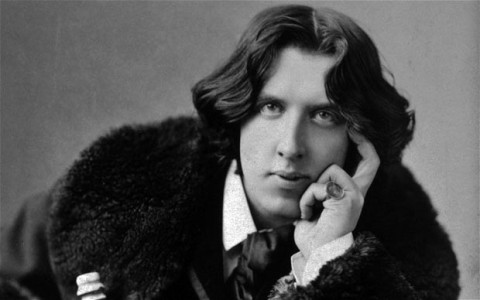
According to The Telegraph, experts rummaging through a dusty box recently uncovered a letter penned by Oscar Wilde in 1890 (or thereabouts). Addressed to a “Mr. Morgan,” the letter runs 13 pages, and it offers what amounts to practical advice for an aspiring writer. Details on the letter’s contents remain scarce, although we will probably know more when the document gets auctioned off in two weeks time. But, so far, we know that Wilde offered Mr. Morgan two points to consider:
“Make some sacrifice for your art, and you will be repaid, but ask of art to sacrifice herself for you and a bitter disappointment may come to you,”
“The best work in literature is always done by those who do not depend on it for their daily bread and the highest form of literature, Poetry, brings no wealth to the singer.”
It’s essentially the nineteenth century version of what Charles Bukowski later said in much more simple terms: “if you’re doing it for money or fame, don’t do it.”
Ernest Hemingway took a dim view of Hollywood. He once said that the best way for a writer to deal with the movie business was to arrange a quick meeting at the California state line. “You throw them your book, they throw you the money,” he said.“Then you jump into your car and drive like hell back the way you came.”
But Hemingway became a little more involved when it was time to film his 1940 novel For Whom the Bell Tolls, as this 1971 CBC interview with Ingrid Bergman reveals. Hemingway sold the film rights to Paramount Pictures in part because he wanted his good friend Gary Cooper, who had starred in A Farewell to Arms (which you canfind in our collection of 500 Free Movies Online), to play the lead role of Robert Jordan, an American volunteer in the Spanish Civil War who is given a dangerous mission to blow up a bridge. Cooper was under contract with Paramount.
Bergman first came to Hemingway’s attention when he saw the young Swedish actress in the 1939 Hollywood remake of Intermezzo. Despite her Nordic appearance, Hemingway thought Bergman would be perfect for the role of the young Spanish woman Maria in For Whom the Bell Tolls. As Bergman explains in the interview, Hemingway sent her a copy of the book with the inscription, “You are the Maria in this book.”
The problem was that Bergman was under contract with another studio, Selznick International Pictures. But studios occasionally made arrangements with one another to share actors, and David O. Selznick became convinced that the high-profile Hemingway project would be great for his young protégé’s career. So in typical fashion, Selznick pulled out all the stops. On January 31, 1941 Selznick sent a note to Kay Brown, his talent scout who had discovered Bergman in Sweden, describing his efforts to win Bergman the part. In a passage quoted by Donald Spoto in Notorious: The Life of Ingrid Bergman, Selznick writes:
I pinned Hemingway down today and he told me clearly and frankly that he would like to see her play the part. He also said this to the press today. However, he tells me also that at Paramount he was told she was wooden, untalented, and various other things. Needless to say, I answered these various charges.… I am also personally supervising a publicity campaign to try to jockey Paramount into a position where they will almost have to use her. You will be seeing these items from time to time. Incidentally, Ingrid wasn’t in town today, or I could have brought her together with Hemingway. However, we are arranging for her to fly today to see Hemingway in San Francisco before he sails for China. If he likes her, I am asking him to go to town with Paramount on it. If she doesn’t get the part, it won’t be because there hasn’t been a systematic campaign to get it for her!
As part of Selznick’s systematic campaign, he invited Life magazine to photograph Bergman’s lunch with Hemingway and his wife, Martha Gellhorn, at Jack’s Restaurant in San Francisco. The magazine published a series of photos along with a caption quoting Hemingway as saying, “If you don’t act in the picture, Ingrid, I won’t work on it.”
Despite Selznick’s machinations, Paramount gave the part to one of its own contract actresses, the ballet dancer Vera Zorina. Bergman had to content herself with the female lead in a little black-and-white film called Casablanca. But after several weeks of shooting the Hemingway film in the Sierra Nevada, Paramount became unhappy with Zorina’s performance. Just as Bergman was wrapping up Casablanca, her wish came through and she was given the role of Maria. For Whom the Bell Tolls became the blockbuster hit of 1943, and Bergman received an Oscar nomination for her performance. Ironically, though, it was her role in the low-profile Casablanca that sealed Bergman’s fate as a film icon.
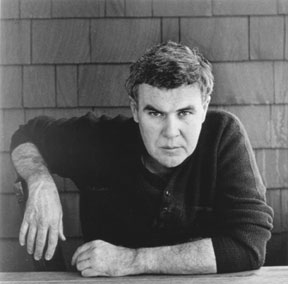
Beloved of 80s MFA students and New Yorker fiction editors, Raymond Carver belonged to neither world. He suffered and drank his way from working-class obscurity to literary fame like another underdog poet and writer, Charles Bukowski (though Bukowski never had, and maybe never wanted, Carver’s cachet). Carver published his first collection of gritty realist stories—Will You Please Be Quiet, Please?—in 1976, when short fiction was largely dominated by the baroque experimentalism of writers like Donald Barthelme and John Barth.
But while Carver perhaps lacked the imaginative exuberance, and early educational opportunities, of a Barthelme, his fiction gave readers something they craved, maybe without even knowing it. A Publisher’s Weekly reviewer of the first collection noted that Carver voiced the “inarticulate worlds of Americans,” the dim ache in the nondescript lives of aspiring students, down-and-outers, diner waitresses, salesmen, and unhappily hitched blue-collar couples. Carver’s approach to quiet desperation is poetic, eschewing flashy postmodernist contraptions for powerfully direct and evocative images. As writer and critic Brian A. Oard puts it:
The Carveresque image allows the reader to glimpse the terrible waste of his characters’ lives (something the characters themselves can sometimes feel but rarely see) and forces the reader to reconsider the entire story in the image’s dark light.
In the audio at the top, you can hear Carver’s friend, writer Richard Ford, read “The Student’s Wife,” from Will You Please Be Quiet Please?, as part of The Guardian’s short story podcast. Ford describes the story as “spare, direct, rarely polysyllabic, restrained, intense, never melodramatic, and real-sounding while being obviously literary in intent.”
“Fat,” another of Carver’s stories from his first collection, conflates two archetypical images of disquiet in the American psyche: obesity and bad marital sex. In a story about excess and longing, Carver’s minimalist restraint lends these commonplaces near-totemic status. Above, listen to the story read by Irish author and memoirist Anne Enright.
Carver, a man of self-destructive appetites, understood the craving of characters like Rita, the waitress in “Fat.” His own desires drove an alcoholism that nearly killed him. Several of his characters share this flaw, including Wes in Carver’s story “Chef’s House,” read above by celebrated short story-ist David Means. Published in The New Yorker in 1981, “Chef’s House” marks the beginning of Carver’s long relationship with the tony magazine.
In 2007, The New Yorker also broke open the myth of the hyper-minimalist Carver, inspiration to thousands of creative writing students, by showing how his streamlined prose was perhaps as much the product of Alfred A. Knopf editor Gordon Lish as of the author. The magazine published Lish’s edit of Carver’s “Beginners,” which became in Lish’s hands the signature story “What We Talk About When We Talk About Love.”
I do not think lovers of Carver need be too dismayed by these revelations. Several well-known works of literature are close collaborative efforts between editor and author. See, for example, T.S. Eliot’s The Waste Land, which we’d never know by that name without Ezra Pound (the famous footnotes were not Eliot’s idea either). And the glittering sentences of Fitzgerald would not shine so brightly without editor Malcolm Cowley. But as The New Yorker alleges, Carver felt forced to accept Lish’s edits. Once he had gained more confidence and success, his prose took on much more expansive qualities, as you can see in the 1983 story “Cathedral.”
The readings above can be otherwise found in our collection of Free Audio Books.
We're hoping to rely on loyal readers, rather than erratic ads. Please click the Donate button and support Open Culture. You can use Paypal, Venmo, Patreon, even Crypto! We thank you!
Open Culture scours the web for the best educational media. We find the free courses and audio books you need, the language lessons & educational videos you want, and plenty of enlightenment in between.