If you’ve ever studied the history of photography, you’ve inevitably encountered Eadweard Muybridge’s experiments from the 1870s, which used new innovations in photography to answer a simple question: When a horse trots, do all four of its hooves ever leave the ground at once? The question piqued the curiosity of Leland Stanford, former governor of California and co-founder of Stanford University. And so, as Colin Marshall previously noted here, he “called on an English photographer named Eadweard Muybridge, known for his work in such then-cutting-edge subfields as time-lapse and stereography, and tasked him with figuring it out. Using a series of cameras activated by trip wires as the horse trotted past, Muybridge proved that all four of its hooves do indeed leave the ground, winning Stanford the wager.” You can watch the footage resulting from that experiment below.
Above, you can also see the strange new afterlife of that same footage. According to the National Institute of Mental Health:
For the first time, [Muybridge’s] movie has been encoded in – and then played back from – DNA in living cells. Scientists funded by the National Institutes of Health say it is a major step toward a “molecular recorder” that may someday make it possible to get read-outs, for example, of the changing internal states of neurons as they develop. Neuroscientist Seth Shipman, Ph.D., of Harvard Medical School, explains the study.
Ultimately, this experiment demonstrates the “power to turn living cells into digital data warehouses,” writes Wired. Shipman does a good job of unpacking the study. Read more about it over at this NIH website.
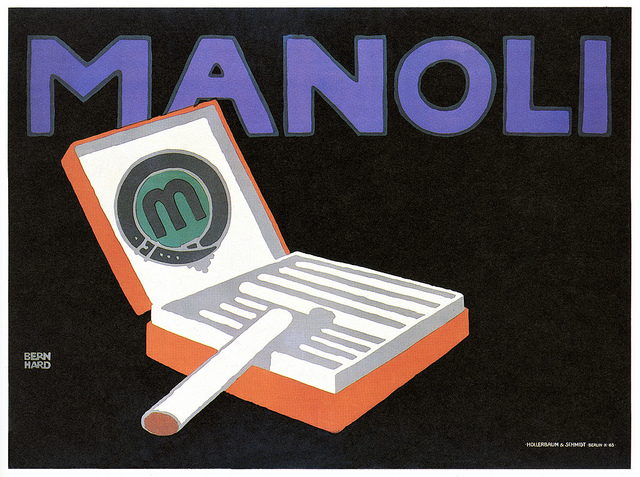
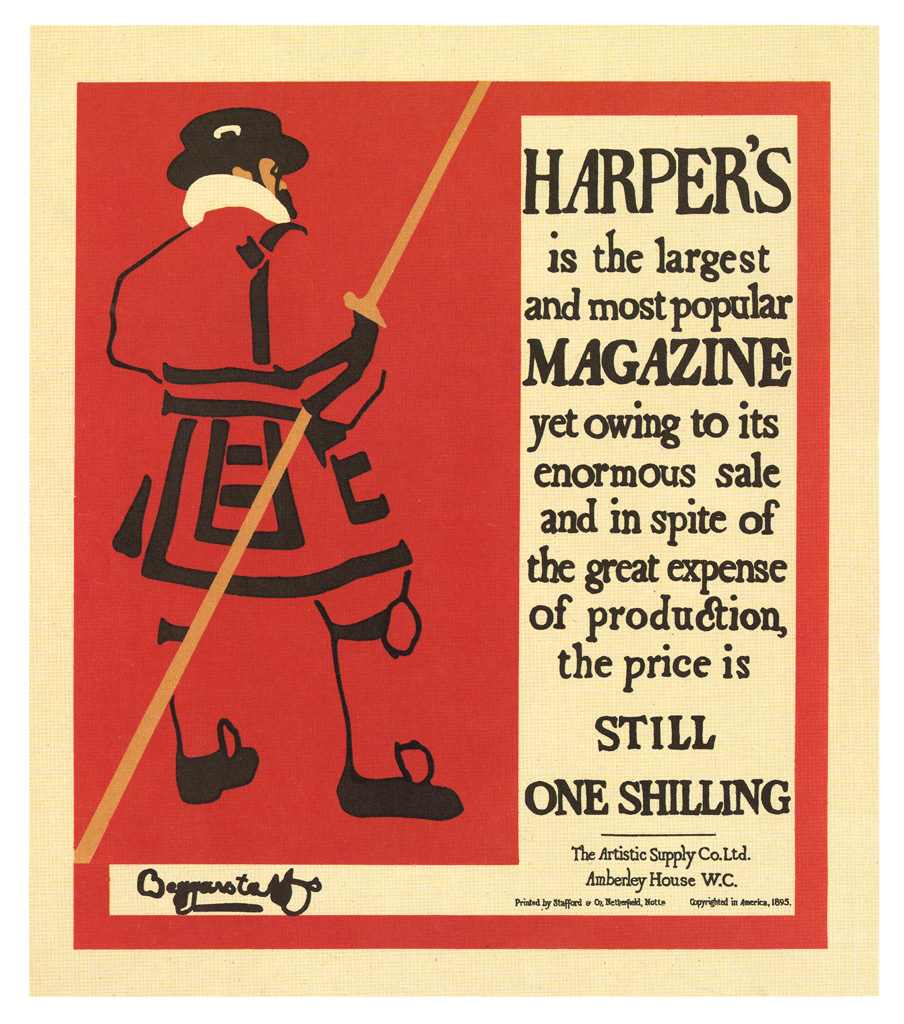
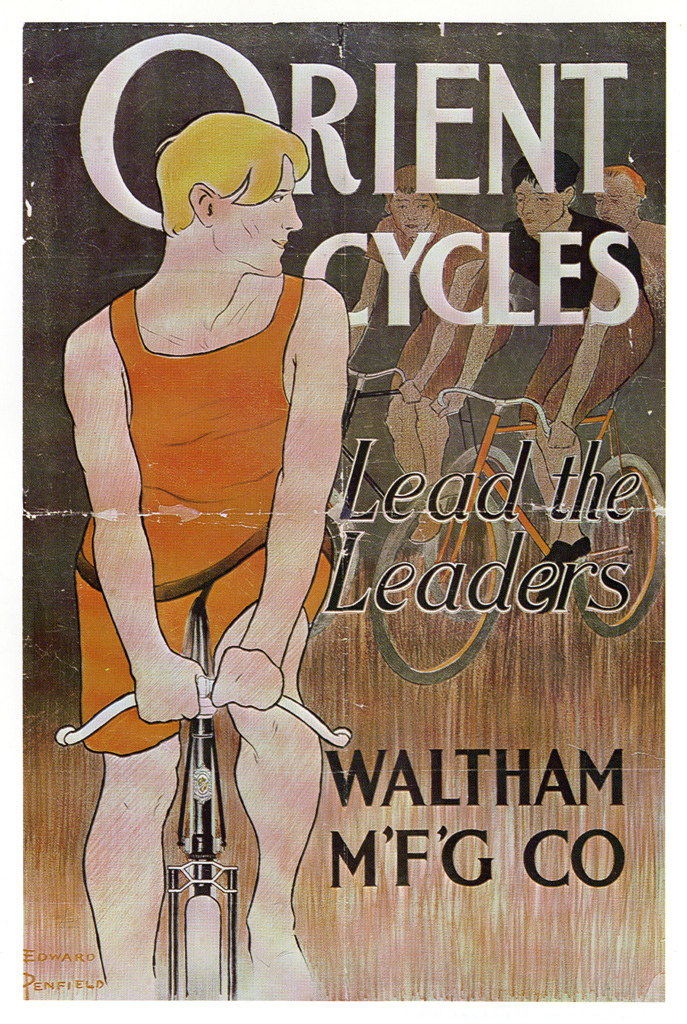
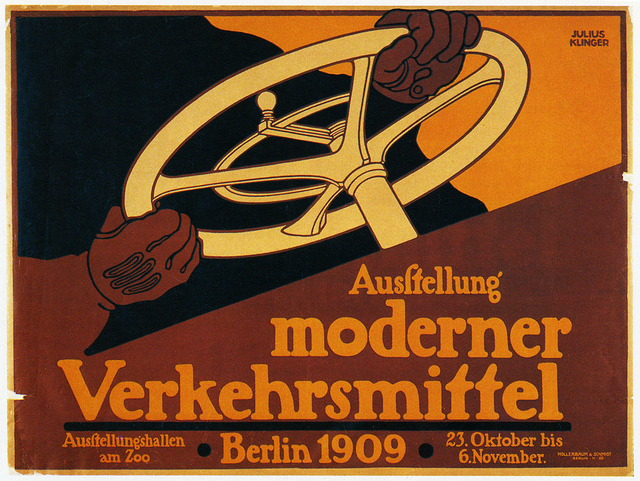
Europe at the end of the nineteenth century and beginning of the twentieth: what a time and place to be alive. Or rather, what a time and place to be alive for people in the right countries and, more importantly, of the right classes, those who saw a new world taking shape around them and partook of it with all possible heartiness. The period between the end of the Franco-Prussian War in 1871 and the outbreak of World War I in 1914, best known by its French name La Belle Époque, saw not just peace in Europe and empires at their zenith, but all manner of technological, social, and cultural innovations at home as well.
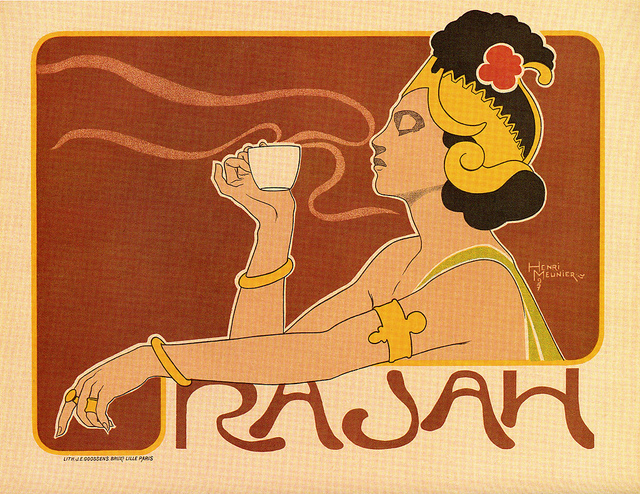
“In the late nineteenth century, lithographers began to use mass-produced zinc plates rather than stones in their printing process,” says the accompanying text. “This innovation allowed them to prepare multiple plates, each with a different color ink, and to print these with close registration on the same sheet of paper. Posters in a range of colors and variety of sizes could now be produced quickly, at modest cost.”
Like other of the most fruitful technological advancements of the era, this leap forward in poster-printing drew the attention, and soon the efforts, of artists: well-regarded illustrators and graphic designers like Alphonse Mucha, Jules Chéret, Eugène Grasset, and Henri de Toulouse-Lautrec took to the new method, and “The ‘Golden Age of the Poster’ was the spectacular result.” While many of the best-remembered posters of that Golden Age come from France, it touched the streets of every major city in western Europe as well as those of England and America, all places whose well-heeled populations found themselves newly and avidly interested in art, photography, motion pictures, magazines, bicycles, automobiles, absinthe, coffee, cigarettes, and world travel.
The companies behind all those exciting things had, of course, to advertise, but unlike in earlier times, they couldn’t settle for getting the word out; they had to use images, and the most vivid ones possible at that. They had to use them in such a way as to associate what they had to offer with the abundant spirit of the time, whether they called that time La Belle Époque, the Wilhelmine period, the late Victorian and Edwardian era, or the Gilded Age. All those names, of course, were applied only in retrospect, after it became clear how bad times could get in the twentieth century. But then, none of us ever realize we’re living through a golden age before it comes to its inevitable end; until that time, best just to enjoy it. You can enter the poster archive here.
In 2015, the Dutch animation studio Job, Joris & Marieke, got an Oscar nomination for this delightful animated short, “A Single Life.” It’s a two minute tale about how music–particularly vinyl records–can transport us to magical places. And we mean really magical places.
If you would like to support the mission of Open Culture, consider making a donation to our site. It’s hard to rely 100% on ads, and your contributions will help us continue providing the best free cultural and educational materials to learners everywhere. You can contribute through PayPal, Patreon, and Venmo (@openculture). Thanks!
Still true half a century later? Immaterial. Olivier’s use of “I think” and “almost” leaves room enough for a sort of genial, general agreement.
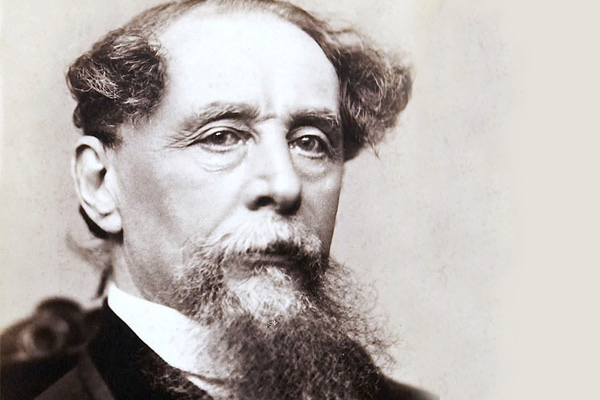
Some of the introductions give unintentionally hilarious added value, such as host Frank Craven’s attempt to contextualize a Lux Radio Theater presentation starring Orson Welles as Sydney Carton in A Tale of Two Cities excerpt. The author’s work was often published in serial form, he tells listeners:
Records tell us of how crowds thronged the wards of New York City to receive news of their favorite heroine or hero. For already, the names of Dickens’ characters were household words, as much, I imagine, as Lux Toilet Soap is a household word throughout America today, and for very much the same reason–the ability to find approval among people of all kinds of ages and every walk of life, not only among women who are anxious to preserve their loveliness but with every member of the family, young and old. Lux Toilet Soap is quick to make friends and to keep them.
How disappointed the sponsors must’ve been that in the whole of A Tale of Two Cities, there’s not a single reference to soap. (For the record, Oliver Twist has one and David Copperfield has two…)
The 24-hour playlist (the first one above) will be added to our list of Free Audio Books. If you need to download Spotify’s free software, grab it here.
In 1856, novelist George Eliot—real name Mary Anne Evans—issued a vicious critique of other women English writers in language we would expect from the most self-satisfied of misogynists, a group of people with an unqualified monopoly on the culture, but who had very little new to say on the subject. But Eliot certainly did, in “Silly Novels by Lady Novelists.” Though she couches many of her critical observations in the condescending vocabulary of a male antagonist, the language only serves to make her argument more effective. The essay, writes Kathryn Schulz, “does a remarkable number of things deftly and all at once.”
Although she is an uncommonly compassionate writer, Eliot has knife skills when she needs them, and the most obvious thing she does here is chiffonade the chick lit of her day. Yet even while castigating some women, she manages to champion women as a whole. Her chief objection to silly novels is that they misrepresent women’s real intellectual capacity; and the chief blame for them, she argues, lies not with their authors but with the culture that produced them—through inadequate education, low expectations, patronizing critics, and fear of the real deal.
The fault, she asserted, lies with the gatekeepers, the tastemakers, the lazy thinkers. Though an accomplished essayist and translator, Eliot would only publish her first novel in 1859, at the age of 37. But “Silly Novels by Lady Novelists,” writes Schulz, “traces out in negative space, the contours of a truly great novel”—one that wouldn’t arrive until fourteen years later: Middlemarch: a study of provincial life. (Read online or download in various formats here.)
The book’s first chapter introduces Dorothea Brooke, a well-off 19-year old orphan—who, writes Pamela Erens, “has dreams of doing some great work in the world” but gives her life instead to “dry humorless pedant” Casaubon—with an ironic quote from the licentious Jacobean play The Maid’s Tragedy: “Since I can do no good because a woman, / Reach constantly at something that is near it.”
As with the pen name she adopted, Eliot appropriated the armor of a male-dominated culture to bring into being some of the most staggeringly insightful writing of the time, and a beacon to other great women writers. “What do I think of Middlemarch?,” wrote Emily Dickinson, “What do I think of glory?—except that in a few instances ‘this mortal has already put on immortality.’” Virginia Woolf pronounced the book “one of the few English novels written for grown-up people.” Number twenty-one on The Guardian’s list of “The 100 Best Novels,” Middlemarch, writes Robert McCrum, exerts “an almost hypnotic power over its readers…. Today it stands as perhaps the greatest of many great Victorian novels.”
Do we have the time or the attention to read Eliot’s sprawling 900-page realist epic in the 21st century? Given that Karl Ove Knausgaard’s 3,600 page, six-part autobiographical novel, My Struggle, is one of the most lauded literary works of the past few years, perhaps we do. More specifically, in the language of many a condescending critic of today, do “Millennials” have the time and attention to read Middlemarch? At least a certain contingent of young readers has not only read the novel, but has adapted it into a seventy-episode web drama, Middlemarch: The Series—an “attempt worth watching,” writes Rebecca Mead at The New Yorker, “for its ambition as well as its charm.”
Written and directed by Yale undergraduate film student Rebecca Shoptaw, the series stars several of Shoptaw’s peers “as students at Lowick College, in the fictional town of Middlemarch, Connecticut,” and it transcribes the novel’s form into that most 21st century of mediums, the vlog. You can see the official teaser at the top of the post; watch the first episode just above, introducing Yale student Mia Fowler as Dot Brooke; and see the full series, thus far, down below. (The show has already won awards and recognition from several film festivals. See “air dates” and more on its busy Tumblr page.)
Up to now, notes Mead,Eliot’s fiction has resisted the kind of treatment given to Charlotte Brontë and Jane Austen in adaptations like “a chapter book for tweens called Jane Airhead” and the Austen-inspired Bridget Jones’s Diary and Clueless (not to mention Pride and Prejudice and Zombies). And yet, despite the daunting size, scope, and seriousness of Eliot’s novel, Middlemarch: the Series continues in this tradition of light-hearted, pop-cultural modernizations, using the same device as the award-winning Austen vlog adaptation The Lizzie Bennet Diaries and Brontë vlog adaptation “The Autobiography of Jane Eyre.”
Though it is “an impossibly tall order,” writes Mead, “to expect a Web series to approach the nuance of a nineteenth-century novel—of the nineteenth-century novel,” adaptations like Shoptaw’s don’t even attempt to do this. They express “a winning affection” for their source material, and a sense of how it still informs the very different gender identities and sexual relationships of the present. In that sense, it may be useful to think of them as, in part, working in a similar vein as another very 21st century medium: fan fiction. Would the knives-out critic Eliot approve? Impossible to say. But I dare say she might admire the ambition, creative impulses, and narrative ingenuity of Shoptaw and her cast perhaps as much as they admire her greatest work.
American guitar came of age in the fifties, with the blues, folk, country, and jazz playing of Mississippi John Hurt, Sister Rosetta Tharpe, Merle Travis, Chet Atkins, Wes Montgomery, Les Paul, and so many other incredible players who perfected the sound of Americana before it became inseparable from nostalgia and revivalism. Though it has usually been Chuck Berry who gets—or who took—most of the credit for rock and roll, and who is often enough named as a favorite influence of so many UK guitar heroes, one star British player who made his name a few years later always stuck fast to rock and roll’s deepest roots. We can hear all of those golden age players—Hurt, Tharpe, Travis, Atkins, Montgomery, Paul—in Mark Knopfler’s fingers, in some of the unlikeliest hits of the 80s, songs long on style and flashy solos, but also unquestionably rooted in roots music.
We may not have realized until we heard Knopfler’s country records just how much his Dire Straits sound grew out of acoustic music. (“Sultans of Swing” was first written on a National guitar in open tuning.) But he is, and has always been, a brilliant country and country blues player—recording with George Jones, Emmylou Harris, and Mary Chapin Carpenter and collaborating with Chet Atkins on record and on stage.
For Knopfler fans, the joy of slowly discovering the many angles in his playing, the many layers of influence and blends of tradition, constitutes much of the fun in watching him over the decades. You get an accelerated sense of the experience in the short video above, in which he discusses his favorite guitars—including the famous red Stratocaster (“my lust object as a child”) that carried him, with matching headbands, through those MTV years.
Hearing any beloved player talk about his or her guitars can be a treat in itself, but with Knopfler, each instrument offers an occasion to reveal, and effortlessly demonstrate, all of the ways his playing style developed and incorporated new techniques. As much as he learned from endless practice and from emulating his favorite players, he learned from the guitars; the tonality of the Strat “made me want to write another way.” He learned from a 1958 Les Paul that one might “get to the end of a song and have nothing left to say… but the guitar has.” Knopfler never deploys his impeccable vibrato, unique fingerpicking style, or gorgeous single notes wails just to show off—they arrive in service to the emotions of the song, and come out of the distinctive properties of each guitar. He may be the most tasteful, even restrained, of superstar rock guitarists.
Not every guitarist is as thoughtful about their instruments as Knopfler, and few are simultaneously as eloquent and genially demonstrative of their mastery of form and function. The clip at the top comes from the PBS documentary series Soundbreaking. In the 45-minute documentary, Guitar Stories, above, which we’ve featured here before, Knopfler tells the story of the six guitars that shaped his career. The host and interviewer is none other than bassist and Dire Straits co-founder John Illsley, who is as awestruck by Knopfler as any other fan—meaning not that he thinks Knopfler is superhuman or godlike, but that the guitarist is simply, unpretentiously, and unquestionably, “one of the truly great players,” a designation that both Illsley and his former bandmate realize cannot be divorced from the truly great instruments Knopfler has played.
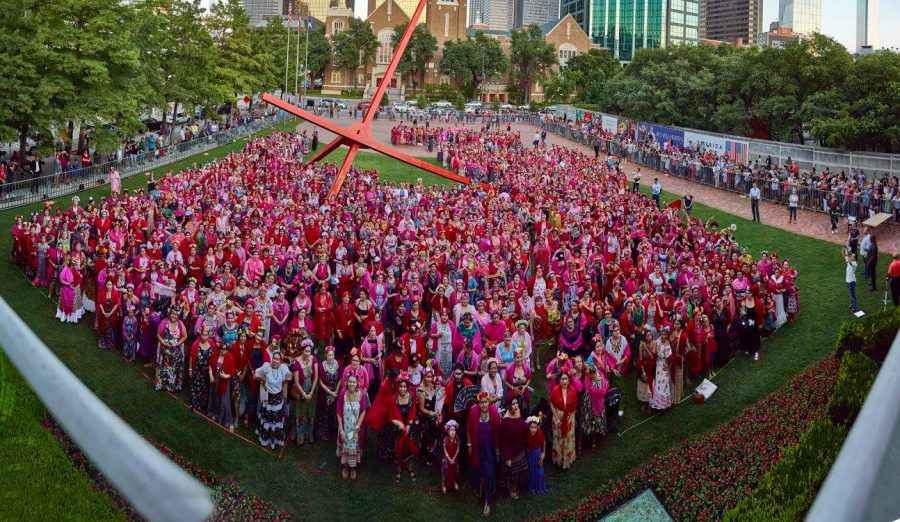
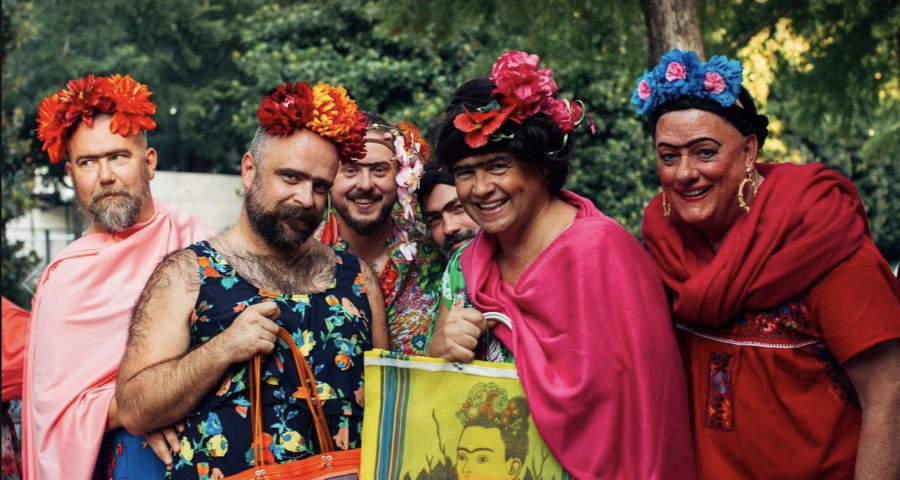
According to the rules of Frida Fest, to participate in the record attempt, individuals had to provide their own costume, and make sure their costumes included the following elements:
A unibrow drawn onto the face joining the eyebrows. This can be done with make-up or by sticking hair.
Artificial flowers worn in the hair, a minimum of three artificial flowers must be worn.
A red or pink shawl.
A flower-printed dress that extends to below the knees on all sides; the dress must not have any slits up the side.
Notes NPR, there’s “no official word yet on whether a record was set, but prior to Thursday, there didn’t appear to be another record-holder listed in the Guinness World Records.”
If you would like to support the mission of Open Culture, consider making a donation to our site. It’s hard to rely 100% on ads, and your contributions will help us continue providing the best free cultural and educational materials to learners everywhere. You can contribute through PayPal, Patreon, and Venmo (@openculture). Thanks!
“The longer I live here,” a Los Angeles-based friend recently said, “the more ‘I Love L.A.’ sounds like an unironic tribute to this city.” That hit single by Randy Newman, a singer-songwriter not known for his simple earnestness, has produced a multiplicity of interpretations since it came out in 1983, the year before Los Angeles presented a sunny, colorful, forward-looking image to the world as the host of the Summer Olympic Games. Listeners still wonder now what they wondered back then: when Newman sings the praises — literally — of the likes of Imperial Highway, a “big nasty redhead,” Century Boulevard, the Santa Ana winds, and bums on their knees, does he mean it?
“I Love L.A.“ ‘s both smirking and enthusiastic music video offers a view of Newman’s 1980s Los Angeles, but fifteen years later, he starred in an episode of the public television series Great Streets that presents a slightly more up-to-date, and much more nuanced, picture of the city. In it, the native Angeleno looks at his birthplace through the lens of the 27-mile Sunset Boulevard, Los Angeles’ most famous street — or, in his own words, “one of those places the movies would’ve had to invent, if it didn’t already exist.”
Historian Leonard Pitt (who appears alongside figures like filmmaker Allison Anders, artist Ed Ruscha, and Doors keyboardist Ray Manzarek) describes Sunset as the one place along which you can see “every stratum of Los Angeles in the shortest period of time.” Or as Newman puts it, “Like a lot of the people who live here, Sunset is humble and hard-working at the beginning,” on its inland end. “Go further and it gets a little self-indulgent and outrageous” before it “straightens itself out and grows rich, fat, and respectable.” At its coastal end “it gets real twisted, so there’s nothing left to do but jump into the Pacific Ocean.”
Newman’s westward journey, made in an open-topped convertible (albeit not “I Love L.A.“ ‘s 1955 Buick) takes him from Union Station (America’s last great railway terminal and the origin point of “L.A.‘s long, long-anticipated subway system”) to Aimee Semple McPherson’s Angelus Temple, now-gentrified neighborhoods like Silver Lake then only in mid-gentrification, the humble studio where he laid tracks for some of his biggest records, the corner where D.W. Griffith built Intolerance’s ancient Babylon set, the storied celebrity hideout of the Chateau Marmont, UCLA (“almost my alma mater”), the Lake Shrine Temple of the Self-Realization Fellowship, and finally to edge of the continent.
More recently, Los Angeles Times architecture critic Christopher Hawthorne traveled the entirety of Sunset Boulevard again, but on foot and in the opposite direction. The east-to-west route, he writes, “offers a way to explore an intriguing notion: that the key to deciphering contemporary Los Angeles is to focus not on growth and expansion, those building blocks of 20th century Southern California, but instead on all the ways in which the city is doubling back on itself and getting denser.” For so much of the city’s history, “searching for a metaphor to define Sunset Boulevard, writers” — or musicians or filmmakers or any number of other creators besides — “have described it as a river running west and feeding into the Pacific. But the river flows the other direction now.”
Los Angeles has indeed plunged into a thorough transformation since Newman first simultaneously celebrated and satirized it, but something of the distinctively breezy spirit into which he tapped will always remain. “There‘s some kind of ignorance L.A. has that I’m proud of. The open car and the redhead and the Beach Boys, the night just cooling off after a hot day, you got your arm around somebody,” he said to the Los Angeles Weekly a few years after taping his Great Streets tour. ”That sounds really good to me. I can‘t think of anything a hell of a lot better than that.”
The instrument in the video above dates back to 1566.
Meaning, if it were the patriarch of a human family, siring musical sons every 20 to 25 years, it would take more than 10 generations to get to composer Robert Schumann, born in 1810.
Were you to peek at the back, you’d see traces of King Charles IX of France’s coat of arms. The Latin motto Pietate et Justitia–piety and justice–still lingers on its rib.
It was constructed by the master creator, Andrea Amati, as part of a large set of stringed instruments, of which it is one of four survivors of its size and class.
After leaving Charles’ court, the violin spent time in the Henry Hottinger collection, which was eventually acquired by the Wurlitzer Company in New York. In 1966, it was donated to Cremona, Italy, Amati’s birthplace and home to an international school of violin making.
Venerable unto the point of pricelessness, from time to time it is taken out and played–to wondrous effect–by world class violinists. It’s tempting to keep anthropomorphizing, so as to wonder if it might not prefer a forever home with a gifted young musician who would take it out and play it every day. I know what a children’s author would say on that subject.
You can view Amati’s Charles IX violin in more detail here, but why stop there, when you can also like it on Facebook!
Image courtesy of The Victoria and Albert Museum
On any given weekend, in any part of the state where I live, you can find yourself standing in a hall full of knives, if that’s the kind of thing you like to do. It is a very niche kind of experience. Not so in some other weapons expos—like the Arms and Armor galleries at the Metropolitan Museum of Art, where everyone, from the most warlike to the staunchest of pacifists, stands in awe at the intricate ornamentation and incredibly deft craftsmanship on display in the suits of armor, lances, shields, and lots and lots of knives.
We must acknowledge in such a space that the worlds of art and of killing for fame and profit were never very far apart during Europe’s late Medieval and Renaissance periods. Yet we encounter many similar artisanal instruments from the time, just as finely tuned, but made for far less belligerent purposes.
As Maya Corry of the Fitzwilliam Museum in Cambridge—an institution with its own impressive arms and armor collection—comments in the video above (at 2:30), one unusual kind of 16th century knife meant for the table, not the battlefield, offers “insight into that harmonious, audible aspect of family devotions,” prayer and song.
From the collection of the Fitzwilliam Museum, in Cambridge. (Johan Oosterman )
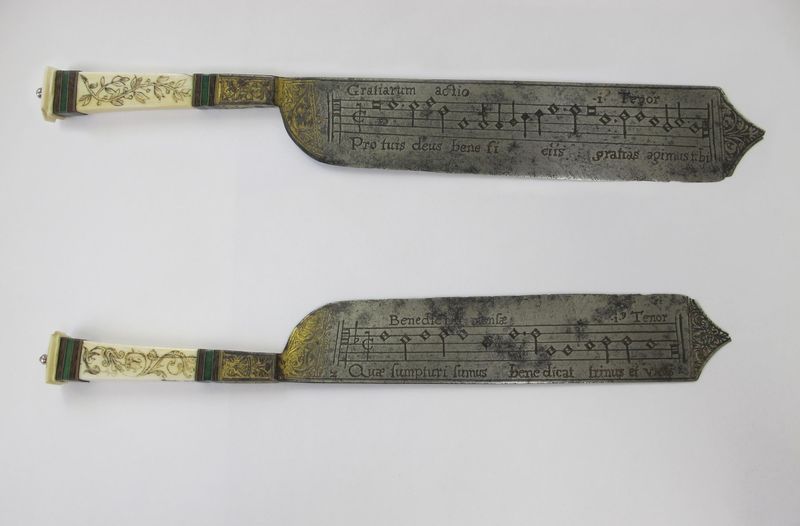
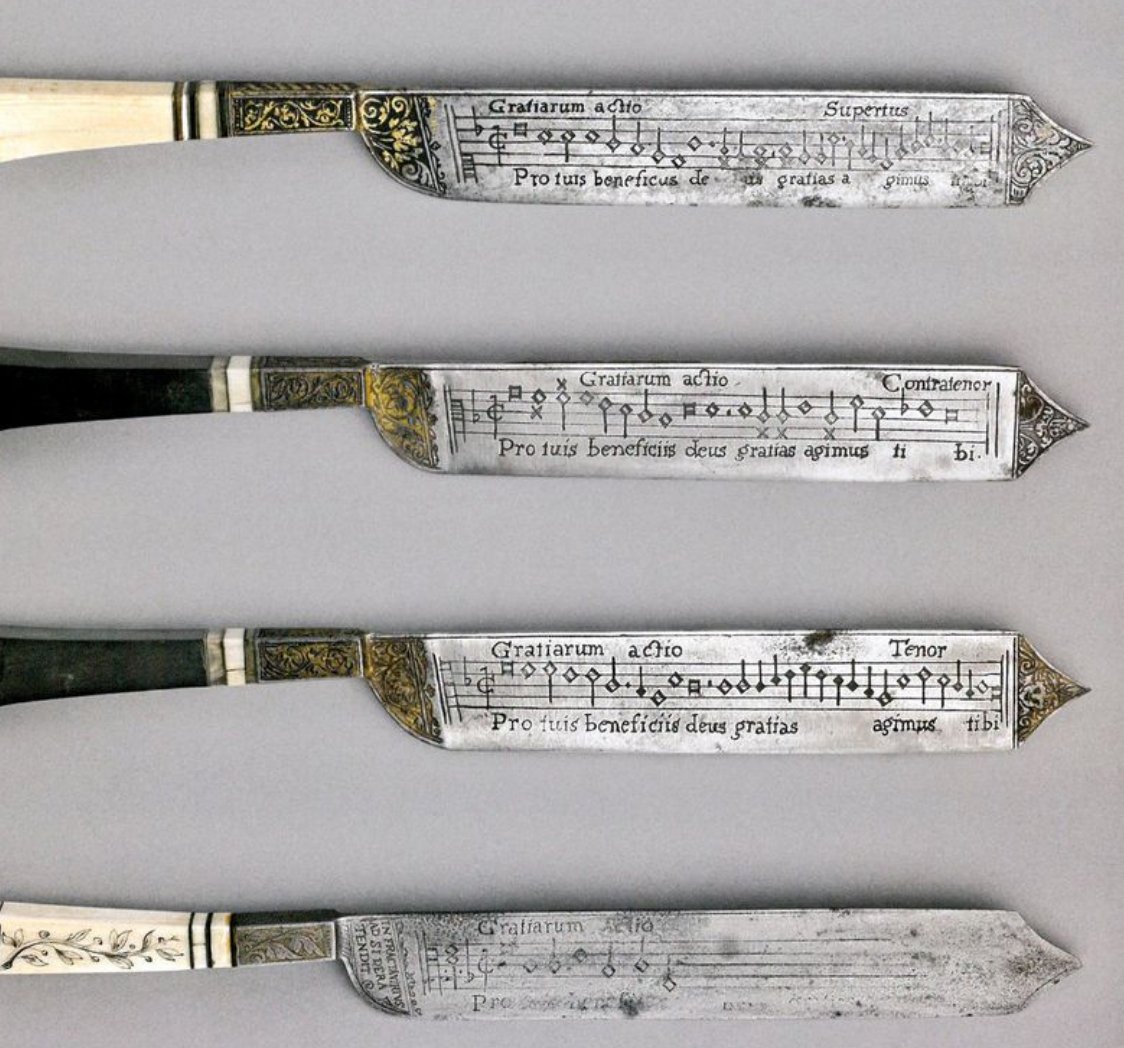
These knives, which have musical scores engraved in their blades, brought a table together in singing their prayers, and may have been used to carve the lamb or beef in their “striking balance of decorative and utilitarian function.” At least historians think such “notation knives,” which date from the early 1500s, were used at banquets. “The sharp, wide steel would have been ideal for cutting and serving meat,” writes Eliza Grace Martin at the WQXR blog, “and the accentuated tip would have made for a perfect skewer.” But as Kristen Kalber, curator at the Victoria and Albert Museum, which houses the knives at the top of the post, tells us “diners in very grand feasts didn’t cut their own meat.” It’s unlikely they would have sung from the bloody knives held by their servants.
The knives’ true purpose “remains a mystery,” Martin remarks, like many “rituals of the Renaissance table.” Victoria and Albert Museum curator Kirstin Kennedy admits in the video above that “we are not entirely sure” what the “splendid knife” she holds was used for. But we do know that each knife had a different piece of music on each side, and that a set of them together contained different harmony parts in order to turn a roomful of diners into a chorus. One set of blades had the grace on one side, with the inscription, “the blessing of the table. May the three-in-one bless that which we are about to eat.” The other side holds the benediction, to be sung after the dinner: “The saying of grace. We give thanks to you God for your generosity.”
Common enough verbiage for any household in Renaissance Europe, but when sung, at least by a chorus from the Royal College of Music, who recreated the music and made the recordings here, the prayers are superbly graceful. Above, hear one version of the Grace and Benediction from the Victoria and Albert Museum knives; below, hear a second version. You can hear a captivating set of choral prayers from the Fitzwilliam Museum knives at WQXR’s site, recorded for the Fitzwilliam’s “Madonnas & Miracles” exhibit. We are as unlikely now to encounter singing kitchen knives as we are to run into a horse and rider bearing 100 pounds of finely-wrought wearable steel sculpture. Such strange artifacts seem to speak of a strange people who valued beauty whether carving up the main course or cutting down their enemies.
The story is well known. Syd Barrett, spiralling into depression, “hallucinations, disorganized speech, memory lapses, intense mood swings, and periods of catatonia,” left Pink Floyd in April, 1968, before recording two solo albums (The Madcap Laughs and Barrett) and then fading into obscurity. Above you can watch a delightful, new animation of “Effervescing Elephant,” a song Barrett first wrote during his teenage years and recorded in 1970. The new “retro-style” animation comes from Yoann Hervo. Below, find another animated take on “Effervescing Elephant,” this one from Steve Bobinksi.
If you would like to support the mission of Open Culture, consider making a donation to our site. It’s hard to rely 100% on ads, and your contributions will help us continue providing the best free cultural and educational materials to learners everywhere. You can contribute through PayPal, Patreon, and Venmo (@openculture). Thanks!
We're hoping to rely on loyal readers, rather than erratic ads. Please click the Donate button and support Open Culture. You can use Paypal, Venmo, Patreon, even Crypto! We thank you!
Open Culture scours the web for the best educational media. We find the free courses and audio books you need, the language lessons & educational videos you want, and plenty of enlightenment in between.