Whether we lived through them as kids or as grown-ups, few of us feel sure about whether we miss the 1990s. No generation did more to define the decade before last, at least in the West, than the unmoored, irony-loving, at once deeply cynical and deeply earnest “Generation X” that succeeded the wealthier, more influential Baby Boomers. No writer did more to define that generation than Douglas Coupland, the Canadian novelist, visual artist, and seer of the immediate future whose 1991 literary debut Generation X: Tales for an Accelerated Culture gave the cohort its name. There he wrote of the twentysomethings who lived through the 1990s definitely not as kids, yet, frustratingly, not quite as grown-ups, coming haplessly to grips in the margins of a human experience that an advanced civilization had already begun detaching from supposed expectations — jobs, houses, stability, tight connection between mind and body, unquestionably “real” lived experience — of generations before.
Coupland, also a prolific sculptor (next time you get to his hometown of Vancouver, do visit the somehow always striking Digital Orca), writer of the film Everything’s Gone Green, star of the documentary Souvenir of Canada, and now the developer of a snoring-assistance smartphone app, knows a thing or two about switching media. Five years after breaking out with Generation X, he also made Close Personal Friend, the not-quite-categorizable short about technology, memory, and identity at the top of the post. In what plays as a cross between a Chris Marker-style essay film and a middle-period MTV music video, Coupland continues his career-long rumination about our “accelerated culture” and the fascinatingly empowered yet compromised human beings to which it gives rise. What does it mean in this modern, hypermediated context, he wonders, that we now wonder whether we actually have lives? “Not having a life is so common,” he says. “It’s almost become the norm. […] People just aren’t getting their year’s worth of year anymore.”
Given our culture’s further acceleration since he spoke those words in 1996 — the world wide web as we know it having got its start just three years before — Coupland’s thoughts on the subject, whether expressed in fiction, through sculpture, or onscreen, still sound plenty relevant. Close Personal Friend, with its voidlike backdrops, video-blender editing, and scattered clips of wholesome midcentury Americana, bears the aesthetic mark of its era. Coupland’s faintly ominous talk of “FedEx, Prozac, microwave ovens, and fax machines” also time-stamps it technologically and culturally. But the observations have carried through, only growing sharper, to his latest work. Asked to imagine the “two dominant activities” of life twenty years hence, the Coupland of 1996 names “going shopping and going to jail,” pursuits he sees as now merged in his essay collection published last year, Shopping in Jail. Just above, we have a half-hour conversation between Coupland and Q host Jian Ghomeshi about his even newer book, a study of misanthropy in novel form called Worst. Person. Ever. In the talk, he cites “I miss my pre-internet brain,” a slogan he made up that has gained much traction in recent years. But does he really? “No,” he admits. “It was boring back then!” Close Personal Friend will be added to our collection of 675 Free Movies Online.
Related Content:
Watch Free Online: Richard Linklater’s Slacker, the Classic Gen‑X Indie Film
The Always-NSFW Kevin Smith and Jason Mewes Catch Up in Jay and Silent Bob Get Old Podcast
Colin Marshall hosts and produces Notebook on Cities and Culture and writes essays on cities, language, Asia, and men’s style. He’s at work on a book about Los Angeles, A Los Angeles Primer. Follow him on Twitter at @colinmarshall or on Facebook.
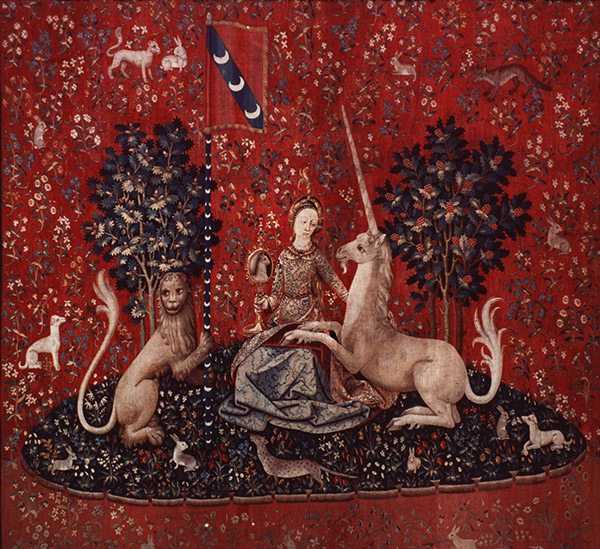 The Getty also dropped into the archive another 4,930 images of European and American tapestries dating from the late 15th through the late 18th centuries.