Over at Escape Into Life, Luke Grundy directs us to a marvelous short film that is as deceptively simple as its title would suggest. At first viewing we thought the effect of LA filmmaker Douglas Burgoff’s “Animals” should be credited mostly to the haunting music by famed British composer Michael Nyman. But then we watched it again with the sound off, and we were just as impressed as before, if not more so. Just take a look at the series of close-ups on the monkey’s face between the 1:54 and 2:14 marks.
Sheerly Avni is a San Francisco-based arts and culture writer. Her work has appeared in Salon, LA Weekly, Mother Jones, and many other publications. You can follow her on twitter at @sheerly.
As for Amis, he has never worked hard to make friends, staking out controversial positions on Muslims and euthanasia and then, earlier this year, going out of his way to mock writing for children: “People ask me if I ever thought of writing a children’s book. I say, if I had a serious brain injury I might well write a children’s book, but otherwise the idea of being conscious of who you’re directing the story to is anathema to me, because, in my view, fiction is freedom and any restraints on that are intolerable.” You get the drift.
But good writers rarely win popularity contests. And few will deny that Mailer and Amis have put their stamp on the Anglo-American literary scene. So here you have it — Martin Amis interviewing Norman Mailer in 1991, upon the release of Mailer’s sprawling 1400-page CIA epic, Harlot’s Ghost. The first clip (above) starts with the novel, the remaining parts move in many different directions. The writing life, writing about homosexuality, the state of capitalism, America after the Cold War, Mailer’s legacy — it’s part of the 40 minute conversation. Find Part 2, Part 3, and Part 4.
You can find this video permanently listed in our new collection of 235 Cultural Icons.
A few days ago, The Guardian published its list of the 100 Greatest Non-Fiction Books of all time. The collection spans biography, art, philosophy, history and several other hefty categories, and, for the most part, there’s not much for anyone seeking light summer reading, unless you’re the sort who regularly brings Kant, Hume, Herodotus, and Pepys down to the seaside. (Note: The Guardian published Friday The Best Holiday Reads, which goes heavy on vacation-worthy fiction.)
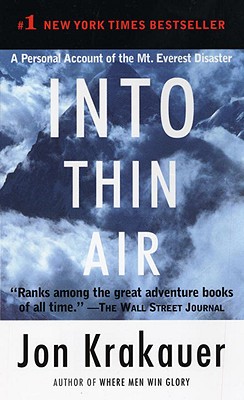
Several years ago we asked you to tell us about the books that changed your life, and you delivered. (Your first choice by a wide margin was George Orwell’s 1984.) This time around, we want to hear your favorite non-fiction books, and we’ll both post your choices and — of course — let you know if they’re available for free online.
We’ll kick it off with a few personal favorites:
The Possessed, by Elif Batuman. A delightful reminiscence by a recovering graduate student, in which she treats, among other things, Russian novelists, doomed love affairs, academic conferences, Turkic poetry, and mostly, the pleasures and perils of loving books just a little bit too much.
The Best American Sports Writing of the Century, edited by David Halberstam and Glenn Stout. You don’t even need to know or care about sports, because like all great literature, these essays aren’t really just about what they’re about. The subject may be sports, but the stories are America.
Your turn! Feel free to add your favorites to the comments section below…
Sheerly Avni is a San Francisco-based arts and culture writer. Her work has appeared in Salon, LA Weekly, Mother Jones, and many other publications. You can follow her on twitter at @sheerly.
We didn’t have cell phones [during my days at Northwestern]. If you made plans to meet someone in a snow storm and they didn’t show up, you just assumed that they were devoured by wolves and went on with your life. And we couldn’t text, and we certainly couldn’t sext each other. If you wanted to send someone a picture of your private parts, you had to fax it. That’s how Kinko’s got its name!
Best Advice:
In my experience, you will truly serve only what you love, because service is love made visible. If you love friends, you will serve your friends. If you love community, you will serve your community. If you love money, you will serve your money. If you love only yourself, you will serve only yourself and you will have only yourself… Try to love others and serve others, and hopefully find those who will love and serve you in return…
Clarence Clemons, the saxophonist who played alongside Bruce Springsteen for four decades, passed away today at 69. The Big Man and his sound will be missed.
Above, a simple mournful reminder of what we’ll be going without: First up, a soulful solo from “Jungleland,” performed in Milwaukee back in March 2008. And then a return to the early days, a youthful performance of “Thunder Road” recorded at the Capitol Theatre, Passaic, NJ (1978). Clarence takes over at the 6:12 mark.
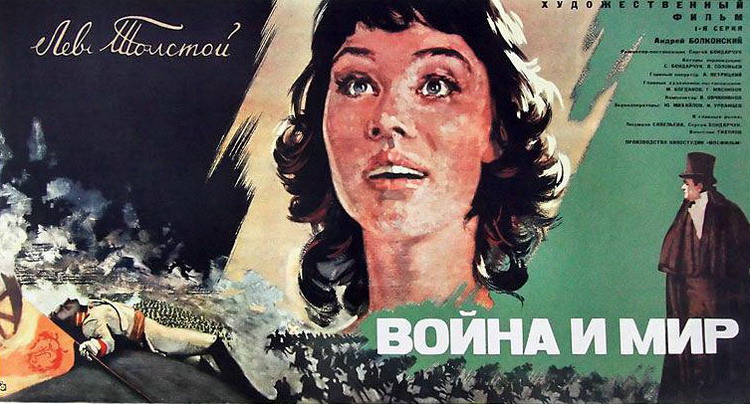
It’s hard to do cinematic justice to any good novel, let alone the greatest of Russia’s many great novels, Leo Tolstoy’s War & Peace. But Soviet director Sergei Bondarchuk somehow managed to pull it off. Reviewing Bondarchuk’s film back in 1969, a young Roger Ebert wrote:
“War and Peace” is the definitive epic of all time. It is hard to imagine that circumstances will ever again combine to make a more spectacular, expensive, and — yes — splendid movie. Perhaps that’s just as well; epics seem to be going out of favor, replaced instead by smaller, more personal films. Perhaps this greatest of the epics will be one of the last, bringing the epic form to its ultimate statement and at the same time supplying the epitaph.
No corners were cut, and no expenses spared, in making the film. Indeed, the film (available on DVD here) was made “at a cost of $100,000,000, with a cast of 120,000, all clothed in authentic uniforms, and the Red Army was mobilized to recreate Napoleon’s battles exactly (it is claimed) as they happened.” What’s more, 35,000 costumes were made for the production, and many Soviet museums contributed artifacts for the production design. That’s staggering, even by today’s standards.
Released in four parts between 1965 and 1967, the Academy Award-winning film runs more than seven hours and you can now find it playing on YouTube. You can watch Part 1 here, and here you have Part 2, Part 3 and Part 4. And if you need subtitles, click CC at the bottom of the videos. The film is, of course, listed in our collection of Free Movies Online.
Arkansas-born artist Shea Hembrey kicks off his TED talk by confessing to a hick childhood in which he and his sister “would compete to see who could eat the most squirrel brains.” That modest joke sets the stage for his introduction of Seek, a project Hembrey conceived in response to his disappointment with several exhibits of contemporary art in Europe, including the Venice Biennale. Finding much of the work he encountered too obtuse and inaccessible, Hembrey decided to create an international biennial of his own, featuring the 100 most inspiring artists he could find.
The twist, of course, is that all 100 artists (and artworks) were created by Hembrey himself, in strict accordance with two personal criteria: First, the work must be something he could explain to his grandma in less than five minutes; next, its process must engage the three “H’s” of head, heart, and hand.
All 100 pieces feature distinct materials, character and craft, and taken together they provide an impressive showcase for Hembrey’s humor and virtuosity. But that grandma of his had better be hiding a degree in semiotics, or at least an old copy of the The Postmodern Condition, because the success of Seek’s joke is largely dependent on our knowledge of the world it lampoons. And for all the determined folksiness of his manifesto, the position Hembrey stakes out — somewhere between parody and homage — would not be unfamiliar to the curators of the Venice Biennale.
Sheerly Avni is a San Francisco-based arts and culture writer. Her work has appeared in Salon, LA Weekly, Mother Jones, and many other publications. You can follow her on twitter at @sheerly.
What do you get for the father who has everything? How about a healthy dose of canonical resentment, in the form of Sylvia Plath’s most famous poem, read by Plath herself, from our list of Cultural Icons?
Or, if you’d prefer something that says “I love you” with a little less rancor, you might want to go with a video that’s guaranteed to make him smile.
Sheerly Avni is a San Francisco-based arts and culture writer. Her work has appeared in Salon, LA Weekly, Mother Jones, and many other publications. You can follow her on twitter at @sheerly.
In 2005, Vice President Dick Cheney personally engineered a loophole in the U.S. energy bill exempting companies that use an oil- and gas-drilling procedure known as hydraulic fracturing, or “fracking,” from regulation under the Safe Drinking Water Act. As a result, tons of diesel fuel and assorted chemicals–some of them toxic, like benzyne–are injected at high pressure into the earth at the sole discretion of the companies doing the injecting. One of the chief beneficiaries of Cheney’s string-pulling is the company that invented the procedure, Halliburton, which employed Cheney as chairman and CEO just prior to his becoming vice president. (A coincidence?)
In the wake of the Halliburton Loophole, as it has come to be known, there have been a growing number of water pollution cases, from Pennsylvania to Colorado, associated with fracking. Some of those cases were documented in last year’s Sundance Film Festival award-winning documentary, Gasland, by Josh Fox, who said in a PBS interview, “I could take a car battery and throw it in the watershed and go to federal prison, but these guys can take the same chemicals and inject it by the thousands of gallons, and they’re exempt. It makes no sense.”
It’s a serious issue involving two of America’s vital interests–the need for energy and the need for safe drinking water–but a group of journalism students in New York University’s Studio 20 master’s program, in association with the public-interest journalism group ProPublica, has taken a light-hearted approach, creating a music video to raise awareness of fracking. It’s called “My Water’s on Fire Tonight (The Fracking Song).” The purpose of the project, according to group leader David Holmes, is to encourage people to read ProPublica’s reporting on the issue. “We were concerned with building a better entryway into that investigation,” Holmes told Poynter.org, “and we figured a song would be the perfect way to do it–especially since it’s called fracking.”
If you were stuck somewhere far away from yesterday’s lunar eclipse, here’s some consolation courtesy of NASA. The Scientific Visualization Studio at the Goddard Space Flight Center has compiled this two and a half minute video from over a year’s worth of data recorded by the Lunar Reconnaissance Orbiter (LRO), which has been orbiting the moon at 50 kilometers above its surface for over a year.
The results are pretty spectacular, and might render the pain of missing a chance to watch the moon turn red a little more bearable, especially for all you heartbroken Cancers (we’ll get through this.)
Sheerly Avni is a San Francisco-based arts and culture writer. Her work has appeared in Salon, LA Weekly, Mother Jones, and many other publications. You can follow her on twitter at @sheerly.
The New York Times has posted A.O. Scott’s 3‑minute look back at the 1929 short film Un Chien Andalou. Scott describes the surrealist classic, a collaboration between painter Salvador Dalí and a very young first-time filmmaker Luis Buñuel, as an “old dog with an endless supply of new tricks.” The short’s procession of seemingly absurd, unconnected images, he adds, does not follow the logic of narrative but rather the “logic of dreams.”
Even though its most famous (or infamous) images — a severed hand, a hand covered with ants, and most finally a hand slicing into a woman’s eyeball with a razor blade — seem less shocking now than they did 80 years ago, Un Chien Andalou is still a pleasure. Our reality has changed since the 20s. Our dreams, less so.
You can watch Un Chien Andalou in its entirety, along with L’Âge d’Or, another Buñuel/Dalí production, in our collection of Free Online Movies. But proceed with caution: About 25 years ago, I slipped a copy into the family VCR, expecting a cute cartoon about an Andalusian dog. I’m still recovering.
Sheerly Avni is a San Francisco-based arts and culture writer. Her work has appeared in Salon, LA Weekly, Mother Jones, and many other publications. You can follow her on twitter at @sheerly.
We're hoping to rely on loyal readers, rather than erratic ads. Please click the Donate button and support Open Culture. You can use Paypal, Venmo, Patreon, even Crypto! We thank you!
Open Culture scours the web for the best educational media. We find the free courses and audio books you need, the language lessons & educational videos you want, and plenty of enlightenment in between.