Back in the early 1990s, while most of us were still trying to wrap our heads around this new thing called the internet (don’t miss this amusing bit), NPR’s Science Friday started pushing the envelope and hosting the first internet-based radio talk show. This marked the first time that listeners could “phone into” a program via the web and talk together – in this case about the creative uses of this emerging technology. The broadcast, which singlehandedly brought the internet to a crawl, has now resurfaced online. You can listen below (or here).
Another chapter from America’s long history of incivility. Today, we rewind the videotape to December 1971, when Gore Vidal (already known for his televised spat with William F. Buckley) got into a verbal brawl with the always mercurial (and, on this occasion, sauced) novelist Norman Mailer. What the television audience sees is just the tip of the iceberg. Back in the greenroom, Mailer actually headbutted Vidal, taking revenge for a negative review that Vidal published in the New York Review of Books that previous summer. (Slate has more on this.) Cavett navigated the whole scene rather remarkably, as you’ll see. But still, almost 40 years later, he mulls over the difficulty of this one interview (and here again), even though many others (take for example this bit with Sly Stone) were no small challenge…
RSA has rolled out its latest animated video, and it’s a good one. This time we have Steven Pinker, the famed Harvard linguist and cognitive scientist, trying to make sense of innuendo. Why do we often say things in veiled terms, especially when everyone knows what’s really being said? Pinker breaks it all down, and explains how language provides the grease that lubricates everyday social relationships.
Last summer, NYU announced that it will join the open courseware movement by making free courses available online, all in video. Fast forward several months, and you can now see the first fruits of NYU’s labor.
The Open Education pilot features four courses, the first of ten courses that will eventually appear online.
History of New York City: A Social History – — iTunes Video –YouTube – Web Site – Prof. Daniel Walkowitz
American Literature I: Beginnings to Civil War – iTunes — YouTube – Prof. Cyrus Patell
Introduction to Sociology – Web Site – Prof. Harvey Molotch
Genomes and Diversity – Web Site – Prof. Mark Siegal
You can profit from these courses no matter where you live, and the same applies to NYU students. NYU now operates campuses across the globe, from Argentina to Abu Dhabi, to Singapore and soon Shanghai. And the hope is these students can all participate in a common curriculum. Hence a reason why NYU put these courses online.
In 2010, the folks who publish the Macmillan Dictionary launched the ‘What’s your English?’ campaign. They then spent a good year traveling across the globe, visiting nations where English is spoken, and asking experts and everyday speakers to talk about their regional dialects. The United States, Australia, Ireland, Scotland and Canada were obvious stops. But the tour also swept through India, Russia, Brazil, China, Mexico and beyond. Now, to cap things off, Macmillan has posted a “rap battle” between British and Canadian English, featuring “Baba Brinkman” and hip hop emcee “Professor Elemental.” Get the lyrics/script here. H/T Metafilter.
A new NASA breakthrough lets us see the sun in a 360 degree, panoramic view. The upshot? Better space weather reports coming our way. The video from NASA’s YouTube channel has all the good details …
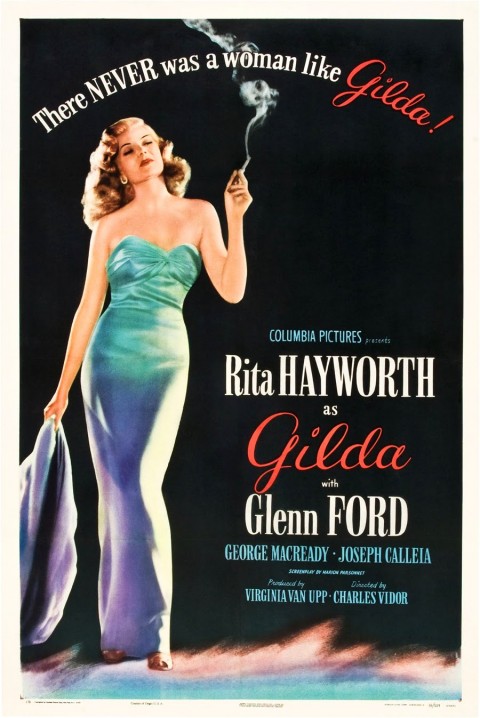
During the 1940s and 50s, Hollywood entered a “noir” period, producing riveting films based on hard-boiled fiction. These films were set in dark locations and shot in a black & white aesthetic that fit like a glove. Hardened men wore fedoras and forever smoked cigarettes. Women played the femme fatale role brilliantly. Love was the surest way to death. All of these elements figured into what Roger Ebert calls “the most American film genre” in his short Guide to Film Noir. (Also find 23 noir films right here.)
Next Monday, the long-running American game show, Jeopardy!, will air a tournament of champions, pitting its two biggest winners, Ken Jennings and Brad Rutter, against Watson, IBM’s newest supercomputer. And it will provide an occasion to answer an important question: Can computers understand the subtleties of language? Can they answer questions when they’re posed in less than straightforward ways? When, for example, the questions use wordplay and puns? IBM worked on the project for four years, and the early indications suggest that computers can undoubtedly master these subtleties. (Just watch this Watson match against less accomplished Jeopardy! players.) This article does a good job of explaining the fairly staggering things happening on the backend of the new IBM computer, and how this research might shape the future of computing. The Watson/human faceoff begins next Monday, with two matches taking place over three days. Once video becomes available, as it inevitably will, we will tweet it on our ever-flowing Twitter stream.
Since 2007, Michael Wesch, a Kansas State University anthropologist, has released a series of viral videos interrogating the ways in which new web technologies shape human communication and interactions with information. First came The Machine is Us/ing Us, then Information R/evolution and An Anthropological Introduction to YouTube. Now he’s back with a new video called “Rethinking Education,” a montage that pulls together sound bites of thought leaders (Tim O’Reilly, Yochai Benkler, Brewster Kahle, Ray Kurzweil, etc.) describing how technology is altering the broader educational landscape…
If I have this right, you’re looking at the dripping, flowing art of Holton Rower, a New York-based artist, who also happens to be the grandson of Alexander Calder. The film itself was directed and edited by Dave Kaufman. Enough said, I will let you sit back and watch gravity, paint and Holton do their thing…
Sophocles and Aeschylus may be spinning in their graves. Or, who knows, they may be taking some delight in this bizarre twist on the Oedipus myth. Running eight minutes, Jason Wishnow’s 2004 film puts vegetables in the starring roles. One of the first stop-motion films shot with a digital still camera, Oedipus took two years to make with a volunteer staff of 100. But the hard work paid off. The film has since been screened at 70+ film festivals and was eventually acquired by the Sundance Channel. Separate videos show you the behind-the-scenes making of the film, plus the storyboards used during production.
We're hoping to rely on loyal readers, rather than erratic ads. Please click the Donate button and support Open Culture. You can use Paypal, Venmo, Patreon, even Crypto! We thank you!
Open Culture scours the web for the best educational media. We find the free courses and audio books you need, the language lessons & educational videos you want, and plenty of enlightenment in between.