Animated Video Shows Curiosity, NASA’s Mars Rover, in Dramatic Action

In late Novem­ber, NASA’s Curios­i­ty, the world’s biggest extrater­res­tri­al rover, began rock­et­ing toward Mars (see pho­tos of the launch here) in search of any hint that the red plan­et might have pro­vid­ed a home for micro­scop­ic life. The Curios­i­ty will even­tu­al­ly reach Mars in August after cov­er­ing 345 mil­lion miles. Ear­li­er this year, an artist released a rather dra­mat­ic ani­ma­tion depict­ing key moments in the mis­sion — the voy­age, the land­ing (don’t miss this part!), the explo­ration, and all of the rest. It’s anoth­er can­di­date for our col­lec­tion of Great Sci­ence Videos.

via Coudal.com

by | Permalink | Make a Comment ( 1 ) |

Miniatur Wunderland: The World’s Largest Model Railroad

The con­struc­tion began in the year 2000, and over the years, Miniatur Wun­der­land, locat­ed in Ham­burg, Ger­many, has staked its claim as the largest mod­el rail­way in the world. Watch as you take a ride across the sev­en sec­tions: Harz, the fic­ti­tious city of Knuffin­gen, the Alps and Aus­tria, Ham­burg, Amer­i­ca, Scan­di­navia, and Switzer­land.

As the video attests, it took more than 500,000 work­ing hours to cre­ate this mas­sive minia­ture world. The most recent addi­tion is the Knuffin­gen air­port, locat­ed on 150 square meters, and boast­ing 40 air­planes that can taxi, take off, and land.

Miniatur Wun­der­land is con­stant­ly evolv­ing: the final phase of the project is slat­ed to be com­plet­ed in 2020, by which time the mod­el area will grow to near­ly 25,000 square feet. No won­der Miniatur Wun­der­land is Ham­burg’s most pop­u­lar attrac­tion.

via Giz­mo­do

Eugene Buchko is a blog­ger and pho­tog­ra­ph­er liv­ing in Atlanta, GA. He main­tains a pho­to­blog, Eru­dite Expres­sions, and writes about what he reads on his read­ing blog.

Crowded House: How the World’s Population Grew to 7 Billion People

This fall, the world’s pop­u­la­tion reached sev­en bil­lion. A sober­ing thought. How did we get to this point? Pro­duc­er Adam Cole and pho­tog­ra­ph­er Mag­gie Star­bard of Nation­al Pub­lic Radio have put the world’s accel­er­at­ing pop­u­la­tion growth in per­spec­tive in a two-and-a-half minute video, above.

In those two and a half min­utes, 638 babies will be born world­wide, accord­ing to sta­tis­tics from the Unit­ed States Cen­sus Bureau, and 265 peo­ple will die. That’s a net gain of 373 peo­ple, just while you watch the film. The biggest growth, accord­ing to NPR,  is hap­pen­ing in sub-Saha­ran Africa, where access to fam­i­ly plan­ning is low and infant mor­tal­i­ty rates are high.

It may seem counter-intu­itive that pop­u­la­tion growth rates are high where infant sur­vival rates are low, but as Swedish glob­al health expert Hans Rosling put it dur­ing a recent TED talk, “Only by child sur­vival can we con­trol pop­u­la­tion growth.” Because pop­u­la­tion growth and infant mor­tal­i­ty rates are both cor­re­lat­ed to pover­ty rates, he argues, elim­i­nat­ing pover­ty is the key to achiev­ing a sus­tain­able world pop­u­la­tion. You can learn more in our Novem­ber 1 fea­ture,  â€śHans Rosling Uses IKEA Props to Explain World of 7 Bil­lion Peo­ple.”

Conformity Isn’t a Recipe for Excellence: Wisdom from George Carlin & Steve Jobs (NSFW)

Dur­ing the 1960s, George Car­lin had some­thing of an epiphany. Con­front­ed by the coun­ter­cul­ture, the young come­di­an real­ized that he was­n’t stay­ing true to him­self — that he was try­ing to be Dan­ny Kaye, a very main­stream star, when he was real­ly an out­law and a rebel at heart. (Watch him on The Tonight Show in 1966). Even­tu­al­ly, Car­lin learned “not to give a shit,” to break with mil­que­toast con­ven­tions that restrained oth­er come­di­ans, and that’s when his com­ic genius bloomed. Note that some of Car­lin’s com­ments here are … not sur­pris­ing­ly … not safe for work.

Steve Jobs, anoth­er child of the coun­ter­cul­ture, did­n’t learn Car­lin’s les­son over time. As Wal­ter Isaac­son makes clear in his new biog­ra­phy, Jobs under­stood from the begin­ning that excel­lence is rarely achieved by walk­ing down the path of con­for­mi­ty. In a 1995 inter­view, Jobs boiled down his basic approach to life. The mas­ter­mind behind the leg­endary Think Dif­fer­ent tele­vi­sion cam­paign (watch the ver­sion nar­rat­ed by Jobs him­self) said:

When you grow up, you tend to get told the world is the way it is, and your life is just to live your life inside the world. Try not to bash into the walls too much. Try to have a nice fam­i­ly, have fun, save a lit­tle mon­ey.

That’s a very lim­it­ed life. Life can be much broad­er once you dis­cov­er one sim­ple fact: Every­thing around you that you call life was made up by peo­ple that were no smarter than you and you can change it, you can influ­ence it, you can build your own things that oth­er peo­ple can use. Once you learn that, you’ll nev­er be the same again.

You can find more pearls of wis­dom from Jobs over at Brain­Pick­ings, and we’ll leave you below with more cul­tur­al fig­ures med­i­tat­ing on life:

Stephen Fry: What I Wish I Had Known When I Was 18

Paulo Coel­ho: Suc­cess Nev­er Hap­pens With­out Tak­ing Risks

One of the Biggest Risks is Being Too Cau­tious…

Bono Tells Grad­u­ates “Pick a Fight, Get in It” (2004)

Conan O’Brien: Through Dis­ap­point­ment You Can Gain Clar­i­ty

J.K. Rowl­ing Tells Har­vard Grad­u­ates What They Need to Know

by | Permalink | Make a Comment ( 2 ) |

This is Your Brain on Sex and Religion: Experiments in Neuroscience

If you attend­ed the recent Soci­ety for Neu­ro­science con­fer­ence, you had the chance to see some unprece­dent­ed 3D imag­ing of the brain — images that showed the exact order in which wom­en’s brain regions (80 in total) are acti­vat­ed in the sequence lead­ing to an orgasm. For Bar­ry Komis­aruk (pro­fes­sor of psy­chol­o­gy at Rut­gers Uni­ver­si­ty), this imag­ing isn’t gra­tu­itous. The whole point is to demys­ti­fy how the brain expe­ri­ences plea­sure, some­thing that could even­tu­al­ly inform our under­stand­ing of addic­tion and depres­sion. Komis­aruk said:

It’s a beau­ti­ful sys­tem in which to study the brain’s con­nec­tiv­i­ty. We expect that this movie [above], a dynam­ic rep­re­sen­ta­tion of the grad­ual buildup of brain activ­i­ty to a cli­max, fol­lowed by res­o­lu­tion, will facil­i­tate our under­stand­ing of patho­log­i­cal con­di­tions such as anor­gas­mia by empha­siz­ing where in the brain the sequen­tial process breaks down.

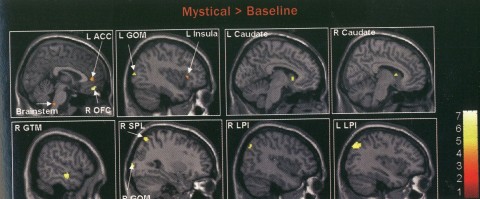
Mean­while, back at the neu­ro­science ranch, researchers are also using imag­ing tech­nol­o­gy to observe the human brain in anoth­er state, the state where peo­ple expe­ri­ence mys­ti­cal awak­en­ings dur­ing prayer and med­i­ta­tion or oth­er spir­i­tu­al epipha­nies. Sci­en­tif­ic Amer­i­can took a fair­ly deep look at this cut­ting-edge field sev­er­al years ago (read the full piece here), and now NPR has pro­duced a mul­ti­me­dia glimpse into the evolv­ing sci­ence of spir­i­tu­al­i­ty. The pre­sen­ta­tion (click here or the image above) com­bines audio, video, arti­cles, book excerpts, etc. and delves into the fun­da­men­tal ques­tion: Is God a delu­sion cre­at­ed by brain chem­istry, or is brain chem­istry a nec­es­sary con­duit for peo­ple to reach God?

If you want to learn more about the brain and neu­ro­science, don’t miss the cours­es list­ed in the Psychology/Neuroscience sec­tion of our big col­lec­tion of Free Online Cours­es.

Time and The Guardian have more on the first sto­ry above here and here.

by | Permalink | Make a Comment ( 1 ) |

Quantcast