Lt. John Pike Pepper Sprays His Way Into Art History

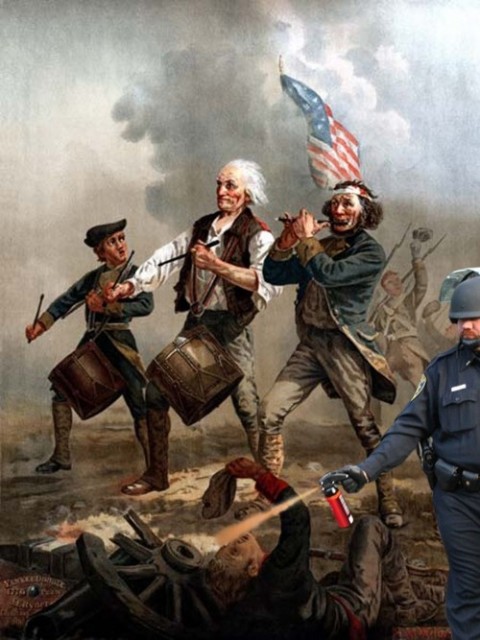
Pep­per spray stu­dents in the face on Fri­day, and you wake up the face of evil on Sat­ur­day. Then, the brunt of some clever jokes on Mon­day. Look! There’s Lieu­tenant John Pike pop­ping into the famous paint­ing, The Spir­it of ’76, and mac­ing a wound­ed sol­dier while he’s down. That’s low.

Now the sym­bol of French free­dom, Delacroix’s Lib­er­ty Lead­ing the Peo­ple. Is Pike using pep­per spray? Or, on clos­er inspec­tion, is that a shot of deodor­ant? Quel con ce mec.

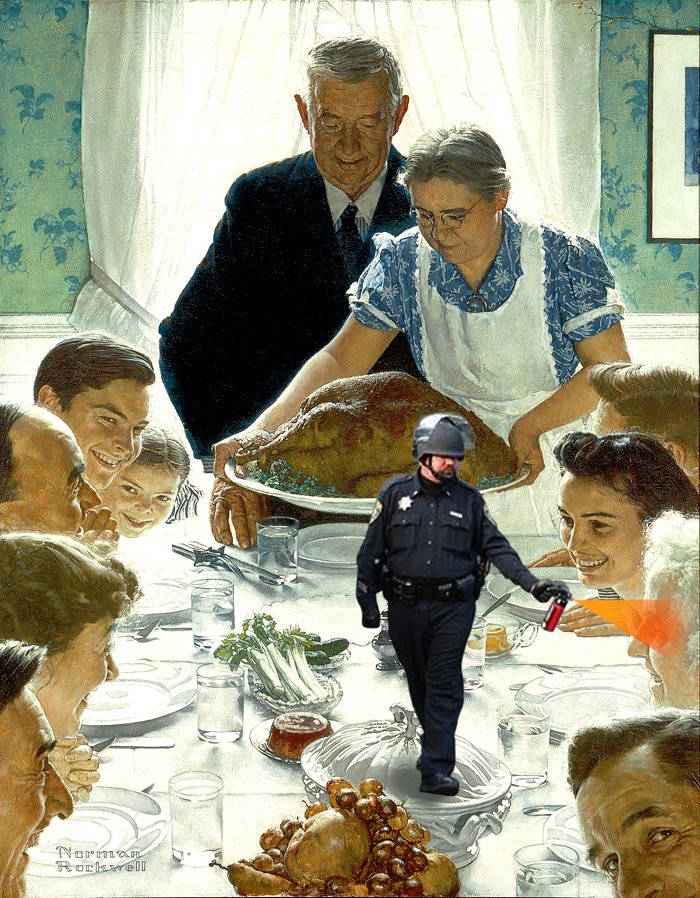
Free­dom from Want is part of Nor­man Rock­well’s Four Free­doms series of paint­ings. And guess who is ruin­ing free­dom, Thanks­giv­ing and every­thing whole­some?

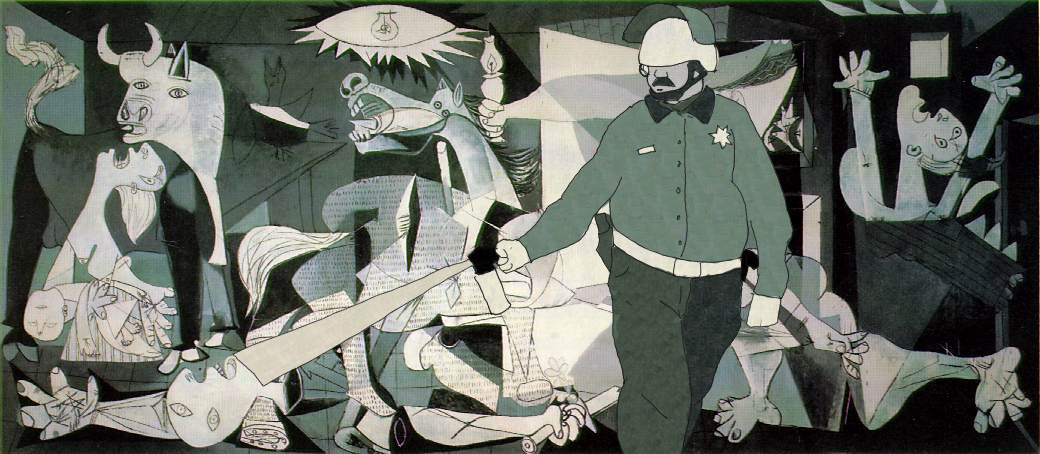
Yes, he even­tu­al­ly des­e­crates Picas­so’s anti-war mur­al, Guer­ni­ca, too.

A baby seal? WTF Pike?!!

More art his­to­ry fun awaits you at the Pep­per­Spray­ing­Cop Tum­blr site.

H/T Heather and Wash­Po

by | Permalink | Make a Comment ( 14 ) |

Iconic Photographer Henri Cartier-Bresson Takes You Inside His Creative World: Watch “The Decisive Moment”

The great artists are often the ones who are best at rec­og­niz­ing and exploit­ing the unique char­ac­ter of their medi­um.

In the ear­ly 20th cen­tu­ry, pho­tog­ra­phy was mired in an inten­tion­al­ly fuzzy Pic­to­ri­al­ism. The pre­vail­ing view was that pho­tog­ra­phy had to imi­tate paint­ing, or it was­n’t “art.” So in the ear­ly 1930s Edward West­on, Ansel Adams and a few oth­ers on the West Coast formed Group f/64 in protest. They embraced their medi­um’s inher­ent strength by plac­ing large for­mat cam­eras on tripods and stop­ping the lens­es way down (all the way to f/64) to cap­ture scenes with a lev­el of detail and clar­i­ty that a painter could only dream of achiev­ing.

Across the Atlantic an even greater rev­o­lu­tion was tak­ing place. With the intro­duc­tion of the 35mm Leica cam­era and fast films, Euro­pean pho­tog­ra­phers in the late 1920s and ear­ly 1930s were begin­ning to explore the medi­um’s aston­ish­ing abil­i­ty to freeze time. Not only could pho­tog­ra­phy ren­der a sta­t­ic scene with more detail than paint­ing, it could iso­late and pre­serve an oth­er­wise tran­si­to­ry moment from the flux of life. No artist seized upon this essen­tial aspect of pho­tog­ra­phy with greater bril­liance and con­sis­ten­cy than the French­man Hen­ri Carti­er-Bres­son.

“In pho­tog­ra­phy,” wrote Carti­er-Bres­son, “there is a new kind of plas­tic­i­ty, the prod­uct of instan­ta­neous lines made by move­ments of the sub­ject. We work in uni­son with move­ment as though it were a pre­sen­ti­ment of the way in which life itself unfolds. But inside move­ment there is one moment at which the ele­ments in motion are in bal­ance. Pho­tog­ra­phy must seize upon this moment and hold immo­bile the equi­lib­ri­um of it.”

Carti­er-Bres­son would often say that his great­est joy was geom­e­try. When he was 20 years old he stud­ied paint­ing under the cubist André Lhote, who adopt­ed for his school the mot­to of Pla­to’s Acad­e­my: “Let no one igno­rant of geom­e­try enter.” Carti­er-Bres­son took an ear­ly inter­est in math­e­mat­i­cal­ly sophis­ti­cat­ed painters. “He loved Pao­lo Uccel­lo and Piero del­la Francesca because they were the painters of divine pro­por­tions,” writes Pierre Assouline in his book, Hen­ri Carti­er-Bres­son: A Biog­ra­phy. “Carti­er-Bres­son was so immersed in their works that his mind filled with pro­trac­tors and plumb lines. Like them, he dreamed of diag­o­nals and pro­por­tions, and became obsessed with the mys­tique of mea­sure­ments, as if the world was sim­ply the prod­uct of numer­i­cal com­bi­na­tions.”

At the same time the young artist fell under the sway of a teacher whose approach was decid­ed­ly less ratio­nal. While still in his teens, Carti­er-Bres­son began sit­ting in on André Bre­ton’s leg­endary Sur­re­al­ist gath­er­ings at the Café de la Place Blanche. He had lit­tle regard for Sur­re­al­ist paint­ing, but was intox­i­cat­ed with the Sur­re­al­ist phi­los­o­phy of life: the empha­sis on chance and intu­ition, the role of spon­ta­neous expres­sion, the all-encom­pass­ing atti­tude of revolt. It made a pro­found impres­sion. In  Hen­ri Carti­er-Bres­son: The Ear­ly Work, Peter Galas­si describes the Sur­re­al­ist approach to life in a way that also neat­ly cap­tures Carti­er-Bres­son’s even­tu­al modus operan­di as a pho­tog­ra­ph­er: “Alone, the Sur­re­al­ist wan­ders the streets with­out des­ti­na­tion but with a pre­med­i­tat­ed alert­ness for the unex­pect­ed detail that will release a mar­velous and com­pelling real­i­ty just beneath the banal sur­face of ordi­nary exis­tence.”

The geo­met­ric for­mal­ism of Renais­sance paint­ing and the serendip­i­ty of Sur­re­al­ism were two key influ­ences on Carti­er-Bres­son’s pho­tog­ra­phy. A third came as an epiphany when he stum­bled upon a repro­duc­tion of Mar­tin Munkác­si’s “Three Boys at Lake Tan­ganyi­ka.” The pic­ture showed a group of African boys frol­ick­ing in the water. If the pho­tog­ra­ph­er had pressed the shut­ter a mil­lisec­ond ear­li­er or lat­er, the beau­ti­ful­ly bal­anced, inter­lock­ing com­po­si­tion would not have exist­ed. “I sud­den­ly under­stood that pho­tog­ra­phy can fix eter­ni­ty in a moment,” Carti­er-Bres­son lat­er said. He gave up paint­ing and bought his first Leica.

Over the next half cen­tu­ry Carti­er-Bres­son would trav­el the world with a Leica in one hand, the strap twist­ed around his wrist, ready to raise it to his eye and fix eter­ni­ty at any moment. Inward­ly he held onto the spir­it of Sur­re­al­ism while out­ward­ly call­ing him­self a pho­to­jour­nal­ist. As a pho­to­jour­nal­ist he wit­nessed some of the biggest events of the 20th cen­tu­ry. He was with Gand­hi a few min­utes before he was assas­si­nat­ed in 1948. He was in Chi­na when the com­mu­nists took over in 1949. “He was the Tol­stoy of pho­tog­ra­phy,” said Richard Ave­don short­ly after Carti­er-Bres­son’s death in 2004 at the age of 95. “With pro­found human­i­ty, he was the wit­ness of the 20th Cen­tu­ry.”

“To take pho­tographs,” Carti­er-Bres­son once said, “is to hold one’s breath when all fac­ul­ties con­verge in the face of flee­ing real­i­ty. It is at that moment that mas­ter­ing an image becomes a great phys­i­cal and intel­lec­tu­al joy.”

Hen­ri Carti­er-Bres­son: The Deci­sive Moment (above) is an 18-minute film pro­duced in 1973 by Scholas­tic Mag­a­zines, Inc. and the Inter­na­tion­al Cen­ter of Pho­tog­ra­phy. It fea­tures a selec­tion of Carti­er-Bres­son’s icon­ic pho­tographs, along with rare com­men­tary by the pho­tog­ra­ph­er him­self.

Reading Marx’s Capital with David Harvey (Free Online Course)

David Har­vey, an impor­tant social the­o­rist and geo­g­ra­ph­er, has got the right idea. Take what you know. Teach it in the class­room. Cap­ture it on video. Then dis­trib­ute it to the world. Keep it sim­ple, but just do it.

Har­vey is now mak­ing avail­able 26 hours of lec­tures, dur­ing which he gives a close read­ing of Karl Marx’s Das Kap­i­tal (1867). This work, often con­sid­ered to be Marx’s mas­ter­piece, is where he elab­o­rat­ed a cri­tique of cap­i­tal­ism and laid the ground­work for an ide­ol­o­gy that took the 20th cen­tu­ry by storm. Har­vey is no stranger to this text. He has taught this class for over 40 years now, both in uni­ver­si­ties (Johns Hop­kins and CUNY) and in the com­mu­ni­ty as well.

The first lec­ture, pre­ced­ed by an intro­duc­to­ry inter­view last­ing rough­ly six min­utes, appears above. The rest of the lec­tures can be accessed via Har­vey’s web site, YouTube, and iTunes. Also, we have placed the course in our col­lec­tion of Free Online Cours­es, which keeps on grow­ing. Find it under the Eco­nom­ics sec­tion.

UPDATE:  David Har­vey is look­ing for vol­un­teers to trans­late his lec­tures into 36 lan­guages. If you want to help you, you can get start­ed here.

Relat­ed Con­tent:

The Cri­sis of Cap­i­tal­ism Ani­mat­ed (with David Har­vey)

Hayek v. Keynes Rap

by | Permalink | Make a Comment ( 18 ) |

A 3D Tour of Picasso’s Guernica

In June 1937 Pablo Picas­so paint­ed Guer­ni­ca, a mur­al that memo­ri­al­ized the events of April 27, 1937, the date when Ger­many sup­port­ed its fas­cist ally Fran­cis­co Fran­co and bombed Guer­ni­ca, a rather remote town in the Basque region of north­ern Spain. For the Nazis, the mil­i­tary strike was an excuse to try out their lat­est mil­i­tary hard­ware, estab­lish a blue­print for ter­ror bomb­ings of civil­ian pop­u­la­tions, and pull Spain into the fas­cist fold. After the bomb­ing, the repub­li­can gov­ern­ment on the oth­er side of the Span­ish Civ­il War com­mis­sioned Picas­so to cre­ate the mur­al for dis­play at the 1937 World’s Fair in Paris.

You can learn more about the famous anti-war paint­ing, now housed at the Museo Reina Sofía in Madrid, by check­ing out the Smarthis­to­ry primer post­ed below. In the mean­time, we’re high­light­ing today a dig­i­tal­ly-ren­dered 3D tour of Picas­so’s land­mark work. It’s the cre­ation of Lena Gieseke, a visu­al effects artist who, once upon a time, was mar­ried to the film­mak­er Tim Bur­ton. Some will con­sid­er the idea of putting Guer­ni­ca in 3D down­right blas­phe­mous. Oth­ers will find it instruc­tive, a chance to see parts of the mur­al from a new per­spec­tive. The video above runs three min­utes.

If you would like to sign up for Open Culture’s free email newslet­ter, please find it here. It’s a great way to see our new posts, all bun­dled in one email, each day.

If you would like to sup­port the mis­sion of Open Cul­ture, con­sid­er mak­ing a dona­tion to our site. It’s hard to rely 100% on ads, and your con­tri­bu­tions will help us con­tin­ue pro­vid­ing the best free cul­tur­al and edu­ca­tion­al mate­ri­als to learn­ers every­where. You can con­tribute through Pay­Pal, Patre­on, and Ven­mo (@openculture). Thanks!

Relat­ed Con­tent:

The Gestapo Points to Guer­ni­ca and Asks Picas­so, “Did You Do This?;” Picas­so Replies “No, You Did!”

Guer­ni­ca: Alain Resnais’ Haunt­ing Film on Picasso’s Paint­ing & the Crimes of the Span­ish Civ­il War

Picas­so Paint­ing on Glass

Dear Mon­sieur Picas­so: A Free eBook

by | Permalink | Make a Comment ( 11 ) |

Pepper Spraying Peaceful Protestors Continues; This Time at UC Davis

It’s becom­ing a trend. Around the coun­try, police­men are pep­per spray­ing peace­ful pro­tes­tors. It start­ed in NYC when Tony Bologna, one of New York’s finest, pep­per sprayed a group of young women already cor­doned off by a police bar­ri­er. Next they man­aged to get an 84 year old woman in Seat­tle. And now Lieu­tenant John Pike gives UC Davis pro­tes­tors a face full of pep­per spray, even though they were peace­ful­ly seat­ed on the ground. To make things worse, “When stu­dents cov­ered their eyes with their cloth­ing, police forced open their mouths and pep­per-sprayed down their throats,” or so claims Nathan Brown, an assis­tant pro­fes­sor in the Eng­lish Depart­ment. (You can read a first-hand stu­dent account here.)

Ini­tial­ly the chan­cel­lor of the uni­ver­si­ty, Lin­da P.B. Kate­hi, appeared to defend the police action. But, as the video above went viral, she began chang­ing her tune and call­ing for an inves­ti­ga­tion into the mat­ter. Noth­ing like a lit­tle trans­paren­cy … and some pub­lic sham­ing (below) … to make peo­ple see the light.

You can read a fuller account of Fri­day’s events in the UC Davis news­pa­per. Also don’t miss the paper’s col­lec­tion of pho­tos on Flickr. And I’d also rec­om­mend the analy­sis by James Fal­lows over at The Atlantic. Here’s the mon­ey quote:

I can’t see any legit­i­mate basis for police action like what is shown here. Watch that first minute and think how we’d react if we saw it com­ing from some riot-con­trol unit in Chi­na, or in Syr­ia. The calm of the offi­cer who walks up and in a leisure­ly way pep­per-sprays unarmed and pas­sive peo­ple right in the face? We’d think: this is what hap­pens when author­i­ty is unac­count­able and has lost any sense of human con­nec­tion to a sub­ject pop­u­la­tion. That’s what I think here.

And per­haps we can add this thought. If you’re the chan­cel­lor, the per­son charged with over­see­ing the edu­ca­tion and wel­fare of stu­dents, you should­n’t rec­og­nize the prob­lem with Fri­day’s events only when the polit­i­cal heat gets turned up. Talk about a lack of human con­nec­tion.…

Updates:

Offi­cers in pep­per spray inci­dent placed on leave

Learn about pep­per spray and the harm it does

by | Permalink | Make a Comment ( 4 ) |

Stanford Opens Seven New Online Courses for Enrollment (Free)

This fall, Stan­ford launched a high­ly-pub­li­cized exper­i­ment in online learn­ing. The uni­ver­si­ty took three of its most pop­u­lar com­put­er sci­ence cours­es and made them freely avail­able to the world. Each course fea­tures inter­ac­tive video clips; short quizzes that pro­vide instant feed­back; and the abil­i­ty to pose high val­ue ques­tions to Stan­ford instruc­tors. The response? It has been noth­ing short of amaz­ing. One course alone (Intro­duc­tion to Arti­fi­cial Intel­li­gence) pulled in more than 58,000 enroll­ments.

Start­ing in Jan­u­ary and Feb­ru­ary 2012, Stan­ford will offer sev­en new cours­es, and they’re all open for enroll­ment today. Here’s the new list (and don’t for­get to browse through our col­lec­tion of 400 Free Online Cours­es):

Com­put­er Sci­ence 101
Soft­ware Engi­neer­ing for SaaS
Human Com­put­er Inter­faces
Nat­ur­al Lan­guage Pro­cess­ing
Game The­o­ry
Prob­a­bilis­tic Graph­i­cal Mod­els
Machine Learn­ing

Anoth­er sev­en cours­es have recent­ly been added. Find the updat­ed list here.

Relat­ed Con­tent:

Cre­ate iPhone/iPad Apps in iOS 5 with Free Stan­ford Course

MIT Intro­duces Com­plete Cours­es to Open­Course­Ware Project

by | Permalink | Make a Comment ( 7 ) |

The Clash: Westway to the World

The Gram­my-win­ning 2000 film, The Clash: West­way to the World, is a fas­ci­nat­ing look at the rise and fall of one of his­to­ry’s great­est rock bands. The Clash did­n’t invent punk rock–bands like the Ramones and the Sex Pis­tols pre­ced­ed them–but they did their best to rein­vent it, mov­ing beyond the self-absorbed nihilism of the Pis­tols to embrace a more glob­al, polit­i­cal­ly engaged ethos that moshed togeth­er a riot of musi­cal and cul­tur­al influ­ences, includ­ing reg­gae and rap. Per­haps no one was more respon­si­ble for inject­ing those influ­ences into the punk sub­cul­ture than the man who made this movie, Don Letts.

The British-born son of Jamaican immi­grants, Letts ran a cloth­ing bou­tique in West Lon­don in the ear­ly 1970s that became an ear­ly gath­er­ing place for punk rock­ers. He lat­er became the res­i­dent DJ at the first punk night­club, The Roxy, at a time when there weren’t many punk records out, so he played a lot of reg­gae. And he start­ed record­ing the scene. “When the punk rock thing hap­pened in about 1976,” Letts lat­er recalled, “the whole ‘Do It Your­self’ prin­ci­ple came into play. All my mates picked up gui­tars and I want­ed to pick up some­thing too, but the stage was kind of full up. So I picked up a Super 8 cam­era, and using the ‘DIY’ prin­ci­ple, taught myself to become a film­mak­er through film­ing the bands I liked and work­ing out how to do it as I went along. I’d nev­er been to film school; I nev­er even read the instruc­tions for the cam­era!”

The raw, unpol­ished footage was edit­ed togeth­er in 1978 and released as The Punk Rock Movie. Letts went on to make all of the Clash’s videos, and in 1981 when the Clash played their leg­endary 17 nights at Bond’s Inter­na­tion­al Casi­no in Times Square, Letts was com­mi­sioned by the band’s mer­cu­r­ial man­ag­er, Bernie Rhodes, to make a doc­u­men­tary. As music jour­nal­ist Chris Salewicz writes in his book Redemp­tion Song: The Bal­lad of Joe Strum­mer, “after each night’s show he’d be hand­ed a wedge of dol­lars by Bernie and told to buy more film.” Unfor­tu­nate­ly, Rhodes then placed almost all of Letts’s footage in a stor­age facil­i­ty in New York and for­got to pay the bill. The exposed film was thrown away.

So when Sony lat­er approached Letts to put togeth­er The Clash: West­way to the World, he had to make do with oth­er archival footage and inter­views. In the inter­views, the mem­bers of the band are char­ac­ter­is­ti­cal­ly sin­cere in their assess­ment of why the band dis­in­te­grat­ed. When Mick Jones formed Big Audio Dyna­mite in 1984, Letts was invit­ed to join the group. The man who brought reg­gae to punk still could­n’t play a musi­cal instru­ment, so he intro­duced film-edit­ing tech­niques to the music. He became an ear­ly pio­neer of sam­pling, using audio clips from old movies and oth­er sources. “When the oth­ers would be lay­ing down their parts in the stu­dio,” Letts lat­er said of his days with Big Audio Dyna­mite, “I’d be run­ning what was tan­ta­mount to a film fes­ti­val in the green room.”

Don’t miss our col­lec­tion of Free Movies Online. 435 films and count­ing.

Moby Offers Up Free Music to Filmmakers

A lit­tle gift from Moby to film­mak­ers. If you’re an indie film­mak­er, non-prof­it film­mak­er or film stu­dent, you can head to MobyGratis.com, reg­is­ter for the site, and then start brows­ing through a fair­ly exten­sive cat­a­logue of record­ings — 150 record­ings in total.

As Moby tells us, you can “down­load what­ev­er you want to use in your film or video or short. The music is free as long as it’s being used in a non-com­mer­cial or non-prof­it film, video, or short.”

If you’re a com­mer­cial film­mak­er, don’t fret. Moby gives you the option to license the music, and the mon­ey will be donat­ed to the humane soci­ety.

Final­ly, film lovers, don’t miss our col­lec­tion of 1100 Free Movies Online. It includes all kinds of good clas­sics, west­erns, doc­u­men­taries, noir films and more.

Moby fans will also want to see this oth­er free­bie: Moby Lets You Down­load 4 Hours of Ambi­ent Music to Help You Sleep, Med­i­tate, Do Yoga & Not Pan­ic

via Kot­tke

If you would like to sign up for Open Culture’s free email newslet­ter, please find it here. It’s a great way to see our new posts, all bun­dled in one email, each day.

If you would like to sup­port the mis­sion of Open Cul­ture, con­sid­er mak­ing a dona­tion to our site. It’s hard to rely 100% on ads, and your con­tri­bu­tions will help us con­tin­ue pro­vid­ing the best free cul­tur­al and edu­ca­tion­al mate­ri­als to learn­ers every­where. You can con­tribute through Pay­Pal, Patre­on, and Ven­mo (@openculture). Thanks!

by | Permalink | Make a Comment ( 4 ) |

« Go BackMore in this category... »
Quantcast