A more gentle version of George Carlin, Fry’s views appear heartfelt while partaking of serious irony. He claims that in order to properly appreciate our present lives, “even if it isn’t true, you must absolutely assume that there is no afterlife.” Choosing his positions to argue as much for their rhetorical audacity as anything else, he argues for polytheism in favor of monotheism, and he treats the issue of the divine presence in nature by referencing the life cycle of a parasitic worm. He seems an apt voice to add to the new atheist debates, at least as amusing as Dawkins and much moreso than Sam Harris. This clip is added to our collection of 250 Cultural Icons.
Today is the 50th anniversary of the death of Ernest Hemingway. In remembrance, we bring you the writer’s own voice from 1954, reading his Nobel Prize acceptance speech at a radio station in Havana, Cuba. Hemingway’s influence on Twentieth Century literature was profound, both for the originality of his prose and the tragic alienation of his heroes. One of the most beautiful and frequently quoted examples of Hemingway’s style is the opening paragraph of A Farewell to Arms:
In the late summer of that year we lived in a house in a village that looked across the river and the plain to the mountains. In the bed of the river there were pebbles and boulders, dry and white in the sun, and the water was clear and swiftly moving and blue in the channels. Troops went by the house and down the road and the dust they raised powdered the leaves of the trees. The trunks of the trees too were dusty and the leaves fell early that year and we saw the troops marching along the road and the dust rising and leaves, stirred by the breeze, falling and the soldiers marching and afterward the road bare and white except for the leaves.
“Hemingway’s appreciation of the aesthetic qualities of the physical world is important,” wrote Robert Penn Warren in 1949, “but a peculiar poignancy is implicit in the rendering of those qualities; the beauty of the physical world is a background for the human predicament, and the very relishing of the beauty is merely a kind of desperate and momentary compensation possible in the midst of the predicament.” That predicament, wrote Warren, “in a world without supernatural sanctions, in the God-abandoned world of modernity,” is man’s full consciousness of his own impending annihilation. Here is a stark passage from “A Clean, Well-Lighted Place”:
What did he fear? It was not fear or dread. It was a nothing he knew too well. It was all a nothing and a man was nothing too. It was only that and light was all it needed and a certain cleanliness and order. Some lived in it and never felt it but he knew it was all nada y pues nada y nada y pues nada. Our nada who art in nada, nada be thy name thy kingdom nada thy will be nada in nada as it is in nada. Give us this nada our daily nada and nada us our nada as we nada our nadas and nada us not into nada but deliver us from nada; pues nada. Hail nothing full of nothing, nothing is with thee. He smiled and stood before a bar with a shining steam pressure coffee machine. “What’s yours?” asked the barman. “Nada.”
Caught in an existential cul-de-sac, Hemingway’s characters find meaning through adherence to what Warren called the Hemingway Code: “His heroes are not defeated except upon their own terms. They are not squealers, welchers, compromisers, or cowards, and when they confront defeat they realize that the stance they take, the stoic endurance, the stiff upper lip mean a kind of victory. Defeated upon their own terms, some of them have even courted their defeat; and certainly they have maintained, even in the practical defeat, an ideal of themselves.”
Fifty years ago today, after enduring years of declining health, Ernest Hemingway met death upon his own terms. Looking back on it in 1999, Joyce Carol Oates wrote: “Hemingway’s death by suicide in 1961, in a beautiful and isolated Ketchum, Idaho, would seem to have brought him full circle: back to the America he had repudiated as a young man, and to the method of suicide his father had chosen, a gun. To know the circumstances of the last years of Hemingway’s life, however, his physical and mental suffering, is to wonder that the beleaguered man endured as long as he did. His legacy to literature, apart from the distinct works of art attached to his name, is a pristine and immediately recognizable prose style and a vision of mankind in which life and art are affirmed despite all odds.”
The artist and cartoon pioneer Winsor McCay (1869?-1934) did not make the world’s first animated film. That distinction goes to Emile Cohl and his 76-second long Fantasmagorie(1908). But McKay, who was also the author of the popular weekly Little Nemo comic strips, made a contribution to cartoons that is arguably even more important.
Sweet, mischievous Gertie, with her ready tears, excitable nature, and complete inability to miss a chance to get herself in trouble, is widely credited as the first character created specifically for animation, and the first to demonstrate a personality all of her own. Mickey Mouse, Bugs Bunny, Bambi, even Wall‑e… they all owe a debt to Gertie, the first of the line. One suspects the artist knew exactly what he was doing when he chose to draw her as an animal that is also our common ancestor.
Sheerly Avni is a San Francisco-based arts and culture writer. Her work has appeared in Salon, LA Weekly, Mother Jones, and many other publications. You can follow her on twitter at @sheerly.
Sam Harris — he wrote the bestsellers The End of Faith and Letter to a Christian Nation. He’s also one-fourth of the New Atheist quartet informally called The Four Horsemen (where you’ll also find Richard Dawkins, Christopher Hitchens and Daniel Dennett.) And he has most recently argued that neuroscience can eventually answer all moral questions. Sam Harris is very much a public intellectual. He’s out there and in the mix. And he’s now answering questions from Reddit.com users. Give Harris 54 minutes and he’ll tell you how to promote public rationality, why meditation can change your life, and much, much more …
The Nokia Short 2011 competition wrapped up this weekend at the Edinburgh International Film Festival, and the jury gave the first prize to Splitscreen: A Love Story. Shot with a Nokia N8 mobile phone and a hand-held dolly (watch the “making of” video here), the film elegantly weaves together scenes from Paris and New York. A synchronized tale of two great cities. Then, it all comes together in London. Kudos to director JW Griffiths, and don’t miss his original pitch.
It’s with some discomfort that the author names Gone with the Wind, published exactly 75 years ago today, her favorite childhood book: It was thick, it was romantic — and perhaps most crucially for any awkward, bespectacled preteen girl — it featured a headstrong heroine whose appeal to the opposite sex derived more from her charm than her physical beauty.
Nonetheless, there’s no way around the profound failings of both the book and the MGM epic film based on it: Novel and film treated slavery as an incidental backdrop to the war; they glorified and misrepresented the actions of the Ku Klux Klan; and most egregiously, they portrayed the master-slave relationship as one which neither master nor slave should ever dream of altering. In the words of historian and sociologist Jim Loewen, author of Lies My Teacher Told Me: Everything Your High School History Textbook Got Wrong:
[Gone With The Wind] laments the passing of the slave era as “gone with the wind.” In the novel, Mitchell states openly that African Americans are “creatures of small intelligence.” And this book is by far the most popular book in the U.S. and has been for 60 years. The book is also profoundly wrong in its history. What it tells us about slavery, and especially reconstruction, did not happen…it is profoundly racist and profoundly wrong. Should we teach it? Of course. Should we teach against it? Of course.
Meanwhile, Hattie McDaniel took home a best supporting actress Oscar for her role as Scarlett O’Hara’s loyal house slave, Mammy. She was the first African-American woman to win an Academy Award. The fact that she was not allowed to attend the film’s premiere in Atlanta makes her acceptance speech (1940) even more poignant. It appears above.
Sheerly Avni is a San Francisco-based arts and culture writer. Her work has appeared in Salon, LA Weekly, Mother Jones, and many other publications. You can follow her on twitter at @sheerly.
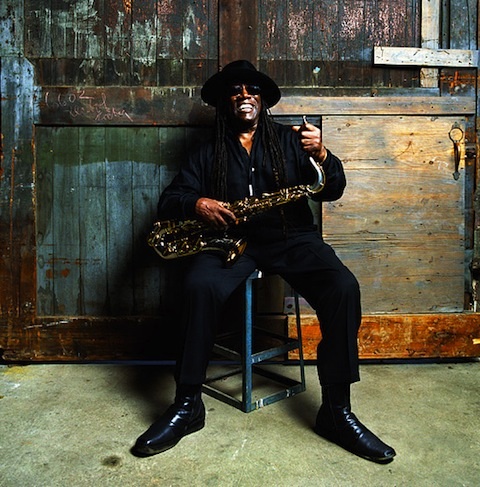
Today, Bruce Springsteen published on his web site a revised version of the eulogy he delivered last week for Clarence Clemons, his friend and band mate. It’s equal parts honest and moving. The talk builds momentum as it goes along, kind of like a Springsteen song, with the rhythm really picking up here:
I think perhaps “C” protected me from a world where it wasn’t always so easy to be an insecure, weird and skinny white boy either. But, standing together we were badass, on any given night, on our turf, some of the baddest asses on the planet. We were united, we were strong, we were righteous, we were unmovable, we were funny, we were corny as hell and as serious as death itself. And we were coming to your town to shake you and to wake you up. Together, we told an older, richer story about the possibilities of friendship that transcended those I’d written in my songs and in my music. Clarence carried it in his heart. It was a story where the Scooter and the Big Man not only busted the city in half, but we kicked ass and remadethe city, shaping it into the kind of place where our friendship would not be such an anomaly. And that… that’s what I’m gonna miss. The chance to renew that vow and double down on that story on a nightly basis, because that is something, that is the thing that we did together… the two of us. Clarence was big, and he made me feel, and think, and love, and dream big. How big was the Big Man? Too fucking big to die. And that’s just the facts. You can put it on his grave stone, you can tattoo it over your heart. Accept it… it’s the New World.
And finally the crescendo:
SO LADIES AND GENTLEMAN… ALWAYS LAST, BUT NEVER LEAST. LET’S HEAR IT FOR THE MASTER OF DISASTER, the BIG KAHUNA, the MAN WITH A PHD IN SAXUAL HEALING, the DUKE OF PADUCAH, the KING OF THE WORLD, LOOK OUT OBAMA! THE NEXT BLACK PRESIDENT OF THE UNITED STATES EVEN THOUGH HE’S DEAD… YOU WISH YOU COULD BE LIKE HIM BUT YOU CAN’T! LADIES AND GENTLEMEN, THE BIGGEST MAN YOU’VE EVER SEEN!… GIVE ME A C‑L-A-R-E-N-C‑E. WHAT’S THAT SPELL? CLARENCE! WHAT’S THAT SPELL? CLARENCE! WHAT’S THAT SPELL? CLARENCE! … amen.
We're hoping to rely on loyal readers, rather than erratic ads. Please click the Donate button and support Open Culture. You can use Paypal, Venmo, Patreon, even Crypto! We thank you!
Open Culture scours the web for the best educational media. We find the free courses and audio books you need, the language lessons & educational videos you want, and plenty of enlightenment in between.