No more top hat and handkerchief. Marco Tempest uses iPods and iPhones to create magic for the 21st century. He calls himself a techno-illusionist. “I explore the borders between technology and magic,” says Tempest, “between what’s incredibly real and incredibly not.” Originally from Switzerland, Tempest now lives in New York City. He was featured in the internationally syndicated television series, The Virtual Magician, and his work can be viewed on a YouTube channel of the same name. His newest release, “iPod Magic–Deceptions,” features an application he developed to synchronize video playback on multiple screens. The App is called “MultiVid.” You can download it for free here, and learn how to use it here.
Yesterday, the Open University released ‘The History of English in 10 Minutes,’ a witty animated sequence that takes you through 1600 years of linguistic history. The Vikings gave us “give” and “take.” Shakespeare added another 2,000 words and expressions to the mix. The British Empire (see video above) then brought the evolving English language to new lands, creating new varieties of English worldwide. And so the story continues. You can find this series featuring the voice of Clive Anderson on iTunes or YouTube. We’ve included links to each YouTube chapter right below. Many thanks to Catherine for the heads up…
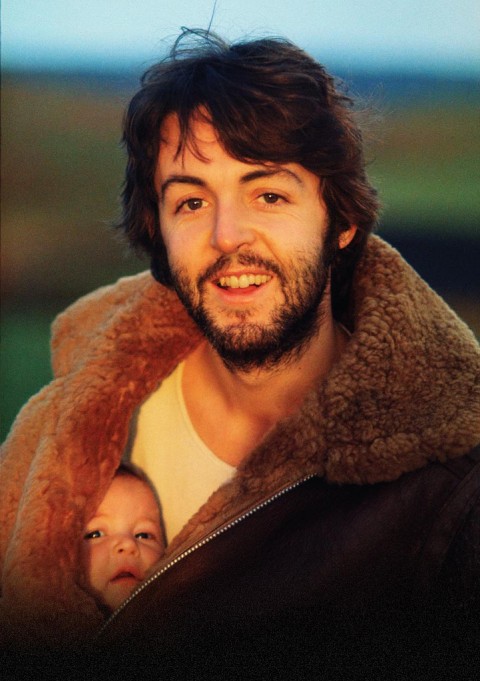
In 1967, a young Linda Eastman went to London to photograph the “Swinging Sixties” and snagged exclusive photos of The Rolling Stones, Eric Clapton and Jimi Hendrix. In the midst of it all, she met Paul McCartney, and when the two married in 1969, she had a fixed place within rock ‘n roll’s inner circle.
During the coming decades, she took over 200,000 images. Yes, that means many more photographs of rock stars and artists. But the emphasis also shifted inward, to a new domestic life with Paul and their children — Heather, Mary, Stella, and James. Years later, as Paul prepares to marry again, the photographic work of Linda McCartney (1941–1998) has been published in a 288-page retrospective volume called Linda McCartney: Life in Photographs. It features a forward by Paul and some commentary by Annie Leibovitz. An impressive sampling of Linda McCartney’s work can be previewed on this web site.
The high points of this documentary on the great J.R.R. Tolkien, from the BBC Series In Their Own Words: British Novelists, are the moments that fulfill the promise of the series’ title. Skip over the distracting “man on the street” interviews and long pans of the landscape, meant perhaps to invoke Middle Earth. In fact, you can skip over every scene that isn’t just the author’s magnificent talking head.
Start at minute 2:49, where he describes first writing the immortal words “In a hole in the ground there lived a hobbit.” The anecdote should inspire beleaguered graduate students and teachers everywhere: He came up with the line while grading exams.
We also loved Tolkien’s confession about trees, starting at the 7:00 minute mark: “I should have liked to make contact with a tree and find out how it feels about things.”
You can watch the documentary on YouTube in two parts. The first part is above, the second here. The material also appears in our collection of 250 Cultural Icons.
Sheerly Avni is a San Francisco-based arts and culture writer. Her work has appeared in Salon, LA Weekly, Mother Jones, and many other publications. You can follow her on twitter at @sheerly.
Earlier this year, Google rolled out “Art Project,” a tool that lets you access 1,000 works of art appearing in 17 great museums across the world, from the Met in New York City to the Uffizi Gallery in Florence. (More on that here.) Now, as part of a broader effort to put art in your hands, the company has produced a new smartphone app (available in Android and iPhone) that enriches the museum-going experience, and it’s being demoed at the Getty Museum in Los Angeles.
The concept is pretty simple. You’re wandering through the Getty. You spot a painting that deeply touches you. To find out more about it, you open the Google Goggles app on your phone, snap a photo, and instantly download commentary from artists, curators, and conservators, or even a small image of the work itself. Sample this, and you’ll see what we mean. And, for more on the story, turn to Jori Finkel, the ace arts reporter for the LA Times.
Give the piece a listen, especially if you’ve ever considered “Valkyries” too overbearing. The all-piano arrangement does full justice to the music’s power, while also relieving some of its bombast. A definite winner. H/T @brainpicker
Sheerly Avni is a San Francisco-based arts and culture writer. Her work has appeared in Salon, LA Weekly, Mother Jones, and many other publications. You can follow her on twitter at @sheerly.
If you’re looking forward to this week’s release of the Buddy Holly cover album Rave On (and you should be, if only for John Doe’s awesome take on Peggy Sue Got Married), then you’ll definitely get a kick out of the crooner’s first ever known recording. The song is from 1949, and the sound quality isn’t great, but no amount of static can block out the kid’s familiar warble. His voice may not have changed yet, but he’s already Buddy Holly.
We have added this Buddy Holly clip to our collection of 250 Cultural Icons. There you’ll find great writers, dazzling filmmakers and musicians, brilliant philosophers and scientists presented in video and audio.
Sheerly Avni is a San Francisco-based arts and culture writer. Her work has appeared in Salon, LA Weekly, Mother Jones, and many other publications. You can follow her on twitter at @sheerly.
Last week, we asked Open Culture readers to write in with your favorite non-fiction titles of all time, and you didn’t disappoint. We had a hard time culling from the more than 100 suggestions, but we did have a few criteria to guide us:
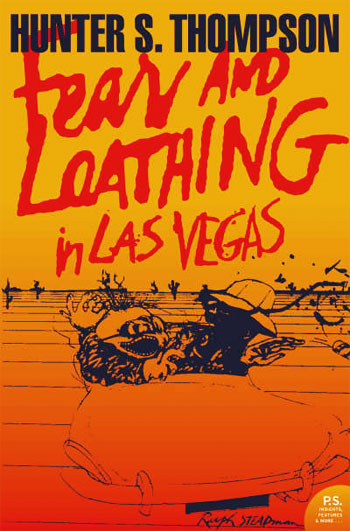
1. Priority went to repeat nominees (Bill Bryson, Hunter S. Thompson, and Richard Dawkins, to name a few).
2. We leaned toward books that are available for free online.
3. When all else failed, we relied on our own preferences — or prejudices.
Thanks again for all of your recommendations, and may we congratulate you on your excellent taste in non-fiction, equalled by only your excellent taste in websites.
Lastly, and only in part because we’ve been warned that we would be roundly scolded for the omission: The Elements of Style, by William Strunk and E.B. White
Thanks again, and happy reading!
Sheerly Avni is a San Francisco-based arts and culture writer. Her work has appeared in Salon, LA Weekly, Mother Jones, and many other publications. You can follow her on twitter at @sheerly.
We're hoping to rely on loyal readers, rather than erratic ads. Please click the Donate button and support Open Culture. You can use Paypal, Venmo, Patreon, even Crypto! We thank you!
Open Culture scours the web for the best educational media. We find the free courses and audio books you need, the language lessons & educational videos you want, and plenty of enlightenment in between.