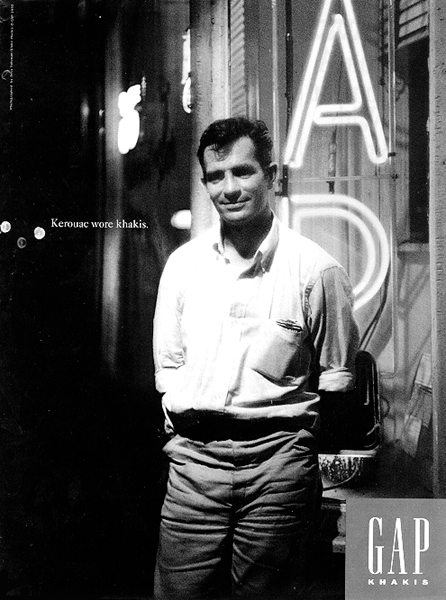
Kerouac Wore Khakis: Ghost of the Beat Writer Stars in 1993 Gap Advertising Campaign

jksm

“When [Jack] Ker­ouac died in 1968 at the age of 47, he was a bro­ken alco­holic, his lit­er­ary rep­u­ta­tion so deplet­ed he was unable even to find a paper­back pub­lish­er for his last nov­el, Van­i­ty of Dulu­oz,” writes The Tele­graph. “Unsure of what val­ue to put on his estate, the bank val­ued it at a nom­i­nal $1. Over the years, it would rise to an esti­mat­ed $20m.” As The Tele­graph goes on to describe, the Ker­ouac estate start­ed gen­er­at­ing its wealth when, dur­ing the 1990s, feud­ing rel­a­tives, exer­cis­ing ques­tion­able author­i­ty over the writer’s lit­er­ary remains, began auc­tion­ing things off. The orig­i­nal man­u­script of On The Road was sold to James Isray, own­er of the Indi­anapo­lis Colts, for $2.43 mil­lion. John­ny Depp paid $50,640 for Kerouac’s rain­coat, tweed over­coat and oth­er per­son­al belong­ings. And pho­tos were licensed off to cor­po­ra­tions.

Enter the Gap’s 1993 “Ker­ouac Wore Khakis” adver­tis­ing cam­paign. The cam­paign drew on images tak­en in 1958, when Jer­ry Yuls­man fol­lowed Jack Ker­ouac around Green­wich Vil­lage, tak­ing pic­tures for Pageant Mag­a­zine. (See orig­i­nals here and here.) 35 years lat­er, Madi­son Ave. mar­keters air­brushed the images, stripped them of col­or, and, some­how found a way to graft onto stodgy pants, worn by desk jock­eys nation­wide, the illu­sion of free­dom. That sleight of hand would make Don Drap­er proud. As for what hap­pened in Ker­ouac’s grave, we can only con­jec­ture.

We’ll have more from the annals of com­mer­cial­iz­ing the Beats tomor­row.

Relat­ed Con­tent:

Jack Kerouac’s Naval Reserve Enlist­ment Mugshot, 1943

Bob Dylan and Allen Gins­berg Vis­it the Grave of Jack Ker­ouac (1979)

Jack Kerouac’s Hand-Drawn Cov­er for On the Road

Ker­ouac Reads from On the Road (1959)

by | Permalink | Make a Comment ( 2 ) |

Hear Sylvia Plath Read ‘Lady Lazarus’ on the 50th Anniversary of Her Death

In the ear­ly morn­ing hours of Mon­day, Feb­ru­ary 11, 1963, Sylvia Plath brought food and drink into the bed­room of her two sleep­ing young chil­dren. She opened a win­dow in their room and attached a note with her doc­tor’s name and phone num­ber to a baby car­riage in the hall­way. She then went into the kitchen and sealed it off with tape and wet tow­els. She turned on the gas and put her head into the oven.

It was a sad end­ing for a woman who had strug­gled for much of her life with men­tal ill­ness. She was 30 years old. But with the crit­i­cal and pop­u­lar suc­cess of Ariel, the posthu­mous­ly pub­lished col­lec­tion of poems writ­ten dur­ing the last months of her life, Plath’s sui­cide became one of the most mythol­o­gized events in the his­to­ry of 20th cen­tu­ry let­ters. The grim event of 50 years ago is inex­tri­ca­bly bound up with Plath’s lega­cy as a poet.

In recog­ni­tion of that fact, we mark the anniver­sary with a record­ing Plath made at the BBC stu­dios in Decem­ber, 1962, of one of her most cel­e­brat­ed poems–one she had only recent­ly writ­ten, called “Lady Lazarus.” The ver­sion Plath reads con­tains two lines that were cut from the pub­lished poem. (You can open the text in a new win­dow to read while you lis­ten.) “Lady Lazarus” is a dis­turb­ing poem, with imagery from the Holo­caust graft­ed onto personal–one might say narcissistic–revelations of sui­ci­dal obses­sion. The sin­is­ter, malev­o­lent tone is espe­cial­ly chill­ing when you hear it in Plath’s own voice:

Herr God, Herr Lucifer
Beware
Beware.

Out of the ash
I rise with my red hair
And I eat men like air.

For more on Plath’s life and her com­pli­cat­ed and con­tentious lit­er­ary lega­cy, and to hear anoth­er of her read­ings, see our Octo­ber 27, 2012 post, “For Sylvia Plath’s 80th Birth­day, Hear Her Read ‘A Birth­day Present.’ ”

The Genius of J.S. Bach’s “Crab Canon” Visualized on a Möbius Strip

The most impres­sive of Johann Sebas­t­ian Bach’s pieces, musi­cophiles may have told you, will knock you over with their inge­nious­ness, or at least their sheer com­plex­i­ty. Indeed, the music of Bach has, over the past two and a half cen­turies, pro­vid­ed meat and drink to both pro­fes­sion­al and ama­teur stu­dents of the rela­tion­ship between inge­nious­ness and com­plex­i­ty. It’s no mis­take, for instance, that the com­pos­er has offered such a rich source of intel­lec­tu­al inspi­ra­tion to Gödel, Esch­er, Bach author Dou­glas R. Hof­s­tadter, well beyond hav­ing giv­en him a word to fill out the book’s title. Lis­ten to the first canon from Bach’s Musi­cal Offer­ing, and you’ll hear what sounds like a sim­ple begin­ning devel­op into what sounds like quite a com­plex mid­dle. You may hear it and instinc­tive­ly under­stand what’s going on; you may hear it and have no idea what’s going on beyond your sus­pi­cion that some­thing is hap­pen­ing.

If you process things more visu­al­ly than you do aural­ly, pay atten­tion to the video above, a visu­al­iza­tion of the piece by math­e­mat­i­cal image-mak­er Jos Leys. You can fol­low the score, note for note, and then watch as the piece revers­es itself, run­ning back across the staff in the oth­er direc­tion. So far, so easy, but anoth­er lay­er appears: Bach wrote the piece to then be played simul­ta­ne­ous­ly back­wards as well as for­wards. But pre­pare your­self for the mind-blow­ing coup de grâce when Leys shows us at a stroke just what the impos­si­ble shape of the Möbius strip has to do with the form of this “crab canon,” mean­ing a canon made of two com­ple­men­tary, reversed musi­cal lines. Hof­s­tadter had a great deal of fun with that term in Gödel, Esch­er, Bach, but then, he has one of those brains — you’ll notice many Bach enthu­si­asts do — that explodes with con­nec­tions, trans­po­si­tions, and per­mu­ta­tions, even in its unal­tered state. Alter­na­tive­ly, if you con­sid­er your­self a con­scious­ness-bend­ing psy­cho­naut, feel free get into your pre­ferred frame of mind, watch Bach’s crab canon visu­al­ized, and call me in the morn­ing.

Relat­ed con­tent:

A Big Bach Down­load: All of Bach’s Organ Works for Free

The Open Gold­berg Vari­a­tions: J.S. Bach’s Mas­ter­piece Free to Down­load

Glenn Gould Explains the Genius of Johann Sebas­t­ian Bach (1962)

Col­in Mar­shall hosts and pro­duces Note­book on Cities and Cul­ture and writes essays on lit­er­a­ture, film, cities, Asia, and aes­thet­ics. He’s at work on a book about Los Ange­les, A Los Ange­les Primer. Fol­low him on Twit­ter at @colinmarshall.

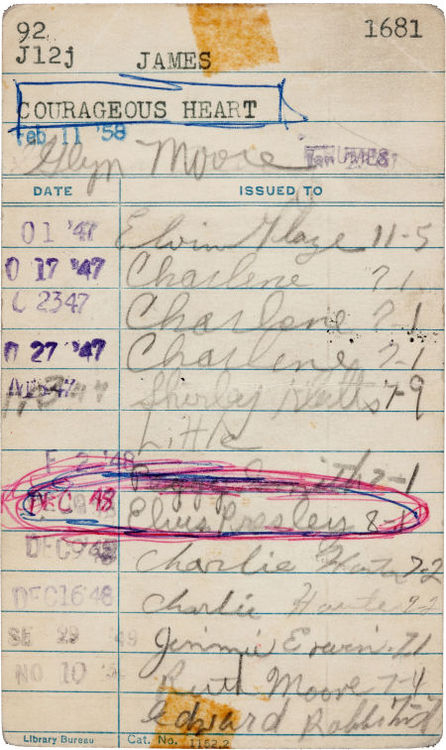
Library Card Signed by 13-Year-Old Elvis Presley, the Earliest Known Signature of the King

elvis library card
Cour­tesy of the Chica­go Pub­lic Library Tum­blr, we have the library card signed by Elvis Pres­ley in 1948, when the rock icon was only 13 years old. Because it’s believed to be the ear­li­est known sig­na­ture of the King, the auto­graph fetched $7,500 at auc­tion last sum­mer, more than twice the orig­i­nal ask­ing price. As for what was young Elvis read­ing, you’re won­der­ing? It’s The Coura­geous Heart: A Life of Andrew Jack­son for Young Read­ers. h/t @kirstinbutler

Fol­low us on Face­bookTwit­ter and Google Plus and share intel­li­gent media with your friends! They’ll thank you for it.

by | Permalink | Make a Comment ( 11 ) |

Do You Speak Java Jive?: The Language of the Indie Cafes

java jive

I haven’t fre­quent­ed Star­bucks for a long time, but when I did, I could nev­er get into their lin­go. Do you want a “grande,” the “barista” asked? No, just give me a medi­um, ok? And if I ever tired of the irri­tat­ing lin­go bat­tles, I head­ed to an indie cafe where sim­ple lan­guage made sense.

Nowa­days, you appar­ent­ly can’t bank on the indies for an escape. This week­end, The New York Times has a huge spread reveal­ing the pri­vate vocab­u­lar­ies of Amer­i­ca’s indie cof­fee bars, the places where you can now order “Cap­puc­ci­gos,” “Jillys,” “Kan­skis,” and a “Franken­caf,” along with some “Bert & Ernie,” appar­ent­ly the new way of say­ing cream and sug­ar. If you care to speak Java Jive, you’ll want to spend time with this spread. It’s almost some­thing we could add to our list of Free For­eign Lan­guage Lessons.

And now for some more cof­fee ran­dom­ness:

Every­thing You Want­ed to Know About Cof­fee in Three Min­utes

“The Vertue of the COFFEE Drink”: London’s First Cafe Cre­ates Ad for Cof­fee in the 1650s

The Physics of Cof­fee Rings Final­ly Explained

Jim Henson’s Vio­lent Wilkins Cof­fee Com­mer­cials (1957–1961)

by | Permalink | Make a Comment ( 3 ) |

Mathemusician Vi Hart Explains the Space-Time Continuum With a Music Box, Bach, and a Möbius Strip

Vi Hart, the Khan Acad­e­my’s res­i­dent “Recre­ation­al Math­e­mu­si­cian” turns the space-time con­tin­u­um into some­thing that can be played for­wards, back­wards, upside down, in a cir­cle, and on a Möbius strip.

How you ask?

Music. You know, that stuff that Shake­speare rhap­sodized as the food of love?

The fast-talk­ing Hart has way too much to prove in her less than eight minute video to waste time wax­ing poet­ic. To her, even the most elu­sive con­cepts are explain­able, rep­re­sentable. She does man­age to cre­ate some unin­ten­tion­al­ly love­ly lit­tle melodies on a music box that reads holes punched through the nota­tions on a tape print­ed with a musi­cal stave.

It took sev­er­al view­ings for me to wrap my mind around what exact­ly was being demon­strat­ed, but I think I’m begin­ning to grope my way toward what­ev­er dimen­sion she’s cur­rent­ly inhab­it­ing. See if you can fol­low along and then weigh in as to what you think the math­e­mat­i­cal­ly-inclined Bach might be doing in his grave as Hart blithe­ly feeds one of his com­po­si­tions through her music box, upside down, and back­wards.

Relat­ed Con­tent:

How a Bach Canon Works. Bril­liant.

85,000 Clas­si­cal Music Scores (and Free MP3s) on the Web

A Big Bach Down­load – All Bach Organ Works for Free

Ayun Hal­l­i­day took piano lessons for years. All that remains are the open­ing bars to Hel­lo Dol­ly. Fol­low her @AyunHalliday

Walter Cronkite Imagines the Home of the 21st Century … Back in 1967

Liv­ing room, 2001:

In 1967, exec­u­tives at CBS tele­vi­sion made a bold move and changed the net­work’s long-run­ning doc­u­men­tary series, The 20th Cen­tu­ry, from a pro­gram look­ing back at the past to one look­ing ahead to the future. The 21st Cen­tu­ry, as it was renamed, was host­ed by Wal­ter Cronkite and ran for three sea­sons. In one of the ear­ly episodes, “At Home, 2001,” which aired on March 12, 1967, Cronkite cites a gov­ern­ment report pre­dict­ing that by the year 2000, tech­nol­o­gy will have low­ered the aver­age Amer­i­can work week to 30 hours, with a one-month vaca­tion. What will peo­ple do with all that free time? In the scene above, Cronkite makes a fair­ly accu­rate pre­dic­tion of today’s state-of-the-art home enter­tain­ment sys­tems. Although the knobs and dials look a bit archa­ic, the basic prin­ci­ple is there. But what­ev­er hap­pened to that 30-hour work week?

Home office, 2001:

“Now this is where a man might spend most of his time in the 21st cen­tu­ry,” says Cronkite as he walks into the home office of the future, above. “This equip­ment will allow him to car­ry on nor­mal busi­ness activ­i­ties with­out ever going to an office away from home.”

In envi­sion­ing the office of the future as a mas­cu­line domain, Cronkite makes the same mis­take as Stan­ley Kubrick and Arthur C. Clarke of imag­in­ing tech­no­log­i­cal change with­out social change. (Remem­ber the moon shut­tle stew­ardess in 2001: A Space Odyssey?) But he oth­er­wise offers a fair­ly pre­scient vision of some of the home com­put­ing, Inter­net and telecom­mu­ni­ca­tions advances that have indeed come to pass.

Kitchen, 2001:

Cronkite’s pow­ers of pre­dic­tion fail him when he reach­es the Rube Gold­ber­gian “kitchen of 2001,” which mis­takes gra­tu­itous automa­tion for con­ve­nience. As one YouTube com­men­ta­tor said of the clip above, the only thing that resem­bles the kitchen of today is the microwave oven–and microwaves already exist­ed in 1967.

But “At Home, 2001,” is much more thought-pro­vok­ing than a few “gee whiz” pre­dic­tions about the gad­gets of the future. Cronkite inter­views the archi­tect Philip John­son and oth­er lead­ing design­ers of his day for a deep­er dis­cus­sion about the ten­sion that exists between our deep-seat­ed, basi­cal­ly agrar­i­an expec­ta­tions for a home and the real­i­ties of urban con­ges­tion and sub­ur­ban sprawl. You can watch the com­plete 25-minute pro­gram at A/V Geeks. And to read more about it, see Matt Novak’s piece at Pale­o­Fu­ture. “Can we find a com­pro­mise between our increas­ing­ly urban way of liv­ing and the pride and pri­va­cy of the indi­vid­ual home?” asks Cronkite at the end of the pro­gram. “It will take deci­sions that go beyond tech­nol­o­gy, deci­sions about the qual­i­ty of the life we want to lead, to answer the ques­tion ‘How will we live in the 21st cen­tu­ry?’ ”

via Kot­tke

Relat­ed Con­tent:

Arthur C. Clarke Pre­dicts the Future in 1964 … And Kind of Nails It

The Inter­net Imag­ined in 1969

Mar­shall McLuhan: The World is a Glob­al Vil­lage

1930s Fash­ion Design­ers Imag­ine How Peo­ple Would Dress in the Year 2000

The Acoustic Guitar Project Gives Songwriters Worldwide a Guitar and One Week to Write a Song

The White Stripes’ song “Lit­tle Room” is all about re-con­nect­ing with the space of cre­ativ­i­ty with­in you—the “lit­tle room” where emo­tions become ideas—when you’re feel­ing over­whelmed (by suc­cess? Or maybe just kids, bills and the IRS). Their garage-rock dit­ty is a nice mar­riage of form and con­tent, the lyri­cal sim­plic­i­ty enacts the men­tal par­ing down Jack White rec­om­mends. No telling how often White goes to his “lit­tle room,” but he’s such a well­spring of song­writ­ing ideas, solo and in a con­stel­la­tion of side projects, that I’d guess it’s pret­ty often. As a song­writer myself, I have found White’s advice utter­ly unim­peach­able (which must be why I duti­ful­ly ignore it so often).

But the lit­tle room isn’t just a com­fort­ing place in the head, like Hap­py Gilmore’s hap­py place. It’s also a phys­i­cal space—differently arranged for artists of dif­fer­ent media. For the singer/songwriter, it’s gen­er­al­ly a famil­iar, seclud­ed place where you can put all of your focus on a gui­tar, a notepad, and a record­ing device (the sim­pler the bet­ter). That’s the space con­jured up by The Acoustic Gui­tar Project, “cre­at­ed to help musi­cians recon­nect to the orig­i­nal moment that inspired them to be singer-song­writ­ers.” Con­ceived in April, 2012, the project’s stat­ed mis­sion is three­fold:

  • Inspire artists to take action.
  • Tell sto­ries from a truth­ful, mean­ing­ful point of view.
  • Strive to give peo­ple some­thing to believe in.

If these goals sound a lit­tle too vague and pollyan­naish to com­mu­ni­cate much, lis­ten to the won­der­ful sim­plic­i­ty of The Acoustic Gui­tar Project’s premise: 1) the project selects a musi­cian, and pro­vides him or her with an acoustic gui­tar and a hand­held recorder. 2) the musi­cian must pro­duce an orig­i­nal song with­in one week, using only the equip­ment pro­vid­ed. 3) the musi­cian, once fin­ished, choos­es the next musi­cian for the project, and, I sup­pose, “pays it for­ward.”

It’s a real­ly neat idea, and you can see the results on the site, which fea­tures over forty singer/songwriters so far who have been passed the gui­tar. Each musi­cian has their own page with a pro­file, pho­to, and the audio and lyrics of their song. The first three stages of the project took place in New York City, Helsin­ki, Fin­land, and Bogo­ta, Colum­bia, respec­tive­ly, and the fourth stage moves to Port-au-Prince, Haiti. Joel Wald­man of Bogo­ta is one of these brave trou­ba­dours. You can see him per­form his song, “Como Una Lla­ma” (Like a Flame) live above. (See Joel’s page for the lyrics to his song, in both Span­ish and Eng­lish.)  In the video below, Joel very thought­ful­ly dis­cuss­es the feel­ing of writ­ing a song—a process, he says, of com­bin­ing infor­ma­tion and inspi­ra­tion.

Relat­ed Con­tent:

James Tay­lor Gives Free Acoustic Gui­tar Lessons Online

The Best Music to Write By: Give Us Your Rec­om­men­da­tions

Josh Jones is a writer, edi­tor, and musi­cian based in Wash­ing­ton, DC. Fol­low him @jdmagness

« Go BackMore in this category... »
Quantcast