Cutting-Edge Technology Reconstructs the Battle of Gettysburg 150 Years Later

IsometricalGettysburg

Today, as the U.S. cel­e­brates the “nation’s birth­day,” we also round the cor­ner of the 150th anniver­sary of Get­tys­burg, the blood­i­est and arguably most deci­sive bat­tle of an inter­nal strug­gle that nev­er ceas­es to haunt the nation­al psy­che. With over 50,000 Union and Con­fed­er­ate sol­diers killed, injured, gone miss­ing, or cap­tured dur­ing the days of July 1–3, 1863, his­to­ri­ans con­tin­ue to pore over the most minute details of the bat­tle strate­gies of Gen­er­als Lee and Meade. Today’s dig­i­tal imag­ing and satel­lite tech­nol­o­gy means that our views of the action are in many ways far supe­ri­or to any­thing com­man­ders on the field could have hoped for.

Since 2000, the Nation­al Park Ser­vice has used mil­i­tary engi­neer­ing tech­niques to restore the his­toric bat­tle­field to some­thing resem­bling its 1863 state, and, in the past few years, car­tog­ra­phers and researchers Anne Kel­ly Knowles, Dan Miller, Alex Tait, and Allen Car­roll have ana­lyzed new and old maps of the Penn­syl­va­nia ter­rain in and around Get­tys­burg to get a renewed appre­ci­a­tion for what the gen­er­als could and could not see dur­ing the con­flict. Con­fed­er­ate offi­cers had their views obstruct­ed not only by lim­it­ed map­ping tech­nol­o­gy and rel­a­tive field posi­tions, but also by their own com­mu­ni­ca­tion fail­ures. As Knowles points out at the Smithsonian’s web­site:

We know that Con­fed­er­ate gen­er­al Robert E. Lee was vir­tu­al­ly blind at Get­tys­burg, as his for­mer­ly bril­liant cav­al­ry leader J.E.B. Stu­art failed to inform him of Fed­er­al posi­tions, and Con­fed­er­ate scouts’ recon­nais­sance was poor. The Con­fed­er­ates’ field posi­tions, gen­er­al­ly on low­er ground than Yan­kee posi­tions, fur­ther put Lee at a dis­ad­van­tage. A strik­ing con­trast in visu­al per­cep­tion came when Union Gen. Gou­vernour K. War­ren spot­ted Con­fed­er­ate troops from Lit­tle Round Top and called in rein­force­ments just in time to save the Fed­er­al line.

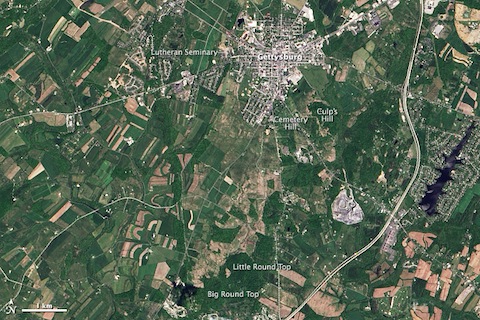
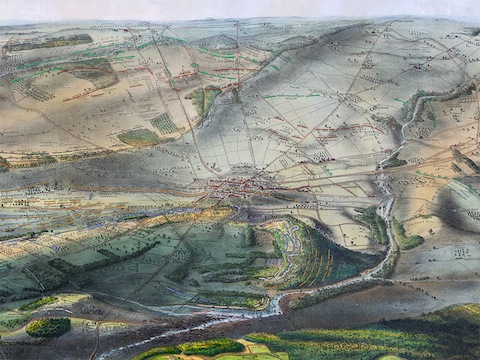
Using so-called GIS (Geo­graph­ic Infor­ma­tion Sys­tems), Knowles and her team are able to show what was hid­den from the sol­ders’ views dur­ing such key moments as Pickett’s Charge. The team used sev­er­al peri­od maps, like the 1863 “iso­met­ri­cal draw­ing” at the top, in their recon­struc­tions. They also used satel­lite images from NASA, includ­ing the May 2013 pic­ture below from the Oper­a­tional Land Imager (OLI). You can see Knowles and her team’s painstak­ing geo­graph­i­cal and topo­graph­ic recon­struc­tions of the coun­try’s costli­est rift at the Smith­son­ian Magazine’s site.

gettysburg_oli_2013134

Relat­ed Con­tent:

Hiroshi­ma Atom­ic Bomb­ing Remem­bered with Google Earth

The Get­tys­burg Address Ani­mat­ed

Behold Charles Laughton Deliv­er­ing the Get­tys­burg Address in its Entire­ty in Rug­gles of Red Gap

Josh Jones is a writer and musi­cian based in Wash­ing­ton, DC. Fol­low him at @jdmagness

Teacher Wears Same Groovy Outfit In Yearbook Photo 40 Years Straight

In 1973, Dale Irby, a teacher at Pre­ston­wood Ele­men­tary in Dal­las, decid­ed to wear a poly­ester shirt and cof­fee-col­ored sweater for school-pic­ture day. With­out real­iz­ing it, he wore the same out­fit the fol­low­ing year. Accord­ing to the Dal­las News, Dale’s wife noticed the emerg­ing trend and dared him to do it a third year. And then they fig­ured, ‘Why stop?’ The tra­di­tion con­tin­ued 40 years in total, until Dale and his out­fit retired this year.

via Mash­able

by | Permalink | Make a Comment ( 4 ) |

Great Moments in Computer History: Douglas Engelbart Presents “The Mother of All Demos” (1968)

Dou­glas Engel­bart, a tech­nol­o­gy pio­neer best known for his inven­tion of the com­put­er mouse, died in Ather­ton, Cal­i­for­nia on Wednes­day. He was 88 years old. Engel­bart began work­ing at the Stan­ford Research Insti­tute (SRI Inter­na­tion­al) in 1957, and there, accord­ing to John Markof­f’s obit­u­ary in The New York Times, he began try­ing to make the com­put­er screen “a work­sta­tion that would orga­nize all the infor­ma­tion and com­mu­ni­ca­tions for a giv­en project.” It’s a con­cept we take for grant­ed today. But it was con­sid­ered far-fetched back then. A decade lat­er, Engel­bart brought us all into the world of inter­ac­tive com­put­ing and graph­ic inter­faces when, in 1968, he pre­sent­ed what’s now called “The Moth­er of All Demos.” You can watch it in its entire­ty above. Stan­ford’s Mous­eSite sets the stage for what you’re going to see:

On Decem­ber 9, 1968, Dou­glas C. Engel­bart and the group of 17 researchers work­ing with him in the Aug­men­ta­tion Research Cen­ter at Stan­ford Research Insti­tute in Men­lo Park, CA, pre­sent­ed a 90-minute live pub­lic demon­stra­tion of the online sys­tem, NLS, they had been work­ing on since 1962. The pub­lic pre­sen­ta­tion was a ses­sion of the Fall Joint Com­put­er Con­fer­ence held at the Con­ven­tion Cen­ter in San Fran­cis­co, and it was attend­ed by about 1,000 com­put­er pro­fes­sion­als. This was the pub­lic debut of the com­put­er mouse. But the mouse was only one of many inno­va­tions demon­strat­ed that day, includ­ing hyper­text, object address­ing and dynam­ic file link­ing, as well as shared-screen col­lab­o­ra­tion involv­ing two per­sons at dif­fer­ent sites com­mu­ni­cat­ing over a net­work with audio and video inter­face.

If you want to get right to the action, you can watch the sec­tion where Engel­bart demos the mouse here, plus see pic­tures of his orig­i­nal mouse here. Through the links below, you can relive oth­er great moments in com­put­ing his­to­ry.

Relat­ed Con­tent:

Pong, 1969: A Mile­stone in Video Game His­to­ry

The First 3D Dig­i­tal Film Cre­at­ed by Ed Cat­mull, Co-Founder of Pixar (1970)

The First Piz­za Ordered by Com­put­er, 1974

Steve Jobs Demos the First Mac­in­tosh in 1984

Watch the World’s Old­est Work­ing Dig­i­tal Com­put­er — the 1951 Har­well Deka­tron — Get Fired Up Again

Watch Franz Kafka, the Wonderful Animated Film by Piotr Dumala


Let’s sneak in a quick birth­day cel­e­bra­tion before the 4th. Franz Kaf­ka was born on this day (July 3), a good 130 years ago. To com­mem­o­rate the occa­sion, we’re pre­sent­ing Piotr Dumala’s 1992 short ani­mat­ed film called, quite sim­ply, Franz Kaf­ka. Dumala’s ani­ma­tion tech­nique grew out of his train­ing as a sculp­tor, when he start­ed exper­i­ment­ing with scratch­ing images into paint­ed plas­ter. Lat­er he devel­oped a more full blown method known as “destruc­tive ani­ma­tion,” which is on full dis­play in the film. You can learn more about Dumala and his approach here. The 16-minute film is based on The Diaries of Franz Kaf­ka, and now appears in our col­lec­tion of 525 Free Movies Online. Also on our site, you can view Dumala’s adap­ta­tion of Dos­to­evsky’s Crime and Pun­ish­ment.

Note: This film/post orig­i­nal­ly appeared on our site in 2010. Still enam­ored by Dumala’s work, we thought it was time to bring it back.

If you would like to sign up for Open Culture’s free email newslet­ter, please find it here. It’s a great way to see our new posts, all bun­dled in one email, each day.

If you would like to sup­port the mis­sion of Open Cul­ture, con­sid­er mak­ing a dona­tion to our site. It’s hard to rely 100% on ads, and your con­tri­bu­tions will help us con­tin­ue pro­vid­ing the best free cul­tur­al and edu­ca­tion­al mate­ri­als to learn­ers every­where. You can con­tribute through Pay­Pal, Patre­on, and Ven­mo (@openculture). Thanks!

Relat­ed Con­tent:

Kafka’s Night­mare Tale, ‘A Coun­try Doc­tor,’ Told in Award-Win­ning Japan­ese Ani­ma­tion

Vladimir Nabokov (Chan­nelled by Christo­pher Plum­mer) Teach­es Kaf­ka at Cor­nell

Nabokov Makes Edi­to­r­i­al Improve­ments to Kafka’s The Meta­mor­pho­sis

Find works by Kaf­ka in our Free eBooks and Free Audio Books col­lec­tions

by | Permalink | Make a Comment ( 5 ) |

Hearsay of the Soul: A 5‑Channel Video Installation by Celebrated German Filmmaker Werner Herzog

werner_herzog_1

David Lynch has embraced visu­al art and the pos­si­bil­i­ties of the new music indus­try. With Pina, Wim Wen­ders made one of the most acclaimed works in the lat­est, super­hero-filled wave of 3D movies. Jean-Luc Godard… well, I could­n’t quite tell you what he has got up to with his lat­est pic­ture, but it sounds con­cep­tu­al­ly and tech­no­log­i­cal­ly for­ward-look­ing indeed. Clear­ly, some of the cre­ators best suit­ed for the new cin­e­mat­ic real­i­ty in which we find our­selves also hap­pen to have already logged decades and decades in the craft. Wern­er Her­zog, direc­tor of Cave of For­got­ten Dreams, anoth­er one of the few recent 3D movies you still hear peo­ple talk­ing about, has exe­cut­ed his lat­est project not in the the­ater, but in a muse­um, and not as a tra­di­tion­al film, but as a five-chan­nel video instal­la­tion.

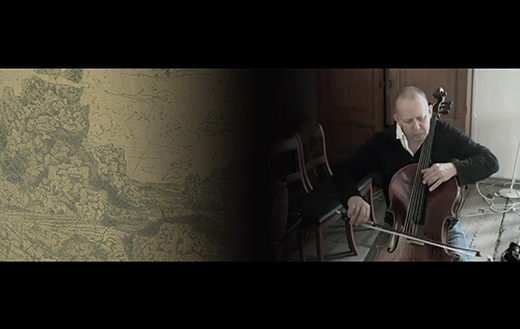
Hearsay of the Soul will run at the Get­ty Cen­ter, a par­tic­u­lar­ly well-known muse­um over­look­ing Los Ange­les — Her­zog’s city of res­i­dence and my own — from July 23 to Jan­u­ary 19. In it, Her­zog com­bines land­scape etch­ings by Dutch Gold­en Age mas­ter print­mak­er and Rem­brandt-influ­encer Her­cules Segers with music from two of Segers’ mod­ern coun­try­men, cel­list Ernst Rei­jseger and organ­ist Har­men Fraan­je. (Her­zog afi­ciona­dos will, in fact, rec­og­nize Rei­jseger’s work from the score of Cave of For­got­ten Dreams.) “They are like flash­lights held in our uncer­tain hands,” Herz­zog says of Segers’ images, “a fright­ened light that opens breach­es into the recess­es of a place that seems some­what known to us: our selves. We morph with these images. Her­cules Segers’s images and my films do not speak to each oth­er, but for a brief moment, I hope, they might dance with each oth­er.” You can glimpse a few of the instal­la­tion’s images and hear a few of its sounds just above.

Relat­ed Con­tent:

Wern­er Her­zog and Cor­mac McCarthy Talk Sci­ence and Cul­ture

Errol Mor­ris and Wern­er Her­zog in Con­ver­sa­tion

Por­trait Wern­er Her­zog: The Director’s Auto­bi­o­graph­i­cal Short Film from 1986

Watch Wern­er Her­zog Eats His Shoe by Les Blank, Direc­tor of Qui­et, Quirky Films

Col­in Mar­shall hosts and pro­duces Note­book on Cities and Cul­ture and writes essays on lit­er­a­ture, film, cities, Asia, and aes­thet­ics. He’s at work on a book about Los Ange­lesA Los Ange­les Primer. Fol­low him on Twit­ter at @colinmarshall.

A Song of Our Warming Planet: Cellist Turns 130 Years of Climate Change Data into Music

If you use data graph­ics and tech­ni­cal illus­tra­tions to explain cli­mate change to most Amer­i­cans, their eyes will glaze over. So Uni­ver­si­ty of Min­neso­ta under­grad Daniel Craw­ford is try­ing a dif­fer­ent approach. He’s using music to com­mu­ni­cate the lat­est in cli­mate sci­ence. Draw­ing on a method called “data soni­fi­ca­tion” that con­verts glob­al tem­per­a­ture records into a series of musi­cal notes, Craw­ford and his trusty cel­lo have cre­at­ed “A Song of Our Warm­ing Plan­et.” Here’s some of the tech­ni­cal back­sto­ry you need to know:

Craw­ford based his com­po­si­tion on sur­face tem­per­a­ture data from NASA’s God­dard Insti­tute of Space Stud­ies. The tem­per­a­ture data were mapped over a range of three octaves, with the cold­est year on record (–0.47 °C in 1909) set to the low­est note on the cel­lo (open C). Each ascend­ing halftone is equal to rough­ly 0.03°C of plan­e­tary warm­ing.

In Crawford’s com­po­si­tion, each note rep­re­sents a year, ordered from 1880 to 2012. The pitch reflects the aver­age tem­per­a­ture of the plan­et rel­a­tive to the 1951–80 base line. Low notes rep­re­sent rel­a­tive­ly cool years, while high notes sig­ni­fy rel­a­tive­ly warm ones.

Craw­ford has released the score and sound files under a Cre­ative Com­mons license.

Down­load the sheet music (PDF) | Down­load the audio file (MP3) | Play the audio file only | Code to embed the audio file

To delve deep­er into what’s hap­pen­ing to our cli­mate, we sug­gest you spend time with Glob­al Warm­ing: a free course from the Uni­ver­si­ty of Chica­go.

via i09

Fol­low us on Face­bookTwit­ter and Google Plus and share intel­li­gent media with your friends! They’ll thank you for it.


by | Permalink | Make a Comment ( 7 ) |

Learn 48 Languages for Free Online: A Big Update to Our Master List

SONY DSCRight in time for your trav­els, we’ve just com­plet­ed a big update to our rich col­lec­tion of Free For­eign Lan­guage Lessons. Fea­tur­ing free audio and video lessons, this handy resource will help you learn to speak Span­ish, French, Ger­man, Eng­lish, Chi­nese, Ara­bic, Ital­ian, and Russ­ian, plus 36 oth­er lan­guages. And it’s all for free, which is a lot less than what Roset­ta Stone and oth­er ven­dors will charge you. Not bad, espe­cial­ly con­sid­er­ing that some of the lessons come from ven­er­a­ble insti­tu­tions like Yale, Cam­bridge, Carnegie Mel­lon, Emory, the BBC, the US Peace Corps, the For­eign Ser­vice Insti­tute, and more.

The com­plete list of Free For­eign Lan­guage Lessons, includes the fol­low­ing lan­guages: Ara­bic, Bul­gar­i­an, Cam­bo­di­an, Cata­lan, Chi­nese (Man­darin & Can­tonese), Czech, Dan­ish, Dutch, Eng­lish, Finnish, French, Gael­ic, Ger­man, Greek, Hebrew, Hin­di, Hun­gar­i­an, Ice­landic, Indone­sian, Irish, Ital­ian, Japan­ese, Kore­an, Lao, Latin, Lithuan­ian, Lux­em­bour­gish, Maori, Nor­we­gian, Pol­ish, Por­tuguese, Roman­ian, Russ­ian, Ser­bo-Croa­t­ian, Sign Lan­guage, Span­ish, Swahili, Taga­log, Thai, Turk­ish, Ukrain­ian, Urdu, Viet­namese, Welsh and Yid­dish.

If we’re miss­ing any great resources, please tell us in the com­ments sec­tion below.

Relat­ed Con­tent:

Free Online Cours­es from Top Uni­ver­si­ties

Free Kids Edu­ca­tion­al Resources: Video Lessons, Apps, Books, Web­sites & More

Free MOOCs from Great Uni­ver­si­ties (Many Offer­ing Cer­tifi­cates)

Free Audio Books: Down­load Great Books for Free

Free eBooks: Down­load to Kin­dle, iPad/iPhone & Nook

by | Permalink | Make a Comment ( 20 ) |

David Bowie Narrates Sergei Prokofiev’s Children’s Symphony Peter and the Wolf

Some of the 20th century’s great­est actors have nar­rat­ed Sergei Prokofiev’s sym­phon­ic sto­ry Peter and the Wolf, includ­ing Peter Usti­nov, Alec Guin­ness, Ralph Richard­son, John Giel­gud, Basil Rath­bone, Edna Ever­age, and one of my favorites, Boris Karloff. In 1978, David Bowie joined this illus­tri­ous com­pa­ny with his record­ing of the clas­sic for RCA Vic­tor with the Philadel­phia Orches­tra. Find it above.

Bowie begins, as do all of the nar­ra­tors, with a brief sum­ma­ry of how this sym­pho­ny works, with dif­fer­ent instru­men­ta­tion rep­re­sent­ing the var­i­ous char­ac­ters (see here for full text of the sto­ry and descrip­tion of themes):

Each char­ac­ter in the tale is going to be rep­re­sent­ed by a dif­fer­ent instru­ment of the orches­tra. For instance, the bird will be played by the flute. (Like this.) Here’s the duck, played by the oboe. The cat by the clar­inet. The bas­soon will rep­re­sent grand­fa­ther. The wolf by the French horns. And Peter by the strings. The blast of the hunters’ shot­guns played by the ket­tle drums.

Bowie has said he that he made the record­ing as a present for his son, Dun­can, then 7. Prokofiev, com­mis­sioned by the Cen­tral Children’s The­atre in Moscow in 1936 to help cul­ti­vate the musi­cal tastes of young chil­dren, wrote the sym­pho­ny in four days. As Tim Smith points out in an essay for PBS, Peter and the Wolf has “helped intro­duce gen­er­a­tions of chil­dren to the instru­ments of the orches­tra and the con­cept of telling a sto­ry through music.” I know it will be a part of my daughter’s musi­cal edu­ca­tion. I’m pret­ty sure we’ll start with Bowie’s ver­sion.

Relat­ed Con­tent: 

David Bowie Releas­es Vin­tage Videos of His Great­est Hits from the 1970s and 1980s

The Sto­ry of Zig­gy Star­dust: How David Bowie Cre­at­ed the Char­ac­ter that Made Him Famous

Rare 1946 Film: The Great Russ­ian Com­pos­er Sergei Prokofiev Plays Piano, Dis­cuss­es His Music

Josh Jones is a writer and musi­cian based in Wash­ing­ton, DC. Fol­low him at @jdmagness

« Go BackMore in this category... »
Quantcast