Rare Miles Davis Live Recordings Capture the Jazz Musician at the Height of His Powers

Very ear­ly in his career as a band­leader, Miles Davis devel­oped a rep­u­ta­tion for a too-cool per­sona on stage. Whether turn­ing his back on the crowd or walk­ing off­stage while his side­men soloed, his refusal to cater to audi­ence expec­ta­tions only enhanced his mys­tique. What­ev­er fans and crit­ics made of Miles’ seem­ing contempt—political state­ment, eccen­tric­i­ty, or daz­zling egotism—his live play­ing trans­fixed those who had the priv­i­lege to see him and con­sis­tent­ly drew the best play­ers in his­to­ry into his orbit.

The six­ties saw him at the peak of his pow­ers as a live per­former. He hit the pop charts in the ear­ly part of the decade with the 1962 two-LP set In Per­son, record­ed over two nights at the Black­hawk in San Fran­cis­co. The very next month he record­ed the Gram­my-nom­i­nat­ed Miles Davis at Carnegie Hall with an orches­tra led by Gil Evans. In 2007, a never‑before released live gem from the 1963 Mon­terey Jazz Fes­ti­val thrilled fans (lis­ten to “So What” from that record­ing above). All of these record­ings cap­ture Davis dur­ing his “tran­si­tion peri­od,” between his first and sec­ond “great quin­tets” (which fea­tured John Coltrane and Wayne Short­er on sax, respec­tive­ly).

Direct­ly above, hear a less­er-known, offi­cial­ly unre­leased record­ing from that tran­si­tion­al peri­od. Cap­tured by French pub­lic broad­cast­ing com­pa­ny ORFT, the ses­sions took place at the Juan-Les-Pins Fes­ti­val in Antibes in July 26–28, 1963, just a few months before Mon­terey. Davis is backed here by the same ensem­ble: George Cole­man on tenor sax, Her­bie Han­cock on piano, Ron Carter on bass, and (then sev­en­teen-year-old) Tony Williams on drums. These record­ings rep­re­sent alter­nates and out­takes from the record orig­i­nal­ly released in ’64 as In Europe, reis­sued in 1989 as Miles in Antibes. The full track­list (below) is book­end­ed by two ver­sions of Kind of Blue open­er “So What,” and it’s inter­est­ing to com­pare these wild­ly fre­net­ic ’63 live iter­a­tions from Mon­terey and Antibes to the clas­sic of laid-back cool from the late 50s.

1. So What (July 26, 1963)

2  Stel­la By Starlight (July 26)

3. Sev­en Steps To Heav­en – Walkin’ (July 26)

4. If I were a Bell (July 28, 1963)

5. So What (July 28)

Davis’ first and sec­ond “great quin­tets” are per­haps his most-loved groups. How­ev­er, the short-lived 1963 ensem­ble above cer­tain­ly pushed him in a new direc­tion. For anoth­er piv­otal moment of tran­si­tion, watch the 1969 return to the Juan-Les-Pins Jazz Fest in the video below, which shows Davis again mov­ing in a very dif­fer­ent direc­tion, pre­sag­ing his ’70s swerves into acid rock and funk. This per­for­mance fea­tures anoth­er all-star ensem­ble, with Wayne Short­er on tenor and sopra­no sax, Chick Corea on elec­tric piano, Dave Hol­land on bass, and Jack DeJohnette on drums.

via Past Dai­ly

Relat­ed Con­tent:

The Miles Davis Sto­ry, the Defin­i­tive Film Biog­ra­phy of a Jazz Leg­end

Miles Davis and His ‘Sec­ond Great Quin­tet,’ Filmed Live in Europe, 1967

‘The Sound of Miles Davis’: Clas­sic 1959 Per­for­mance with John Coltrane

Josh Jones is a writer and musi­cian based in Wash­ing­ton, DC. Fol­low him @jdmagness

Mikhail Bulgakov’s The Master and Margarita, Animated in Two Minutes

You prob­a­bly know Mikhail Bul­gakov through one of two works: Heart of a Dog, his short nov­el about the forced trans­for­ma­tion of a dog into a human being (com­par­isons to the grand Sovi­et project have, indeed, been sug­gest­ed), or The Mas­ter and Mar­gari­ta, his longer, lat­er nov­el about a vis­it paid to Sovi­et Rus­sia by the dev­il him­self. Heart of a Dog, writ­ten in 1925, did­n’t see offi­cial Russ­ian pub­li­ca­tion until 1987; The Mas­ter and Mar­gari­ta, writ­ten between 1928 and 1940, did­n’t come out until 1967. This sug­gests that Bul­gakov’s lit­er­ary per­spec­tive may have touched a nerve with the author­i­ties, but the art­ful­ness with which he expressed it has since lift­ed him to the top of the twen­ti­eth-cen­tu­ry Russ­ian canon.

Oth­er cre­ators have paid to trib­ute to the enor­mous­ly influ­en­tial The Mas­ter and Mar­gari­ta with art­ful­ness of their own. We now have at least five films, two tele­vi­sion series, nine­teen stage pro­duc­tions, two bal­lets, four operas (though the com­pli­cat­ed mate­r­i­al defeat­ed Andrew Lloyd Web­ber’s attempt at adap­ta­tion) and a graph­ic nov­el based in whole or in part on Bul­gakov’s book. At the top of the post, you can watch Svet­lana Petro­va and Natalia Bere­zo­vaya’s Mar­gari­ta, an ani­mat­ed short that, ambi­tious in its own way, attempts to cap­ture The Mas­ter and Mar­gari­ta in two ever-shift­ing min­utes of imagery. (Or, as this Russ­ian ani­ma­tion data­base puts it, “Impu­dent young ani­ma­tors dare to touch Bul­gakov.” ) Though made in 1997, it comes off today as quite a tan­ta­liz­ing “book trail­er,” though I would sub­mit that Bul­gakov’s writ­ing needs none of our inter­net-age mar­ket­ing inno­va­tions.

Relat­ed Con­tent:

18 Ani­ma­tions of Clas­sic Lit­er­ary Works: From Pla­to and Shake­speare, to Kaf­ka, Hem­ing­way and Gaiman

Two Beau­ti­ful­ly-Craft­ed Russ­ian Ani­ma­tions of Chekhov’s Clas­sic Children’s Sto­ry “Kash­tan­ka”

Crime and Pun­ish­ment by Fyo­dor Dos­toyevsky Told in a Beau­ti­ful­ly Ani­mat­ed Film by Piotr Dumala

Col­in Mar­shall hosts and pro­duces Note­book on Cities and Cul­ture and writes essays on lit­er­a­ture, film, cities, Asia, and aes­thet­ics. He’s at work on a book about Los Ange­les, A Los Ange­les Primer. Fol­low him on Twit­ter at @colinmarshall.

Watch the Finals of the Poetry Out Loud Competition, Live Tonight

“Hav­ing oth­ers’ poems in our minds and hearts means we’re nev­er real­ly alone.”
Karen Kovacik, Indi­ana State Poet Lau­re­ate

Youssef Biaz, recit­ing here, was 16 years old when he was named Poet­ry Out Loud Nation­al Cham­pi­on. Biaz won a $20,000 award and $500 worth of poet­ry books for his high school in Auburn, Alaba­ma. He went on to recite poet­ry at the White House along with Rita Dove, Com­mon, and Bil­ly Collins. His favorite poet, Sharon Olds, just won the Pulitzer Prize for Poet­ry.

This past week­end, kids across the coun­try packed their bags and head­ed to Wash­ing­ton, DC, to recite poet­ry in the eighth con­sec­u­tive year of the nation­al com­pe­ti­tion, Poet­ry Out Loud. The recita­tion com­pe­ti­tion, pre­sent­ed by the Poet­ry Foun­da­tion and the Nation­al Endow­ment for the Arts, brings fifty-three Amer­i­can high school stu­dents to the nation’s cap­i­tal to com­pete for the title of 2013 Poet­ry Out Loud Nation­al Cham­pi­on. It will cul­mi­nate tonight in an evening of recita­tion com­pe­ti­tion at 7pm EDT.

If you can’t make it to DC for the free event this year, which fea­tures host Anna Dea­vere Smith and singer-cel­list Ben Sollee, view the live web­cast of Poet­ry Out Loud, or host a view­ing par­ty and bid a cel­e­bra­to­ry adieu to Nation­al Poet­ry Month.

Kristin Gecan is the media asso­ciate at the Poet­ry Foun­da­tion, which is the pub­lish­er of Poet­ry mag­a­zine and an inde­pen­dent lit­er­ary orga­ni­za­tion com­mit­ted to a vig­or­ous pres­ence for poet­ry in our cul­ture. The site also fea­tures an archive of more than 10,000 poems. Fol­low the Poet­ry Foun­da­tion on Twit­ter, Tum­blr, Face­book, or Pin­ter­est

Willie Nelson Auditions for The Hobbit Film Sequel, Turns 80 Today

Willie Nel­son, Amer­i­ca’s icon­ic coun­try music singer, has logged lots of miles. And, today, he turns 80, with more than 60 stu­dio albums, 10 live albums, and 27 col­lab­o­ra­tions to his cred­it. Recent­ly, Nel­son showed that he has a lit­tle more tread on his tires when, while vis­it­ing Conan O’Brien’s show, he shot a short audi­tion reel for Peter Jack­son, hop­ing to land the role of Gan­dalf in The Hob­bit sequel. It’s doubt­ful that, wher­ev­er he is, Ian McKel­lan is break­ing a sweat.

For more Tolkien trea­sures don’t miss:

Lis­ten to J.R.R. Tolkien Read a Lengthy Excerpt from The Hob­bit (1952)

Down­load Eight Free Lec­tures on The Hob­bit by “The Tolkien Pro­fes­sor,” Corey Olsen

Dis­cov­er J.R.R. Tolkien’s Per­son­al Book Cov­er Designs for The Lord of the Rings Tril­o­gy

Steven Spielberg’s Obama, Starring Daniel Day Lewis as the President

Sarah Palin did­n’t like the 2013 White House Cor­re­spon­dents’ Din­ner. In a cranky tweet, she wrote: “That #WHCD was pathet­ic. The rest of Amer­i­ca is out there work­ing our ass­es off while these DC ass­clowns throw them­selves a #nerd­prom.” But I have to dis­agree with Amer­i­ca’s most dis­tin­guished half-term gov­er­nor. Some­where in Wash­ing­ton, a hard-work­ing writer imag­ined Barack Oba­ma play­ing Daniel Day Lewis play­ing Barack Oba­ma and had the gump­tion to fol­low the joke entire­ly through. Who­ev­er’s respon­si­ble for real­iz­ing that com­ic moment, we salute you.

Spiel­berg’s Oba­ma aired dur­ing the Cor­re­spon­dents’ Din­ner. You can watch Conan O’Brien’s full com­e­dy rou­tine at the WHCD here.

Relat­ed Con­tent:

Steven Spiel­berg on the Genius of Stan­ley Kubrick

Watch Steven Spielberg’s Debut: Two Films He Direct­ed as a Teenag­er

525 Free Movies Online: Great Clas­sics, Indies, Noir, West­erns, etc.

Inside Break­ing Bad: Watch Conan O’Brien’s Extend­ed Inter­view with the Show’s Cast and Cre­ator

by | Permalink | Make a Comment ( 1 ) |

Neil deGrasse Tyson Explains Why He’s Uncomfortable Being Labeled an ‘Atheist’

The evo­lu­tion­ary biol­o­gist Stephen Jay Gould famous­ly said that sci­ence and reli­gion are “nonover­lap­ping mag­is­te­ria”:

The net of sci­ence cov­ers the empir­i­cal uni­verse: what is it made of (fact) and why does it work this way (the­o­ry). The net of reli­gion extends over ques­tions of moral mean­ing and val­ue. These two mag­is­te­ria do not over­lap, nor do they encom­pass all inquiry (con­sid­er, for starters, the mag­is­teri­um of art and the mean­ing of beau­ty). To cite the arch clich­es, we get the age of rocks, and reli­gion retains the rock of ages; we study how the heav­ens go, and they deter­mine how to go to heav­en.

But sci­ence and reli­gion, as it is wide­ly prac­ticed, do over­lap. They both make spe­cif­ic claims about the nature and his­to­ry of the Uni­verse. Some reli­gion­ists do indeed make claims about the age of rocks.

Giv­en the obvi­ous over­lap, it’s not sur­pris­ing that scientists–particularly those who work in the most fun­da­men­tal and gen­er­al of fields, like physics and cosmology–are often asked for their views on reli­gion. In this short video from Big Think, astro­physi­cist and pop­u­lar sci­ence writer Neil deGrasse Tyson explains why he is loathe to take sides on the issue, and why he dis­likes the word “athe­ist.”

“The moment when some­one attach­es you to a phi­los­o­phy or a move­ment,” says Tyson, “then they assign all the bag­gage, and all the rest of the phi­los­o­phy that goes with it, to you. And when you want to have a con­ver­sa­tion, they will assert that they already know every­thing impor­tant that there is to know about you because of that asso­ci­a­tion. And that’s not the way to have a con­ver­sa­tion.”

Relat­ed Con­tent:

Neil deGrasse Tyson Lists 8 (Free) Books Every Intel­li­gent Per­son Should Read

Neil deGrasse Tyson Deliv­ers the Great­est Sci­ence Ser­mon Ever

Alain de Bot­ton Wants a Reli­gion for Athe­ists: Intro­duc­ing Athe­ism 2.0

Stephen Col­bert Talks Sci­ence with Astro­physi­cist Neil deGrasse Tyson

A Short Animated History of the GIF

In 1987, Com­puserve begat­teth Image For­mat 87A.

Image For­mat 87A begat­teth Graph­ics Inter­change For­mat or GIF (rhymes with a cer­tain brand of peanut but­ter, the video his­to­ry above help­ful­ly points out).

The pro­lif­er­a­tions of free online GIF gen­er­a­tors begat­teth the count­less annoy­ing, smarmy, bone­head­ed ani­mat­ed loops you’ve seen junk­ing up emails, pro­file pic­tures, and MySpace pages.

Of course, some of them are also pret­ty cool, which is why they’re being cel­e­brat­ed with a fes­ti­val at the Brook­lyn Acad­e­my of Music. No tick­ets nec­es­sary. Mov­ing the Still: A GIF Fes­ti­val will be screen­ing through June on the out­door elec­tron­ic bill­board meant to pro­mote upcom­ing and cur­rent attrac­tions. Con­ceiv­ably, view­ers with wheels and time to spare could take it in on an end­less loop of their own, by cir­cling up Flat­bush to Lafayette, then mov­ing up when the light changes, bat­tling traf­fic from the near­by Bar­clays Cen­ter on the return leg.

What do we stand to see in this fes­ti­val? The video his­to­ry leads us to believe that any­thing is pos­si­ble, though cer­tain things—accidental hap­pen­ings, laser cats, col­or­ful barf­ing (…wait, col­or­ful barfing?)—have a built in appeal.

Relat­ed Con­tent:

A Gallery of Stan­ley Kubrick Cin­ema­graphs: Icon­ic Moments Briefly Ani­mat­ed

Kids (and Less Savvy Mar­keters) Imag­ine the Inter­net in 1995

Ayun Hal­l­i­day grav­i­tates toward the paper GIFs known as flip books. Fol­low her @AyunHalliday

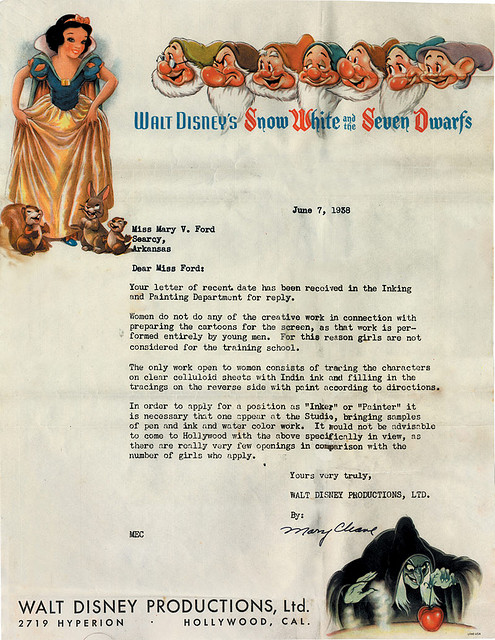
No Women Need Apply: A Disheartening 1938 Rejection Letter from Disney Animation

Disney Letter

Put your­self in the mind of an artis­tic young woman who goes to see Dis­ney’s Snow White and the Sev­en Dwarfs when it first opens in 1937. Cap­ti­vat­ed by the film’s ground­break­ing cel-based cin­e­mat­ic ani­ma­tion, under­stand­ing that it rep­re­sents the future of the art form, you feel you should pur­sue a career with a stu­dio your­self. Alas, in response to the let­ter of inquiry you send Dis­ney’s way, you receive the terse rejec­tion let­ter above. “Women do not do any of the cre­ative work in con­nec­tion with prepar­ing the car­toons for the screen,” it flat­ly states, “as that work is per­formed entire­ly by young men. For this rea­son girls are not con­sid­ered for the train­ing school.” Your only remain­ing hope? To aim low­er on the totem pole and become an “Inker” or “Painter,” but “it would not be advis­able to come to Hol­ly­wood with the above specif­i­cal­ly in view, as there are real­ly very few open­ings in com­par­i­son with the num­ber of girls who apply.”

Times have changed; women now cre­ate ani­ma­tion. But to catch a glimpse of the indus­try in decid­ed­ly pre-changed times, revis­it the 1939 pro­mo­tion­al doc­u­men­tary short How Walt Dis­ney Car­toons Are Made. In it, you’ll see these very young men hard at work, as well as those “pret­ty girls” hired to do ink­ing and col­or. Pre­war Dis­ney turned out some mas­ter­pieces, no doubt, but by today’s stan­dards their atti­tudes toward gen­der may leave some­thing to be desired. “This let­ter orig­i­nal­ly belonged to my grand­moth­er,” writes the user who dis­cov­ered the note above. “After she passed away we dis­cov­ered it and were sur­prised at how well it was pre­served for being near­ly 70 years old.” Young women like her, aspir­ing to high places in ani­ma­tion, found them­selves forced to find alter­nate routes in, although after receiv­ing that rejec­tion let­ter on that sta­tionery — embla­zoned with Snow White her­self, adding insult to injury — I would­n’t blame them for look­ing into oth­er fields entire­ly.

via Soci­o­log­i­cal Images & Mefi

Relat­ed con­tent:

How Walt Dis­ney Car­toons Are Made

Don­ald Duck Wants You to Pay Your Tax­es (1943)

Walt Dis­ney Presents the Super Car­toon Cam­era (1957)

Col­in Mar­shall hosts and pro­duces Note­book on Cities and Cul­ture and writes essays on lit­er­a­ture, film, cities, Asia, and aes­thet­ics. He’s at work on a book about Los Ange­les, A Los Ange­les Primer. Fol­low him on Twit­ter at @colinmarshall.

« Go BackMore in this category... »
Quantcast