Slavoj Žižek Publishes a Very Clearly Written Essay-Length Response to Chomsky’s “Brutal” Criticisms

zizek sitting

Fur has flown, claws and teeth were bared, and fold­ing chairs were thrown! But of course I refer to the bristly exchange between those two stars of the aca­d­e­m­ic left, Slavoj Žižek and Noam Chom­sky. And yes, I’m pok­ing fun at the way we—and the blo­gos­phere du jour—have turned their shots at one anoth­er into some kind of celebri­ty slap­fight or epic rap bat­tle grudge match. We aim to enter­tain as well as inform, it’s true, and it’s hard to take any of this too seri­ous­ly, since par­ti­sans of either thinker will tend to walk away with their pre­vi­ous assump­tions con­firmed once every­one goes back to their cor­ners.

But despite the seem­ing cat­ti­ness of Chom­sky and Žižek’s high­ly medi­at­ed exchanges (per­haps we’re drum­ming it up because a sim­ple face-to-face debate has yet to occur, and prob­a­bly won’t), there is a great deal of sub­stance to their vol­leys and ripostes, as they butt up against crit­i­cal ques­tions about what phi­los­o­phy is and what role it can and should play in polit­i­cal strug­gle. As to the for­mer, must all phi­los­o­phy emu­late the sci­ences? Must it be empir­i­cal and con­sis­tent­ly make trans­par­ent truth claims? Might not “the­o­ry,” for exam­ple (a word Chom­sky dis­miss­es in this con­text), use the forms of literature—elaborate metaphor, play­ful sys­tems of ref­er­ence, sym­bol­ism and anal­o­gy? Or make use of psy­cho­an­a­lyt­ic and Marx­i­an ter­mi­nol­o­gy in evoca­tive and nov­el ways in seri­ous attempts to engage with ide­o­log­i­cal for­ma­tions that do not reveal them­selves in sim­ple terms?

Anoth­er issue raised by Chomsky’s cri­tiques: should the work of philoso­phers who iden­ti­fy with the polit­i­cal left endeav­or for a clar­i­ty of expres­sion and a direct util­i­ty for those who labor under sys­tems of oppres­sion, lest obscu­ran­tist and jar­gon-laden writ­ing become itself an oppres­sive tool and self-ref­er­en­tial game played for elit­ist intel­lec­tu­als? These are all impor­tant ques­tions that nei­ther Žižek nor Chom­sky has yet tak­en on direct­ly, but that both have oblique­ly addressed in testy off-the-cuff ver­bal inter­views, and that might be pur­sued by more dis­in­ter­est­ed par­ties who could use their exchange as an exem­plar of a cur­rent method­olog­i­cal rift that needs to be more ful­ly explored, if nev­er, per­haps, ful­ly resolved. As Žižek makes quite clear in his most recent—and very clearly-written—essay-length reply to Chomsky’s lat­est com­ment on his work (pub­lished in full on the Ver­so Books blog), this is a very old con­flict.

Žižek spends the bulk of his reply exon­er­at­ing him­self of the charges Chom­sky levies against him, and find­ing much com­mon ground with Chom­sky along the way, while ulti­mate­ly defend­ing his so-called con­ti­nen­tal approach. He pro­vides ample cita­tions of his own work and oth­ers to sup­port his claims, and he is detailed and spe­cif­ic in his his­tor­i­cal analy­sis. Žižek is skep­ti­cal of Chomsky’s claims to stand up for “vic­tims of Third World suf­fer­ing,” and he makes it plain where the two dis­agree, not­ing, how­ev­er, that their antag­o­nism is most­ly a ter­ri­to­r­i­al dis­pute over ques­tions of style (with Chom­sky as a slight­ly morose guardian of seri­ous, sci­en­tif­ic thought and Žižek as a some­times buf­foon­ish prac­ti­tion­er of a much more lit­er­ary tra­di­tion). He ends with a dig that is sure to keep fan­ning the flames:

To avoid a mis­un­der­stand­ing, I am not advo­cat­ing here the “post­mod­ern” idea that our the­o­ries are just sto­ries we are telling each oth­er, sto­ries which can­not be ground­ed in facts; I am also not advo­cat­ing a pure­ly neu­tral unbi­ased view. My point is that the plu­ral­i­ty of sto­ries and bias­es is itself ground­ed in our real strug­gles. With regard to Chom­sky, I claim that his bias some­times leads him to selec­tions of facts and con­clu­sions which obfus­cate the com­plex real­i­ty he is try­ing to ana­lyze.

………………….

Con­se­quent­ly, what today, in the pre­dom­i­nant West­ern pub­lic speech, the “Human Rights of the Third World suf­fer­ing vic­tims” effec­tive­ly mean is the right of the West­ern pow­ers them­selves to intervene—politically, eco­nom­i­cal­ly, cul­tur­al­ly, militarily—in the Third World coun­tries of their choice on behalf of the defense of Human Rights. My dis­agree­ment with Chomsky’s polit­i­cal analy­ses lies else­where: his neglect of how ide­ol­o­gy works, as well as the prob­lem­at­ic nature of his biased deal­ing with facts which often leads him to do what he accus­es his oppo­nents of doing.

But I think that the dif­fer­ences in our polit­i­cal posi­tions are so min­i­mal that they can­not real­ly account for the thor­ough­ly dis­mis­sive tone of Chomsky’s attack on me. Our con­flict is real­ly about some­thing else—it is sim­ply a new chap­ter in the end­less gigan­tomachy between so-called con­ti­nen­tal phi­los­o­phy and the Anglo-Sax­on empiri­cist tra­di­tion. There is noth­ing spe­cif­ic in Chomsky’s critique—the same accu­sa­tions of irra­tional­i­ty, of emp­ty pos­tur­ing, of play­ing with fan­cy words, were heard hun­dreds of times against Hegel, against Hei­deg­ger, against Der­ri­da, etc. What stands out is only the blind bru­tal­i­ty of his dis­missal

I think one can con­vinc­ing­ly show that the con­ti­nen­tal tra­di­tion in phi­los­o­phy, although often dif­fi­cult to decode, and sometimes—I am the first to admit this—defiled by fan­cy jar­gon, remains in its core a mode of think­ing which has its own ratio­nal­i­ty, inclu­sive of respect for empir­i­cal data. And I fur­ther­more think that, in order to grasp the dif­fi­cult predica­ment we are in today, to get an ade­quate cog­ni­tive map­ping of our sit­u­a­tion, one should not shirk the resorts of the con­ti­nen­tal tra­di­tion in all its guis­es, from the Hegelian dialec­tics to the French “decon­struc­tion.” Chom­sky obvi­ous­ly doesn’t agree with me here. So what if—just anoth­er fan­cy idea of mine—what if Chom­sky can­not find any­thing in my work that goes “beyond the lev­el of some­thing you can explain in five min­utes to a twelve-year-old” because, when he deals with con­ti­nen­tal thought, it is his mind which func­tions as the mind of a twelve-year-old, the mind which is unable to dis­tin­guish seri­ous philo­soph­i­cal reflec­tion from emp­ty pos­tur­ing and play­ing with emp­ty words?

Relat­ed Con­tent:

Noam Chom­sky Slams Žižek and Lacan: Emp­ty ‘Pos­tur­ing’

Slavoj Žižek Responds to Noam Chom­sky: ‘I Don’t Know a Guy Who Was So Often Empir­i­cal­ly Wrong’

The Feud Con­tin­ues: Noam Chom­sky Responds to Žižek, Describes Remarks as ‘Sheer Fan­ta­sy’

Josh Jones is a writer and musi­cian based in Wash­ing­ton, DC. Fol­low him at @jdmagness

Björk and Sir David Attenborough Team Up in a New Documentary About Music and Technology

There’s a long and com­pan­ion­able his­to­ry between music and math­e­mat­ics. While it is often said that every cul­ture has its own form of music, it’s also near­ly just as true that most ancient cul­tures explored the math­e­mat­i­cal prin­ci­ples of sound. Leave it to the Pythagore­ans of Ancient Greece to notice the rela­tion­ship between musi­cal scales and math­e­mat­i­cal ratios.

How music and sci­ence inter­sect is a more mod­ern inquiry. Fields like neu­ro­science and mod­ern med­i­cine and tech­nol­o­gy make both the roots of music and cog­ni­tion, as well as how sci­ence can inspire music, a crack­ling fron­tier.

Chan­nel 4 in Eng­land aired a new doc­u­men­tary When Björk Met Atten­bor­ough on July 27th with—who better?—naturalist David Atten­bor­ough as host. Atten­bor­ough, who was famous­ly grant­ed priv­i­leged access to film Dian Fossey’s research on moun­tain goril­las, teams up with a less elu­sive but fas­ci­nat­ing fig­ure this time around. Atten­bor­ough actu­al­ly co-hosts the pro­gram with Björk.

Björk’s album Bio­phil­ia is the launch­ing-off point for the doc­u­men­tary. It’s an apt choice. Björk has called live per­for­mances of music on the album a “med­i­ta­tion on the rela­tion­ship between music, nature, and tech­nol­o­gy.”

New instru­ments were spe­cial­ly designed for the album and the songs are con­cep­tu­al­ly wed­ded to nat­ur­al phe­nom­e­na. “Moon” fea­tures musi­cal repeat­ing musi­cal cycles; “Thun­der­bolt” includes arpeg­gios inspired by the time between the moment when light­en­ing is seen and thun­der is heard.

In the doc­u­men­tary, Atten­bor­ough explores how music exists in the nat­ur­al world, tak­ing view­ers through the film­ing of the Reed War­bler and Blue Whales. For her part, Björk argues that cut­ting-edge tech­nol­o­gy keeps music intu­itive and acces­si­ble. Fea­tured are the instru­ments Björk devel­oped for Bio­phil­ia: the “pen­du­lum harp,” the “sharp­si­chord” and the “game­leste,” a com­bi­na­tion game­lan and celes­ta pro­grammed to be played remote­ly on an iPad.

You can watch the doc­u­men­tary above.

via io9

Relat­ed Con­tent:

Watch Philip Glass Remix His Own Music—Then Try it Your­self With a New App

Day of Light: A Crowd­sourced Film by Mul­ti­me­dia Genius Bri­an Eno

Kate Rix writes about dig­i­tal media and edu­ca­tion. Fol­low her on Twit­ter @mskaterix and learn more about her work by vis­it­ing .

Mick Jagger Defends the Rights of the Individual After His Legendary 1967 Drug Bust

Mick Jag­ger turns 70 today, and I think we can safe­ly say at this point that he’s going to stick with this rock star thing. But if at some point in his youth he had decid­ed on a dif­fer­ent career, he might have gone with “post-drug bust inter­view sub­ject” (or civ­il lib­er­tar­i­an activist). It’s a skill he prac­ticed often. Take the clip above, filmed after the leg­endary 1967 Stones’ drug bust after a News of the World arti­cle exposed the band’s recre­ation­al use, along with that of the Moody Blues and The Who. The bust, it turns out, was an L.A. Con­fi­den­tial-style frame-up between the tabloid and the police, and includ­ed the col­lab­o­ra­tion of a deal­er known appro­pri­ate­ly as “Acid King,” real name David Schnei­der­man. Accord­ing to Simon Wells’ exhaus­tive But­ter­fly on a Wheel: The Great Rolling Stones Drug Bust, Schnei­der­man “remains prob­a­bly the most enig­mat­ic fig­ure in rock and roll folk­lore” and claimed to work for the CIA, MI5, and oth­er secret agen­cies (turns out this may have been true).

So the Stones were set up, which doesn’t mean they weren’t also real­ly high (hear Wells tell the sto­ry in detail in an author inter­view above). But they took it in stride, using the pub­lic­i­ty to sub­stan­ti­ate their image as rock and roll’s bad boys and send­ing the suave, vol­u­ble Jag­ger out on press jags, like the very strange pan­el inter­view with the show World in Action, from which the above excerpt comes, where Mick sits down with a cou­ple chap­lains and a cou­ple suits and defends the rights of the indi­vid­ual. Jag­ger proves him­self a very able spokesman for his generation—intelligent, poised, and yes, ridicu­lous­ly hand­some. He not only stood up to defend him­self in inter­views through­out the Stones’ tur­bu­lent drug-fueled hey­days, but he stood by his man Kei­th as well. Check him out below field­ing press ques­tions with aplomb for a slight­ly addled Richards after one of Keith’s drug tri­als.

Relat­ed Con­tent:

Mick Jag­ger Tells the Sto­ry Behind ‘Gimme Shel­ter’ and Mer­ry Clayton’s Haunt­ing Back­ground Vocals

Mick Jag­ger, 15 Years Old, Shows Off His Rock Climb­ing Shoes on British TV (1959)

The Rolling Stones at 50: Mick, Kei­th, Char­lie & Ron­nie Revis­it Their Favorite Songs

Josh Jones is a writer and musi­cian based in Wash­ing­ton, DC. Fol­low him at @jdmagness

The General, “Perhaps the Greatest Film Ever Made,” and 20 Other Buster Keaton Classics Free Online


What motion pic­ture did no less an auteur than Orson Welles call “the great­est com­e­dy ever made, the great­est Civ­il War film ever made, and per­haps the great­est film ever made”? Why, Joseph Frank “Buster” Keaton’s 1926 The Gen­er­al, unsung in its day but heaped with crit­i­cal acclaim ever since. The Gen­er­al, as Roger Ebert describes it, “is an epic of silent com­e­dy, one of the most expen­sive films of its time, includ­ing an accu­rate his­tor­i­cal recre­ation of a Civ­il War episode, hun­dreds of extras, dan­ger­ous stunt sequences, and an actu­al loco­mo­tive falling from a burn­ing bridge into a gorge far below.” This and all of Keaton’s movies, Ebert adds, show­case “a grace­ful per­fec­tion, such a mesh­ing of sto­ry, char­ac­ter and episode, that they unfold like music.”

You can watch The Gen­er­al online right above. If you then find your­self moved to take in more of Keaton’s fil­mog­ra­phy, have a look at this list of his freely view­able pic­tures help­ful­ly com­piled by MUBI. Its still-active links include all of the fol­low­ing movies:

They also pro­vide a list of avail­able films Keaton made in col­lab­o­ra­tion with his fel­low silent star and men­tor Roscoe “Fat­ty” Arbuck­le:

These 21 films will give you a thor­ough primer on the joy of silent com­e­dy as per­fect­ed by Buster Keaton, in Ebert’s words “not the Great Stone Face so much as a man who kept his com­po­sure in the cen­ter of chaos. Oth­er silent actors might mug to get a point across, but Keaton remained obser­vant and col­lect­ed. That’s one rea­son his best movies have aged bet­ter than those of his rival, Char­lie Chap­lin. He seems like a mod­ern vis­i­tor to the world of the silent clowns.”

We will add a num­ber of these films to our col­lec­tion of 500+ Free Movies Online.

Relat­ed Con­tent:

The Pow­er of Silent Movies, with The Artist Direc­tor Michel Haz­anavi­cius

Hol­ly­wood, Epic Doc­u­men­tary Chron­i­cles the Ear­ly His­to­ry of Cin­e­ma

535 Free Movies Online: Great Clas­sics, Indies, Noir, West­erns, etc.

25 Free Char­lie Chap­lin Films Online

Col­in Mar­shall hosts and pro­duces Note­book on Cities and Cul­ture and writes essays on lit­er­a­ture, film, cities, Asia, and aes­thet­ics. He’s at work on a book about Los Ange­lesA Los Ange­les Primer. Fol­low him on Twit­ter at @colinmarshall.

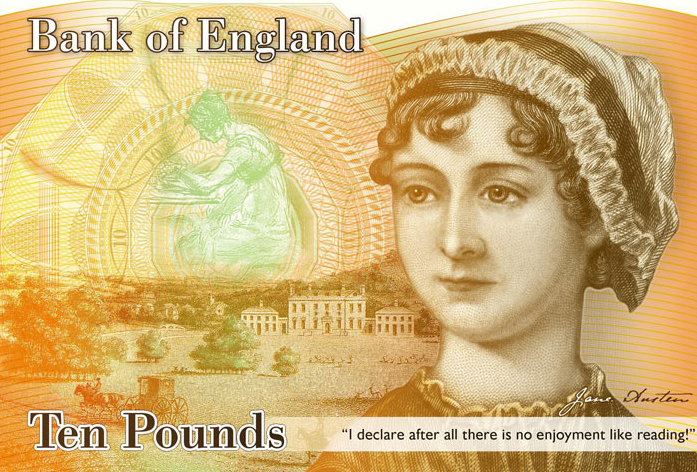
‘Pride and Prejudice’ Author Jane Austen Will Appear on the £10 Note


Jane austen Note

Ear­li­er this year, the Roy­al Mail released a stamp col­lec­tion com­mem­o­rat­ing Jane Austen’s six nov­els. Now, word has leaked out that, prob­a­bly start­ing in 2017, the author of Pride and Prej­u­dice will appear on the £10 note. Said Mark Car­ney, the new gov­er­nor of the Bank of Eng­land, “Jane Austen cer­tain­ly mer­its a place in the select group of his­tor­i­cal fig­ures to appear on our ban­knotes. Her nov­els have an endur­ing and uni­ver­sal appeal and she is recog­nised as one of the great­est writ­ers in Eng­lish lit­er­a­ture.” Only three women have appeared on Eng­lish ban­knotes since they start­ed por­tray­ing his­tor­i­cal fig­ures in 1970. Austen will be the fourth. The Guardian has more on this good sto­ry here.

Relat­ed Con­tent:

New Stamp Col­lec­tion Cel­e­brates Six Nov­els by Jane Austen

Read Jane Austen’s Man­u­scripts Online

Jane Austen, Game The­o­rist: UCLA Poli Sci Prof Finds Shrewd Strat­e­gy in “Clue­less­ness”

Find Jane Austen’s Works in Our Free Audio Books and Free eBooks Col­lec­tions

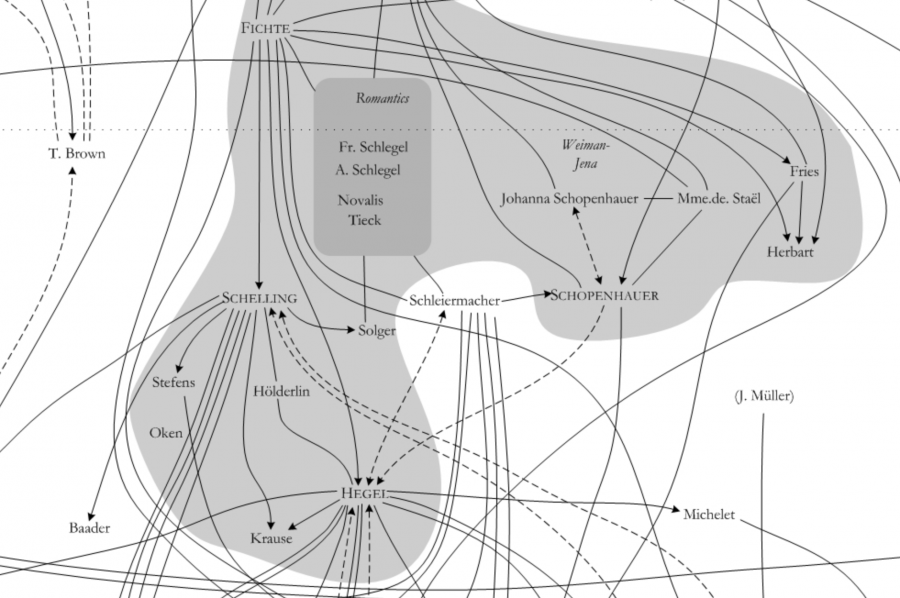
The History of Philosophy, from 600 B.C.E. to 1935, Visualized in Two Massive, 44-Foot High Diagrams


The his­to­ry of phi­los­o­phy tends to get might­i­ly abbre­vi­at­ed. The few phi­los­o­phy pro­fes­sors I know don’t have much truck with gen­er­al­ist “his­to­ry of ideas”-type projects, and the dis­ci­pline itself encour­ages, nay, requires, inten­sive spe­cial­iza­tion. Add to this glib com­ments like Alfred North Whitehead’s on phi­los­o­phy as a “series of foot­notes to Pla­to,” and the emi­nent posi­tion of the errat­ic and com­par­a­tive­ly philo­soph­i­cal­ly-unschooled auto­di­dact Wittgen­stein, and you have, in mod­ern phi­los­o­phy, a sad neglect of the geneal­o­gy of thought.

But take heart, you who, like me, incline toward minor fig­ures and obscure rela­tion­ships. Ohio State pro­fes­sor of phi­los­o­phy Kevin Scharp is a Lin­naean tax­on­o­mist of thought, com­pil­ing charts, “Infor­ma­tion Box­es,” and hand-drawn dia­grams of the “Soci­ol­o­gy of Phi­los­o­phy,” like that above, which cov­ers West­ern phi­los­o­phy from 600 B.C.E. to 600 C.E. and shows the myr­i­ad com­plex con­nec­tions between hun­dreds of indi­vid­ual philoso­phers and schools of thought (such as Sto­icism, Skep­ti­cism, Neo-Pla­ton­ism, etc.). The sec­ond mas­sive dia­gram cov­ers 600 C.E. to about 1935. Each one is about 4 feet wide and 44 feet tall, with the text at 12-pont font. Both dia­grams are based on Soci­ol­o­gy of Philoso­phies by Ran­dall Collins.

Note: to see the dia­grams in detail, you will need to click the links above, and then click again on the images that appear on the new web page.

Relat­ed Con­tent:

The His­to­ry of Phi­los­o­phy … With­out Any Gaps

The Illus­trat­ed Guide to a Ph.D.

Down­load 90 Free Phi­los­o­phy Cours­es and Start Liv­ing the Exam­ined Life

Josh Jones is a writer and musi­cian based in Wash­ing­ton, DC. Fol­low him at @jdmagness

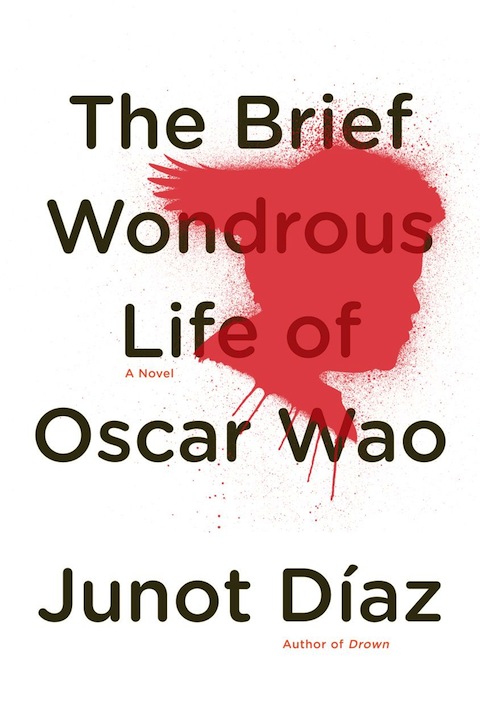
Junot Díaz Annotates a Selection of The Brief Wondrous Life of Oscar Wao for “Poetry Genius”

OscarWao

Junot Díaz’s break­out 2007 nov­el The Brief Won­drous Life of Oscar Wao is a bril­liant illus­tra­tion of “mis­pri­sion,” the act of mis­read­ing or mis­un­der­stand­ing that, in Harold Bloom’s esti­ma­tion, pre­cip­i­tates new lit­er­ary cre­ation. In Díaz’s nov­el, the expe­ri­ences of a young immigrant—a sci-fi nerd and gamer inter­act­ing with cul­ture high and low—brings forth a vibrant, play­ful poly­glot born from mis­un­der­stand­ing and desire.

So far, this read­ing is the stan­dard fare of crit­i­cal appraisals of the book. Now, how­ev­er, we have it on authority—from the author him­self, who has pro­vid­ed his own anno­ta­tions for an excerpt of Oscar Wao via “Poet­ry Genius,” a sec­tion of the pop­u­lar site “Rap Genius,” that allows authors to anno­tate their own work. The por­tion of the nov­el Díaz choos­es to anno­tate is packed with allu­sions to sci­ence fic­tion clas­sics, includ­ing Frank Herbert’s Dune, Plan­et of the Apes, and, of course, Star Wars. In the selec­tion below on Star Wars’ fic­tion­al plan­et Tatooine, Díaz makes a humor­ous and insight­ful com­ment on nerd cul­ture, race and nation­al­i­ty, and the yearn­ing every fan­boy or girl has to see him or her­self in the works they love.

Depend­ing on your fan­boy ori­en­ta­tion either the first or sec­ond most famous desert plan­et in ner­dom. Again when I saw those land­scapes in Star Wars I felt surge of kin­ship. Shit, on first view­ing I also thought my man’s name was Juan Keno­bi. But that’s what hap­pens when you’re an immi­grant kid of col­or in a cul­ture that eras­es your com­mu­ni­ty com­plete­ly. You start invent­ing fil­i­a­tions.


As pub­lish­er Melville House’s blog notes, Díaz’s anno­ta­tion often reads like a “line-by-line author talk.” Per usu­al, the author is as com­fort­able in an off-the-cuff ver­nac­u­lar as he is in an eru­dite lit­er­ary-crit­i­cal voice, as when he cites David Fos­ter Wal­lace, Jorge Luis Borges, Patrick Chamoi­seau, and William Voll­mann as inspi­ra­tions. The Poet­ry Genius site also includes the fas­ci­nat­ing inter­view with Díaz above. Fans of Díaz and the nov­el won’t want to miss it.

Relat­ed Con­tent:

Junot Díaz Reads From “Drown”

Junot Diaz, New Pulitzer Prize Win­ner, Speaks @ Google

Josh Jones is a writer and musi­cian based in Wash­ing­ton, DC. Fol­low him at @jdmagness

The First Bloomsday: Watch Dublin’s Literati Celebrate James Joyce’s Ulysses in Drunken Fashion, 1954

Here’s a fas­ci­nat­ing glimpse of the very first Blooms­day cel­e­bra­tion, filmed in Dublin in 1954.

The footage shows the great Irish comedic writer Bri­an O’Nolan, bet­ter known by his pen name Flann O’Brien, appear­ing very drunk as he sets off with two oth­er renowned post-war Irish writ­ers, Patrick Kavanagh and Antho­ny Cronin, and a cousin of James Joyce, a den­tist named Tom Joyce, on a pil­grim­age to vis­it the sites in James Joyce’s epic nov­el Ulysses.

The footage was tak­en by John Ryan, an artist, pub­lish­er and pub own­er who orga­nized the event. The idea was to retrace the steps of Leopold Bloom and oth­er char­ac­ters from the nov­el, but as Peter Costel­lo and Peter van de Kamp explain in this humer­ous pas­sage from their book, Flann O’Brien: An Illus­trat­ed Biog­ra­phy, things began to go awry right from the start:

The date was 16 June, 1954, and though it was only mid-morn­ing, Bri­an O’Nolan was already drunk.

This day was the fifti­eth anniver­sary of Mr. Leopold Bloom’s wan­der­ings through Dublin, which James Joyce had immor­talised in Ulysses.

To mark this occa­sion a small group of Dublin literati had gath­ered at the Sandy­cove home of Michael Scott, a well-known archi­tect, just below the Martel­lo tow­er in which the open­ing scene of Joyce’s nov­el is set. They planned to trav­el round the city through the day, vis­it­ing in turn the scenes of the nov­el, end­ing at night in what had once been the broth­el quar­ter of the city, the area which Joyce had called Night­town.

Sad­ly, no-one expect­ed O’Nolan to be sober. By rep­u­ta­tion, if not by sight, every­one in Dublin knew Bri­an O’Nolan, oth­er­wise Myles na Gopaleen, the writer of the Cruiskeen Lawn col­umn in the Irish Times. A few knew that under the name of Flann O’Brien, he had writ­ten in his youth a now near­ly for­got­ten nov­el, At Swim-Two-Birds. See­ing him about the city, many must have won­dered how a man with such extreme drink­ing habits, even for the city of Dublin, could have sus­tained a career as a writer.

As was his cus­tom, he had been drink­ing that morn­ing in the pubs around the Cat­tle Mar­ket, where cus­tomers, sup­pos­ed­ly about their law­ful busi­ness, would be served from 7:30 in the morn­ing. Now retired from the Civ­il Ser­vice, on grounds of “ill-health”, he was earn­ing his liv­ing as a free-lance jour­nal­ist, writ­ing not only for the Irish Times, but for oth­er papers and mag­a­zines under sev­er­al pen-names. He need­ed to write for mon­ey as his pen­sion was a tiny one. But this left lit­tle time for more cre­ative work. In fact, O’Nolan no longer felt the urge to write oth­er nov­els.

The rest of the par­ty, that first Blooms­day, was made up of the poet Patrick Kavanagh, the young crit­ic Antho­ny Cronin, a den­tist named Tom Joyce, who as Joyce’s cousin rep­re­sent­ed the fam­i­ly inter­est, and John Ryan, the painter and busi­ness­man who owned and edit­ed the lit­er­ary mag­a­zine Envoy. The idea of the Blooms­day cel­e­bra­tion had been Ryan’s, grow­ing nat­u­ral­ly out of a spe­cial Joyce issue of his mag­a­zine, for which O’Nolan had been guest edi­tor.

Ryan had engaged two horse drawn cabs, of the old fash­ioned kind, which in Ulysses Mr. Bloom and his friends dri­ve to poor Pad­dy Dig­nam’s funer­al. The par­ty were assigned roles from the nov­el. Cronin stood in for Stephen Dedalus, O’Nolan for his father, Simon Dedalus, John Ryan for the jour­nal­ist Mar­tin Cun­ning­ham, and A.J. Lev­en­thal, the Reg­is­trar of Trin­i­ty Col­lege, being Jew­ish, was recruit­ed to fill (unkown to him­self accord­ing to John Ryan) the role of Leopold Bloom.

Kavanagh and O’Nolan began the day by decid­ing they must climb up to the Martel­lo tow­er itself, which stood on a gran­ite shoul­der behind the house. As Cronin recalls, Kavanagh hoist­ed him­self up the steep slope above O’Nolan, who snarled in anger and laid hold of his ankle. Kavanagh roared, and lashed out with his foot. Fear­ful that O’Nolan would be kicked in the face by the poet­’s enor­mous farmer’s boot, the oth­ers has­tened to res­cue and restrain the rivals.

With some dif­fi­cul­ty O’Nolan was stuffed into one of the cabs by Cronin and the oth­ers. Then they were off, along the seafront of Dublin Bay, and into the city.

In pubs along the way an enor­mous amount of alco­hol was con­sumed, so much so that on Sandy­mount Strand they had to relieve them­selves as Stephen Dedalus does in Ulysses. Tom Joyce and Cronin sang the sen­ti­men­tal songs of Tom Moore which Joyce had loved, such as Silent, O Moyle. They stopped in Irish­town to lis­ten to the run­ning of the Ascot Gold Cup on a radio in a bet­ting shop, but even­tu­al­ly they arrived in Duke Street in the city cen­tre, and the Bai­ley, which John Ryan then ran as a lit­er­ary pub.

They went no fur­ther. Once there, anoth­er drink seemed more attrac­tive than a long tour of Joycean slums, and the siren call of the long van­ished plea­sures of Night­town.

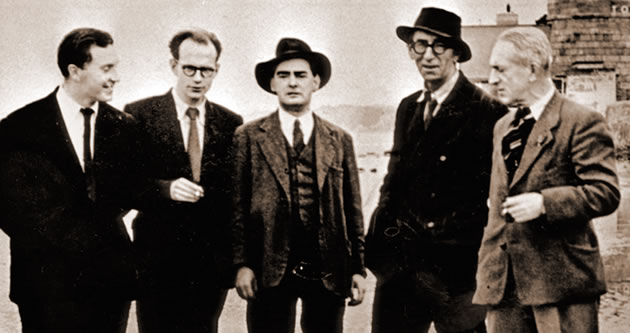
 The First Bloomsday 1954

Cel­e­brants of the first Blooms­day pause for a pho­to in Sandy­mount, Dublin on the morn­ing of June 16, 1954. From left are John Ryan, Antho­ny Cronin, Bri­an O’Nolan (a.k.a. Flann O’Brien), Patrick Kavanagh and Tom Joyce, cousin of James Joyce.

via Bib­liok­lept/Antoine Malette

Relat­ed con­tent:

On Blooms­day, Hear James Joyce Read From his Epic Ulysses, 1924

Stephen Fry Explains His Love for James Joyce’s Ulysses

Hen­ri Matisse Illus­trates 1935 Edi­tion of James Joyce’s Ulysses

« Go BackMore in this category... »
Quantcast