Annotated Photographs of Beat Writers Featured in The Allen Ginsberg Festival, Starting Today

BurroughsKerouac

Start­ing today, the Con­tem­po­rary Jew­ish Muse­um (CJM) begins its four-day cel­e­bra­tion of Allen Gins­berg with The Allen Gins­berg Fes­ti­val in San Fran­cis­co, pro­duced in coop­er­a­tion with The Beat Muse­um, City Lights Book­store, and sev­er­al oth­er orga­ni­za­tions. The fes­ti­val, which runs from the 11th to the 14th of this month, cel­e­brates Ginsberg’s life and art with a host of events (some free, some rang­ing from $10 to $15 for admis­sion). While the lit­er­ary tours, pan­el dis­cus­sions, and lec­tures promise to be a treat for those lucky enough to attend, per­haps the cen­ter­piece of the Gins­berg Fes­ti­val is an exhi­bi­tion of the poet’s anno­tat­ed pho­tographs, on view at CJM until Sep­tem­ber 8th.

The pho­tos, which moved through NYU’s Grey Art Gallery ear­li­er this year, show Gins­berg and his beat bud­dies in inti­mate and unguard­ed moments, such as the snap above of William Bur­roughs and Jack Ker­ouac. In his tidy script hand­writ­ing, Gins­berg writes below the pho­to:

“Now Jack as I warned you far back as 1945, if you keep going home to live with your ‘Memère’ you’ll find your­self wound tighter and tighter in her apron strings till you’re an old man and can’t escape…” William Seward Bur­roughs camp­ing as an André Gide-ian sophis­ti­cate lec­tur­ing the earnest Thomas Wolfean All-Amer­i­can youth Jack Ker­ouac who lis­tens sober­ly dead-pan to “the most intel­li­gent man in Amer­i­ca” for a fun­ny second’s cha­rade in my liv­ing room 206 East 7th Street Apt 16, Man­hat­tan, one evening Fall 1953

Fla­vor­wire has com­piled 25 of these pho­tos, includ­ing the por­trait of the young mer­chant marine, Allen Gins­berg, below, which he anno­tates as, “Allen Gins­berg, util­i­ty man S.S. John Blair just back from Galve­ston-Dakar dol­drums trip, I hand­ed my cam­era to the radio-man on the ship’s fan­tail, smok­ing what? In New York har­bor, cir­ca Octo­ber 30, 1947.”

Ginsberg47

As the CJM page notes, “the late 1940s and ear­ly 1950s marked a cru­cial peri­od for Allen Gins­berg as he found his poet­ic and sex­u­al voic­es simul­ta­ne­ous­ly.” The pho­tos in this exhib­it doc­u­ment not only Gins­berg find­ing him­self, but also find­ing him­self among a group of men—Burroughs, Ker­ouac, Neal Cas­sady, Gre­go­ry Corso—whose rest­less­ness and eru­dite enthu­si­asm changed the course of twen­ti­eth cen­tu­ry lit­er­a­ture.

Relat­ed Con­tent:

Hear the Very First Record­ing of Allen Gins­berg Read­ing His Epic Poem “Howl” (1956)

Allen Ginsberg’s “Celes­tial Home­work”: A Read­ing List for His Class “Lit­er­ary His­to­ry of the Beats”

Allen Ginsberg’s Per­son­al Recipe for Cold Sum­mer Borscht

Josh Jones is a writer and musi­cian based in Wash­ing­ton, DC. Fol­low him at @jdmagness

Johnny Rotten’s Cordial Letter to the Rock and Roll Hall of Fame: Next to the Sex Pistols, You’re ‘a Piss Stain’

johnny rotten hall of fame

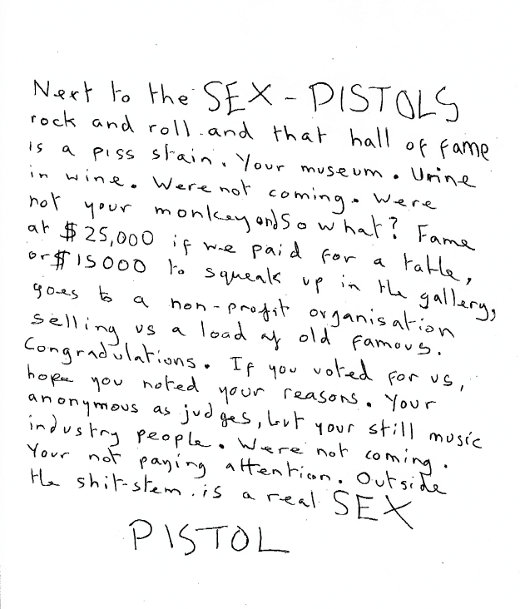
The Sex Pis­tols cer­tain­ly weren’t the first to balk at show­ing up to receive a tro­phy at the Rock and Roll Hall of Fame induc­tion cer­e­mo­ny. They were, how­ev­er, notable for the style in which they declined to attend. When word came in ear­ly 2006 that the Pis­tols would be induct­ed, the band’s singer John Lydon, whose stage name was “John­ny Rot­ten,” faxed the Hall of Fame a hand­writ­ten note. “Next to the SEX-PISTOLS rock and roll and that hall of fame is a piss stain,” wrote Lydon. “Your muse­um. Urine in wine. Were not com­ing. Were not your mon­key and so what?” You can read the rest above, or watch below as a bemused Jann Wen­ner, co-founder of the muse­um, reads the let­ter out loud dur­ing the cer­e­mo­ny.

via Let­ters of Note

Relat­ed Con­tent: 

The His­to­ry of Punk Rock: A Doc­u­men­tary

The Art of Punk, MOCA’s Series of Punk Doc­u­men­taries, Begins with Black Flag

Mal­colm McLaren on The Quest for Authen­tic Cre­ativ­i­ty

Punk Meets High Fash­ion in Met­ro­pol­i­tan Muse­um of Art Exhi­bi­tion PUNK: Chaos to Cou­ture

Download a Free Course from “The Great Courses” Through Audible.com’s Free Trial Program

great-courses-on-audible

Hard­ly a day goes by where I’m not doing one of two things — lis­ten­ing to an audio book from Audible.com, or lis­ten­ing to a lec­ture from The Great Cours­es (for­mer­ly known as The Teach­ing Com­pa­ny). So, I was nat­u­ral­ly pleased when the two com­pa­nies announced a part­ner­ship yes­ter­day. From now on, Audi­ble sub­scribers can down­load courses/lectures from The Great Cours­es, and they’re pret­ty cheap. For exam­ple, mem­bers of Audi­ble’s Gold plan can pur­chase a pol­ished 36-hour course, such as How to Lis­ten to and Under­stand Great Music, for rough­ly $15. Not bad, espe­cial­ly con­sid­er­ing that it would cost expo­nen­tial­ly more to buy it direct­ly through the Great Cours­es’ web site. If you’ve nev­er tried out Audi­ble or The Great Cours­es, then you may want to sign up for Audible’s 30-Day Free Tri­al. It will let you down­load any one course for free. NB: Audi­ble is an Amazon.com sub­sidiary, and we’re a mem­ber of their affil­i­ate pro­gram.

If none of the above sounds any good, well, you could always lose your­self in our col­lec­tions of 900 Free Audio Books and 1700 Free Online Cours­es from Top Uni­ver­si­ties.

Relat­ed Con­tent:

Down­load 90 Free Phi­los­o­phy Cours­es and Start Liv­ing the Exam­ined Life

Learn to Code with Harvard’s Intro to Com­put­er Sci­ence Course And Oth­er Free Tech Class­es

The Art of Liv­ing: A Free Stan­ford Course Explores Time­less Ques­tions

150 Free Online Busi­ness Cours­es

by | Permalink | Make a Comment ( 2 ) |

The Grateful Dead’s “Ultimate Bootleg” Now Online & Added to the Library of Congress’ National Recording Registry

dead barton hall

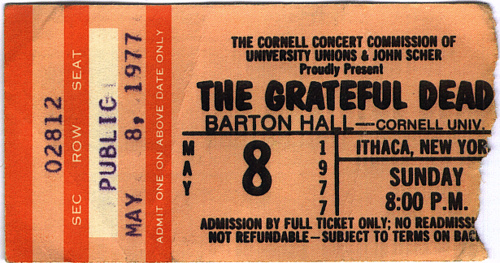
I have known many a Dead­head, and I’ve loved ‘em—friends and friends of friends; I’ve hung out in park­ing lots, at par­ties and camp­sites, and done what ‘Heads do in such gath­er­ings. And yet, to para­phrase St. Paul, I was in the scene but not of it, nev­er one of the faith­ful, just a hang­er-on in a world that bemused me, lis­ten­ing to music whose intense appeal I didn’t quite get. Don’t get me wrong; I thought the first album was a coun­try-rock clas­sic. But that’s where my Dead knowl­edge end­ed. Of the two six­ties bands who both once called them­selves The Warlocks—The Dead and The Vel­vet Underground—my psy­che­del­ic tastes ran decid­ed­ly in the East Coast direc­tion.

So I’m prob­a­bly as far as it gets from an expert on the labyrinthine world of Grate­ful Dead bootlegs. But I have to admit, just like the park­ing lot scene the young, aloof me observed through the eyes of my old hip­pie friends, I’m intrigued and a lit­tle intim­i­dat­ed by the obses­sive cat­a­logu­ing of Dead­head fan­dom.

My teenage punk-rock self admired the DIY ethos, despite seri­ous styl­is­tic mis­giv­ings, and now as a grown-up who couldn’t care less about labels, I’m find­ing the time to go back and re-lis­ten to some of those boot­leg record­ings. I’m catch­ing up on the his­to­ry of live Dead by read­ing Nick Paumgarten’s exhaus­tive “Dead­head: The After­life” arti­cle in The New York­er, and luck­i­ly for me, and for the real fans too, the days of trad­ing tapes are gone. Hun­dreds of hours of live con­cert audio now exist in the Inter­net Archive.

One of those con­cert recordings—the May 8, 1977 Bar­ton Hall/Cornell Uni­ver­si­ty gig avail­able above in its entirety—is said by some to be the “ulti­mate boot­leg.” I’m in no posi­tion to judge, so I’ll quote the Library of Congress’s Nation­al Record­ing Reg­istry, who write that this record­ing “has achieved almost myth­ic sta­tus among ‘Dead­head’ tape traders because of its excel­lent sound qual­i­ty and ear­ly acces­si­bil­i­ty.” The LOC also points out that “fans of the Grate­ful Dead will nev­er com­plete­ly agree about which one of their over 2,300 con­certs was the best.” Debates like this can, and should, go on for­ev­er. If they didn’t, whole sub­cul­tures would shriv­el up and die. The arm­chair anthro­pol­o­gist in me thinks that would be a shame. The music fan (and inner hip­pie) in me is hap­py to groove to what­ev­er catch­es my fan­cy these days, and I’m get­ting down to this one, for sure.

Note: You can find more infor­ma­tion on the Bar­ton Hall/Cornell con­cert here. And here you can find 13 essen­tial bootlegs select­ed by Nick Paum­garten, com­plete with links to audio from the con­certs.

Relat­ed Con­tent:

8,976 Free Grate­ful Dead Con­cert Record­ings in the Inter­net Archive, Explored by the New York­er

Bob Dylan and The Grate­ful Dead Rehearse Togeth­er in Sum­mer 1987. Lis­ten to 74 Tracks.

The Grate­ful Dead Rock the Nation­al Anthem at Can­dle­stick Park: Open­ing Day, 1993

Josh Jones is a writer and musi­cian based in Wash­ing­ton, DC. Fol­low him at @jdmagness

Three Great Films Starring Charlie Chaplin, the True Icon of Silent Comedy

Writ­ing about the sort of cre­ators and works of art we do here at Open Cul­ture, I con­stant­ly strug­gle not to overuse the word “icon­ic.” But in the case of actor and film­mak­er Char­lie Chap­lin, no oth­er adjec­tive could do. When we call Chap­lin icon­ic, we mean it lit­er­al­ly: not only did he find great suc­cess as a com­ic fig­ure in the silent-film era, he visu­al­ly rep­re­sents the con­cept of a com­ic fig­ure in the silent film era. Yet he did­n’t attain icon sta­tus in just one form, hav­ing con­tin­u­al­ly tweaked, refined, and improved his look and sen­si­bil­i­ty through­out his 75-year career. Now, 35 years after his death, we see all of these per­for­mances as sub­tly dif­fer­ent but still rec­og­nize them as expres­sions of the broad­er Chap­lin per­sona. At the top of the post, you can watch the film that estab­lished his most beloved one, 1915’s The Tramp.

But the Lit­tle Tramp did­n’t emerge ful­ly formed just then and there. Tech­ni­cal­ly, the char­ac­ter debuted in the pre­vi­ous year’s Kid Auto Races at Venice, and even before that, Chap­lin por­trayed a few fel­lows we might call pro­to-Tramps. Just above, you’ll find 1914’s Mak­ing a Liv­ing, a pic­ture that casts the Lon­don-born Chap­lin, with hat, cane, and mus­tache, as flir­ta­tious thief Hen­ry Eng­lish. His crim­i­nal ways lead him into the path of those oth­er silent-com­e­dy stal­warts (if not quite icons), the Key­stone Kops. A decade lat­er, Chap­lin, by that point the quin­tes­sen­tial writ­ing-direct­ing-act­ing auteur, would­n’t need to share the screen. In 1925, he made the Klondike-set The Gold Rush, whose “streaks of poet­ry, pathos, ten­der­ness, linked with brusque­ness and bois­ter­ous­ness” drew spe­cial praise from the New York Times, and for which Chap­lin said he want­ed to be remem­bered. You can watch it below, and then you can browse our col­lec­tion of 25 Free Char­lie Chap­lin Films on the web.

Relat­ed Con­tent:

The Pow­er of Silent Movies, with The Artist Direc­tor Michel Haz­anavi­cius

Hol­ly­wood, Epic Doc­u­men­tary Chron­i­cles the Ear­ly His­to­ry of Cin­e­ma

4,000+ Free Movies Online: Great Clas­sics, Indies, Noir, West­erns, Doc­u­men­taries & More

Col­in Mar­shall hosts and pro­duces Note­book on Cities and Cul­ture and writes essays on lit­er­a­ture, film, cities, Asia, and aes­thet­ics. He’s at work on a book about Los Ange­lesA Los Ange­les Primer. Fol­low him on Twit­ter at @colinmarshall.

How a Clean, Tidy Home Can Help You Survive the Atomic Bomb: A Cold War Film from 1954

Last week, we revis­it­ed some Cold War pro­pa­gan­da that taught upstand­ing Amer­i­can cit­i­zens How to Spot a Com­mu­nist Using Lit­er­ary Crit­i­cism. It’s a gem, but it has noth­ing on the 1954 film, The House in the Mid­dle. Select­ed for preser­va­tion in the Nation­al Film Reg­istry by The Library of Con­gress, the short doc­u­men­tary makes the ulti­mate case for clean­li­ness. Bring­ing view­ers to the Neva­da Prov­ing Grounds, the 12-minute film shows what hap­pens when clean, white hous­es are sub­ject­ed to heat waves from an atom­ic blast, ver­sus what hap­pens when a dingy, ill-kept house goes through the same drill. It turns out that neat peo­ple can not only claim moral vic­to­ry (as they always do). They also get to live anoth­er day. Con­sid­er it proof of the sur­vival of the tidi­est.

The film was pro­duced by the Nation­al Clean Up-Paint Up-Fix Up Bureau with sup­port from the Fed­er­al Civ­il Defense Admin­is­tra­tion. The Nation­al Paint, Var­nish and Lac­quer Asso­ci­a­tion also appar­ent­ly played a role, sug­gest­ing that cor­po­rate inter­ests were cap­i­tal­iz­ing on wartime fear. Not the first time that’s hap­pened in Amer­i­ca. Or that last…

If you would like to sign up for Open Culture’s free email newslet­ter, please find it here. It’s a great way to see our new posts, all bun­dled in one email, each day.

If you would like to sup­port the mis­sion of Open Cul­ture, con­sid­er mak­ing a dona­tion to our site. It’s hard to rely 100% on ads, and your con­tri­bu­tions will help us con­tin­ue pro­vid­ing the best free cul­tur­al and edu­ca­tion­al mate­ri­als to learn­ers every­where. You can con­tribute through Pay­Pal, Patre­on, and Ven­mo (@openculture). Thanks!

Relat­ed Con­tent:

An Sur­vival Guide to the Post Apoc­a­lypse (NSFW)

Duck and Cov­er, or: How I Learned to Elude the Bomb

Hiroshi­ma After the Atom­ic Bomb in 360 Degrees

by | Permalink | Make a Comment ( 3 ) |

New Robert Rauschenberg Digital Collection Lets You Download Free High-Res Images of the Artist’s Work

MotherofGod

After the wan­ing of abstract expres­sion­ism, Robert Rauschenberg’s exu­ber­ant prints, paint­ings, sculp­tures, and three-dimen­sion­al col­lages he called “Com­bines” reju­ve­nat­ed the New York art world and helped bring pop art to promi­nence, antic­i­pat­ing Warhol’s exper­i­ments. And now stu­dents of twen­ti­eth-cen­tu­ry Amer­i­can art can con­nect with all of the artist’s work in the San Fran­cis­co Muse­um of Mod­ern Art’s per­ma­nent col­lec­tion with­out set­ting foot in the Bay area, thanks to SFMOMA’s Rauschen­berg Research Project, which allows users to down­load high res images of the muse­um’s Rauschen­bergs. Research materials—including com­men­tary, inter­views, essays, and more—accompany each image. Click­ing on the main link for each image will send you to a page with a lengthy descrip­tion. Scrolling down to the bot­tom of the page, you’ll find indi­vid­ual links for each of the asso­ci­at­ed files and an omnibus link for all of them at once.


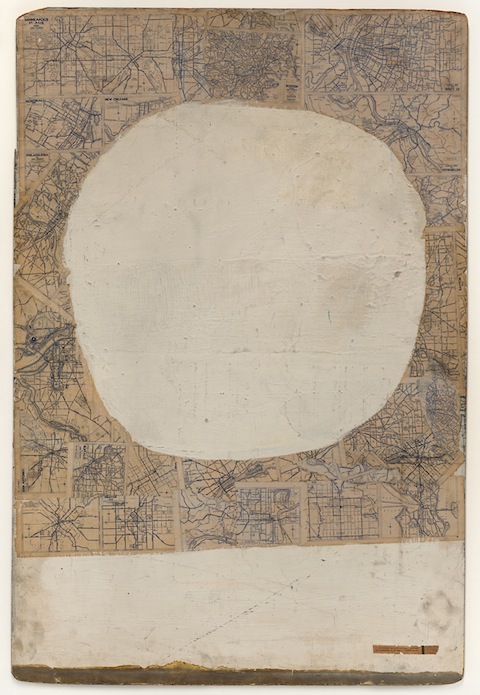
It’s cer­tain­ly not a sub­sti­tute for see­ing the work up close in all its onto­log­i­cal mate­ri­al­i­ty, but it’s still quite a won­der­ful resource for researchers, art his­to­ri­ans, and even gen­er­al enthu­si­asts of Rauschen­berg, par­tic­u­lar­ly since many of the works in SFMOMA’s data­base are not cur­rent­ly on dis­play (and the muse­um is tem­porar­i­ly closed dur­ing an expan­sion). A paint­ing you can’t see in per­son is the dense col­lage Moth­er of God (at top), one of Rauschenberg’s ear­li­est sur­viv­ing paint­ings from a peri­od in the 50s when the artist explored sev­er­al reli­gious themes. The painting’s brown back­ground is com­posed of lay­ers of maps of Amer­i­can locales, and the site allows you to zoom in and exam­ine each one in fine detail. In the video above—one of the dig­i­tal project’s col­lec­tion of artifacts—see Rauschen­berg dis­cuss the paint­ing with cura­tor Wal­ter Hopps and SFMOMA Direc­tor David A. Ross in a 1999 inter­view.

via Metafil­ter

Relat­ed Con­tent:

Rauschen­berg Eras­es De Koon­ing

The Rijksmu­se­um Puts 125,000 Dutch Mas­ter­pieces Online, and Lets You Remix Its Art

LA Coun­ty Muse­um Makes 20,000 Artis­tic Images Avail­able for Free Down­load

The Nation­al Gallery Makes 25,000 Images of Art­work Freely Avail­able Online

Josh Jones is a writer and musi­cian based in Wash­ing­ton, DC. Fol­low him at @jdmagness

Alfred Hitchcock Explains the Plot Device He Called the ‘MacGuffin’

Alfred Hitch­cock liked to call it the “MacGuf­fin” — the mys­te­ri­ous object in a spy thriller that sets the whole chain of events into motion.

But despite the sup­posed cen­tral­i­ty of the MacGuf­fin, a Hitch­cock movie is always about some­thing else. In The 39 Steps, for exam­ple, the MacGuf­fin turns out to be the cov­et­ed plans for an advanced air­plane engine, stored in the mind of a vaude­ville per­former named “Mr. Mem­o­ry.” But real­ly the film is about a wrong­ful­ly accused man’s des­per­ate strug­gle to solve a mys­tery so he can clear his name and live to see anoth­er day.

The MacGuf­fin is always par­tic­u­lar — often to the point of absur­di­ty — while the hero’s moti­va­tion is uni­ver­sal. Some of the char­ac­ters may care about the MacGuf­fin, but the audi­ence cer­tain­ly does not. In his 1962 inter­view with François Truf­faut, Hitch­cock explains:

The main thing I’ve learned over the years is that the MacGuf­fin is noth­ing. I’m con­vinced of this, but I find it very dif­fi­cult to prove it to oth­ers. My best MacGuf­fin, and by that I mean the emp­ti­est, the most nonex­is­tent, and the most absurd, is the one we used in North by North­west. The pic­ture is about espi­onage, and the only ques­tion that’s raised in the sto­ry is to find out what the spies are after. Well, dur­ing the scene at the Chica­go air­port, the Cen­tral Intel­li­gence man explains the whole sit­u­a­tion to Cary Grant, and Grant, refer­ring to the James Mason char­ac­ter, asks, “What does he do?”  The coun­ter­in­tel­li­gence man replies, “Let’s just say that he’s an importer and exporter.” “But what does he sell?” “Oh, just gov­ern­ment secrets!” is the answer. Here, you see, the MacGuf­fin has been boiled down to its purest expres­sion: noth­ing at all!

The term “MacGuf­fin” was coined by a screen­writer Hitch­cock worked with named Angus MacPhail, accord­ing to Don­ald Spo­to in The Art of Alfred Hitch­cock: Fifty Years of His Motion Pic­tures. But the prin­ci­ple goes back at least as far as Rud­yard Kipling, as Hitch­cock explains in this whim­si­cal lit­tle film by Isaac Nie­mand with audio from Hitch­cock­’s June 8, 1972 appear­ance on the Dick Cavett Show. Per­haps the most impor­tant thing to remem­ber about the MacGuf­fin is that it con­tains the word “guff,” which means a load of non­sense. “There’s a lot to look for in Hitch­cock­’s films,” writes Spo­to, “but watch out for the MacGuf­fin. It will lead you nowhere.”

NOTE: The 39 Steps and oth­er Hitch­cock thrillers can be found in our col­lec­tion of 16 Free Hitch­cock Movies Online, not to men­tion our big col­lec­tion, 4,000+ Free Movies Online: Great Clas­sics, Indies, Noir, West­erns, Doc­u­men­taries & More.

If you would like to sign up for Open Culture’s free email newslet­ter, please find it here. It’s a great way to see our new posts, all bun­dled in one email, each day.

If you would like to sup­port the mis­sion of Open Cul­ture, con­sid­er mak­ing a dona­tion to our site. It’s hard to rely 100% on ads, and your con­tri­bu­tions will help us con­tin­ue pro­vid­ing the best free cul­tur­al and edu­ca­tion­al mate­ri­als to learn­ers every­where. You can con­tribute through Pay­Pal, Patre­on, and Ven­mo (@openculture). Thanks!

Relat­ed con­tent:

Alfred Hitch­cock on the Film­mak­er’s Essen­tial Tool: ‘The Kuleshov Effect’

Hitchcock’s Sev­en-Minute Edit­ing Mas­ter Class

37 Hitch­cock Cameos over 50 Years: All in One Video
« Go BackMore in this category... »
Quantcast