Judging by behind-the-scenes footage of a beardless Jim Henson animating “Drums West,” a 1961 homage to jazz drummer Chico Hamilton, one good sneeze and the party would’ve been over.
Animation is always a painstaking proposition, but the hundreds of tiny paper scraps Henson was contending with in an extremely cramped working space seem downright oppressive compared to the expansive visuals to which they gave rise.
The finished piece’s construction paper fireworks are everything iTunes Visualizer function strives to be. Speaking for myself, I can’t envision any computer-generated abstraction opening a magic portal that suddenly allowed even a philistine like me to appreciate a brush solo steeped in 50’s‑era West Coast cool.
If you would like to sign up for Open Culture’s free email newsletter, please find it here. It’s a great way to see our new posts, all bundled in one email, each day.
If you would like to support the mission of Open Culture, consider making a donation to our site. It’s hard to rely 100% on ads, and your contributions will help us continue providing the best free cultural and educational materials to learners everywhere. You can contribute through PayPal, Patreon, and Venmo (@openculture). Thanks!
To some directors, the music heard in their films seems as (or more) important than the images seen or the dialogue spoken. Maybe you’d make that case about Jim Jarmusch after reading — or, more to the point, hearing — our post on the music in his movies. And surely many Quentin Tarantino fans would regard a Reservoir Dogs without “Stuck in the Middle with You” or a Pulp Fiction without “Misirlou” as not Reservoir Dogs or Pulp Fiction at all. In the booklet that comes with The Tarantino Connection, a collection of soundtrack songs from Tarantino’s movies,Tarantino describes his perhaps unsurprisingly musically-inspired method of film conception as follows: “One of the things I do when I am starting a movie, when I’m writing a movie or when I have an idea for a film is, I go through my record collection and just start playing songs, trying to find the personality of the movie, find the spirit of the movie. Then, ‘boom,’ eventually I’ll hit one, two or three songs, or one song in particular, ‘Oh, this will be a great opening credit song.’ ” Hence his use of Dick Dale, the “King of Surf Guitar,” for the opening credits of Pulp Fiction.
“Having ‘Misirlou’ as your opening credits is just so intense,” writes Tarantino. “It just says, ‘You are watching an epic, you are watching this big old movie just sit back.’ It’s so loud and blearing at you, a gauntlet is thrown down that the movie has to live up to.’ ” He goes on to describe the taking of songs and arranging them in a certain sequence in a movie as “just about as cinematic a thing as you can do. You are really doing what movies do better than any other art form; it really works in this visceral, emotional, cinematic way that’s just really special.” And did he already know, as he set Reservoir Dogs’ un-unseeable ear-slicing scene to that mellow, then twenty-year-old hit from Stealers Wheel, that “when you do it right and you hit it right then the effect is you can never really hear this song again without thinking about that image from the movie”? Certainly his use of Bobby Womack’s “Across 110th Street” has fused the song with Jackie Brown and not the eponymous 1972 picture for which Womack originally wrote it. And who has Kill Bill anddoesn’t associate it with Nancy Sinatra’s version of “Bang Bang (My Baby Shot Me Down)”? “I don’t know if Gerry Rafferty [a member of Stealers Wheel] necessarily appreciated the connotations that I brought to ‘Stuck in the Middle with You,’ ” Tarantino adds. “There is a good chance he didn’t.” But when it comes to understanding a song’s cinematic potential, Tarantino has long since proven he knows what he’s doing.
There aren’t many animators out there who would make a movie that justifies the murder of annoying people, but that’s precisely what Russian filmmaker Fyodor Khitruk did with this breakthrough movie Story of One Crime (1962), which you can watch above. The film, about an unassuming clerk who snaps and kills his loud, inconsiderate neighbors with a frying pan, was a landmark in Russia and not just because of its critique of Soviet society — something utterly unthinkable during Stalin’s reign just nine years prior. Unlike previous Russian animated movies – which were largely Marxism-espousing Disney knockoffs – this film presented a clean, modern visual style that seemed more influenced by the likes of Paul Klee than by Disney. The movie shook up the world of Soviet animation and helped start a rebirth of the industry.
Over his long career (he died in 2012 at the age of 95) Khitruk made two kinds of movies: cartoons for children – his most famous being his stylized adaptation of Winnie the Pooh – and socially-aware satires. One in the latter category is his short The Island (1973), which you can see above.
At first blush, it looks like the premise for a New Yorker cartoon – a hairy looking castaway is stuck on a comically small island with a single palm tree. As the movie progresses, a parade of people pass through but don’t help. As the guy gets embroiled in an art heist, converted by missionaries, colonized by an invading army and marketed to by merchants hawking useless goods, it becomes increasingly clear that the titular island is less a sandy spot in the sea than a metaphor for societal isolation. The Island ended up winning the Palme d’Or for the best short at the 1974 Cannes film festival.
Jonathan Crow is a Los Angeles-based writer and filmmaker whose work has appeared in Yahoo!, The Hollywood Reporter, and other publications. You can follow him at @jonccrow. And check out his blog Veeptopus, featuring one new drawing of a vice president with an octopus on his head daily.
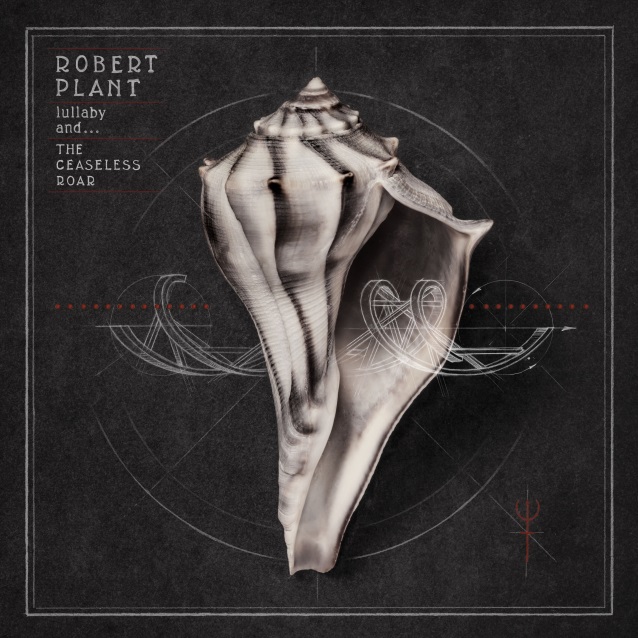
Quick note: If you’re not familiar with it, NPR’s First Listen site lets you stream new albums by major artists. And this week’s lineup deserves a special mention. First Listen is featuring Robert Plant’s new release Lullaby And… The Ceaseless Roar. The album, writes NPR, is “an expression of many kinds of rich, autumnal love: of the English countryside to which Plant recently returned after several years living and working in Nashville and Texas; of the musical diaspora he’s been exploring since Led Zeppelin first connected its American-inspired blues to North Africa in ‘Kashmir’; of the Celtic and Romantic literary lines he’s always favored; and of a woman, whom the songs’ narrator treasures but, for reasons upon which at least half of the album dwells, leaves behind.” You can stream it here for a limited time.
While at NPR, you might also want to hear Ryan Adams by, yes, Ryan Adams. It’s his 14th album, and, says The New York Daily News, it “goes all in for neo-classic rock. It draws on the kind of serrated riffs Keith Richards likes to hone — but weighted with the heavy bottom and burning organ of Tom Petty and the Heartbreakers.”
Having once been involved in the founding of an arts magazine, I have experienced intimately the ways in which such an endeavor can depend upon a community of equals pooling a diversity of skills. The process can be painful: egos compete, certain elements seek to dominate, but the successful product of such a collaborative effort will represent a living community of artists, writers, editors, and other masters of technique who subordinate their individual wills, temporarily, to the will of a collective, creating new gestalt identities from conceptual atoms. As Monoskop—“a wiki for collaborative studies of art, media and the humanities”—points out, “the whole” of an arts magazine, “could become greater than the sum of its parts.” Often when this happens, a publication can serve as the platform or nucleus of an entirely new movement.
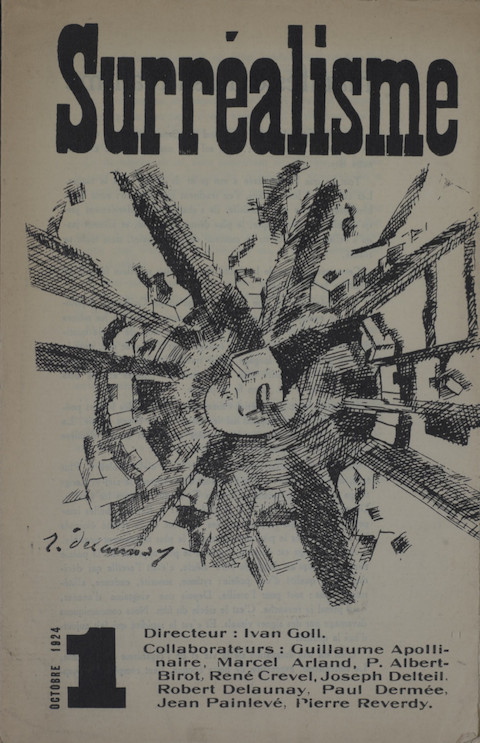
Monoskop maintains a digital archive of printed avant-garde and modernist magazines dating from the late-19th century to the late 1930s, published in locales from Arad to Bucharest, Copenhagen to Warsaw, in addition to the expected New York and Paris. From the latter city comes the 1924 first issue of Surrealisme at the top of the post.
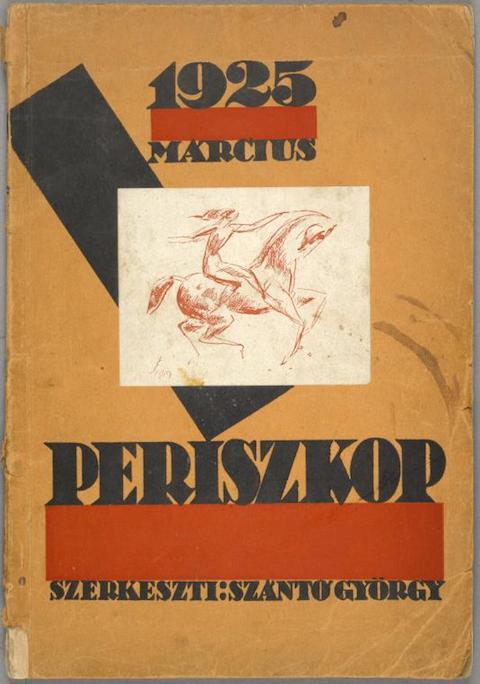
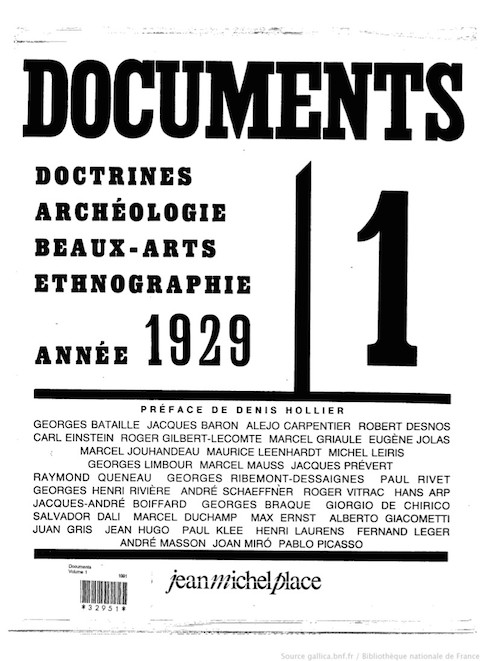
From the much smaller city of Arad in Romania comes the March, 1925 issue 1 of Periszkóp above, published in Hungarian and featuring works by Picasso, Marc Chagall, and many lesser-known Eastern European artists. Just below, see another Paris publication: the first, 1929 issue of Documents, a surrealist journal edited by Georges Bataille and featuring such luminaries as Cuban novelist Alejo Carpentier and artists Georges Braque, Giorgio De Chirico, Salvador Dali, Marcel Duchamp, Paul Klee, Joan Miro, and Pablo Picasso. Further down, see the first, 1926, issue of the Bauhaus journal, vehicle of the famous arts movement founded by Walter Gropius in 1919.
The variety of modernist and avant garde publications archived at Monoskop “provide us with a historical record of several generations of artists and writers.” They also “remind us that our lenses matter.” In an age of “the relentless linearity of digital bits and the UX of the glowing screen” we tend to lose sight of such critically important matters as design, typography, layout, writing, and the “techniques of printing and mechanical reproduction.” Anyone can build a website, fill it with “content,” and propagate it globally, giving little or no thought to aesthetic choices and editorial framing. But the magazines represented in Monoskop’s archive are specialized creations, the products of very deliberate choices made by groups of highly skilled individuals with very specific aesthetic agendas.
A majority of the publications represented come from the explosive period of modernist experimentation between the wars, but several, like the journal Rhythm: Art Music Literature—first published in 1911—offer glimpses of the early stirrings of modernist innovation in the Anglophone world. Others like the 1890–93 Parisian Entretiens politiques et littéraires showcase the work of pioneering early French modernist forebears like Jules Laforgue (a great influence upon T.S. Eliot) and also André Gide and Stéphane Mallarmé. Some of the publications here are already famous, like The Little Review, many much lesser-known. Most published only a handful of issues.
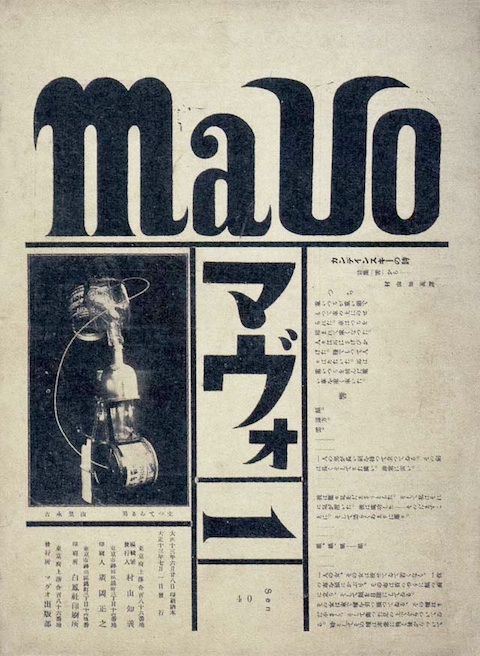
With a few exceptions—such as the 1923 Japanese publication MAVO shown above—almost all of the journals represented at Monoskop’s archive hail from Eastern and Western Europe and the U.S.. While “only a few journals had any significant impact outside the avant-garde circles in their time,” the ripples of that impact have spread outward to encompass the art and design worlds that surround us today. These examples of the literary and design culture of early 20th century modernist magazines, like those of late 20th century postmodern ‘zines, provide us with a distillation of minor movements that came to have major significance in decades hence.
In 1968, Van Morrison cut tracks for what’s been called his “revenge” or “contractual obligation album.” The backstory, provided by Top Tenz, goes like this:
After a pretty unhappy couple of years with his label Bang Records in the mid-60s, Van Morrison wanted out. They demanded he deliver some more short and poppy stuff like Brown Eyed Girl, while he wanted to release 11-minute renditions of lion impersonations (which he did on the album Saint Dominic’s Preview.) The singer became so distraught with his label situation, that he slipped into financial trouble and had problems finding gigs.
Just when it seemed Morrison might never deliver on his musical potential, Warner Music stepped in and bought out his deal with Bang Records. There was still one small contractual detail though. Morrison was obliged to record exactly 36 songs for his old label, who would also continue to earn royalties off anything he released for the first year after leaving Bang. Not a patient man at the best of times, Van did the only thing he could think of: he recorded more than 30 songs in a single recording session, on an out-of-tune guitar, about subjects as diverse as ringworm, blowing your nose, a dumb guy named George, and whether he wanted to eat a danish or a sandwich.
You can hear “Ring Worm” above, and both “Want a Danish?” and “The Big Royalty Check” below.
Deemed unworthy, the songs Morrison banged out (cheap pun, I know!) weren’t released in the 1960s. They eventually saw the light of day, however, on the 1994 album Payin Dues, which happens to be available on Spotify for free. According to rock critic Richie Unterberger, the album ranks as “the least commercial music ever recorded by a major rock artist, and the nastiest spit in the eye of commercial expectations and contractual obligations.” But, there’s certainly an entertainment factor to the collection, and it should be noted that Payin Dues also includes some worthwhile tracks, including all of Van Morrison’s studio masters from the Bang years, plus the demo of “The Smile You Smile” and an alternate take of “Brown Eyed Girl”.
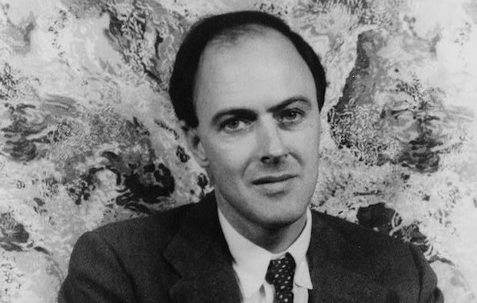
Generations of us know Roald Dahl as, first and foremost, the author of popular children’s novels like The BFG, The Witches, Charlie and the Chocolate Factory (that book of the “subversive” lost chapter), and James and the Giant Peach. We remember reading those with great delight, and some of us even made it into the rumored literary territory of his “stories for grown-ups.” But few of us, at least if we grew up in the past few decades, will have familiarized ourselves with all the purposes to which Dahl put his pen. Like many fine writers, Dahl always drew something from his personal experience, and few personal experiences could have had as much impact as the sudden death of his measles-stricken seven-year-old daughter Olivia in 1962. A chapter of Donald Sturrock’s biography Storyteller: The Life of Roald Dahl, excerpted at The Telegraph, tells of both the event itself and Dahl’s stoic, writerly (according to some, perhaps too stoic and too writerly) way of handling it.
But good did come out of Dahl’s response to the tragedy. In 1986, he wrote a leaflet for the Sandwell Health Authority entitled Measles: A Dangerous Illness, which tells Olivia’s story and provides a swift and well-supported argument for universal vaccination against the disease:
Olivia, my eldest daughter, caught measles when she was seven years old. As the illness took its usual course I can remember reading to her often in bed and not feeling particularly alarmed about it. Then one morning, when she was well on the road to recovery, I was sitting on her bed showing her how to fashion little animals out of coloured pipe-cleaners, and when it came to her turn to make one herself, I noticed that her fingers and her mind were not working together and she couldn’t do anything.
“Are you feeling all right?” I asked her.
“I feel all sleepy,” she said.
In an hour, she was unconscious. In twelve hours she was dead.
The measles had turned into a terrible thing called measles encephalitis and there was nothing the doctors could do to save her. That was twenty-four years ago in 1962, but even now, if a child with measles happens to develop the same deadly reaction from measles as Olivia did, there would still be nothing the doctors could do to help her.
On the other hand, there is today something that parents can do to make sure that this sort of tragedy does not happen to a child of theirs. They can insist that their child is immunised against measles. I was unable to do that for Olivia in 1962 because in those days a reliable measles vaccine had not been discovered. Today a good and safe vaccine is available to every family and all you have to do is to ask your doctor to administer it.
It is not yet generally accepted that measles can be a dangerous illness. Believe me, it is. In my opinion parents who now refuse to have their children immunised are putting the lives of those children at risk. In America, where measles immunisation is compulsory, measles like smallpox, has been virtually wiped out.
Here in Britain, because so many parents refuse, either out of obstinacy or ignorance or fear, to allow their children to be immunised, we still have a hundred thousand cases of measles every year. Out of those, more than 10,000 will suffer side effects of one kind or another. At least 10,000 will develop ear or chest infections. About 20 will die.
LET THAT SINK IN.
Every year around 20 children will die in Britain from measles.
So what about the risks that your children will run from being immunised?
They are almost non-existent. Listen to this. In a district of around 300,000 people, there will be only one child every 250 years who will develop serious side effects from measles immunisation! That is about a million to one chance. I should think there would be more chance of your child choking to death on a chocolate bar than of becoming seriously ill from a measles immunisation.
So what on earth are you worrying about? It really is almost a crime to allow your child to go unimmunised.
The ideal time to have it done is at 13 months, but it is never too late. All school-children who have not yet had a measles immunisation should beg their parents to arrange for them to have one as soon as possible.
Incidentally, I dedicated two of my books to Olivia, the first was ‘James and the Giant Peach’. That was when she was still alive. The second was ‘The BFG’, dedicated to her memory after she had died from measles. You will see her name at the beginning of each of these books. And I know how happy she would be if only she could know that her death had helped to save a good deal of illness and death among other children.
Alas, this message hasn’t quite fallen into irrelevance. What with anti-vaccination movements having somehow picked up a bit of steam in recent years (and with the number of cases of measles cases now climbing again), it might make sense to send Dahl’s leaflet back into print — or, better yet, to keep it circulating far and wide around the internet. Not that others haven’t made cogent pro-vaccination arguments of their own, in different media, with different illustrations of the data, and with different levels of profanity. Take, for instance, Penn and Teller’s segmentbelow, which, finding the perfect target given its mandate against non-evidence-based beliefs, takes aim at the proposition that vaccinations cause autism:
You’ve probably seen “Illusion of Choice,” a 2011 infographic detailing how six media conglomerates “control a staggering 90% of what we read, watch, or listen to.” (The entities named are GE, News Corp, Disney, Viacom, Time Warner, and CBS.) Another “Illusion of Choice” infographic from last year documents how “ten huge corporations control the production of almost everything the average person buys.” Are these webs of corporate connection kooky conspiracy theories or genuine cause for alarm? Do the correlations between business entities cause political currents that undermine democracy and media independence? It’s not particularly controversial to think so given the amount of money corporations spend on lobbying and political campaigns. It’s not even particularly controversial to say so, at least for those of us who aren’t employed by, say, Viacom, Time Warner, GE, etc.
But pointing fingers at the corporatocracy may have not gone over so well for famed comedy writer Robert Smigel in 1998 when his recurring animated “Saturday TV Funhouse” segment produced the “Conspiracy Theory Rock” bit above for Saturday Night Live. A parody of the beloved Schoolhouse Rock educational ‘toons of the 70s, “Conspiracy Theory Rock” features a disheveled gentleman—a stereotype of the outsider crackpot—leading a sing-along about the machinations of the “Media-opoly.” Figured as greedy octopi (reminiscent of Matt Taibbi’s “vampire squid”), the media giants here, including GE, Westinghouse, Fox, and Disney, devour the smaller guys—the traditional networks—and “use them to say whatever they please and put down the opinions of anyone who disagrees.” The segment may have raised the ire of GE, who own NBC. It aired once with the original episode but was subsequently pulled from the show in syndication, though it’s been included in subsequent DVD compilations of “Saturday TV Funhouse.”
Now “Conspiracy Theory Rock” is circulating online—amplified by a Marc Maron tweet—as a “banned” clip, a misleading description that feeds right into the story of conspiracy. Editing a sketch from a syndicated comedy show, after all, is not tantamount to banning it. While the short piece makes the usual compelling case against corporate rule, it does so in a tongue-in-cheek way that allows for the possibility that some of these allegations are tenuous exaggerations. Our unwashed presenter, for example, ends the segment mumbling an incoherent non sequitur about Lorne Michaels and Marion Barry attending the same high school. For his part, Michaels has said the segment was cut because it “wasn’t funny.” He’s got a point—it isn’t—but it’s hard to believe it didn’t raise other objections from network executives. It wouldn’t be the first time the show has been accused of censoring a political sketch.
We're hoping to rely on loyal readers, rather than erratic ads. Please click the Donate button and support Open Culture. You can use Paypal, Venmo, Patreon, even Crypto! We thank you!
Open Culture scours the web for the best educational media. We find the free courses and audio books you need, the language lessons & educational videos you want, and plenty of enlightenment in between.





.jpg)