Hear Roger Waters’ Early, Work-in-Progress Recordings of Pink Floyd’s The Wall

My first expo­sure to Pink Floyd’s rock opera The Wall left me feel­ing noth­ing less than aston­ish­ment. And though I nev­er had the chance to see the out­ra­geous stage show, with its very lit­er­al wall and giant inflat­able pig, the film has always struck me as a suit­ably dark piece of psy­chodra­ma. Over a great many sub­se­quent lis­tens, the melo­dra­mat­ic dou­ble-album can still blow my mind, but I’ve come to feel that some of the strongest mate­r­i­al are those songs penned joint­ly by Roger Waters and David Gilmour, and those are rel­a­tive­ly few. (Mark Blake quotes Gilmour as say­ing “things like ‘Com­fort­ably Numb’ were the last embers of mine and Roger’s abil­i­ty to work col­lab­o­ra­tive­ly togeth­er.) The bulk of the album belongs to Waters, its auto­bi­o­graph­i­cal details and per­son­al themes, and the album and film can some­times feel as sti­fled and claus­tro­pho­bic as its pro­tag­o­nist does. This is either a cre­ative fail­ing or a bril­liant meld­ing of form and con­tent.

Inspired by an inci­dent in which an exas­per­at­ed Waters spat on a row­dy fan at a sta­di­um show in Mon­tre­al dur­ing the band’s 1977 “In the Flesh Tour,” The Wall doc­u­ments the painful rise and even more painful fall of a fic­tive rock star named, of course, Pink (played by Bob Geld­of in the film ver­sion), whose life close­ly par­al­lels Waters’, down to the spit­ting. It has always seemed an odd irony that Waters respond­ed to the alien­ation of tour­ing mas­sive sta­di­ums by cre­at­ing a sta­di­um show big­ger than any­thing the band had yet done, but it speaks to the bassist and singer’s grandiose per­son­al­i­ty and obses­sive desire to turn his angst into the­ater. Often­times the results were spec­tac­u­lar, oth­er times bom­bas­tic and con­fus­ing (at least to crit­ics, some of whom are eas­i­ly con­fused). The record­ing of the album, as many well know, strained the band almost to break­ing, and by many accounts, Waters’ impe­ri­ous­ness didn’t help mat­ters, to say the least.

All of the behind-the-scenes dra­ma may or may not eclipse the dra­ma of the album itself, depend­ing on your lev­el of fan­dom and inter­est in Pink Floyd biog­ra­phy. Lovers of Waters’ epic rock dra­matur­gy will find edi­fi­ca­tion at the exten­sive online crit­i­cal com­men­tary Pink Floyd The Wall: A Com­plete Analy­sis, an online work in progress that deliv­ers on its title. For a very brief account of the sto­ry behind the sto­ry, co-pro­duc­er Bob Ezrin’s inter­view with Grammy.com offers per­spec­tive from some­one involved in the project who wasn’t a mem­ber of what came to seem like The Roger Waters’ Band. Ezrin describes The Wall as “Roger’s own project and not a group effort,” and his own role as “a kind of ref­er­ee between him and the rest of the band.”

In the begin­ning we had a very long demo that Roger had writ­ten. We start­ed to sep­a­rate out the pieces, and when we looked at the sto­ry­line we real­ized what we need­ed was a through line, some­thing to get us from start to fin­ish.

Ezrin recounts that he “closed [his] eyes and wrote out the movie that would become The Wall,” hand­ed the script out to the band, and marked songs miss­ing from Waters’ demo as “’TBW’—‘to be writ­ten.’” (Among those songs was “Com­fort­ably Numb.”)

The record­ings at the top of the post—which sur­faced in 2001 with the title Under Con­struc­tion—rep­re­sent a step in The Wall’s evo­lu­tion­ary devel­op­ment between Waters’ rudi­men­ta­ry demos (short excerpts above) and the com­plet­ed album. (See the Youtube page for a com­plete track­list. Con­trary to the upload­er’s descrip­tion, Roger Waters cer­tain­ly does not play all the instru­ments.) While Under Con­struc­tion has gen­er­al­ly been referred to as a “demo,” Rick Karhu of Pink Floyd fanzine Spare Bricks express­es his doubts about the use of a term he takes to denote “a fair­ly pol­ished record­ing”: “Demos are not rough record­ings or works-in-progress […]. I doubt very much that Under Con­struc­tion is a demo of The Wall.”

It’s too rough around the edges—at times shock­ing­ly so—to be strict­ly con­sid­ered a demo record­ing. At points, things are hap­haz­ard­ly edit­ed togeth­er. Songs cut off abrupt­ly, fade unex­pect­ed­ly or drop out entire­ly for a moment as if some­one at the mix­ing desk hit the wrong but­ton at some point. Vocal tracks peak-out, often caus­ing anguish to the lis­ten­er’s ear drums. Some instru­ment lines (most­ly the bass gui­tar) mean­der through the back­ground as if the per­son play­ing is mak­ing up the part as they go. Equal­iza­tion is nonex­is­tent on most tracks. Over­all, most of it sounds like a 4‑track record­ing by a band who has only the vaguest notion of how the equip­ment works.

Lest we take this descrip­tion as dis­par­age­ment, Karhu clar­i­fies: “It is pre­cise­ly for those rea­sons […] that I love them dear­ly and con­sid­er them one of the most valu­able, unau­tho­rized Floyd record­ings to be unearthed. Ever.” Many Youtube com­menters agree, some even argu­ing that these rough sketch­es are supe­ri­or to the final pol­ished prod­uct. It’s a debate I won’t weigh in on, though I will say that like Karhu, I enjoy the lo-fi ragged­ness of this ver­sion of The Wall. It seems to con­vey the emo­tion­al­ly frayed edges of these songs in a way the slick pro­duc­tion of the stu­dio album may not at times. Either as a mere doc­u­ment of the album’s ear­ly his­to­ry or an alter­nate, fragmented—and hence more traumatized—take on The Wall, this unof­fi­cial ver­sion is haunt­ing and strange. Does it per­haps bet­ter rep­re­sent Waters’ desire to make his psy­chic unease into art? We invite you to judge for your­selves. And if, like me, you can lis­ten to “Com­fort­ably Numb” (and that incred­i­ble gui­tar solo) on repeat for hours on end, you may be inter­est­ed to hear David Gilmour dis­cuss the song’s com­po­si­tion in the inter­view below.

Hear more demo tracks on YouTube here.

Relat­ed Con­tent:

David Gilmour & David Bowie Sing “Com­fort­ably Numb” Live (2006)

Watch Doc­u­men­taries on the Mak­ing of Pink Floyd’s Dark Side of the Moon and Wish You Were Here

Hear Lost Record­ing of Pink Floyd Play­ing with Jazz Vio­lin­ist Stéphane Grap­pel­li on “Wish You Were Here”

Josh Jones is a writer and musi­cian based in Durham, NC. Fol­low him at @jdmagness.

The Famous Letter Where Freud Breaks His Relationship with Jung (1913)

FreudJung

Freud and Jung. Jung and Freud. His­to­ry has close­ly asso­ci­at­ed these two who did so much exam­i­na­tion of the mind in ear­ly 20th-cen­tu­ry Europe, but the sim­ple con­nec­tion of their names belies a much more com­pli­cat­ed rela­tion­ship between the men them­selves. At the top of the post, you can see the let­ter that Sig­mund Freud, father of psy­cho­analy­sis, wrote to Carl Gus­tav Jung, founder of ana­lyt­i­cal psy­chol­o­gy, in order to end that rela­tion­ship entire­ly. “At first Freud saw in Jung a suc­ces­sor who might lead the psy­cho­an­a­lyt­ic move­ment into the future,” say the cura­tor’s com­ments at the Library of Con­gress’ web site, “but by 1913 rela­tions between the two men had soured.

While Freud claims in his let­ter that it is ‘demon­stra­bly untrue’ that he treats his fol­low­ers as patients, in the very same let­ter we find him allud­ing to Jung’s ‘ill­ness.’ ” Freud calls it “a con­ven­tion among us ana­lysts that none of us need feel ashamed of his own neu­ro­sis. But one [mean­ing Jung] who while behav­ing abnor­mal­ly keeps shout­ing that he is nor­mal gives ground for the sus­pi­cion that he lacks insight into his ill­ness. Accord­ing­ly, I pro­pose that we aban­don our per­son­al rela­tions entire­ly.”

“I shall lose noth­ing by it,” he con­tin­ues, “for my only emo­tion­al tie with you has been a long thin thread — the lin­ger­ing effect of past dis­ap­point­ments — and you have every­thing to gain, in view of the remark you recent­ly made to the effect that an inti­mate rela­tion­ship with a man inhib­it­ed your sci­en­tif­ic free­dom.” This rela­tion­ship, writes Lionel Trilling in a review of The Cor­re­spon­dence Between Sig­mund Freud and C.G. Jung, “had its bright begin­ning in 1906 and came to its embit­tered end in 1913,” when Freud wrote this let­ter.  “Freud and Jung were not good for one anoth­er; their con­nec­tion made them sus­cep­ti­ble to false atti­tudes and ambigu­ous tones. [ … ] The intel­lec­tu­al and pro­fes­sion­al dif­fer­ences between the two men, pro­found as these even­tu­al­ly became, would per­haps not of them­selves have brought about a break so dras­tic as did take place had not their alien­at­ing ten­den­cy been rein­forced by per­son­al con­flicts.” Only a com­par­a­tive study of Freud and Jung’s meth­ods would yield a com­plete under­stand­ing of their roles in the strug­gle for the soul of psy­cho­analy­sis. But on a more basic lev­el, this hard­ly counts as the first nor the last col­lapse, in any field of human endeav­or, of a per­haps overde­ter­mined suc­ces­sion between an emi­nence and his would-be pro­tege — though it may count as one of the most elo­quent­ly doc­u­ment­ed ones.

Relat­ed Con­tent:

Sig­mund Freud Speaks: The Only Known Record­ing of His Voice, 1938

Face to Face with Carl Jung: ‘Man Can­not Stand a Mean­ing­less Life’

Carl Gus­tav Jung Explains His Ground­break­ing The­o­ries About Psy­chol­o­gy in Rare Inter­view (1957)

Carl Gus­tav Jung Pon­ders Death

Col­in Mar­shall hosts and pro­duces Note­book on Cities and Cul­ture and writes essays on cities, lan­guage, Asia, and men’s style. He’s at work on a book about Los Ange­les, A Los Ange­les Primer. Fol­low him on Twit­ter at @colinmarshall or on Face­book.

Ultra Violet — Artist and Friend of Salvador Dalí and Andy Warhol — Dies at 78

“When I got off the boat from France years ago, the first per­son I met was Sal­vador Dalí, and I real­ized I was born sur­re­al­ist,” said Isabelle Collin Dufresne, bet­ter known by her artis­tic nom-de-plume Ultra Vio­let. Dufresne died Sat­ur­day in New York City after years of bat­tling can­cer. She may have been inspired by Dalí, but she was also a legit­i­mate artist in her own right.

Though per­haps not as well known as oth­er “super­stars” linked to Andy Warhol such as Edie Sedg­wick or the Vel­vet Under­ground, Ultra Vio­let worked in a sim­i­lar pop style. Her cre­ations were sym­bol­ic, approach­able and vibrant. Of course, she asso­ci­at­ed strong­ly with the col­or in her namesake—violet was one of the most impor­tant col­ors in her palette.

“It’s in my col­or, my sig­na­ture, but it’s also in the col­or of mourn­ing, the roy­al col­or,” she said of a vio­let memo­ri­am to the events of Sep­tem­ber 11.

A New York­er by choice, Ultra Vio­let was one of prob­a­bly thou­sands to cre­ate art after the Sep­tem­ber 11, 2001 ter­ror­ist attacks. “IXXI” was dis­tinct­ly non-polit­i­cal. It nei­ther attacks nor defends; it only memo­ri­al­izes. It por­trays the Roman numer­als for nine and 11. A palin­drome, she not­ed.

Once alleged­ly “exor­cised” in her home­town in France, Dufresne grew up in a con­ser­v­a­tive, reli­gious house­hold. It wasn’t until she came to the Unit­ed States that she became a seri­ous par­tic­i­pant in the art world.

She is prob­a­bly best known for her 1988 life reflec­tion, Famous for 15 Min­utes: My Years with Andy Warhol.

The youth­ful ener­gy around many of the Fac­to­ry artists didn’t always age well. As an old­er woman, Ultra Vio­let some­times looked strange with her vio­let hair and flam­boy­ant cloth­ing, and she was some­times crit­i­cized for pro­duc­ing slop­py work instead of devel­op­ing a tighter style with age.

Pieces like 2007’s “Elec­tric Love Chair” even ref­er­ence the glo­ry days of Pop Art, but Ultra Vio­let spent most of her life exper­i­ment­ing with new ideas and tech­nolo­gies for the pro­duc­tion of art.

“I’m inter­est­ed more in the future than in the past,” she told Ernie Manouse in a 2005 inter­view.

 This is a guest post from Zach Lind­sey, an Eng­lish as a Sec­ond Lan­guage Teacher liv­ing in Austin, Texas. He’s writ­ten about artists’ mus­es before, for Lehigh Val­ley Style and Be About It.

by | Permalink | Make a Comment ( 1 ) |

The Making of Queen and David Bowie’s 1981 Hit “Under Pressure”: Demos, Studio Sessions & More

Before “Ice Ice Baby” became the most ubiq­ui­tous ear­worm of 1989, its sam­pled groove drove a song record­ed 8 years ear­li­er, Queen and David Bowie’s bril­liant col­lab­o­ra­tion “Under Pres­sure.” Sty­lus mag­a­zine—who declared Queen bassist John Deacon’s three-note riff the num­ber one bassline of all time—called the song “pos­sessed of under­stat­ed cool […] min­i­mal and pre­cise.” And if some­how you’ve nev­er heard it, have a lis­ten; you’ll sure­ly agree. Bowie and Fred­die Mercury’s trad­ed lines and melod­ic scat­ting build to pow­er­ful crescen­dos then pull back into deeply mov­ing har­monies. Lyri­cal­ly the song com­petes with any­thing writ­ten by either artist. As it turns out, Queen and Bowie wrote the song in a day, or as Bowie has it, “one evening flat.” “Quite a feat,” “for what is actu­al­ly a fair­ly com­pli­cat­ed song,” he wrote in response to a fan’s ques­tion on his offi­cial web­site.

Bowie remem­bers that “the riff had already been writ­ten by Fred­die and the oth­ers” when he joined them in the stu­dio in Mon­treux, Switzer­land. In fact, “Under Pres­sure” evolved out of anoth­er song entire­ly, “Feel Like,” writ­ten by drum­mer Roger Tay­lor, which you can hear above in a very rough demo record­ing. A great many of the ele­ments are there—Brian May’s restrained gui­tar work, Taylor’s midtem­po clock­work drum­ming, and many of the vocal melodies that would end up on “Under Pres­sure.” But that icon­ic bassline is miss­ing, as is, of course, the lat­er song’s oth­er big star. You can see the influ­ence Bowie had on the the­mat­ic direc­tion of the new song. “Feel Like” is a clas­sic Queen lament over lost love, “Under Pres­sure” an apoc­a­lyp­tic cry of both fear and empa­thy.

And that bassline? Every­one recalls that John Dea­con him­self came up with it. But Dea­con, ever mod­est, cred­it­ed it to Bowie in a 1984 inter­view. In either case, Dea­con appar­ent­ly for­got the riff, and May had to remind him of it—a fun­ny moment you can hear above in a record­ing of stu­dio ses­sions for the song. Bri­an May recalls that Bowie lived near the stu­dio and that they “went out for a meal or some drinks or some­thing.” This may well be, but he doesn’t tell us that Bowie orig­i­nal­ly joined the band in the stu­dio to sing back­ing vocals for an even­tu­al­ly scrapped R&B song called “Cool Cat.” An ear­li­er Open Cul­ture post fea­tur­ing the iso­lat­ed vocal tracks from “Under Pres­sure” (below) quotes both Tay­lor and May’s descrip­tions of what was, some­what con­trary to Bowie’s under­state­ment, actu­al­ly a 24-hour-long ses­sion, pow­ered by wine and cocaine.

Their rem­i­nisces, record­ed in Mark Blake’s book Is This the Real Life?: The Untold Sto­ry of Fred­die Mer­cury and Queen, also inform us that Bowie and Mer­cury “swap[ped] vers­es blind, which helped give the song its cut-and-paste feel.” Though the band sounds light­heart­ed enough in the stu­dio ses­sions, the song­writ­ing, May remem­bers, was fraught with ten­sion. “It was very hard,” he said in 2008, “because you already had four pre­co­cious boys and David, who was pre­co­cious enough for all of us.” Bowie, says May, “took over the song lyri­cal­ly” and insist­ed on pre­sid­ing over the final mix ses­sion, which “didn’t go well,” accord­ing to Queen engi­neer Rein­hold Mack. For his part, May has said he would “love to sit down qui­et­ly on my own and re-mix it.”

While he hasn’t nec­es­sar­i­ly fol­lowed through on that desire, May and Roger Tay­lor did con­tribute a dance mix of “Under Pressure”—the so-called “Rah Mix”—to 1999’s Great­est Hits III (hear it above). The remix was a top 20 hit, but I, for one, think it’s impos­si­ble to improve on the orig­i­nal.

Relat­ed Con­tent:

Lis­ten to Fred­die Mer­cury and David Bowie on the Iso­lat­ed Vocal Track for the Queen Hit ‘Under Pres­sure,’ 1981

Gui­tarist Bri­an May Explains the Mak­ing of Queen’s Clas­sic Song, ‘Bohemi­an Rhap­sody’

The Sto­ry of Zig­gy Star­dust: How David Bowie Cre­at­ed the Char­ac­ter that Made Him Famous

Josh Jones is a writer and musi­cian based in Durham, NC. Fol­low him at @jdmagness.

Restored Footage from the First World Cup: Uruguay, 1930

The 19th FIFA World Cup is now under­way in Brazil, and that gives us an excuse to revis­it the first World Cup, played in July, 1930 in Uruguay. Only 13 teams par­tic­i­pat­ed in the tour­na­ment, and all match­es were played in Mon­te­v­ideo, Uruguay’s cap­i­tal. In the semi-finals, the Unit­ed States lost to Argenti­na, 6–1. Uruguay crushed Yugoslavia by the same score. In the end, Uruguay, the favorites all along, tri­umphed over Argenti­na (4–2) before a home crowd of 93,000, to become the win­ner of the inau­gur­al FIFA World Cup.

Recent­ly restored by FIFA, the 13-minute video above lets you revis­it the action from the 1930 tour­na­ment, and par­tic­u­lar­ly from the cham­pi­onship game. Argenti­na led going into half­time, but then José Pedro Cea, Vic­to­ri­ano San­tos Iri­arte (aka “El Canario”), and Héc­tor Cas­tro went to work and sealed the deal for Uruguay. The footage is bit­ter­sweet to watch — sweet, because it’s fun to watch the moves of those his­toric foot­ballers; bit­ter, because it’s hard not to think wist­ful­ly about those ath­letes, then in their prime, who have long since passed.

via When Sat­ur­day Comes

Relat­ed Con­tent:

Ter­ry Gilliam, Guy Ritchie & Ale­jan­dro González Iñár­ritu Direct Soc­cer Ads for Nike

Stephen Hawk­ing Reveals the Con­di­tions That Could Lead to England’s Vic­to­ry at The World Cup

Rare Video Shows FDR Walk­ing: Filmed at the 1937 All-Star Game

by | Permalink | Make a Comment ( 3 ) |

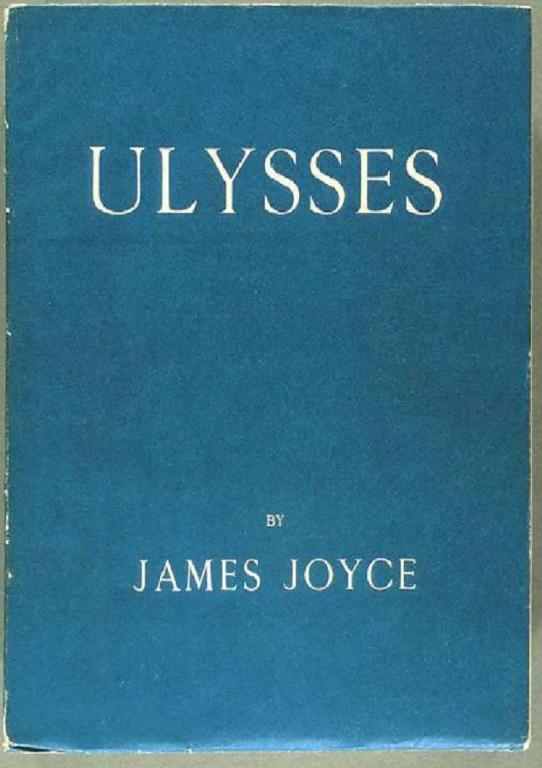
Everything You Need to Enjoy Reading James Joyce’s Ulysses on Bloomsday

ulysses first edition

Since its pub­li­ca­tion in 1922, James Joyce’s Ulysses has enjoyed a sta­tus, in var­i­ous places and in var­i­ous ways, as The Book to Read. Alas, this Mod­ernist nov­el of Dublin on June 16, 1904 has also attained a rep­u­ta­tion as The Book You Prob­a­bly Can’t Read — or at least not with­out a whole lot of work on the side. In truth, nobody needs to turn them­selves into a Joyce schol­ar to appre­ci­ate it; the unini­ti­at­ed read­er may not enjoy it on every pos­si­ble lev­el, but they can still, with­out a doubt, get a charge from this piece of pure lit­er­a­ture.

Today, on this Blooms­day 2014, we offer you every­thing that may help you get that charge, start­ing with Ulysses as a free eBook (iPad/iPhone — Kin­dle + Oth­er For­mats — Read Online Now). Or per­haps you’d pre­fer to lis­ten to the nov­el as a free audio book; you can even hear a pas­sage read by Joyce him­self.

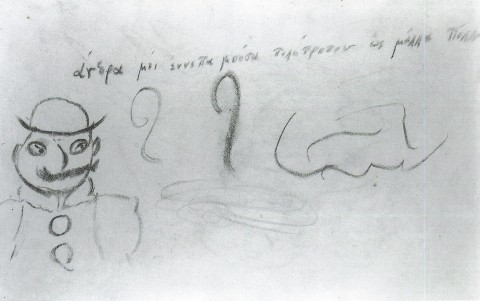
The work may stand as a remark­ably rich tex­tu­al achieve­ment, but it also has a visu­al his­to­ry: we’ve pre­vi­ous­ly fea­tured, for instance, Hen­ri Matis­se’s illus­trat­ed 1935 edi­tion of the bookJoyce’s own sketch of pro­tag­o­nist Leopold Bloom (below), and Ulysses “Seen,” a graph­ic nov­el adap­ta­tion-in-progress.

James-Joyce-Leopold-Bloom-Sketch--e1360049021427


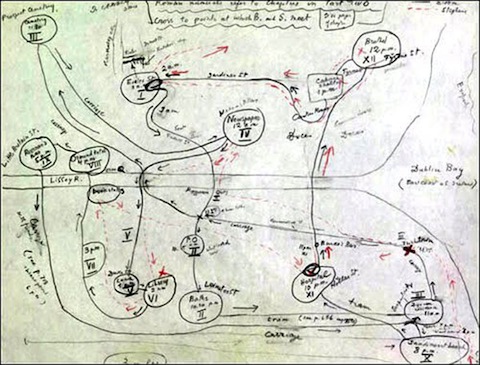
Even Vladimir Nabokov, obvi­ous­ly a for­mi­da­ble lit­er­ary pow­er him­self, added to all this when he sketched out a map of the paths Bloom and Stephen Dedalus (pre­vi­ous­ly seen in Joyce’s A Por­trait of the Artist as a Young Man) take through Dublin in the book.

UllysesMap

Oth­er high-pro­file Ulysses appre­ci­a­tors include Stephen Fry, who did a video expound­ing upon his love for it, and Frank Delaney, whose pod­cast Re: Joyce, as enter­tain­ing as the nov­el itself, will exam­ine the entire text line-by-line over 22 years. Still, like any vital work of art, Ulysses has drawn detrac­tors as well. Irv­ing Bab­bitt, among the nov­el­’s ear­ly review­ers, said it evi­denced “an advanced stage of psy­chic dis­in­te­gra­tion”; Vir­ginia Woolf, hav­ing quit at page 200, wrote that “nev­er did any book so bore me.” But bored or thrilled, each read­er has their own dis­tinct expe­ri­ence with Ulysses, and on this Blooms­day we’d like to send you on your way to your own. (Or maybe you have a dif­fer­ent way of cel­e­brat­ing, as the first Blooms­day rev­el­ers did in 1954.) Don’t let the tow­er­ing nov­el­’s long shad­ow dark­en it. Remem­ber the whole thing comes down to an Irish­man and his man­u­scripts — many of which you can read online.

Relat­ed Con­tent:

James Joyce’s Ulysses: Down­load the Free Audio Book

James Joyce Reads From Ulysses and Finnegans Wake In His Only Two Record­ings (1924/1929)

Hen­ri Matisse Illus­trates 1935 Edi­tion of James Joyce’s Ulysses

Read Joyce’s Ulysses Line by Line, for the Next 22 Years, with Frank Delaney’s Pod­cast

The First Blooms­day: Watch Dublin’s Literati Cel­e­brate James Joyce’s Ulysses in Drunk­en Fash­ion, 1954

James Joyce, With His Eye­sight Fail­ing, Draws a Sketch of Leopold Bloom (1926)

Col­in Mar­shall hosts and pro­duces Note­book on Cities and Cul­ture and writes essays on cities, lan­guage, Asia, and men’s style. He’s at work on a book about Los Ange­les, A Los Ange­les Primer. Fol­low him on Twit­ter at @colinmarshall or on Face­book.

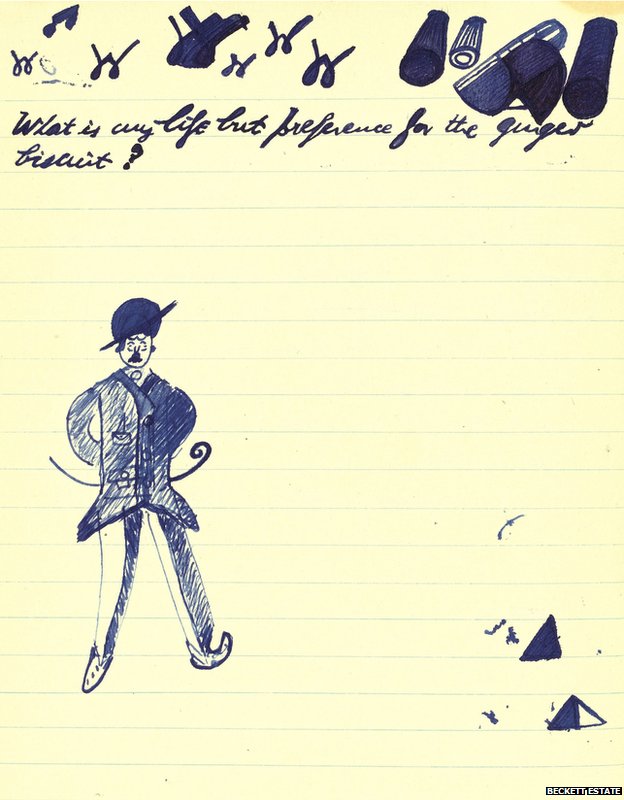
Samuel Beckett Draws Doodles of Charlie Chaplin, James Joyce & Hats

beckett chaplin

Samuel Beck­ett was a play­wright, a nov­el­ist, a Nobel Prize win­ner and the chauf­feur for a school-aged André the Giant. He was also, appar­ent­ly, a com­pul­sive doo­dler. The orig­i­nal man­u­scripts of his first and sec­ond nov­els, Mur­phy and Watt respec­tive­ly, are cov­ered in mar­gin­a­lia.

Beckett - james Joyce

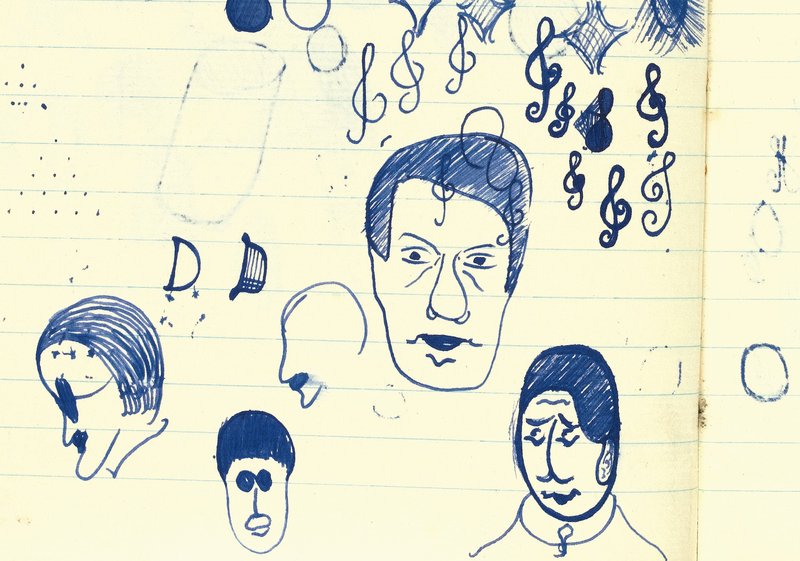
The man­u­script for Mur­phy, com­pris­ing six note­books, was auc­tioned off last year by Sotheby’s to the tune of £962,500 (or over $1.6 mil­lion). The book was writ­ten between the years of 1935 to 1936 and the man­u­script shows numer­ous revi­sions. It also con­tains this doo­dle (above) of Char­lie Chap­lin, who would lat­er influ­ence his sem­i­nal play Wait­ing for Godot. Beck­et­t’s doo­dle of James Joyce appears beneath it.

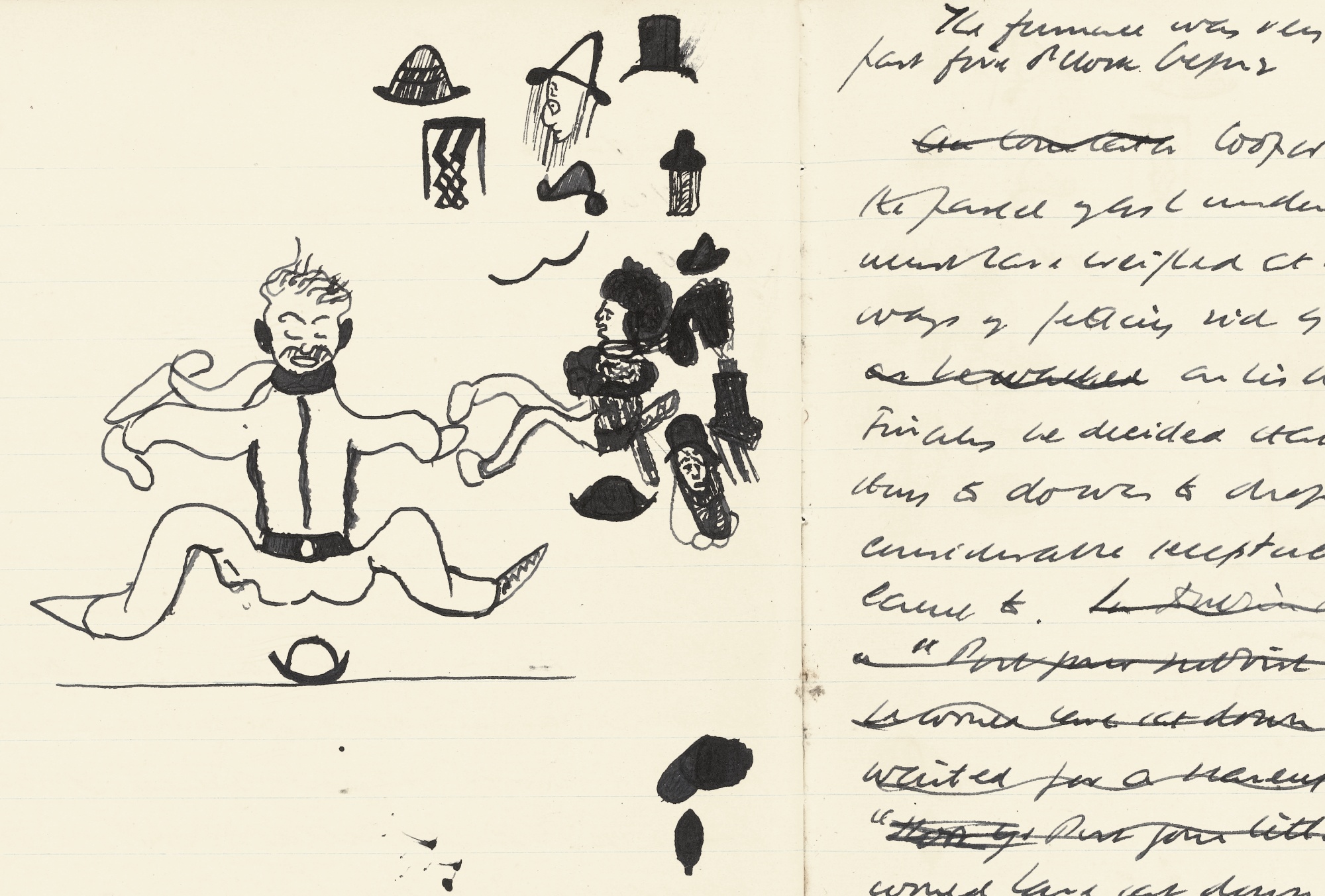
For some­one who made a career explor­ing heavy themes like noth­ing­ness and futil­i­ty, his draw­ings are noth­ing like the stark, angu­lar doo­dles of Franz Kaf­ka. Beckett’s pic­tures are curvy, light-heart­ed and whim­si­cal. Look at the draw­ing below. I real­ly don’t know what’s going on there but it sort of looks like a man in ear­muffs giv­ing birth to a hat.

beckett-murphy-2

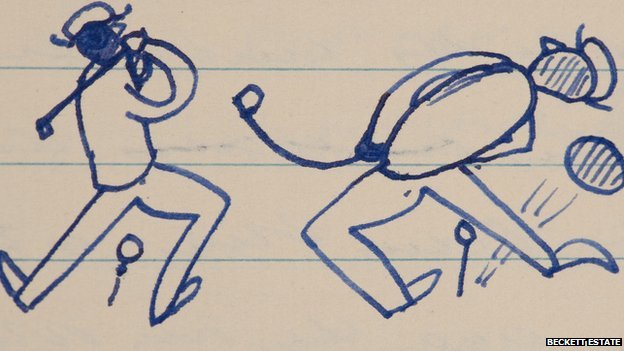
And this one is of a cou­ple golfers.

_75342230_murphy-golf

Beckett’s sec­ond nov­el Watt, the last book he wrote in Eng­lish, also took up six note­books. Accord­ing to Beckett’s rec­ol­lec­tions, Watt was writ­ten “in drips and drabs” while he was in liv­ing in France dur­ing WWII. In the first note­book, along­side an X‑ed out page of text is this odd draw­ing of a long-haired cen­taur in a top hat.

beckett doodle

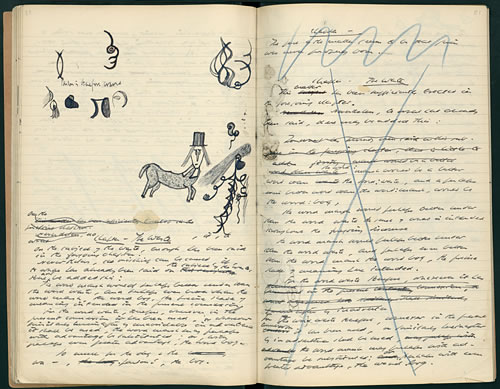
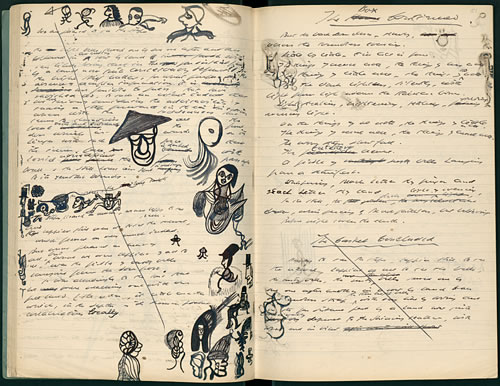
And this page, in the sec­ond note­book, fea­tures a bunch of ter­rif­ic, strik­ing­ly graph­ic doo­dles includ­ing one that looks like Mor­ley Safer in an Asian cone hat. (Again with the hats.)

beckettwatt2

via @SteveSilberman/Brain­Pick­ings/Har­ry Ran­som Cen­ter
Relat­ed Con­tent:

Samuel Beck­ett Directs His Absur­dist Play Wait­ing for Godot (1985)

Mon­ster­piece The­ater Presents Wait­ing for Elmo, Calls BS on Samuel Beck­ett

Rare Audio: Samuel Beck­ett Reads Two Poems From His Nov­el Watt

Jonathan Crow is a Los Ange­les-based writer and film­mak­er whose work has appeared in Yahoo!, The Hol­ly­wood Reporter, and oth­er pub­li­ca­tions. You can fol­low him at @jonccrow.


Anthony Burgess’ Lost Introduction to Joyce’s Dubliners Now Online

joyce sketch

Quick note: Writ­ten in 1986 as the intro­duc­tion to a Dol­men Press edi­tion of James Joyce’s Dublin­ers, but nev­er used, this essay by Antho­ny Burgess, author of A Clock­work Orange, was found among the papers he left behind. And it now appears in The Irish Times for the first time. You can read it online here. Copies of Joyce’s Dublin­ers can be found in our book col­lec­tions:

800 Free eBooks for iPad, Kin­dle & Oth­er Devices

and

1,000 Free Audio Books: Down­load Great Books for Free

Relat­ed Con­tent:

James Joyce Reads From Ulysses and Finnegans Wake In His Only Two Record­ings (1924/1929)

James Joyce’s Dublin Cap­tured in Vin­tage Pho­tos from 1897 to 1904

James Joyce, With His Eye­sight Fail­ing, Draws a Sketch of Leopold Bloom (1926)


« Go BackMore in this category... »
Quantcast