Study 40+ Languages with Free Lessons from the U.S. Foreign Service Institute

fsijapanese

I spent this after­noon chat­ting with a trav­el writer about how we first allowed our­selves to start learn­ing for­eign lan­guages. That notion may sound a bit odd, espe­cial­ly to those of you liv­ing in coun­tries where every­one grows up trilin­gual. But Amer­i­cans — even Amer­i­can trav­el­ers — have strug­gled with the con­cept of mas­ter­ing lan­guages oth­er than Eng­lish. Some­times it has seemed mere­ly unnec­es­sary; at oth­er times, down­right impos­si­ble. But no mat­ter our nation­al­i­ty, our increas­ing­ly glob­al­ized 21st-cen­tu­ry lives have put to rest any and all excus­es in which we might dress up our lin­guis­tic parochial­ism. Tech­nol­o­gy has also done more than its share, giv­en the ever-grow­ing abun­dance of free and effec­tive lan­guage-learn­ing resources on the inter­net. Take for exam­ple, our pret­ty mas­sive list of Free For­eign Lan­guage Lessons. Or dis­cov­er this trove of lan­guage learn­ing resources from the U.S. For­eign Ser­vice Insti­tute, a gov­ern­ment agency long tasked with teach­ing the widest pos­si­ble vari­ety of tongues to diplo­mats and oth­er offi­cials sta­tioned abroad. Though pro­duced sev­er­al decades ago, the lessons are still rel­e­vant .… and, more impor­tant­ly, they’re in the pub­lic domain.

Most of the down­load­ables avail­able for each of the over 40 lan­guages on the site include include text lessons in PDF form and audio lessons, suit­able for load­ing onto your mobile audio device of choice, in MP3 form. Nat­u­ral­ly, you’ll find a more robust store of FSI resources for the much-spo­ken Chi­nese, Span­ish, and French than you will for, say, Chinyan­ja, Lin­gala, and Sin­hala — but how often do you run across means of learn­ing that lat­ter class of lan­guages at all? I’ve found Japan­ese and Kore­an, my own East Asian lan­guages of choice, decent­ly rep­re­sent­ed; in fact, prepa­ra­tion for an extend­ed trip to South Korea this week has seen me go into study­ing over­drive, mak­ing use of every online resource avail­able. You can find more of them in our full list of free lan­guage lessons, where, if you’d like to learn any of the lan­guages men­tioned here — or maybe Ara­bic, Finnish, Swahili, or many tongues besides — you can get a pain­less start. We live in too big (and too inter­est­ing) a world not to take advan­tage of it.

Relat­ed Con­tent:

Learn 47 Lan­guages Online for Free: Span­ish, Chi­nese, Eng­lish & More

Learn Latin, Old Eng­lish, San­skrit, Clas­si­cal Greek & Oth­er Ancient Lan­guages in 10 Lessons

Col­in Mar­shall hosts and pro­duces Note­book on Cities and Cul­ture and writes essays on cities, lan­guage, Asia, and men’s style. He’s at work on a book about Los Ange­les, A Los Ange­les Primer. Fol­low him on Twit­ter at @colinmarshall or on Face­book.

1756 TED Talks Listed in a Neat Spreadsheet

TED-Gates

A quick update for TED heads. In ear­ly 2011 we men­tioned that some­one put togeth­er a handy online spread­sheet that lists 875 TED Talks, with handy links to each video. It’s worth men­tion­ing the spread­sheet again because this evolv­ing Google doc now lists 1756 talks. That works out to more than 440 hours of “riv­et­ing talks by remark­able peo­ple.” Because the page gets updat­ed on a reg­u­lar basis, you’ll want to book­mark it and keep tabs on the new addi­tions.

Relat­ed Con­tent:

1,700 Free Online Cours­es from Top Uni­ver­si­ties.

1,000 Free Audio Books: Down­load Great Books for Free.

800 Free eBooks for iPad, Kin­dle & Oth­er Devices.

by | Permalink | Make a Comment ( 7 ) |

Glenn Gould: Off and On the Record: Two Short Films About the Life & Music of the Eccentric Musician

Cana­di­an pianist Glenn Gould was one of those child prodi­gies whose spec­tac­u­lar tal­ents were matched by some seri­ous eccen­tric­i­ties. As an infant, Gould report­ed­ly hummed rather than cried, he had per­fect pitch at age 3, and he grad­u­at­ed at the age of 12 from the Roy­al Con­ser­va­to­ry of Music in Toron­to. Unlike just about every oth­er musi­cian on the plan­et, Gould report­ed­ly didn’t seem to need to spend hour upon hour prac­tic­ing his instru­ment. Instead, he had the envi­able abil­i­ty to prac­tice in his head. His inter­pre­ta­tions of Brahms, Beethoven and espe­cial­ly Bach were hailed as genius.

Gould also tend­ed to dress in a win­ter coat and gloves no mat­ter what the tem­per­a­ture was out­side. This result­ed in Gould get­ting arrest­ed in Mia­mi for being a sus­pect­ed vagrant. While per­form­ing, he would fall into some­thing close to an ecsta­t­ic state, shak­ing his head and twist­ing his tor­so in a man­ner that raised more than a few eye­brows in the but­toned-down world of clas­si­cal music. But per­haps his most famous eccen­tric­i­ty was that, like Jazz pianist Thelo­nious Monk, Gould had a habit of hum­ming along as he played.

Wolf Koenig and Roman Kroitor made a pair of gor­geous­ly shot doc­u­men­taries about the pianist in 1959. Glenn Gould – Off the Record, which you can see above, shows Gould relax­ing at his lake­side cot­tage north of Toron­to. In the movie, we see that he leads a soli­tary life — his only com­pan­ions are his piano and his pet dog – where he can focus com­plete­ly on his music.

In Glenn Gould – On the Record, below, Koenig and Kroitor show Gould in the stu­dio try­ing to get a record­ing to match his pre­cise vision. It also focus­es on the har­ried record­ing engi­neers who strug­gle to record the music com­ing out of Gould’s piano and not his mouth. Both films released by the Nation­al Film Board of Cana­da will be added to our list of Free Doc­u­men­taries, part of our larg­er col­lec­tion, 4,000+ Free Movies Online: Great Clas­sics, Indies, Noir, West­erns, Doc­u­men­taries & More.

Relat­ed Con­tent:

Glenn Gould Explains the Genius of Johann Sebas­t­ian Bach (1962)

Glenn Gould Offers a Strik­ing­ly Uncon­ven­tion­al Inter­pre­ta­tion of 1806 Beethoven Com­po­si­tion

The Art of Fugue: Gould Plays Bach

Jonathan Crow is a Los Ange­les-based writer and film­mak­er whose work has appeared in Yahoo!, The Hol­ly­wood Reporter, and oth­er pub­li­ca­tions. You can fol­low him at @jonccrow.


Rare Video: Fidel Castro Plays Baseball (1959)

Base­ball has the great capac­i­ty to tran­scend pol­i­tics. Peo­ple on the right love it. (Think George Will, the colum­nist who finds him­self at the cen­ter of a hot con­tro­ver­sy this week). The same holds true for folks on the left. One left­ist with a deep and abid­ing love for base­ball is Fidel Cas­tro. Before he seized pow­er in 1959, Cas­tro spent some time on the dia­mond. Baseball-Reference.com tells us that Fidel like­ly “pitched in intra­mur­al com­pe­ti­tion in col­lege for the Uni­ver­si­ty of Havana law school.” But “he was not good enough to pitch on the col­lege’s var­si­ty team.” Nor is the long-stand­ing myth true that “Cas­tro tried out for either the New York Yan­kees or Wash­ing­ton Sen­a­tors and failed to impress enough to sign a con­tract.” He was nev­er going to have a big league career. That’s for sure. But once Cas­tro actu­al­ly rose to pow­er, no one was going to stop him from hit­ting or pitch­ing in a 1959 char­i­ty game. (Watch above.) As they say, some­times “it’s good to be the king.” Just ask Vladimir Putin, who recent­ly scored 6 goals, and made 5 assists, in a hock­ey game

The 1959 clip above comes from British Pathé, which made an archive of 85,000 his­tor­i­cal films avail­able on YouTube in April. Don’t miss it.

Relat­ed Con­tent:

Bill Murray’s Base­ball Hall of Fame Speech (and Hideous Sports Coat)

The Grate­ful Dead Rock the Nation­al Anthem at Can­dle­stick Park: Open­ing Day, 1993

Free: Watch Jack­ie Robin­son Star in The Jack­ie Robin­son Sto­ry (1950)

Lou Gehrig, Yan­kee Leg­end, Stars in 1938 West­ern Rawhide

The Hobbit: The First Animation & Film Adaptation of Tolkien’s Classic (1966)

If you come to the first film pro­duc­tion of J.R.R. Tolkien’s 1937 nov­el The Hob­bit expect­ing any­thing like a rev­er­ent ren­di­tion of the sto­ry, pre­pare your­self for dis­ap­point­ment. Pro­duced in 1966, the 12-minute ani­mat­ed short takes ele­ments of the clas­sic work of fan­ta­sy and adapts—or corrupts—them to fit a dif­fer­ent sto­ry, one with a drag­on, a hob­bit, a wiz­ard, and an Arken­stone, to be sure, but with a great many odd lib­er­ties tak­en with Tolkien’s world. Instead of the great Smaug, we have a drag­on named “Slag.” Instead of pil­lag­ing The Lone­ly Moun­tain, he steals the trea­sure of the vil­lage of Dale. Instead of a troupe of dwarves, we have one Gen­er­al Oak­en­shield, a princess named “Mika,” and an unnamed watch­man. Trolls and gob­lins become “Groans” and “Grablins,” and Gol­lum appears as “Goloom.”

Is this some off-brand knock-off, you may ask? Not exact­ly. Pro­duc­er William Sny­der became the first per­son to acquire rights to Tolkien’s book, and he orig­i­nal­ly intend­ed a fea­ture length film. The project failed, but when the novel’s pop­u­lar­i­ty soared, Sny­der con­tract­ed Prague-based com­ic illus­tra­tor and ani­ma­tor Gene Deitch to cre­ate the short film you see above. Snyder’s motives, it seems, were mer­ce­nary: he want­ed to extend his license, which he then sold back to Tolkien’s pub­lish­ers for $100,000. But the film itself has a cer­tain charm, despite the nar­ra­tive butch­ery. Deitch hired Czech illus­tra­tor Adolf Born for the project, and he ren­ders the sto­ry in the col­or­ful, folk-art style of East­ern Europe (some of the draw­ings remind me of the lurid car­i­ca­tures of Ger­man artist George Grosz, some of Rocky and Bull­win­kle).

If Deitch’s Hob­bit short fails to move you, con­sid­er it at least a minor entry in the career of a fas­ci­nat­ing char­ac­ter in the world of comics, ani­ma­tion, and folk music. Deitch pro­duced car­toons for Colum­bia, 20th Cen­tu­ry Fox, MGM, and Para­mount (includ­ing some Tom and Jer­ry and Pop­eye shorts) and made record­ings of John Lee Hook­er and Pete Seeger, as well as the recent­ly re-dis­cov­ered won­der Con­nie Con­verse. He also wrote the pop­u­lar guide How to Suc­ceed in Ani­ma­tion and fathered three car­toon­ist sons, the most well-known of whom, Kim Deitch, holds a spe­cial place in the his­to­ry of under­ground comics. But I offer none of this infor­ma­tion to excuse the flaws of Deitch and Snyder’s Hob­bit short. Fans of com­ic art may love it, Tolkien purists not at all. Deitch tells the full sto­ry of the “Hol­ly­wood­ized” short film’s slap­dash mak­ing on his blog, and it is well worth a read. The film itself can be found in the Ani­ma­tion sec­tion of our col­lec­tion, 4,000+ Free Movies Online: Great Clas­sics, Indies, Noir, West­erns, Doc­u­men­taries & More.

EndlessHobbit

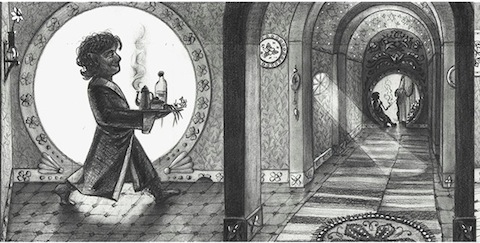
For anoth­er, much more faithful—albeit wordless—illustrated take, see Anna Repp’s End­less Book Project (screen shot above). A Metafil­ter user describes it as “one con­tin­u­ous scroll, with new art­work added almost every week.” Each pan­el has a unique look—some in the intri­cate style of Ger­man Renais­sance engrav­ing, some resem­bling wood­cuts, some inkwash draw­ings. And of course, you can­not go wrong with Tolkien’s own orig­i­nal illus­tra­tions for The Hob­bit, some pub­lished in the first edi­tion, and many more late­ly dis­cov­ered among the author’s papers. See Tolkien’s draw­ing of The Lone­ly Moun­tain at night below, and vis­it Brain­pick­ings for more.

The-Lonely-Mountain-from--001

Relat­ed Con­tent:

“The Tolkien Pro­fes­sor” Presents Three Free Cours­es on The Lord of the Rings

C.S. Lewis’ Pre­scient 1937 Review of The Hob­bit by J.R.R. Tolkien: It “May Well Prove a Clas­sic”

Lis­ten to J.R.R. Tolkien Read a Lengthy Excerpt from The Hob­bit (1952)

Sovi­et-Era Illus­tra­tions Of J. R. R. Tolkien’s The Hob­bit (1976)

Josh Jones is a writer and musi­cian based in Durham, NC. Fol­low him at @jdmagness.

Rik Mayall Voices the Animation “Don’t Fear Death” Just Months Before His Untimely Passing

To para­phrase an acquaintance’s trib­ute to Rik May­all (leg­endary British come­di­an who died yes­ter­day at age 56), the cult com­e­dy The Young Ones turned a gen­er­a­tion of Amer­i­can mis­fits into Anglophiles before they’d ever set foot in Britain. I was one of those kids, stay­ing up late to catch the riotous­ly slap­stick show about four slack­er room­mates who mer­ci­less­ly abused each oth­er to insane degrees while attend­ing “Scum­bag Col­lege.” Fea­tur­ing musi­cal appear­ances by British alter­na­tive heroes like Mad­ness, Dexys Mid­night Run­ners, Motör­head, and The Damned, the show only ran for 12 episodes, but it had an enor­mous influ­ence on both sides of the Atlantic as a Mon­ty Python for absur­dist post-punk 80s brats.

May­all co-cre­at­ed and co-wrote the show, and his anar­chic gal­lows humor per­me­at­ed every episode. He lat­er went on to write and/or star in sit­coms Bot­tom and The New States­man, and had a beloved, if brief, role in the Rowan Atkin­son com­e­dy Black­ad­der. Short­ly before his death, May­all voiced the ani­ma­tion above, “Don’t Fear Death,” for Chan­nel 4. Writ­ten and pro­duced by Louis Hud­son and Ian Raven­scroft, this per­fect vehi­cle for Mayall’s snide sen­si­bil­i­ties explores “the ben­e­fits of being dead,” includ­ing nev­er hav­ing to “waste one more sin­gle, soul-crush­ing hour in your mind­less dead-end job.” Luck­i­ly for his fans, May­all avoid­ed that hor­ri­ble fate and instead cre­at­ed some of the most mem­o­rably obnox­ious char­ac­ters in British com­e­dy his­to­ry, although writer Lau­rence Marks tells the BBC he was “the antithe­sis” of those char­ac­ters, “a qui­et, polite, car­ing gen­tle­man.”

See May­all below do an ear­ly ver­sion of his Young Ones char­ac­ter in a clas­sic 80s stand-up rou­tine .

via Dan­ger­ous Minds

Relat­ed Con­tent:

New Ani­mat­ed Film Tells the Life Sto­ry of Mon­ty Python’s Gra­ham Chap­man

John Cleese’s Eulo­gy for Gra­ham Chap­man: ‘Good Rid­dance, the Free-Load­ing Bas­tard, I Hope He Fries’

Josh Jones is a writer and musi­cian based in Durham, NC. Fol­low him at @jdmagness.

Pablo Neruda’s Historic First Reading in the US (1966)

Few pub­lic fig­ures of the 20th cen­tu­ry are as dear to the hearts and minds of Latin Amer­i­ca as Chilean poet Nef­tali Ricar­do Reyes Basoal­to — AKA Pablo Neru­da. He became famous for his writ­ing before he was 20 years old and he won the Nobel Prize for Lit­er­a­ture in 1971. In between, he wrote sur­re­al­ist poems, Whit­manesque epics and polit­i­cal man­i­festos. Fel­low Nobel Prize win­ner Gabriel Gar­cía Mar­quez called him “the great­est poet of the 20th cen­tu­ry in any lan­guage.”

Yet Neru­da was known almost as much for his pol­i­tics as for his writ­ing. After Franco’s forces exe­cut­ed his friend Fed­eri­co Gar­cía Lor­ca dur­ing the Span­ish Civ­il War, Neru­da shift­ed hard to the left. In the 30s and 40s, he pub­li­cal­ly sup­port­ed Joseph Stal­in at a time when his tri­umphs were obvi­ous and his crimes were hid­den. Neru­da even wrote a cou­ple odes to the strong­man. When Neru­da was sta­tioned as a diplo­mat in Mex­i­co City, he report­ed­ly helped mural­ist David Alfaro Siqueiros flee the coun­try after he led an assas­si­na­tion attempt against Stalin’s rival Leon Trot­sky.

So it isn’t sur­pris­ing that Neruda’s pol­i­tics would make him unpop­u­lar in some cor­ners of Wash­ing­ton. He was offi­cial­ly barred from com­ing to the Unit­ed States and he was report­ed­ly at the cen­ter of a CIA smear cam­paign. But, in 1966, the poet was invit­ed to the Inter­na­tion­al PEN con­fer­ence in New York City by Arthur Miller. When the play­wright beseeched the White House, Pres­i­dent John­son, dis­play­ing far more polit­i­cal courage than is imag­in­able today, grant­ed Neru­da a visa.

The poet was treat­ed like a rock star. He gave a read­ing of his poems with trans­la­tion, at the 96th St. Y. in Man­hat­tan to a packed audi­ence on June 11th of that year. You can lis­ten to it above, or down­load the audio here. After an intro­duc­tion by Archibald MacLeish, Neru­da begins speak­ing at the 9:00 mark.

When the New York Times asked what he thought of Amer­i­ca, he said, “Your coun­try – how shall I say it? – seems more pre­pared for peace than for war. Peace and poet­ry…”

Neru­da died in 1973, twelve days after a CIA-backed coup in Chile over­threw Neruda’s polit­i­cal ally Sal­vador Allende and installed Gen­er­al Augus­to Pinochet.

You can find oth­er poet­ry read­ings in our col­lec­tion, 1,000 Free Audio Books: Down­load Great Books for Free.

Relat­ed Con­tent:

“The Me Bird” by Pablo Neru­da: An Ani­mat­ed Inter­pre­ta­tion

Poems as Short Films: Langston Hugh­es, Pablo Neru­da and More

Read 10 Short Sto­ries by Gabriel Gar­cía Márquez Free Online (Plus More Essays & Inter­views)

Jonathan Crow is a Los Ange­les-based writer and film­mak­er whose work has appeared in Yahoo!, The Hol­ly­wood Reporter, and oth­er pub­li­ca­tions. You can fol­low him at @jonccrow.

Terry Gilliam, Guy Ritchie & Alejandro González Iñárritu Direct Soccer Ads for Nike

Even if you don’t hail from one of the world’s many soc­cer-lov­ing coun­tries (you know, the ones that don’t call it “soc­cer”) sure­ly you can get on board for the World Cup. Here in the Unit­ed States, I often hear “I just watch it for the ads” said about the Super Bowl. And if that game’s breaks show­case some pret­ty cool spots, then its non-Amer­i­can foot­ball equiv­a­lent offers an even high­er lev­el of pro­mo­tion­al spec­ta­cle. Last year, we fea­tured Brazil and 12 Mon­keys auteur Ter­ry Gilliam’s two ven­tures into the form of the World Cup com­mer­cial, “The Secret Tour­na­ment” and “The Rematch,” the first of which you can watch at the top of the post. They came com­mis­sioned by Nike in 2002, and six years lat­er the for­mi­da­ble shoe man­u­fac­tur­er put a pre­sum­ably decent chunk of its mar­ket­ing bud­get behind anoth­er fea­ture film­mak­er with a vision: Lock, Stock, and Two Smok­ing Bar­rels and Snatch direc­tor Guy Ritchie. The result, “The Next Lev­el,” appears below:

“The entire film is seen as if through the eyes of an ama­teur foot­baller fast-tracked into the big time,” says the web site of The Mill, the adver­tis­ing agency behind the spot. “We see what he sees in the thick of the action, on and off the pitch: the foot­work, the fouls, the goals and the girls. Film­ing in Lon­don, Man­ches­ter and Barcelona with per­haps the world’s small­est cam­era (SI 2K) took a month. The Mill pushed post pro­duc­tion to the extreme, ven­tur­ing into some unchar­tered FX ter­ri­to­ry, set­ting up a new data pipeline for the cam­era (used here for the first time in com­mer­cial pro­duc­tion) and to track shots pre­vi­ous­ly con­sid­ered impos­si­ble.” These hyper­ki­net­ic, celebri­ty foot­baller-filled two min­utes cer­tain­ly do take the wish-ful­fill­ment aspect of sports fan­dom to the next lev­el, or at least a more lit­er­al one. The Mill and Nike would then step up to a three-minute pro­duc­tion with Ale­jan­dro González Iñár­ritu, he of Amores Per­ros and Babel, for 2010’s “Write the Future,” a med­i­ta­tion on how, in sports as else­where, one good move might lock in a des­tiny, or one bad move might shat­ter it:

The Mill calls it “one of our biggest jobs to date,” with “a stag­ger­ing 236 VFX shots made up of 106 foot­ball shots which includ­ed a CG sta­di­um com­plete with flags and ban­ners, crowd repli­ca­tion using Mas­sive, grass clean up and replace­ment, and full roto­scope of all the play­ers.” Impres­sive, sure, but some sure­ly feel that such a degree of labor and atten­tion placed on adver­tis­ing dur­ing tele­vised match­es takes away from the beau­ty of the Beau­ti­ful Game itself.  “Soc­cer is a lie,” says the dis­ap­point­ed would-be foot­baller pro­tag­o­nist of Eduar­do Sacheri’s new nov­el Papers in the Wind. “It’s all a farce … And yet … some­how … there’s still a ‘but.’” You may also con­sid­er the adver­tis­ing enter­prise a lie, but when it can bring togeth­er rare tal­ents from cin­e­ma as well as the rest of the cul­tur­al world for high-impact moments like these, well, some­how… there’s still a “but.” Just think back twen­ty years to anoth­er Nike ad, the one with the clas­sic turn by none oth­er than William S. Bur­roughs:

Relat­ed Con­tent:

Watch “The Secret Tour­na­ment” & “The Rematch,” Ter­ry Gilliam’s Star-Stud­ded Soc­cer Ads for Nike

Beat Writer William S. Bur­roughs Spreads Coun­ter­cul­ture Cool on Nike Sneak­ers, 1994

Video: The Day Bob Mar­ley Played a Big Soc­cer Match in Brazil, 1980

Col­in Mar­shall hosts and pro­duces Note­book on Cities and Cul­ture and writes essays on cities, lan­guage, Asia, and men’s style. He’s at work on a book about Los Ange­les, A Los Ange­les Primer. Fol­low him on Twit­ter at @colinmarshall or on Face­book.

« Go BackMore in this category... »
Quantcast