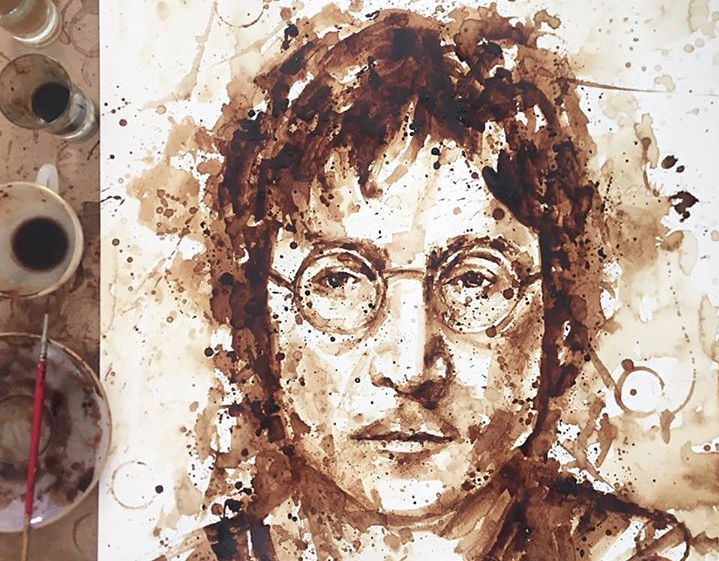
Coffee Portraits of John Lennon, Albert Einstein, Marilyn Monroe & Other Icons

Coffee Lennon

Paint­ings by Maria A. Aris­ti­dou

As philoso­pher Mar­shall McLuhan wrote in Under­stand­ing Media, “the medi­um is the mes­sage.”

Artist Maria A. Aris­ti­dou’s medi­um is cof­fee, and late­ly, she’s been gar­ner­ing a lot of atten­tion for java-based por­traits of such cul­tur­al lumi­nar­ies as Ein­stein, Darth Vad­er and The Bea­t­les.

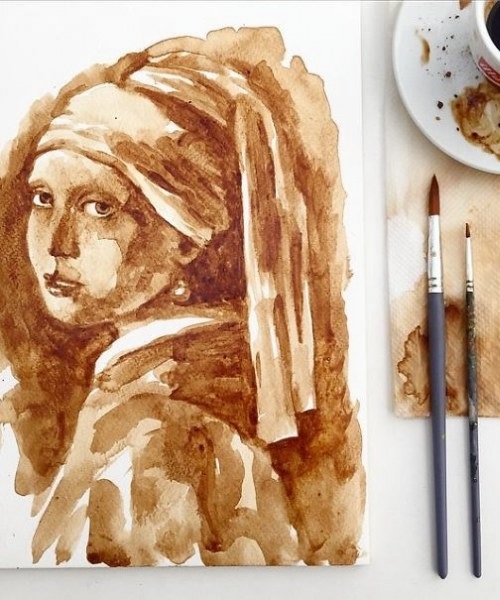
The pro­lif­ic and high­ly-caf­feinat­ed artist found her niche when an acci­den­tal spill gave rise to a some­what sullen fac­sim­i­le of Vermeer’s Girl with a Pearl Ear­ring.

Girl-with-Pearl-Earring

She has since applied her espres­so blends toward the Mona Lisa and one of Baroque era painter Juan de Arel­lano’s flo­ral still lifes, but for the most part, she draws her sub­jects from the realm of pop cul­ture.

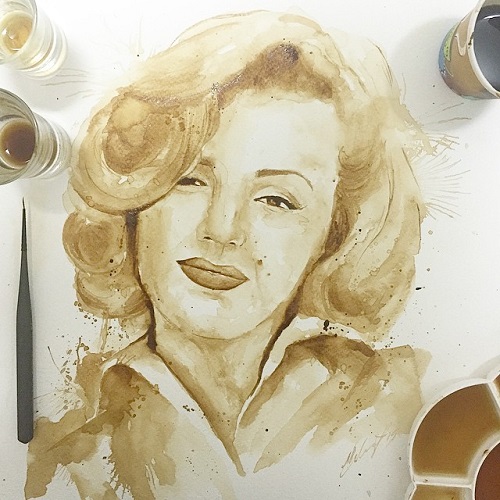
Dorm room faves like Mar­i­lyn Mon­roe, Bob Mar­ley, and John Lennon are over­shad­owed by fic­tion­al super­stars like Frozen’s Queen Elsa, Nintendo’s Mario, and var­i­ous per­son­ages from Game of Thrones.

My favorite? Kyle MacLach­lan as Twin Peaks’ Agent Dale “Damn fine cup of cof­fee, Diane!” Coop­er. That’s not just medi­um. That’s meta!

Aris­ti­dou is not the only artist find­ing inspi­ra­tion in this non-tra­di­tion­al pig­ment. A recent NPR sto­ry on the trend cites cof­fee artists Angel Sarkela-Saur and Andy Saur and Giu­lia Bernardel­li.

Scroll back­wards to the mid-1800s and you’ll find author—and gift­ed drafts­man—Vic­tor Hugo exper­i­ment­ing with the stuff. Nor was his promis­cu­ous nib a stranger to the artis­tic pos­si­bil­i­ties of soot, coal dust, and blood.

Aris­ti­dou, who holds degrees in Fine Art Print­mak­ing and Arts Health, eschews the tra­di­tion­al artist’s web­site in favor of social media. Not only is she a mas­ter of the hash­tag, she also designs cakes. View her com­plete oeuvre—including sev­er­al car­tons of cor­po­rate logo East­er eggs and some recent fash­ion illus­tra­tions that com­bine water­col­or with java—on her Face­book or Insta­gram pages.

Above you can watch Aris­ti­dou paint por­traits of Ein­stein, the Bea­t­les and R2D2 in quick time-lapse motion.

Relat­ed Con­tent:

Vic­tor Hugo’s Sur­pris­ing­ly Mod­ern Draw­ings Made with Coal, Dust & Cof­fee (1848–1851)

J.S. Bach’s Com­ic Opera, “The Cof­fee Can­ta­ta,” Sings the Prais­es of the Great Stim­u­lat­ing Drink (1735)

Black Cof­fee: Doc­u­men­tary Cov­ers the His­to­ry, Pol­i­tics & Eco­nom­ics of the “Most Wide­ly Tak­en Legal Drug”

The Fine Art of Paint­ing Por­traits on Cof­fee Foam

Ayun Hal­l­i­day is an author, illus­tra­tor, and Chief Pri­ma­tol­o­gist of the East Vil­lage Inky zine. Fol­low her @AyunHalliday

Endangered Species (Including Cecil the Lion) Projected Onto the Empire State Building

Any­one with a Face­book or Twit­ter account last week could­n’t avoid hear­ing about Wal­ter James Palmer, the Min­neso­ta den­tist who alleged­ly went tro­phy hunt­ing in Zim­bab­we and killed Cecil the Lion, a local favorite who had been ille­gal­ly lured away from a pro­tect­ed wildlife pre­serve. I won’t say any­thing more about it, oth­er than that you can sign a peti­tion to get Palmer extra­dit­ed to Zim­bab­we and let him defend his actions to local author­i­ties.

Mean­while, back in New York City, two artists Travis Threlkel and Louie Psi­hoyos were get­ting ready to turn The Empire State build­ing into a Noah’s Ark of Endan­gered Ani­mals. And that’s exact­ly what hap­pened on Sat­ur­day night. Plac­ing “40 stacked, 20,000-lumen pro­jec­tors on the roof of a near­by build­ing,” Threlkel and Psi­hoyos pro­ject­ed an array of endan­gered ani­mals “onto a space 375 feet tall and 186 feet wide cov­er­ing 33 floors,” reports The New York Times. You can see pho­tos of the ani­mals over at the Rac­ing Extinc­tion Twit­ter stream. Touch­ing­ly, there was an homage to Cecil the Lion. A video from the Times appears above; anoth­er from The New York­er below.

To learn more about how Project Map­ping works, and to see oth­er exam­ples of Threlkel’s work, see the videos on this page.

Fol­low us on Face­book, Twit­ter, Google Plus and LinkedIn and share intel­li­gent media with your friends. And if you want to make sure that our posts def­i­nite­ly appear in your Face­book news­feed, just fol­low these sim­ple steps.

by | Permalink | Make a Comment ( 4 ) |

Kurt Vonnegut Maps Out the Universal Shapes of Our Favorite Stories

Imag­ine a hat. Flip it upside down, and you’ve got your­self the out­line of a sto­ry the pub­lic will nev­er weary of, accord­ing to author Kurt Von­negut, who maps it on out a chalk­board in the video above.

His Y‑axis charts a range between good and ill for­tune. Von­negut rec­om­mends posi­tion­ing your main char­ac­ter slight­ly clos­er to the good (i.e. wealth and bois­ter­ous health) end of the spec­trum, at least in the begin­ning. He or she will dip below mid­line soon enough.

As for the X‑axis, Von­negut labels it B‑E, from begin­ning to end.

Now plot your points, remem­ber­ing that it’s all about the curves.

Some pop­u­lar themes include peo­ple get­ting in and out of trou­ble, and the ever­green boy gets girl. (The always pro­gres­sive Von­negut reminds his view­ers that the gen­ders in the lat­ter sce­nario are always open to inter­pre­ta­tion. Again, it’s the curves that count…)

Think­ing about my favorite books and films, it seems that most do fol­low Vonnegut’s upside-down hat nar­ra­tive arc.

Are there excep­tions?

Hor­a­tio Alger’s rags to rich­es sto­ries, for exam­ple. We should all be so lucky to find our­selves pow­er­ing up such a steep uphill grade.

Of course there are excep­tions!

Von­negut him­self iden­ti­fies a par­tic­u­lar­ly high pro­file one, whose geom­e­try is less an ele­gant curve than a stair­case that ter­mi­nates in a free fall. (SPOILER: it involves a fairy god­moth­er and ends in an infin­i­ty sym­bol.

Those weary of pars­ing sto­ry using the Hero’s Jour­ney tem­plate should inves­ti­gate Vonnegut’s graph­ic approach. It works!

Relat­ed Con­tent:

Kurt Vonnegut’s 8 Tips on How to Write a Good Short Sto­ry

Kurt Von­negut Explains “How to Write With Style”

Kurt Von­negut Urges Young Peo­ple to Make Art and “Make Your Soul Grow”

Ayun Hal­l­i­day is an author, illus­tra­tor, and Chief Pri­ma­tol­o­gist of the East Vil­lage Inky zine. Fol­low her @AyunHalliday

What Beatboxing and Opera Singing Look Like Inside an MRI Machine

Beat­box­ing, the prac­tice of pro­duc­ing drum machine-like beats (espe­cial­ly TR-808-like beats) with one’s voice, has long since made the tran­si­tion from par­lor trick to acknowl­edged musi­cal art form. But we still have much to under­stand about it, as the recent­ly-emerged first gen­er­a­tion of beat­box­ing schol­ars knows full well. “A team of lin­guis­tics and engi­neer­ing stu­dents at USC want­ed to learn more about the mechan­ics behind the rhythms,” writes Los Ange­les Times music crit­ic Ran­dall Roberts. “By using MRI tech­nol­o­gy, they record­ed an unnamed local beat­box­er work­ing his mag­ic, broke down the most com­mon­ly employed sounds by exam­in­ing the move­ments of his mouth and then ana­lyzed the data.”

This result­ed in a paper called “Par­alin­guis­tic Mech­a­nisms of Pro­duc­tion in Human ‘Beat­box­ing’: A Real-Time Mag­net­ic Res­o­nance Imag­ing Study.” Roberts describes it as “pre­dictably heavy with lin­guis­tic jar­gon, but even to a civil­ian, the results are illu­mi­nat­ing,” espe­cial­ly the video the research team record­ed, “which reveals how the human mouth can so con­vinc­ing­ly cre­ate the pop of a snare drum.” At the top of the post, you can see this sort of thing for your­self: in this video “The Diva and the Emcee,” fea­tured at the Inter­na­tion­al Soci­ety for Mag­net­ic Res­o­nance in Med­i­cine (ISMRM) Sci­en­tif­ic Ses­sions in Seat­tle, we see how a beat­box­er’s tech­nique com­pares to that of an opera singer.

You can find out more at the site of the Speech Pro­duc­tion and Artic­u­la­tion Knowl­edge group (SPAN), the USC team that per­formed this pio­neer­ing research into an impor­tant com­po­nent of one of the pil­lars of hip hop. Keep their find­ings in mind next time you watch a beat­box­ing clip that goes viral (such as the Gold­berg Vari­a­tions one we fea­tured back in 2012) for a rich­er lis­ten­ing expe­ri­ence. After all, it does no harm to the romance of the beat­box, to para­phrase Carl Sagan, to know a lit­tle bit about it.

Relat­ed Con­tent:

Beat­box­ing Bach’s Gold­berg Vari­a­tions

All Hail the Beat: How the 1980 Roland TR-808 Drum Machine Changed Pop Music

Langston Hugh­es Reveals the Rhythms in Art & Life in a Won­der­ful Illus­trat­ed Book for Kids (1954)

Do Rap­pers Have a Big­ger Vocab­u­lary Than Shake­speare?: A Data Sci­en­tist Maps Out the Answer

Col­in Mar­shall writes on cities, lan­guage, Asia, and men’s style. He’s at work on a book about Los Ange­les, A Los Ange­les Primer, and the video series The City in Cin­e­ma. Fol­low him on Twit­ter at @colinmarshall or on Face­book.

Patti Smith Plays at CBGB In One of Her First Recorded Concerts, Joined by Seminal Punk Band Television (1975)

The pic­ture of punk as the domain of boor­ish nihilists who can’t play their instru­ments has been as much a cre­ation of mar­ket­ing (via Mal­colm McLaren) as it has been a virtue-of-neces­si­ty min­i­mal­ist pose and a form of avant garde DIY exper­i­men­tal­ism. But there have always been, since the coin­ing of the term “punk” as a musi­cal genre, stel­lar musi­cians and thought­ful, poet­ic lyri­cists shap­ing the scene. Of the for­mer, we must men­tion Tele­vi­sion, with their mag­nif­i­cent gui­tar inter­play between leader Tom Ver­laine and Richard Lloyd. And, of the lat­ter, we need look no fur­ther than the god­moth­er of punk her­self, Pat­ti Smith, who has always com­mand­ed stage and stu­dio with her smart, arrest­ing lyri­cism and pow­er­ful set of pipes.

Years before the Sex Pis­tols invad­ed the States, these two bands played reg­u­lar­ly at CBG­Bs (Tele­vi­sion was, in fact, the very first band to play there) with a loose col­lec­tion of mis­fits who re-invent­ed rock and roll. In Decem­ber, 1975, Smith released her first album, Hors­es, a hybrid of punk and spo­ken word pro­duced by the Vel­vet Underground’s John Cale.

But before that record made her famous—in April of that year—the Pat­ti Smith Group took the stage with Tele­vi­sion, and two teenage fans were there to record both sets from both bands. First appear­ing as a boot­leg CD gener­i­cal­ly titled “Ear­ly Gig ’75,” the disc has since been reis­sued as We Can’t Do Any­more… Cause I’m Just Too Tired!, with anoth­er set of Smith cov­ers tacked on from a ’78 con­cert in San­ta Mon­i­ca.

We get clas­sic tracks from both bands, such as Television’s “Mar­quee Moon” and “Lit­tle John­ny Jew­ell” and Smith’s cov­er of “Hey Joe” and Van Morrison’s “Glo­ria” as well as her own “Hors­es” and “Piss Fac­to­ry.” At the top of the post, you can hear her do six songs from that night in 1975, the last three with Tele­vi­sion join­ing her onstage: “We’re Going to Have a Real Good Time Togeth­er” (Vel­vet Under­ground cov­er), “Redon­do Beach,” “Bird­land,” “Space Mon­key,” “Dis­tant Fin­gers,” and “Glo­ria.” You’ll also hear the two young tapers chat­ting it up in the first few min­utes of the tape.

Smith’s band, writes boot­leg blog Doom & Gloom From the Tomb, “was tran­si­tion­ing from a cabaret-lean­ing trio to a ful­ly-fledged rock band sound,” and the ram­shackle per­for­mances show us a tal­ent­ed bunch of musi­cians still find­ing their foot­ing as a group. The fol­low­ing year, Smith and band would appear in Stock­holm after the release of Hors­es. As you can see and hear above (after a brief inter­view) they’d become a tighter, and some­what more con­ven­tion­al, rock and roll machine, but the ear­ly per­for­mances at the top—for all the lo-fi murk­i­ness and intru­sive crowd noise—have a raw appeal only height­ened by the fact that they are now impor­tant doc­u­ments of a now-leg­endary musi­cal era. See this review of the boot­leg CD reis­sue for a blow-by-blow descrip­tion of this his­toric ’75 con­cert from two sem­i­nal, and phe­nom­e­nal­ly tal­ent­ed, punk bands.

Relat­ed Con­tent:

The Talk­ing Heads Play CBGB, the New York Club that Shaped Their Sound (1975)

The Ramones, a New Punk Band, Play One of Their Very First Shows at CBGB (1974)

Blondie Plays CBGB in the Mid-70s in Two Vin­tage Clips

Josh Jones is a writer and musi­cian based in Durham, NC. Fol­low him at @jdmagness

Brooklyn–Based Makers of Artisanal Water Let You Sip From America’s Great Cultural Waters

The Tim­my Broth­ers, based in Brook­lyn, cre­ate hand­craft­ed water. It’s not just any water. It’s water that lets you trav­el to dif­fer­ent cul­tur­al times and places. Want to drink water that evokes mem­o­ries of Mark Twain’s Mis­sis­sip­pi Riv­er? Or the great jazz that came out of New Orleans? Well, the Tim­my Broth­ers have just the prod­uct for you.

If you’re in Brook­lyn, also con­sid­er mak­ing a side trip to Bea­con, NY where David Rees lov­ing­ly cre­ates arti­sanal hand­craft­ed pen­cils. You’ll nev­er look at pen­cils the same way again. :-)

via Digg

Fol­low us on Face­book, Twit­ter, Google Plus and LinkedIn and share intel­li­gent media with your friends. And if you want to make sure that our posts def­i­nite­ly appear in your Face­book news­feed, just fol­low these sim­ple steps.

1,000 Musicians Perform Foo Fighters’ “Learn to Fly” in Unison in Italy

Despite break­ing his leg dur­ing a gig ear­li­er this sum­mer, Dave Grohl and the Foo Fight­ers have blitzed their way through Europe and Amer­i­ca, play­ing some­times 5–6 shows per week, in cities often large, but some­times small.

On Sep­tem­ber 16th, the band will make a pit­stop in my home­town, Moun­tain View, CA (pop­u­la­tion 75,000). So it does­n’t seem implau­si­ble for the res­i­dents of Cese­na, Italy (pop­u­la­tion 100,000) to ask the Foo Fight­ers to play a show in their small city, which sits right near the Adri­at­ic Sea.

And boy did they make the request in style. I get chills when I watch this, every time.

Fol­low us on Face­book, Twit­ter, Google Plus and LinkedIn and share intel­li­gent media with your friends. And if you want to make sure that our posts def­i­nite­ly appear in your Face­book news­feed, just fol­low these sim­ple steps.

by | Permalink | Make a Comment ( 6 ) |

Emily Dickinson’s Handwritten Coconut Cake Recipe Hints at How Baking Figured Into Her Creative Process

Emily Dickinson Coconut Cake

The Emi­ly Dick­in­son Muse­um will tell you that “The kitchen appears to be one of the rooms where [Emi­ly] Dick­in­son felt most com­fort­able, per­haps most at home.” But the “many drafts of poems writ­ten on kitchen papers tell us also that this was a space of cre­ative fer­ment for her, and that the writ­ing of poet­ry mixed in her life with the mak­ing of del­i­cate treats.”

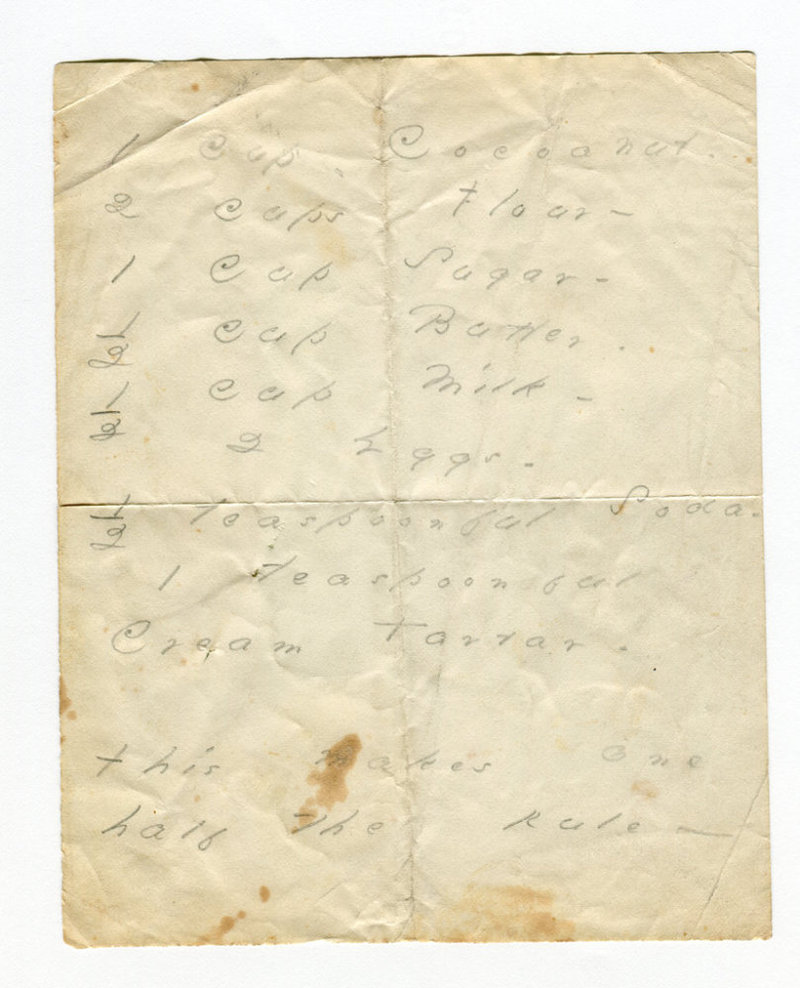
We still have access to Dick­in­son’s gin­ger­bread and dough­nut recipes. But if you want to see an exam­ple of how bak­ing nour­ished her cre­ative process, then look no fur­ther than Emi­ly’s recipe for Coconut Cake. The image above shows the ingre­di­ents scratched out in her hand­writ­ing:

1 cup coconut
2 cups flour
1 cup sug­ar
1/2 cup but­ter
1/2 cup milk
2 eggs
1/2 tea­spoon soda
1 tea­spoon cream of tar­tar

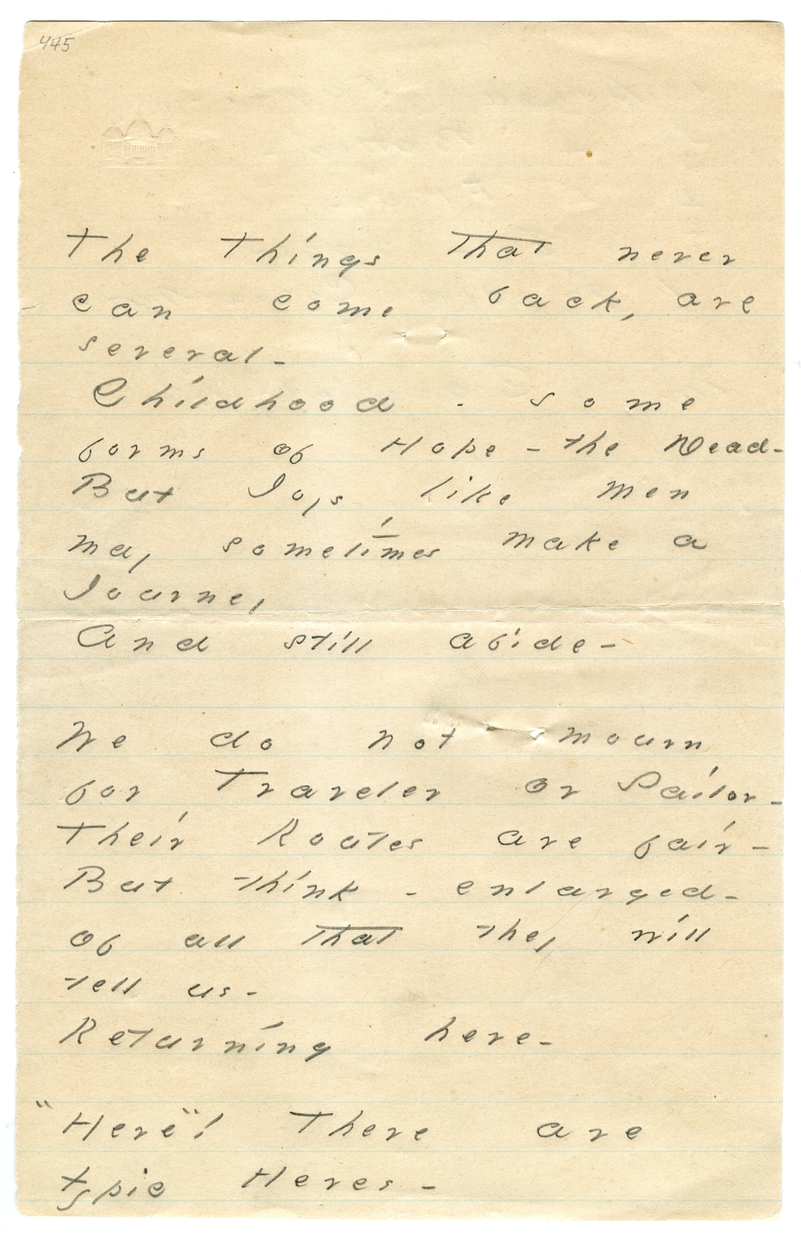
On the flip side of the recipe, Dick­in­son then wrote the begin­ning of a poem, “The Things that nev­er can come back, are sev­er­al” (read the tran­script here). Pre­sum­ably the recipe inspired the poem, but per­haps it was the oth­er way around?

rsz_2things_that_never_can_come_back_are_several

If you’re look­ing for your own source of cre­ative inspi­ra­tion, you can try out Dick­in­son’s recipes for Black Cake and also Rye and Indi­an Bread here. (Accord­ing to The Pub­lic Domain Review, “her loaf of Indi­an and Rye won sec­ond prize in the Amherst Cat­tle Show of 1856.”) And you can even head up to the Emi­ly Dick­in­son Muse­um in Amherst, MA and take part in their annu­al bak­ing con­test.

Over at NPR, Dick­in­son schol­ar Nel­ly Lam­bert has more on the poet­’s rela­tion­ship to bak­ing and food.

Relat­ed Con­tent:

The Online Emi­ly Dick­in­son Archive Makes Thou­sands of the Poet’s Man­u­scripts Freely Avail­able

The Sec­ond Known Pho­to of Emi­ly Dick­in­son Emerges

Watch an Ani­mat­ed Film of Emi­ly Dickinson’s Poem ‘I Start­ed Early–Took My Dog’

by | Permalink | Make a Comment ( 4 ) |

« Go BackMore in this category... »
Quantcast