Björk Presents Groundbreaking Experimental Musicians in Modern Minimalists, a 1997 Documentary

Exper­i­men­tal music, by its very nature, stays out of the main­stream. All styles of music begin as exper­i­ments, but most soon­er or lat­er, in one form or anoth­er, find their way to pop­u­lar accep­tance. But if one liv­ing musi­cian per­son­i­fies the intrigu­ing bor­der­lands between the pop­u­lar and the exper­i­men­tal, Björk does: since at least the 1980s (and, tech­ni­cal­ly, the 1970s), she has steadi­ly put out records that con­sti­tute mas­ter class­es in how to keep push­ing forms for­ward while main­tain­ing a wide fan base, seem­ing­ly giv­ing the lie to John Cage’s dic­tum that mak­ing some­thing 20 per­cent new means a loss of 80 per­cent of the audi­ence.

Cage, an icon of min­i­mal­ist exper­i­men­tal music who still caught the pub­lic ear now and again, does­n’t appear in the BBC’s Mod­ern Min­i­mal­ists [part one, part two], but only because he died in 1992, five years before it aired. But this Björk-host­ed whirl­wind tour through the com­pa­ny of a selec­tion of inno­v­a­tive min­i­mal­ist com­posers of the day actu­al­ly feels, at points, a bit like Cage’s 1960 per­for­mance of Water Walk on I’ve Got a Secret: we not only hear them talk, but we hear their music, see them make it, and get an insight into the way they work and — per­haps most impor­tant­ly — the way they think.

“When I was asked to do this pro­gram,” Björk says in her dis­tinc­tive Ice­landic inflec­tion, “it was very impor­tant for me to intro­duce the peo­ple I think are chang­ing music today.” That ros­ter includes Alas­dair Mal­loy from Scot­land, Mika Vainio from Fin­land, and, most famous­ly, Arvo Pärt from Esto­nia. Björk not only draws out their musi­cal philoso­phies, but responds with a few of her own.

“Peo­ple have moved away from plots and struc­tures, and moved to its com­plete oppo­site, which is tex­tures,” she says over a series of post­mod­ern land­scapes, “A place to live in, or an envi­ron­ment, or a still­ness.” And the role of the musi­cian in that mod­ern real­i­ty? “To take these every­day nois­es that are ugly, and make them beau­ti­ful. By this, they’re doing mag­ic.”

via Net­work Awe­some

Relat­ed Con­tent:

Watch Björk’s 6 Favorite TED Talks, From the Mush­room Death Suit to the Vir­tu­al Choir

Hear the Album Björk Record­ed as an 11-Year-Old: Fea­tures Cov­er Art Pro­vid­ed By Her Mom (1977)

A Young Björk Decon­structs (Phys­i­cal­ly & The­o­ret­i­cal­ly) a Tele­vi­sion in a Delight­ful Retro Video

Björk and Sir David Atten­bor­ough Team Up in a New Doc­u­men­tary About Music and Tech­nol­o­gy

John Cage Per­forms Water Walk on US Game Show I’ve Got a Secret (1960)

Col­in Mar­shall writes on cities, lan­guage, Asia, and men’s style. He’s at work on a book about Los Ange­les, A Los Ange­les Primer, and the video series The City in Cin­e­ma. Fol­low him on Twit­ter at @colinmarshall or on Face­book.

Neil deGrasse Tyson Presents a Brief History of Everything in an 8.5 Minute Animation

Patre­on, a crowd fund­ing site where fans can auto­mat­i­cal­ly tithe a set amount to their fave artist every time that per­son uploads con­tent, is a great way for pas­sion­ate, under-rec­og­nized indi­vid­u­als to gain vis­i­bil­i­ty and a bit of dough.

So what’s astro­physi­cist Neil deGrasse Tyson doing there? He’s already famous, and one would think his gig as direc­tor of New York City’s Hay­den Plan­e­tar­i­um, cou­pled with the pro­ceeds from his books and dvds, would prove suf­fi­cient to any finan­cial needs.

(Is it some sort of Aman­da Palmer thing?)

Nope. Turns out Dr. Tyson is there on some­one else’s behalf, nar­rat­ing an episode of Har­ry Reich’s Minute Physics. The video series often employs white­board ani­ma­tions to explain such sci­en­tif­ic phe­nom­e­na as dark mat­ter, wave/particle dual­i­ty, and bicy­cles.

The lat­est Tyson-nar­rat­ed episode, above, shoots the moon by cram­ming the entire His­to­ry of the Uni­verse (and some com­pli­men­ta­ry Stravin­sky) into an 8.5‑minute frame­work (a neg­li­gi­ble amount when you con­sid­er phe­nom­e­na like light years, but still many times the series’ stan­dard minute).

Thus far, 1075 fans of Minute Physics have anted up, result­ing in a take of $2,992.66 per video. (Click here to see how that amount com­pares to the var­i­ous wages and salaries of Dr. Tyson’s cowork­ers at the Amer­i­can Muse­um of Nat­ur­al His­to­ry…it’s clear Reich devotes a lot of labor to every episode.)

If you’re feel­ing flush (or ner­vous about the upcom­ing school year), you can join these 1075 fans, earn­ing admis­sion to a sup­port­ers-only activ­i­ty feed where you can ask ques­tions, watch out­takes, pre­view upcom­ing attrac­tions, and pos­si­bly even get your name in the cred­its.

Relat­ed Con­tent:

Stephen Col­bert & Neil deGrasse Break Down Our Awe­some 3 Bil­lion-Mile Jour­ney to Plu­to

Neil deGrasse Tyson Talks Aster­oid Physics & “Non New­ton­ian Solids” with Inspir­ing 9‑Year-Old Stu­dent

Neil deGrasse Tyson’s StarTalk Radio Show Pod­cast Tack­les the His­to­ry of Video Games

Ayun Hal­l­i­day is an author, illus­tra­tor, and Chief Pri­ma­tol­o­gist of the East Vil­lage Inky zine. Fol­low her @AyunHalliday

How ABC Television Introduced Rap Music to America in 1981: It’s Painfully Awkward

Of all the var­i­ous types of pro­fes­sion­al explain­ers out there, none may come across as more clue­less than the tele­vi­sion news reporter faced with a minor­i­ty youth cul­ture and try­ing to account for its existence—one he or she had pre­vi­ous­ly been unaware of. Every descrip­tion gets reduced to the broad­est of judge­ments, easy stereo­types fill in for appre­ci­a­tion. The larg­er the media out­let, the more these ten­den­cies seem to man­i­fest; in fact a string of such sen­su­al­ized reportage put togeth­er seems to con­sti­tute both the rise and the fall of a cor­po­rate news career.

All of the above should pre­pare you for what you are about to see in ABC’s 20/20 spe­cial “Rap­pin’ to the Beat” from 1981. Inves­tiga­tive reporter Steve Fox jour­neys into the world of rap music, a form—his con­de­scend­ing co-anchor tells us in a back-hand­ed remark—“so com­pelling, you’ll nev­er miss the fact there’s no melody.” “It’s a music that is all beat,” he says, “strong beat, and talk.” With the tone estab­lished, enter Fox to tell us that Blondie’s “Rap­ture” is the main rea­son rap caught on. It only gets worse. I sup­pose you could blame Deb­bie Har­ry, but she didn’t ask to be the first voice of rap we hear in a 20/20 spe­cial. That deci­sion was the spe­cial purview of “Rap­pin’ to the Beat”’s pro­duc­ers.

But like all archival film and video of emerg­ing cre­ative move­ments, these clips redeem them­selves with footage of the scene’s pio­neers, includ­ing a per­for­mance from a 22-year-old Kur­tis Blow and some ear­ly breakdancing—or, as one NYC Tran­sit cop calls it, a riot. The sec­ond part, above, gives us some insight­ful com­men­tary from NYC radio DJ Pablo Guz­man, folk­lorist John Szwed (who wrote the defin­i­tive biog­ra­phy of Sun Ra), and syn­di­cat­ed rock colum­nist Lisa Robin­son, who reminds us of how “very black and very urban” rap is, then goes on to say, “peo­ple hat­ed rock and roll 15 years ago.”

It’s cer­tain­ly true that 15 years or so after this clum­sy attempt at cap­tur­ing the moment, rap and hip-hop became ubiquitous—at a time when punk rock also hit the sub­urbs. Punk also had its 20/20 moment in the late 70s (above); it sym­bol­ized, the announc­er tells us, “the dread­ful pos­si­bil­i­ty of riot which has always seemed to cling to rock and roll.” Met­al got the Ger­al­do treat­ment in “Heavy Met­al Moms”—the exam­ples abound. Which of them is more banal, con­de­scend­ing, or just painful­ly awk­ward is impos­si­ble to say, but they make fas­ci­nat­ing win­dows onto the medi­a’s con­sis­tent­ly weird­ed-out response to out­siders they can’t ignore. As a coun­ter­point, check out the way Fred Rogers wel­comed to his show a 12-year-old break­dancer or a cou­ple of exper­i­men­tal elec­tron­ic musi­cians, mak­ing no effort to be cool, knowl­edge­able, or detached, only kind and curi­ous. It’s just my opin­ion, but I always thought TV news need­ed more Mr. Rogers and less.… what­ev­er the jour­nal­is­tic approach in “Rap­pin’ to the Beat” is sup­posed to be.

via Men­tal Floss

Relat­ed Con­tent:

The “Amen Break”: The Most Famous 6‑Second Drum Loop & How It Spawned a Sam­pling Rev­o­lu­tion

Fight For Your Right Revis­it­ed: Adam Yauch’s 2011 Film Com­mem­o­rates the Beast­ie Boys’ Leg­endary Music Video

Mr. Rogers Takes Break­danc­ing Lessons from a 12-Year-Old (1985)

Josh Jones is a writer and musi­cian based in Durham, NC. Fol­low him at @jdmagness.

Read Online Haruki Murakami’s New Essay on How a Baseball Game Launched His Writing Career

wind pinball

For years, it was hard to come across Hear the Wind Sing and Pin­ball 1973, Haru­ki Murakami’s first and sec­ond nov­els, unless one want­ed to pony up some­thing between $250 and $400 at Ama­zon for their Kodan­sha Eng­lish edi­tions. The author has long dis­missed them as juve­nil­ia, though he was far from a juve­nile at that time, and was actu­al­ly man­ag­ing a jazz bar on the out­skirts of Tokyo with his wife and writ­ing his first works at their kitchen table. He was search­ing for a style as a nov­el­ist, and it was once he wrote A Wild Sheep Chase that Muraka­mi became the writer he envi­sioned.

On August 4, Knopf will pub­lish both nov­els in a sin­gle vol­ume with new trans­la­tions by Ted Goossen, so read­ers can make up their own minds on whether Muraka­mi is being too hard on him­self. A lot of the famil­iar Muraka­mi ele­ments and themes are there: a name­less nar­ra­tor who likes his beer and smokes, cats, music, lit­er­a­ture, spaghet­ti, mys­te­ri­ous appear­ances and dis­ap­pear­ances, lone­li­ness, and his poet­ic obser­va­tions of nature.

Now that Muraka­mi has relent­ed on the book’s pub­li­ca­tion, he has penned an intro­duc­tion that explores the begin­ning of his writ­ing career, chance deci­sions, his some­times blind search for a style, and the base­ball game that changed his life:

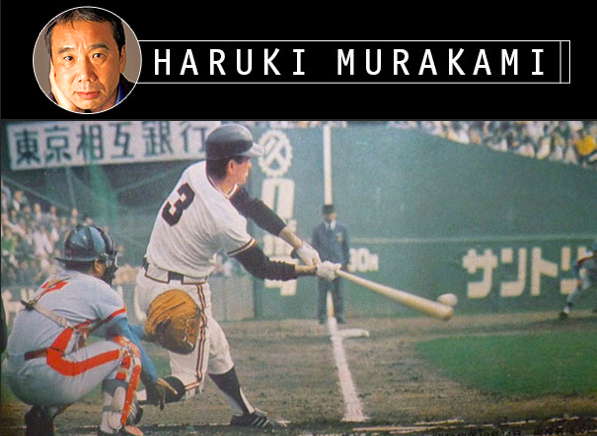
I think Hiroshima’s start­ing pitch­er that day was Yoshi­ro Sotoko­ba. Yakult coun­tered with Takeshi Yasu­da. In the bot­tom of the first inning, Hilton slammed Sotokoba’s first pitch into left field for a clean dou­ble. The sat­is­fy­ing crack when the bat met the ball resound­ed through­out Jin­gu Sta­di­um. Scat­tered applause rose around me. In that instant, for no rea­son and on no grounds what­so­ev­er, the thought sud­den­ly struck me: I think I can write a nov­el.

I can still recall the exact sen­sa­tion. It felt as if some­thing had come flut­ter­ing down from the sky, and I had caught it clean­ly in my hands. I had no idea why it had chanced to fall into my grasp. I didn’t know then, and I don’t know now. What­ev­er the rea­son, it had tak­en place. It was like a rev­e­la­tion. Or maybe epiphany is the clos­est word. All I can say is that my life was dras­ti­cal­ly and per­ma­nent­ly altered in that instant—when Dave Hilton belt­ed that beau­ti­ful, ring­ing dou­ble at Jin­gu Sta­di­um.

After the game (Yakult won as I recall), I took the train to Shin­juku and bought a sheaf of writ­ing paper and a foun­tain pen. Word proces­sors and com­put­ers weren’t around back then, which meant we had to write every­thing by hand, one char­ac­ter at a time. The sen­sa­tion of writ­ing felt very fresh. I remem­ber how thrilled I was. It had been such a long time since I had put foun­tain pen to paper.

Each night after that, when I got home late from work, I sat at my kitchen table and wrote. Those few hours before dawn were prac­ti­cal­ly the only time I had free. Over the six or so months that fol­lowed I wrote Hear the Wind Sing. I wrapped up the first draft right around the time the base­ball sea­son end­ed. Inci­den­tal­ly, that year the Yakult Swal­lows bucked the odds and almost everyone’s pre­dic­tions to win the Cen­tral League pen­nant, then went on to defeat the Pacif­ic League cham­pi­ons, the pitch­ing-rich Han­kyu Braves in the Japan Series. It was tru­ly a mirac­u­lous sea­son that sent the hearts of all Yakult fans soar­ing.

You can read the rest of Murakami’s intro­duc­tion over at Lithub. And pre-order the new trans­la­tion of Wind/Pinball here.

Relat­ed Con­tent:

A 56-Song Playlist of Music in Haru­ki Murakami’s Nov­els: Ray Charles, Glenn Gould, the Beach Boys & More

Haru­ki Muraka­mi Reads in Eng­lish from The Wind-Up Bird Chron­i­cle in a Rare Pub­lic Read­ing (1998)

Dis­cov­er Haru­ki Murakami’s Adver­to­r­i­al Short Sto­ries: Rare Short-Short Fic­tion from the 1980s

A Dream­i­ly Ani­mat­ed Intro­duc­tion to Haru­ki Muraka­mi, Japan’s Jazz and Base­ball-Lov­ing Post­mod­ern Nov­el­ist

Ted Mills is a free­lance writer on the arts who cur­rent­ly hosts the FunkZone Pod­cast. You can also fol­low him on Twit­ter at @tedmills, read his oth­er arts writ­ing at tedmills.com and/or watch his films here.

The Delightful TV Ads Directed by Hayao Miyazaki & Other Studio Ghibli Animators (1992–2015)

Last week, we fea­tured a trio of ridicu­lous­ly cute com­mer­cials about a cat called Kon­yara. The com­pa­ny that made them was none oth­er that Stu­dio Ghi­b­li, Hayao Miyaza­k­i’s ani­ma­tion shop. Those com­mer­cials, drawn in an ele­gant­ly sim­ple style that recalls tra­di­tion­al Japan­ese sumi‑e illus­tra­tions, had the same metic­u­lous atten­tion to detail and flu­id move­ments that are Miyaza­k­i’s trade­mark.

As it turns out, Ghi­b­li did­n’t restrict its com­mer­cial endeav­ors to car­toon cats. Above are a bunch of com­mer­cials the com­pa­ny did over the years stretch­ing all the way back to 1992. The ads range from ones about bread to banks to green tea. There are also quite a num­ber of tie-ins from the stu­dio’s movies, like an ad for Law­son’s con­ve­nience stores that fea­tures col­lectible dolls from Spir­it­ed Away. What is fas­ci­nat­ing about these ads is the range of styles they exhib­it. Many are done in a way that clear­ly recalls Miyaza­k­i’s movies, oth­ers look much more min­i­mal and much more ges­tur­al.

In oth­er Miyaza­ki relat­ed news, it turns out that the mas­ter isn’t retir­ing after all. Fol­low­ing the release of his fea­ture The Wind Ris­es in 2013, Hayao Miyaza­ki announced he was get­ting out of the ani­ma­tion biz. But as with his numer­ous dec­la­ra­tions of retire­ment in the past, it did­n’t take.

Miyaza­ki is report­ed­ly mak­ing a 10-minute long ani­mat­ed short called Kemushi no Boro (Boro the Cater­pil­lar). The direc­tor describes the short as “a sto­ry of a tiny, hairy cater­pil­lar, so tiny that it may be eas­i­ly squished between your fin­gers.” He has been devel­op­ing on the idea for a cou­ple decades now and, in spite of the short’s length, the film is pro­ject­ed to take three years to make.

What might be sur­pris­ing is that the film will be entire­ly com­put­er gen­er­at­ed. Miyaza­ki is per­haps the world’s most famous pro­po­nent of hand-drawn cel ani­ma­tion. As a younger man, he railed against CGI call­ing the method “shal­low, fake.” Over the years, how­ev­er, his feel­ings evolved.

“If [hand-drawn cel ani­ma­tion] is a dying craft we can’t do any­thing about it,” he told The Guardian back in 2005. “Civ­i­liza­tion moves on. Where are all the fres­co painters now? Where are the land­scape artists? What are they doing now? […] Actu­al­ly I think CGI has the poten­tial to equal or even sur­pass what the human hand can do. But it is far too late for me to try it.”

Appar­ent­ly it is not.

Boro will screen exclu­sive­ly in his Stu­dio Ghi­b­li Muse­um in Mita­ka, Tokyo, so if you want to see the master’s next work, be pre­pared to fly to Japan.

Relat­ed Con­tent:

The Simp­sons Pay Won­der­ful Trib­ute to the Ani­me of Hayao Miyaza­ki

How to Make Instant Ramen Com­pli­ments of Japan­ese Ani­ma­tion Direc­tor Hayao Miyaza­ki

French Stu­dent Sets Inter­net on Fire with Ani­ma­tion Inspired by Moe­bius, Syd Mead & Hayao Miyaza­ki

Jonathan Crow is a Los Ange­les-based writer and film­mak­er whose work has appeared in Yahoo!, The Hol­ly­wood Reporter, and oth­er pub­li­ca­tions. You can fol­low him at @jonccrow. And check out his blog Veep­to­pus, fea­tur­ing lots of pic­tures of vice pres­i­dents with octo­pus­es on their heads.  The Veep­to­pus store is here.

Allen Ginsberg’s Top 10 Favorite Films

Before Net­flix killed Block­buster, Block­buster killed the mom and pop video store. Maybe you had your favorite ma and pa shop, where under the sur­face of new releas­es you’d find the quirky, curat­ed selec­tions that reflect­ed the mind of the own­er.

When Allen Gins­berg lived in New York’s East Vil­lage, it was Kim’s Video, opened in 1987 by Yong­man Kim. With so many artists fre­quent­ing its St. Marks Place loca­tion, Kim asked its more famous cus­tomers to share their lists of top ten favorite films. Gins­berg oblig­ed. And you can now find his top 10 list online (in two parts: Part 1Part 2) thanks to The Allen Gins­berg Project.

Gins­berg’s old­est choice is Sergei Eisen­stein’s 1925 Bat­tle­ship Potemkin, which you can watch above. One must won­der if it was the very poet­ic edit­ing that drew Gins­berg to the film, or some­thing else, per­haps, maybe the film’s rev­o­lu­tion­ary nature?

Many of Gins­berg’s choic­es reflect his inter­est in poet­ic real­ism, the French film move­ment that com­bined sto­ries of real folks with some­times very impres­sion­ist cam­era work. Three of its most famous pro­po­nents, Julian Duvivi­er, Jean Renoir, and Mar­cel Carné appear on the Gins­berg list.

Julian Duvivier’s Pépé le Moko (1937) is set in that most won­der­ful loca­tion for the Beat poets, Tang­iers, and inspired Gra­ham Greene to write The Third Man. Mar­cel Carné’s clas­sic Chil­dren of Par­adise (1945) makes the list, as does his 1938 film noir Port of Shad­ows. Jean Renoir’s The Grand Illu­sion, which still tops many top 10 film lists today, is here too.

Anoth­er French­man, Jean Cocteau gets on the list twice, with two films from his Orphic tril­o­gy, The Blood of a Poet (1930) and Orpheé (1950). The mix of the dream­like and the erot­ic make a per­fect choice for the poet.

Gins­berg saves space for Beat cin­e­ma, a lot of which is still not on DVD. Ron Rice’s The Flower Thief (1960) is often called one of the main films of the Beat Gen­er­a­tion, a large­ly impro­vised, low bud­get film about the artists and writ­ers of San Fran­cis­co. It sad­ly remains unavail­able on DVD, and one won­ders if the film was even avail­able at Kim’s, as it doesn’t appear to be on VHS either.

More avail­able are his final two choic­es, Robert Frank and Alfred Leslie’s Pull My Daisy (1959), which was named after (and exe­cut­ed in a style sim­i­lar to) an Exquis­ite Corpse-style poem writ­ten by Gins­berg, Jack Ker­ouac, and Neil Cas­sady in the late ‘40s. Also large­ly impro­vised, the film involves bohemi­an par­ty crash­ers who make life com­pli­cat­ed for a man and wife try­ing to impress a respectable bish­op who’s come for din­ner.

Last­ly, Gins­berg names Har­ry Smith’s vision­ary cut-up ani­ma­tion mas­ter­piece Heav­en and Earth Mag­ic (1957 — 1962), which you can see above. Smith was not just a superb film­mak­er, but a great influ­ence on the Beats through his inter­est in psy­che­delics and mys­ti­cism, as well as the man behind the Amer­i­can Anthol­o­gy of Folk Music on Folk­ways records. A great friend of Gins­berg, Har­ry Smith gets the final tip of the hat.

via The Allen Gins­berg Project

Relat­ed Con­tent:

13 Lec­tures from Allen Ginsberg’s “His­to­ry of Poet­ry” Course (1975)

The First Record­ing of Allen Gins­berg Read­ing “Howl” (1956)

Rare Footage of Allen Gins­berg, Jack Ker­ouac & Oth­er Beats Hang­ing Out in the East Vil­lage (1959)

Ted Mills is a free­lance writer on the arts who cur­rent­ly hosts the FunkZone Pod­cast. You can also fol­low him on Twit­ter at @tedmills, read his oth­er arts writ­ing at tedmills.com and/or watch his films here.

Jean-Paul Sartre Reviews Orson Welles’ Masterwork (1945): “Citizen Kane Is Not Cinema”

orson_welles_citizen_french_movie_poster_14a

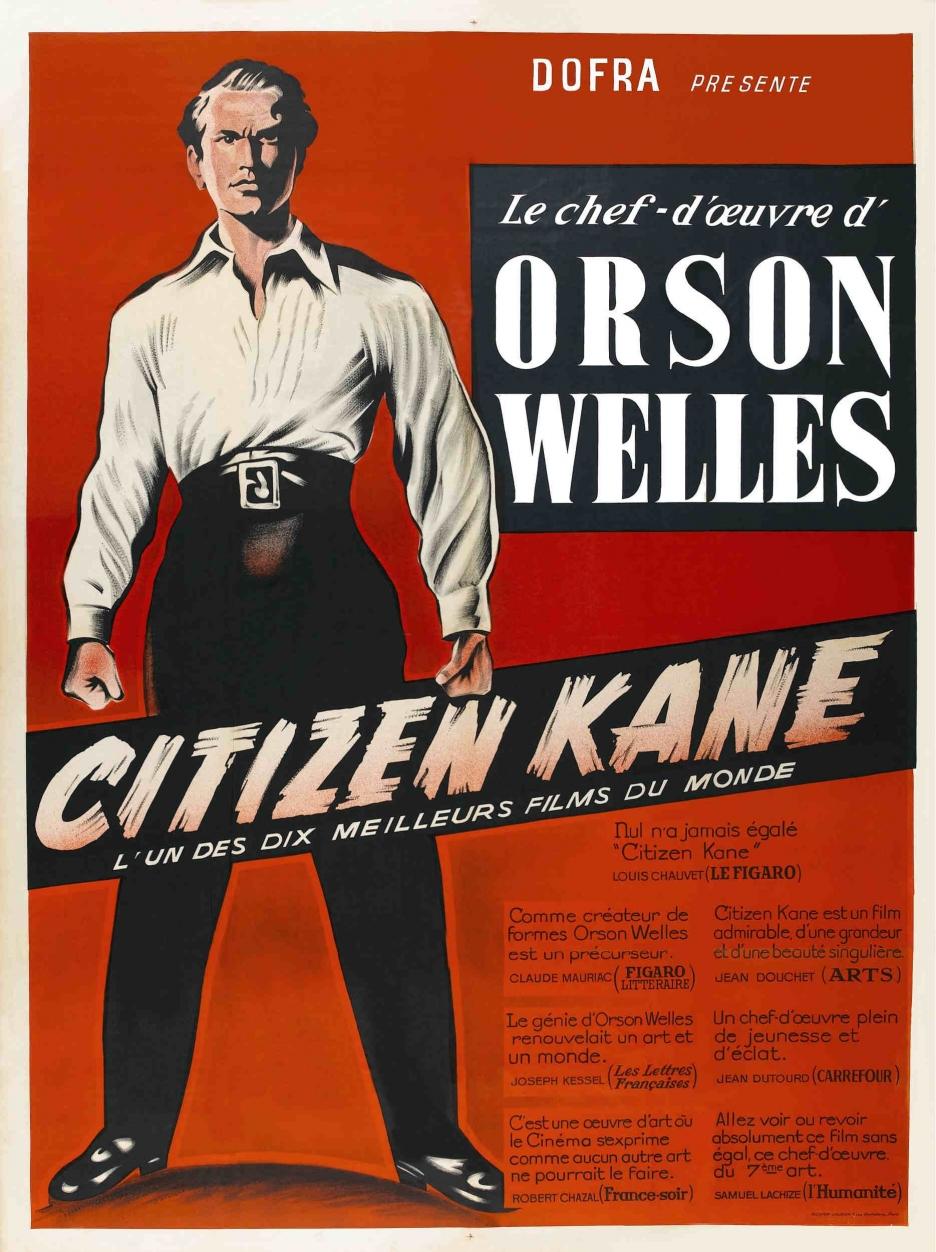
You may recall our post­ing last year of Jorge Luis Borges’ review of Orson Welles’ Cit­i­zen Kane — sure­ly one of the most Open Cul­ture-wor­thy inter­sec­tions of 20th cen­tu­ry lumi­nar­ies ever to occur. Borges described Welles’ mas­ter­work as pos­sessed of one side that, “point­less­ly banal, attempts to milk applause from dimwits,” and anoth­er, a “kind of meta­phys­i­cal detec­tive sto­ry” whose “sub­ject (both psy­cho­log­i­cal and alle­gor­i­cal) is the inves­ti­ga­tion of a man’s inner self, through the works he has wrought, the words he has spo­ken, the many lives he has ruined.” On the whole, the author of Labyrinths called the pic­ture “not intel­li­gent, though it is the work of genius.”

Not long after our post, the Paris Review’s Dan Piepen­bring wrote one that also quot­ed anoth­er, lat­er review of Cit­i­zen Kane by none oth­er than Jean-Paul Sartre:

Kane might have been inter­est­ing for the Amer­i­cans, [but] it is com­plete­ly passé for us, because the whole film is based on a mis­con­cep­tion of what cin­e­ma is all about. The film is in the past tense, where­as we all know that cin­e­ma has got to be in the present tense. ‘I am the man who is kiss­ing, I am the girl who is being kissed, I am the Indi­an who is being pur­sued, I am the man pur­su­ing the Indi­an.’ And film in the past tense is the antithe­sis of cin­e­ma. There­fore Cit­i­zen Kane is not cin­e­ma.

The 1945 review orig­i­nal­ly ran in high-mind­ed film jour­nal L’Écran français under the head­line “Quand Hol­ly­wood veut faire penser … Cit­i­zen Kane d’Orson Welles,” or, “When Hol­ly­wood Wants to Make Us Think … Orson Welles’ Cit­i­zen Kane.” Accord­ing to The Writ­ings of Jean-Paul Sartre: A Bib­li­o­graph­i­cal Life, “in re-read­ing this [review], which he did not remem­ber at all, Sartre hard­ly rec­og­nized his style and expressed some doubt about the authen­tic­i­ty of his sig­na­ture. On the oth­er hand, he did find in it the ideas Cit­i­zen Kane sug­gest­ed to him when he first saw it in the Unit­ed States. After he saw the film again in France, Sartre had a slight­ly more favor­able opin­ion of it, but he still thinks it is undoubt­ed­ly no mas­ter­piece.”

But at the time, writes Simon Leys, “the impact of this con­dem­na­tion was dev­as­tat­ing. The Mag­nif­i­cent Amber­sons was shown soon after­wards in Paris but failed mis­er­ably. The cul­ti­vat­ed pub­lic always fol­lows the direc­tives of a few pro­pa­gan­da com­mis­sars: there is much more con­for­mi­ty among intel­lec­tu­als than among plumbers or car mechan­ics.” Or at least the cul­ti­vat­ed pub­lic did so in 1940s Paris; the mechan­ics of cul­ture have changed some­what since then, but as far as Cit­i­zen Kane goes, high-pro­file opin­ions about it have grown only more pos­i­tive over time. Sure, Ver­ti­go recent­ly knocked it down a peg in the Sight and Sound poll, but that just makes me won­der what Sartre thought of Hitch­cock­’s mas­ter­work — a film that might have had a res­o­nance or two in the mind of an exis­ten­tial­ist.

Relat­ed Con­tent:

Jorge Luis Borges, Film Crit­ic, Reviews Cit­i­zen Kane — and Gets a Response from Orson Welles

Orson Welles Explains Why Igno­rance Was His Major “Gift” to Cit­i­zen Kane

Jean-Paul Sartre Rejects the Nobel Prize in Lit­er­a­ture in 1964: “It Was Mon­strous!”

Jean-Paul Sartre Breaks Down the Bad Faith of Intel­lec­tu­als

Human, All Too Human: 3‑Part Doc­u­men­tary Pro­files Niet­zsche, Hei­deg­ger & Sartre

Niet­zsche, Wittgen­stein & Sartre Explained with Mon­ty Python-Style Ani­ma­tions by The School of Life

Down­load Wal­ter Kaufmann’s Lec­tures on Niet­zsche, Kierkegaard, Sartre & Mod­ern Thought (1960)

Col­in Mar­shall writes on cities, lan­guage, Asia, and men’s style. He’s at work on a book about Los Ange­les, A Los Ange­les Primer, and the video series The City in Cin­e­ma. Fol­low him on Twit­ter at @colinmarshall or on Face­book.

David Bowie Becomes a DJ on BBC Radio in 1979; Introduces Listeners to The Velvet Underground, Talking Heads, Blondie & More

Cast your mind back to 1979, a time before Inter­net radio, Twit­ter, Tum­blr, and oth­er social net­works begin­ning with the let­ter T. And now imag­ine that you’d nev­er heard the Vel­vet Under­ground, Talk­ing Heads, Blondie, Roxy Music, hell, even Bruce Springsteen—all of whom were just begin­ning to break through to main­stream con­scious­ness. Now imag­ine your intro­duc­tion to these artists comes from none oth­er than Zig­gy Star­dust himself—or the Thin White Duke—David Bowie, immersed in his Berlin peri­od and record­ing a tril­o­gy of albums that togeth­er arguably rep­re­sent the best work of his career. That would be some­thing, wouldn’t it?

Per­haps some of you don’t have to imag­ine. If you had tuned into BBC Radio One on May, 20 of that year, you would have heard David Bowie DJ his own two hour show, “Star Spe­cial,” play­ing his favorite records and jovial­ly chat­ting up his audi­ence. “There are some famous names here,” says an announc­er intro­duc­ing Bowie’s show, “some you’ve nev­er heard of before.” Bowie laughs at his own jokes, and obvi­ous­ly takes great plea­sure in shar­ing so many then-obscure artists. “You can hear that deep need to show,” writes Dan­ger­ous Minds, “to bring lis­ten­ers some­thing new, in every word Bowie utters.” He doesn’t mind bring­ing them his own new stuff either, play­ing “Boys Keep Swing­ing” and “Yas­sas­sin” from that year’s Lodger.

Track list­ing

The Doors, “Love Street”
Iggy Pop, “TV Eye”
John Lennon, “Remem­ber”
? & The Mys­te­ri­ans, “96 Tears”
Edward Elgar, “The Nurs­ery Suite” (extract)
Dan­ny Kaye, “Inch­worm”
Philip Glass, “Tri­al Prison”
The Vel­vet Under­ground, “Sweet Jane”
Mars, “Helen Fords­dale”
Lit­tle Richard, “He’s My Star”
King Crim­son, “21st Cen­tu­ry Schizoid Man”
Talk­ing Heads, “Warn­ing Sign”
Jeff Beck, “Beck’s Bolero”
Ron­nie Spec­tor, “Try Some, Buy Some”
Marc Bolan, “20th Cen­tu­ry Boy”
The Mekons, “Where Were You?”
Steve For­bert, “Big City Cat”
The Rolling Stones, “We Love You”
Roxy Music, “2HB”
Bruce Spring­steen, “It’s Hard To Be A Saint In The City”
Ste­vie Won­der, “Fin­ger­tips”
Blondie, “Rip Her To Shreds”
Bob Seger, “Beau­ti­ful Los­er”
David Bowie, “Boys Keep Swing­ing”
David Bowie, “Yas­sas­sin”
Talk­ing Heads, “Book I Read”
Roxy Music, “For Your Plea­sure”
King Cur­tis, “Some­thing On Your Mind”
The Sta­ple Singers, “Lies”

See a com­plete playlist of Bowie’s “Star Spe­cial” above, and hear the entire show at the top of the post. It’s a great lis­ten even with the ben­e­fit of hind­sight, but if you can put your­self in the place of some­one who’d nev­er heard Lou Reed mum­ble and moan his way through “Sweet Jane”—or for that mat­ter nev­er heard the still-obscure exper­i­men­tal punk band Mars—it’s even bet­ter. For oth­er excel­lent exam­ples of British rock stars as radio tastemak­ers, hear the Sex Pis­tols’ John Lydon intro­duce an audi­ence to Can, King Tub­by, Nico, Cap­tain Beef­heart, and more in this 1977 Cap­i­tal Radio inter­view. (Lydon says he loves “Rebel Rebel,” but thinks Bowie is “a real bad drag queen.”) And don’t miss Joe Strummer’s eclec­tic 8‑episode BBC Radio Show “Lon­don Call­ing” from 1998/2001.

Below you can hear the tracks on a Spo­ti­fy playlist.

via John Coulthart/Metafil­ter/Dan­ger­ous Minds

Relat­ed Con­tent:

David Bowie’s Top 100 Books

David Bowie Releas­es Vin­tage Videos of His Great­est Hits from the 1970s and 1980s

“Joe Strummer’s Lon­don Call­ing”: All 8 Episodes of Strummer’s UK Radio Show Free Online

Josh Jones is a writer and musi­cian based in Durham, NC. Fol­low him at @jdmagness.

« Go BackMore in this category... »
Quantcast