A Beautiful Drone’s Eye View of Antarctica

If you haven’t seen it already, check it out. When Stock­holm-based film­mak­er Kalle Ljung spent 16 days in the Antarc­tic ear­li­er this year, he “got to expe­ri­ence the most amaz­ing scenery and wildlife” and cap­tured some beau­ti­ful footage with a DJI Phan­tom 2 drone cam­era. Ready for some goose­bumps? Catch the scene (around the 6 minute mark) where Ljung dri­ves the cam­era straight through a hole in an ice­berg. Pret­ty amaz­ing to watch.

If you would like to sign up for Open Culture’s free email newslet­ter, please find it here. It’s a great way to see our new posts, all bun­dled in one email, each day.

If you would like to sup­port the mis­sion of Open Cul­ture, con­sid­er mak­ing a dona­tion to our site. It’s hard to rely 100% on ads, and your con­tri­bu­tions will help us con­tin­ue pro­vid­ing the best free cul­tur­al and edu­ca­tion­al mate­ri­als to learn­ers every­where. You can con­tribute through Pay­Pal, Patre­on, and Ven­mo (@openculture). Thanks!

via Kot­tke

Relat­ed Con­tent: 

Auschwitz Cap­tured in Haunt­ing Drone Footage

A Eery Drone’s‑Eye View of Cher­nobyl

Drones over Los Ange­les, New York, Lon­don, Bangkok & Mex­i­co City

Read Noam Chomsky & Sam Harris’ “Unpleasant” Email Exchange

In 2013, we doc­u­ment­ed the acri­mo­nious exchange between Noam Chom­sky and Slavoj Žižek, which all start­ed when Chom­sky accused Žižek of “posturing–using fan­cy terms like poly­syl­la­bles and pre­tend­ing [to] have a the­o­ry when you have no the­o­ry what­so­ev­er.” To which Žižek respond­ed: “Chom­sky, … always empha­sizes how one has to be empir­i­cal, accu­rate… well I don’t think I know a guy who was so often empir­i­cal­ly wrong in his descrip­tions…” And so it con­tin­ued.

Two years lat­er, Chom­sky now finds him­self in anoth­er fraught exchange — this time, with Sam Har­ris, author of The End of Faith and Let­ter to a Chris­t­ian Nation. It’s a lit­tle hard to pin down when the dust-up first began. But, it at least goes back to Jan­u­ary, when Har­ris took Chom­sky to task  (hear an excerpt of a longer pod­cast above) for draw­ing a moral equiv­a­lence between U.S. mil­i­tary action and the vio­lence com­mit­ted by some of Amer­i­ca’s his­tor­i­cal foes (e.g., the Nazis dur­ing WWII and lat­er Al-Qae­da).

Over the past week, Chom­sky and Har­ris con­tin­ued the debate, trad­ing emails back and forth. Their corre­spon­dence runs some 10,000 words, but it only amounts to what Har­ris ulti­mate­ly calls “an unpleas­ant and fruit­less encounter” that demon­strates the “lim­its of dis­course.” It’s an exchange that Chom­sky seem­ing­ly pre­ferred to keep pri­vate (his per­mis­sion to print the emails was grudg­ing at best), and Har­ris saw some virtue in mak­ing pub­lic. The final email by Har­ris reads:

May 1, 2015

From: Sam Har­ris
To: Noam Chom­sky

Noam—

I’ve now read our cor­re­spon­dence through and have decid­ed to pub­lish it (www.samharris.org). I under­stand your point about “exhi­bi­tion­ism,” but I dis­agree in this case.

You and I prob­a­bly share a mil­lion read­ers who would have found a gen­uine con­ver­sa­tion between us extreme­ly use­ful. And I trust that they will be dis­ap­point­ed by our fail­ure to pro­duce one, as I am. How­ev­er, if pub­lish­ing this exchange helps any­one to bet­ter com­mu­ni­cate about these top­ics in the future, our time won’t have been entire­ly wast­ed.

Sam

Whether Sam is right about that (is there some­thing par­tic­u­lar­ly instruc­tive here?), you can decide. Here’s the entire exchange.

If you would like to sign up for Open Culture’s free email newslet­ter, please find it here. It’s a great way to see our new posts, all bun­dled in one email, each day.

If you would like to sup­port the mis­sion of Open Cul­ture, con­sid­er mak­ing a dona­tion to our site. It’s hard to rely 100% on ads, and your con­tri­bu­tions will help us con­tin­ue pro­vid­ing the best free cul­tur­al and edu­ca­tion­al mate­ri­als to learn­ers every­where. You can con­tribute through Pay­Pal, Patre­on, and Ven­mo (@openculture). Thanks!

Relat­ed Con­tent:

Noam Chom­sky Slams Žižek and Lacan: Emp­ty ‘Pos­tur­ing’

Slavoj Žižek Responds to Noam Chom­sky: ‘I Don’t Know a Guy Who Was So Often Empir­i­cal­ly Wrong’

Clash of the Titans: Noam Chom­sky & Michel Fou­cault Debate Human Nature & Pow­er on Dutch TV, 1971

Read 9 Free Books By Noam Chom­sky Online

by | Permalink | Make a Comment ( 57 ) |

Hear the “Seikilos Epitaph,” the Oldest Complete Song in the World: An Inspiring Tune from 100 BC

Last sum­mer, we fea­tured a Sumer­ian hymn con­sid­ered the old­est known song in the world. Giv­en the pop­u­lar­i­ty of that post, it seems we may have long under­es­ti­mat­ed the num­ber of ancient-musi­cophiles on the inter­net. There­fore, we sub­mit today for your approval the Seik­i­los epi­taph, the old­est known com­plete musi­cal com­po­si­tion — that is to say, a song that our 21st-cen­tu­ry selves can still play and hear in its intend­ed entire­ty, more or less as did the ancient Greeks who lived dur­ing the first-cen­tu­ry (or there­abouts) era of its com­po­si­tion.

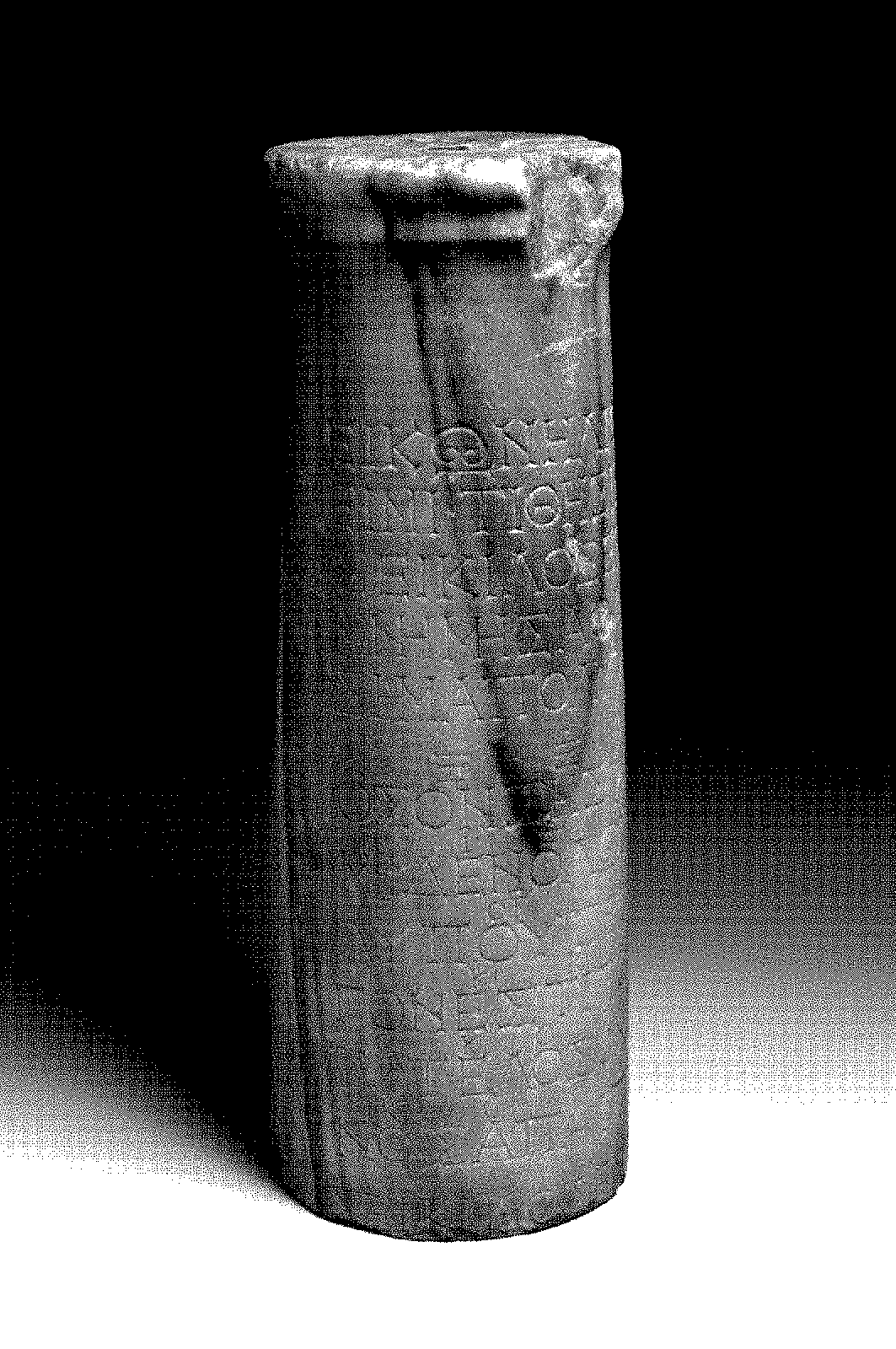
The Seik­i­los epi­taph’s sur­vival in one piece, as it were, no doubt owes some­thing to its short­ness. The Greeks could carve the entire thing onto the sur­face of a tomb­stone, exact­ly the medi­um on which the mod­ern world redis­cov­ered it in 1885 near Aidin, Turkey. Its lyrics, lib­er­al­ly brought into Eng­lish, exhort us as fol­lows:

While you live, shine

have no grief at all

life exists only for a short while

and time demands its toll.

The sur­face also bears an explana­to­ry inscrip­tion about — and writ­ten in the voice of — the arti­fact itself:  “I am a tomb­stone, an image. Seik­i­los placed me here as an ever­last­ing sign of death­less remem­brance.” The Greeks, like many peo­ples in the ancient world of unvar­nished mor­tal­i­ty, rel­ished a good memen­to mori, and this old­est com­plete song in the world offers one whose mes­sage still holds today, and which we can trace all the way to more recent words, like those of William Saroy­an, when he said, “In the time of your life, live — so that in that good time there shall be no ugli­ness or death for your­self or for any life your life touch­es.”

Or for anoth­er inter­pre­ta­tion, you can hear a mod­ern, gui­tar-dri­ven cov­er of the Seik­i­los epi­taph by Vlog­broth­er and famous inter­net teacher Hank Green, in a tru­ly strik­ing exam­ple of two eras col­lid­ing. But of course, the Youtube era has also made every­one a crit­ic. As one com­menter per­fect­ly put it, “I pre­fer his ear­li­er stuff.”

Seikilos epitaph

Relat­ed Con­tent:

Lis­ten to the Old­est Song in the World: A Sumer­ian Hymn Writ­ten 3,400 Years Ago

What Ancient Greek Music Sound­ed Like: Hear a Recon­struc­tion That is ‘100% Accu­rate’

Hear The Epic of Gil­gamesh Read in the Orig­i­nal Akka­di­an and Enjoy the Sounds of Mesopotamia

Learn Latin, Old Eng­lish, San­skrit, Clas­si­cal Greek & Oth­er Ancient Lan­guages in 10 Lessons

Col­in Mar­shall writes on cities, lan­guage, Asia, and men’s style. He’s at work on a book about Los Ange­les, A Los Ange­les Primer, and the video series The City in Cin­e­maFol­low him on Twit­ter at @colinmarshall or on Face­book.

Do Not Track: Interactive Film Series Reveals the Personal Information You’re Giving Away on the Web

If Face­book knows every­thing about you, it’s because you hand­ed it the keys to your king­dom.  You post­ed a pho­to, liked a favorite child­hood TV show, and will­ing­ly vol­un­teered your birth­day. In oth­er words, you hand­ed it all the data it needs to annoy you with tar­get­ed adver­tis­ing.

(In my case, it’s an ancient secret that helped a mid­dle aged mom shave 5 inch­es off her waist­line. Let me save you a click: acai berries.)

Film­mak­er Brett Gay­lor (a “lefty Cana­di­an dad who reads sci­ence fic­tion) seeks to set the record straight regard­ing the web economy’s impact on per­son­al pri­va­cy.

Watch­ing his inter­ac­tive doc­u­men­tary web series, Do Not Track, you’ll inevitably arrive at a cross­roads where you must decide whether or not to share your per­son­al infor­ma­tion. No big­gie, right? It’s what hap­pens every time you con­sent to “log in with Face­book.”

Every time you choose this con­ve­nience, you’re allow­ing Google and oth­er big time track­ers to stick a har­poon (aka cook­ie) in your side. Swim all you want, lit­tle fishy. You’re not exact­ly get­ting away, par­tic­u­lar­ly if you’re logged in with a mobile device with a com­pul­sion to reveal your where­abouts.

You say you have noth­ing to hide? Bul­ly for you! What you may not have con­sid­ered is the impact your dig­i­tal easy-breezi­ness has on friends. Your net­work. And vice ver­sa. Tag away!

In this are­na, every “like”—from an acquaintance’s recent­ly launched organ­ic skin­care line to Star Trekhelps track­ers build a sur­pris­ing­ly accu­rate por­trait, one that can be used to deter­mine how insur­able you are, how wor­thy of a loan. Gen­der and age aren’t the only fac­tors that mat­ter here. So does your demon­strat­ed extra­ver­sion, your degree of open­ness.

(Ha ha, and you thought it cost you noth­ing to “like” that acquaintance’s smelly straw­ber­ry-scent­ed mois­tur­iz­er!)

To get the most out of Do Not Track, you’ll want to sup­ply its pro­duc­ers with your email address on your first vis­it. It’s a lit­tle counter-intu­itive, giv­en the sub­ject mat­ter, but doing so will pro­vide you with a unique con­fig­u­ra­tion that promis­es to lift the veil on what the track­ers know about you.

What does it say about me that I couldn’t get my Face­book log-in to work? How dis­ap­point­ing that this fail­ure meant I would be view­ing results tai­lored to Episode 3’s star, Ger­man jour­nal­ist Richard Gut­jahr?

(Your pro­file… says that your age is 42 and your gen­der is male. But the real gold mine is your Face­book data over time. By ana­lyz­ing the at least 129 things you have liked on Face­book, we have used our advanced algo­rithm tech­niques to assess your per­son­al­i­ty and have found you scored high­est in Open­ness which indi­cates you are cre­ative, imag­i­na­tive, and adven­tur­ous. Our per­son­al­i­ty eval­u­a­tion sys­tem uses Psy­cho-demo­graph­ic trait pre­dic­tions pow­ered by the Apply Mag­ic Sauce API devel­oped at the Uni­ver­si­ty of Cam­bridge Psy­cho­met­rics Cen­tre.)

I think the take­away is that I am not too on top of my pri­va­cy set­tings. And why would I be? I’m an extro­vert with noth­ing to hide, except my spend­ing habits, brows­ing his­to­ry, race, age, mar­i­tal sta­tus…

Should we take a tip from our high school brethren, who evade the scruti­ny of col­lege admis­sions coun­selors by adopt­ing some ridicu­lous, evoca­tive pseu­do­nym? Expect upcom­ing episodes of Do Not Track to help us nav­i­gate these and oth­er dig­i­tal issues.

Tune in to Do Not Track here. You can find episodes 1, 2 and 3 cur­rent­ly online. Episodes 4–6 will roll out between May 12 and June 9.

Relat­ed Con­tent:

The Internet’s Own Boy: New Doc­u­men­tary About Aaron Swartz Now Free Online

A Threat to Inter­net Free­dom: Film­mak­er Bri­an Knap­pen­berg­er Explains Why Net Neu­tral­i­ty Mat­ters

How Brew­ster Kahle and the Inter­net Archive Will Pre­serve the Infi­nite Infor­ma­tion on the Web

Ayun Hal­l­i­day an author, illus­tra­tor, and Chief Pri­ma­tol­o­gist of the East Vil­lage Inky zine invites you to look into her very soul @AyunHalliday

Miles Davis Opens for Neil Young and “That Sorry-Ass Cat” Steve Miller at The Fillmore East (1970)

miles fillmore east

The sto­ry, the many sto­ries, of Miles Davis as an open­ing act for sev­er­al rock bands in the 1970s make for fas­ci­nat­ing read­ing. Before he blew the Grate­ful Dead’s minds as their open­ing act at the Fill­more West in April 1970 (hear both bands’ sets here), Davis and his all-star Quintet—billed as an “Extra Added Attraction”—did a cou­ple nights at the Fill­more East, open­ing for Neil Young and Crazy Horse and The Steve Miller Band in March of 1970. The com­bi­na­tion of Young and Davis actu­al­ly seems to have been rather unre­mark­able, but there is a lot to say about where the two artists were indi­vid­u­al­ly.

Nate Chi­nen in at Length describes their meet­ing as a “min­i­mum orbit inter­sec­tion distance”—the “clos­est point of con­tact between the paths of two orbit­ing sys­tems.” Both artists were “in the thrall of rein­ven­tion,” Young mov­ing away from the smooth­ness of CSNY and into free-form anti-vir­tu­os­i­ty with Crazy Horse; Davis toward vir­tu­os­i­ty turned back into the blues. Miles, sug­gest­ed jazz writer Greg Tate, was “bored fid­dling with quan­tum mechan­ics and just want­ed to play the blues again.” The sto­ry of Davis and Young at the Fill­more East is best told by lis­ten­ing to the music both were mak­ing at the time. Hear “Cin­na­mon Girl” below and the rest of Neil Young and Crazy Horse’s incred­i­ble set here. The band had just released their beau­ti­ful­ly ragged Every­body Knows this is Nowhere.

When it comes to the meet­ing of Davis and Steve Miller, the sto­ry gets juici­er, and much more Miles: the dif­fi­cult per­former, not the impos­si­bly cool musi­cian. (It some­times seems like the word “dif­fi­cult” was invent­ed to describe Miles Davis.) The trum­peter’s well-earned ego­tism lends his lega­cy a kind of rak­ish charm, but I don’t rel­ish the posi­tions of those record com­pa­ny exec­u­tives and pro­mot­ers who had to wran­gle him, though many of them were less than charm­ing indi­vid­u­als them­selves. Colum­bia Records’ Clive Davis, who does not have a rep­u­ta­tion as a pushover, sounds alarmed in his rec­ol­lec­tion of Miles’ reac­tion after he forced the trum­peter to play the Fill­more dates to mar­ket psy­che­del­ic jazz-funk mas­ter­piece Bitch­es Brew to white audi­ences.

Accord­ing to John Glatt, Davis remem­bers that Miles “went nuts. He told me he had no inter­est in play­ing for ‘those fu*king long-haired kids.’” Par­tic­u­lar­ly offend­ed by The Steve Miller Band, Davis refused to arrive on time to open for an artist he deemed “a sor­ry-ass cat,” forc­ing Miller to go on before him. “Steve Miller didn’t have his shit going for him,” remem­bers Davis in his exple­tive-filled auto­bi­og­ra­phy, “so I’m pissed because I got to open for this non-play­ing motherfu*ker just because he had one or two sor­ry-ass records out. So I would come late and he would have to go on first and then when we got there, we smoked the motherfu*king place, and every­body dug it.” There is no doubt Davis and Quin­tet smoked. Hear them do “Direc­tions” above from an Ear­ly Show on March 6, 1970.

“Direc­tions,” from unre­leased tapes, is as raw as they come, “the inten­si­ty,” writes music blog Willard’s Worm­holes, “of a band that sounds like they were play­ing at the The Fill­more to prove some­thing to some­body… and did.” The next night’s per­for­mances were released in 2001 as It’s About That Time. Hear the title track above from March 7th. As for The Steve Miller Blues Band? We have audio of their per­for­mance from that night as well. Hear it below. It’s inher­ent­ly an unfair com­par­i­son between the two bands, not least because of the vast dif­fer­ence in audio qual­i­ty. But as for whether or not they sound like “sor­ry-ass cats”… well, you decide.

Relat­ed Con­tent:

The Night When Miles Davis Opened for the Grate­ful Dead in 1970: Hear the Com­plete Record­ings

Miles Davis’ Entire Discog­ra­phy Pre­sent­ed in a Styl­ish Inter­ac­tive Visu­al­iza­tion

Bill Graham’s Con­cert Vault: From Miles Davis to Bob Mar­ley

Josh Jones is a writer and musi­cian based in Durham, NC. Fol­low him at @jdmagness

Coffee is for People, Not Robots: The New Ad for David Lynch’s Line of Organic Coffee

Pay a vis­it to Whole Foods, and you’ll find The David Lynch Sig­na­ture Cup Cof­fee line, which includes three pre­mier cof­fee blends, each taste-test­ed and select­ed by David Lynch him­self. Last year, Lynch talked with Vice.com about the gen­e­sis of his cof­fee line and explained:

One day, a friend came over to me and said, “David, you drink so much cof­fee, you should have your own line,” and one thing led to anoth­er, and I blind test­ed many, many dif­fer­ent cof­fees. Anoth­er friend of mine said, “I know these guys down in Long Beach who have the great­est cof­fee” but I tast­ed it, and it was ter­ri­ble, so I kept tast­ing dif­fer­ent cof­fees and dif­fer­ent mix­tures and kept com­ing back to this [blend] in blind tests over and over again.

Over the years, Lynch has released some uncon­ven­tion­al ads (of course!) for his cof­fee prod­ucts. Per­haps you recall this one from 2011, fea­tur­ing a seem­ing­ly sev­ered Bar­bie head. Or this almost epilep­sy-induc­ing one fom 2012. Now comes the lat­est ad, cre­at­ed by direc­tor Andrew Parkhurst, remind­ing us that cof­fee is for peo­ple, not robots. Kind of like Trix are for kids.

If you would like to sign up for Open Culture’s free email newslet­ter, please find it here. It’s a great way to see our new posts, all bun­dled in one email, each day.

If you would like to sup­port the mis­sion of Open Cul­ture, con­sid­er mak­ing a dona­tion to our site. It’s hard to rely 100% on ads, and your con­tri­bu­tions will help us con­tin­ue pro­vid­ing the best free cul­tur­al and edu­ca­tion­al mate­ri­als to learn­ers every­where. You can con­tribute through Pay­Pal, Patre­on, and Ven­mo (@openculture). Thanks!

via Indiewire

Relat­ed Con­tent:

David Lynch’s Unlike­ly Com­mer­cial for a Home Preg­nan­cy Test (1997)

David Lynch’s Per­fume Ads Based on the Works of Hem­ing­way, F. Scott Fitzger­ald & D.H. Lawrence

David Lynch’s Music Videos: Nine Inch Nails, Moby, Chris Isaak & More

« Go Back
Quantcast