Hear Marcel Duchamp Read “The Creative Act,” A Short Lecture on What Makes Great Art, Great

Hear­ing some­one dis­cuss the nature of art can eas­i­ly grow tire­some — indeed, it has, as a sub­ject, become some­thing of a short­hand for the tire­some. But Mar­cel Duchamp, the French painter, sculp­tor, con­cep­tu­al artist, and chess enthu­si­ast, could do it right. He did it by get­ting straight to the point, a suc­cinct­ness most famous­ly demon­strat­ed in Foun­tain, the sim­ple, every­day porce­lain uri­nal he signed and sub­mit­ted as a work of art for dis­play. The fact that the art world soon put Foun­tain (and its sim­i­lar, mass-pro­duced descen­dants) quite lit­er­al­ly on a pedestal makes an obser­va­tion about art more clean­ly than thou­sands of words on the role of the artist in mod­ern soci­ety ever could.

But where–whether you paint on a can­vas, chis­el into a block of stone, or make a pur­chase at the plumb­ing store down the street–does this impulse to make art come from? Do artists con­scious­ly cre­ate their work, act­ing out cre­ative deci­sions made with­in, or do they mere­ly give form to artis­tic impuls­es received from… else­where? And what do we talk about when we talk about the work of art the artist ulti­mate­ly pro­duces?

Duchamp, con­cise as ever, addressed the issue in 1957 when he gave the eight-minute lec­ture “The Cre­ative Act” which you can hear above (or on the full Sur­re­al­ism Reviewed album avail­able on Spo­ti­fy below). He iden­ti­fies one impor­tant part of the process as what he calls the “art coef­fi­cient.”

“In the cre­ative act,” Duchamp says, “the artist goes from inten­tion to real­iza­tion through a chain of total­ly sub­jec­tive reac­tions. His strug­gle toward the real­iza­tion is a series of efforts, pains, sat­is­fac­tion, refusals, deci­sions, which also can­not and must not be ful­ly self-con­scious, at least on the aes­thet­ic plane. The result of this strug­gle is a dif­fer­ence between the inten­tion and its real­iza­tion, a dif­fer­ence which the artist is not aware of.” This gap between what the artist “intend­ed to real­ize and did real­ize,” Duchamp calls the art coef­fi­cient, “an arith­meti­cal rela­tion between the unex­pressed but intend­ed and the unin­ten­tion­al­ly expressed.”

But none of it mat­ters, in Ducham­p’s think­ing, unless some­one else actu­al­ly thinks about the work of art. “No work of art — no bal­loon dog, no poem men­tion­ing cold-water flats, no four-minute-and-thir­ty-three-sec­ond per­for­mance by silent musi­cians — is a great work until pos­ter­i­ty says so,” writes the Paris Review’s Rebec­ca Bates in a post on the lec­ture (and a “sort-of Dadaist Mad Libs” recent­ly made out of it). She quotes Duchamp in a 1964 inter­view with Calvin Tomkins: “The artist pro­duces noth­ing until the onlook­er has said, ‘You have pro­duced some­thing mar­velous.’ The onlook­er has the last word in it.” Accord­ing to Ducham­p’s per­cep­tions, we, as pos­ter­i­ty, as the onlook­ers, have the last word on all work, even Ducham­p’s own. So go ahead and yam­mer a bit about the nature of art; doing so not only keeps the art alive, but made it art in the first place.

Relat­ed Con­tent:

Mar­cel Duchamp, Chess Enthu­si­ast, Cre­at­ed an Art Deco Chess Set That’s Now Avail­able via 3D Print­er

Anémic Ciné­ma: Mar­cel Duchamp’s Whirling Avant-Garde Film (1926)

When Bri­an Eno & Oth­er Artists Peed in Mar­cel Duchamp’s Famous Uri­nal

Col­in Mar­shall writes else­where on cities, lan­guage, Asia, and men’s style. He’s at work on a book about Los Ange­les, A Los Ange­les Primer, the video series The City in Cin­e­maand the crowd­fund­ed jour­nal­ism project Where Is the City of the Future? Fol­low him on Twit­ter at @colinmarshall or on Face­book.

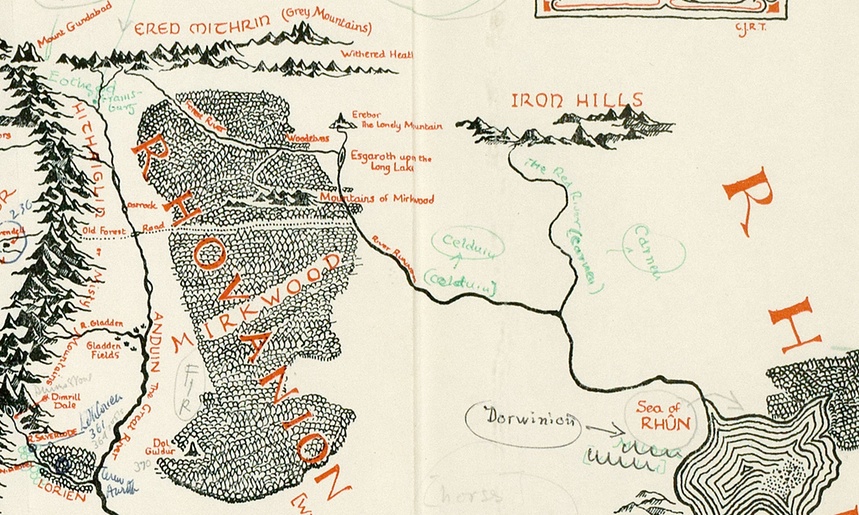
Map of Middle-Earth Annotated by Tolkien Found in a Copy of Lord of the Rings

tolkien map

Image via Blackwell’s Rare Books

Back in April, we high­light­ed for you a trove of 110 illus­tra­tions by J.R.R. Tolkien, offer­ing a rare glimpse of the author’s artis­tic tal­ents. Tolkien did­n’t just like to write books, as we saw. He also liked to draw illus­tra­tions for these books, which helped him to con­cep­tu­al­ize the fan­ta­sy worlds he was cre­at­ing.

Just this month, Houghton Mif­flin released a new book called The Art of The Lord of the Rings by J.R.R. Tolkien, which brings togeth­er more than 180 draw­ings, inscrip­tions, maps, and plans–all drawn by Tolkien as part of his world­build­ing cre­ative process. Most were nev­er pub­lished until now.

And then we get this: a new­ly-dis­cov­ered map anno­tat­ed by Tolkien. Found in a copy of The Lord of the Rings that orig­i­nal­ly belonged to Pauline Baynes (the artist who illus­trat­ed Tolkien’s nov­els in print), the map intrigu­ing­ly con­nects Tolkien’s fan­ta­sy world to real places on our globe. Accord­ing to The Guardian, anno­ta­tions on the map (click here to view the mate­ri­als in a larg­er for­mat) sug­gests that “Hob­biton is on the same lat­i­tude as Oxford [where Tolkien taught], and implies that the Ital­ian city of Raven­na could be the inspi­ra­tion behind the fic­tion­al city of Minas Tirith.” Bel­grade, Cyprus, and Jerusalem also get list­ed as ref­er­ence points. Dis­cov­ered by Blackwell’s Rare Books, the rare map will be put on the mar­ket for an ask­ing price of £60,000.

You can learn more about this map, con­sid­ered “per­haps the finest piece of Tolkien ephemera to emerge in the last 20 years,” over at The Guardian.

Relat­ed Con­tent:

110 Draw­ings and Paint­ings by J.R.R. Tolkien: Of Mid­dle-Earth and Beyond

Dis­cov­er J.R.R. Tolkien’s Per­son­al Book Cov­er Designs for The Lord of the RingsTril­o­gy

The Only Draw­ing from Mau­rice Sendak’s Short-Lived Attempt to Illus­trate The Hob­bit

Hear J.R.R. Tolkien Read From The Lord of the Rings and The Hob­bit

Sovi­et-Era Illus­tra­tions Of J. R. R. Tolkien’s The Hob­bit (1976)

The Neuroscience of Bass: New Study Explains Why Bass Instruments Are Fundamental to Music

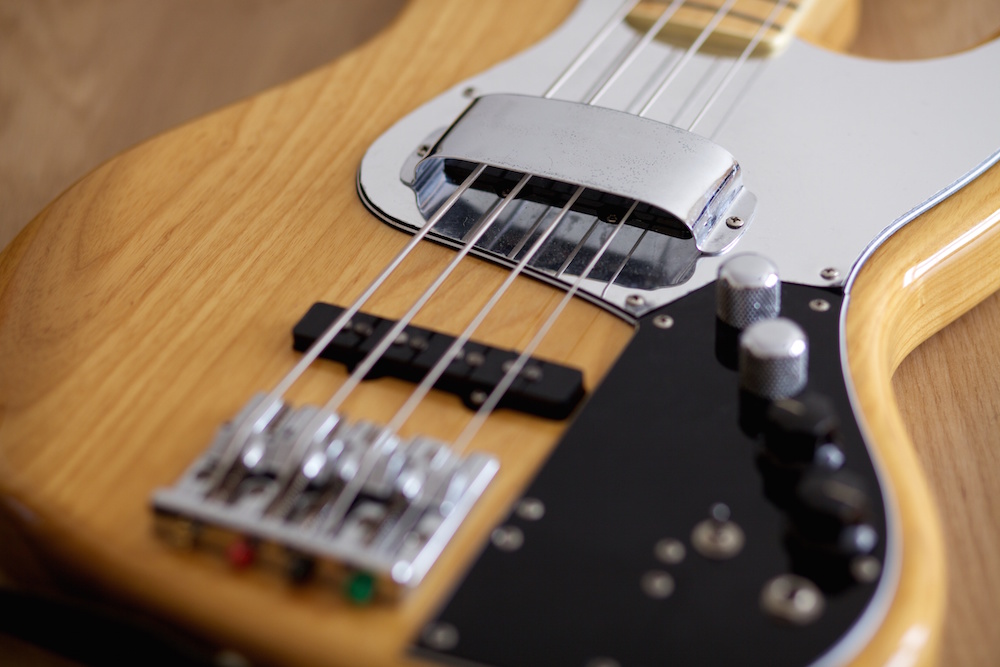
Fender Marcus Miller Jazz Bass with authentic Marcus Miller signature under the pickguard. Serial no. Q074671 Made in Japan Features: - Natural - Maple fingerboard - 3 pick guards: original 3-ply black, white and chrome - Two-band active EQ - Badass® Bass II™ bridge More information: http://www.fender.com/en-NL/series/artist/marcus-miller-jazz-bass-maple-fingerboard-natural-3-ply-black-pickguard

Pho­to by Sebas­ti­aan term Burg via Wiki­me­dia Com­mons

At the low­er range of hear­ing, it’s said humans can hear sound down to about 20 Hz, beneath which we encounter a murky son­ic realm called “infra­sound,” the world of ele­phant and mole hear­ing. But while we may not hear those low­est fre­quen­cies, we feel them in our bod­ies, as we do many sounds in the low­er fre­quen­cy ranges—those that tend to dis­ap­pear when pumped through tin­ny ear­buds or shop­ping mall speak­ers. Since bass sounds don’t reach our ears with the same excit­ed ener­gy as the high fre­quen­cy sounds of, say, trum­pets or wail­ing gui­tars, we’ve tend­ed to dis­miss the instruments—and players—who hold down the low end (know any famous tuba play­ers?).

In most pop­u­lar music, bass play­ers don’t get near­ly enough credit—even when the bass pro­vides a song’s essen­tial hook. As Led Zeppelin’s John Paul Jones joked at his Rock and Roll Hall of Fame induc­tion cer­e­mo­ny in 1995, “thank you to my friends for remem­ber­ing my phone num­ber.” And yet, writes Tom Barnes at Mic, “there’s sci­en­tif­ic proof that bassists are actu­al­ly one of the most vital mem­bers of any band…. It’s time we start­ed treat­ing bassists with the respect they deserve.” Research into the crit­i­cal impor­tance of low fre­quen­cy sound explains why bass instru­ments most­ly play rhythm parts and leave the fan­cy melod­ic noodling to instru­ments in the upper range. The phe­nom­e­non is not spe­cif­ic to rock, funk, jazz, dance, or hip hop. “Music in diverse cul­tures is com­posed this way,” says psy­chol­o­gist Lau­rel Train­or, direc­tor of the McMas­ter Uni­ver­si­ty Insti­tute for Music and the Mind, “from clas­si­cal East Indi­an music to Game­lan music of Java and Bali, sug­gest­ing an innate ori­gin.”

Train­or and her col­leagues have recent­ly pub­lished a study in the Pro­ceed­ings of the Nation­al Acad­e­my of Sci­ences sug­gest­ing that per­cep­tions of time are much more acute at low­er reg­is­ters, while our abil­i­ty to dis­tin­guish changes in pitch gets much bet­ter in the upper ranges, which is why, writes Nature, “sax­o­phon­ists and lead gui­tarists often have solos at a squeal­ing reg­is­ter,” and why bassists tend to play few­er notes. (These find­ings seem con­sis­tent with the physics of sound waves.) To reach their con­clu­sions, Train­er and her team “played peo­ple high and low pitched notes at the same time.” Par­tic­i­pants were hooked up to an elec­troen­cephalo­gram that mea­sured brain activ­i­ty in response to the sounds. The psy­chol­o­gists “found that the brain was bet­ter at detect­ing when the low­er tone occurred 50 MS too soon com­pared to when the high­er tone occurred 50 MS too soon.”

The study’s title per­fect­ly sum­ma­rizes the team’s find­ings: “Supe­ri­or time per­cep­tion for low­er musi­cal pitch explains why bass-ranged instru­ments lay down musi­cal rhythms.” In oth­er words, “there is a psy­cho­log­i­cal basis,” says Train­or, “for why we cre­ate music the way we do. Vir­tu­al­ly all peo­ple will respond more to the beat when it is car­ried by low­er-pitched instru­ments.” Uni­ver­si­ty of Vien­na cog­ni­tive sci­en­tist Tecum­seh Fitch has pro­nounced Train­or and her co-authors’ study a “plau­si­ble hypoth­e­sis for why bass parts play such a cru­cial role in rhythm per­cep­tion.” He also adds, writes Nature:

For loud­er, deep­er bass notes than those used in these tests, peo­ple might also feel the res­o­nance in their bod­ies, not just hear it in their ears, help­ing us to keep rhythm. For exam­ple, when deaf peo­ple dance they might turn up the bass and play it very loud, he says, so that “they can lit­er­al­ly ‘feel the beat’ via tor­so-based res­o­nance.”

Painful­ly awk­ward rev­el­ers at wed­dings, on cruise ships, at high school reunions—they just can’t help it. Maybe even this danc­ing owl can’t help it. Some of us keep time bet­ter than oth­ers, but most of us feel and respond phys­i­cal­ly to low-fre­quen­cy rhythms.

Bass instru­ments don’t only keep time; they also play a key role in a song’s har­mon­ic and melod­ic struc­ture. In 1880, an aca­d­e­m­ic music text­book informed its read­ers that “the bass part… is, in fact, the foun­da­tion upon which the melody rests and with­out which there could be no melody.” As true as this was at the time—-when acoustic pre­cur­sors to elec­tric bass, syn­the­siz­ers, and sub-bass ampli­fi­ca­tion pro­vid­ed the low end—it’s just as true now. And bass parts often define the root note of a chord, regard­less of what oth­er instru­ments are doing. As a bass play­er, notes Sting, “you con­trol the har­mo­ny,” as well as anchor­ing the melody. It seems the impor­tance of rhythm play­ers, though over­looked in much pop­u­lar appre­ci­a­tion of music, can­not be over­stat­ed.

Relat­ed Con­tent:

How Drums & Bass Make the Song: Iso­lat­ed Tracks from Led Zep­pelin, Rush, The Pix­ies, The Bea­t­les to Roy­al Blood

Hear Iso­lat­ed Tracks From Five Great Rock Bassists: McCart­ney, Sting, Dea­con, Jones & Lee

The Sto­ry of the Bass: New Video Gives Us 500 Years of Music His­to­ry in 8 Min­utes

7 Female Bass Play­ers Who Helped Shape Mod­ern Music: Kim Gor­don, Tina Wey­mouth, Kim Deal & More

The Neu­ro­science of Drum­ming: Researchers Dis­cov­er the Secrets of Drum­ming & The Human Brain

Josh Jones is a writer and musi­cian based in Durham, NC. Fol­low him at @jdmagness


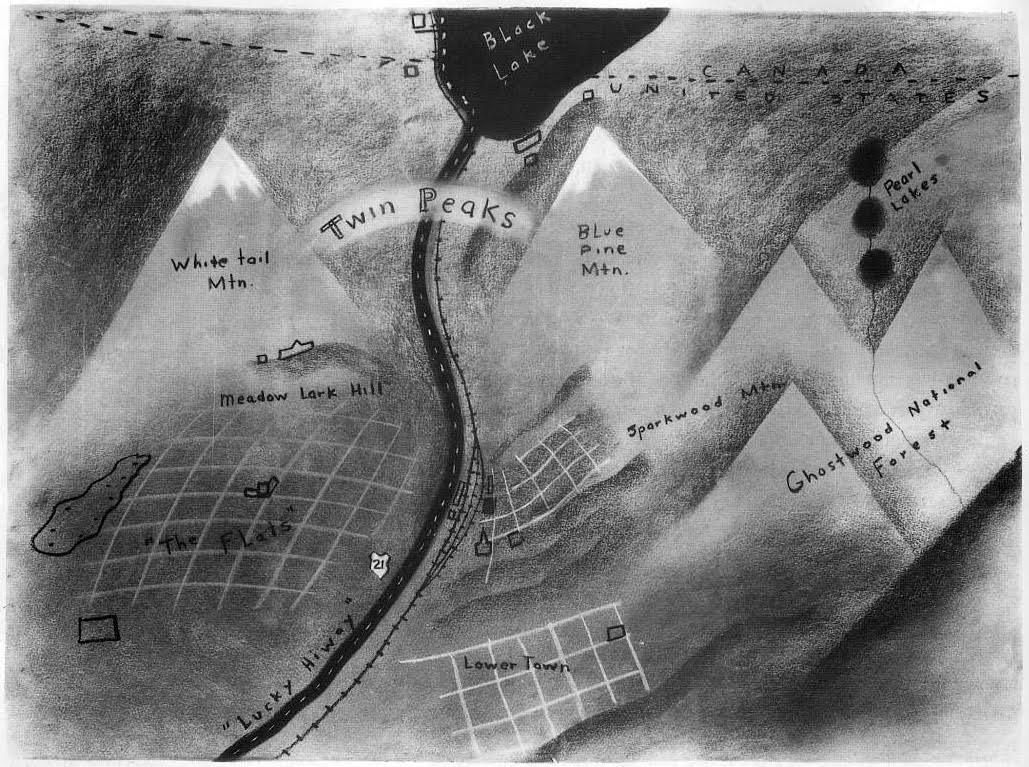
David Lynch Draws a Map of Twin Peaks (to Help Pitch the Show to ABC)

Twin Peaks Map

“How did this even get on the air?” Both the die-hard fans and bewil­dered haters asked that ques­tion about Twin Peaks, David Lynch and Mark Frost’s sur­re­al tele­vi­sion dra­ma that famous­ly aired on ABC prime­time in 1990 and 1991. That such an uncon­ven­tion­al vision — and one real­ized, at least through­out the first sea­son, with such thor­ough com­mit­ment — ever made it to the main­stream air­waves now seems like a his­tor­i­cal achieve­ment in and of itself. So how, giv­en the stul­ti­fy­ing rig­ors of the enter­tain­ment indus­try, did Lynch and Frost actu­al­ly sell this pack­age of cryp­tic dreams, back­ward speech, small-town sav­agery, a mur­dered home­com­ing queen, and damn fine cher­ry pie?

First, Lynch drew a map. Know­ing that no TV exec­u­tive would under­stand Twin Peaks with­out under­stand­ing Twin Peaks, the fic­tion­al Wash­ing­ton town which gives the sto­ry its set­ting and title, he drew what you see above. Nigel Holmes includ­ed it in his out-of-print Pic­to­r­i­al Maps, com­ment­ing that “the peaks of the title, and the town they name, are clear­ly vis­i­ble as white-topped moun­tains ris­ing out of the mod­eled land­scape.

By cre­at­ing a sense of place, Lynch made the town all the more believ­able. A straight­for­ward map would have been dull by com­par­i­son and might have sug­gest­ed that there was some­thing intrin­si­cal­ly inter­est­ing about the geog­ra­phy of the place. What was much more impor­tant to con­vey was the mood of the sto­ry, and it’s nice­ly cap­tured in Lynch’s quirky draw­ing.”

The book also includes a quote from Lynch him­self, on the util­i­ty of the map: “We knew where every­thing was, and it helped us decide what mood each place had, and what could hap­pen there. Then the char­ac­ters just intro­duced them­selves to us and walked into the sto­ry.” As any Twin Peaks fan will notice, the map iden­ti­fies a host of loca­tions ref­er­enced in the show, such as White Tail and Blue Pine moun­tains (the peaks them­selves), Ghost­wood Nation­al For­est, and Lucky High­way 21. But “can you locate Spark­wood and 21, One-Eyed Jack’s and The Great North­ern?” asks fan site Wel­come to Twin Peaks. And if the much-dis­cussed 21st-cen­tu­ry Twin Peaks revival comes to fruition, will it dust off this trusty ref­er­ence doc­u­ment and revive the askew but deep sense of place we (or at least some us) savored the first time around?

Relat­ed Con­tent:

David Lynch’s Twin Peaks Title Sequence, Recre­at­ed in an Adorable Paper Ani­ma­tion

Play the Twin Peaks Video Game: Retro Fun for David Lynch Fans

Ele­men­tary School Stu­dents Per­form in a Play Inspired by David Lynch’s Twin Peaks

Col­in Mar­shall writes else­where on cities, lan­guage, Asia, and men’s style. He’s at work on a book about Los Ange­les, A Los Ange­les Primer, the video series The City in Cin­e­maand the crowd­fund­ed jour­nal­ism project Where Is the City of the Future? Fol­low him on Twit­ter at @colinmarshall or on Face­book.

Stream 61 Hours of Orson Welles’ Classic 1930s Radio Plays: War of the Worlds, Heart of Darkness & More

oson welles spotify

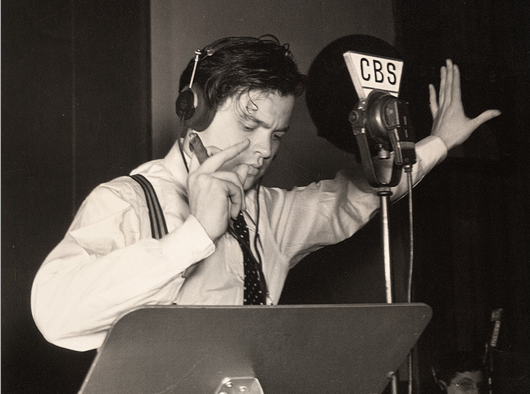
There has rarely ever been an artist more ful­ly in com­mand of as many dif­fer­ent art forms as Orson Welles dur­ing his height — the late 1930s and ear­ly 40s. He rev­o­lu­tion­ized the stage, radio and cin­e­ma before the age of 26 and became a house­hold name in the process.

Welles’s first brush with nation­al fame came at the age of 20 when he staged an all-black pro­duc­tion of Mac­beth in Harlem. The 1936 play was ground­break­ing both for its strik­ing sets and its dar­ling inter­pre­ta­tion that set Shakespeare’s bloody trag­ic in Haiti. But per­haps the most remark­able aspect of this pro­duc­tion was that it was done entire­ly with non-actors. Through sheer charis­ma and force of will, Welles coaxed and cajoled ter­rif­ic per­for­mances out of day labor­ers and fac­to­ry work­ers.

Two years lat­er, in 1938, Welles end­ed up on the cov­er of TIME Mag­a­zine for his stag­ing of Julius Cae­sar. He set the play in con­tem­po­rary fas­cist Italy. It was a bold choice that turned a 340 year-old play into a work of great polit­i­cal urgency.

That same year, Welles also man­aged to freak out the nation with his bril­liant, wild­ly irre­spon­si­ble adap­ta­tion of War of the Worlds. Welles staged the beloved sci-fi nov­el as if it were a news report. The broad­cast cap­tured the dra­ma and ter­ror of an emerg­ing calami­ty all too well; it caused a pub­lic pan­ic.

Now you can lis­ten to that infa­mous radio play along with 61 hours of oth­er radio plays, all cre­at­ed by Welles for his 1930s radio show, The Mer­cury The­atre on the Air. The Spo­ti­fy playlist, embed­ded below, includes A Christ­mas Car­ol, Heart of Dark­ness and even a rehearsal for Julius Cae­sar. Check it out. And if you need Spo­ti­fy’s free soft­ware, down­load it here.

Or if Spo­ti­fy isn’t your thing, you can lis­ten to anoth­er big col­lec­tion of Welles’s radio dra­mas below at archive.org. Start stream­ing that col­lec­tion here:

The noto­ri­ety of Welles’ radio work land­ed him one of the most gen­er­ous movie con­tracts in Hol­ly­wood stu­dio his­to­ry. This is dou­bly impres­sive because, at this stage in his life, Welles had no idea how to actu­al­ly make a film. The result­ing movie was a barbed, thin­ly veiled film à clef of one of the most pow­er­ful men in Amer­i­ca – William Ran­dolph Hearst. This proved to be a ter­ri­ble career move; Hearst’s wrath derailed Welles’s career for years but it did pro­duce a pret­ty good movie – Cit­i­zen Kane.

Via Cri­te­ri­on

Relat­ed Con­tent:

Young Orson Welles Directs “Voodoo Mac­beth,” the First Shake­speare Pro­duc­tion With An All-Black Cast: Footage from 1936

Orson Welles’ Icon­ic War of the Worlds­Broad­cast (1938)

Lis­ten to Eight Inter­views of Orson Welles by Film­mak­er Peter Bog­danovich (1969–1972)

Watch Orson Welles’ The Stranger Free Online, Where 1940s Film Noir Meets Real Hor­rors of WWII

The Hearts of Age: Orson Welles’ Sur­re­al­ist First Film (1934)

Orson Welles Explains Why Igno­rance Was His Major “Gift” to Cit­i­zen Kane

Jonathan Crow is a Los Ange­les-based writer and film­mak­er whose work has appeared in Yahoo!, The Hol­ly­wood Reporter, and oth­er pub­li­ca­tions. You can fol­low him at @jonccrow. And check out his blog Veep­to­pus, fea­tur­ing lots of pic­tures of vice pres­i­dents with octo­pus­es on their heads.  The Veep­to­pus store is here.

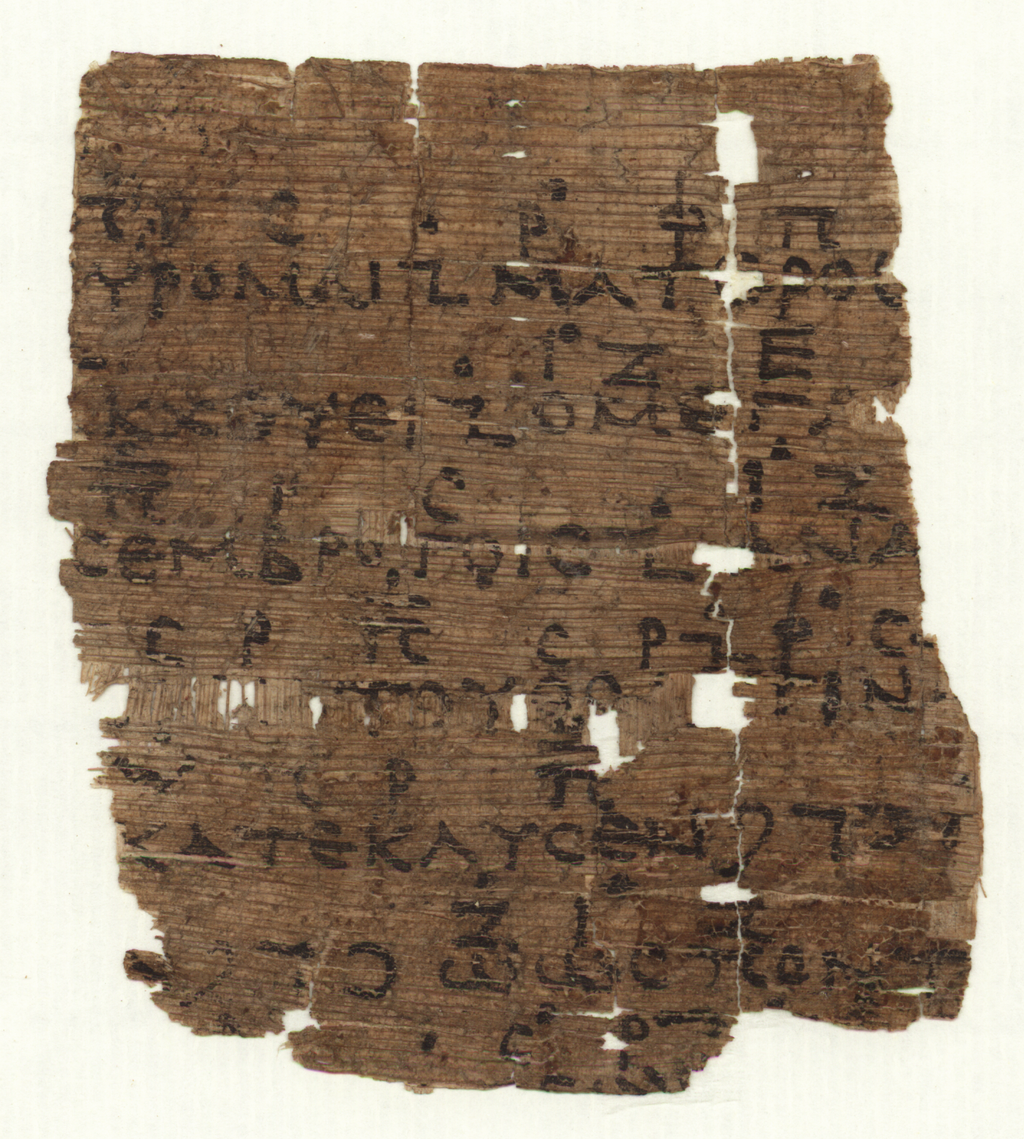
Hear the World’s Oldest Surviving Written Song (200 BC), Originally Composed by Euripides, the Ancient Greek Playwright

Imag­ine if you will that it is the year 4515, and future peo­ple slow­ly begin exca­vat­ing the musi­cal remains of mil­len­nia past. Now add the fol­low­ing wrin­kle to this sce­nario, cour­tesy of clas­sics schol­ar Armand D’Angour: “all that sur­vived of the Bea­t­les songs were a few of the lyrics, and all that remained of Mozart and Verdi’s operas were the words and not the music.” Would it be pos­si­ble to recov­er the rhythms and melodies from these scraps? Wouldn’t this music be for­ev­er lost to his­to­ry?

Not nec­es­sar­i­ly, D’Angour tells us; we could “recon­struct the music, redis­cov­er the instru­ments that played them, and hear the words once again in their prop­er set­ting.” Giv­en the inex­act, spec­u­la­tive nature of much ancient his­to­ry, I imag­ine the recon­struct­ed Bea­t­les might end up sound­ing noth­ing like them­selves, but then again, now that schol­ars have begun to recov­er the music of ancient Greek tragedy from a few frag­ments of text, sure­ly those future his­to­ri­ans could remake “Love Me Do”

Recon­struct­ing Don Gio­vani might be a lit­tle trick­i­er, and that’s often the scale aca­d­e­mics like D’Angour are work­ing with, since not only the love-poems of Sap­pho, but also “the epics of Homer” and “the tragedies of Sopho­cles and Euripides—were all, orig­i­nal­ly, music. Dat­ing from around 750 to 400 BC, they were com­posed to be sung in whole or part to the accom­pa­ni­ment of the lyre, reed-pipes, and per­cus­sion instru­ments.” This much we all like­ly know to some extent.

D’Angour goes on to describe in detail how schol­ars like him­self use “pat­terns of long and short syl­la­bles” in the sur­viv­ing verse to deter­mine musi­cal rhythm, and new rev­e­la­tions about ancient Greek vocal nota­tion and tun­ing to recon­struct ancient melody.

Orestes

The ear­li­est sur­viv­ing musi­cal doc­u­ment “pre­serves a few bars of sung music” from fifth-cen­tu­ry trage­di­an Euripi­des’ play Orestes. A “noto­ri­ous­ly avant-garde com­pos­er,” Euripides—scholars presume—“violated the long-held norms of Greek folk-singing by neglect­ing word-pitch.” You can see the papyrus frag­ment above, writ­ten around 200 BC in Egypt and called “Katolo­phy­ro­mai” after the first word in the “stasi­mon,” or choral song. Above the words, notice the vocal and instru­men­tal nota­tion schol­ars have used to recon­struct the music. The lines describe Orestes’ guilt after mur­der­ing his moth­er:

I cry, I cry, your mother’s blood that dri­ves you mad, great hap­pi­ness in mor­tals nev­er last­ing, but like a sail of swift ship, which a god shook up and plunged it with ter­ri­ble trou­bles into the greedy and dead­ly waves of the sea.

This trans­la­tion comes from “Greek Recon­struc­tion­ist Pagan­ism” site Bar­ing the Aegis, who also describe the song’s rhythm, Dochmius, and mode, Lydi­an, with a help­ful expla­na­tion for non-spe­cial­ists of what these terms mean. They also fea­ture the live per­for­mance of the stasi­mon at the top of the post, just one inter­pre­ta­tion by Spy­ros Giasafakis and Evi Ster­giou of neo­folk band Dae­mo­nia Nymphe. Below it, hear anoth­er inter­pre­ta­tion by Pet­ros Tabouris and Nikos Kon­stan­tinopou­los. And just below and at the bot­tom of the post are two more ver­sions of the ancient song.

Giv­en Euripi­des’ exper­i­men­tal­ism, we can’t expect that this recon­struct­ed song would be rep­re­sen­ta­tive of most ancient Greek music. “How­ev­er, we can rec­og­nize that Euripi­des adopt­ed anoth­er prin­ci­ple,” set­ting words to falling and ris­ing cadences accord­ing to their emo­tion­al import. As D’Angour puts it, “this was ancient Greek sound­track music,” and it was appar­ent­ly so well-received that his­to­ri­an Plutarch tells a sto­ry about “thou­sands of Athen­ian sol­diers held pris­on­er” in Syra­cuse: “those few who were able to sing Euripi­des’ lat­est songs were able to earn some food and drink.”

As for “the great­est of ancient poet-singers,” Homer, it seems accord­ing to recon­struc­tions by the late Pro­fes­sor Mar­tin West of Oxford that Home­r­ic tunes were “fair­ly monot­o­nous,” explain­ing per­haps why “the tra­di­tion of Home­r­ic recita­tion with­out melody emerged from what was orig­i­nal­ly a sung com­po­si­tion.”

Relat­ed Con­tent:

Hear the “Seik­i­los Epi­taph,” the Old­est Com­plete Song in the World: An Inspir­ing Tune from 100 BC

Lis­ten to the Old­est Song in the World: A Sumer­ian Hymn Writ­ten 3,400 Years Ago

Hear the World’s Old­est Instru­ment, the “Nean­derthal Flute,” Dat­ing Back Over 43,000 Years

Free Cours­es in Ancient His­to­ry, Lit­er­a­ture & Phi­los­o­phy

Josh Jones is a writer and musi­cian based in Durham, NC. Fol­low him at @jdmagness

A Fittingly Strange Animation of What’s Going On Inside Charles Manson’s Mind

In 1968, Charles Man­son lis­tened to The Bea­t­les’ White Album and came away think­ing that Amer­i­ca was on the verge of an apoc­a­lyp­tic race war between whites and blacks. As Man­son imag­ined it, the race war would be trig­gered by a shock­ing, chaot­ic event called “Hel­ter Skel­ter” — a named bor­rowed from a song on the White Album. And, like most mega­lo­ma­ni­acs, Man­son put him­self at the cen­ter of the dra­ma. In the sum­mer of 1969, Man­son had mem­bers of his cult com­mit a series of infa­mous mur­ders in South­ern Cal­i­for­nia, hop­ing that African-Amer­i­cans would be blamed and the race war would begin. Instead, a lengthy police inves­ti­ga­tion led to Man­son’s arrest on Decem­ber 2, 1969 and his con­vic­tion soon there­after, mak­ing him then, and now, one of Amer­i­ca’s noto­ri­ous inmates.

Through the 1980s, Man­son, even though behind bars, remained a very pub­lic fig­ure, giv­ing high pro­file inter­views to Tom Sny­der, Char­lie Rose, and Ger­al­do Rivera. But then, he began to fade from view, for what­ev­er rea­sons. For the past 20 years, we haven’t heard much from him. Until this came along. Above, you can watch Leah Shore’s ani­ma­tion of nev­er-before-heard phone con­ver­sa­tions between Charles Man­son and Mar­lin Maryn­ick (who lat­er pub­lished a best-sell­ing biog­ra­phy called Charles Man­son Now). Fit­ting­ly strange, the ani­ma­tion reminds us of the very odd things going on inside Man­son’s mind. Off kil­ter as ever, he goes in all kinds of unex­pect­ed direc­tions.

via Vice

Relat­ed Con­tent:

The Time Neil Young Met Charles Man­son, Liked His Music, and Tried to Score Him a Record Deal

Tim­o­thy Leary’s Wild Ride and the Fol­som Prison Inter­view

Aleis­ter Crow­ley: The Wickedest Man in the World Doc­u­ments the Life of the Bizarre Occultist, Poet & Moun­taineer

Watch Vincent Price Turn Into Edgar Allan Poe & Read Four Classic Poe Stories (1970)

Can you have a Hal­loween with­out Edgar Allan Poe? Sure you can — but here at Open Cul­ture, we don’t rec­om­mend it. So that you need not go Poe-less on this, or any, Hal­loween night, we’ve fea­tured not just his com­plete works free to down­load, but oth­er mate­r­i­al like the ani­mat­ed adap­ta­tion of “The Tell-Tale Heart” as well as ani­ma­tions of his oth­er sto­ries; Poe read­ings by the likes of Christo­pher Lee, James Earl Jones, and Iggy Pop; and Orson Welles’ inter­pre­ta­tion of his work on an Alan Par­sons Project album.

We also believe that you should­n’t have to endure a Price­less Hal­loween — that is to say, a Hal­loween with­out Vin­cent Price. Though he proved his ver­sa­til­i­ty in a wide vari­ety of gen­res through­out his long act­ing career, his­to­ry has remem­bered Price first and fore­most for his work in hor­ror, no doubt thanks in large part to his pos­ses­sion of a voice per­fect­ly suit­ed to the ele­gant­ly sin­is­ter. It also made him an ide­al teller of Poe’s inge­nious­ly macabre tales, which you can expe­ri­ence for your­self in the record­ings we’ve post­ed of Price read­ing Poe, a playlist which also includes read­ings by Price’s equal­ly ver­sa­tile Basil Rath­bone.

Rath­bone may also have got to read Poe, the work, but despite his huge num­ber of roles on stage and screen, he nev­er actu­al­ly played Poe, the man. But Price did, in the spe­cial An Evening of Edgar Allan Poe, the clos­est any of us will get to an audi­ence with the trou­bled, bril­liant, and ter­ri­fy­ing­ly inven­tive writer him­self. In it, Price-as-Poe takes the stage and, over the course of an hour, weaves into his per­for­mance four of his most endur­ing sto­ries: “The Tell-Tale Heart,” “The Sphinx,” “The Cask of Amon­til­la­do,” and “The Pit and the Pen­du­lum.” Go on, join Edgar Allan Poe in his draw­ing room this Hal­loween by hav­ing Price bring him to life on your screen — it will guar­an­tee you a mem­o­rable hol­i­day evening.

Relat­ed Con­tent:

Down­load The Com­plete Works of Edgar Allan Poe on His Birth­day

Watch the 1953 Ani­ma­tion of Edgar Allan Poe’s “The Tell-Tale Heart,” Nar­rat­ed by James Mason

Edgar Allan Poe’s “The Raven,” Read by Christo­pher Walken, Vin­cent Price, and Christo­pher Lee

Christo­pher Lee (R.I.P.) Reads Edgar Allan Poe’s “The Raven,” and From “The Fall of the House of Ush­er”

Iggy Pop Reads Edgar Allan Poe’s Clas­sic Hor­ror Sto­ry, “The Tell-Tale Heart”

5 Hours of Edgar Allan Poe Sto­ries Read by Vin­cent Price & Basil Rath­bone

James Earl Jones Reads Edgar Allan Poe’s “The Raven” and Walt Whitman’s “Song of Myself”

Hear Orson Welles Read Edgar Allan Poe on a Cult Clas­sic Album by The Alan Par­sons Project

Edgar Allan Poe Ani­mat­ed: Watch Four Ani­ma­tions of Clas­sic Poe Sto­ries

The Fall of the House of Ush­er: Poe’s Clas­sic Tale Turned Into 1928 Avant Garde Film, Script­ed by e.e. cum­mings

Col­in Mar­shall writes else­where on cities, lan­guage, Asia, and men’s style. He’s at work on a book about Los Ange­les, A Los Ange­les Primer, the video series The City in Cin­e­maand the crowd­fund­ed jour­nal­ism project Where Is the City of the Future? Fol­low him on Twit­ter at @colinmarshall or on Face­book.

« Go BackMore in this category... »
Quantcast