George Eliot’s Middlemarch Gets Reborn as a 21st Century Web Series: Watch It Online

In 1856, nov­el­ist George Eliot—real name Mary Anne Evans—issued a vicious cri­tique of oth­er women Eng­lish writ­ers in lan­guage we would expect from the most self-sat­is­fied of misog­y­nists, a group of peo­ple with an unqual­i­fied monop­oly on the cul­ture, but who had very lit­tle new to say on the sub­ject. But Eliot cer­tain­ly did, in “Sil­ly Nov­els by Lady Nov­el­ists.” Though she couch­es many of her crit­i­cal obser­va­tions in the con­de­scend­ing vocab­u­lary of a male antag­o­nist, the lan­guage only serves to make her argu­ment more effec­tive. The essay, writes Kathryn Schulz, “does a remark­able num­ber of things deft­ly and all at once.”

Although she is an uncom­mon­ly com­pas­sion­ate writer, Eliot has knife skills when she needs them, and the most obvi­ous thing she does here is chif­fon­ade the chick lit of her day. Yet even while cas­ti­gat­ing some women, she man­ages to cham­pi­on women as a whole. Her chief objec­tion to sil­ly nov­els is that they mis­rep­re­sent women’s real intel­lec­tu­al capac­i­ty; and the chief blame for them, she argues, lies not with their authors but with the ­cul­ture that pro­duced them—through inad­e­quate edu­ca­tion, low expec­ta­tions, patron­iz­ing crit­ics, and fear of the real deal.

The fault, she assert­ed, lies with the gate­keep­ers, the tastemak­ers, the lazy thinkers. Though an accom­plished essay­ist and trans­la­tor, Eliot would only pub­lish her first nov­el in 1859, at the age of 37. But “Sil­ly Nov­els by Lady Nov­el­ists,” writes Schulz, “traces out in neg­a­tive space, the con­tours of a tru­ly great novel”—one that wouldn’t arrive until four­teen years lat­er: Mid­dle­march: a study of provin­cial life. (Read online or down­load in var­i­ous for­mats here.)

The book’s first chap­ter intro­duces Dorothea Brooke, a well-off 19-year old orphan—who, writes Pamela Erens, “has dreams of doing some great work in the world” but gives her life instead to “dry humor­less pedant” Casaubon—with an iron­ic quote from the licen­tious Jacobean play The Maid’s Tragedy: “Since I can do no good because a woman, / Reach con­stant­ly at some­thing that is near it.”

As with the pen name she adopt­ed, Eliot appro­pri­at­ed the armor of a male-dom­i­nat­ed cul­ture to bring into being some of the most stag­ger­ing­ly insight­ful writ­ing of the time, and a bea­con to oth­er great women writ­ers. “What do I think of Mid­dle­march?,” wrote Emi­ly Dick­in­son, “What do I think of glory?—except that in a few instances ‘this mor­tal has already put on immor­tal­i­ty.’” Vir­ginia Woolf pro­nounced the book “one of the few Eng­lish nov­els writ­ten for grown-up peo­ple.” Num­ber twen­ty-one on The Guardian’s list of “The 100 Best Nov­els,” Mid­dle­march, writes Robert McCrum, exerts “an almost hyp­not­ic pow­er over its read­ers…. Today it stands as per­haps the great­est of many great Vic­to­ri­an nov­els.”

Do we have the time or the atten­tion to read Eliot’s sprawl­ing 900-page real­ist epic in the 21st cen­tu­ry? Giv­en that Karl Ove Knaus­gaard’s 3,600 page, six-part auto­bi­o­graph­i­cal nov­el, My Strug­gle, is one of the most laud­ed lit­er­ary works of the past few years, per­haps we do. More specif­i­cal­ly, in the lan­guage of many a con­de­scend­ing crit­ic of today, do “Mil­len­ni­als” have the time and atten­tion to read Mid­dle­march? At least a cer­tain con­tin­gent of young read­ers has not only read the nov­el, but has adapt­ed it into a sev­en­ty-episode web dra­ma, Mid­dle­march: The Series—an “attempt worth watch­ing,” writes Rebec­ca Mead at The New York­er, “for its ambi­tion as well as its charm.”

Writ­ten and direct­ed by Yale under­grad­u­ate film stu­dent Rebec­ca Shoptaw, the series stars sev­er­al of Shoptaw’s peers “as stu­dents at Low­ick Col­lege, in the fic­tion­al town of Mid­dle­march, Con­necti­cut,” and it tran­scribes the novel’s form into that most 21st cen­tu­ry of medi­ums, the vlog. You can see the offi­cial teas­er at the top of the post; watch the first episode just above, intro­duc­ing Yale stu­dent Mia Fowler as Dot Brooke; and see the full series, thus far, down below. (The show has already won awards and recog­ni­tion from sev­er­al film fes­ti­vals. See “air dates” and more on its busy Tum­blr page.)

Up to now, notes Mead, Eliot’s fic­tion has resist­ed the kind of treat­ment giv­en to Char­lotte Bron­të and Jane Austen in adap­ta­tions like “a chap­ter book for tweens called Jane Air­head” and the Austen-inspired Brid­get Jones’s Diary and Clue­less (not to men­tion Pride and Prej­u­dice and Zom­bies). And yet, despite the daunt­ing size, scope, and seri­ous­ness of Eliot’s nov­el, Mid­dle­march: the Series con­tin­ues in this tra­di­tion of light-heart­ed, pop-cul­tur­al mod­ern­iza­tions, using the same device as the award-win­ning Austen vlog adap­ta­tion The Lizzie Ben­net Diaries and Bron­të vlog adap­ta­tion “The Auto­bi­og­ra­phy of Jane Eyre.”

Though it is “an impos­si­bly tall order,” writes Mead, “to expect a Web series to approach the nuance of a nine­teenth-cen­tu­ry novel—of the nine­teenth-cen­tu­ry nov­el,” adap­ta­tions like Shoptaw’s don’t even attempt to do this. They express “a win­ning affec­tion” for their source mate­r­i­al, and a sense of how it still informs the very dif­fer­ent gen­der iden­ti­ties and sex­u­al rela­tion­ships of the present. In that sense, it may be use­ful to think of them as, in part, work­ing in a sim­i­lar vein as anoth­er very 21st cen­tu­ry medi­um: fan fic­tion. Would the knives-out crit­ic Eliot approve? Impos­si­ble to say. But I dare say she might admire the ambi­tion, cre­ative impuls­es, and nar­ra­tive inge­nu­ity of Shoptaw and her cast per­haps as much as they admire her great­est work.

via The New York­er

Relat­ed Con­tent:

“The Auto­bi­og­ra­phy of Jane Eyre” Adapts Brontë’s Hero­ine for Vlogs, Tum­blr, Twit­ter & Insta­gram

Hear Jane Austen’s Pride and Prej­u­dice as a Free Audio Book 

Read Jane Austen’s Fic­tion Man­u­scripts Free Online

Josh Jones is a writer and musi­cian based in Durham, NC. Fol­low him at @jdmagness


Mark Knopfler Gives a Short Masterclass on His Favorite Guitars & Guitar Sounds

Amer­i­can gui­tar came of age in the fifties, with the blues, folk, coun­try, and jazz play­ing of Mis­sis­sip­pi John Hurt, Sis­ter Roset­ta Tharpe, Mer­le Travis, Chet Atkins, Wes Mont­gomery, Les Paul, and so many oth­er incred­i­ble play­ers who per­fect­ed the sound of Amer­i­cana before it became insep­a­ra­ble from nos­tal­gia and revival­ism. Though it has usu­al­ly been Chuck Berry who gets—or who took—most of the cred­it for rock and roll, and who is often enough named as a favorite influ­ence of so many UK gui­tar heroes, one star British play­er who made his name a few years lat­er always stuck fast to rock and roll’s deep­est roots. We can hear all of those gold­en age players—Hurt, Tharpe, Travis, Atkins, Mont­gomery, Paul—in Mark Knopfler’s fin­gers, in some of the unlike­li­est hits of the 80s, songs long on style and flashy solos, but also unques­tion­ably root­ed in roots music.

We may not have real­ized until we heard Knopfler’s coun­try records just how much his Dire Straits sound grew out of acoustic music. (“Sul­tans of Swing” was first writ­ten on a Nation­al gui­tar in open tun­ing.) But he is, and has always been, a bril­liant coun­try and coun­try blues player—recording with George Jones, Emmy­lou Har­ris, and Mary Chapin Car­pen­ter and col­lab­o­rat­ing with Chet Atkins on record and on stage.

For Knopfler fans, the joy of slow­ly dis­cov­er­ing the many angles in his play­ing, the many lay­ers of influ­ence and blends of tra­di­tion, con­sti­tutes much of the fun in watch­ing him over the decades. You get an accel­er­at­ed sense of the expe­ri­ence in the short video above, in which he dis­cuss­es his favorite guitars—including the famous red Stra­to­cast­er (“my lust object as a child”) that car­ried him, with match­ing head­bands, through those MTV years.

Hear­ing any beloved play­er talk about his or her gui­tars can be a treat in itself, but with Knopfler, each instru­ment offers an occa­sion to reveal, and effort­less­ly demon­strate, all of the ways his play­ing style devel­oped and incor­po­rat­ed new tech­niques. As much as he learned from end­less prac­tice and from emu­lat­ing his favorite play­ers, he learned from the gui­tars; the tonal­i­ty of the Strat “made me want to write anoth­er way.” He learned from a 1958 Les Paul that one might “get to the end of a song and have noth­ing left to say… but the gui­tar has.” Knopfler nev­er deploys his impec­ca­ble vibra­to, unique fin­ger­pick­ing style, or gor­geous sin­gle notes wails just to show off—they arrive in ser­vice to the emo­tions of the song, and come out of the dis­tinc­tive prop­er­ties of each gui­tar. He may be the most taste­ful, even restrained, of super­star rock gui­tarists.

Not every gui­tarist is as thought­ful about their instru­ments as Knopfler, and few are simul­ta­ne­ous­ly as elo­quent and genial­ly demon­stra­tive of their mas­tery of form and func­tion. The clip at the top comes from the PBS doc­u­men­tary series Sound­break­ing. In the 45-minute doc­u­men­tary, Gui­tar Sto­ries, above, which we’ve fea­tured here before, Knopfler tells the sto­ry of the six gui­tars that shaped his career. The host and inter­view­er is none oth­er than bassist and Dire Straits co-founder John Ill­s­ley, who is as awestruck by Knopfler as any oth­er fan—meaning not that he thinks Knopfler is super­hu­man or god­like, but that the gui­tarist is sim­ply, unpre­ten­tious­ly, and unques­tion­ably, “one of the tru­ly great play­ers,” a des­ig­na­tion that both Ill­s­ley and his for­mer band­mate real­ize can­not be divorced from the tru­ly great instru­ments Knopfler has played.

Relat­ed Con­tent:

Gui­tar Sto­ries: Mark Knopfler on the Six Gui­tars That Shaped His Career

Ste­vie Ray Vaugh­an Plays the Acoustic Gui­tar in Rare Footage, Let­ting Us See His Gui­tar Vir­tu­os­i­ty in Its Purest Form

Hear Jimi Hendrix’s Vir­tu­oso Gui­tar Per­for­mances in Iso­lat­ed Tracks: “Fire,” “Pur­ple Haze,” “Third Stone from the Sun” & More

Josh Jones is a writer and musi­cian based in Durham, NC. Fol­low him at @jdmagness

Attempting to Set the World Record for Most Frida Kahlo Lookalikes in One Place: It Happened in Dallas

Fun fact: The Dal­las Muse­um of Art and the Lati­no Cen­ter for Lead­er­ship Devel­op­ment cel­e­brat­ed Fri­da Kahlo’s 110th birth­day last week. And the fes­tiv­i­ties were capped off with an attempt to set the Guin­ness World Record for the largest gath­er­ing of peo­ple dressed as Fri­da Kahlo in one space.

Accord­ing to the rules of Fri­da Fest, to par­tic­i­pate in the record attempt, indi­vid­u­als had to pro­vide their own cos­tume, and make sure their cos­tumes includ­ed the fol­low­ing ele­ments:

  • A uni­brow drawn onto the face join­ing the eye­brows. This can be done with make-up or by stick­ing hair.
  • Arti­fi­cial flow­ers worn in the hair, a min­i­mum of three arti­fi­cial flow­ers must be worn.
  • A red or pink shawl.
  • A flower-print­ed dress that extends to below the knees on all sides; the dress must not have any slits up the side.

Notes NPR, there’s “no offi­cial word yet on whether a record was set, but pri­or to Thurs­day, there did­n’t appear to be anoth­er record-hold­er list­ed in the Guin­ness World Records.”

You can see a gallery of 44 pho­tos on the muse­um’s Face­book page. Enjoy.

Pho­to Cour­tesy of Ash­ley Gongo­ra and Kathy Tran — at Dal­las Muse­um of Art.

Pho­to Cour­tesy of Ash­ley Gongo­ra and Kathy Tran — at Dal­las Muse­um of Art.

via Neatora­ma

If you would like to sign up for Open Culture’s free email newslet­ter, please find it here. It’s a great way to see our new posts, all bun­dled in one email, each day.

If you would like to sup­port the mis­sion of Open Cul­ture, con­sid­er mak­ing a dona­tion to our site. It’s hard to rely 100% on ads, and your con­tri­bu­tions will help us con­tin­ue pro­vid­ing the best free cul­tur­al and edu­ca­tion­al mate­ri­als to learn­ers every­where. You can con­tribute through Pay­Pal, Patre­on, and Ven­mo (@openculture). Thanks!

Relat­ed Con­tent:

The Fri­da Kahlo Action Fig­ure

1933 Arti­cle on Fri­da Kahlo: “Wife of the Mas­ter Mur­al Painter Glee­ful­ly Dab­bles in Works of Art”

Fri­da Kahlo’s Col­or­ful Clothes Revealed for the First Time & Pho­tographed by Ishi­uchi Miyako

Fri­da Kahlo and Diego Rivera Vis­it Leon Trot­sky in Mex­i­co, 1938

The Artist as Artist’s Mod­el: Au Naturel Por­traits of Fri­da Kahlo Tak­en by Art Patron Julien Levy (1938)

Watch Randy Newman’s Tour of Los Angeles’ Sunset Boulevard, and You’ll Love L.A. Too

“The longer I live here,” a Los Ange­les-based friend recent­ly said, “the more ‘I Love L.A.’ sounds like an uniron­ic trib­ute to this city.” That hit sin­gle by Randy New­man, a singer-song­writer not known for his sim­ple earnest­ness, has pro­duced a mul­ti­plic­i­ty of inter­pre­ta­tions since it came out in 1983, the year before Los Ange­les pre­sent­ed a sun­ny, col­or­ful, for­ward-look­ing image to the world as the host of the Sum­mer Olympic Games. Lis­ten­ers still won­der now what they won­dered back then: when New­man sings the prais­es — lit­er­al­ly — of the likes of Impe­r­i­al High­way, a “big nasty red­head,” Cen­tu­ry Boule­vard, the San­ta Ana winds, and bums on their knees, does he mean it?

“I Love L.A.“ ‘s both smirk­ing and enthu­si­as­tic music video offers a view of New­man’s 1980s Los Ange­les, but fif­teen years lat­er, he starred in an episode of the pub­lic tele­vi­sion series Great Streets that presents a slight­ly more up-to-date, and much more nuanced, pic­ture of the city. In it, the native Ange­leno looks at his birth­place through the lens of the 27-mile Sun­set Boule­vard, Los Ange­les’ most famous street — or, in his own words, “one of those places the movies would’ve had to invent, if it did­n’t already exist.”

His­to­ri­an Leonard Pitt (who appears along­side fig­ures like film­mak­er Alli­son Anders, artist Ed Ruscha, and Doors key­boardist Ray Man­zarek) describes Sun­set as the one place along which you can see “every stra­tum of Los Ange­les in the short­est peri­od of time.” Or as New­man puts it, “Like a lot of the peo­ple who live here, Sun­set is hum­ble and hard-work­ing at the begin­ning,” on its inland end. “Go fur­ther and it gets a lit­tle self-indul­gent and out­ra­geous” before it “straight­ens itself out and grows rich, fat, and respectable.” At its coastal end “it gets real twist­ed, so there’s noth­ing left to do but jump into the Pacif­ic Ocean.”

New­man’s west­ward jour­ney, made in an open-topped con­vert­ible (albeit not “I Love L.A.“ ‘s 1955 Buick) takes him from Union Sta­tion (Amer­i­ca’s last great rail­way ter­mi­nal and the ori­gin point of “L.A.‘s long, long-antic­i­pat­ed sub­way sys­tem”) to Aimee Sem­ple McPher­son­’s Angelus Tem­ple, now-gen­tri­fied neigh­bor­hoods like Sil­ver Lake then only in mid-gen­tri­fi­ca­tion, the hum­ble stu­dio where he laid tracks for some of his biggest records, the cor­ner where D.W. Grif­fith built Intol­er­ance’s ancient Baby­lon set, the sto­ried celebri­ty hide­out of the Chateau Mar­mont, UCLA (“almost my alma mater”), the Lake Shrine Tem­ple of the Self-Real­iza­tion Fel­low­ship, and final­ly to edge of the con­ti­nent.

More recent­ly, Los Ange­les Times archi­tec­ture crit­ic Christo­pher Hawthorne trav­eled the entire­ty of Sun­set Boule­vard again, but on foot and in the oppo­site direc­tion. The east-to-west route, he writes, “offers a way to explore an intrigu­ing notion: that the key to deci­pher­ing con­tem­po­rary Los Ange­les is to focus not on growth and expan­sion, those build­ing blocks of 20th cen­tu­ry South­ern Cal­i­for­nia, but instead on all the ways in which the city is dou­bling back on itself and get­ting denser.” For so much of the city’s his­to­ry, “search­ing for a metaphor to define Sun­set Boule­vard, writ­ers” — or musi­cians or film­mak­ers or any num­ber of oth­er cre­ators besides — “have described it as a riv­er run­ning west and feed­ing into the Pacif­ic. But the riv­er flows the oth­er direc­tion now.”

Los Ange­les has indeed plunged into a thor­ough trans­for­ma­tion since New­man first simul­ta­ne­ous­ly cel­e­brat­ed and sat­i­rized it, but some­thing of the dis­tinc­tive­ly breezy spir­it into which he tapped will always remain. “There‘s some kind of igno­rance L.A. has that I’m proud of. The open car and the red­head and the Beach Boys, the night just cool­ing off after a hot day, you got your arm around some­body,” he said to the Los Ange­les Week­ly a few years after tap­ing his Great Streets tour. ”That sounds real­ly good to me. I can‘t think of any­thing a hell of a lot bet­ter than that.”

Relat­ed Con­tent:

Glenn Gould Gives Us a Tour of Toron­to, His Beloved Home­town (1979)

Charles Bukows­ki Takes You on a Very Strange Tour of Hol­ly­wood

Join Clive James on His Clas­sic Tele­vi­sion Trips to Paris, LA, Tokyo, Rio, Cairo & Beyond

The City in Cin­e­ma Mini-Doc­u­men­taries Reveal the Los Ange­les of Blade Run­ner, Her, Dri­ve, Repo Man, and More

Based in Seoul, Col­in Mar­shall writes and broad­casts on cities and cul­ture. He’s at work on the book The State­less City: a Walk through 21st-Cen­tu­ry Los Ange­les, the video series The City in Cin­e­ma, the crowd­fund­ed jour­nal­ism project Where Is the City of the Future?, and the Los Ange­les Review of Books’ Korea Blog. Fol­low him on Twit­ter at @colinmarshall or on Face­book.

Watch the World’s Oldest Violin in Action: Marco Rizzi Performs Schumann’s Sonata No. 2 on a 1566 Amati Violin

Most of us are acquaint­ed with the sor­row­ful sound of the world’s small­est vio­lin, but what of the world’s old­est?

The instru­ment in the video above dates back to 1566.

Mean­ing, if it were the patri­arch of a human fam­i­ly, sir­ing musi­cal sons every 20 to 25 years, it would take more than 10 gen­er­a­tions to get to com­pos­er Robert Schu­mann, born in 1810.

And then anoth­er 31 years for Schu­mann to com­pose Sonata No. 2 for Vio­lin and Piano in D minor, Op . 121, the piece vio­lin­ist Mar­co Rizzi–age unknown–coaxes from this love­ly piece of wood.

Were you to peek at the back, you’d see traces of King Charles IX of France’s coat of arms. The Latin mot­to Pietate et Justi­tia–piety and justice–still lingers on its rib.

It was con­struct­ed by the mas­ter cre­ator, Andrea Amati, as part of a large set of stringed instru­ments, of which it is one of four sur­vivors of its size and class.

After leav­ing Charles’ court, the vio­lin spent time in the Hen­ry Hot­tinger col­lec­tion, which was even­tu­al­ly acquired by the Wurl­itzer Com­pa­ny in New York. In 1966, it was donat­ed to Cre­mona, Italy, Amati’s birth­place and home to an inter­na­tion­al school of vio­lin mak­ing.

Ven­er­a­ble unto the point of price­less­ness, from time to time it is tak­en out and played–to won­drous effect–by world class vio­lin­ists. It’s tempt­ing to keep anthro­po­mor­phiz­ing, so as to won­der if it might not pre­fer a for­ev­er home with a gift­ed young musi­cian who would take it out and play it every day. I know what a chil­dren’s author would say on that sub­ject.

You can view Amati’s Charles IX vio­lin in more detail here, but why stop there, when you can also like it on Face­book!

Relat­ed Con­tent:

What Makes the Stradi­var­ius Spe­cial? It Was Designed to Sound Like a Female Sopra­no Voice, With Notes Sound­ing Like Vow­els, Says Researcher

Why Vio­lins Have F‑Holes: The Sci­ence & His­to­ry of a Remark­able Renais­sance Design

Watch the Mak­ing of a Hand-Craft­ed Vio­lin, from Start to Fin­ish, in a Beau­ti­ful­ly-Shot Doc­u­men­tary

Ayun Hal­l­i­day is an author, illus­tra­tor, the­ater mak­er and Chief Pri­ma­tol­o­gist of the East Vil­lage Inky zine — issue 58 is hot off the press. Fol­low her @AyunHalliday.

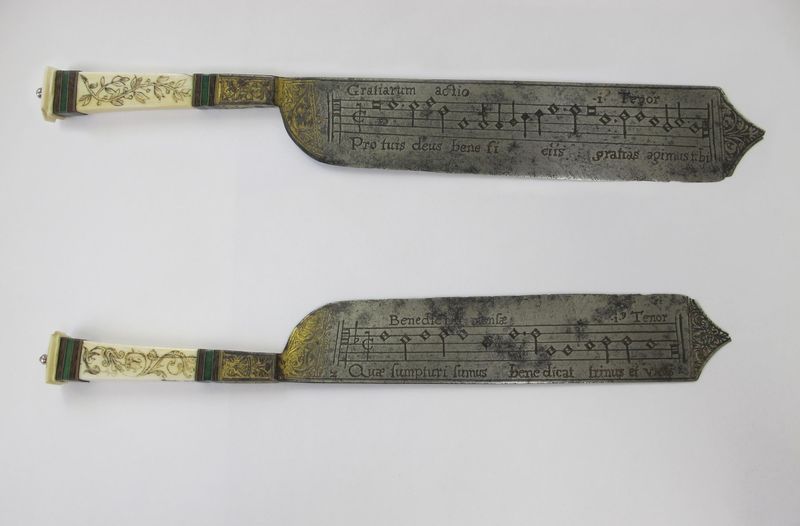
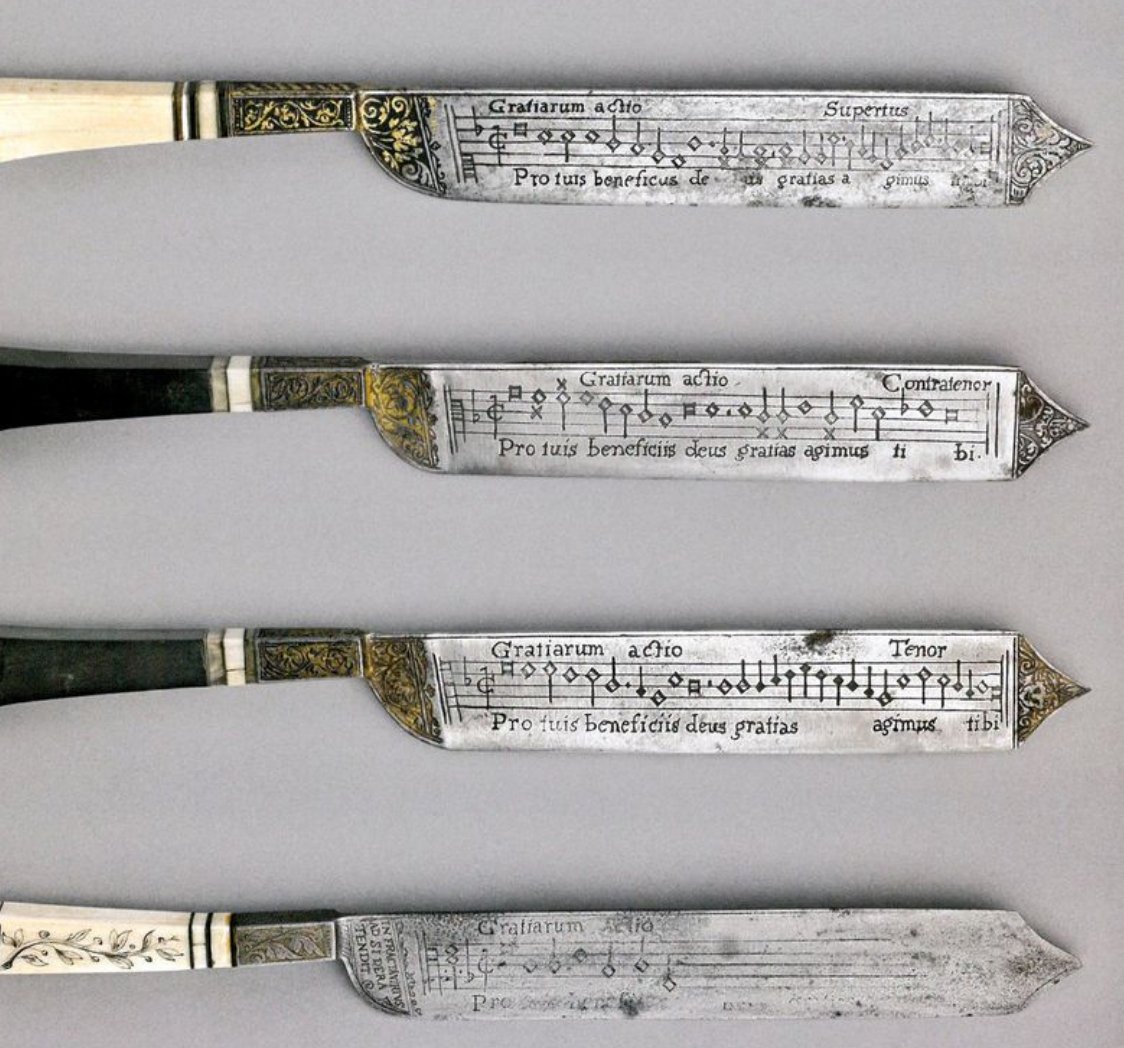
Renaissance Knives Had Music Engraved on the Blades; Now Hear the Songs Performed by Modern Singers

Image cour­tesy of The Vic­to­ria and Albert Muse­um

On any giv­en week­end, in any part of the state where I live, you can find your­self stand­ing in a hall full of knives, if that’s the kind of thing you like to do. It is a very niche kind of expe­ri­ence. Not so in some oth­er weapons expos—like the Arms and Armor gal­leries at the Met­ro­pol­i­tan Muse­um of Art, where every­one, from the most war­like to the staunchest of paci­fists, stands in awe at the intri­cate orna­men­ta­tion and incred­i­bly deft crafts­man­ship on dis­play in the suits of armor, lances, shields, and lots and lots of knives.

We must acknowl­edge in such a space that the worlds of art and of killing for fame and prof­it were nev­er very far apart dur­ing Europe’s late Medieval and Renais­sance peri­ods. Yet we encounter many sim­i­lar arti­sanal instru­ments from the time, just as fine­ly tuned, but made for far less bel­liger­ent pur­pos­es.

As Maya Cor­ry of the Fitzwilliam Muse­um in Cam­bridge—an insti­tu­tion with its own impres­sive arms and armor col­lec­tion—com­ments in the video above (at 2:30), one unusu­al kind of 16th cen­tu­ry knife meant for the table, not the bat­tle­field, offers “insight into that har­mo­nious, audi­ble aspect of fam­i­ly devo­tions,” prayer and song.

From the col­lec­tion of the Fitzwilliam Muse­um, in Cam­bridge. (Johan Oost­er­man )

These knives, which have musi­cal scores engraved in their blades, brought a table togeth­er in singing their prayers, and may have been used to carve the lamb or beef in their “strik­ing bal­ance of dec­o­ra­tive and util­i­tar­i­an func­tion.” At least his­to­ri­ans think such “nota­tion knives,” which date from the ear­ly 1500s, were used at ban­quets. “The sharp, wide steel would have been ide­al for cut­ting and serv­ing meat,” writes Eliza Grace Mar­tin at the WQXR blog, “and the accen­tu­at­ed tip would have made for a per­fect skew­er.” But as Kris­ten Kalber, cura­tor at the Vic­to­ria and Albert Muse­um, which hous­es the knives at the top of the post, tells us “din­ers in very grand feasts didn’t cut their own meat.” It’s unlike­ly they would have sung from the bloody knives held by their ser­vants.

The knives’ true pur­pose “remains a mys­tery,” Mar­tin remarks, like many “rit­u­als of the Renais­sance table.”  Vic­to­ria and Albert Muse­um cura­tor Kirstin Kennedy admits in the video above that “we are not entire­ly sure” what the “splen­did knife” she holds was used for. But we do know that each knife had a dif­fer­ent piece of music on each side, and that a set of them togeth­er con­tained dif­fer­ent har­mo­ny parts in order to turn a room­ful of din­ers into a cho­rus. One set of blades had the grace on one side, with the inscrip­tion, “the bless­ing of the table. May the three-in-one bless that which we are about to eat.” The oth­er side holds the bene­dic­tion, to be sung after the din­ner: “The say­ing of grace. We give thanks to you God for your gen­eros­i­ty.”

Com­mon enough ver­biage for any house­hold in Renais­sance Europe, but when sung, at least by a cho­rus from the Roy­al Col­lege of Music, who recre­at­ed the music and made the record­ings here, the prayers are superbly grace­ful. Above, hear one ver­sion of the Grace and Bene­dic­tion from the Vic­to­ria and Albert Muse­um knives; below, hear a sec­ond ver­sion. You can hear a cap­ti­vat­ing set of choral prayers from the Fitzwilliam Muse­um knives at WQXR’s site, record­ed for the Fitzwilliam’s “Madon­nas & Mir­a­cles” exhib­it. We are as unlike­ly now to encounter singing kitchen knives as we are to run into a horse and rid­er bear­ing 100 pounds of fine­ly-wrought wear­able steel sculp­ture. Such strange arti­facts seem to speak of a strange peo­ple who val­ued beau­ty whether carv­ing up the main course or cut­ting down their ene­mies.

via WQXR/@tedgioia

Relat­ed Con­tent:

An Ancient Philo­soph­i­cal Song Recon­struct­ed and Played for the First Time in 1,000 Years

See The Guidon­ian Hand, the Medieval Sys­tem for Read­ing Music, Get Brought Back to Life

Hear the Ear­li­est Known Piece of Poly­phon­ic Music: This Com­po­si­tion, Dat­ing Back to 900 AD, Changed West­ern Music

Josh Jones is a writer and musi­cian based in Durham, NC. Fol­low him at @jdmagness

Syd Barrett’s “Effervescing Elephant” Comes to Life in a New Retro-Style Animation

The sto­ry is well known. Syd Bar­rett, spi­ralling into depres­sion, “hal­lu­ci­na­tions, dis­or­ga­nized speech, mem­o­ry laps­es, intense mood swings, and peri­ods of cata­to­nia,” left Pink Floyd in April, 1968, before record­ing two solo albums (The Mad­cap Laughs and Bar­rett) and then fad­ing into obscu­ri­ty. Above you can watch a delight­ful, new ani­ma­tion of “Effer­vesc­ing Ele­phant,” a song Bar­rett first wrote dur­ing his teenage years and record­ed in 1970. The new “retro-style” ani­ma­tion comes from Yoann Her­vo. Below, find anoth­er ani­mat­ed take on “Effer­vesc­ing Ele­phant,” this one from Steve Bobinksi.

If you would like to sign up for Open Culture’s free email newslet­ter, please find it here. It’s a great way to see our new posts, all bun­dled in one email, each day.

If you would like to sup­port the mis­sion of Open Cul­ture, con­sid­er mak­ing a dona­tion to our site. It’s hard to rely 100% on ads, and your con­tri­bu­tions will help us con­tin­ue pro­vid­ing the best free cul­tur­al and edu­ca­tion­al mate­ri­als to learn­ers every­where. You can con­tribute through Pay­Pal, Patre­on, and Ven­mo (@openculture). Thanks!

Relat­ed Con­tent:

Psy­che­del­ic Scenes of Pink Floyd’s Ear­ly Days with Syd Bar­rett, 1967

Short Film Syd Barrett’s First Trip Reveals the Pink Floyd Founder’s Psy­che­del­ic Exper­i­men­ta­tion (1967)

Pink Floyd Per­forms on US Tele­vi­sion for the First Time: Amer­i­can Band­stand, 1967

by | Permalink | Make a Comment ( 1 ) |

Take an Online Course on Design & Architecture with Frank Gehry

FYI: If you sign up for a Mas­ter­Class course by click­ing on the affil­i­ate links in this post, Open Cul­ture will receive a small fee that helps sup­port our oper­a­tion.

“Most of our cities are built with just face­less glass, only for economies and not for human­i­ties.” We’ve all heard many vari­a­tions on that com­plaint from many dif­fer­ent peo­ple, but sel­dom with the author­i­ty car­ried by the man mak­ing it this time: Frank Gehry, author of some of the most talked-about build­ings of the past thir­ty years. You may love or hate his work, the body of which includes such strik­ing, for­mal­ly and mate­ri­al­ly uncon­ven­tion­al build­ings as Bil­bao’s Guggen­heim Muse­um, Los Ange­les’ Walt Dis­ney Con­cert Hall, and Seat­tle’s Muse­um of Pop Cul­ture, but you can’t remain indif­fer­ent to it, and that alone tells us how deeply Gehry under­stands the pow­er of his craft.

And so when Gehry talks archi­tec­ture, we should lis­ten. Mas­ter­class, the online edu­ca­tion start­up that has pro­duced cours­es in var­i­ous dis­ci­plines with such high-pro­file prac­ti­tion­er-teach­ers as David Mamet, Her­bie Han­cock, Jane Goodall, Steve Mar­tin, and Wern­er Her­zog, has read­ied a rich oppor­tu­ni­ty to do so in the fall: “Frank Gehry Teach­es Design and Archi­tec­ture,” whose trail­er you can view above. The $90 course promis­es a look into the cre­ative process, as well as into the “nev­er-before-seen mod­el archive,” of this biggest of all “star­chi­tects” whose “vision for what archi­tec­ture could accom­plish” has reshaped not just our sky­lines but “the imag­i­na­tions of artists and design­ers around the world.”

As with any edu­ca­tion­al expe­ri­ence, the more thor­ough­ly you pre­pare in advance, the more you’ll get out of it, and so, to that end, we sug­gest watch­ing Syd­ney Pol­lack­’s doc­u­men­tary Sketch­es of Frank Gehry, recent­ly made avail­able online by the Louis Vuit­ton Foun­da­tion. “Pol­lack is not usu­al­ly a doc­u­men­tar­i­an, and Gehry has nev­er been doc­u­ment­ed; they were friends, and Gehry sug­gest­ed Pol­lack might want to ‘do some­thing,’ ” wrote Roger Ebert in his review. “Because Pol­lack has his own clout and is not mere­ly a sup­pli­cant at Gehry’s altar, he asks pro­fes­sion­al ques­tions as his equal, sym­pa­thizes about big projects that seem to go wrong and offers insights.”

Pol­lack also “has access to the archi­tec­t’s famous clients, like Michael Eis­ner,” com­mis­sion­er of the Dis­ney Con­cert hall, “and Den­nis Hop­per, who lives in a Gehry home in San­ta Mon­i­ca” — just as Gehry him­self does, in the house whose rad­i­cal, qua­si-indus­tri­al mod­i­fi­ca­tion did much to make his name. Though he also brings in a few of the archi­tec­t’s many crit­ics to pro­vide bal­ance, “Pol­lack­’s opin­ion is clear: Gehry is a genius.” You may think so too, which would be a good a rea­son as any to take his Mas­ter­class. Even if you think the oppo­site, the phys­i­cal and cul­tur­al impact of Gehry’s work, as well as his endur­ing rel­e­vance and indus­tri­ous­ness — he con­tin­ues to design today, in his late eight­ies, espe­cial­ly for his long-ago adopt­ed home­town of Los Ange­les — has some­thing to teach us all.

Relat­ed Con­tent:

Gehry’s Vision for Archi­tec­ture

On the Impor­tance of the Cre­ative Brief: Frank Gehry, Maira Kalman & Oth­ers Explain its Essen­tial Role

The ABC of Archi­tects: An Ani­mat­ed Flip­book of Famous Archi­tects and Their Best-Known Build­ings

Based in Seoul, Col­in Mar­shall writes and broad­casts on cities and cul­ture. He’s at work on the book The State­less City: a Walk through 21st-Cen­tu­ry Los Ange­les, the video series The City in Cin­e­ma, the crowd­fund­ed jour­nal­ism project Where Is the City of the Future?, and the Los Ange­les Review of Books’ Korea Blog. Fol­low him on Twit­ter at @colinmarshall or on Face­book.

« Go BackMore in this category... »
Quantcast