The Roland TR-808, the Drum Machine That Changed Music Forever, Is Back! And It’s Now Affordable & Compact

You don’t have to be a gear­head to instant­ly rec­og­nize the sound of the Roland TR-808. Intro­duced in 1980, the leg­endary drum machine is all over the 80s, 90s, and the retro 2000s, from dance prog­en­i­tors like Afri­ka Bambaataa’s “Plan­et Rock” to for­ma­tive Def Jam releas­es like Run DMC’s debut and the Beast­ie Boy’s Licensed to Ill (one of the orig­i­nal machines used on such clas­sics recent­ly went on sale). The 808 pro­vides the back­beat for Mar­vin Gaye’s “Sex­u­al Heal­ing,” New Order’s “Shell­shock,” and LL Cool J’s “Going Back to Cali”… track after era-defin­ing track puls­es with the icon­ic drum machine’s deep, thud­ding kick drum and com­i­cal­ly syn­thet­ic con­gas, claves, mara­cas, hand­claps, and cow­bells.

The 808 inspired a trib­ute cel­e­bra­tion around the world on August 8th (8/08) and stars in its own full-length doc­u­men­tary, “a nerdy love let­ter” to the elec­tric instru­ment, writes Slate. You can buy 808 Adi­das that actu­al­ly play beats, play with a vir­tu­al TR-808 in your brows­er, and enjoy the sounds of Kanye West’s odd­ly influ­en­tial 2008 album 808s and Heart­break. With all this renewed atten­tion, you might think it’s a good time for Japan’s Roland to bring the device back into pro­duc­tion, just as Moog briefly reis­sued its Min­i­moog Mod­el D (since dis­con­tin­ued) amidst a swirl of renewed main­stream inter­est in ana­log syn­the­siz­ers.

Roland has obvi­ous­ly felt the pop cul­tur­al winds blow­ing its way. Yes­ter­day, on 808 Day, the com­pa­ny announced a new iter­a­tion, now called the TR-08, as part of its Bou­tique line. (A pre­vi­ous revival, the TR‑8, saw Roland com­bine the 808 with the clas­sic 909, renowned in rave cir­cles.) The video at the top fea­tures some of the 808’s orig­i­nal adopters—producer Jim­my Jam, rap­per Mar­ley Marl, and DJs Jazzy Jeff and Juan Atkins—marveling over the new prod­uct. Just above, in case you’ve some­how for­got­ten, we have a demon­stra­tion of famous TR-808 beats from tracks like “Plan­et Rock” and Cybotron’s “Clear,” songs that made inno­v­a­tive use of sam­ples and which them­selves became choice mate­r­i­al for dozens of sam­ple-based pro­duc­tions.

The 808 was the choice of drum machine for tin­ker­ers. Its sound was “crowd-sourced,” writes Chris Nor­ris, “with artists build­ing on one another’s mod­i­fi­ca­tions of the device. One of the first major inno­va­tions came about in 1984,” with the “fine tun­ing of the 808’s low fre­quen­cies and fur­ther widen­ing of its bass kick drum to cre­ate the sound of an under­ground nuke test” heard on pro­duc­er Strafe’s club hit “Set it Off.” The new TR-08 has a much small­er foot­print and expands the machine’s capa­bil­i­ties with con­tem­po­rary fea­tures like an LED screen, con­trols over gain and tun­ing, bat­tery or USB pow­er, and audio or MIDI through a USB con­nec­tion.

Arguably “one of the most impact­ful pieces of mod­ern music hard­ware,” writes The Verge, upon its debut the 808 “received mixed reviews and was con­sid­ered a com­mer­cial fail­ure as its ana­log cir­cuit­ry didn’t cre­ate the ‘tra­di­tion­al’ drum sounds” most pro­duc­ers expect­ed. This meant that 808s could be picked up rel­a­tive­ly cheap­ly by bed­room pro­duc­ers and local DJs. As a result, “the trem­bling feel­ing of that sound,” Nor­ris writes, “boom­ing down boule­vards in Oak­land, the Bronx, and Detroit are part of America’s cul­tur­al DNA, the ghost of Rea­gan-era blight” and the renais­sance of cre­ativ­i­ty born in its midst. To get a sense of the breadth of the 808’s musi­cal con­tri­bu­tions, lis­ten to the playlist above, with every­one from Talk­ing Heads to 2 LIVE CREW, Phil Collins, and Whit­ney Hous­ton putting in an appear­ance.

Relat­ed Con­tent:

All Hail the Beat: How the 1980 Roland TR-808 Drum Machine Changed Pop Music

See the First “Drum Machine,” the Rhyth­mi­con from 1931, and the Mod­ern Drum Machines That Fol­lowed Decades Lat­er

The “Amen Break”: The Most Famous 6‑Second Drum Loop & How It Spawned a Sam­pling Rev­o­lu­tion

Josh Jones is a writer and musi­cian based in Durham, NC. Fol­low him at @jdmagness

25,000+ 78RPM Records Now Professionally Digitized & Streaming Online: A Treasure Trove of Early 20th Century Music

Every record­ing medi­um works as a metonym for its era: the term “LP” con­jures up asso­ci­a­tions with a broad musi­cal peri­od of clas­sic rock ‘n’ roll, soul, doo-wop, R&B, funk, jazz, dis­co etc.; we talk of the “CD era,” dom­i­nat­ed by dance music and hip-hop; the 45 makes us think of juke­box­es, din­ers, and sock-hops; and the cas­sette, well… at least one sub­genre of music, what John Peel called “sham­bling,” jan­g­ly, lo-fi pop, came to be known by the name “C86,” the title of an NME com­pi­la­tion, short for “Cas­sette, 1986.” (Read­ers of the mag­a­zine had to clip coupons and send mon­ey by postal mail to receive a copy of the tape.)

Soon, how­ev­er, few­er and few­er peo­ple will remem­ber the age of the 78rpm record, the pre­ferred vehi­cle for the music of the ear­ly 20th cen­tu­ry. From clas­si­cal and opera to blues, blue­grass, swing, rag­time, gospel, Hawai­ian, and hol­i­day nov­el­ties the 78 epit­o­mizes the sounds of its hey­day as much as any of the media men­tioned above.

While cas­settes recent­ly made a nos­tal­gic come­back, and turnta­bles are found in every big box store, we’re gen­er­al­ly not equipped to play back 78s. These are brit­tle records made from shel­lac, a resin secret­ed by bee­tles. They were often played on appli­ances that dou­bled as qual­i­ty par­lor fur­ni­ture.

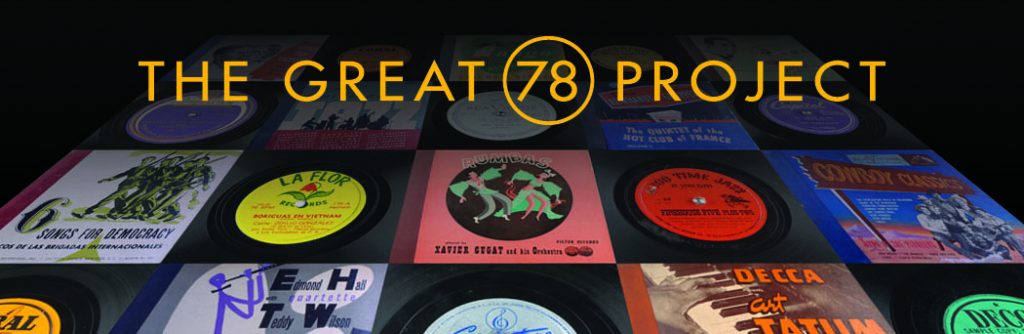
Thanks now to the Inter­net Archive, that stal­wart of dig­i­tal cat­a­logu­ing and cura­tion, we can play twen­ty five thou­sand 78s and immerse our­selves in the ear­ly 20th cen­tu­ry, whether for research pur­pos­es or pure enjoy­ment. Pre­vi­ous efforts at preser­va­tion have “restored or remas­tered… com­mer­cial­ly viable record­ings” on LP or CD, writes The Great 78 Project, the archive’s vol­un­teer pro­gram to dig­i­tize musi­cal his­to­ry. The cur­rent effort seeks to go beyond pop­u­lar­i­ty and col­lect every­thing, from the rarest and strangest to the already his­toric. “I want to know what the ear­ly 20th cen­tu­ry sound­ed like,” writes Inter­net Archive founder Brew­ster Kahle, “Mid­west, dif­fer­ent coun­tries, dif­fer­ent social class­es, dif­fer­ent immi­grant com­mu­ni­ties and their loves and fears.”

You can hear sev­er­al selec­tions here, and thou­sands more at this archive of 78s uploaded by audio-visu­al preser­va­tion com­pa­ny, George Blood, L.P. Oth­er 78rpm archives from vol­un­teer col­lec­tors and the ARChive of Con­tem­po­rary Music are being dig­i­tized and uploaded as well. You’ll note the record­ings are often sub­merged in crack­le and hiss, and gen­er­al­ly lack bass and tre­ble (most play­back sys­tems of the time could not repro­duce the low­er and high­er ends of the audi­ble spec­trum). “We have pre­served the often very promi­nent sur­face noise and imper­fec­tions,” the Archive writes, “and includ­ed files gen­er­at­ed by dif­fer­ent sizes and shapes of sty­lus to facil­i­tate dif­fer­ent kinds of analy­sis.” Dif­fer­ent play­back sys­tems could pro­duce marked­ly dif­fer­ent sounds, and the record­ings were not always strict­ly 78rpm.

These con­di­tions of the trans­fer ensure that we rough­ly hear what the first audi­ences heard, though the records’ age and our pen­chant for 7 speak­er audio sys­tems intro­duce some new vari­ables. None of these record­ings were even made in stereo. The 78 peri­od, notes Yale Library, last­ed between 1898 and the late 1950s, when the 33 1/2 rpm long-play­ing record ful­ly edged out the old­er mod­el. For approx­i­mate­ly fifty years, these records car­ried record­ed music, sound, and speech into homes around the world. “What is this?” Kahle asks of this for­mi­da­ble dig­i­ti­za­tion project. “A ref­er­ence col­lec­tion? A collector’s dream? A dis­cov­ery radio sta­tion? The sound­track of the ear­ly 20th cen­tu­ry?” All of the above. To learn more about The Great 78 Project, includ­ing the tech­ni­cal details of the trans­fer and how you can care­ful­ly pack­age up and mail in your own 78rpm records, vis­it their Preser­va­tion page.

h/t @Ferdinand77

Relat­ed Con­tent:

BBC Launch­es World Music Archive

The British Library’s “Sounds” Archive Presents 80,000 Free Audio Record­ings: World & Clas­si­cal Music, Inter­views, Nature Sounds & More

DC’s Leg­endary Punk Label Dischord Records Makes Its Entire Music Cat­a­log Free to Stream Online

Josh Jones is a writer and musi­cian based in Durham, NC. Fol­low him at @jdmagness

The Nano Guitar: Discover the World’s Smallest, Playable Microscopic Guitar

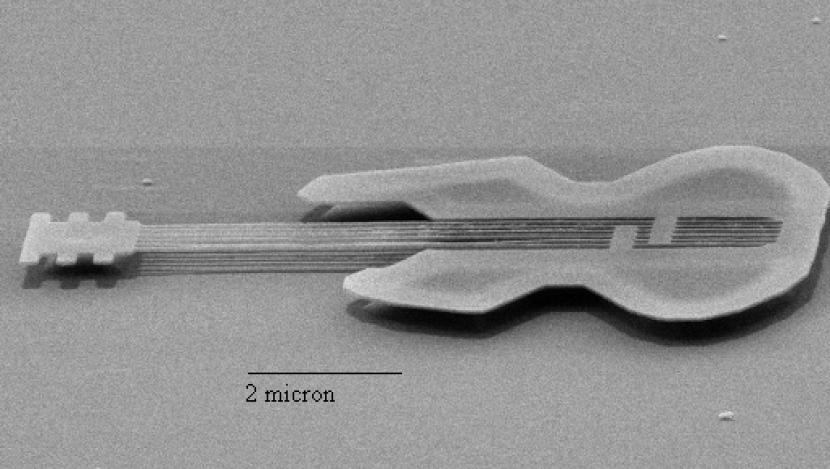
In 1997, the Cor­nell Chron­i­cle announced: “The world’s small­est gui­tar — carved out of crys­talline sil­i­con and no larg­er than a sin­gle cell — has been made at Cor­nell Uni­ver­si­ty to demon­strate a new tech­nol­o­gy that could have a vari­ety of uses in fiber optics, dis­plays, sen­sors and elec­tron­ics.”

Invent­ed by Dustin W. Carr, the so-called “nano­gu­i­tar” mea­sured 10 microm­e­ters long–roughly the size of your aver­age red blood cell. And it had six strings, each “about 50 nanome­ters wide, the width of about 100 atoms.”

Accord­ing to The Guardian, the vin­tage 1997 nano­gu­i­tar was actu­al­ly nev­er played. That hon­or went to a 2003 edi­tion of the nano­gu­i­tar, whose strings were plucked by minia­ture lasers oper­at­ed with an atom­ic force micro­scope, cre­at­ing “a 40 mega­hertz sig­nal that is 130,000 times high­er than the sound of a full-scale gui­tar.” The human ear could­n’t hear some­thing at that fre­quen­cy, and that’s a prob­lem not even a good amp–a Vox AC30, Fend­er Deluxe Reverb, etc.–could fix.

Thus con­cludes today’s adven­ture in nan­otech­nol­o­gy.

If you would like to sign up for Open Culture’s free email newslet­ter, please find it here. It’s a great way to see our new posts, all bun­dled in one email, each day.

If you would like to sup­port the mis­sion of Open Cul­ture, con­sid­er mak­ing a dona­tion to our site. It’s hard to rely 100% on ads, and your con­tri­bu­tions will help us con­tin­ue pro­vid­ing the best free cul­tur­al and edu­ca­tion­al mate­ri­als to learn­ers every­where. You can con­tribute through Pay­Pal, Patre­on, and Ven­mo (@openculture). Thanks!

Relat­ed Con­tent:

Richard Feyn­man Intro­duces the World to Nan­otech­nol­o­gy with Two Sem­i­nal Lec­tures (1959 & 1984)

Stephen Fry Intro­duces the Strange New World of Nanoscience

A Boy And His Atom: IBM Cre­ates the World’s Small­est Stop-Motion Film With Atoms

New Deep Learning Courses Released on Coursera, with Hope of Teaching Millions the Basics of Artificial Intelligence

FYI: If you fol­low edtech, you know the name Andrew Ng. He’s the Stan­ford com­put­er sci­ence pro­fes­sor, who co-found­ed MOOC-provider Cours­era and lat­er became chief sci­en­tist at Baidu. Since leav­ing Baidu, he’s been work­ing on three arti­fi­cial intel­li­gence projects, the first of which he unveiled yes­ter­day. On Medi­um, he wrote:

I have been work­ing on three new AI projects, and am thrilled to announce the first one: deeplearning.ai, a project ded­i­cat­ed to dis­sem­i­nat­ing AI knowl­edge, is launch­ing a new sequence of Deep Learn­ing cours­es on Cours­era. These cours­es will help you mas­ter Deep Learn­ing, apply it effec­tive­ly, and build a career in AI.

Speak­ing to the MIT Tech­nol­o­gy Review, Ng elab­o­rat­ed: “The thing that real­ly excites me today is build­ing a new AI-pow­ered soci­ety… I don’t think any one com­pa­ny could do all the work that needs to be done, so I think the only way to get there is if we teach mil­lions of peo­ple to use these AI tools so they can go and invent the things that no large com­pa­ny, or com­pa­ny I could build, could do.”

Andrew’s new 5‑part series of cours­es on Deep Learn­ing can be accessed here. Cours­es include: Neur­al Net­works and Deep Learn­ing, Improv­ing Deep Neur­al Net­works, Struc­tur­ing Machine Learn­ing Projects, Con­vo­lu­tion­al Neur­al Net­works, and Sequence Mod­els.

You can find these cours­es on our list of Free Com­put­er Sci­ence Cours­es, a sub­set of our col­lec­tion, 1,700 Free Online Cours­es from Top Uni­ver­si­ties.

If you would like to sign up for Open Culture’s free email newslet­ter, please find it here. It’s a great way to see our new posts, all bun­dled in one email, each day.

If you would like to sup­port the mis­sion of Open Cul­ture, con­sid­er mak­ing a dona­tion to our site. It’s hard to rely 100% on ads, and your con­tri­bu­tions will help us con­tin­ue pro­vid­ing the best free cul­tur­al and edu­ca­tion­al mate­ri­als to learn­ers every­where. You can con­tribute through Pay­Pal, Patre­on, and Ven­mo (@openculture). Thanks!

Relat­ed Con­tent:

Google Launch­es Free Course on Deep Learn­ing: The Sci­ence of Teach­ing Com­put­ers How to Teach Them­selves

Google’s Deep­Mind AI Teach­es Itself to Walk, and the Results Are Kooky, No Wait, Chill­ing

Arti­fi­cial Intel­li­gence: A Free Online Course from MIT

Marshall McLuhan Explains Why We’re Blind to How Technology Changes Us, Raising the Question: What Have the Internet & Social Media Done to Us?

Image of Mar­shall McLuhan at Cana­da, by Wiki­me­dia Com­mons

So many of us use Face­book every day, but how many of us know that its enor­mous pres­ence in our lives owes, in part, to mod­ern phi­los­o­phy? “In the course of his stud­ies at Stan­ford,” writes John Lan­ches­ter in a recent Lon­don Review of Books piece of Face­book, Sil­i­con Val­ley bil­lion­aire Peter Thiel, an ear­ly investor in the com­pa­ny, “became inter­est­ed in the ideas of the US-based French philoso­pher René Girard, as advo­cat­ed in his most influ­en­tial book, Things Hid­den since the Foun­da­tion of the World,” espe­cial­ly a con­cept he called “mimet­ic desire.”

“Human beings are born with a need for food and shel­ter,” writes Lan­ches­ter. “Once these fun­da­men­tal neces­si­ties of life have been acquired, we look around us at what oth­er peo­ple are doing, and want­i­ng, and we copy them.” Or as Thiel explained it, “Imi­ta­tion is at the root of all behav­ior.” Lan­ches­ter reports that “the rea­son Thiel latched onto Face­book with such alacrity was that he saw in it for the first time a busi­ness that was Girar­dian to its core: built on people’s deep need to copy,” yet few of us, its users, have clear­ly per­ceived that essen­tial aspect of Face­book and oth­er social media plat­forms.

Mar­shall McLuhan, despite hav­ing died decades before their devel­op­ment, would have caught on right away — and he under­stood why even we savvy denizens of the 21st cen­tu­ry haven’t. “For the past 3500 years of the West­ern world, the effects of media — whether it’s speech, writ­ing, print­ing, pho­tog­ra­phy, radio or tele­vi­sion — have been sys­tem­at­i­cal­ly over­looked by social observers,” said the author of Under­stand­ing Media and The Medi­um is the Mes­sage. “Even in today’s rev­o­lu­tion­ary elec­tron­ic age, schol­ars evi­dence few signs of mod­i­fy­ing this tra­di­tion­al stance of ostrich­like dis­re­gard.”

Those words come from an in-depth 1969 inter­view with Play­boy mag­a­zine that broke the celebri­ty lit­er­a­ture pro­fes­sor McLuhan’s ideas to an even wider audi­ence than they’d had before. In it he diag­nosed a “pecu­liar form of self-hyp­no­sis” he called “Nar­cis­sus nar­co­sis, a syn­drome where­by man remains as unaware of the psy­chic and social effects of his new tech­nol­o­gy as a fish of the water it swims in. As a result, pre­cise­ly at the point where a new media-induced envi­ron­ment becomes all per­va­sive and trans­mo­gri­fies our sen­so­ry bal­ance, it also becomes invis­i­ble.”

As McLuhan saw it, “most peo­ple, from truck dri­vers to the lit­er­ary Brah­mins, are still bliss­ful­ly igno­rant of what the media do to them; unaware that because of their per­va­sive effects on man, it is the medi­um itself that is the mes­sage, not the con­tent, and unaware that the medi­um is also the mas­sage — that, all puns aside, it lit­er­al­ly works over and sat­u­rates and molds and trans­forms every sense ratio. The con­tent or mes­sage of any par­tic­u­lar medi­um has about as much impor­tance as the sten­cil­ing on the cas­ing of an atom­ic bomb.”

Just last month, no less omnipresent an inter­net titan than Google cel­e­brat­ed McLuhan’s 106th birth­day, and a social observ­er called PR Pro­fes­sor saw in it a cer­tain irony: though “it seems like tech­nol­o­gy that extends man’s abil­i­ty to expe­ri­ence and inter­pret the world is pos­i­tive and desir­able,” McLuhan point­ed out “that the inher­ent ten­den­cy to focus on the mes­sages with­in the media make us blind to the lim­its and struc­tures imposed by the medi­ums them­selves.” This blind­ness has con­se­quences indeed, since, accord­ing to McLuhan, each time a soci­ety devel­ops a new media tech­nol­o­gy, “all oth­er func­tions of that soci­ety tend to be trans­mut­ed to accom­mo­date that new form” as that tech­nol­o­gy “sat­u­rates every insti­tu­tion of that soci­ety.”

This went for speech, writ­ing, print, and the tele­graph as well as it goes for “social media plat­forms like Twit­ter, which reduce expres­sive pos­si­bil­i­ties to 140 char­ac­ters of text or express­ing one’s self through the ‘re-tweet­ing’ of posts by oth­ers.” McLuhan believed that at one time only the inter­pre­tive work of the artist, “who has had the pow­er — and courage — of the seer to read the lan­guage of the out­er world and relate it to the inner world,” could allow the rest of us to rec­og­nize the thor­ough­go­ing effects of tech­nol­o­gy on soci­ety, but that “the new envi­ron­ment of elec­tric infor­ma­tion” had made pos­si­ble “a new degree of per­cep­tion and crit­i­cal aware­ness by nonartists.” At least more of us, if we step back, can now under­stand our afflic­tion by mimet­ic desire, Nar­cis­sus nar­co­sis, or any num­ber of oth­er trou­bling con­di­tions. What to do about them remains an open ques­tion.

Relat­ed Con­tent:

Mar­shall McLuhan Pre­dicts That Elec­tron­ic Media Will Dis­place the Book & Cre­ate Sweep­ing Changes in Our Every­day Lives (1960)

Mar­shall McLuhan in Two Min­utes: A Brief Ani­mat­ed Intro­duc­tion to the 1960s Media The­o­rist Who Pre­dict­ed Our Present

Has Tech­nol­o­gy Changed Us?: BBC Ani­ma­tions Answer the Ques­tion with the Help of Mar­shall McLuhan

McLuhan Said “The Medi­um Is The Mes­sage”; Two Pieces Of Media Decode the Famous Phrase

Mar­shall McLuhan, W.H. Auden & Buck­min­ster Fuller Debate the Virtues of Mod­ern Tech­nol­o­gy & Media (1971)

New Ani­ma­tion Explains Sher­ry Turkle’s The­o­ries on Why Social Media Makes Us Lone­ly

Based in Seoul, Col­in Mar­shall writes and broad­casts on cities and cul­ture. He’s at work on the book The State­less City: a Walk through 21st-Cen­tu­ry Los Ange­les, the video series The City in Cin­e­ma, the crowd­fund­ed jour­nal­ism project Where Is the City of the Future?, and the Los Ange­les Review of Books’ Korea Blog. Fol­low him on Twit­ter at @colinmarshall or on Face­book.

Stream 935 Songs That Appeared in “The John Peel Festive 50” from 1976 to 2004: The Best Songs of the Year, as Selected by the Beloved DJ’s Listeners

Image by Zetkin, via Wiki­me­dia Com­mons

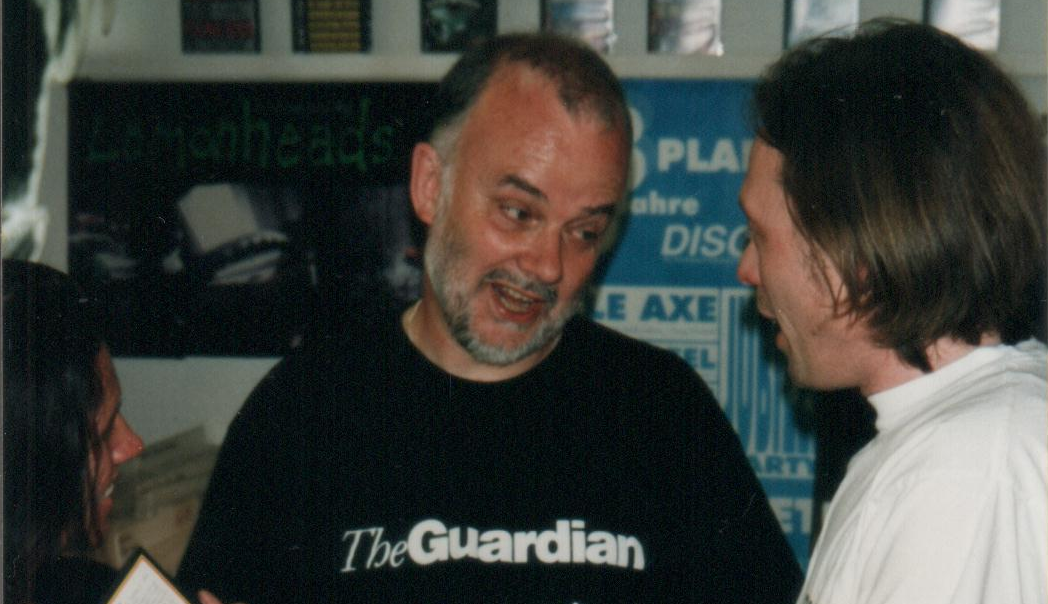
We’ve devot­ed space here before to leg­endary BBC DJ John Peel’s musi­cal lega­cy, from his for­mi­da­ble record col­lec­tion to his many hours of “Peel Ses­sions,” the record­ings he made in BBC stu­dios of artists like David Bowie, Joy Divi­sion, The Smiths, The Spe­cials, Siouxsie and the Ban­shees and so, so many more–usually when they were on the cusp of super­star­dom or endur­ing cult sta­tus. It was Peel’s par­tic­u­lar tal­ent for dis­cov­er­ing and pro­mot­ing such artists that set him apart from his peers. Rather than rid­ing the cul­tur­al wave of the moment, he lis­tened at the mar­gins, cul­ti­vat­ing and curat­ing what he heard. Whether punk, glam, new wave, hard­core, ska, tech­no, or indus­tri­al, it seems John Peel got there first, and the rest of the indus­try fol­lowed after him.

Peel did not approach his role in a crit­i­cal vein—sitting in judg­ment of the music around him. He approached it as an enthu­si­as­tic and obses­sive fan, which explains much of his appeal to the lis­ten­ers who loved his broad­casts. He hon­ored those lis­ten­ers each year by com­pil­ing a list of their favorites in what he called “The John Peel Fes­tive 50.” This end-of-the-year event “became a Christ­mas insti­tu­tion, writes the BBC, “more loved than fairy lights and Christ­mas crack­ers.”

Lis­ten­ers of Peel’s show vot­ed for their three favorite tracks in Novem­ber. The fol­low­ing month, the high­est-ranked “Fes­tive 50” were all played on the air. He described the process as a tru­ly demo­c­ra­t­ic, crowd­sourced endeav­or, as we would say today.

It’s real­ly just me mark­ing every sin­gle vote down in a ledger. There is obvi­ous­ly the temp­ta­tion to slip some­thing in that I like, espe­cial­ly if it’s just out­side the 50, and some­thing crap has gone above it. But I have a very work­man-like brain so it just would­n’t be on to fix it.

Peel “wasn’t always hap­py with what the lis­ten­ers vot­ed for,” often feel­ing “there were too many ‘white boys with gui­tars’ mak­ing an appear­ance.” The pre­dictabil­i­ty of sev­er­al of the lists irked him, and seemed to work against the spir­it of his mis­sion to tire­less­ly pro­mote adven­tur­ous, exper­i­men­tal music. Peel may have been pop­u­lar, but in mat­ters of taste, he was no pop­ulist. For the most part, how­ev­er, he remained faith­ful to the fans’ picks, and not­ed that he nev­er would have been able to choose the top three songs of the year him­self: “I couldn’t get any few­er than a list of 250.”

The tra­di­tion, with a few hic­cups, con­tin­ued from its incep­tion in 1976 till Peel’s death in 2004, and the mas­sive Spo­ti­fy playlist above aggre­gates the hun­dreds of those picks—932 songs, to be exact, over 70 hours of music. From Dylan, Clap­ton, and the Stones to Neko Case—and along the way, no short­age of tracks from the punk and post-punk artists most close­ly asso­ci­at­ed with Peel’s show. While the listener’s picks do fall heav­i­ly into the “white boys with gui­tars” cat­e­go­ry, there’s plen­ty more besides, includ­ing ear­ly tracks from Eric B. & Rakim, P.J. Har­vey, Stere­o­lab, 10,000 Mani­acs, Cocteau Twins, and many more. You can explore the tracks in Peel’s “Fes­tive 50” lists here. They’re sort­ed by decade: 1970s — 1980s — 1990s — 2000s.

Note: Here’s a direct link to the Spo­ti­fy playlist, and if you need Spo­ti­fy’s soft­ware, down­load it here.

Relat­ed Con­tent:

Stream 15 Hours of the John Peel Ses­sions: 255 Tracks by Syd Bar­rett, David Bowie, Siouxsie and the Ban­shees & Oth­er Artists

Hear a 9‑Hour Trib­ute to John Peel: A Col­lec­tion of His Best “Peel Ses­sions”

Revis­it the Radio Ses­sions and Record Col­lec­tion of Ground­break­ing BBC DJ John Peel

Josh Jones is a writer and musi­cian based in Durham, NC. Fol­low him at @jdmagness

Bertrand Russell Reveals the 4 Human Desires That Make Our World: Acquisitiveness, Rivalry, Vanity & Love of Power

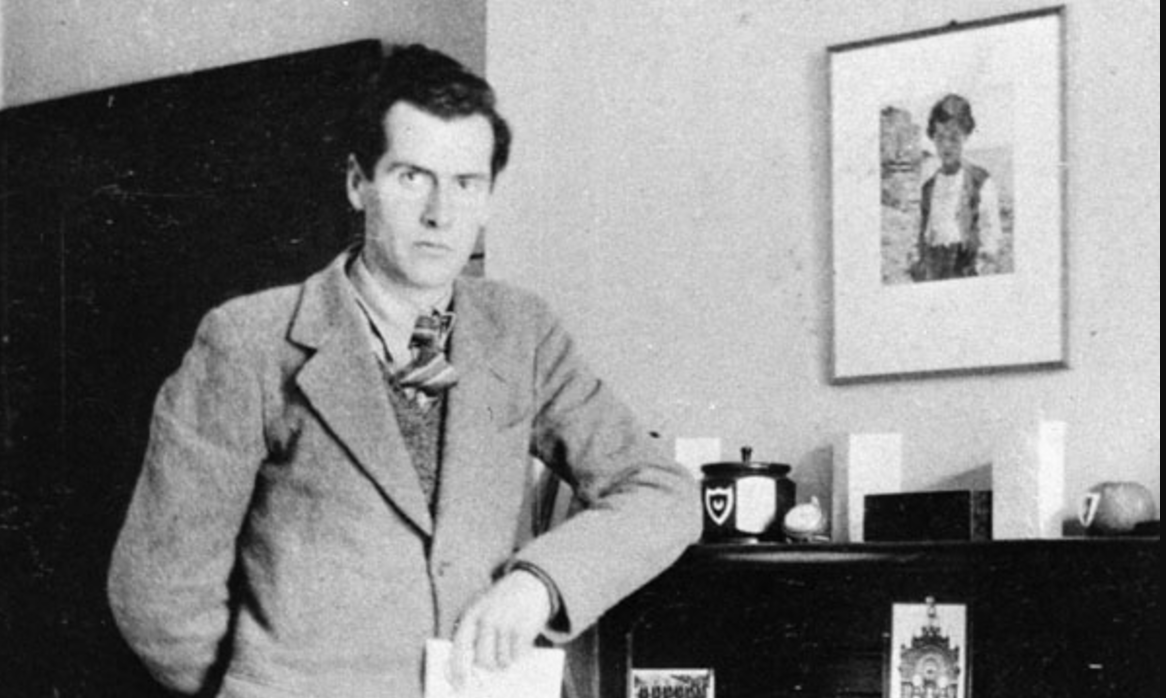
Con­trary to Aris­to­tle, the emi­nent logi­cian, philoso­pher, and activist Bertrand Rus­sell believed that virtue and moral­i­ty play lit­tle part in polit­i­cal life. Rather, what most dri­ves us to action, he argued, is self­ish desire. Rus­sel­l’s polit­i­cal phi­los­o­phy could seem almost Machi­avel­lian, most notably in his Nobel Prize speech 1950, in which he pro­claims that “all human activ­i­ty is prompt­ed by desire.” (Hear Rus­sell read an excerpt above.)

There is a whol­ly fal­la­cious the­o­ry advanced by some earnest moral­ists to the effect that it is pos­si­ble to resist desire in the inter­ests of duty and moral prin­ci­ple. I say this is fal­la­cious, not because no man ever acts from a sense of duty, but because duty has no hold on him unless he desires to be duti­ful. If you wish to know what men will do, you must know not only, or prin­ci­pal­ly, their mate­r­i­al cir­cum­stances, but rather the whole sys­tem of their desires with their rel­a­tive strengths.

Russell’s argu­ment about desire admits “there is no lim­it to the efforts that men will make, or to the vio­lence that they will dis­play” in the face of per­ceived scarci­ty, and his obser­va­tions recall not only the realpoli­tik of Machi­avel­li, but the insights of that most promi­nent the­o­rist of desire, Sig­mund Freud.

Man dif­fers from oth­er ani­mals in one very impor­tant respect, and that is that he has some desires which are, so to speak, infi­nite, which can nev­er be ful­ly grat­i­fied, and which would keep him rest­less even in Par­adise. The boa con­stric­tor, when he has had an ade­quate meal, goes to sleep, and does not wake until he needs anoth­er meal. Human beings, for the most part, are not like this. 

Rather than libidi­nous instincts, how­ev­er, Rus­sell names four main polit­i­cal desires that can­not be sat­is­fied: Acquis­i­tive­ness (“the wish to pos­sess as much as pos­si­ble), Rival­ry (“a much stronger motive”), Van­i­ty (“a motive of immense poten­cy”), and Love of Pow­er (“which out­weighs them all”). We may note the tremen­dous degree to which all four desires seem active­ly at work in shap­ing our cur­rent world. All four of these qual­i­ties greet us every morn­ing on our smart­phones and nev­er let up, day after day. But it has always been so to one degree or anoth­er, Rus­sell argues. The impor­tant thing is to be clear­sight­ed on the mat­ter. Although self­ish polit­i­cal desires can and large­ly are destruc­tive, they need not always be so.

Polit­i­cal desires like the love of pow­er may “have oth­er sides which are more desir­able.” Schol­ar­ly and sci­en­tif­ic endeav­ors may be “main­ly actu­at­ed by a love of pow­er.…. In pol­i­tics, also, a reformer may have just as strong a love of pow­er as a despot. It would be a com­plete mis­take to decry love of pow­er alto­geth­er as a motive.” “Rus­sell,” writes Maria Popo­va, is “a thinker of excep­tion­al sen­si­tiv­i­ty to nuance and to the dual­i­ties of which life is woven.” He cau­tions that we can­not sim­ply dis­miss our most pow­er­ful motive as “a whole­sale neg­a­tive dri­ver.”

The real prob­lem, as Rus­sell sees it, lies in “cir­cum­stances in which pop­u­la­tions will fall below self­ish­ness, if self­ish­ness is inter­pret­ed as enlight­ened self-inter­est.” The phe­nom­e­non we observe of peo­ple “vot­ing against their inter­ests” is for Rus­sell an occa­sion “on which they are con­vinced that they are act­ing from ide­al­is­tic motives.”

Much that pass­es as ide­al­ism is dis­guised hatred or dis­guised love of pow­er. When you see large mass­es of men swayed by what appear to be noble motives, it is as well to look below the sur­face and ask your­self what it is that makes these motives effec­tive. It is part­ly because it is so easy to be tak­en in by a facade of nobil­i­ty that a psy­cho­log­i­cal inquiry, such as I have been attempt­ing, is worth mak­ing.

Rather than virtue or moral­i­ty, pol­i­tics most requires “intel­li­gence,” Rus­sell con­cludes, “a thing that can be fos­tered by known meth­ods of edu­ca­tion.” These are not the forms of edu­ca­tion we gen­er­al­ly receive: “Schools are out to teach patri­o­tism,” he says, “news­pa­pers are out to stir up excite­ment; and politi­cians are out to get re-elect­ed. None of the three, there­fore, can do any­thing towards sav­ing the human race from rec­i­p­ro­cal sui­cide.”

The Cold War threat of nuclear anni­hi­la­tion hangs heavy over Russell’s speech. As long as humans are gripped by hatred and fear of oth­ers and held in thrall to polit­i­cal delu­sions, he sug­gests, the pos­si­bil­i­ty of mutu­al­ly assured destruc­tion remains. On the oth­er hand, if we were hon­est about our desires, and “if men were actu­at­ed by self-inter­est,” Rus­sell writes, “which they are not.… if men desired their own hap­pi­ness as ardent­ly as they desired the mis­ery of their neigh­bors.… the whole human race would coop­er­ate.” Read the full text of Rus­sel­l’s Nobel speech here.

via Brain­Pick­ings

Relat­ed Con­tent:

Free Online Polit­i­cal Sci­ence Cours­es

7 Nobel Speech­es by 7 Great Writ­ers: Hem­ing­way, Faulkn­er, and More

Bertrand Rus­sell & Buck­min­ster Fuller on Why We Should Work Less, and Live & Learn More

Bertrand Rus­sell: The Every­day Ben­e­fit of Phi­los­o­phy Is That It Helps You Live with Uncer­tain­ty

Josh Jones is a writer and musi­cian based in Durham, NC. Fol­low him at @jdmagness

New Yorkers Can Now Stream 30,000 Free Movies, Including the Entire Criterion Collection, with Their Library Cards

Image by Andrés Nieto Por­ras, via Flickr Com­mons

A quick heads up for the 8+ mil­lion peo­ple liv­ing in New York City. Accord­ing to The New York Times, any­one “who has a New York Pub­lic Library or Brook­lyn Pub­lic Library card can now watch more than 30,000 fea­ture films, doc­u­men­taries, for­eign-lan­guage films and train­ing videos.” This includes the entire cat­a­logue of films in The Cri­te­ri­on Col­lec­tion (think Felli­ni, Lynch and Kuro­sawa), and also com­plete lec­ture series from The Great Cours­es.

The films can be viewed streamed any­where, any­time, on smart­phones, tablets, PCs and smart TVs.

New York Pub­lic Library mem­bers can get start­ed here. And Brook­lyn Pub­lic Library fans can do the same here.

Please some­one, beam me back to New York.

If you would like to sign up for Open Culture’s free email newslet­ter, please find it here. It’s a great way to see our new posts, all bun­dled in one email, each day.

If you would like to sup­port the mis­sion of Open Cul­ture, con­sid­er mak­ing a dona­tion to our site. It’s hard to rely 100% on ads, and your con­tri­bu­tions will help us con­tin­ue pro­vid­ing the best free cul­tur­al and edu­ca­tion­al mate­ri­als to learn­ers every­where. You can con­tribute through Pay­Pal, Patre­on, and Ven­mo (@openculture). Thanks!

Relat­ed Con­tent:

4,000+ Free Movies Online: Great Clas­sics, Indies, Noir, West­erns, Doc­u­men­taries & More

120 Artists Pick Their Top 10 Films in the Cri­te­ri­on Col­lec­tion

The New York Pub­lic Library Lets You Down­load 180,000 Images in High Res­o­lu­tion: His­toric Pho­tographs, Maps, Let­ters & More

100,000+ Won­der­ful Pieces of The­ater Ephemera Dig­i­tized by The New York Pub­lic Library

Food­ie Alert: New York Pub­lic Library Presents an Archive of 17,000 Restau­rant Menus (1851–2008)

New York Pub­lic Library Puts 20,000 Hi-Res Maps Online & Makes Them Free to Down­load and Use

by | Permalink | Make a Comment ( 1 ) |

« Go BackMore in this category... »
Quantcast