Why You Should Read One Hundred Years of Solitude: An Animated Video Makes the Case

Maybe we read some cel­e­brat­ed lit­er­ary works the way we eat kale or quinoa—you don’t exact­ly love it but they say it’s, like, a super­food. Not so Gabriel Gar­cia Marquez’s One Hun­dred Years of Soli­tude. When I first start­ed read­ing the nov­el, I couldn’t stop. Twelve hours and a cou­ple pots of cof­fee lat­er, I want­ed to read it again right away. It’s a page-turner—not some­thing one often says of lit­er­ary fic­tion beloved by high­brow crit­ics and academics—but I mean it as the high­est pos­si­ble com­pli­ment.

The book has every fea­ture of a binge-wor­thy soap opera: char­ac­ters we love and love to hate, doomed affairs, sex, vio­lence, end­less fam­i­ly squab­bling, tragedy, intrigue, melo­dra­ma…. Again, this is no crit­i­cism; Mar­quez loved telen­ov­e­las and even wrote a script for one. He want­ed his work to reach as many peo­ple as pos­si­ble, to thrill and enter­tain. But he did­n’t with­hold any lit­er­ary nutri­ents either.


The novel’s poet­ic lan­guage, his­tor­i­cal scope, and the­mat­ic and sym­bol­ic com­plex­i­ty has led crit­ics like William Kennedy to com­pare it to the book of Gen­e­sis, and led no small num­ber of read­ers to wild­ly pre­fer it to the Bible or any oth­er ancient book of mythol­o­gy.

If you’re one of the two or three peo­ple who hasn’t read the nov­el, and you don’t find all this praise ful­ly con­vinc­ing, con­sid­er the case made by Fran­cis­co Díez-Buzo in the TED-Ed ani­mat­ed video above.

The sto­ry, we learn, arrived as an epiphany Mar­quez had while he and his fam­i­ly were on the road to a vaca­tion des­ti­na­tion. He turned the car around, aban­doned the trip, and start­ed writ­ing immediately—an exam­ple of the total com­mit­ment many writ­ers promise them­selves they’ll one day get around to maybe work­ing on. Eigh­teen months and many pots of cof­fee lat­er, One Hun­dred Years of Soli­tude appeared, intro­duc­ing a world­wide read­er­ship to Mar­quez, mag­i­cal real­ism, and Latin Amer­i­can lit­er­a­ture, pol­i­tics, and his­to­ry.

Most every read­er now has a vol­ume of Octavio Paz or Pablo Neru­da on the shelf, and nov­els by Mar­quez, Mario Var­gas Llosa, or Isabelle Allende. Before Cien años de soledad arrived, how­ev­er, this was rarely so out­side of Span­ish-speak­ing coun­tries. The nov­el cre­at­ed a glob­al appetite for rich Latin Amer­i­can tra­di­tions of sto­ry­telling and lyri­cal poet­ry. New trans­la­tions from the region began appear­ing every­where.

Like Faulkner’s entire cor­pus com­pressed into one vol­ume, the epic tale of sev­en gen­er­a­tions of Buendías in the fic­tion­al Colom­bian town of Macon­do is vast and sprawl­ing. It “is not an easy book to read,” says Díez-Buzo. Here, as you might expect, I dis­agree. It is hard­er not to read it once you’ve picked it up. But you will need to read it again, and again, and again.

So packed is the book with detail, allu­sion, his­tor­i­cal ref­er­ence, and nar­ra­tive that you could read it for the rest of your life and nev­er exhaust its lay­ers of mean­ing. As Harold Bloom put it, “every page is rammed full of life beyond the capac­i­ty of any sin­gle read­er to absorb… There are no wast­ed sen­tences, no mere tran­si­tions, in this nov­el, and you must notice every­thing at the moment you read it.” Pablo Neru­da called it “the great­est rev­e­la­tion in the Span­ish lan­guage since Don Quixote of Cervantes”—the found­ing text of Span­ish-lan­guage lit­er­a­ture and, indeed, of the nov­el form itself.

The super­nat­ur­al and the sur­re­al suf­fuse each page, rais­ing even mun­dane encoun­ters to a myth­ic dimen­sion, stag­ing his­to­ry as time­less dra­ma, played out over and over again through each gen­er­a­tion. In each rep­e­ti­tion, fan­tas­tic and fatal changes also “pro­duce a sense of his­to­ry,” says Díez-Buzo, “as a down­ward spi­ral the char­ac­ters seem pow­er­less to escape.”

It is this his­to­ry that Mar­quez described, when he accept­ed the Nobel Prize in 1982, as “a bound­less realm of haunt­ed men and his­toric women, whose unend­ing obsti­na­cy blurs into leg­end.” Marquez’s own fam­i­ly his­to­ry, full of “haunt­ed men and his­toric women,” served as a mod­el for his suc­ces­sion of fic­tion­al ances­tors. Latin Amer­i­cans, he said, “have not had a moment’s rest,” yet in the face of colo­nial­ist bru­tal­i­ty, civ­il war, dic­ta­tor­ships, “oppres­sion, plun­der­ing and aban­don­ment,” he declared, “we respond with life.” By some strange act of mag­ic, Mar­quez con­tained all of that life in one extra­or­di­nary nov­el.

Relat­ed Con­tent:

Hear Gabriel Gar­cía Márquez’s Extra­or­di­nary Nobel Prize Accep­tance Speech, “The Soli­tude Of Latin Amer­i­ca,” in Eng­lish & Span­ish (1982)

New Gabriel Gar­cía Márquez Dig­i­tal Archive Fea­tures More Than 27,000 Dig­i­tized Let­ters, Man­u­script Pages, Pho­tos & More

Gabriel Gar­cía Márquez Describes the Cul­tur­al Mer­its of Soap Operas, and Even Wrote a Script for One

Josh Jones is a writer and musi­cian based in Durham, NC. Fol­low him at @jdmagness

Discover “Journey of the Universe,” a Multimedia Project That Explores Humanity’s Place in the Epic History of the Cosmos

Today we know what no pre­vi­ous gen­er­a­tion knew: the his­to­ry of the uni­verse and of the unfold­ing of life on Earth. Through the aston­ish­ing achieve­ments of nat­ur­al sci­en­tists world­wide, we now have a detailed account of how galax­ies and stars, plan­ets and liv­ing organ­isms, human beings and human con­scious­ness came to be.

With this knowl­edge, the ques­tion of what role we play in the 14-bil­lion-year his­to­ry of the uni­verse impos­es itself with greater poignan­cy than ever before. In ask­ing our­selves how we will tell the sto­ry of Earth to our chil­dren, we must inevitably con­sid­er the role of human­i­ty in its his­to­ry, and how we con­nect with the intri­cate web of life on Earth.

In Jour­ney of the Uni­verse–a mul­ti­me­dia edu­ca­tion­al project that fea­tures a book, film and free online courses–evolutionary philoso­pher Bri­an Thomas Swimme and his­to­ri­an of reli­gions Mary Eve­lyn Tuck­er pro­vide an ele­gant, sci­ence-based nar­ra­tive to tell this epic sto­ry, lead­ing up to the chal­lenges of our present moment. The authors describe the ori­gins of humans on Earth, how we devel­oped a sym­bol­ic con­scious­ness, and how our abil­i­ty to com­mu­ni­cate using sym­bols make humans a “plan­e­tary pres­ence.”

We are now faced with a new dynamic—one where the sur­vival of the species and entire ecosys­tems depend pri­mar­i­ly on human activ­i­ty, and the choic­es humans make.

Weav­ing togeth­er the find­ings of mod­ern sci­ence togeth­er with endur­ing wis­dom found in the human­is­tic tra­di­tions of the West, Asia, and indige­nous peo­ples, the authors explore cos­mic evo­lu­tion as a pro­found­ly won­drous process based on cre­ativ­i­ty, con­nec­tion, and inter­de­pen­dence, and they envi­sion an unprece­dent­ed oppor­tu­ni­ty for the world’s peo­ple to address the daunt­ing eco­log­i­cal and social chal­lenges of our times.

Devel­oped over sev­er­al decades, and inspired by the authors’ long col­lab­o­ra­tion with Thomas Berry, Jour­ney of the Uni­verse boasts an impres­sive ros­ter of sci­ence advi­sors includ­ing Ursu­la Good­e­nough, Craig Kochel, and Ter­ry Dea­con.

Jour­ney of the Uni­verse is a mul­ti­me­dia edu­ca­tion­al project that includes:

1.) The Jour­ney of the Uni­verse: A Sto­ry for Our Time Spe­cial­iza­tion avail­able on Cours­era, cre­at­ed by Yale.  This is a col­lec­tion of three Mas­sive Online Open Cours­es that take stu­dents through the sci­en­tif­ic and cul­tur­al cos­mol­o­gy found through­out Jour­ney of the Uni­verse, as well as deep into its lin­eage with cul­tur­al his­to­ri­an and cos­mol­o­gist Thomas Berry:

Course 1: Jour­ney of the Uni­verse: The Unfold­ing of Life

Course 2: Jour­ney of the Uni­verse: Weav­ing Knowl­edge and Action

Course 3: The World­view of Thomas Berry: The Flour­ish­ing of the Earth Com­mu­ni­ty

2) The Jour­ney of the Uni­verse Film, win­ner of the 2012 San Francisco/Northern Cal­i­for­nia Emmy® Award for best doc­u­men­tary. You can watch the trail­er for the film above

3) The Jour­ney of the Uni­verse Book, pub­lished by Yale Uni­ver­si­ty Press. Trans­lat­ed into French, Ital­ian, Span­ish, Ger­man, Turk­ish, Chi­nese, Kore­an, Indone­sian.

4) The Jour­ney of the Uni­verse Con­ver­sa­tion Series, a twen­ty-part edu­ca­tion­al series inte­grates the per­spec­tives of the sci­ences and the human­i­ties into a retelling of our 13.7 bil­lion year sto­ry. In a series of one-on-one inter­views, sci­en­tists, his­to­ri­ans, and envi­ron­men­tal­ists explore the unfold­ing sto­ry of the uni­verse and Earth and the role of the human in respond­ing to our present chal­lenges.

Devin O’Dea lives in San Fran­cis­co where he serves as the man­ag­er of the Jour­ney of the Uni­verse project: a col­lab­o­ra­tive, mul­ti­me­dia con­ver­sa­tion that draws togeth­er sci­en­tif­ic dis­cov­er­ies with human­is­tic insights con­cern­ing the nature of the uni­verse.  Devin wel­comes all inter­ests and feed­back to Jour­ney mate­ri­als at devin@journeyoftheuniverse.org.

Hear Langston Hughes Read His Poetry Over Original Compositions by Charles Mingus & Leonard Feather: A Classic Collaboration from 1958

Have you looked up Charles Min­gus late­ly? You should. Min­gus, who died in 1979, has a “lost” album com­ing out—live record­ings made in ‘73, aired on the radio once, then dis­ap­peared into obscu­ri­ty until now. Seems there’s always some­thing new to learn about our favorite jazz musicians—and our favorite jazz poets. New­ly-dis­cov­ered poems from Langston Hugh­es, for exam­ple, appeared a few years back, writ­ten in “depths of the cri­sis” of the Great Depres­sion.

These poems are dark and bit­ter, “some of the harsh­est polit­i­cal verse ever penned by an Amer­i­can,” writes Hugh­es schol­ar Arnold Ram­per­sad. They are not the cel­e­bra­to­ry Hugh­es we read in school. While angry con­ser­v­a­tives and McCarthy­ism may have forced this side of him into hid­ing, in Hugh­es’ view, poet­ry, like jazz, had room for every­thing, whether it be love or rage.

“Jazz is a great big sea,” he wrote in his 1956 essay “Jazz as Com­mu­ni­ca­tion.” The music “wash­es up all kinds of fish and shells and spume and waves with a steady old beat, or off-beat.” His task, in poems like “The Weary Blues” had been to put “jazz into words,” with all of its wild mood swings, lovers’ quar­rels, rapid-fire con­ver­sa­tions, and heat­ed argu­ments.

Through­out his career, Min­gus had been mov­ing in the oth­er direc­tion, tak­ing storms of ideas—angry, melan­choly, joy­ful, etc.—and turn­ing them into sounds. But his music, always “supreme­ly vocal,” notes The Nation’s Adam Shatz, spoke in one way or anoth­er. Min­gus “col­lab­o­rat­ed with poets in East Vil­lage Cof­fee­hous­es” and won his only Gram­my for a piece of writ­ing, the lin­er notes for his 1971 album Let My Chil­dren Hear Music.

For Min­gus, crit­ic Whit­ney Bal­li­ett remarked, jazz “was anoth­er way of talk­ing.” For anoth­er com­pos­er, pianist and jour­nal­ist Leonard Feath­er, lan­guage and music played equal roles. Feath­er, notes Jason Anke­ny, was known both as “the acknowl­edged dean of Amer­i­can jazz crit­ics” and author of “peren­ni­al” stan­dards “Evil Gal Blues,” “Blow­top Blues,” and “How Blue Can You Get?”

Two years after Hugh­es read “Jazz as Com­mu­ni­ca­tion” at the New­port Jazz Fes­ti­val, he col­lab­o­rat­ed with Feather’s All-Star Sex­tet and Min­gus and the Horace Par­lan Quin­tet on an album first released as The Weary Blues. It has recent­ly been re-released by Fin­ger­tips as Harlem in Vogue—22 tracks of Hugh­es read­ing poems like “The Weary Blues,” “Blues at Dawn,” and “Same in Blues/Comment on Curb” (top) over orig­i­nal com­po­si­tions by Feath­er and Min­gus, with six addi­tion­al tracks of Hugh­es read­ing solo and two orig­i­nal songs by Bob Dor­ough with the Bob Dor­ough Quin­tet. (Min­gus plays bass on tracks 11–18.)

You can stream the album in full above (and buy it here). Here, lis­ten to the Poet­ry Foundation’s Cur­tis Fox, jazz musi­cian Charley Ger­ard, and poet Hol­ly Bass dis­cuss the record and Hugh­es’ rela­tion­ship to jazz and blues. Hugh­es’ poems, notes Ger­ard, are “struc­tured just like blues,” their meters, rhymes, and rhythms always invok­ing the sounds of Harlem’s musi­cal scene. In these record­ings, Feath­er and Min­gus trans­pose Hugh­es’ lan­guage into music, just as he had turned jazz into words.

Relat­ed Con­tent:

Watch Langston Hugh­es Read Poet­ry from His First Col­lec­tion, The Weary Blues (1958)

Charles Min­gus Explains in His Gram­my-Win­ning Essay “What is a Jazz Com­pos­er?”

Poems as Short Films: Langston Hugh­es, Pablo Neru­da and More

Josh Jones is a writer and musi­cian based in Wash­ing­ton, DC. Fol­low him at @jdmagness

A First Look at The Animated Mind of Oliver Sacks, a Feature-Length Journey Into the Mind of the Famed Neurologist

“Every day a word sur­pris­es me,” famed neu­rol­o­gist Oliv­er Sacks once told Bill Hayes, with whom he spent the final six years of his life. The com­ment came “apro­pos of noth­ing oth­er than that a word had sud­den­ly popped into his head,” writes Hayes in a recent New York Times piece on Sacks’ love of lan­guage. “Often this hap­pened while swim­ming — ‘ideas and para­graphs’ would devel­op as he back­stroked, after which he’d rush to the dock or pool’s edge to get the words down on paper — as Dempsey Rice has cap­tured in an enchant­i­ng forth­com­ing film, The Ani­mat­ed Mind of Oliv­er Sacks.” You can get a glimpse of that film, and its por­tray­al of Sacks’ habit of get­ting ideas while swim­ming, in the trail­er above.

“In 1982 I wrote a sec­tion of A Leg to Stand On” — his mem­oir of his expe­ri­ence recov­er­ing from a moun­taineer­ing acci­dent that left him with­out aware­ness of his left leg — “by a lake.” We watch his ani­mat­ed form mak­ing its way across the water in cap and speedo, a wake of words trail­ing behind them.

After the swim, “drip­ping, I would write.” We then see James Sil­ber­man, then pres­i­dent and edi­tor at Sum­mit Books, read­ing Sacks’ hand­writ­ten, still-sog­gy man­u­script. The sog­gi­ness might be artis­tic license, but the hand­writ­ten-ness was­n’t: Sil­ber­man “wrote me back say­ing, did I think this was the 19th cen­tu­ry? No one has sent him a man­u­script for thir­ty years. And besides, this one looked like it had been dropped in the bath.”

So maybe the ani­ma­tors did­n’t get quite as cre­ative draw­ing those pages as it might seem, but they still must have had to get cre­ative indeed to keep up with Sacks him­self, a decade of whose con­ver­sa­tions with Rice pro­vide the film’s nar­ra­tion. “Oliv­er saw his patients as whole peo­ple, rather than iso­lat­ed dis­or­ders,” she says by way of explain­ing what made Sacks’ books, like Awak­en­ingsThe Man Who Mis­took His Wife for a Hat, and many more besides, so res­o­nant with read­ers the world over. “He was­n’t afraid to open­ly inquire of the patient with autism or amne­sia, ‘What is it like to be you?’ ” The Ani­mat­ed Mind of Oliv­er Sacks fin­ished a suc­cess­ful Kick­starter cam­paign in July, but you can still donate and keep up with release details at its offi­cial site. As a view­ing expe­ri­ence, it should con­firm what read­ers have long sus­pect­ed: though they come for a look into the unusu­al minds of Oliv­er Sacks’ patients, they stay to inhab­it the even more unusu­al mind of Oliv­er Sacks.

Relat­ed Con­tent:

A Fas­ci­nat­ing Case Study by Oliv­er Sacks Inspires a Short Ani­mat­ed Film, The Lost Mariner

Oliv­er Sacks Explains the Biol­o­gy of Hal­lu­ci­na­tions: “We See with the Eyes, But with the Brain as Well”

This is What Oliv­er Sacks Learned on LSD and Amphet­a­mines

Oliv­er Sacks Con­tem­plates Mor­tal­i­ty (and His Ter­mi­nal Can­cer Diag­no­sis) in a Thought­ful, Poignant Let­ter

Oliv­er Sacks’ Final Inter­view: A First Look

Based in Seoul, Col­in Mar­shall writes and broad­casts on cities and cul­ture. His projects include the book The State­less City: a Walk through 21st-Cen­tu­ry Los Ange­les and the video series The City in Cin­e­ma. Fol­low him on Twit­ter at @colinmarshall or on Face­book.

“The Long Tomorrow”: Discover Mœbius’ Hard-Boiled Detective Comic That Inspired Blade Runner (1975)

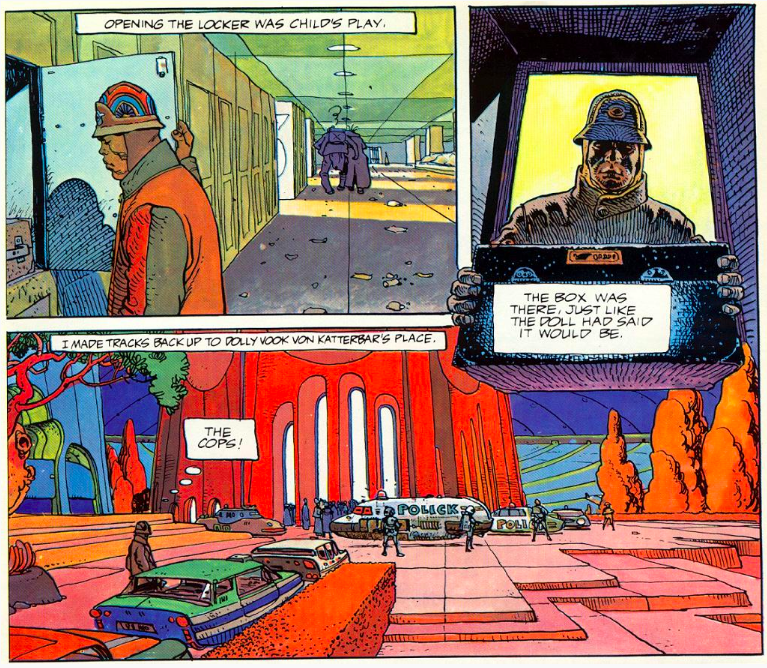
Ale­jan­dro Jodor­owsky may nev­er have made his film adap­ta­tion of Frank Her­bert’s Dune, but plen­ty came out of the attempt — includ­ing, one might well argue, Blade Run­ner. Mak­ing that still huge­ly influ­en­tial adap­ta­tion of Philip K. Dick­’s Do Androids Dream of Elec­tric Sheep?, Rid­ley Scott and his col­lab­o­ra­tors looked to a few key visu­al sources, one of them a two-part short sto­ry in com­ic form called “The Long Tomor­row.”

Illus­trat­ed by none oth­er than French artist Mœbius, one of the rich­est visu­al imag­i­na­tions of our time, it tells the futur­is­tic hard-boiled sto­ry of a pri­vate detec­tive in a dense, ver­ti­cal under­ground city filled with androids, row­dy bars, assas­sins, and fly­ing cars. “I’m a con­fi­den­tial nose,” says the pro­tag­o­nist by way of intro­duc­tion. “My office is on the 97th lev­el. Club’s the name, Pete Club.”

Then comes the fate­ful piece of nar­ra­tion that begins any detec­tive sto­ry worth its salt: “It start­ed out a day like any oth­er day.” But by the end of that day, Club has tak­en a job from a clas­sic dame in need, fend­ed off both a four-armed thug and a hired assas­sin, slain an alien mon­ster with whom he finds him­self in bed, and recov­ered the pres­i­den­t’s miss­ing brain.

The sto­ry was writ­ten writ­ten by Dan O’Ban­non, then known main­ly for the film Dark Star, a sci­ence-fic­tion com­e­dy he’d made with his Uni­ver­si­ty of South­ern Cal­i­for­nia class­mate John Car­pen­ter. On the strength of that, Jodor­owsky had brought him onto Dune to work on its spe­cial effects, just as he’d brought Mœbius on to cre­ate its sto­ry­boards and con­cept art. With noth­ing to do before shoot­ing began — which it nev­er did — O’Ban­non first drew “The Long Tomor­row” him­self as a way of keep­ing busy. Mœbius took one look at it and imme­di­ate­ly saw its promise.

The French may have coined the term film noir, but this ear­ly work of future noir ben­e­fit­ed from hav­ing an Amer­i­can writer. “When Euro­peans try this kind of par­o­dy, it is nev­er entire­ly sat­is­fac­to­ry,” Mœbius writes in the intro­duc­tion to the book ver­sion of “The Long Tomor­row.” “The French are too French, the Ital­ians are too Ital­ian … so, under my nose was a pas­tiche that was more orig­i­nal than the orig­i­nals.” It also, with Mœbius’ art, laid the visu­al ground­work for gen­er­a­tions of sci-fi sto­ries to come.

“The way Neu­ro­mancer-the-nov­el ‘looks’ was influ­enced in large part by some of the art­work I saw in  Heavy Met­al,” said William Gib­son, refer­ring to the Eng­lish ver­sion of Métal hurlant, the mag­a­zine that pop­u­lar­ized Mœbius’ work. (O’Ban­non also worked on the ani­mat­ed Heavy Met­al anthol­o­gy film, released in 1981.) But per­haps Rid­ley Scott, who start­ed work­ing with the artist on 1979’s O’Ban­non-script­ed Alien, described the influ­ence of Mœbius’ art on our visions of the future best: “You see it every­where, it runs through so much you can’t get away from it.” In a cul­tur­al sense, all of us live in Pete Club’s city now.

via Dan­ger­ous Minds

Relat­ed Con­tent:

Métal hurlant: The Huge­ly Influ­en­tial French Com­ic Mag­a­zine That Put Moe­bius on the Map & Changed Sci-Fi For­ev­er

Mœbius & Jodorowsky’s Sci-Fi Mas­ter­piece, The Incal, Brought to Life in a Tan­ta­liz­ing Ani­ma­tion

Moe­bius’ Sto­ry­boards & Con­cept Art for Jodorowsky’s Dune

In Search of Mœbius: A Doc­u­men­tary Intro­duc­tion to the Inscrutable Imag­i­na­tion of the Late Com­ic Artist Mœbius

The Blade Run­ner Sketch­book Fea­tures The Orig­i­nal Art of Syd Mead & Rid­ley Scott (1982)

The 14-Hour Epic Film, Dune, That Ale­jan­dro Jodor­owsky, Pink Floyd, Sal­vador Dalí, Moe­bius, Orson Welles & Mick Jag­ger Nev­er Made

Based in Seoul, Col­in Mar­shall writes and broad­casts on cities and cul­ture. His projects include the book The State­less City: a Walk through 21st-Cen­tu­ry Los Ange­les and the video series The City in Cin­e­ma. Fol­low him on Twit­ter at @colinmarshall or on Face­book.

Margaret Atwood Offers a New Online Class on Creative Writing

FYI: If you sign up for a Mas­ter­Class course by click­ing on the affil­i­ate links in this post, Open Cul­ture will receive a small fee that helps sup­port our oper­a­tion.

FYI: Back in July, Col­in Mar­shall high­light­ed an online writ­ing course being devel­oped by Mar­garet Atwood, the author of The Hand­maid­’s Tale, Cat’s Eye, Alias Grace, and The Blind Assas­sin. As a quick fol­low up, it’s worth men­tion­ing that Atwood’s cre­ative writ­ing course has now gone live.

You can take this class by sign­ing up for a Mas­ter­Class’ All Access Pass. The All Access Pass will give you instant access to this course and 85 oth­ers for a 12-month peri­od.

If you would like to sign up for Open Culture’s free email newslet­ter, please find it here. It’s a great way to see our new posts, all bun­dled in one email, each day.

If you would like to sup­port the mis­sion of Open Cul­ture, con­sid­er mak­ing a dona­tion to our site. It’s hard to rely 100% on ads, and your con­tri­bu­tions will help us con­tin­ue pro­vid­ing the best free cul­tur­al and edu­ca­tion­al mate­ri­als to learn­ers every­where. You can con­tribute through Pay­Pal, Patre­on, and Ven­mo (@openculture). Thanks!

Relat­ed Con­tent:

An Ani­mat­ed Mar­garet Atwood Explains How Sto­ries Change with Tech­nol­o­gy

Mal­colm Glad­well Teach­ing His First Online Course: A Mas­ter Class on How to Turn Big Ideas into Pow­er­ful Sto­ries

Ursu­la Le Guin Gives Insight­ful Writ­ing Advice in Her Free Online Work­shop

100 Great Sci-Fi Sto­ries by Women Writ­ers (Read 20 for Free Online)

Annie Lei­bovitz Teach­es Pho­tog­ra­phy in Her First Online Course

Josh Jones is a writer and musi­cian based in Wash­ing­ton, DC. Fol­low him at @jdmagness

Nirvana Refuses to Fake It on Top of the Pops, Gives a Big “Middle Finger” to the Tradition of Bands Miming on TV (1991)

The bet­ter-safe-than-sor­ry approach to musi­cians pre­tend­ing to play on TV while view­ers hear a pre-record­ed track seems like the antithe­sis of rock and roll. Yet since the ear­li­est days of The Ed Sul­li­van Show, audi­ences have accept­ed the con­ven­tion with­out com­plaint. When the fak­ery unin­ten­tion­al­ly fails, reac­tions tend toward mock­ery, not out­rage. Crit­ics rail, the UK’s Musician’s Union has often balked, but bands and fans play along, every­one oper­at­ing under the pre­sump­tion that the banal cha­rade is harm­less.

Leave it to those spoil­sports Nir­vana to refuse this pleas­ant fic­tion on their Top of the Pops appear­ance in 1991.

Like Amer­i­can coun­ter­parts from Amer­i­can Band­stand to Soul Train, Britain’s Top of the Pops had a long tra­di­tion: “For over 40 years,” writes Rolling Stone, “every­one from the Rolling Stones to Madon­na to Bey­on­cé stopped by… to per­form their lat­est sin­gle as either a lip-sync or sing along with a pre­re­cord­ed back­ing track.” All musi­cians were expect­ed to mime play­ing their instru­ments, a com­i­cal sight, for instance, in appear­ances by The Smiths, in which view­ers hear John­ny Marr’s mul­ti­ple over­dubbed gui­tars but see him play­ing unac­com­pa­nied.

The Smiths approached their Top of the Pops appear­ances with tongue-in-cheek irrev­er­ence. At their 1983 debut per­for­mance, Mor­ris­sey mimed “This Charm­ing Man” using a fern as a micro­phone. Still, the band game­ly pre­tend­ed to play, like every­one else did. But when Nir­vana hit the TOTP stage, with Cobain singing to a back­ing track of “Smells Like Teen Spir­it,” they wouldn’t observe any of the niceties. YouTube chan­nel That Time Punk Rocked writes:

Cobain opts for slow, exag­ger­at­ed strums dur­ing the few times he touch­es his gui­tar, sings an octave low­er (he lat­er con­firmed he was imi­tat­ing Mor­risey from The Smiths), and attempts to eat his micro­phone at one point. He also changes some of the lyrics, exchang­ing the open­ing line “load up on guns, bring your friends,” for “load up on drugs, kill your friends.” Dave Grohl hits cym­bals and skins at ran­dom, doing more danc­ing than drum­ming. Krist Novosel­ic even swings his bass above his head. And despite these ridicu­lous antics, the crowd goes absolute­ly insane.

Maybe the crowd went wild because of those ridicu­lous antics, or maybe no one even noticed, as when a crowd of thou­sands in Argenti­na hard­ly seemed to notice when Nir­vana open­ly mocked them after the audi­ence abused their open­ing act. This may be one bur­den of star­dom Cobain came to know too well—protests reg­is­ter as per­for­mance and stick­ing it the man onstage just makes the man more mon­ey. But the video remains “one of the great­est mid­dle fin­gers” to musi­cal mim­ing cap­tured on camera—recommended view­ing for every salty young band prepar­ing for their first TV gig.

Relat­ed Con­tent:

Nir­vana Plays an Angry Set & Refus­es to Play ‘Smells Like Teen Spir­it’ After the Crowd Hurls Sex­ist Insults at the Open­ing Act (Buenos Aires, 1992)

Watch Nir­vana Per­form “Smells Like Teen Spir­it,” Just Two Days After the Release of Nev­er­mind (Sep­tem­ber 26, 1991)

The First Live Per­for­mance of Nirvana’s “Smells Like Teen Spir­it” (1991)

Josh Jones is a writer and musi­cian based in Durham, NC. Fol­low him at @jdmagness

Frida Kahlo’s Passionate Love Letters to Diego Rivera

The truth young ide­al­is­tic lovers learn: rela­tion­ships are messy and complicated—filled with dis­ap­point­ments, mis­un­der­stand­ings, betray­als great and small. They fall apart and some­times can­not be put back togeth­er. It’s easy to grow cyn­i­cal and bit­ter. Yet, as James Bald­win famous­ly wrote, “you think your pain and your heart­break are unprece­dent­ed in the his­to­ry of the world, but then you read.” You read, that is, the life sto­ries and let­ters of writ­ers and artists who have expe­ri­enced out­sized roman­tic bliss and tor­ment, and who some­how became more pas­sion­ate­ly alive the more they suf­fered.

When it comes to per­son­al suf­fer­ing, Fri­da Kahlo’s biog­ra­phy offers more than one per­son could seem to bear. Already dis­abled by polio at a young age, she found her life for­ev­er changed at 18 when a bus acci­dent sent an iron rod through her body, frac­tur­ing mul­ti­ple bones, includ­ing three ver­te­brae, pierc­ing her stom­ach and uterus. Recall­ing the old Gre­go­ri­an hymn, Kahlo’s friend Mex­i­can writer Andrés Hen­e­strosa remarked that she “lived dying”—in near con­stant pain, endur­ing surgery after surgery and fre­quent hos­pi­tal­iza­tions.

In the midst of this pain, she found love with her men­tor and hus­band Diego Rivera—and, it must be said, with many oth­ers. Kahlo, writes Alexxa Got­thardt at Art­sy, “was a pro­lif­ic lover: Her list of romances stretched across decades, con­ti­nents, and sex­es. She was said to have been inti­mate­ly involved with, among oth­ers, Marx­ist the­o­rist Leon Trot­sky, dancer Josephine Bak­er, and pho­tog­ra­ph­er Nick­o­las Muray. How­ev­er, it was her obses­sive, abid­ing rela­tion­ship with fel­low painter Diego Rivera—for whom she’d har­bored a pas­sion­ate crush since she laid eyes on him at age 15—that affect­ed Kahlo most pow­er­ful­ly.”

Her let­ters to Rivera—himself a pro­lif­ic extra-mar­i­tal lover—stretch “across the twen­ty-sev­en-year span of their rela­tion­ship,” writes Maria Popo­va; they “bespeak the pro­found and abid­ing con­nec­tion the two shared, brim­ming with the seething caul­dron of emo­tion with which all ful­ly inhab­it­ed love is filled: ela­tion, anguish, devo­tion, desire, long­ing, joy.”

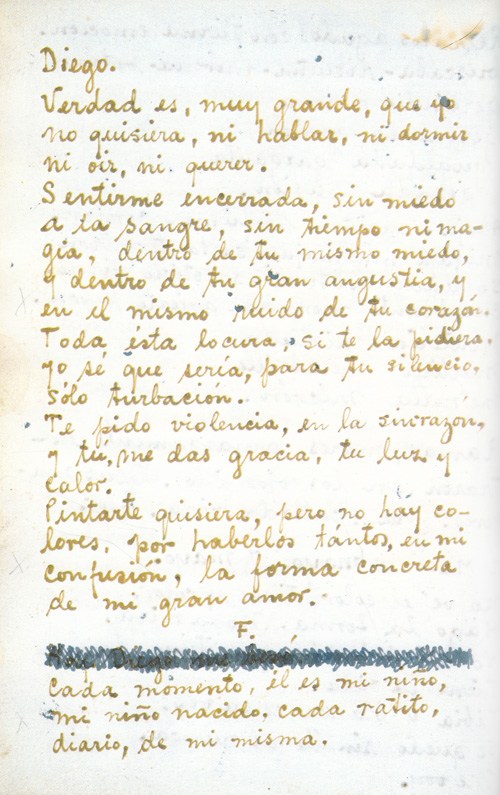
Diego.
Truth is, so great, that I wouldn’t like to speak, or sleep, or lis­ten, or love. To feel myself trapped, with no fear of blood, out­side time and mag­ic, with­in your own fear, and your great anguish, and with­in the very beat­ing of your heart. All this mad­ness, if I asked it of you, I know, in your silence, there would be only con­fu­sion. I ask you for vio­lence, in the non­sense, and you, you give me grace, your light and your warmth. I’d like to paint you, but there are no col­ors, because there are so many, in my con­fu­sion, the tan­gi­ble form of my great love.

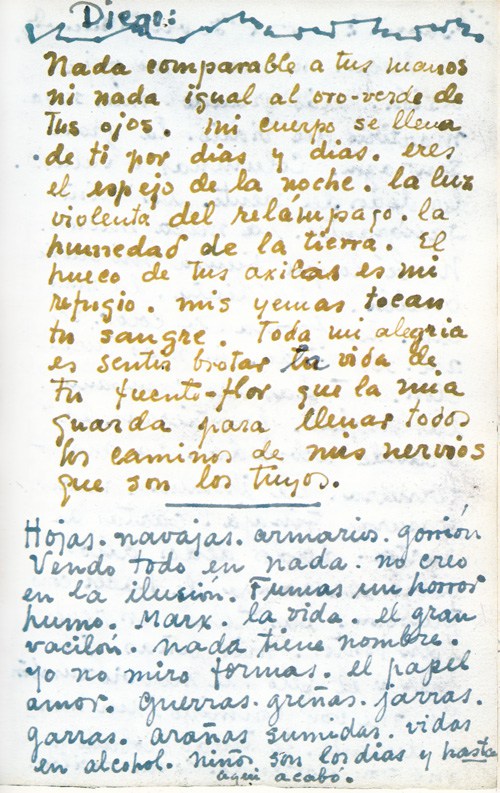
So begins the let­ter pic­tured at the top. In anoth­er, equal­ly pas­sion­ate and poet­ic let­ter, pic­tured fur­ther up, she writes:

Noth­ing com­pares to your hands, noth­ing like the green-gold of your eyes. My body is filled with you for days and days. you are the mir­ror of the night. the vio­lent flash of light­ning. the damp­ness of the earth. The hol­low of your armpits is my shel­ter. my fin­gers touch your blood. All my joy is to feel life spring from your flower-foun­tain that mine keeps to fill all the paths of my nerves which are yours.

Kahlo and Rivera fell in love in 1928, when she asked him to look at her paint­ings. Over her mother’s objec­tions, they mar­ried the fol­low­ing year. After ten tumul­tuous years, they divorced in 1939, then remar­ried in 1940 and stayed part­nered until her death in 1954. Over these years, she poured out her emo­tions in let­ters, many, like those above, first writ­ten in her illus­trat­ed diary. Let­ters to and from her many lovers have also just emerged in a trove of per­son­al arti­facts, recent­ly lib­er­at­ed from a bath­room at Casa Azul where they had been kept under lock and key at River­a’s behest.

Both artists’ many affairs caused tremen­dous pain and “cre­at­ed rifts between them per­son­al­ly,” notes Katy Fal­lon at Broad­ly, although “their rela­tion­ship has been mythol­o­gized past recog­ni­tion,” in the way of so many oth­er famous cou­ples. In the most egre­gious betray­al, Rivera even slept with Kahlo’s younger sis­ter Cristi­na, his favorite mod­el, an act that inspired Frida’s 1937 paint­ing Mem­o­ry, the Heart, a self-por­trait in which she stands with a met­al rod pierc­ing her chest, her hands seem­ing­ly ampu­tat­ed, face expres­sion­less. We learn the wrong lessons from roman­ti­ciz­ing “every­thing” about Fri­da and Diego’s life, Pat­ti Smith sug­gests in her trib­ute to Kahlo’s love let­ters. But there is also dan­ger in pass­ing judg­ment.

“I don’t look at these two as mod­els of behav­ior,” Smith says, but “the most impor­tant les­son… isn’t their indis­cre­tions and love affairs but their devo­tion. Their iden­ti­ties were mag­ni­fied by the oth­er. They went through their ups and downs, part­ed, came back togeth­er, to the end of their lives.” In a 1935 let­ter to Rivera, read by pianist Mona Golabek above, Kahlo for­gives his affairs, call­ing them “only flir­ta­tions…. At bot­tom, you and I love each oth­er dear­ly, and thus go through adven­tures with­out num­bers, beat­ings on doors, impre­ca­tions, insults, inter­na­tion­al claims. Yet, we will always love each oth­er…. All the ranges I have gone through have served only to make me under­stand in the end that I love you more than my own skin.”

Read many more excerpts from Frida’s let­ters to Diego at Brain Pick­ings.

Relat­ed Con­tent:   

Vis­it the Largest Col­lec­tion of Fri­da Kahlo’s Work Ever Assem­bled: 800 Arti­facts from 33 Muse­ums, All Free Online

Artists Fri­da Kahlo & Diego Rivera Vis­it Leon Trot­sky in Mex­i­co: Vin­tage Footage from 1938

Rare Pho­tos of Fri­da Kahlo, Age 13–23

Josh Jones is a writer and musi­cian based in Durham, NC. Fol­low him at @jdmagness

« Go BackMore in this category... »
Quantcast