Classic Songs by Bob Dylan Re-Imagined as Pulp Fiction Book Covers: “Like a Rolling Stone,” “A Hard Rain’s A‑Gonna Fall” & More

Screen­writer Todd Alcott has been very busy since we intro­duced you to his hilar­i­ous Mid-Cen­tu­ry Pulp Fic­tion Cov­er project last month.

To restate what should be obvi­ous from the sec­ond, if not first glance, none of Alcott’s titles are real. His aes­thet­i­cal­ly con­vinc­ing mock-ups pay trib­ute to favorite songs by favorite artists: David Bowie, Talk­ing Heads, Joy Divi­sion, Elvis Costel­lo…

The start of the school year finds him in a Dylan mood, ren­der­ing some of his best known hits in a vari­ety of pulp genre for­mats:

Bob Dylan is the per­fect sub­ject for this project, because his work has always been all about quo­ta­tion and repur­pos­ing. From the very begin­ning, he took old songs, changed the lyrics and called them his own…. And it’s not just the melodies, he’s also not shy about lift­ing phras­es and whole lines from oth­er sources. One of the fun things about being a Bob Dylan fan is being able to spot the influ­ences. It’s not just lift­ing lines from clas­sic blues songs, where we don’t real­ly know who “wrote” the orig­i­nals, it’s real, iden­ti­fi­able, copy­right-pro­tect­ed mate­r­i­al. And you nev­er know where it’s going to come from, a book about the Yakuza from Japan, a cook­book, an old Time Mag­a­zine arti­cle, or 1940s noir pic­tures.

I was watch­ing a clas­sic Robert Mitchum noir, Out of the Past, and Mitchum is talk­ing to some­one, and they men­tion San Fran­cis­co, and Mitchum says “I always liked San Fran­cis­co, I was there for a par­ty once.” 

And I was like “Wait, what?” Because that’s a line from a real­ly obscure Dylan song, “Maybe Some­day,” off his album Knocked-Out Loaded. 

I was like “Wait, why did that line stick in Dylan’s mind? Why did he decide to quote that? Is it just the way Mitchum says it? What hap­pened there?” And sud­den­ly a song I had­n’t thought about much became a lot more inter­est­ing.

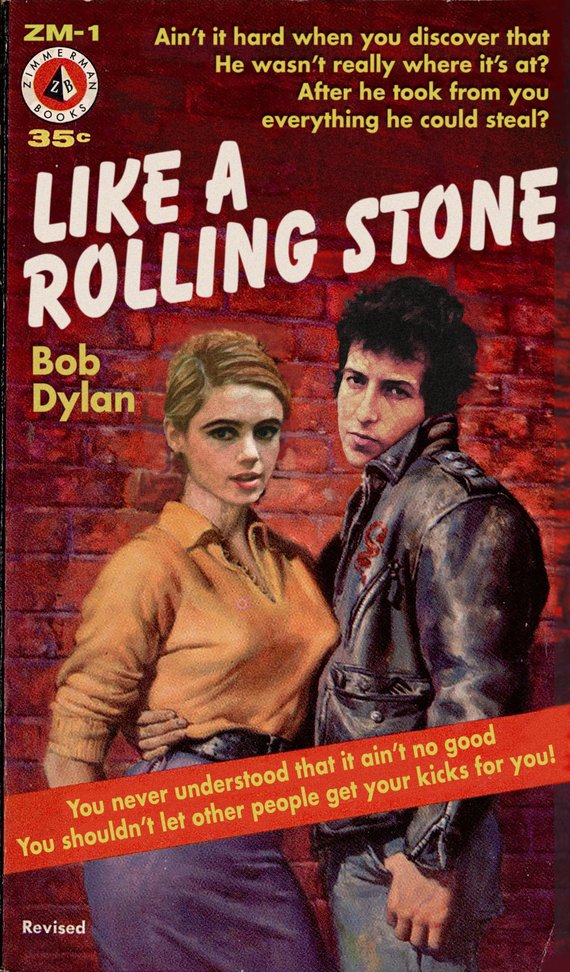
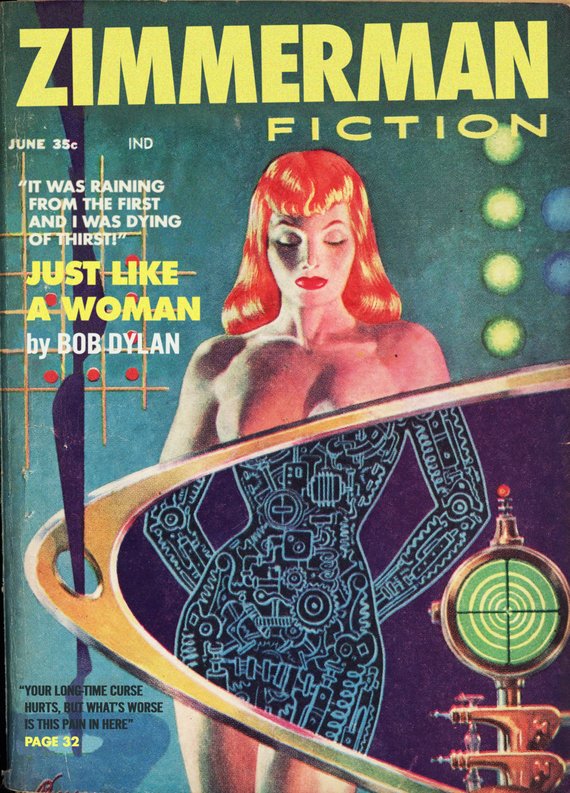
So for my Dylan cov­ers, I try to car­ry on that tra­di­tion of tak­ing quotes and repur­pos­ing them. So “Just Like a Woman” becomes a sto­ry in a sci­ence-fic­tion pulp, and “Like a Rolling Stone” becomes an expose on juve­nile delin­quen­cy, and “Rainy Day Women” becomes a post-apoc­a­lyp­tic adven­ture sto­ry. 

In a way, it’s what this project is all about, tak­ing dis­card­ed pieces of cul­ture and stick­ing them back togeth­er with new ref­er­ences to make them breathe again.

Just Like a Woman”’s lyrics have nev­er sat par­tic­u­lar­ly well with fem­i­nists. (“There’s no more com­plete cat­a­logue of sex­ist slurs,” author Mar­i­on Meade wrote in The New York Times.)

I think it’s fair to say that Alcott’s bux­om flame-haired cyborg leans in to that crit­i­cism. The cov­er of this faux sci­ence fic­tion mag also harkens back to a time when the depic­tion of sexy female robots left some­thing to the imag­i­na­tion.

From a design stand­point, it’s a great illus­tra­tion of the heavy lift­ing a sin­gle well-cho­sen punc­tu­a­tion change can do.

The magazine’s title is an extra gift to Dylan fans.
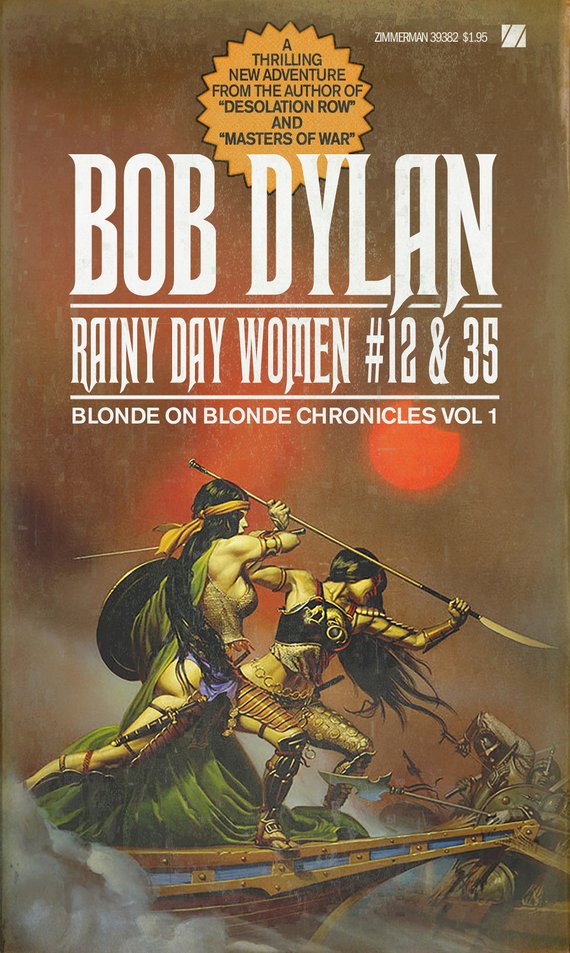
The Blonde-on-Blonde Chron­i­cles con­tin­ue with Rainy Day Women #12 & 35. Does it mat­ter that the breast-plat­ed, and for all prac­ti­cal pur­pos­es bot­tom­less war­riors are raven tressed?

Only if tongue’s not firm­ly in cheek.

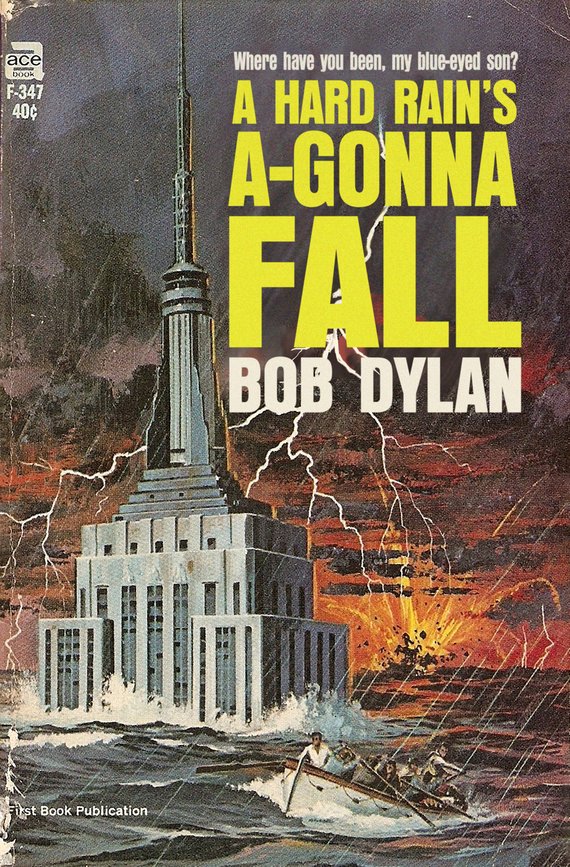
The night­mare vision of Dylan’s sev­en-minute protest song “A Hard Rain’s A‑Gonna Fall” makes for a smooth tran­si­tion to a dis­as­ter nov­el of the 1970s.

In a 1963 radio inter­view with author Studs Terkel, Dylan assert­ed that the song wasn’t direct­ly relat­ed to the nuclear fears all-per­va­sive at the time:

It’s not the fall­out rain. It isn’t that at all. The hard rain’s gonna fall is in the last verse…That means all the lies, you know, that peo­ple get told on their radios and in news­pa­pers. All you have to think for a minute, you know. Try­ing to take people’s brains away, you know. Which maybe has been done already. I hate to think it’s been done. All the lies, which I con­sid­er poi­son.

This writer can think of anoth­er rea­son cit­i­zens might find them­selves fight­ing for their lives in a row­boat lev­el with the very tip­py top of the Empire State Build­ing. So, I sus­pect, can Alcott.

Or maybe we’re wrong and cli­mate change is noth­ing but fake news.

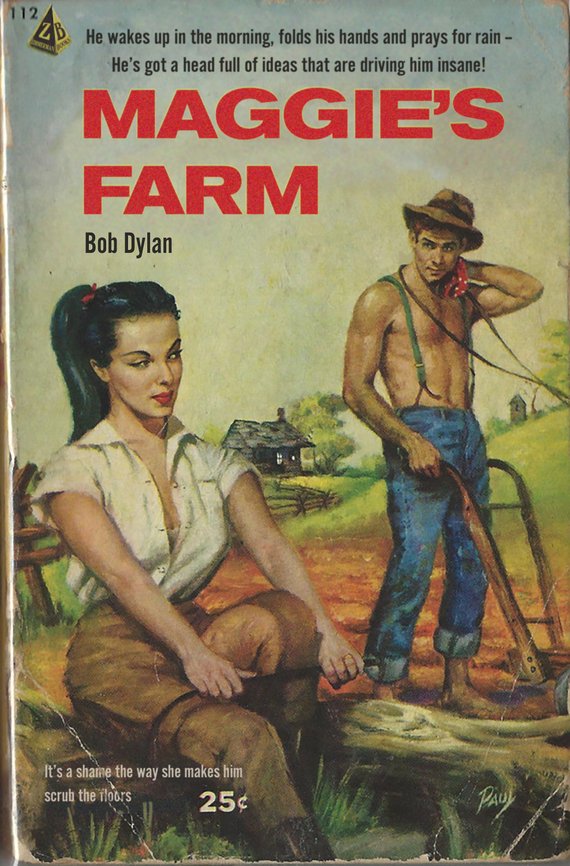
Alcott gets some mileage out of anoth­er rain-based lyric on Maggie’s Farm, a steamy rur­al romp whose creased cov­er is also part and par­cel of the genre.

Who’s that young punk on the cov­er of Like a Rolling Stone? Beats me, but the girl’s a dead ringer for Warhol super­star, Edie Sedg­wick, the pur­port­ed inspi­ra­tion for the song that shares the novel’s name. Ms. Sedgwick’s real life fig­ure was much less volup­tuous, but if the genre cov­ers that sparked this project demon­strate any­thing, it’s that sex sells.

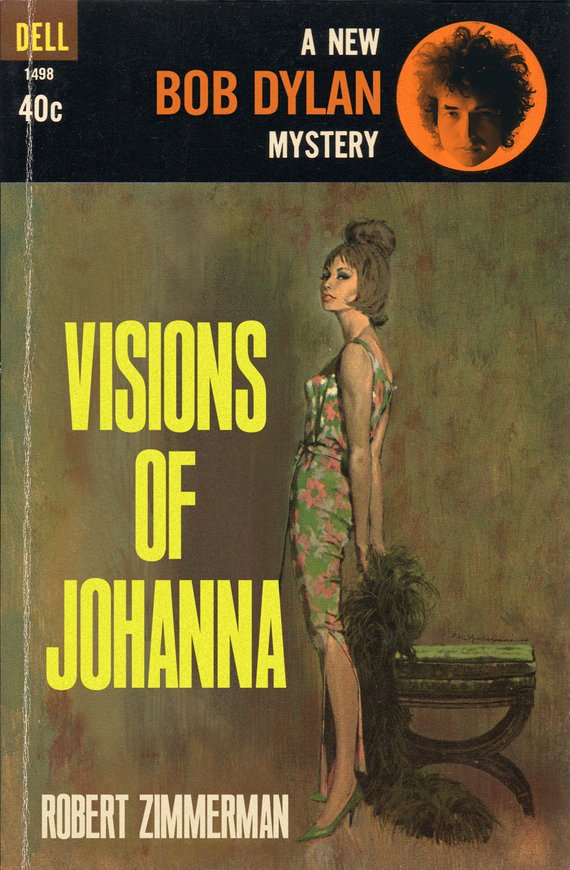
Visions of Johan­na is pos­i­tive­ly under­stat­ed in com­par­i­son. While many pulp authors toiled in obscu­ri­ty, let us pre­tend that Nobel Prize win­ner and (faux) pulp-nov­el­ist Dylan wouldn’t have. Espe­cial­ly if he had a series like the pseu­do­ny­mous Brett Halliday’s pop­u­lar Mike Shayne mys­ter­ies. At that lev­el, the cov­er wouldn’t real­ly need quotes.

Though what harm would there be? There’s plen­ty of neg­a­tive space here. Read­ers, which line would you splash across the cov­er if you were this prankster, Alcott?

Ain’t it just like the night to play tricks when you’re tryin’ to be so qui­et?

We sit here strand­ed, though we’re all doin’ our best to deny it

And Louise holds a hand­ful of rain, temptin’ you to defy it

Lights flick­er from the oppo­site loft

In this room the heat pipes just cough

The coun­try music sta­tion plays soft

But there’s noth­ing, real­ly noth­ing to turn off

Just Louise and her lover so entwined

And these visions of Johan­na that con­quer my mind

In the emp­ty lot where the ladies play blindman’s bluff with the key chain

And the all-night girls they whis­per of escapades out on the “D” train

We can hear the night watch­man click his flash­light

Ask him­self if it’s him or them that’s real­ly insane

Louise, she’s all right, she’s just near

She’s del­i­cate and seems like the mir­ror

But she just makes it all too con­cise and too clear

That Johanna’s not here

The ghost of ’lec­tric­i­ty howls in the bones of her face

Where these visions of Johan­na have now tak­en my place

Now, lit­tle boy lost, he takes him­self so seri­ous­ly

He brags of his mis­ery, he likes to live dan­ger­ous­ly

And when bring­ing her name up

He speaks of a farewell kiss to me

He’s sure got a lot­ta gall to be so use­less and all

Mut­ter­ing small talk at the wall while I’m in the hall

How can I explain?

Oh, it’s so hard to get on

And these visions of Johan­na, they kept me up past the dawn

Inside the muse­ums, Infin­i­ty goes up on tri­al

Voic­es echo this is what sal­va­tion must be like after a while

But Mona Lisa mus­ta had the high­way blues

You can tell by the way she smiles

See the prim­i­tive wall­flower freeze

When the jel­ly-faced women all sneeze

Hear the one with the mus­tache say, “Jeeze

I can’t find my knees”

Oh, jew­els and binoc­u­lars hang from the head of the mule

But these visions of Johan­na, they make it all seem so cru­el

The ped­dler now speaks to the count­ess who’s pre­tend­ing to care for him

Sayin’, “Name me some­one that’s not a par­a­site and I’ll go out and say a prayer for him”

But like Louise always says

“Ya can’t look at much, can ya man?”

As she, her­self, pre­pares for him

And Madon­na, she still has not showed

We see this emp­ty cage now cor­rode

Where her cape of the stage once had flowed

The fid­dler, he now steps to the road

He writes ev’rything’s been returned which was owed

On the back of the fish truck that loads

While my con­science explodes

The har­mon­i­cas play the skele­ton keys and the rain

And these visions of Johan­na are now all that remain

You can see more of Todd Alcott’s Mid-Cen­tu­ry Pulp Fic­tion Cov­er project, and pick up archival qual­i­ty prints from his Etsy shop.

Relat­ed Con­tent:

Songs by David Bowie, Elvis Costel­lo, Talk­ing Heads & More Re-Imag­ined as Pulp Fic­tion Book Cov­ers

Bob Dylan Pota­to Chips, Any­one?: What They’re Snack­ing on in Chi­na

Bob Dylan Hates Me: An Ani­ma­tion

Ayun Hal­l­i­day - no rela­tion to Brett — is an author, illus­tra­tor, the­ater mak­er and Chief Pri­ma­tol­o­gist of the East Vil­lage Inky zine.  Join her in NYC on Mon­day, Sep­tem­ber 24 for anoth­er month­ly install­ment of her book-based vari­ety show, Necro­mancers of the Pub­lic Domain. Fol­low her @AyunHalliday.

R.E.M. Reveals the Secrets Behind Their Emotionally-Charged Songs: “Losing My Religion” and “Try Not to Breathe”

Peo­ple lose their reli­gion all the time. It hap­pens in all sorts of ways. And R.E.M.’s 1991 song “Los­ing My Reli­gion” has spo­ken to so many in the midst of these expe­ri­ences that we might won­der if singer/songwriter Michael Stipe had a sim­i­lar life change when he wrote those lyrics. Not so much, he says above in an inter­view with Dutch sta­tion Top 2000 a gogo. “What the song is about has noth­ing to with reli­gion,” he says.

The lyric comes from an old South­ern col­lo­qui­al­ism mean­ing that some­thing so upset­ting has hap­pened “that you might lose your reli­gion.” Stipe used that old-time notion as a metaphor for unre­quit­ed love, a dif­fer­ent kind of faith, one he describes in painful­ly ten­ta­tive terms: “hold­ing back, then reach­ing for­ward, then pulling back again, then reach­ing for­ward again.”

He explains anoth­er of the song’s ambi­gu­i­ties hid­den with­in the ellip­ti­cal lyrics: “You don’t ever real­ly know if the per­son that I’m reach­ing out for is aware of me, if they even know that I exist.” It’s the heady tur­moil of a roman­tic crush raised to the heights of saint­ly suf­fer­ing. A brood­ing, alt-rock ver­sion of love songs like “Earth Angel.” Giv­en the role of devo­tion in so much reli­gious prac­tice, there’s no rea­son the song can’t still be about los­ing one’s reli­gion for lis­ten­ers, but now we know what Stipe him­self had in mind.

Some oth­er fun facts we learn about this huge hit: Stipe record­ed the song almost naked and kind of pissed-off—he had pushed to deliv­er his vocals in one emo­tion­al take, but the stu­dio engi­neer seemed half-asleep. And his awk­ward, angu­lar dance in the oh-so-90s video direct­ed by Tarsem Singh, above? He pulled his inspi­ra­tion from Sinead O’Connor’s St. Vitus dance in 1990s’ “The Emperor’s New Clothes” video and—no surprise—from David Byrne’s “riv­et­ing” herky-jerky moves.

While the record com­pa­ny saw the song’s mass appeal, bassist Mike Mills express­es his ini­tial sur­prise at their choice of “Los­ing My Reli­gion” as Out of Time’s first sin­gle: “That’s a great idea. It makes no sense at all, it’s 5 min­utes long, it has no cho­rus, and a man­dolin is the lead instru­ment. It’s per­fect for R.E.M. because it flouts all the rules.” This peri­od saw the band fur­ther devel­op­ing its moody down­beat folk side, yet the album that pro­duced this song also gave us “Shiny Hap­py Peo­ple,” the pop­pi­est, most upbeat song R.E.M.—and maybe any band—had ever record­ed, a true tes­ta­ment to their emo­tion­al range.

The fol­low­ing year, Auto­mat­ic for the Peo­ple came out, draw­ing on mate­r­i­al writ­ten dur­ing the Out of Time ses­sions and again fea­tur­ing two sin­gles that vast­ly con­trast­ed in tone, maudlin tear­jerk­er “Every­body Hurts” and the cel­e­bra­to­ry Andy Kauf­man trib­ute “Man on the Moon.” Anoth­er song from that album that didn’t get as much atten­tion, “Try Not to Breath,” hear­kens back to a much ear­li­er R.E.M. folk song, the Civ­il War-themed “Swan Swan H” from Life’s Rich Pageant.

As we hear the band explain above in an episode of Song Exploder, the song began its life on a Civ­il War-era instru­ment, the dul­cimer. Then its son­ic influ­ences expand­ed to include two of Peter Buck­’s favorite musi­cal gen­res, surf rock and spaghet­ti west­ern. The episode con­tains many more fas­ci­nat­ing insid­er insights from R.E.M. about “Try Not to Breathe,” which may be one of the sad­dest songs they’ve ever writ­ten, a song about choos­ing to die rather than suf­fer.

Hear the song’s orig­i­nal demo and ref­er­ences to Blade Run­ner, get a glimpse into Stipe’s visu­al song­writ­ing process, and learn the very per­son­al inspi­ra­tion from his fam­i­ly his­to­ry for lyrics like “baby don’t shiv­er now, why do you shiv­er now?” Unlike “Los­ing My Reli­gion,” this song does, in some ways, pull musi­cal­ly and emo­tion­al­ly from Stipe’s reli­gious back­ground.

via Laugh­ing Squid

Relat­ed Con­tent:

R.E.M.’s “Los­ing My Reli­gion” Reworked from Minor to Major Scale

Why R.E.M.’s 1991 Out of Time May Be the “Most Polit­i­cal­ly Impor­tant Album” Ever

R.E.M Plays “Radio Free Europe” on Their Nation­al Tele­vi­sion Debut on The David Let­ter­man Show (1983)

Two Very Ear­ly Con­cert Films of R.E.M., Live in ‘81 and ‘82

Josh Jones is a writer and musi­cian based in Durham, NC. Fol­low him at @jdmagness

MIT Students Solve the Spaghetti Breaking Mystery That Stumped Richard Feynman

Even thir­ty years after his death, Richard Feyn­man remains one of the most beloved minds in physics in part because of how much atten­tion he paid to things oth­er than physics: draw­ing and paint­ingcrack­ing safes, play­ing the bon­gos, break­ing spaghet­ti. But a physics enthu­si­ast might object, and rea­son­ably so, that all those activ­i­ties actu­al­ly have a great deal to do with physics, giv­en the phys­i­cal phe­nom­e­na they all demon­strate and on which they all depend. In recent years, con­sid­er­able sci­en­tif­ic atten­tion has even gone toward spaghet­ti-break­ing, inspir­ing as it did Feyn­man — and com­put­er sci­en­tist Dan­ny Hillis, who hap­pened to be in the kitchen with him — to pose a long-unan­swer­able ques­tion: How come it always breaks into a mil­lion pieces when you snap it?

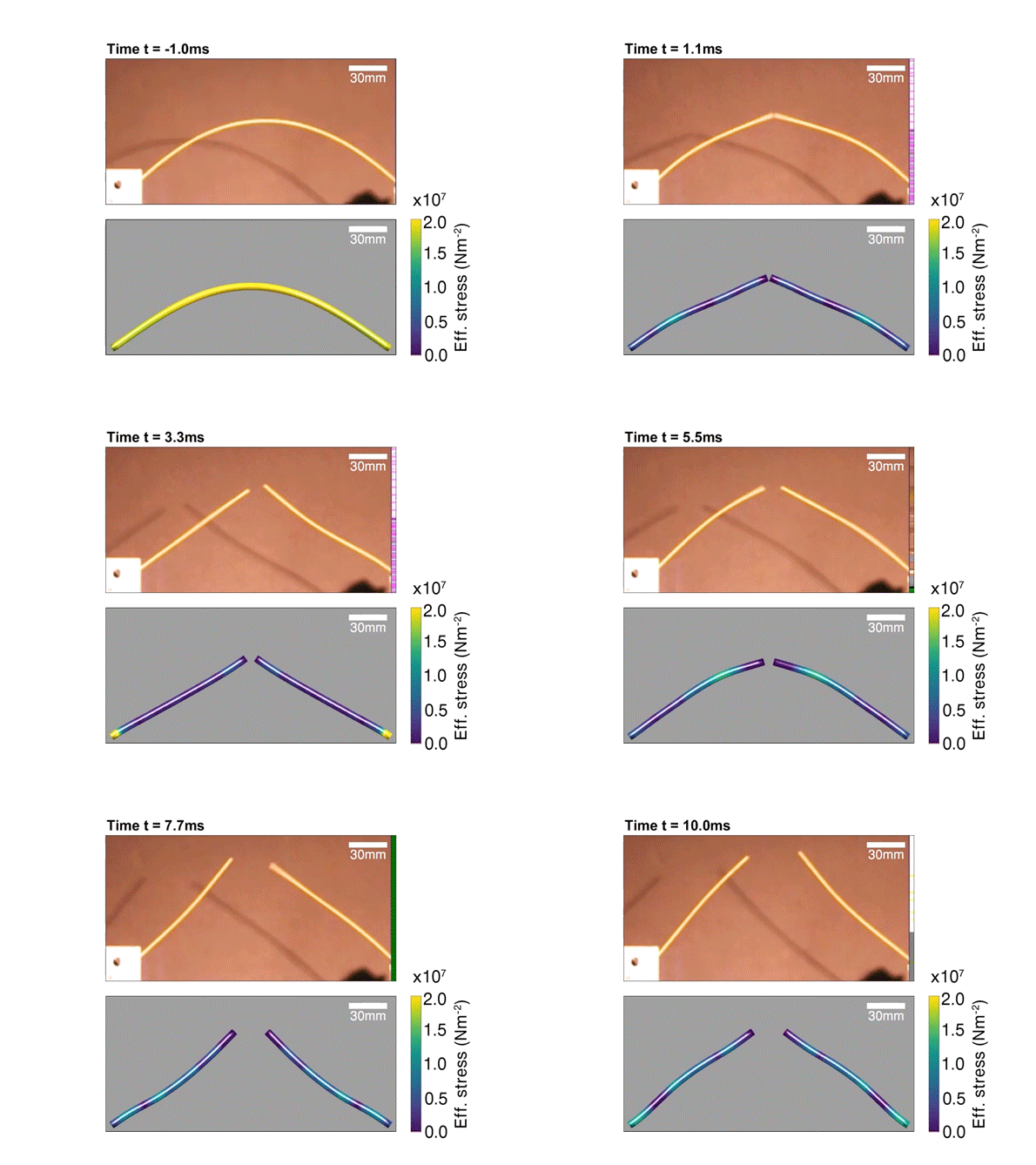
Maybe spaghet­ti does­n’t always break into a mil­lion pieces, exact­ly, but it nev­er breaks in two. Dis­cov­er­ing the secret to a clean two-part break did require a mil­lion of some­thing: a mil­lion frames per sec­ond, specif­i­cal­ly, shot by a cam­era aimed at a pur­pose-built spaghet­ti-break­ing device. The results of the research, a project of stu­dents Ronald Heiss­er and Vishal Patil dur­ing their time at MIT, came out in a paper co-authored by MIT’s Nor­bert Stoop and Uni­ver­sité Aix Mar­seille’s Emmanuel Viller­maux, just pub­lished in the Pro­ceed­ings of the Nation­al Acad­e­my of Sci­ences. The team found, writes MIT News’ Jen­nifer Chu, “that if a stick [of spaghet­ti] is twist­ed past a cer­tain crit­i­cal degree, then slow­ly bent in half, it will, against all odds, break in two.”

As for why spaghet­ti breaks into so many pieces with­out the twist, a ques­tion tak­en on by the Smarter Every Day video just above, French sci­en­tists Basile Audoly and Sebastien Neukirch won the Ig Nobel Prize by fig­ur­ing that out in 2005: “When a stick is bent even­ly from both ends, it will break near the cen­ter, where it is most curved. This ini­tial break trig­gers a ‘snap-back’ effect and a bend­ing wave, or vibra­tion, that fur­ther frac­tures the stick.” If you twist the stick first, “the snap-back, in which the stick will spring back in the oppo­site direc­tion from which it was bent, is weak­ened in the pres­ence of twist. And, the twist-back, where the stick will essen­tial­ly unwind to its orig­i­nal straight­ened con­fig­u­ra­tion, releas­es ener­gy from the rod, pre­vent­ing addi­tion­al frac­tures.”

So now we know. But the fruits of what might strike some as an obses­sive and point­less quest could well fur­ther the sci­ence of frac­tur­ing, which Patil describes to the Wash­ing­ton Post as an out­ward­ly “chaot­ic and ran­dom” process. This research could lead, as Chu writes, to a bet­ter “under­stand­ing of crack for­ma­tion and how to con­trol frac­tures in oth­er rod-like mate­ri­als such as mul­ti­fiber struc­tures, engi­neered nan­otubes, or even micro­tubules in cells.” That’s all a long way from the kitchen, cer­tain­ly, but even the most rev­o­lu­tion­ary advance­ments of knowl­edge grow out of sim­ple curios­i­ty, an impulse felt even in the most mun­dane or friv­o­lous sit­u­a­tions. Richard Feyn­man under­stood that bet­ter than most, hence sub­se­quent gen­er­a­tions of sci­en­tists’ desire to pick up what­ev­er piqued his inter­est — even bro­ken bits of Bar­il­la No. 5.

via MIT News

Relat­ed Con­tent:

The Feyn­man Lec­tures on Physics, The Most Pop­u­lar Physics Book Ever Writ­ten, Is Now Com­plete­ly Online

The Draw­ings & Paint­ings of Richard Feyn­man: Art Express­es a Dra­mat­ic “Feel­ing of Awe”

Learn How Richard Feyn­man Cracked the Safes with Atom­ic Secrets at Los Alam­os

Richard Feyn­man on the Bon­gos

What Ignit­ed Richard Feynman’s Love of Sci­ence Revealed in an Ani­mat­ed Video

A Free Course from MIT Teach­es You How to Speak Ital­ian & Cook Ital­ian Food All at Once

Based in Seoul, Col­in Mar­shall writes and broad­casts on cities and cul­ture. His projects include the book The State­less City: a Walk through 21st-Cen­tu­ry Los Ange­les and the video series The City in Cin­e­ma. Fol­low him on Twit­ter at @colinmarshall or on Face­book.

Leonardo da Vinci’s Earliest Notebooks Now Digitized and Made Free Online: Explore His Ingenious Drawings, Diagrams, Mirror Writing & More

Do a search on the word “poly­math” and you will see an image or ref­er­ence to Leonar­do da Vin­ci in near­ly every result. Many his­tor­i­cal figures—not all of them world famous, not all Euro­peans, men, or from the Ital­ian Renaissance—fit the descrip­tion. But few such record­ed indi­vid­u­als were as fever­ish­ly active, rest­less­ly inven­tive, and aston­ish­ing­ly pro­lif­ic as Leonar­do, who left rid­dles enough for schol­ars to solve for many life­times.

Leonar­do him­self, though world-renowned for his tal­ents in the fine arts, spent more of his time con­ceiv­ing sci­en­tif­ic stud­ies and engi­neer­ing projects. “When he wrote in the ear­ly 1480s to Ludovi­co Sforza, then ruler of Milan, to offer him his ser­vices,” remarks Cather­ine Yvard, Spe­cial Col­lec­tions cura­tor at the Vic­to­ria and Albert Nation­al Art Library, “he adver­tised him­self as a mil­i­tary engi­neer, only briefly men­tion­ing his artis­tic skills at the end of the list.”

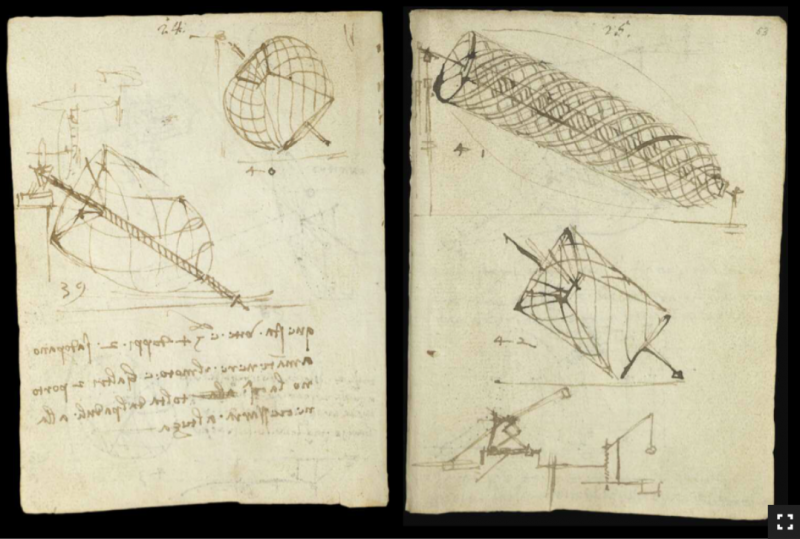
But since so few of his projects were, or could be, real­ized in his life­time, we can only expe­ri­ence them through his most­ly inac­ces­si­ble, and gen­er­al­ly inde­ci­pher­able, note­books, which he began keep­ing after the Duke accept­ed his appli­ca­tion. “None of Leonardo’s pre­de­ces­sors, con­tem­po­raries or suc­ces­sors used paper quite like he did,” notes the Vic­to­ria and Albert Muse­um site, “a sin­gle sheet con­tains an unpre­dictable pat­tern of ideas and inventions—the work­ings of both a design­er and a sci­en­tist.”

Part of the dif­fi­cul­ty of piec­ing his lega­cy togeth­er stems from the fact that his hun­dreds of pages of notes have been dis­trib­uted across sev­er­al insti­tu­tions and pri­vate col­lec­tions, not all of them acces­si­ble to researchers. But ambi­tious dig­i­ti­za­tion projects are eras­ing those bar­ri­ers. We recent­ly fea­tured one, a joint effort of the British Library and Microsoft that brought 570 pages from the Codex Arun­del col­lec­tion to the web. As The Art News­pa­per reports, the Vic­to­ria and Albert has now launched a sim­i­lar endeav­or, dig­i­tiz­ing the Codex Forster note­books, so named because they came from the pri­vate col­lec­tion of John Forster in 1876.

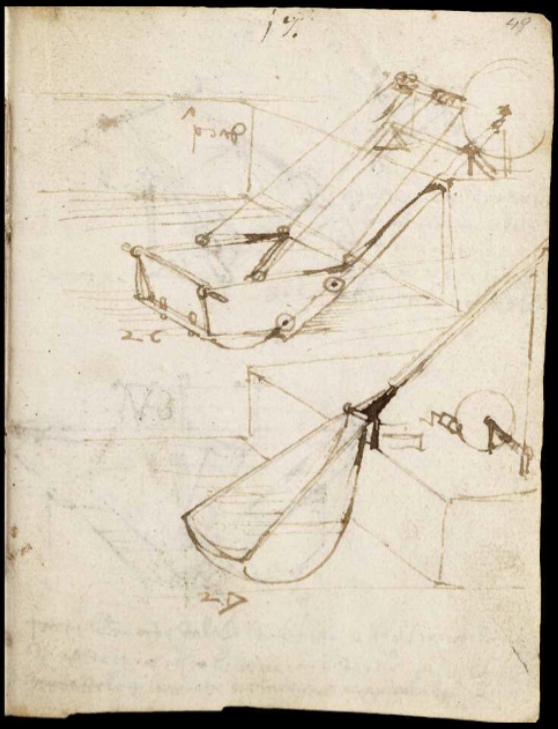
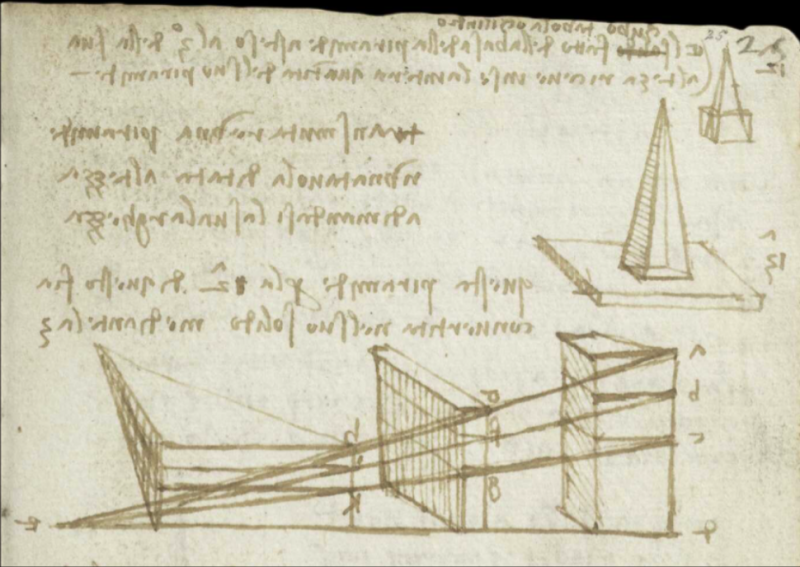
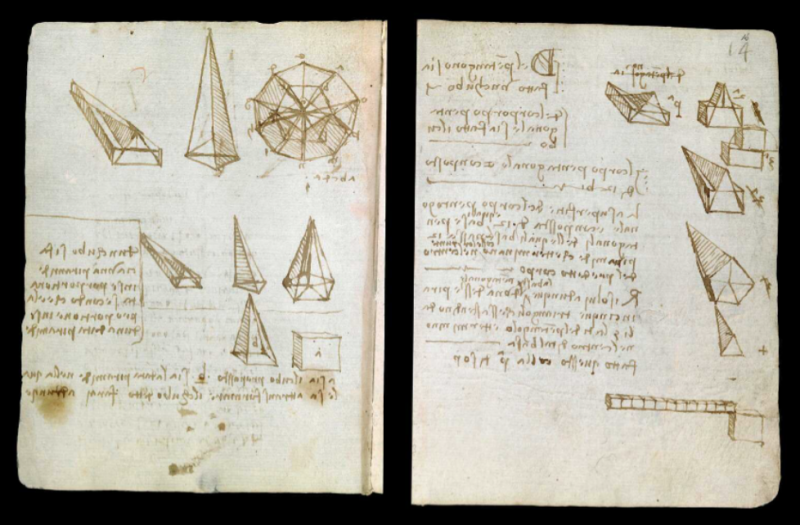
This col­lec­tion includes some of Leonardo’s ear­li­est note­books. Codex Forster I, now online, con­tains the ear­li­est note­book the V&A holds, dat­ing from about 1487, and the lat­est, from 1505. “Writ­ten in Leonardo’s famous ‘mir­ror-writ­ing,’” the V&A notes, “the sub­jects explored with­in range from hydraulic engi­neer­ing to a trea­tise on mea­sur­ing solids.” Forster II and III should come online soon. “We are plan­ning to make these two oth­er vol­umes also ful­ly acces­si­ble online in 2019 to cel­e­brate the 500th anniver­sary of Leonardo’s death,” says Yvard.

The most inno­v­a­tive aspect of this par­tic­u­lar project is the use of IIIF (Inter­na­tion­al Image Inter­op­er­abil­i­ty Frame­work), a tech­nol­o­gy that “has enabled us to present the codex in a new way,” remarks Kati Price, V&A’s head of dig­i­tal media. “We’ve used deep-zoom func­tion­al­i­ty… to present some of the most spec­tac­u­lar and detailed items in our col­lec­tion.” Schol­ars and laypeo­ple alike can take a very close-up look at the many schemat­ics and tech­ni­cal dia­grams in the note­books and see Leonardo’s mind and hand at work.

But while all of us can mar­vel at the sight of his engi­neer­ing genius, when it comes to read­ing his hand­writ­ing, we’ll have to rely on experts. Let’s hope the muse­um will some­day sup­ply trans­la­tions for non­spe­cial­ists. In the mean­time, explore the dig­i­tized man­u­scripts here.

Relat­ed Con­tent:

Leonar­do da Vinci’s Vision­ary Note­books Now Online: Browse 570 Dig­i­tized Pages

Down­load the Sub­lime Anato­my Draw­ings of Leonar­do da Vin­ci: Avail­able Online, or in a Great iPad App

Leonar­do Da Vinci’s To Do List (Cir­ca 1490) Is Much Cool­er Than Yours

Josh Jones is a writer and musi­cian based in Durham, NC. Fol­low him at @jdmagness

A Classic Video of Pablo Picasso Marking Art, Set to the Song, “Pablo Picasso,” by Jonathan Richman & The Modern Lovers

Before the Sex Pis­tols and the Ramones, there were the Mod­ern Lovers, the Boston pro­to-punk band helmed by lead singer Jonathan Rich­man. Their sound owed a lot to the Vel­vet Under­ground, a band the teenaged Rich­man idol­ized, fol­low­ing them to New York City and ingra­ti­at­ing him­self to such a degree that their man­ag­er allowed him to couch surf for a few weeks.

Their sole album, released two years after they broke up, was cob­bled togeth­er from two dif­fer­ent demo ses­sions, one of them pro­duced by the Vel­vets’ John Cale.

By the time it came out, Rich­man had already embraced the gen­tler, sun­nier per­sona and sound that’s made him a cel­e­brat­ed solo artist with fans of all ages. He famous­ly remarked that he didn’t want to make music that could hurt a baby’s ears. As for­mer band­mate, bassist Ernie Brooks told punk his­to­ri­an Legs McNeil:

Jonathan start­ed say­ing his old songs were too neg­a­tive and dark, and he start­ed writ­ing things like “Hey There Lit­tle Insect,” and maybe he was way ahead of us, but we couldn’t fol­low him—he want­ed us to go, “Buzz, buzz, buzz” on stage, but we were too cool!

Rich­man’s impulse was cor­rect. More than 40 years out from the Mod­ern Lovers, his solo career is going strong. (On lat­er record­ings attrib­uted to Jonathan Rich­man and the Mod­ern Lovers, he is the only holdover from the orig­i­nal line up.)

But that Mod­ern Lovers album has plen­ty of stay­ing pow­er, too.

Rolling Stone dubbed it both the 48th best debut album and the 381st great­est album of all time.

And while “Road­run­ner” may be its best known track, thanks to a long run­ning cam­paign to make it the offi­cial rock song of Mass­a­chu­setts (over Richman’s protes­ta­tions that it’s not good enough to deserve the hon­or), “Pablo Picas­so”‘s mem­o­rable cho­rus can­not be unheard:

He could walk down your street

And girls could not resist his stare

Pablo Picas­so nev­er got called an ass­hole

(Fran­coise Gilot, Picasso’s mod­el, and moth­er of two of his chil­dren, might say oth­er­wise, accord­ing to sev­er­al YouTube com­ments elicit­ed by the unat­trib­uted short film above.)

In 1980, a writer for the zine Boston Groupie News tried to get Rich­man to reveal the song’s prove­nance. He had pur­sued art as a teenag­er, tak­ing Sat­ur­day morn­ing class­es at Boston’s Muse­um of Fine Arts. He’d put his phone num­ber on the back of his can­vas­es, con­ceiv­ing of that as a way to con­nect with peo­ple. So, was Picas­so his favorite painter or…?

No, as it turns out:

I read about him when I was 18. I moved to New York and was intim­i­dat­ed by these girls who (I) thought were attrac­tive. I was afraid to approach them. I did­n’t have too high a self-image. I was self-con­scious and I thought “Well, Pablo Picas­so, he’s only 5 foot 3 but he did­n’t let things like that both­er him.” So I made up this song right after I saw those girls. You can pic­ture it; I had this sad lit­tle look on my face and I was think­ing ‘Why am I so scared to approach these girls?’ That was a song of courage for me.

Picas­so looks pret­ty chip­per in the well select­ed vin­tage footage, above. The expres­sion Rich­man cops to hav­ing cul­ti­vat­ed sounds gloomi­er, a delib­er­ate ploy to entice girls into think­ing he was a sad and like­ly soul­ful artist.

In oth­er words, irre­sistible. Like a rock star!

The Mod­ern Lovers’ pop­u­lar­i­ty let him drop the self-con­scious pose, but his inter­est in art remained.

He still paints, and recent­ly iden­ti­fied some of the artists who have inspired him in Art News’ Mus­es col­umn: 

Mon­et con­tributed to his appre­ci­a­tion of the Left Banke’s “Walk Away Renee.”

There’s a direct line between “Road­run­ner” and the lone­li­ness of Edward Hopper’s “Gas.”

And Picas­so? That ass­hole doesn’t even make the list.


Well some peo­ple try to pick up girls

And get called ass­holes

This nev­er hap­pened to Pablo Picas­so

He could walk down your street

And girls could not resist his stare and

So Pablo Picas­so was nev­er called an ass­hole

Well the girls would turn the col­or

Of the avo­ca­do when he would dri­ve

Down their street in his El Dora­do

He could walk down your street

And girls could not resist his stare

Pablo Picas­so nev­er got called an ass­hole

Not like you

Alright

Well he was only 5′3″

But girls could not resist his stare

Pablo Picas­so nev­er got called an ass­hole

Not in New York

Oh well be not schmuck, be not obnox­ious

Be not bell­bot­tom bum­mer or ass­hole

Remem­ber the sto­ry of Pablo Picas­so

He could walk down your street

And girls could not resist his stare

Pablo Picas­so was nev­er called an ass­hole

Alright this is it

Well

Some peo­ple try to pick up girls

And they get called an ass­hole

This nev­er hap­pened to Pablo Picas­so

He could walk down your street

And girls could not resist his stare and so

Pablo Picas­so was nev­er called…

Want to hear it again? Try the ani­mat­ed take below, by the endear­ing­ly mod­est 7atenine22.

Read­ers, if you have any intel on the per­son respon­si­ble for the film at the top of the page, please let us know, so we can give cred­it where cred­it is due.

Relat­ed Con­tent:

14 Self-Por­traits by Pablo Picas­so Show the Evo­lu­tion of His Style: See Self-Por­traits Mov­ing from Ages 15 to 90

Pablo Picasso’s Mas­ter­ful Child­hood Paint­ings: Pre­co­cious Works Paint­ed Between the Ages of 8 and 15

Under­rat­ed Albums That You Want the World to Know About: What’s on Your List?

Ayun Hal­l­i­day is an author, illus­tra­tor, the­ater mak­er and Chief Pri­ma­tol­o­gist of the East Vil­lage Inky zine.  Join her in NYC on Mon­day, Sep­tem­ber 24 for anoth­er month­ly install­ment of her book-based vari­ety show, Necro­mancers of the Pub­lic Domain. Fol­low her @AyunHalliday.

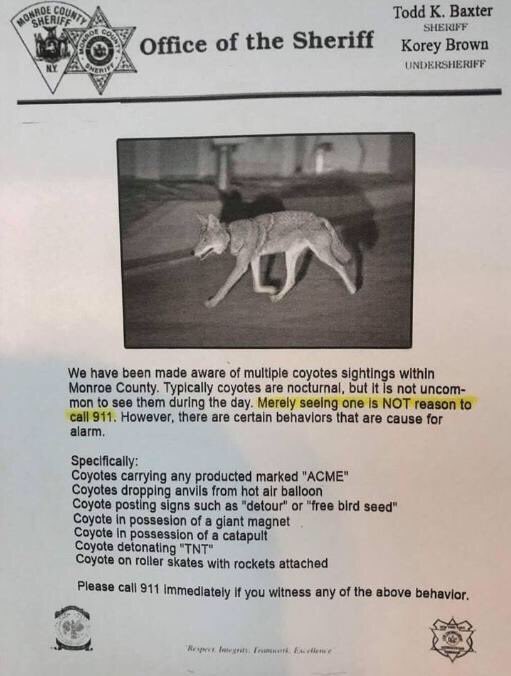
Don’t Call 911 If You See a Coyote, Unless It’s Carrying ACME-Branded Products: The Office of Sheriff, Monroe County, New York

Some­one in the Office of Sher­iff, in Mon­roe Coun­ty, New York, has a good sense of humor. And if you’re from the Looney Tunes/Merrie Melodies gen­er­a­tion, you will get a good laugh.

In oth­er news, Warn­er Bros. just announced that it’s devel­op­ing an ani­mat­ed Wile E. Coy­ote movie, some 70 years after he first appeared on the screen. Appro­pri­ate­ly the film is called, Coy­ote vs. Acme. Some­how that pum­meled coy­ote man­ages to endure.

Relat­ed Con­tent:

Kill the Wab­bit!: How the 1957 Bugs Bun­ny Car­toon, “What’s Opera, Doc?,” Inspired Today’s Opera Singers to First Get Into Opera

The Strange Day When Bugs Bun­ny Saved the Life of Mel Blanc

The Evo­lu­tion of Chuck Jones, the Artist Behind Bugs Bun­ny, Daffy Duck & Oth­er Looney Tunes Leg­ends: A Video Essay

by | Permalink | Make a Comment ( 2 ) |

Watch the New Trailer for Orson Welles’ Lost Film, The Other Side of the Wind: A Glimpse of Footage from the Finally Completed Film

Orson Welles died more than 30 years ago, and his last fea­ture film F for Fake came out fif­teen years before that. But we’ll now have to revise our notions of where his fil­mog­ra­phy ends, since his long-unfin­ished project The Oth­er Side of the Wind just debuted at the Venice Film Fes­ti­val in advance of its Novem­ber 2nd release. Shot between 1970 and 1976, a process pro­longed by numer­ous finan­cial dif­fi­cul­ties, the film was first thrust into lim­bo in its third year of edit­ing by the Iran­ian Rev­o­lu­tion, as some of its financ­ing had come from the Shah’s broth­er-in-law. The light at the end of The Oth­er Side of the Wind’s decades-long tun­nel of own­er­ship com­pli­ca­tions, when it final­ly appeared, took a form even Welles could nev­er have imag­ined: Net­flix.

The Oth­er Side of the Wind stars acclaimed film direc­tor John Hus­ton as an acclaimed film direc­tor named Jake Han­naford, recent­ly returned to Amer­i­ca after years of self-exile in Europe. An old-school rel­ic in the 1970s’ “New Hol­ly­wood” era, a time when a younger gen­er­a­tion of film­mak­ers like Mar­tin Scors­ese, Fran­cis Ford Cop­po­la, and Ter­rence Mal­ick used the major stu­dios to real­ize per­son­al visions at a large cin­e­mat­ic scale, Han­naford tries to make a come­back with a coun­ter­cul­ture pic­ture of his own. Filled with long takes of vast land­scapes, mod­ern archi­tec­ture, a lone motor­cy­cle rid­er, and gra­tu­itous nudi­ty, this film-with­in-the-film, also called The Oth­er Side of the Wind, takes its cues not just from the New Hol­ly­wood kids but from Michelan­ge­lo Anto­nioni and the oth­er Euro­pean film­mak­ers then in vogue as well.

The “real” The Oth­er Side of the Wind, of which you can get a taste in the trail­er above, takes a com­plete­ly dif­fer­ent tack, using doc­u­men­tary-style shoot­ing, quick cut­ting, and oscil­la­tion between col­or and black and white. This lay­er­ing of dif­fer­ent styles comes with a lay­er­ing of dif­fer­ent eras, each com­ment­ing on the oth­ers: the 1930s and 1940s that shaped Welles as a film­mak­er (and that Welles shaped as a peri­od in cin­e­ma), the New-Hol­ly­wood 1970s, and the present day, when a com­pa­ny like Net­flix has the clout to make projects hap­pen for any direc­tor, liv­ing or dead. The col­lab­o­ra­tion to com­plete the film involved new par­tic­i­pants as well as those who’d worked on it in the 1970s, like Welles asso­ciate Peter Bog­danovich, who played a film­mak­er in The Oth­er Side of the Wind not long after becom­ing a film­mak­er him­self.

Numer­ous oth­er direc­tors also appear in the film, from Gold­en-Age Hol­ly­wood jour­ney­man Nor­man Fos­ter to French New Wave fig­ure Claude Chabrol to coun­ter­cul­tur­al icon Den­nis Hop­per. As for Han­naford, a line in the trail­er describes him as “the Hem­ing­way of cin­e­ma,” the kind of macho artist who had long intrigued Welles, per­haps ever since he met and clashed with Hem­ing­way him­self. “He’s been reject­ed by all his old friends,” Welles once said of the Han­naford char­ac­ter in a pre­vi­ous ver­sion of the film. “He’s final­ly been shown up to be a kind of voyeur… a fel­low who lives off oth­er peo­ple’s dan­ger and death.” He put it more blunt­ly to Hus­ton in a quote that appears in Josh Karp’s book Orson Welles’s Last Movie: The Mak­ing of The Oth­er Side of the Wind: “It’s a film about a bas­tard direc­tor. It’s about us, John. It’s a film about us.”

Relat­ed Con­tent:

Watch Orson Welles’ First Ever Film, Direct­ed at Age 19

Dis­cov­er the Lost Films of Orson Welles

F for Fake: Orson Welles’ Short Film & Trail­er That Was Nev­er Released in Amer­i­ca

Watch Orson Welles’ Trail­er for Cit­i­zen Kane: As Inno­v­a­tive as the Film Itself

Orson Welles Remem­bers his Stormy Friend­ship with Ernest Hem­ing­way

Based in Seoul, Col­in Mar­shall writes and broad­casts on cities and cul­ture. His projects include the book The State­less City: a Walk through 21st-Cen­tu­ry Los Ange­les and the video series The City in Cin­e­ma. Fol­low him on Twit­ter at @colinmarshall or on Face­book.

The Last Great Moment of Elvis Presley’s Musical Career: Watch His Extraordinary Performance of “Unchained Melody” (1977)

As the “King” of Amer­i­can pop cul­ture in the mid-20th cen­tu­ry, Elvis embod­ied so many of his country’s con­tra­dic­tions. Revival­ist of the “love and theft” of black Amer­i­can music and per­for­mance; hum­ble, small town mama’s boy and duti­ful sol­dier who built a cult of mod­ern celebri­ty and a gar­ish tem­ple to con­spic­u­ous excess; self-appoint­ed cru­sad­er who railed against “the drug cul­ture” while his “legal” addic­tion to opi­ates and amphet­a­mines laid waste to his career and health.

Maybe in these con­flicts between humil­i­ty and fame-seek­ing, all-Amer­i­can whole­some­ness and trans­gres­sive seduc­tion, play­act­ing law­less­ness and mor­al­iz­ing law and order, his legions of fans saw their own split selves. His hip-shak­ing con­fi­dence seemed par­tic­u­lar­ly suit­ed to both inflam­ing and sooth­ing anx­i­eties and safe­ly chan­nel­ing pent-up pas­sions. Cer­tain incon­sis­ten­cies in his per­sona did not seem to trou­ble him over­much.

But he was not a well man in the last sev­er­al years of his short life and his tenure in the glit­ter­ing faux-palaces of Las Vegas dra­mat­i­cal­ly has­tened the decline. While the real­i­ty of Elvis in Vegas was tacky and sad, the mythos of Elvis in Vegas made it “cool for fad­ing super­star per­form­ers to find a sec­ond (or even third) act of their career in Vegas,” writes Mike Sager at Bill­board. “Elvis paved the way for the likes of Brit­ney Spears,” whose big Amer­i­can rise and fall resem­bles his in many ways.

Elvis’ own attempt at a third (or fourth) act is pre­dictably trag­ic. Exploita­tive man­ag­er Colonel Tom Park­er pushed him out on tour in 1977, notes Andy Greene at Rolling Stone, “despite his hor­rid shape.” Park­er “arranged a cam­era crew to film the June 19th show in Oma­ha” in order to “get more prod­uct in to the stores”—perhaps sens­ing that Pres­ley did not have much fur­ther to go. The cam­eras kept rolling in stops through­out the Mid­west.

He was an absolute mess. He was only 42, but years of pre­scrip­tion drug abuse and hor­ri­fy­ing dietary habits had left him bloat­ed, depressed and near death. He had an enlarged heart, an enlarged intes­tine, hyper­ten­sion and incred­i­bly painful bow­el prob­lems. He was bare­ly sleep­ing and should have prob­a­bly been in the hos­pi­tal, but he was still a huge draw on the con­cert cir­cuit and the mon­ey was too good to turn down.

It is ugly to dwell on this peri­od, except that some­how those final con­certs pro­duced the extra­or­di­nar­i­ly poignant footage of “Unchained Melody” at the top in Rapid City, South Dako­ta. “With­out a doubt,” writes Greene, “it’s the last great moment of his career.” He digs deep, his voice is clear and strong. The jar­ring con­trast between how good he sounds and how ter­ri­ble he looks under­lines and bolds the lines—“time can do so much…”

At the last tour stop in Indi­anapo­lis, he bare­ly pulled off a ren­di­tion of “Are You Lone­some Tonight,” above. The song starts off real­ly strong but soon devolves into Elvis mut­ter­ing gib­ber­ish, sweat­ing, and gig­gling to him­self. This is hard to watch and it’s no won­der the tour footage, aired once on CBS, “has yet to resur­face in any offi­cial capac­i­ty. This isn’t the Elvis that his estate wants the fans to remem­ber.” Sure­ly those fans them­selves pre­fer the kitschy fan­ta­sy. Less than two months lat­er, he was gone.

via Boing Boing

Relat­ed Con­tent:

Watch John­ny Cash’s Poignant Final Inter­view & His Last Per­for­mance: “Death, Where Is Thy Sting?” (2003)

Watch George Harrison’s Final Inter­view and Per­for­mance (1997)

Watch John Lennon’s Last Live Per­for­mance (1975): “Imag­ine,” “Stand By Me” & More

Josh Jones is a writer and musi­cian based in Durham, NC. Fol­low him at @jdmagness

« Go BackMore in this category... »
Quantcast