Amsterdam has many pleasures to offer, not least boating through its hundred-kilometer network of canals. First laid out in the early 17th century, they constitute a rich history lesson in and of themselves. But Amsterdam is also, of course, a modern city with modern infrastructure, such as a metro system with a new line set to open this month. Amsterdammers have been waiting for that line for fifteen years now, and the reasons for the prolonged construction have to do with the old canals, or rather part of the River Amstel that feeds them.
Boring the tunnels entailed draining the river, and draining the river turned out to offer another history lesson, and a much deeper one than expected. “It is not often that a riverbed, let alone one in the middle of a city, is pumped dry and can be systematically examined,” says the web site Below the Surface. “The excavations in the Amstel yielded a deluge of finds, some 700,000 in all: a vast array of objects, some broken, some whole, all jumbled together.”
The unintended archaeological benefit of draining the river amounts to “a multi-faceted picture of daily life in the city of Amsterdam. Every find is a frozen moment in time, connecting the past and the present. The picture they paint of their era is extremely detailed and yet entirely random due to the chance of objects or remains sinking down into the riverbed and being retrieved from there.” At Below the Surface you can browse the extensive catalog of all these artifacts, the oldest of which date to around 4300 BC, more than five and a half millennia before the founding of Amsterdam itself.
Below the Surface’s collection is organized into ten different categories including “interiors and accessories,” “crafts and industry,” “arms and armor,” “communication and exchange,” and “games and recreation.” On your digitized object-based historical journey there, you’ll encounter objects from all of those realms of human life across time, from 13th-century coins, 15th-century keys, 18th-century tiles, and 20th-century medicine tins. To we humans of the 21st century, in the Netherlands or elsewhere, some of these might look surprisingly contemporary — or at least not nearly as ancient as a mobile phone from the 1990s. Enter Below the Surface here.
Based in Seoul, Colin Marshall writes and broadcasts on cities and culture. His projects include the book The Stateless City: a Walk through 21st-Century Los Angeles and the video series The City in Cinema. Follow him on Twitter at @colinmarshall or on Facebook.
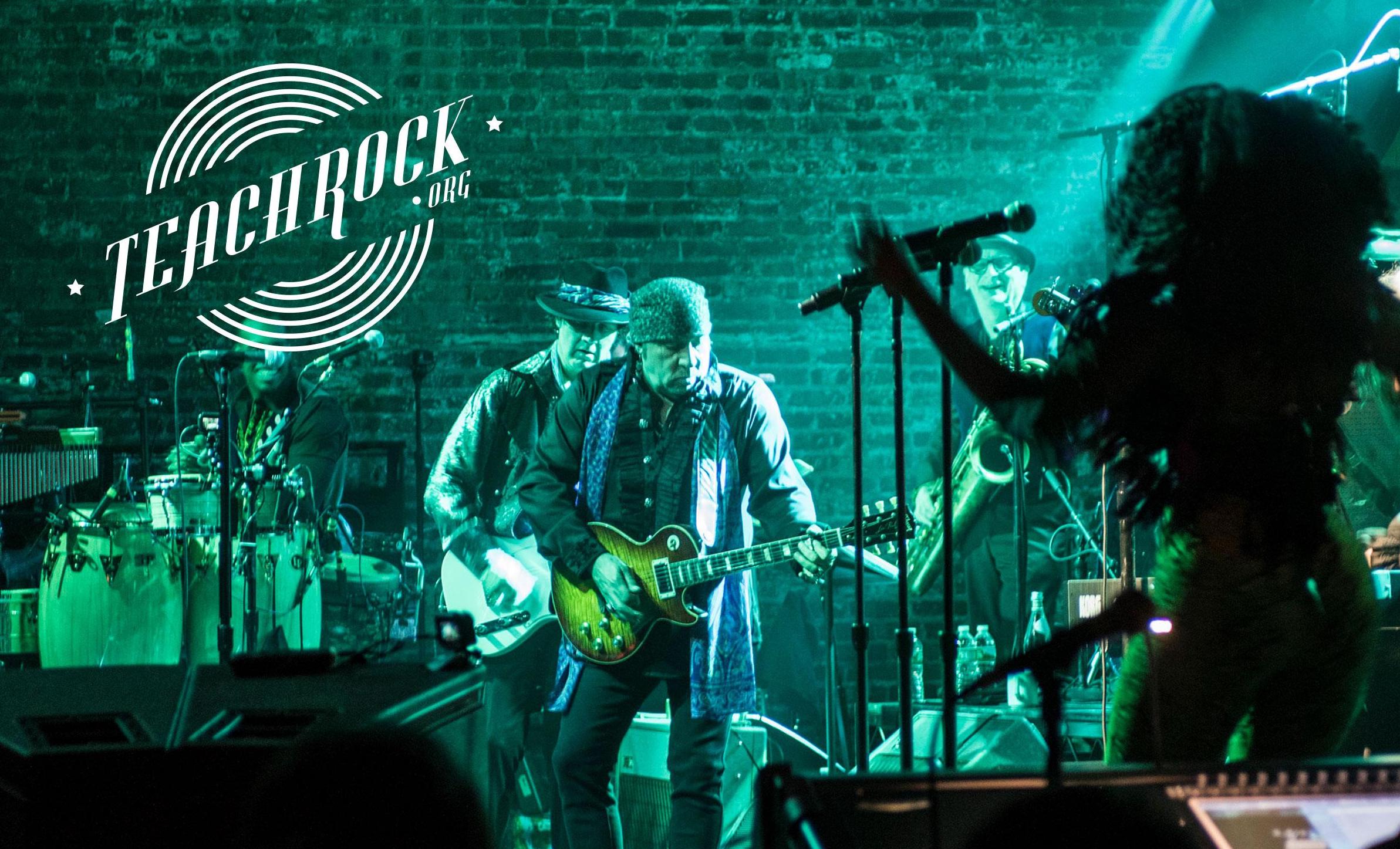
When I think of rock ‘n’ roll high school, I think of the Ramones, but in the 1979 Roger Corman film no one really learns much. In reality, however, another legendary musician, still going strong after five decades in the business, has put his cred to serious use, leveraging stardom as a musician and actor to create a music curriculum teachers can use for free, with lessons on rock history, Native American politics, Bob Dylan’s poetry, immigration and the blues, civil disobedience, the fight to end Apartheid, and much more. That man is Steven Van Zandt—aka Little Steven of the E Street Band, or Silvio Dante of The Sopranos, or Frank Tagliano of Lilyhammer, or a few other aliases and fictional characters.
“For the past decade,” writes John Seabrook at The New Yorker, the bandana-clad guitarist has been “working on a way to recreate” a “dynamic, out-of-school learning experience inside classrooms, through his Rock and Roll Forever Foundation.” Working, that is, to recreate his own experience as a disaffected youth who “had no interest in school whatsoever,” he recalls. What interested him was music: the Beatles, at first, but as he learned more about them, he picked up “bits of information” about Eastern religion and orchestration. He learned about literature from Dylan.
“You didn’t get into it to learn things,” he says, “but you learn things anyway.” At least if you’re as curious and open-minded as Van Zandt, who came to value education through his non-traditional course. Over ten years ago, when the National Association for Music Education told him that “No Child Left Behind legislation was really devastating art classes,” he confronted Ted Kennedy and Mitch McConnell, telling them, “did you ever hear that every kid who takes music class does better in math and science?” They apologized,” he says, “but they said they weren’t going to fix it.”
So Van Zandt decided to do it himself with a program called TeachRock. Working with two ethnomusicologists, he built the curriculum to connect with kids through music. “Instead of telling the kid, ‘Take the iPod out of your ears,’” he told a crowd of teachers gathered at Times Square’s Playstation Theater in May, “we ask them, ‘What are you listening to?’” Van Zandt calls his curriculum “teaching in the present tense,” and while his own back catalog may not necessarily be streaming on kids’ current playlists, he incorporates not only his music and the fifties and sixties rock ‘n’ roll he loves, but also hip-hop, pop, punk, and the “Latin rhythms of ‘Despacito.’” He even uses Beyoncé’s “Single Ladies” video to prompt a discussion on the slave trade.
The focus on popular music as a force for change is fully in keeping with Van Zandt’s own path. His self-education led him into activism in the 80s when he wrote and recorded “Sun City” with 50 other artists to protest South African Apartheid. Unlike some other benefit songs of the time (like the cringe-inducing “Do They Know It’s Christmas”), “Sun City,” with its accompanying video (above), took effective political action—a blanket boycott of the Sun City resort—and didn’t sugar-coat the issues one bit (“relocation to phony homelands/separation of families, I can’t understand”). The Sun City boycott gets its own module.
As Van Zandt told Fast Company in 2015, “I had been researching American foreign policy post-World War II just to educate myself, which I had never done, being obsessed with rock ‘n’ roll my whole life. I was quite shocked to find that we were not always the good guys.” His discoveries compelled him to visit South Africa and to “dedicate my five-record solo career to that learning process, and also combine a bit of journalism with the rock art form.” That same passion for justice informs all of the TeachRock lessons, which you can browse and download for free at the TeachRock site. The multi-media units incorporate video, audio, images, activities, informative handouts, and other resources.
Each lesson also explains how its objectives meet Common Core State Standards (or the state standards of New Jersey and Texas). “TeachRock is rooted in a teaching philosophy that believes students learn best when they truly connect with the material to which they’re introduced,” notes the site’s “Welcome Teachers” page. “Obviously, popular music is one such point of connection.” Perhaps not every kid who learns through music as Van Zandt did will go out and try to change the world, but they’re more than likely to stay engaged and stay in school. And that’s exactly what he hopes to accomplish.
“Teaching kids something they’re not interested in,” he told the teachers in New York, “it didn’t work then, and it’s even worse now. We have an epidemic dropout rate.” Then, in his refreshingly honest way, he concluded, “Where are we going to be in twenty years? How are we going to get smarter looking at this Administration? You know, we’re just getting stupider.” Not if Little Steven has anything to say about it. He’s currently on tour with his Disciples of Soul, and offering free tickets to teachers, provided they show up early for a TeachRock workshop. Sign up here!
I have followed several debates recently about the lack of arts and humanities education in STEM programs. One argument runs thus: scientists, engineers, and programmers often move into careers designing products for human use, without having spent much time learning about other humans. Without required courses, say, in psychology, philosophy, sociology, literature, etc., students can end up unthinkingly reproducing harmful biases or overlooking serious ethical problems and social inequities.
Technological malpractice is bad enough. Medical malpractice can have even more immediately harmful, or fatal, effects. We might take for granted that a doctor’s “bedside manner” is purely a matter of personality, but many medicals schools have decided they need to be more proactive when it comes to training future doctors in compassionate listening. And some have begun using the arts to foster creative thinking and empathy and to improve doctor-patient communication. The verbally-abusive Dr. House aside, the best diagnosticians actually have sympathetic ears.
As Dr. Michael Flanagan of Penn State’s College of Medicine puts it, “Our job is to elicit information from our patients. By communicating more effectively and establishing rapport with patients so they are more comfortable telling you about their symptoms, you are more likely to make the diagnosis and have higher patient satisfaction.” From the patient side of things, an accurate diagnosis can mean more than “satisfaction”; it can mean the difference between life and death, long-term suffering or rapid recovery.
Can impressionist painting make that difference? Dr. Flanagan thinks it’s a start. His seminar “Impressionism and the Art of Communication” asks fourth-year medical students to engage with the work of Vincent van Gogh and Claude Monet, in exercises “ranging from observation and writing activities to painting in the style of said artists,” notes Artsy. “Through the process, they learn to better communicate with patients by developing insights on subjects like mental illness and cognitive bias.” Why not just study these subjects in psychology courses?
One answer comes from Penn State associate professor of art history Nancy Locke, who presents to Flanagan’s classes. “Art can make people see their lives differently,” she says, “Doctors will see people regularly with certain problems.” And they can begin to schematize their patients the way they schematize diseases and disorders. “But a painting can continue to be challenging, and there are always new questions to ask.” Impressionist painting represents only one road, among many others, to the ambiguities of the human mind.
Another Penn State professor, Dr. Paul Haidet, director of medical education research, offered a seminar on jazz and medical communications to fourth-year students in 2014 and 2015. As he mentions in the video above, Flanagan himself took the course. “Just as one jazz musician provides space to another to improvise,” he tells Penn State News, “as physicians we need to provide space to our patients to communicate in their own style. It was a transformational experience, unlike anything I ever had in medical school myself.” He was inspired thereafter to introduce his painting course.
One could imagine classes on the Victorian novel, modernist poetry, or improvisational dance having similar effects. Other medical schools have certainly agreed. Dr. Delphine Taylor, associate professor of medicine at Columbia University Medical Center, “emphasizes that arts-focused activities are important in training future doctors to be present and aware,” Artsy writes, “which is more and more difficult today given the pervasiveness of technology and media.” Arts programs have also been adopted in the medical schools at Yale, Harvard, and UT Austin.
The precedents for incorporating the arts into a science education abound—many a famous scientist has also had a passion for literature, photography, painting, or music. (Einstein, for example, wouldn’t be parted from his violin.) As the arts and sciences grew further apart, for reasons having to do with the structure of higher education and the dictates of market economies, it became far less common for scientists and doctors to receive a liberal arts education. On the other hand, todays liberal arts students might benefit from more required STEM courses, but that’s a story for another day.
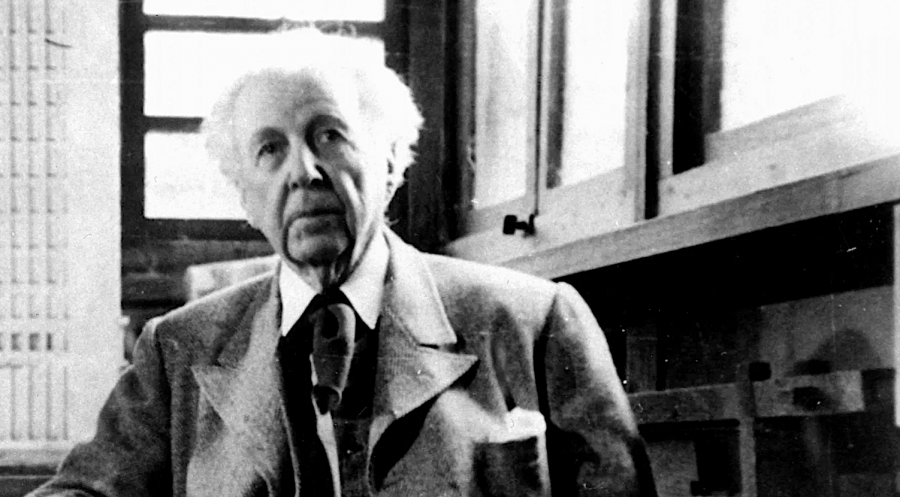
No figure looms larger over American architecture than Frank Lloyd Wright. From the early 1890s to the early 1920s he established himself as the builder of dozens of striking, stylistically innovative private homes as well as public works like Chicago’s Midway Gardens and Tokyo’s Imperial Hotel. But by the end of that period his personal life had already turned chaotic and even tragic, and in his professional life he saw his commissions dry up. Just when it looked like he might not leave much of a legacy at all, an idea came to him: why not start a school?
“Wright founded what he called the Taliesin Fellowship in 1932, when his own financial prospects were dismal, as they had been throughout much of the 1920s,” writes architecture critic Michael Kimmelman in the New York Review of Books. “Having seen the great Chicago architect Louis Sullivan, his former boss, die in poverty not many years earlier, Wright was forestalling his own prospective oblivion.” Charging a tuition of $675 (“raised to $1,100 in 1933, more than at Yale or Harvard”), Wright designed a program “to indoctrinate aspiring architects in his gospel of organic architecture, for which they would do hours of daily chores, plant crops, wash Wright’s laundry, and entertain him and his guests as well as one another in the evenings with musicals and amateur theatricals.”
There at Taliesin, his eponymous home-studio, located in the appropriately rural setting of Spring Green, Wisconsin, Wright sought to forge not just complete architects, and not just complete artists, but complete human beings. He proposed, in Kimmelman’s words, “the creation of a small, independent society made better through his architecture.” He also drew up a list, later included in his autobiography, of the qualities the builders of that society should possess:
I. An honest ego in a healthy body – good correlation
II. Love of truth and nature
III. Sincerity and courage
IV. Ability for action
V. The esthetic sense
VI. Appreciation of work as idea and idea as work
VII. Fertility of imagination
VIII. Capacity for faith and rebellion
IX. Disregard for commonplace (inorganic) elegance
X. Instinctive cooperation
This list reflects the kind of qualities Wright seemed to spend his life cultivating in himself, not to mention displaying to the public. Not that he showed much regard for the truth when it conflicted with his own mythmaking, nor an instinct for cooperation with those he considered less than his equals — and architecturally speaking, he didn’t consider anyone his equal. As well as Wright’s ego may have served him, not every artist needs one quite so colossal, but perhaps, per his list, they do need an honest one. “Early in life I had to choose between honest arrogance and hypocritical humility,” he once said. “I chose the former and have seen no reason to change.”
Based in Seoul, Colin Marshall writes and broadcasts on cities and culture. His projects include the book The Stateless City: a Walk through 21st-Century Los Angeles and the video series The City in Cinema. Follow him on Twitter at @colinmarshall or on Facebook.
It’s maybe a cultural truism that iconoclasts who live long enough eventually become icons. So I suppose it shouldn’t surprise us much to see a rock ‘n’ roll hero like Jimmy Page standing behind the podium at the Oxford Union, for a lecture and Q&A series put on by the famed debating society. But as he tells his audience, it isn’t his first time at Oxford—he made an appearance at 16, accompanying beat poet and novelist Royston Ellis on guitar. (It was Ellis, Page notes, who suggested the quirky spelling of the Beatles to John Lennon.) This story leads to Page’s autobiographical sketch of how he became a musician by listening to “the music coming over from America” and the skiffle versions of the same by English musician Lonnie Donegan.
It’s a story familiar to fans not only of Page but of every British invasion band inspired by the American blues and R&B. But it’s always interesting, especially for Americans, to hear it told. Homegrown traditional music we take for granted sounded to the young Page like “it was coming from Mars.”
He describes the influence of Donegan as a “portal” to the blues and rock ‘n’ roll, which bands like the Yardbirds picked up in the early sixties. Mention of that seminal English band leads Page to recount his second time at Oxford, to see the Yardbirds at Queen’s College, a fateful night that ended with Page joining the band on bass after Paul Samwell-Smith quit. By that time, he had served what he calls a “three-year apprenticeship” as a studio musician, arranger, and composer.
These reminisces set the tenor for Page’s short address, a series of vignettes from his venerable career, full of fascinating digressions and asides. At around 13 minutes in, he concludes that his “lifetime achievement” was to “do something which was initially my hobby, turn that into something which was a very professional process, but still a very creative one… and to inspire young musicians.” After his short speech, the program transitions to an interview format, and Page expands on and clarifies many of his comments. His affable humility and desire to share his wisdom and experience make this very enjoyable viewing for anyone interested in Page’s life and work, or in the history of rock ‘n’ roll more generally, which cannot be told without him, and for which he is a very able chronicler.
The belief in a singular, coherent “Western tradition” in philosophy has led to a very insular, Eurocentric view in philosophy departments, as Jay L. Garfield and Bryan W. Van Norden write in a New York Times op-ed. “No other humanities discipline demonstrates this systemic neglect of most of the civilizations in its domain,” they argue, “The present situation is hard to justify morally, politically, epistemically or as good educational and research training practice.” In his follow-up book Taking Back PhilosophyVan Norden argues that educational institutions should “live up to their cosmopolitan ideals” by expanding the canon and teaching non-Western philosophical traditions.
One philosophy educator, Peter Adamson, professor of philosophy at the LMU in Munich and King’s College London, has taken up the challenge of teaching global philosophical traditions through his popular podcast The History of Philosophy Without Any Gaps, with series on the Islamic World, Africana, and India. With expert co-authors and guests, Adamson’s podcasts help us navigate cultural and historical differences without watering down the substance of diverse bodies of thought.
These surveys of non-Western traditions aim to be as exhaustive as the podcast’s coverage of Classical, Later Antiquity, and Medieval periods in Europe. We’ve featured Adamson’s podcasts on Islamic and Indian philosophy in an earlier post. Now we revisit his series on Indian philosophy, which has grown substantially in the interval, from thirty-two to sixty-two episodes, divided into three categories—“Origins,” “Age of the Sutra,” and “Buddhists and Jains.”
Very broadly, much Indian philosophy can be understood as a centuries-long conflict between the six orthodox Vedic schools (astika) and the heterodox (nastika) schools, including Buddhism, Jainism, and Carvaka, a materialist philosophy that denied all metaphysical doctrines. While some strains among these schools of thought can be associated with individual names, like Kanada, Patañjali, or Nagarjuna, much ancient Indian philosophy “is represented by a mass of texts,” as Luke Muehlhauser writes in his short guide, “for which the authors and dates of composition are mostly unknown.”
Adamson’s free podcast survey of Indian philosophy makes for entertaining, informative listening. You can download every episode in .zip form at the links above. Or find links to the individual episodes right below. To keep up with trends in the study of Indian philosophy in English, be sure to follow the Indian Philosophy Blog. And for an excellent list of “Readings on the Less Commonly Taught Philosophies (LCTP),” see this post by Bryan Van Norden here.
To the naked eye — or at least to the naked eye of anyone born after about 1990 — fans of the Grateful Dead and fans of Steely Dan may look basically the same. Both bands emerged from the 1960s-forged counterculture of America’s “Baby Boom” generation, broadly defined, and both have drawn unusually dedicated listenerships. Yet few bodies of musical work could project such different sets of artistic sensibilities: on one side Steely Dan has the handful of meticulously recorded studio albums filled with esoteric wisecracks and literary references, and on the other the Grateful Dead has the vast archives of live performance heavy on both extended improvisations and good vibes.
Close inspection reveals that the deeper differences in the music of the Grateful Dead and Steely Dan also manifest in the lifestyles of “Deadheads” and “Danfans.” You can see how in this handy Deadhead/Danfan Conversion Chart available on Steely Dan’s official site. (View it in a larger format here.) Where the accoutrements of the Grateful Dead’s crowd include granny glasses, VW buses, and tattooing, it shows us, Steely Dan’s has its LA Eyeworks clip-ons, BMW 353s, and cosmetic laser surgery.
Deadheads read beat poetry, receive cosmic visions, and enjoy the guitar playing of the late Jerry Garcia; Danfans read the MacMall catalog, send erotic e‑mails, and enjoy the guitar playing of the late Walter Becker (among that of the dozens of other professionals called into the studio).
The Deadhead/Danfan Conversion Chart also includes a middle column describing the transitional stage separating Deadhead from Danfan. Between the Grateful Dead fan’s sense of oneness and the Steely Dan fan’s sense of entitlement comes a sense of despair; between the Deadhead’s takeout Indian food and the Danfan’s northern Italian cuisine comes freeze-dried pot roast and gravy. Laid out in this way, the journey from the Grateful Dead to Steely Dan mirrors the life journey taken by many a Baby Boomer: from blissed-out utopianism, consciousness-expanding substances, and free love to creative cynicism, antidepressants, and high-end personal electronics. Or perhaps, to use a metaphor popular in 1960s America, the yin of the Deadhead and the yang of the Danfan inhabits us all, regardless of generation.
Based in Seoul, Colin Marshall writes and broadcasts on cities and culture. His projects include the book The Stateless City: a Walk through 21st-Century Los Angeles and the video series The City in Cinema. Follow him on Twitter at @colinmarshall or on Facebook.
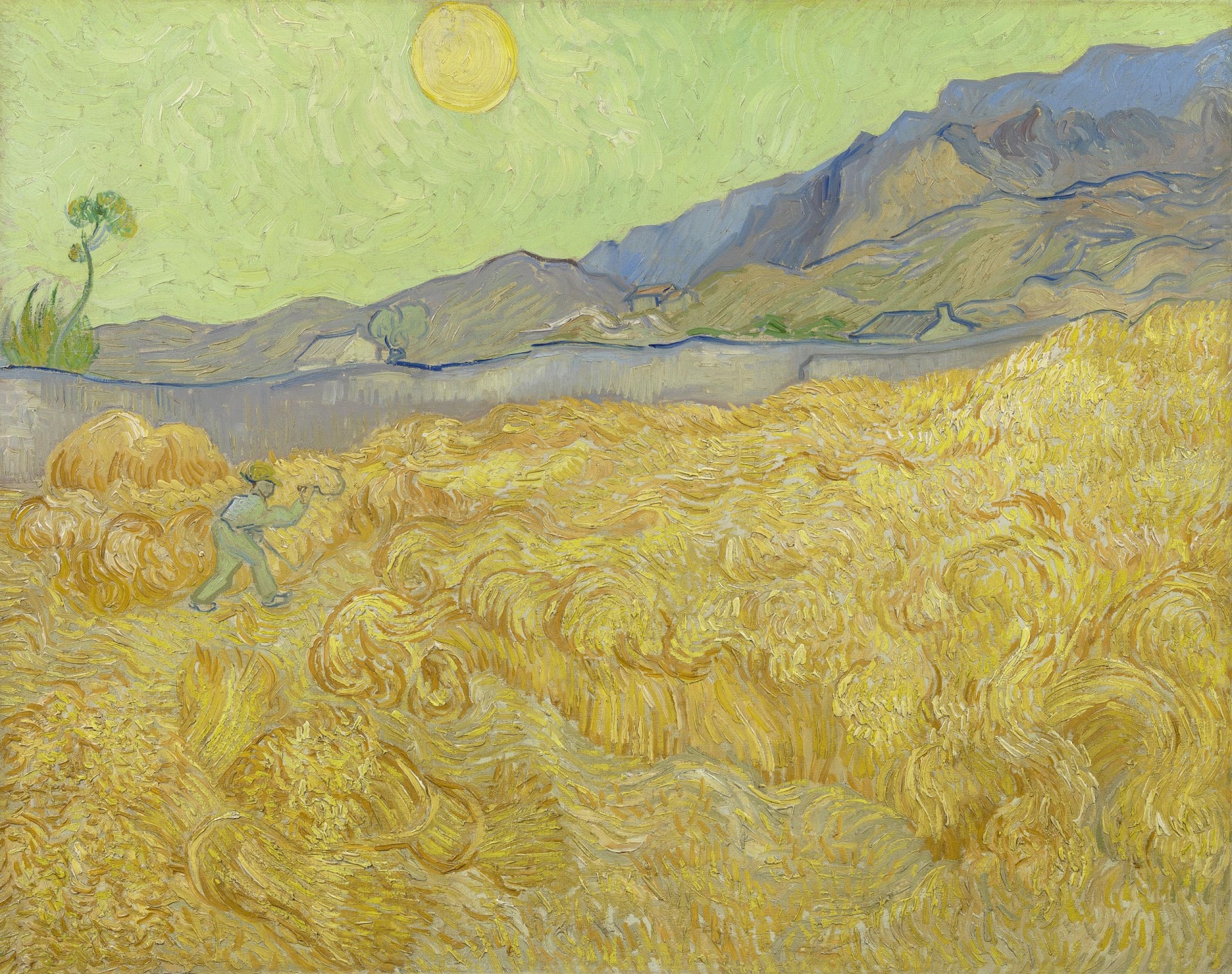
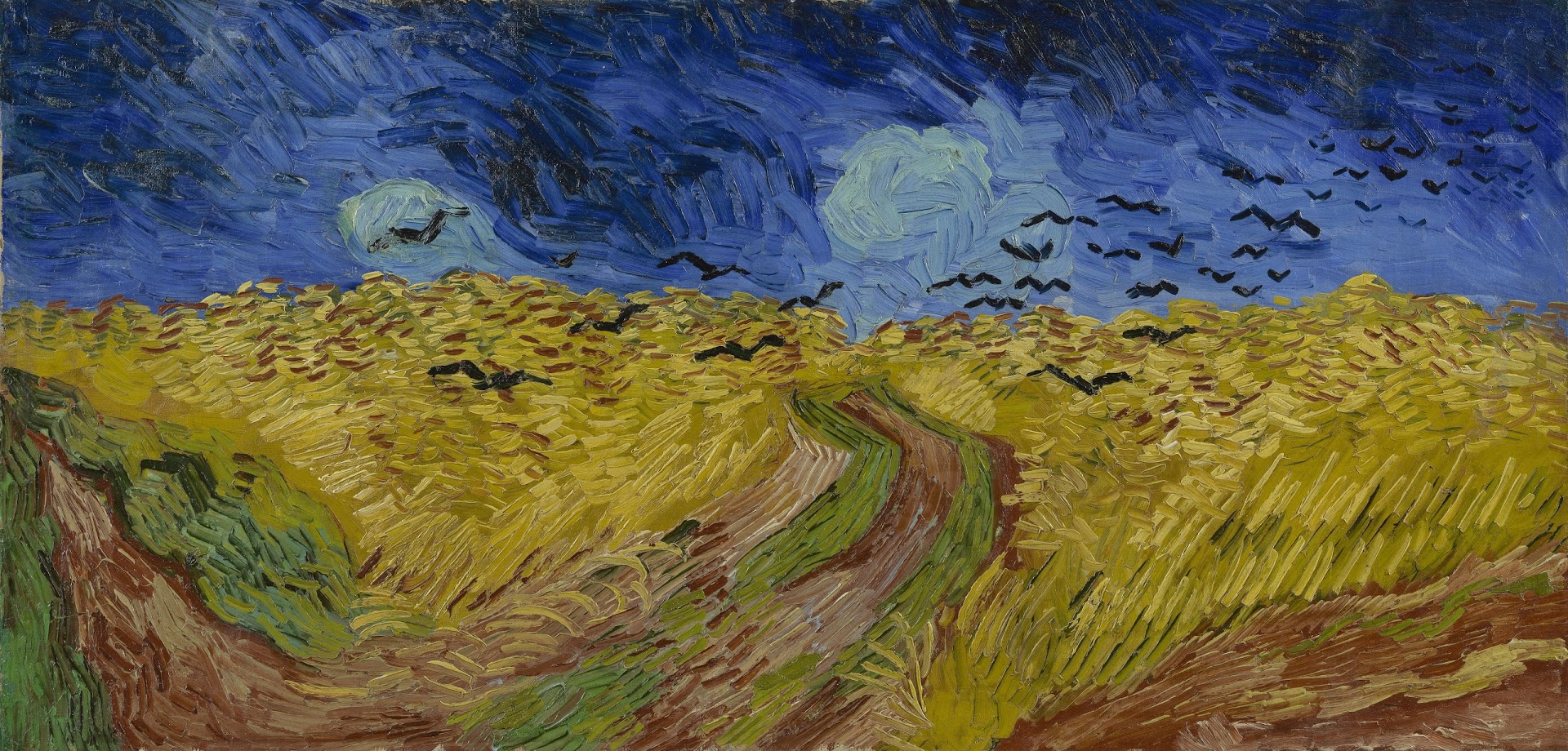
Every artist explores dimensions of space and place, orienting themselves and their works in the world, and orienting their audiences. Then there are artists like Vincent van Gogh, who make space and place a primary subject. In his early paintings of peasant homes and fields, his figures’ muscular shoulders and hands interact with sturdy walls and gnarled trees. Later country scenes—whether curling and delicate, like Wheatfield with a Reaper, or heavy and ominous, like Wheatfield with Crows (both below)—give us the sense of the landscape as a single living entity, pulsating, writhing, blazing in brilliant yellows, reds, greens, and blues.
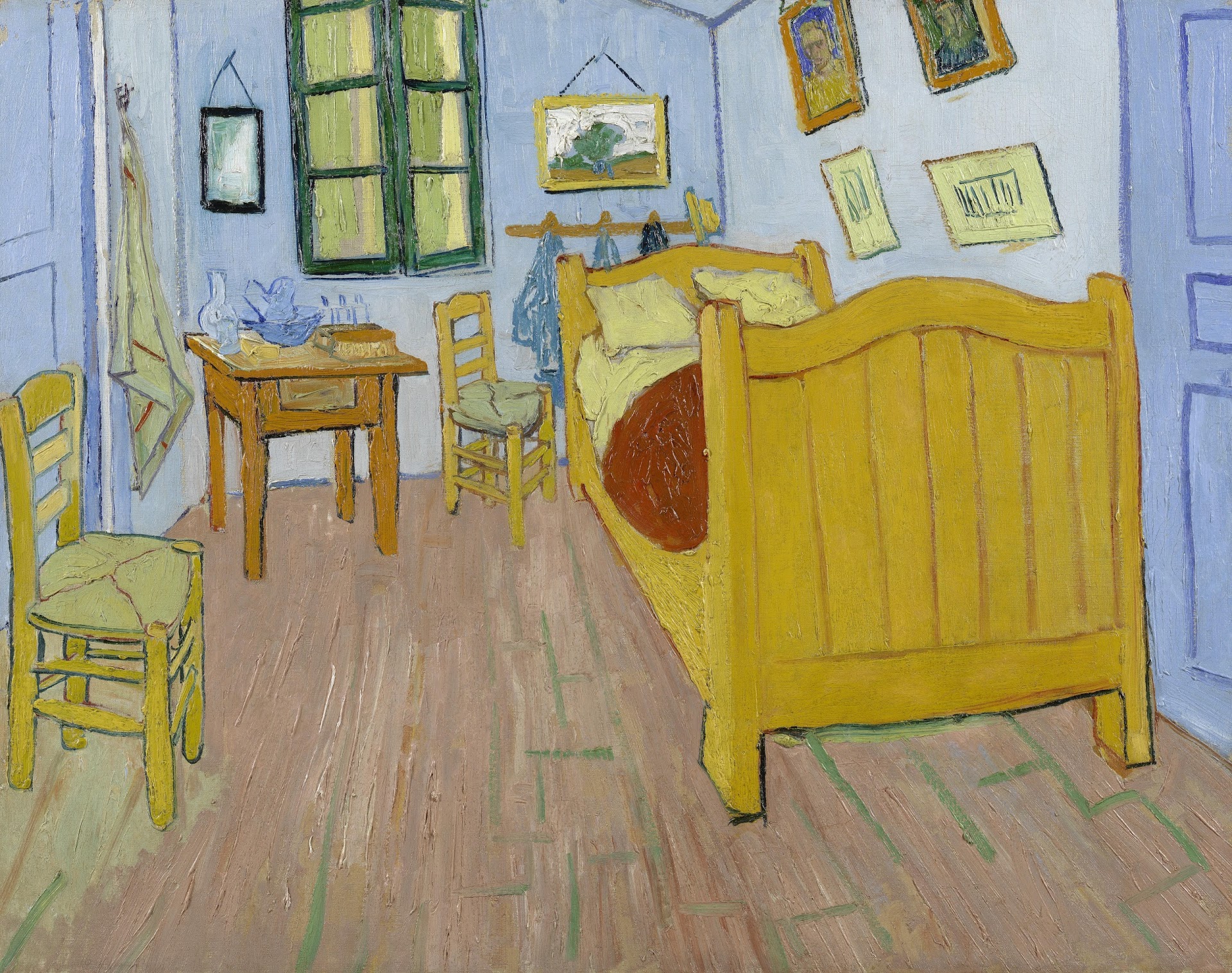
Van Gogh painted interior scenes, such as his famous The Bedroom, at the top (the first of three versions), with an eye toward using color as the means of making space purposeful: “It’s just simply my bedroom,” he wrote to Paul Gauguin of the 1888 painting, “only here color is to do everything… to be suggestive here of rest or of sleep in general. In a word, looking at the picture ought to rest the brain, or rather the imagination.”
So taken was the painter with the concept of using color to induce “rest or sleep” in his viewers’ imaginations that when water damage threated the “stability” of the first painting, Chicago’s Art Institute notes, “he became determined to preserve the composition by painting a second version while at an asylum in Saint-Rémy in 1889,” then demonstrated the deep emotional resonance this scene had for him by painting a third, smaller version for his mother and sister.
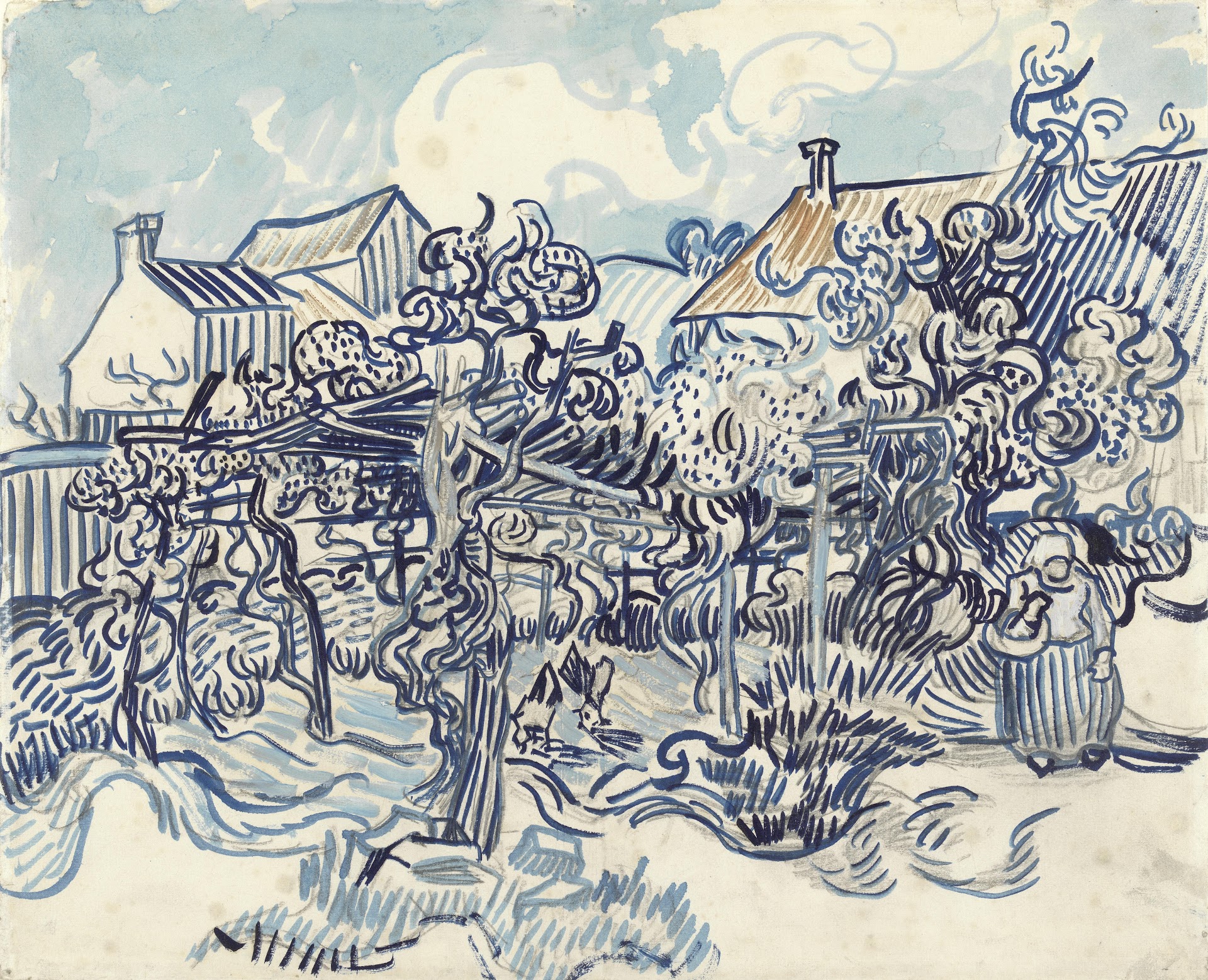
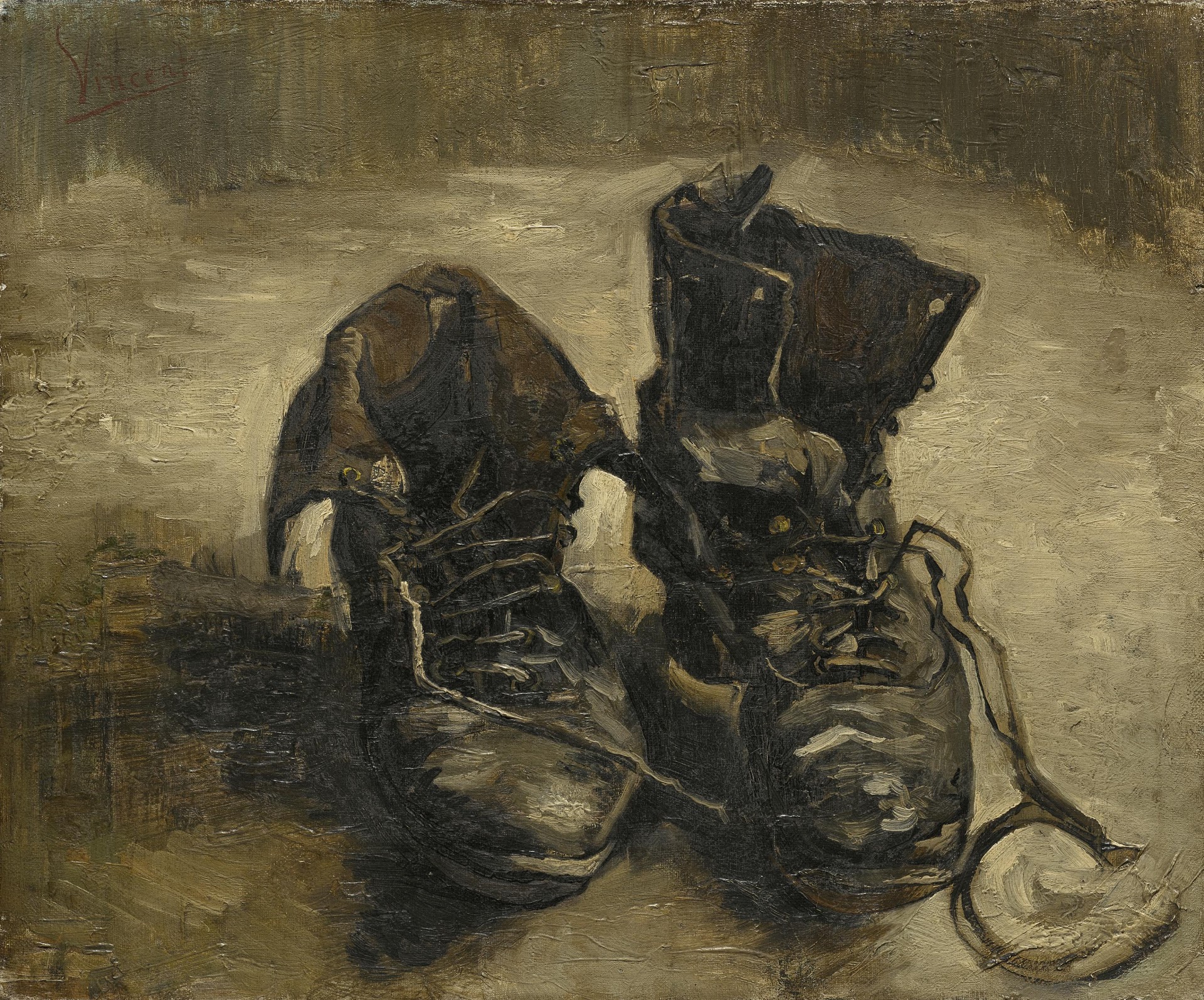
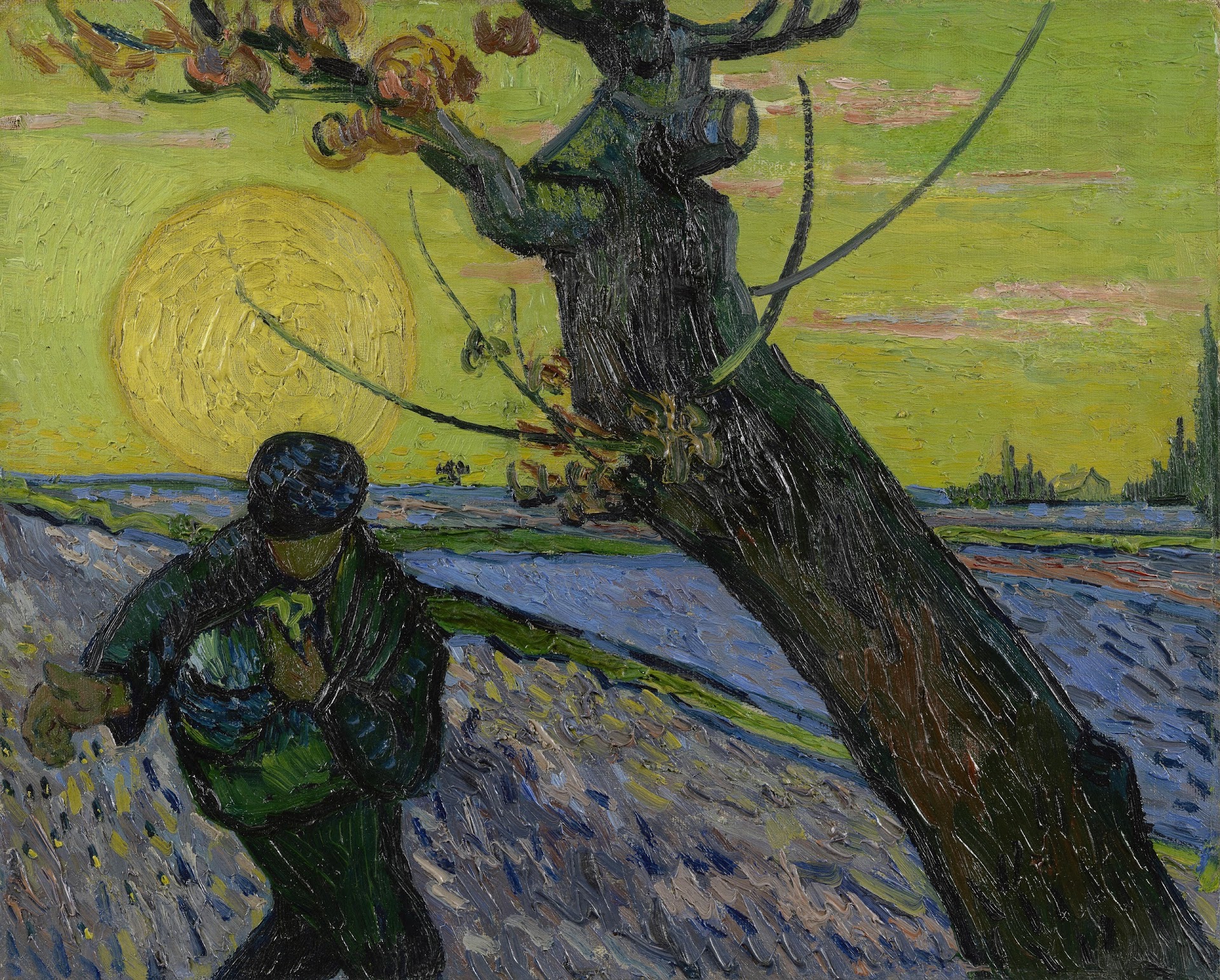
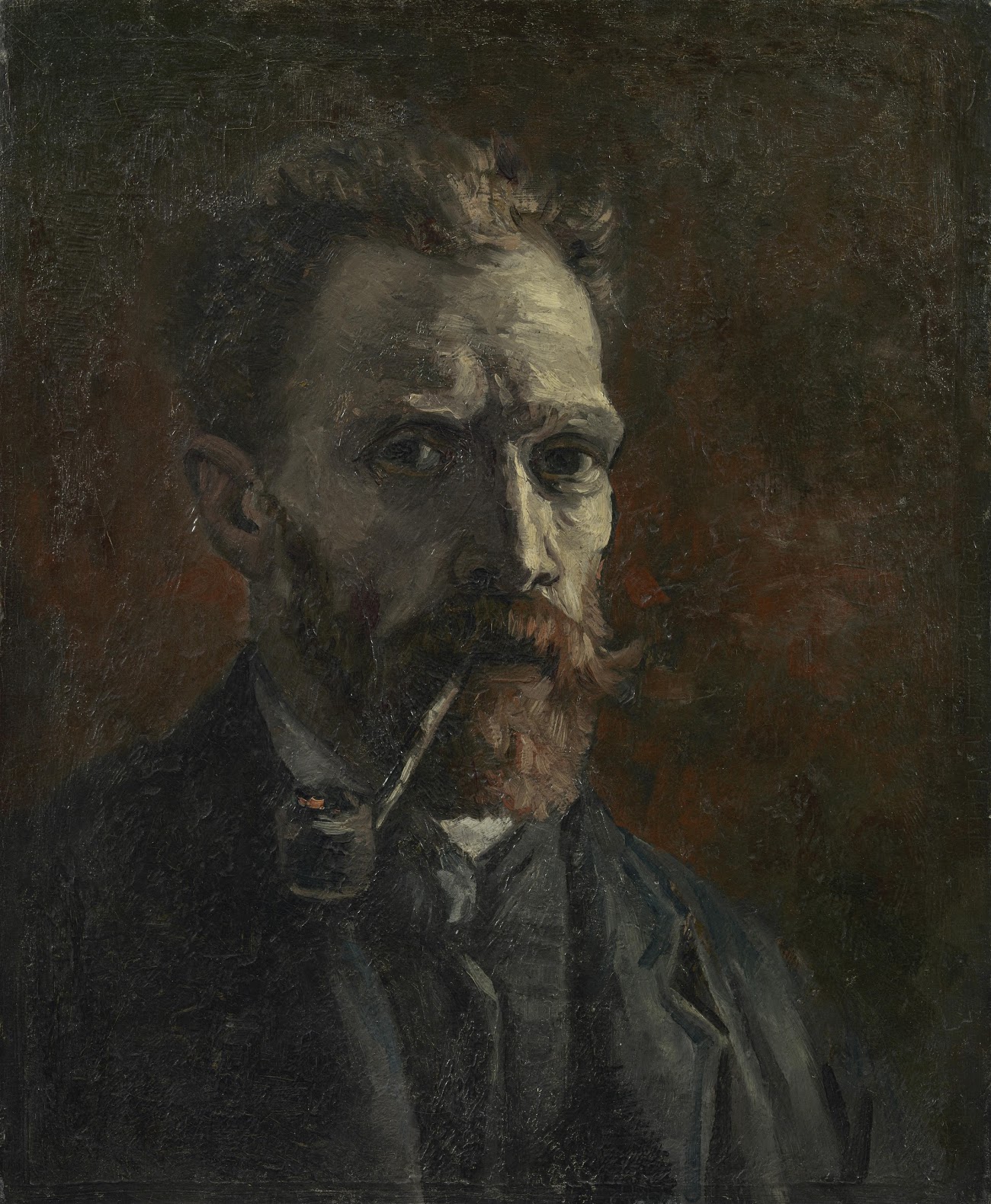
The opportunity to see all of Van Gogh’s bedroom paintings in one place may have passed us by for now—an exhibit in Chicago brought them together in 2016. But we can see the original bedroom at the yellow house in Arles in a virtual space, along with almost 1,000 more Van Gogh paintings and drawings, at the Van Gogh Museum in Amsterdam’s site. The digitized collection showcases a vast amount of Van Gogh’s work—including not only landscapes, but also his many portraits, self-portraits, drawings, city scenes, and still-lifes.
One way to approach these works is through the unifying themes above: how does van Gogh use color to communicate space and place, and to what effect? Even in portraits and still-lifes, his figures compete with the ground. The scored and scalloped paintings of walls, floors, and wallpaper force our attention past the staring eyes of the painter or the finely-rendered fruits and shoes, and into the depths and textures of shadow and light. We begin to see people and objects as inseparable from their surroundings.
“Painting is a faith,” Van Gogh once wrote, and it is as if his paintings ask us to contemplate the spiritual unity of all things; the same animating flame brings every object in his blazing worlds to life. The Van Gogh Museum houses the largest collection of the artist’s work in the world. On their website you can read essays about his life and work, plan a visit, or shop at the online store. But most importantly, you can experience the stunning breadth of his art through your screen—no replacement for the physical spaces of galleries, but a worthy means nonetheless of communing with Van Gogh’s vision.
We're hoping to rely on loyal readers, rather than erratic ads. Please click the Donate button and support Open Culture. You can use Paypal, Venmo, Patreon, even Crypto! We thank you!
Open Culture scours the web for the best educational media. We find the free courses and audio books you need, the language lessons & educational videos you want, and plenty of enlightenment in between.