John Cleese’s Comedically Explains the Psychological Advantages of Extremism: “It Makes You Feel Good Because It Provides You with Enemies”

Extrem­ist: in any polit­i­cal squab­ble, and espe­cial­ly any online polit­i­cal squab­ble, the label is sure to get slapped on some­one soon­er or lat­er. Of course, we nev­er con­sid­er our­selves extrem­ists: it’s the para­me­ters of accept­able polit­i­cal dis­cus­sion that wrong­ly frame our entire­ly rea­son­able, truth-informed views. But what if we were to embrace the extreme? “What we nev­er hear about extrem­ism is its advan­tages,” says Mon­ty Python’s John Cleese in the tele­vi­sion adver­tise­ment above. “The biggest advan­tage of extrem­ism is that it makes you feel good because it pro­vides you with ene­mies.” When you have ene­mies, “you can pre­tend that all the bad­ness in the whole world is in your ene­mies and all the good­ness in the whole world is in you.”

If you “have a lot of anger and resent­ment in you any­way,” you can jus­ti­fy your own unciv­i­lized behav­ior “because these ene­mies of yours are such very bad per­sons, and that if it was­n’t for them, you’d actu­al­ly be good-natured and cour­te­ous and ratio­nal all the time.” Sign on with the “hard left,” Cleese says, and you’ll receive “their list of autho­rized ene­mies: almost all kinds of author­i­ty, espe­cial­ly the police, the City, Amer­i­cans, judges, multi­na­tion­al cor­po­ra­tions, pub­lic schools, fur­ri­ers, news­pa­per own­ers, fox hunters, gen­er­als, class trai­tors — and of course, mod­er­ates.” If you pre­fer the “hard right,” they have a list of their own, one includ­ing “noisy minor­i­ty groups, unions, Rus­sia, weirdos, demon­stra­tors, wel­fare sponges, med­dle­some cler­gy, peaceniks, the BBC, strik­ers, social work­ers, com­mu­nists — and of course, mod­er­ates.”

As Cleese tweet­ed this past week­end, “Hard to tell if I record­ed this 30 years or 10 min­utes ago.” In fact he record­ed it more than 30 years ago, as an endorse­ment of the cen­trist SDP-Lib­er­al Alliance between the Unit­ed King­dom’s Social Demo­c­ra­t­ic Par­ty and Lib­er­al Par­ty. Hav­ing formed in 1981 and gone defunct by 1988 (when it became the par­ty now known as the Lib­er­al Democ­rats), the SDP-Lib­er­al Alliance leaves lit­tle in the way of a lega­cy, but this clip has only grown more rel­e­vant with time. As an extrem­ist, Cleese reminds us “you can strut around abus­ing peo­ple and telling them you could eat them for break­fast and still think of your­self as a cham­pi­on of the truth, a fight­er for the greater good, and not the rather sad, para­noid schizoid that you real­ly are” — a state­ment that, uttered in our inter­net era, would sure­ly make more than a few ene­mies.

via Boing­Bo­ing

Relat­ed Con­tent:

Mon­ty Python’s John Cleese Wor­ries That Polit­i­cal Cor­rect­ness Will Lead Us into a Humor­less World, Rem­i­nis­cent of Orwell’s 1984

John Cleese on How “Stu­pid Peo­ple Have No Idea How Stu­pid They Are” (a.k.a. the Dun­ning-Kruger Effect)

John Cleese Cre­ates Ads for the Amer­i­can Philo­soph­i­cal Asso­ci­a­tion

The Psy­chol­o­gy That Leads Peo­ple to Vote for Extrem­ists & Auto­crats: The The­o­ry of Cog­ni­tive Clo­sure

John Cleese Plays the Dev­il, Makes a Spe­cial Appeal for Hell, 1966

Based in Seoul, Col­in Mar­shall writes and broad­casts on cities, lan­guage, and cul­ture. His projects include the book The State­less City: a Walk through 21st-Cen­tu­ry Los Ange­les and the video series The City in Cin­e­ma. Fol­low him on Twit­ter at @colinmarshall, on Face­book, or on Insta­gram.

When Punk & Reggae Fans Launched the “Rock Against Racism” Movement and Pushed Back Against Britain’s Racist Right (1976)

The UK of the late-70s was, in many unfor­tu­nate respects, like the UK (and US) of today, with far-right attacks against West Indi­an and Asian immi­grants becom­ing rou­tine, along with increased aggres­sion from the police. Enoch Powell’s inflam­ma­to­ry 1968 “Rivers of Blood” speech (denounced in the papers as a naked “appeal to racial hatred) ener­gized the far-right Nation­al Front. Nazi punks and skin­heads began vio­lent cam­paigns in the mid-70s. A very hot sum­mer in 1976 saw a riot at the Not­ting­ham Car­ni­val, when police attacked the West Indi­an fes­ti­val. Car­ni­val-goers fought back, includ­ing the Clash’s Joe Strum­mer and Paul Simenon, who describe the events below.

Strum­mer was inspired to pen “White Riot,” a call to arms for white punks against the police and far right, and the band moved increas­ing­ly toward reg­gae, includ­ing a cov­er of Junior Murvin’s “Police & Thieves.”

Into this boil­ing caul­dron stepped Eric Clap­ton to drunk­en­ly declare his sup­port for Pow­ell onstage in Birm­ing­ham and repeat­ed­ly chant the Nation­al Front slo­gan “keep Britain white!” In out­raged response, pho­tog­ra­ph­er and for­mer Clap­ton fan Red Saun­ders and oth­ers found­ed Rock Against Racism, pub­lish­ing a let­ter in the NME to recruit peo­ple to join the cause. The short note addressed Clap­ton’s glar­ing hypocrisy direct­ly: “Come on Eric… Own up. Half your music is black. You’re rock music’s biggest colonist.”

The let­ter artic­u­lat­ed the dis­gust felt by thou­sands around the coun­try. Paul Fur­ness, work­ing as a med­ical records clerk in Leeds at the time, found the anti-racist dec­la­ra­tion “pos­i­tive” and “life affirm­ing,” as he says in the short film at the top. He helped orga­nize the first Rock Against Racism car­ni­val in 1978 and was amazed “that there were thou­sands and thou­sands and thou­sands of peo­ple descend­ing on Lon­don. The excite­ment of it, just this real­iza­tion…. That you can change things, that you can could actu­al­ly make a dif­fer­ence.”

Cre­at­ed with the Anti-Nazi League, the April 1978 Rock Against Racism Car­ni­val in London’s Vic­to­ria Park was the moment “punk became a pop­ulist move­ment to be reck­oned with,” writes Ian Fort­nam at Clas­sic Rock. (Learn more in the doc­u­men­tary above.) “Nev­er before had so many peo­ple been mobi­lized for that sort of cause,” head­lin­er Tom Robin­son remem­bers. “It was our Wood­stock.” The Clash were there—you can hear their per­for­mance just above. It was, writes Fort­nam, “their finest hour”:

The Clash were on fire, feed­ing off of an ecsta­t­ic audi­ence and pre­mier­ing as yet unrecord­ed mate­r­i­al (even­tu­al­ly released on Give ‘Em Enough Rope the fol­low­ing Novem­ber) like Tom­my Gun and The Last Gang In Town. The show was a rev­e­la­tion.

The Rock Against Racism Car­ni­val brought togeth­er punk and reg­gae bands, and fans of both, start­ing a tra­di­tion of mul­ti-racial line­ups at RAR con­certs into the 80s that fea­tured X‑Ray Specs, the Ruts, the Slits, Gen­er­a­tion X, Elvis Costel­lo, Steel Pulse, Aswad, and Misty in Roots, among many oth­ers. “When you saw a band like ours jam­ming with Tom Robin­son or Elvis Costel­lo,” says singer Poko of Misty in Roots, who played more RAR shows than any oth­er band, “it showed that if you love music we can all live togeth­er.”

That mes­sage res­onat­ed through­out the coun­try and the sound sys­tems of the streets. At the first Car­ni­val, Fort­nam writes, “pha­lanx­es of police held back counter-demon­strat­ing skin­heads” while an esti­mat­ed 80,000 peo­ple marched through the streets chant­i­ng “Black and white unite and fight, smash the Nation­al Front.” Rock Against Racism became a mas­sive move­ment that did cre­ate uni­ty and pushed back suc­cess­ful­ly against far-right attacks. But it wasn’t only about the pol­i­tics, as pho­tog­ra­ph­er Syd Shel­ton recalls below. It was also a fight for what British punk would become—the music of fas­cism and the far right or a syn­the­sis of sounds and rhythms from the for­mer Empire and its for­mer colonies.

Relat­ed Con­tent:

“Stay Free: The Sto­ry of the Clash” Nar­rat­ed by Pub­lic Enemy’s Chuck D: A New 8‑Episode Pod­cast

Lon­don Call­ing: A New Muse­um Exhi­bi­tion Cel­e­brates The Clash’s Icon­ic Album

The Clash Play Their Final Show (San Bernardi­no, 1983)

Josh Jones is a writer and musi­cian based in Durham, NC. Fol­low him at @jdmagness.

Can Reality TV Save the Fine Arts? Body Painter Robin Slonina (Skin Wars) on Pretty Much Pop: A Culture Podcast #47

Fine art and real­i­ty TV are typ­i­cal­ly rat­ed our high­est and low­est forms of enter­tain­ment, yet cre­ative com­pe­ti­tion shows com­bine the two. Robin Sloni­na grad­u­at­ed from Chicago’s Art Insti­tute and lived in the gallery world doing sculp­tures, paint­ings and instal­la­tions for sev­er­al years before dis­cov­er­ing body paint­ing and open­ing Skin City Body Paint­ing in Las Vegas, per­haps the fore­most insti­tu­tion of its type in the world. Robin then served as a judge (along with RuPaul!) on the show Skin Wars for its three sea­sons (2014–2017) before The Game Show Net­work decid­ed that the whole thing was too expen­sive to pro­duce. She joins Mark, Eri­ca, and Bri­an to  fig­ure out the degree to which the com­pe­ti­tion real­i­ty show for­mat lets the art shine through. To learn more, scan these rel­e­vant arti­cles: Learn more at prettymuchpop.com. This episode includes bonus dis­cus­sion with Robin about pub­lic art and the protests that you can only hear by sup­port­ing the pod­cast at patreon.com/prettymuchpop. This pod­cast is part of the Par­tial­ly Exam­ined Life pod­cast net­work. Pret­ty Much Pop: A Cul­ture Pod­cast is the first pod­cast curat­ed by Open Cul­ture. Browse all Pret­ty Much Pop posts or start with the first episode.

When John Maynard Keynes Predicted a 15-Hour Workweek “in a Hundred Year’s Time” (1930)

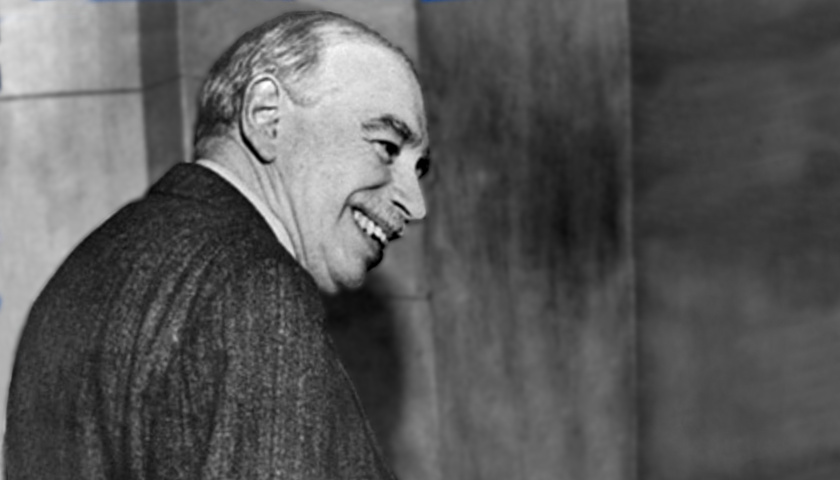
Image by IMF, via Wiki­me­dia Com­mons

That which stands first, and is most to be desired by all hap­py, hon­est and healthy-mind­ed men, is ease with dig­ni­ty.

—Cicero, Pro Ses­tio, XLV., 98

There is much to admire in Roman ideas about the use of leisure time, what Michel Fou­cault referred to as “the care of the self.” The Latin words for work and leisure them­selves give us a sense of what should have pri­or­i­ty in life. Negotium, or busi­ness, is a nega­tion, with the lit­er­al mean­ing of “the nonex­is­tence of leisure” (otium). The Eng­lish word—considered in its parts as “busy-ness”—doesn’t real­ly sound much more appeal­ing.

The notion that every­one, not just a prop­er­tied elite, how­ev­er, should be enti­tled to leisure time came about only rel­a­tive­ly recently—mostly advo­cat­ed by rad­i­cals and trade union­ists. In the U.S., anar­chists and strik­ing work­ers in Chica­go fought against police in 1886 dur­ing the Hay­mar­ket Affair to achieve “Eight Hours for Work, Eight Hours for Rest, Eight Hours for What We Will.” In 1912, women-led immi­grant strik­ers chant­ed “Bread and Ros­es” in Lawrence, Mass­a­chu­setts, pro­claim­ing their right to more than bare sur­vival.

After the achieve­ment of the 40-hour work­week, paid vaca­tions, and oth­er labor con­ces­sions, many influ­en­tial fig­ures believed that egal­i­tar­i­an access to leisure would only increase in the 20th cen­tu­ry. Among them was econ­o­mist John May­nard Keynes, who fore­cast in 1930 that labor-sav­ing tech­nolo­gies might lead to a 15-hour work­week when his grand­chil­dren came of age. Indeed, he titles his essay, “Eco­nom­ic Pos­si­bil­i­ty for our Grand­chil­dren.”

Writ­ing at the start of the Great Depres­sion, Keynes finds rea­son for opti­mism. “We are suf­fer­ing,” he writes, “not from the rheumat­ics of old age, but from the grow­ing-pains of over-rapid changes, from the painful­ness of read­just­ment between one eco­nom­ic peri­od and anoth­er.” Keynes’ essay con­cerns what he calls the “eco­nom­ic prob­lem,” which is not only the prob­lem of mass unem­ploy­ment but also, in his esti­ma­tion, the abil­i­ty of cap­i­tal­ism to pro­vide a decent stan­dard of liv­ing for every­one. He did not see its fail­ure to do so as evi­dence of a more fun­da­men­tal dys­func­tion:

[T]his is only a tem­po­rary phase of mal­ad­just­ment. All this means in the long run that mankind is solv­ing its eco­nom­ic prob­lem. I would pre­dict that the stan­dard of life in pro­gres­sive coun­tries one hun­dred years hence will be between four and eight times as high as it is to-day. There would be noth­ing sur­pris­ing in this even in the light of our present knowl­edge. It would not be fool­ish to con­tem­plate the pos­si­bil­i­ty of afar greater progress still.

Many econ­o­mists shared Keynes’ opti­mism through the 1970s, “a time when rev­o­lu­tion­ary change still seemed like an immi­nent pos­si­bil­i­ty,” writes John Quig­gan, pro­fes­sor of eco­nom­ics at the Uni­ver­si­ty of Queens­land.” Utopi­an ideas were every­where, exem­pli­fied by the Sit­u­a­tion­ist slo­gan of 1968: ‘Be real­is­tic. Demand the impos­si­ble.’” Cult fig­ures like Buck­min­ster Fuller explained, as had Keynes decades ear­li­er, how tech­nol­o­gy could free every­one from the tyran­ny of the labor mar­ket and the scourge of “use­less jobs.”

Keynes and oth­ers made a “case for leisure, in the sense of free time to use as we please, as opposed to idleness”—a dis­tinc­tion that draws from the ancient philoso­phers. “But Keynes offered some­thing quite new: the idea that leisure could be an option for all, not mere­ly for an aris­to­crat­ic minor­i­ty.” He was, obvi­ous­ly, mis­tak­en. “At least in the Eng­lish-speak­ing world,” Quig­gan writes, “the seem­ing­ly inevitable progress towards short­er work­ing hours has halt­ed. For many work­ers it has gone into reverse.”

That has cer­tain­ly been the case for the major­i­ty of work­ers in the U.S., at least before the nov­el coro­n­avirus led to mass lay­offs and reduced hours. What hap­pened? For one thing, the ascen­sion of neolib­er­al eco­nom­ics in the late 1970s, and the elec­tions of Ronald Rea­gan and Mar­garet Thatch­er, began a long slow decline of orga­nized labor. “Employ­ers have had increas­ing desire for work­ers to work long hours,” says Juli­et Schor, pro­fes­sor of soci­ol­o­gy at Boston Col­lege. “And work­ers haven’t had the pow­er to resist that upward pres­sure.”

Keynes’ pre­dic­tions res­onat­ed with NPR’s David Kesten­baum, who inter­viewed some of Keynes’ descen­dants, the clos­est thing he had to grand­chil­dren, in a short seg­ment on Plan­et Mon­ey in 2015. One Keynes rela­tion points out the irony that the man him­self “died from work­ing too hard.” How can those of us who aren’t glob­al­ly famous econ­o­mists help end the tyran­ny of over­work? Maybe a lot more strik­ing work­ers mak­ing demands; maybe a uni­ver­sal basic income or some­thing like Bhutan’s “gross domes­tic hap­pi­ness” index?

Keynes may have erred in his pre­dic­tions of the future (though he seems to have under­stood the needs of his moment well enough), but he may not have been wrong to view the eco­nom­ic tur­moil of his time as a rad­i­cal oppor­tu­ni­ty for utopi­an change and bet­ter liv­ing for every­one. Over­turn­ing the dire con­di­tions of the present for our own grand­chil­dren will require not only hard work, but the leisure to do some vision­ary futur­ist think­ing. Read Keynes’ full essay here.

via Aeon

Relat­ed Con­tent:

An Ani­mat­ed Intro­duc­tion to Econ­o­mist John May­nard Keynes

Buck­min­ster Fuller Rails Against the “Non­sense of Earn­ing a Liv­ing”: Why Work Use­less Jobs When Tech­nol­o­gy & Automa­tion Can Let Us Live More Mean­ing­ful Lives

The Case for a Uni­ver­sal Basic Income in the Time of COVID-19

Josh Jones is a writer and musi­cian based in Durham, NC. Fol­low him at @jdmagness

A Collection of 500 Free Textbooks from Springer

FYI. To help sup­port every­one dur­ing the COVID-19 lock­down, Springer has released a ton of free text­books. Since the Springer web­site isn’t super user-friend­ly, some­one cre­at­ed a web­page that makes it eas­i­er to find and even down­load these texts. The books will remain free at least through the end of July. So start rum­mag­ing now.

If you would like to sign up for Open Culture’s free email newslet­ter, please find it here. It’s a great way to see our new posts, all bun­dled in one email, each day.

If you would like to sup­port the mis­sion of Open Cul­ture, con­sid­er mak­ing a dona­tion to our site. It’s hard to rely 100% on ads, and your con­tri­bu­tions will help us con­tin­ue pro­vid­ing the best free cul­tur­al and edu­ca­tion­al mate­ri­als to learn­ers every­where. You can con­tribute through Pay­Pal, Patre­on, and Ven­mo (@openculture). Thanks!

Relat­ed Con­tent:

1,700 Free Online Cours­es from Top Uni­ver­si­ties

1,000 Free Audio Books: Down­load Great Books for Free

The 150 Best Pod­casts to Enrich Your Mind

by | Permalink | Make a Comment ( 6 ) |

The Bird Library: A Library Built Especially for Our Fine Feathered Friends

“The two things I love most are nov­els and birds,” said Jonathan Franzen in a Guardian pro­file not long ago. “They’re both in trou­ble, and I want to advo­cate for both of them.” Chances are that even that famous­ly inter­net-averse nov­el­ist-turned-bird­watch­er would enjoy the online attrac­tion called The Bird Library, “where the need to feed meets the need to read.” Its live Youtube stream shows the goings-on of a tiny library built espe­cial­ly for our feath­ered friends. “Perched in a back­yard in the city of Char­lottesville,” writes Atlas Obscu­ra’s Claire Voon, “it is the pas­sion project of librar­i­an Rebec­ca Flow­ers and wood­work­er Kevin Cwali­na, who brought togeth­er their skills and inter­ests to show­case the lives of their back­yard birds.”

Recent vis­i­tors, Voon adds, “have includ­ed a strik­ing rose-breast­ed gros­beak, a car­di­nal that looks like it’s vap­ing, and a trio of mourn­ing doves seem­ing­ly caught in a seri­ous meet­ing.” The Bird Library’s web site offers an archive of images cap­tur­ing the insti­tu­tion’s wee reg­u­lars, all accom­pa­nied by enliven­ing cap­tions. (“Why did the bird go to the library?” “He was look­ing for book­worms.”)

Just as year-round bird­watch­ing brings plea­sures dis­tinct from more casu­al ver­sions of the pur­suit, year-round view­ing of The Bird Library makes for a deep­er appre­ci­a­tion not just of the vari­ety of species rep­re­sent­ed among its patrons — the cre­ators have count­ed 20 so far — but for the sea­son­al changes in the space’s decor, espe­cial­ly around Christ­mas­time.

As long­time view­ers know, this isn’t the orig­i­nal Bird Library. “In late 2018 we demol­ished the old Bird Library and start­ed design and devel­op­ment of a new and improved Bird Library 2.0! Com­plete with a large con­crete base for increased capac­i­ty and a big­ger cir­cu­la­tion desk capa­ble of feed­ing all our guests all day long.” Just as libraries for humans need occa­sion­al ren­o­va­tion, so, it seems, do libraries for birds — a con­cept that could soon expand out­side Vir­ginia. “Cwali­na hopes to even­tu­al­ly pub­lish an open-access plan for a sim­i­lar bird library, so that oth­er bird­ers can build their own ver­sions,” reports Voon. And a bird-lov­ing 21st-cen­tu­ry Andrew Carnegie steps for­ward to ensure their archi­tec­tur­al respectabil­i­ty, might we sug­gest going with mod­ernism?

via Atlas Obscu­ra

Relat­ed Con­tent:

Mod­ernist Bird­hous­es Inspired by Bauhaus, Frank Lloyd Wright and Joseph Eich­ler

Free Enter­tain­ment for Cats and Dogs: Videos of Birds, Squir­rels & Oth­er Thrills

Down­load 435 High Res­o­lu­tion Images from John J. Audubon’s The Birds of Amer­i­ca

Explore an Inter­ac­tive Ver­sion of The Wall of Birds, a 2,500 Square-Foot Mur­al That Doc­u­ments the Evo­lu­tion of Birds Over 375 Mil­lion Years

RIP Todd Bol, Founder of the Lit­tle Free Library Move­ment: He Leaves Behind 75,000 Small Libraries That Pro­mote Read­ing World­wide

McDonald’s Opens a Tiny Restau­rant — and It’s Only for Bees

Based in Seoul, Col­in Mar­shall writes and broad­casts on cities, lan­guage, and cul­ture. His projects include the book The State­less City: a Walk through 21st-Cen­tu­ry Los Ange­les and the video series The City in Cin­e­ma. Fol­low him on Twit­ter at @colinmarshall, on Face­book, or on Insta­gram.

Listen to Medieval Covers of “Creep,” “Pumped Up Kicks,” “Bad Romance” & More by Hildegard von Blingin’

All ye bul­ly-rooks with your buskin boots 

Best ye go, best ye go

Out­run my bow

All ye bul­ly-rooks with your buskin boots

Best ye go, best ye go, faster than mine arrow

If bard­core is a thing—and trust us, it is right now—Hilde­gard von Blin­gin’ is the bright­est star in its fir­ma­ment.

The unknown vocal­ist, pure of throat, pays heed to the fas­ci­nat­ing 12th-cen­tu­ry abbess and com­pos­er Saint Hilde­gard of Bin­gen by choice of pseu­do­nym, while demon­strat­ing a sim­i­lar flair for poet­ic lan­guage.

Von Blingin’s nim­ble lyri­cal rework­ing of Fos­ter the People’s 2010 mon­ster hit, “Pumped Up Kicks,” makes deft use of fel­low bard­core prac­tion­er Cor­nelius Link’s copy­right-free instru­men­tal score and the clos­est medieval syn­onyms avail­able.

For the record, Webster’s 1913 dic­tio­nary defines a “bul­ly-rook” as a bul­ly, but the term could also be used in a josh­ing, chops-bust­ing sort of way, such as when The Mer­ry Wives of Windsor’s innkeep­er trots it out to greet lov­able repro­bate, Sir John Fal­staff.

And as any fan of Game of Thrones or The Hunger Games can attest, an arrow can prove as lethal as a gun.

Song­writer Mark Fos­ter told Billboard’s Xan­der Zell­ner last Decem­ber that he had been think­ing of retir­ing “Pumped Up Kicks,” as lis­ten­ers are now con­vinced it’s a boun­cy-sound­ing take on school shoot­ings, rather than a more gen­er­al­ized attempt to get inside the head of a troubled—and fictional—youngster.

With school out of ses­sion since March, it’s an excel­lent time for von Blin­gin’ to pick up the torch and bear this song back to the past.

Dit­to the tim­ing of von Blingin’s ode to Lady Gaga’s “Bad Romance”:

I want thine ugly, I want thy dis­ease

Take aught from thee shall I if it can be free

No Celtic harp, wood­en recorders, or adjust­ment of pos­ses­sive pro­nouns can dis­guise the jolt those open­ing lyrics assume in the mid­dle of a glob­al pan­dem­ic.

(St. Hilde­gard escaped the medieval period’s best known plague, the Black Death, by virtue of hav­ing been born some 250 years before it struck.)

Von Blingin’s lat­est release is an extreme­ly faith­ful take on Radiohead’s “Creep”, with just a few minor tweaks to pull it into medieval lyri­cal align­ment:

Thou float’st like a feath­er

In a beau­ti­ful world

The com­ments sec­tion sug­gest that the peas­ants are eager to get in on the act.

Some are express­ing their enthu­si­asm in approx­i­mate olde Eng­lish…

Oth­ers ques­tion why smygel, eldrich, wyr­den or wastrel were not pressed into ser­vice as replace­ments for creep and weirdo..

To bor­row a phrase from one such jester, best get your requests in “before the tik­toks come for it.”

Lis­ten to Hilde­gard Von Blin­gin’ on Sound Cloud and check out the bard­core sub-red­dit for more exam­ples of the form.

Relat­ed Con­tent: 

Expe­ri­ence the Mys­ti­cal Music of Hilde­gard Von Bin­gen: The First Known Com­pos­er in His­to­ry (1098 – 1179)

Man­u­script Reveals How Medieval Nun, Joan of Leeds, Faked Her Own Death to Escape the Con­vent

1200 Years of Women Com­posers: A Free 78-Hour Music Playlist That Takes You From Medieval Times to Now

Ayun Hal­l­i­day is an author, illus­tra­tor, the­ater mak­er and Chief Pri­ma­tol­o­gist of the East Vil­lage Inky zine. Help con­tain the plague spread with her series of free down­load­able posters, encour­ag­ing cit­i­zens to wear masks in pub­lic set­tings. Fol­low her @AyunHalliday.

An Introduction to Thought Forms, the Pioneering 1905 Theosophist Book That Inspired Abstract Art: It Has Returned to Print

“It is some­times dif­fi­cult to appre­ci­ate the impact that the late-nine­teenth cen­tu­ry (and ongo­ing) occult move­ment called Theos­o­phy had on glob­al cul­ture,” Mitch Horowitz writes in his intro­duc­tion to the new­ly repub­lished 1905 Theo­soph­i­cal book, Thought Forms. That impact man­i­fest­ed “spir­i­tu­al­ly, polit­i­cal­ly, and artis­ti­cal­ly” in the work of lit­er­ary fig­ures like James Joyce and William But­ler Yeats and reli­gious fig­ures like Jid­du Krish­na­mur­ti, hand­picked as a teenag­er by Theosophist leader Charles W. Lead­beat­er to become the group’s mes­sian­ic World Teacher.

The Theo­soph­i­cal Soci­ety helped re-intro­duce Bud­dhism, or a new­ly West­ern­ized ver­sion, to West­ern Europe and the U.S., pub­lish­ing the 1881 “Bud­dhist Cat­e­chism” by Hen­ry Steel Olcott, a for­mer Colonel for the Union Army. Olcott co-found­ed the soci­ety in New York City in 1875 with Russ­ian occultist Hele­na Blavatsky. Soon after­ward, the group of spir­i­tu­al seek­ers relo­cat­ed to India. “Near­ly a cen­tu­ry before the Bea­t­les’ trek to Rishikesh,” writes Hor­witz, “Blavatsky and Olcott laid the tem­plate for the West­ern­er seek­ing wis­dom in the East.”

Theos­o­phy also had a sig­nif­i­cant influ­ence on mod­ern art, includ­ing the work of Wass­i­ly Kandin­sky, until recent­ly con­sid­ered the first Abstract painter—that is until the paint­ings of Hilma af Klint came to be wide­ly known. The reclu­sive Swedish artist, whom we’ve cov­ered here a few times before, came first, though no one knew it at the time. After show­ing her rev­o­lu­tion­ary abstract work to philoso­pher and one­time Ger­man and Aus­tri­an Theo­soph­i­cal Soci­ety leader Rudolf Stein­er, she was told to hide it for anoth­er fifty years.

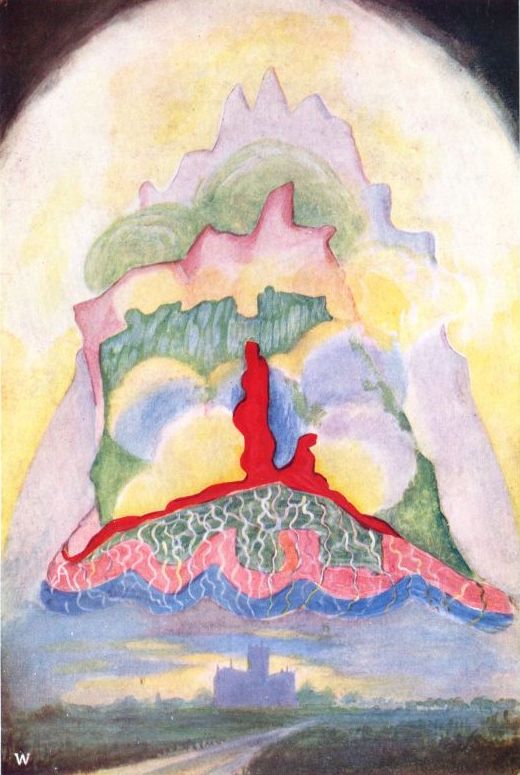
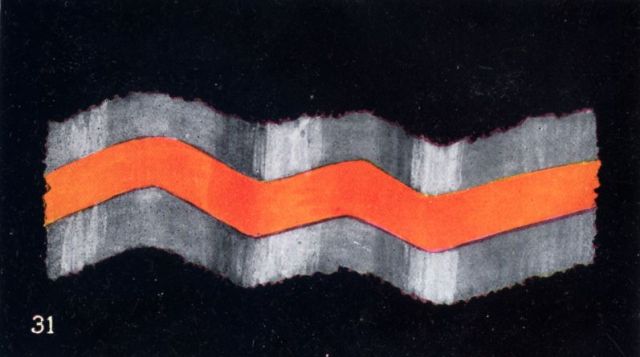
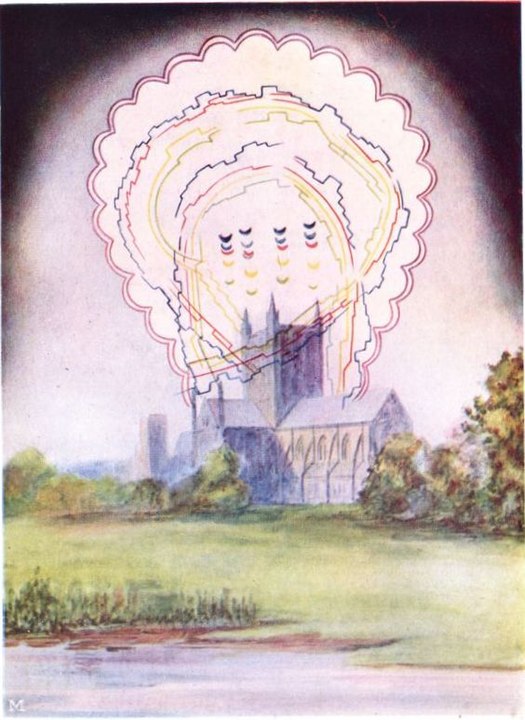
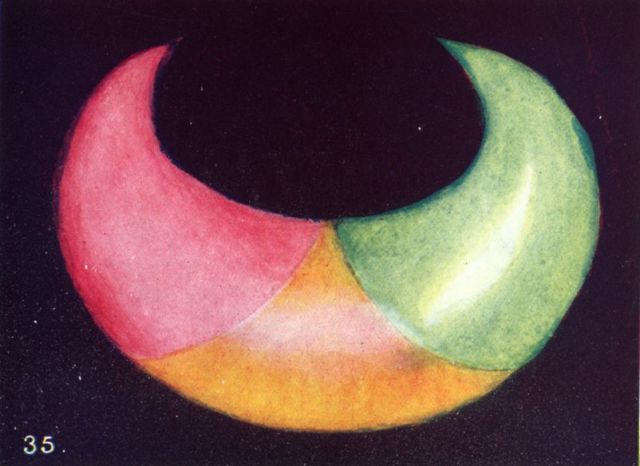
Theos­o­phy gained many promi­nent con­verts in the UK, Europe, and around the world. Af Klint joined the Swedish soci­ety and remained a mem­ber until 1915. The sym­bol­ism in her mys­te­ri­ous abstrac­tions, which she attrib­uted to clair­voy­ant com­mu­ni­ca­tion with “an enti­ty named Amaliel,” may also have been sug­gest­ed by the draw­ings in Thought Forms, an illus­trat­ed book cre­at­ed by Theo­soph­i­cal Soci­ety lead­ers Lead­beat­er and Annie Besant, who was “an ear­ly suf­frag­ist and polit­i­cal activist,” notes Sacred Bones Books. The small press will release a new edi­tion of the book online and in stores on Novem­ber 6. (See their Kick­starter page here and video trail­er below.)

Besant was “far ahead of her time as an artist and thinker. Theos­o­phy was the first occult group to open its doors to women and Thought Forms offers a reminder that the his­to­ry of mod­ernist abstrac­tion and women’s con­tri­bu­tion to it is still being writ­ten.” Although that unfold­ing his­to­ry cen­tral­ly includes af Klint and Besant, the lat­ter did not actu­al­ly make all of the illus­tra­tions we find in this strange book. She and Lead­beat­er claimed to have received, through clair­voy­ant means, “forms caused by def­i­nite thoughts thrown out by one of them, and also watched the forms pro­ject­ed by oth­er per­sons under the influ­ence of var­i­ous emo­tions.”

So Besant would write in 1896 in the Theo­soph­i­cal jour­nal Lucifer. After these “exper­i­ments,” the two then described going into trances and view­ing “auras, vor­tices, ether­ic mat­ter, astral pro­jec­tions, ener­gy forms, and oth­er expres­sions from the unseen world.” The two described these visions to a col­lec­tion of visu­al artists, who ren­dered them into the paint­ings in the 1905 book.

Among those who do study the Theo­soph­i­cal Society’s impact, its first gen­er­a­tion of publications—especially Olcott’s “Bud­dhist Cat­e­chism” and Blavatsky’s 1888 The Secret Doc­trine—are espe­cial­ly well-known texts. But Thought Forms may prove “the most wide­ly read, last­ing, and direct­ly influ­en­tial book to emerge from the rev­o­lu­tion that Theos­o­phy ignit­ed,” Horowitz argues.

“By many esti­mates, Thought Forms marks the ger­mi­na­tion of abstract art”—originated through sev­er­al artists’ best guess at what visions of psy­chic phe­nom­e­na might look like. You can fol­low Sacred Bones’ Kick­starter cam­paign here.

Relat­ed Con­tent:  

A Vision­ary 115-Year-Old Col­or The­o­ry Man­u­al Returns to Print: Emi­ly Noyes Vanderpoel’s Col­or Prob­lems

Dis­cov­er Hilma af Klint: Pio­neer­ing Mys­ti­cal Painter and Per­haps the First Abstract Artist

New Hilma af Klint Doc­u­men­tary Explores the Life & Art of the Trail­blaz­ing Abstract Artist

Josh Jones is a writer and musi­cian based in Durham, NC. Fol­low him at @jdmagness

« Go BackMore in this category... »
Quantcast