Miles Davis is Attacked, Beaten & Arrested by the NYPD Outside Birdland, Eight Days After the Release of Kind of Blue (1959)

It is hard, on the oth­er hand, to blame the police­man, blank, good-natured, thought­less, and insu­per­a­bly inno­cent, for being such a per­fect rep­re­sen­ta­tive of the peo­ple he serves. He, too, believes in good inten­tions and is astound­ed and offend­ed when they are not tak­en for the deed. 

—James Bald­win

James Baldwin’s 1960 essay “Fifth Avenue, Uptown” is rich with heartrend­ing ironies and razor-sharp refu­ta­tions of the usu­al apolo­gies for racist vio­lence in Amer­i­ca. It does not mat­ter, Bald­win argues, whether indi­vid­u­als are “good” or “bad” apples in a sys­tem designed to enforce seg­re­ga­tion, whether by force of law or brute force of will. “None of the police commissioner’s men,” writes Bald­win, “even with the best will in the world, have any way of under­stand­ing the lives led by the peo­ple they swag­ger about in twos and threes con­trol­ling.”

This bru­tal igno­rance extends wide­ly to rad­i­cals, dis­si­dents, peace­ful pro­test­ers, and hap­less bystanders dur­ing times of mass polit­i­cal unrest. (As Ed Kil­go­re points out at New York mag­a­zine, the term “police riot” orig­i­nat­ed in the 1968 Chica­go Demo­c­ra­t­ic Con­ven­tion.) The bru­tal­i­ty we’ve seen vis­it­ed on elder­ly white activists, jour­nal­ists, and even local politi­cians dur­ing recent protests (against bru­tal­i­ty) has been a dai­ly real­i­ty for mil­lions of black Amer­i­cans, even Amer­i­cans as famous as Miles Davis.

In 1959—eight days after the release of Kind of Blue and just after record­ing a broad­cast for armed forces radio—Davis was harassed and then vicious­ly attacked by the police out­side Bird­land in Mid­town Man­hat­tan. Then he was arrest­ed for resist­ing arrest and dragged to the police sta­tion for book­ing and fur­ther harass­ment. You can hear the sto­ry in a clip above from The Miles Davis Sto­ry. Davis him­self recount­ed the event in his auto­bi­og­ra­phy:

I had just fin­ished doing an Armed Forces Day broad­cast, you know, Voice of Amer­i­ca and all that bull­shit. I had just walked this pret­ty white girl named Judy out to get a cab. She got in the cab, and I’m stand­ing there in front of Bird­land wring­ing wet because it’s a hot, steam­ing, mug­gy night in August. 

This white police­man comes up to me and tells me to move on. I said, “Move on, for what? I’m work­ing down­stairs. That’s my name up there, Miles Davis,” and I point­ed to my name on the mar­quee all up in lights.

He said, “I don’t care where you work, I said move on! If you don’t move on I’m going to arrest you.”

I just looked at his face real straight and hard, and I didn’t move. Then he said, “You’re under arrest!” He reached for his hand­cuffs, but he was step­ping back…I kind of leaned in clos­er because I wasn’t going to give him no dis­tance so he could hit me on the head… A crowd had gath­ered all of a sud­den from out of nowhere, and this white detec­tive runs in and BAM! hits me on the head. I nev­er saw him com­ing. Blood was run­ning down the kha­ki suit I had on.

Davis, who grew up wealthy in St. Louis, came from vast­ly dif­fer­ent cir­cum­stances than Bald­win. He under­stood the vio­lence of the South, but not of North­ern cities. Nonethe­less, his expe­ri­ence with the police was iden­ti­cal, whether in Mis­souri or New York. “Now I would have expect­ed this kind of bull about resist­ing arrest and all back in East St Louis,” he wrote, “but not here in New York City, which is sup­posed to be the slick­est, hippest city in the world. But then, again, I was sur­round­ed by white folks and I have learned that when that hap­pens, if you’re black, there is no jus­tice. None.”

He speaks from bit­ter expe­ri­ence. Davis lat­er sued the NYPD, but his case was dis­missed, “despite a moun­tain of evi­dence in his favour,” writes Queen’s Uni­ver­si­ty researcher Mitchell Crouse, “includ­ing mul­ti­ple wit­ness state­ments, pho­to­graph­ic evi­dence, and the fact that at least one of the offi­cers was drunk.”

Bald­win and Davis both wrote of what Jamelle Bouie describes in The New York Times as the raw knowl­edge afford­ed those who live under con­stant sur­veil­lance and threats of assault, arrest, or mur­der by agents of the state: “African-Amer­i­can observers have nev­er had any illu­sions about who the police are meant to serve.” See the many pho­tographs of a bloody Miles tak­en dur­ing and after his arrest at the 1959 Project.

Relat­ed Con­tent:

Miles Davis Icon­ic 1959 Album Kind of Blue Turns 60: Revis­it the Album That Changed Amer­i­can Music

Miles Davis’ Bitch­es Brew Turns 50: Cel­e­brate the Funk-Jazz-Psych-Rock Mas­ter­piece

Miles Davis Dish­es Dirt on His Fel­low Jazz Musi­cians: “The Trom­bone Play­er Should be Shot”; That Ornette is “F‑ing Up the Trum­pet”

Josh Jones is a writer and musi­cian based in Durham, NC. Fol­low him at @jdmagness

Barcelona Opera Re-Opens with a Performance for 2,300 Potted Plants: Watch It Online

Writes The Guardian: “Barcelon­a’s El Liceu opera house reopened on Mon­day with a con­cert to an audi­ence of 2,292 pot­ted plants. The event took place a day after Spain’s state of emer­gency came to an end after more than three months. It was the work of Span­ish con­cep­tu­al artist Euge­nio Ampu­dia, who said the inspi­ra­tion came from a con­nec­tion he built with nature dur­ing the pan­dem­ic: ‘I watched what was going on with nature dur­ing all this time. I heard many more birds singing. And the plants in my gar­den and out­side grow­ing faster. And, with­out a doubt, I thought that maybe I could now relate in a much more inti­mate way with peo­ple and nature.’ ”

You can watch the per­for­mance below. It begins at the 8:30 mark. And do know that plants will be donat­ed to front­line health work­ers.

If you would like to sign up for Open Culture’s free email newslet­ter, please find it here. It’s a great way to see our new posts, all bun­dled in one email, each day.

If you would like to sup­port the mis­sion of Open Cul­ture, con­sid­er mak­ing a dona­tion to our site. It’s hard to rely 100% on ads, and your con­tri­bu­tions will help us con­tin­ue pro­vid­ing the best free cul­tur­al and edu­ca­tion­al mate­ri­als to learn­ers every­where. You can con­tribute through Pay­Pal, Patre­on, and Ven­mo (@openculture). Thanks!

In 1968, a Teenager Convinced Thelonious Monk to Play a Gig at His High School to Promote Racial Unity; Now the Concert Recording Is Getting Released

In 1964, Thelo­nious Monk appeared on the cov­er of TIME. He had been cho­sen for an exten­sive pro­file, his biog­ra­ph­er Robin D.G. Kel­ley tells Ter­ry Gross, because the mag­a­zine thought Miles Davis or Ray Charles might be “too con­tro­ver­sial.” Monk, it was thought “had no com­plaints… he was­n’t so polit­i­cal.” This is not exact­ly so, Kel­ley writes in Thelo­nious Monk: The Life and Times of an Amer­i­can Orig­i­nal. The eccen­tric genius played ben­e­fit con­certs through­out the 60s. But he was also begin­ning to suf­fer from men­tal health issues that remained undi­ag­nosed to the end of his life. Still, he fol­lowed Civ­il Rights strug­gles close­ly. “Thelo­nious was moved by these events” and won­dered what more he could do.

That year Monk had an oppor­tu­ni­ty to make a direct con­tri­bu­tion by play­ing the most­ly white Palo Alto High School after the most “racial­ly tense” sum­mer of the decade, a moment in his­to­ry eeri­ly like the cur­rent time. The show was orga­nized by enter­pris­ing 16-year-old junior Dan­ny Sch­er, who would go on to become a major con­cert pro­mot­er.

Through his local con­nec­tions, Sch­er con­tact­ed Monk’s man­ag­er and arranged the book­ing. In order to fill the audi­to­ri­um, he pro­mot­ed the show in his wealthy Palo Alto enclave, in the local news­pa­pers, and in large­ly seg­re­gat­ed East Palo Alto. (“Against the urg­ing of the police depart­ment,” notes Jazz­iz.) Scher’s hard work turned the event into a rous­ing suc­cess, Kel­ley writes:

Nei­ther Thelo­nious nor six­teen-year-old Dan­ny Sch­er ful­ly grasped what this con­cert meant for race rela­tions in the area. For one beau­ti­ful after­noon, blacks and whites, P.A. and East P.A., buried the hatch­et and gath­ered togeth­er to hear “Blue Monk,” “Well, You Needn’t,” and “Don’t Blame Me.”

Monk played for over an hour to the inte­grat­ed audi­ence, then played an encore after “thun­der­ous applause.” The sto­ry of how the con­cert came about is full of plot twists, includ­ing the fact that Monk nev­er actu­al­ly saw the con­tract and only found out about the gig when Sch­er called him a few days before. But he “dug the kid’s chutz­pah and agreed to do it.” While Sch­er may have had the pres­ence of mind to fol­low up before the gig, he didn’t think to doc­u­ment the moment. That fell to a Black cus­to­di­an at the high school (whose name has been unfor­tu­nate­ly lost) who approached Sch­er, Nate Chi­nen tells NPR, and offered to tune the piano if he could record the gig.

The cus­to­di­an gave the tapes to Sch­er and the pro­mot­er held on to them for over 50 years. Now they’re final­ly being released as Palo Alto by Impulse! Records on July 31st. You can pre­view the new release with “Epistro­phy,” at the top. This record is no minor rar­i­ty, accord­ing to Monk’s son, T.S. Monk, who calls it “one of the best live record­ings I’ve ever heard by Thelo­nious.” Maybe he was ener­gized by the urgency of the moment, maybe it was the ener­gy of the audi­ence that drove his per­for­mance. What­ev­er inspired him that day, Monk showed, as many jazz musi­cians did at the time, how art can suc­ceed where pol­i­tics fail, and can—at least temporarily—unite com­mu­ni­ties who might have come to believe they have noth­ing left in com­mon.

via NPR

 Relat­ed Con­tent:

How Music Unites Us All: Her­bie Han­cock & Kamasi Wash­ing­ton in Con­ver­sa­tion

How Jazz Helped Fuel the 1960s Civ­il Rights Move­ment

Mar­tin Luther King Jr. Explains the Impor­tance of Jazz: Hear the Speech He Gave at the First Berlin Jazz Fes­ti­val (1964)

Thelo­nious Monk’s 25 Tips for Musi­cians (1960)

Josh Jones is a writer and musi­cian based in Durham, NC. Fol­low him at @jdmagness

How One Simple Cut Reveals the Cinematic Genius of Yasujirō Ozu

Since his death 56 years ago, Yasu­jirō Ozu has only become more and more often ref­er­enced as a locus of great­ness in Japan­ese cin­e­ma. Almost with­out excep­tion, his exegetes explain the pow­er of his films first through their decep­tive sim­plic­i­ty. His movies may look and play like sim­ple mid­cen­tu­ry domes­tic dra­mas, each bear­ing a strong resem­blance to the one before, but with­in these rigid the­mat­ic and aes­thet­ic stric­tures, Ozu achieves tran­scen­dence. In fact, before becom­ing a film­mak­er in his own right Paul Schrad­er ele­vat­ed Ozu into a trin­i­ty along­side Robert Bres­son and Carl Theodor Drey­er in his 1972 book Tran­scen­den­tal Style in Film.

“Per­haps the finest image of sta­sis in Ozu’s films is the lengthy shot of the vase in a dark­ened room near the end of Late Spring,” Schrad­er writes, cit­ing the 1949 pic­ture usu­al­ly count­ed among Ozu’s best. “The father and daugh­ter are prepar­ing to spend their last night under the same roof; she will soon be mar­ried. They calm­ly talk about what a nice day they had, as if it were any oth­er day. The room is dark; the daugh­ter asks a ques­tion of the father, but gets no answer. There is a shot of the father asleep, a shot of the daugh­ter look­ing at him, a shot of the vase in the alcove and over it the sound of the father snor­ing. Then there is a shot of the daugh­ter half-smil­ing, then a lengthy, ten-sec­ond shot of the vase again, and a return to the daugh­ter now almost in tears, and a final return to the vase.”

Some view­ers see the vase as an inex­plic­a­ble inclu­sion, espe­cial­ly at such a charged moment. Schrad­er sees it as sta­sis itself, “a form which can accept deep, con­tra­dic­to­ry emo­tion and trans­form it into an expres­sion of some­thing uni­fied, per­ma­nent, tran­scen­dent.” In the video essay at the top of the post, Evan Puschak, bet­ter known as the Nerd­writer, exam­ines for him­self the place of the vase in Late Spring, in Ozu’s style more broad­ly, and in the body of crit­i­cal work sur­round­ing Ozu’s oeu­vre.

To Puschak’s mind, the var­i­ous read­ings of the vase by Schrad­er and oth­ers “speak to the unique pow­er that Ozu has, that he devel­oped over his long career. His style may appear sim­ple, but is in fact so fine-tuned, so care­ful­ly cal­i­brat­ed, that he has the pow­er to over­whelm the view­er, to launch a thou­sand inter­pre­ta­tions with a sin­gle cut.”

Late Spring fea­tures per­for­mances by Ozu reg­u­lars Chishū Ryū and Set­suko Hara, both of them inhab­it­ing the kind of char­ac­ters for which the direc­tor relied on them: Ryū the good-natured but firm father, Hara the by turns melan­cholic and opti­mistic but ulti­mate­ly duti­ful daugh­ter. These are arche­typ­al Ozu peo­ple, and the vase is an arche­typ­al Ozu object, as much so as the recur­ring red tea ket­tle Ozu enthu­si­asts delight in spot­ting. Those fans will under­stand the appear­ance of the vase as a kind of “pil­low shot,” the term used to describe those visu­al moments in all of Ozu’s pic­tures that have noth­ing to do with plot or char­ac­ter and every­thing to do with rhythm and reflec­tion. They depict ket­tles and vas­es, but also pago­das, clothes­line, street signs, smoke­stacks — things, not peo­ple, but things that, in their con­text, under­score Ozu’s pow­er­ful human­i­ty.

Relat­ed Con­tent:

An Intro­duc­tion to Yasu­jiro Ozu, “the Most Japan­ese of All Film Direc­tors”

What Makes Yasu­jirō Ozu a Great Film­mak­er? New Video Essay Explains His Long-Admired Cin­e­mat­ic Style

Video Essay­ist Kog­o­na­da Makes His Own Acclaimed Fea­ture Film: Watch His Trib­utes to Its Inspi­ra­tions Like Ozu, Lin­klater & Mal­ick

How David Lynch Manip­u­lates You: A Close Read­ing of Mul­hol­land Dri­ve

How Ser­gio Leone Made Music an Actor in His Spaghet­ti West­erns, Cre­at­ing a Per­fect Har­mo­ny of Sound & Image

Based in Seoul, Col­in Mar­shall writes and broad­casts on cities, lan­guage, and cul­ture. His projects include the book The State­less City: a Walk through 21st-Cen­tu­ry Los Ange­les and the video series The City in Cin­e­ma. Fol­low him on Twit­ter at @colinmarshall, on Face­book, or on Insta­gram.

Rick Astley Sings an Unexpectedly Enchanting Cover of the Foo Fighters’ “Everlong”

Now, if this leaves you want­i­ng to hear Dave Grohl sing “Nev­er Gonna Give You Up,” all you have to do is click here. Enjoy…

via Boing Boing

Relat­ed Con­tent:

1,000 Musi­cians Per­form Foo Fight­ers’ “Learn to Fly” in Uni­son in Italy; Dave Grohl Responds in Ital­ian

Stu­dent Rick­rolls Teacher By Sneak­ing Rick Ast­ley Lyrics into Quan­tum Physics Paper

Neil Finn Sings a Love­ly Ver­sion of David Bowie’s “Heroes,” Live from Home

by | Permalink | Make a Comment ( 1 ) |

Construct Your Own Bayeux Tapestry with This Free Online App

A wise woman once quoth that one man’s adult col­or­ing book is another’s Medieval Tapes­try Edit.

If tak­ing crayons to emp­ty out­lines of man­dalas, flo­ral pat­terns, and for­est and ocean scenes has failed to calm your mind, the His­toric Tale Con­struc­tion Kit may cure what ails you.

Pro­gram­mers Leonard Allain-Lau­nay and Math­ieu Thoret­ton and soft­ware engi­neer Maria Cos­mi­na Ete­gan cre­at­ed the online kit as a trib­ute to a late, great, ear­ly 21st-cen­tu­ry appli­ca­tion designed by Acad­e­my of Media Arts Cologne stu­dents Björn Karnebo­gen and Gerd Jung­bluth.

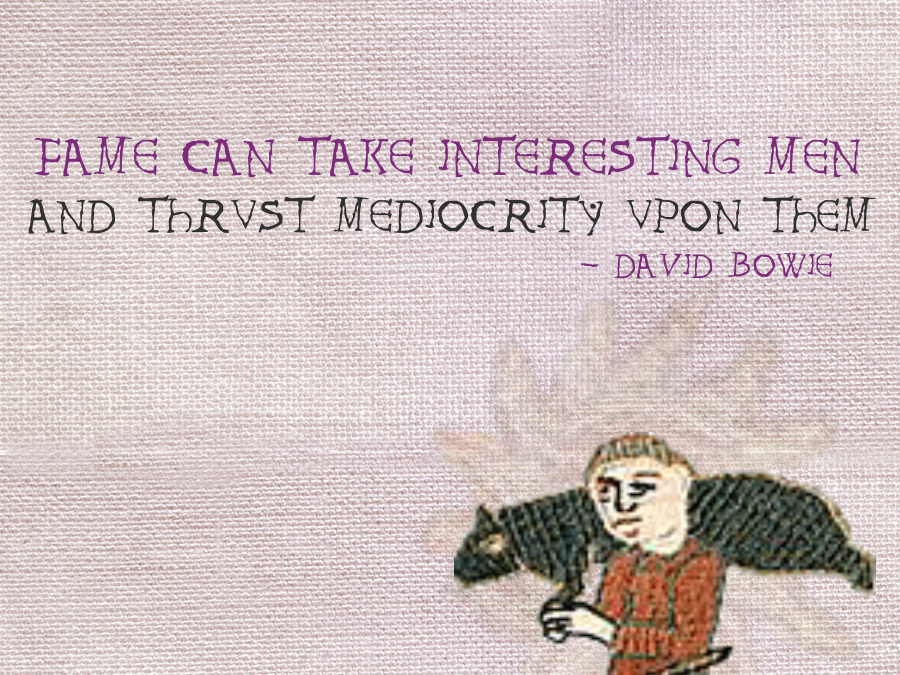
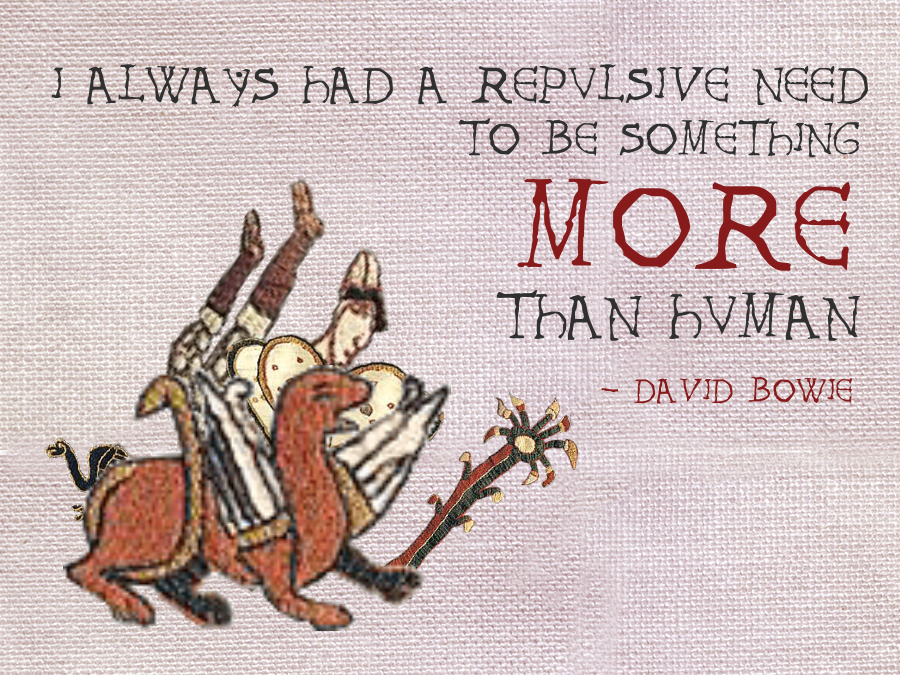
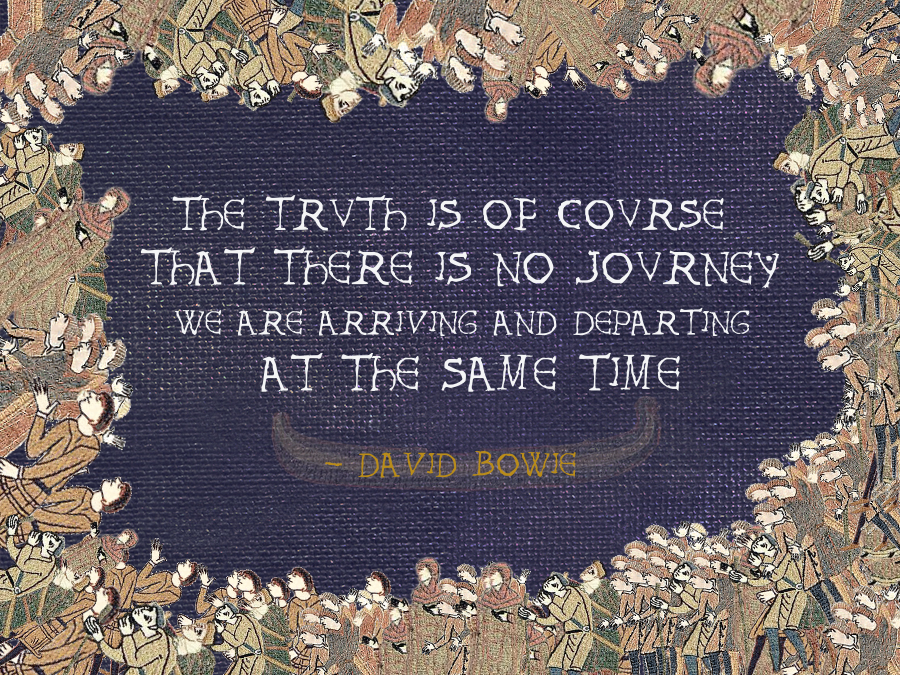
They sep­a­rat­ed out var­i­ous ele­ments of the Bayeux Tapes­try, allow­ing you to freely mess around with 1000-year-old images of war­riors, com­mon­ers, beasts, and build­ings:

Craft thy own Bayeux Tapes­try

Slay mis­chie­vous beasts

Rule the king­dom

Rotate, resize, clone

Choose a back­ground, add some text in your choice of Bayeux or Augus­ta font and you’ll have done your bit to revive the fad­ing art of the Medieval Macro (or meme.)

The orig­i­nal tapes­try used some 224 feet of wool-embroi­dered linen to recount the Bat­tle of Hast­ings and the events lead­ing up to it.

You need not have such lofty aims.

Per­haps test the waters with a Father’s Day greet­ing, resiz­ing and rotat­ing until you feel ready to export as a PNG.

The inter­face is extreme­ly user friend­ly, kind of like a tech-savvy 11th-cen­tu­ry cousin of the online drag-and-drop graph­ic design tool, Can­va.

The His­toric Tale Con­struc­tion Kit’s most impres­sive bells and whis­tles reside in the paint­brush tool in the low­er left cor­ner, which allows you to lay down great swaths of folks, birds, or corpses in a sin­gle sweep.

Your palette will be lim­it­ed to the shades deployed by the Bayeux embroi­der­ers, who obtained their col­ors from plants—dyer’s woadmad­der, and dyer’s rock­et (or weld).

The text, of course, is entire­ly up to you.

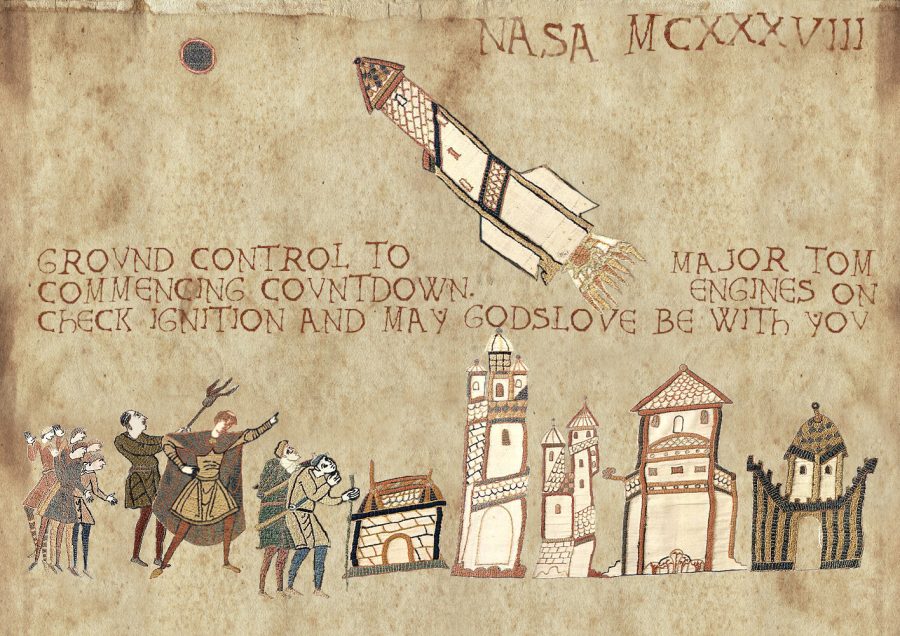
It pleased us to go with the emi­nent­ly quotable David Bowie, and only after we groped our way into the three fledg­ling efforts you see above did we dis­cov­er that we’re not the only ones.

Pre­sent­ing Ear­ly Pre-Bowie Ref­er­ences to “Space Odd­i­ty”


Throw on some Bard­core and begin rework­ing the Bayeux Tapes­try with the His­toric Tale Con­struc­tion Kit here.

If you are inter­est­ed in some­thing a bit more tech­ni­cal, the design­ers have put the open­source code on GitHub for your cus­tomiz­ing plea­sure.

The Bayeux Tapes­try has also been recent­ly dig­i­tized. Explore it here: The Bayeux Tapes­try Gets Dig­i­tized: View the Medieval Tapes­try in High Res­o­lu­tion, Down to the Indi­vid­ual Thread

Relat­ed Con­tent:

Lis­ten to Medieval Cov­ers of “Creep,” “Pumped Up Kicks,” “Bad Romance” & More by Hilde­gard von Blin­gin’

160,000 Pages of Glo­ri­ous Medieval Man­u­scripts Dig­i­tized: Vis­it the Bib­lio­the­ca Philadel­phien­sis

Why Knights Fought Snails in Illu­mi­nat­ed Medieval Man­u­scripts

Ayun Hal­l­i­day is an author, illus­tra­tor, the­ater mak­er and Chief Pri­ma­tol­o­gist of the East Vil­lage Inky zine. Fol­low her @AyunHalliday.

How Fast Can a Vaccine Be Made?: An Animated Introduction

From Ted-Ed comes a video that answers a time­ly ques­tion: How fast can a vac­cine be made?

They write: “When a new pathogen emerges, our bod­ies and health­care sys­tems are left vul­ner­a­ble. And when this pathogen caus­es the out­break of a pan­dem­ic, there’s an urgent need for a vac­cine to cre­ate wide­spread immu­ni­ty with min­i­mal loss of life. So how quick­ly can we devel­op vac­cines when we need them most? Dan Kwartler describes the three phas­es of vac­cine devel­op­ment.” Explorato­ry research, clin­i­cal test­ing, and man­u­fac­tur­ing.

When you’re done, you can watch their relat­ed video: When is a pan­dem­ic over?

If you would like to sign up for Open Culture’s free email newslet­ter, please find it here. It’s a great way to see our new posts, all bun­dled in one email, each day.

If you would like to sup­port the mis­sion of Open Cul­ture, con­sid­er mak­ing a dona­tion to our site. It’s hard to rely 100% on ads, and your con­tri­bu­tions will help us con­tin­ue pro­vid­ing the best free cul­tur­al and edu­ca­tion­al mate­ri­als to learn­ers every­where. You can con­tribute through Pay­Pal, Patre­on, and Ven­mo (@openculture). Thanks!

Why This Font Is Everywhere: How Cooper Black Became Pop Culture’s Favorite Font

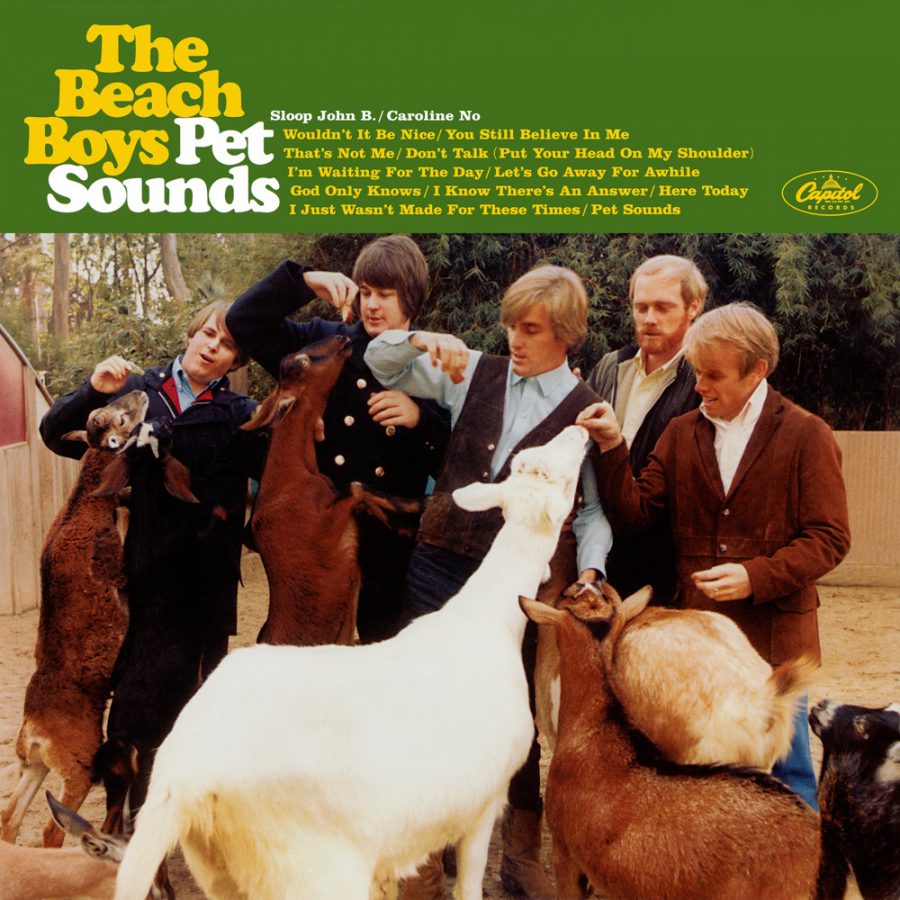
You know Times New Roman, you know Hel­veti­ca, you know Com­ic Sans — and though you may not real­ize it, you know Coop­er Black as well. Just think of the “VOTE FOR PEDRO” shirt worn in Napoleon Dyna­mite (and in real life for years there­after), or a few decades ear­li­er, the cov­er of Pet Sounds. In fact, the his­to­ry of Coop­er Black extends well before the Beach Boys’ mid-1960s mas­ter­piece; to see and hear the full sto­ry, watch the Vox video above. It begins, as nar­ra­tor Estelle Caswell explains, in Chica­go, at the turn of the 1920s when type design­er Oswald Bruce Coop­er cre­at­ed the series of fonts that bear his name. Near­ly a cen­tu­ry after the 1922 intro­duc­tion of the vari­ant Coop­er Black, we see it every­where, not just on album cov­ers and T‑shirts but store­fronts, movie posters, and can­dy wrap­pers all over the world.


The evo­lu­tion of print­ing, specif­i­cal­ly the evo­lu­tion from carved wood type to cast met­al, made Coop­er Black pos­si­ble. Its dis­tinc­tive look — and the curved edges that made it for­giv­ing to imper­fect print­ing process­es — made it a hit. And when film strips replaced met­al type, allow­ing the kind of close­ly-spaced print­ing that Coop­er thought best pre­sent­ed his font, the already-pop­u­lar Coop­er Black under­went a renais­sance.

“It thrived, as always, in adver­tis­ing,” says Caswell. “Its friend­ly curves fit the tongue-in-cheek aes­thet­ic of the 1960s and 70s, but it also showed up in mag­a­zines, movies, and hun­dreds of album cov­ers.” To typog­ra­phy enthu­si­asts, Pet Sounds seem­ing­ly remains Coop­er Black­’s finest hour: “Just look at the way the D works with the E and the Y, and ‘Boys’ fits so nice­ly over the O,” as art direc­tor Stephen Heller says in the video.

In the 1920s Coop­er Black not only show­cased cut­ting-edge print­ing tech­nol­o­gy, its aes­thet­ic looked exhil­a­rat­ing­ly mod­ern as well. Now, of course, it looks com­fort­ing­ly retro, evoca­tive of the era of hand­made graph­ic design slip­ping out of liv­ing mem­o­ry in our dig­i­tal 21st cen­tu­ry. But the 21st cen­tu­ry so far has also been a time of “retro­ma­nia”: with all pre­vi­ous media increas­ing­ly at our fin­ger­tips, we draw inspi­ra­tion (and even mate­r­i­al) for our art and design more direct­ly and instinc­tive­ly than ever from the trends of the past. No won­der we con­tin­ue to feel a res­o­nance in Coop­er Black, whose let­ters, as Caswell puts it, bring with them the weight of “a cen­tu­ry’s worth of changes in tech­nol­o­gy and pop cul­ture.” Nor is Coop­er Black­’s next cen­tu­ry, what­ev­er uses it sees the font put to, like­ly to dimin­ish its appeal.

Relat­ed Con­tent:

The His­to­ry of Typog­ra­phy Told in Five Ani­mat­ed Min­utes

Com­ic Sans Turns 25: Graph­ic Design­er Vin­cent Connare Explains Why He Cre­at­ed the Most Hat­ed Font in the World

Down­load Hel­l­veti­ca, a Font that Makes the Ele­gant Spac­ing of Hel­veti­ca Look as Ugly as Pos­si­ble

The Mak­ing (and Remak­ing) of the Beach Boys’ Pet Sounds, Arguably the Great­est Rock Album of All Time

Enter the Cov­er Art Archive: A Mas­sive Col­lec­tion of 800,000 Album Cov­ers from the 1950s through 2018

Based in Seoul, Col­in Mar­shall writes and broad­casts on cities, lan­guage, and cul­ture. His projects include the book The State­less City: a Walk through 21st-Cen­tu­ry Los Ange­les and the video series The City in Cin­e­ma. Fol­low him on Twit­ter at @colinmarshall, on Face­book, or on Insta­gram.

« Go BackMore in this category... »
Quantcast