Fine art and reality TV are typically rated our highest and lowest forms of entertainment, yet creative competition shows combine the two. Robin Slonina graduated from Chicago’s Art Institute and lived in the gallery world doing sculptures, paintings and installations for several years before discovering body painting and opening Skin City Body Painting in Las Vegas, perhaps the foremost institution of its type in the world.
Robin then served as a judge (along with RuPaul!) on the show Skin Wars for its three seasons (2014–2017) before The Game Show Network decided that the whole thing was too expensive to produce. She joins Mark, Erica, and Brian to figure out the degree to which the competition reality show format lets the art shine through.
To learn more, scan these relevant articles:
That which stands first, and is most to be desired by all happy, honest and healthy-minded men, is ease with dignity.
—Cicero, Pro Sestio, XLV., 98
There is much to admire in Roman ideas about the use of leisure time, what Michel Foucault referred to as “the care of the self.” The Latin words for work and leisure themselves give us a sense of what should have priority in life. Negotium, or business, is a negation, with the literal meaning of “the nonexistence of leisure” (otium). The English word—considered in its parts as “busy-ness”—doesn’t really sound much more appealing.
The notion that everyone, not just a propertied elite, however, should be entitled to leisure time came about only relatively recently—mostly advocated by radicals and trade unionists. In the U.S., anarchists and striking workers in Chicago fought against police in 1886 during the Haymarket Affair to achieve “Eight Hours for Work, Eight Hours for Rest, Eight Hours for What We Will.” In 1912, women-led immigrant strikers chanted “Bread and Roses” in Lawrence, Massachusetts, proclaiming their right to more than bare survival.
After the achievement of the 40-hour workweek, paid vacations, and other labor concessions, many influential figures believed that egalitarian access to leisure would only increase in the 20th century. Among them was economist John Maynard Keynes, who forecast in 1930 that labor-saving technologies might lead to a 15-hour workweek when his grandchildren came of age. Indeed, he titles his essay, “Economic Possibility for our Grandchildren.”
Writing at the start of the Great Depression, Keynes finds reason for optimism. “We are suffering,” he writes, “not from the rheumatics of old age, but from the growing-pains of over-rapid changes, from the painfulness of readjustment between one economic period and another.” Keynes’ essay concerns what he calls the “economic problem,” which is not only the problem of mass unemployment but also, in his estimation, the ability of capitalism to provide a decent standard of living for everyone. He did not see its failure to do so as evidence of a more fundamental dysfunction:
[T]his is only a temporary phase of maladjustment. All this means in the long run that mankind is solving its economic problem. I would predict that the standard of life in progressive countries one hundred years hence will be between four and eight times as high as it is to-day. There would be nothing surprising in this even in the light of our present knowledge. It would not be foolish to contemplate the possibility of afar greater progress still.
Many economists shared Keynes’ optimism through the 1970s, “a time when revolutionary change still seemed like an imminent possibility,” writes John Quiggan, professor of economics at the University of Queensland.” Utopian ideas were everywhere, exemplified by the Situationist slogan of 1968: ‘Be realistic. Demand the impossible.’” Cult figures like Buckminster Fuller explained, as had Keynes decades earlier, how technology could free everyone from the tyranny of the labor market and the scourge of “useless jobs.”
Keynes and others made a “case for leisure, in the sense of free time to use as we please, as opposed to idleness”—a distinction that draws from the ancient philosophers. “But Keynes offered something quite new: the idea that leisure could be an option for all, not merely for an aristocratic minority.” He was, obviously, mistaken. “At least in the English-speaking world,” Quiggan writes, “the seemingly inevitable progress towards shorter working hours has halted. For many workers it has gone into reverse.”
That has certainly been the case for the majority of workers in the U.S., at least before the novel coronavirus led to mass layoffs and reduced hours. What happened? For one thing, the ascension of neoliberal economics in the late 1970s, and the elections of Ronald Reagan and Margaret Thatcher, began a long slow decline of organized labor. “Employers have had increasing desire for workers to work long hours,” says Juliet Schor, professor of sociology at Boston College. “And workers haven’t had the power to resist that upward pressure.”
Keynes’ predictions resonated with NPR’s David Kestenbaum, who interviewed some of Keynes’ descendants, the closest thing he had to grandchildren, in a short segment on Planet Money in 2015. One Keynes relation points out the irony that the man himself “died from working too hard.” How can those of us who aren’t globally famous economists help end the tyranny of overwork? Maybe a lot more striking workers making demands; maybe a universal basic income or something like Bhutan’s “gross domestic happiness” index?
Keynes may have erred in his predictions of the future (though he seems to have understood the needs of his moment well enough), but he may not have been wrong to view the economic turmoil of his time as a radical opportunity for utopian change and better living for everyone. Overturning the dire conditions of the present for our own grandchildren will require not only hard work, but the leisure to do some visionary futurist thinking. Read Keynes’ full essay here.
If you would like to sign up for Open Culture’s free email newsletter, please find it here. It’s a great way to see our new posts, all bundled in one email, each day.
If you would like to support the mission of Open Culture, consider making a donation to our site. It’s hard to rely 100% on ads, and your contributions will help us continue providing the best free cultural and educational materials to learners everywhere. You can contribute through PayPal, Patreon, and Venmo (@openculture). Thanks!
“The two things I love most are novels and birds,” said Jonathan Franzen in a Guardian profile not long ago. “They’re both in trouble, and I want to advocate for both of them.” Chances are that even that famously internet-averse novelist-turned-birdwatcher would enjoy the online attraction called The Bird Library, “where the need to feed meets the need to read.” Its live Youtube stream shows the goings-on of a tiny library built especially for our feathered friends. “Perched in a backyard in the city of Charlottesville,” writes Atlas Obscura’s Claire Voon, “it is the passion project of librarian Rebecca Flowers and woodworker Kevin Cwalina, who brought together their skills and interests to showcase the lives of their backyard birds.”
Recent visitors, Voon adds, “have included a striking rose-breasted grosbeak, a cardinal that looks like it’s vaping, and a trio of mourning doves seemingly caught in a serious meeting.” The Bird Library’s web site offers an archive of images capturing the institution’s wee regulars, all accompanied by enlivening captions. (“Why did the bird go to the library?” “He was looking for bookworms.”)
Just as year-round birdwatching brings pleasures distinct from more casual versions of the pursuit, year-round viewing of The Bird Library makes for a deeper appreciation not just of the variety of species represented among its patrons — the creators have counted 20 so far — but for the seasonal changes in the space’s decor, especially around Christmastime.
As longtime viewers know, this isn’t the original Bird Library. “In late 2018 we demolished the old Bird Library and started design and development of a new and improved Bird Library 2.0! Complete with a large concrete base for increased capacity and a bigger circulation desk capable of feeding all our guests all day long.” Just as libraries for humans need occasional renovation, so, it seems, do libraries for birds — a concept that could soon expand outside Virginia. “Cwalina hopes to eventually publish an open-access plan for a similar bird library, so that other birders can build their own versions,” reports Voon. And a bird-loving 21st-century Andrew Carnegie steps forward to ensure their architectural respectability, might we suggest going with modernism?
Based in Seoul, Colin Marshall writes and broadcasts on cities, language, and culture. His projects include the book The Stateless City: a Walk through 21st-Century Los Angeles and the video series The City in Cinema. Follow him on Twitter at @colinmarshall, on Facebook, or on Instagram.
If bardcore is a thing—and trust us, it is right now—Hildegard von Blingin’ is the brightest star in its firmament.
The unknown vocalist, pure of throat, pays heed to the fascinating 12th-century abbess and composer Saint Hildegard of Bingen by choice of pseudonym, while demonstrating a similar flair for poetic language.
Von Blingin’s nimble lyrical reworking of Foster the People’s 2010 monster hit, “Pumped Up Kicks,” makes deft use of fellow bardcore practioner Cornelius Link’s copyright-free instrumental score and the closest medieval synonyms available.
For the record, Webster’s 1913 dictionarydefines a “bully-rook” as a bully, but the term could also be used in a joshing, chops-busting sort of way, such as when The Merry Wives of Windsor’s innkeepertrots it out to greet lovable reprobate, Sir John Falstaff.
Songwriter Mark Foster told Billboard’s Xander Zellner last December that he had been thinking of retiring “Pumped Up Kicks,” as listeners are now convinced it’s a bouncy-sounding take on school shootings, rather than a more generalized attempt to get inside the head of a troubled—and fictional—youngster.
With school out of session since March, it’s an excellent time for von Blingin’ to pick up the torch and bear this song back to the past.
No Celtic harp, wooden recorders, or adjustment of possessive pronouns can disguise the jolt those opening lyrics assume in the middle of a global pandemic.
(St. Hildegard escaped the medieval period’s best known plague, the Black Death, by virtue of having been born some 250 years before it struck.)
Von Blingin’s latest release is an extremely faithful take on Radiohead’s “Creep”, with just a few minor tweaks to pull it into medieval lyrical alignment:
Thou float’st like a feather
In a beautiful world
The comments section suggest that the peasants are eager to get in on the act.
Some are expressing their enthusiasm in approximate olde English…
Others question why smygel, eldrich, wyrden or wastrel were not pressed into service as replacements for creep and weirdo..
To borrow a phrase from one such jester, best get your requests in “before the tiktoks come for it.”
“It is sometimes difficult to appreciate the impact that the late-nineteenth century (and ongoing) occult movement called Theosophy had on global culture,” Mitch Horowitz writes in his introduction to the newly republished 1905 Theosophical book, Thought Forms. That impact manifested “spiritually, politically, and artistically” in the work of literary figures like James Joyce and William Butler Yeats and religious figures like Jiddu Krishnamurti, handpicked as a teenager by Theosophist leader Charles W. Leadbeater to become the group’s messianic World Teacher.
The Theosophical Society helped re-introduce Buddhism, or a newly Westernized version, to Western Europe and the U.S., publishing the 1881 “Buddhist Catechism” by Henry Steel Olcott, a former Colonel for the Union Army. Olcott co-founded the society in New York City in 1875 with Russian occultist Helena Blavatsky. Soon afterward, the group of spiritual seekers relocated to India. “Nearly a century before the Beatles’ trek to Rishikesh,” writes Horwitz, “Blavatsky and Olcott laid the template for the Westerner seeking wisdom in the East.”
Theosophy also had a significant influence on modern art, including the work of Wassily Kandinsky, until recently considered the first Abstract painter—that is until the paintings of Hilma af Klint came to be widely known. The reclusive Swedish artist, whom we’ve covered here a few times before, came first, though no one knew it at the time. After showing her revolutionary abstract work to philosopher and onetime German and Austrian Theosophical Society leader Rudolf Steiner, she was told to hide it for another fifty years.
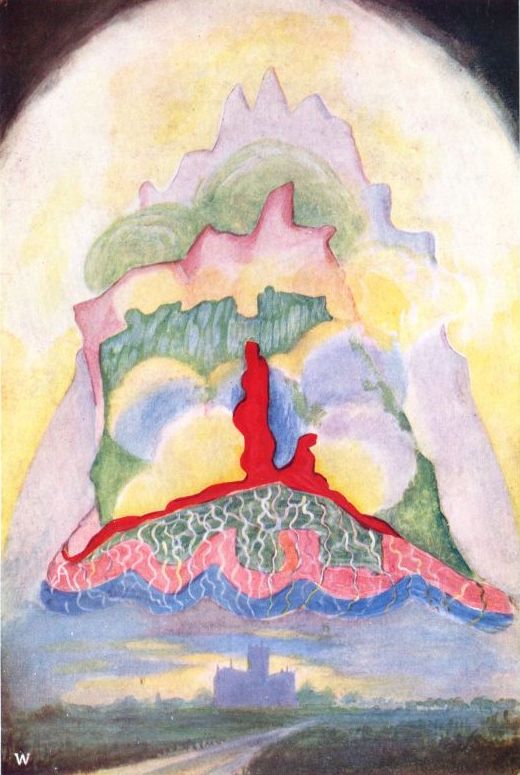
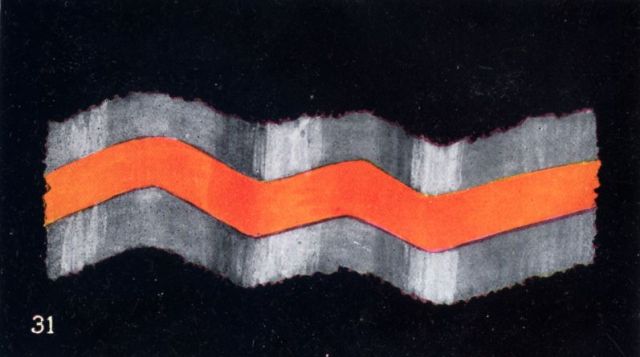
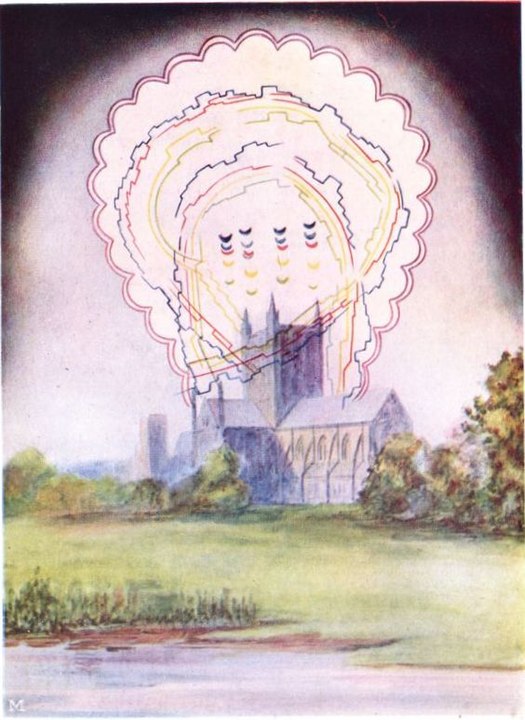
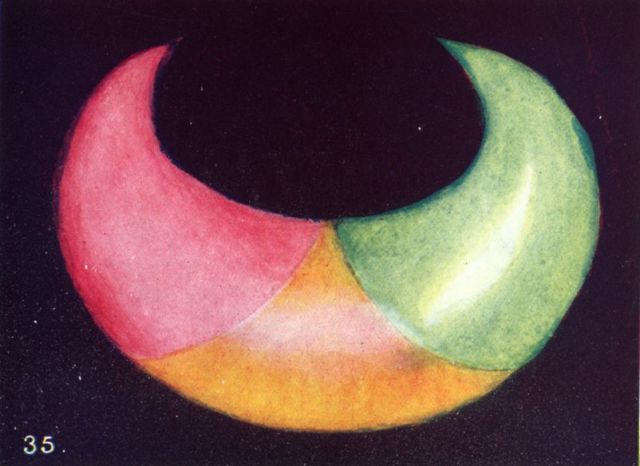
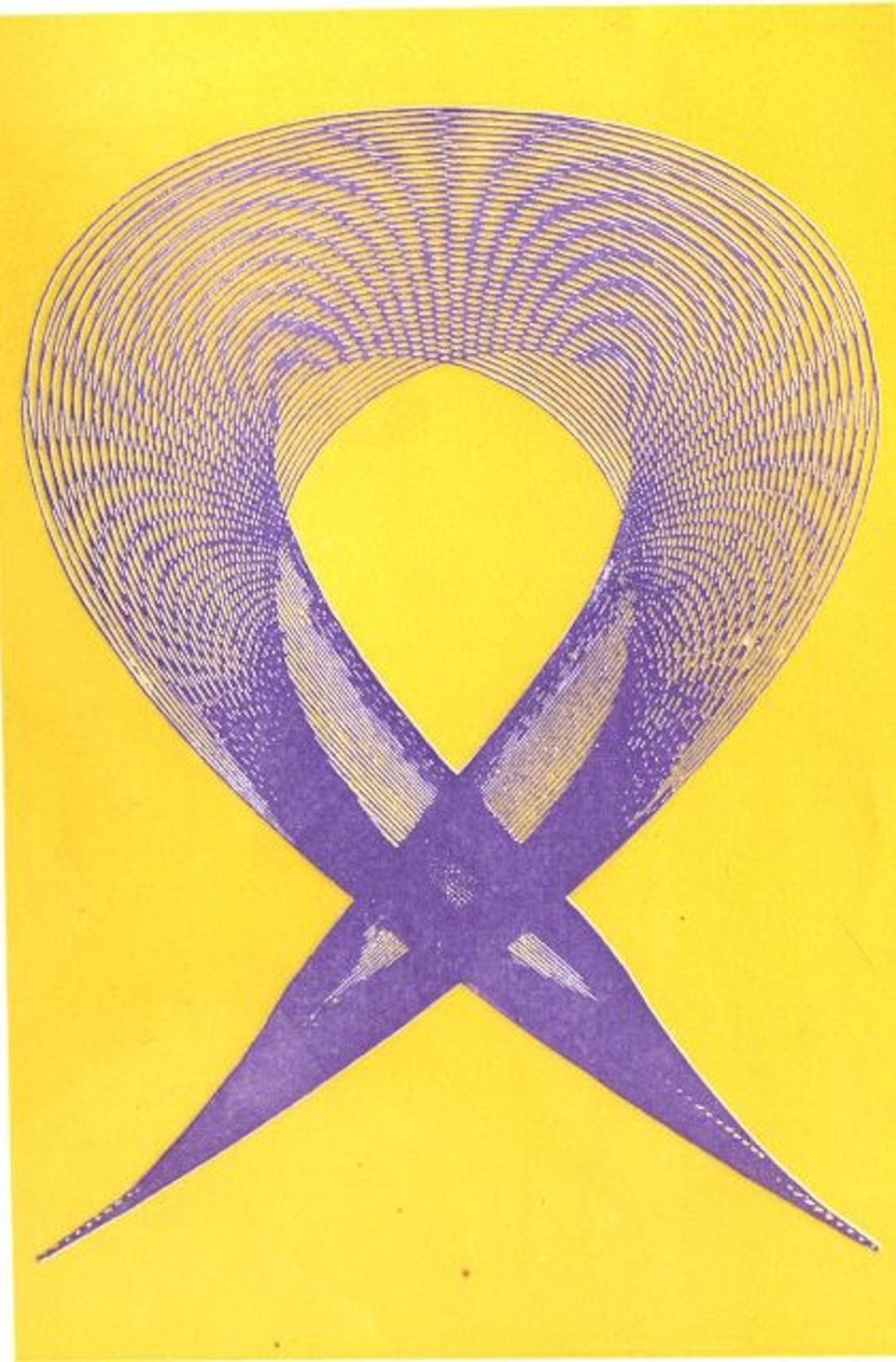
Theosophy gained many prominent converts in the UK, Europe, and around the world. Af Klint joined the Swedish society and remained a member until 1915. The symbolism in her mysterious abstractions, which she attributed to clairvoyant communication with “an entity named Amaliel,” may also have been suggested by the drawings in Thought Forms, an illustrated book created by Theosophical Society leaders Leadbeater and Annie Besant, who was “an early suffragist and political activist,” notes Sacred Bones Books. The small press will release a new edition of the book online and in stores on November 6. (See their Kickstarter page here and video trailer below.)
Besant was “far ahead of her time as an artist and thinker. Theosophy was the first occult group to open its doors to women and Thought Forms offers a reminder that the history of modernist abstraction and women’s contribution to it is still being written.” Although that unfolding history centrally includes af Klint and Besant, the latter did not actually make all of the illustrations we find in this strange book. She and Leadbeater claimed to have received, through clairvoyant means, “forms caused by definite thoughts thrown out by one of them, and also watched the forms projected by other persons under the influence of various emotions.”
So Besant would write in 1896 in the Theosophical journal Lucifer. After these “experiments,” the two then described going into trances and viewing “auras, vortices, etheric matter, astral projections, energy forms, and other expressions from the unseen world.” The two described these visions to a collection of visual artists, who rendered them into the paintings in the 1905 book.
Among those who do study the Theosophical Society’s impact, its first generation of publications—especially Olcott’s “Buddhist Catechism” and Blavatsky’s 1888 The Secret Doctrine—are especially well-known texts. But Thought Forms may prove “the most widely read, lasting, and directly influential book to emerge from the revolution that Theosophy ignited,” Horowitz argues.
“By many estimates, Thought Forms marks the germination of abstract art”—originated through several artists’ best guess at what visions of psychic phenomena might look like. You can follow Sacred Bones’ Kickstarter campaign here.
When asked once about his beliefs, This American Life creator Ira Glass replied that he believes “the car is the best place to listen to the radio.” That seems to be a culturally supported perception, or at least it has been in over the past half-century in America. But does it hold true in other countries? Does listening to the radio in the car feel as good in London, Buenos Aires, Mumbai, and Tokyo as it does in Chicago, New York, Miami, and Los Angeles?
You can see and hear for yourself with the wealth of virtual urban-driving-and-radio-listening experiences on offer at Drive & Listen, where you can take your pick from any of the aforementioned cities and 40 others besides. The site makes this possible by bringing together two forms of media that have come into their own on the internet of the 21st century: streaming radio and streaming video.
In most every major metropolitan area, radio stations now make their broadcasts available online. At the same time, Youtubers have by now shot and uploaded a great many through-the windshield views of all those places, creating the once-unlikely entertainment genre of the driving video.
Here we’ve included some prime examples from popular Youtube driver J Utah, whose scope includes American cities large and small as well as such world capitals as Tokyo, Paris, Singapore, Hong Hong, and São Paulo. All in 4K video.
Click on one of the cities on Drive & Listen’s menu, and chances are you’ll see one of J Utah’s videos. It will come with a streaming-radio soundtrack, sourced from one of the stations in the city or country on display. Your virtual Havana drive may be accompanied by announcements of the news of the day, your virtual Istanbul drive by Turkish rock, your virtual Chicago drive by an NPR affiliate (perhaps even WBEZ, home of This American Life), your virtual Guadalajara drive by soccer scores, your virtual Miami drive by straight-ahead jazz, your virtual Berlin drive by Patti Smith.
Each time you select a city, you’ll get a different combination of radio station and driving footage. As every driver knows, day driving and night driving — to say nothing of rush hour versus the wee hours — feels completely different, and so the drivers of Youtube have shot at all possible times. Some of their routes thread right between downtown skyscrapers, while others stick to freeways along the outskirts. As a resident of Seoul, I can tell you that Drive & Listen accurately conveys the experience of riding in a cab through that city — provided you first crank the video speed up to 2x.
Based in Seoul, Colin Marshall writes and broadcasts on cities, language, and culture. His projects include the book The Stateless City: a Walk through 21st-Century Los Angeles and the video series The City in Cinema. Follow him on Twitter at @colinmarshall, on Facebook, or on Instagram.
Franz Kafka’s unfinished first novel, published by his literary executor Max Brod as Amerika, tells the story of a young European exiled in New York City. He has a series of madcap adventures, winds up in Oklahoma as a “technical worker,” and adopts the name “Negro.” Amerika is a novel written by an artist who had never been to America nor met an American. His impression of the country came entirely from his reading. And yet, Kafka leaves readers with an authentically vivid, lasting impression of the harried din of American life.
We may feel similarly when watching the films of Sergio Leone, who had never seen the West when he started making Westerns. Detached from their cultural origins, Western tropes in the Italian director’s hands reveal their archetypal depths as avatars of lawless violence.
Europeans have been dreaming imaginary Americas for hundreds of years. And given U.S. popular culture’s global reach in the 20th century, nearly every place in the world has its own Americana, an homage from afar made up of local ingredients. Nowhere, perhaps, is this truer than in Japan.
“Jazz and Japan shouldn’t mix,” notes Colin Marshall in an earlier post on Japanese jazz, quoting the book All-Japan, which alleges a lack of improvisation in Japanese culture. But they have mixed particularly well, as you can hear in the 30-minute mix of 70s Japanese jazz above from Coffee Break Sessions, a YouTube channel filled with introductions to genres and styles from around the world. What’s more, jazz arrived in Japan as a double import, two steps removed. It “dates back to the 1920s,” writes Marshall, “when it drew inspiration from visiting Filipino bands who had picked the music up from their American occupiers.” When Japan itself was occupied by U.S. soldiers two decades later, the country already had a jazz tradition.
Japanese culture has long since surpassed the American influences it absorbed to create hybrid genres Americans have been furiously importing at a seemingly exponential rate. One of the newest such genres was actually created by an American DJ, Van Paugam, who aggregated a collection of Japanese records into what he calls “City Pop.” In another Open Culture post on this YouTube phenomenon, Marshall describes the music as “drawing influences from Western disco, funk, and R&B, and using the latest sonic technologies mastered nowhere more than in Japan itself.” Like Japanese jazz, city pop comes from music that began in the U.S. but become globalized and cosmopolitan as it traveled the world.
Paugam characterizes his City Pop mixes as infused with “themes of austere feelings, melancholic vibes, and a sense of having memories of living in a different time and place.” The cultural dislocation one might feel when listening to these songs comes from their uncanniness—they sound like hits we might have heard on top 40 radio, but their idioms don’t exactly click into place. This is especially apparent in the Coffee Break Sessions mix of late 70s, early 80s Japanese pop singers, above.
But there’s something too provincial in calling City Pop—or the disparate types of smooth pop that fall under the designation—a Japanese take on American music, since American music is itself a hybrid of global influences. YouTube phenomena like City Pop have themselves become part of a universal internet pop culture that belongs everywhere and nowhere. Someday everyone will experience the historic 80s pop music of Japan just as they’ll experience the historic 80’s pop music of everywhere else: as part of what Paugam calls a “false sense of nostalgia” for a past they never knew. Hear more mixes of Japanese pop, jazz, and funk over at Coffee Break Sessions.
We're hoping to rely on loyal readers, rather than erratic ads. Please click the Donate button and support Open Culture. You can use Paypal, Venmo, Patreon, even Crypto! We thank you!
Open Culture scours the web for the best educational media. We find the free courses and audio books you need, the language lessons & educational videos you want, and plenty of enlightenment in between.