An Interactive Visualization of the Stanford Encyclopedia of Philosophy

2020 was “a year for the (record) books in pub­lish­ing,” wrote Jim Mil­liot in Publisher’s Week­ly this past Jan­u­ary, a surge con­tin­u­ing into 2021. Yet some kinds of print books have so declined in sales there may be no rea­son to keep pub­lish­ing them, or buy­ing them, since their equiv­a­lents online are supe­ri­or in almost every respect to any ver­sion on paper. As I final­ly con­ced­ed dur­ing a recent, aggres­sive spring clean­ing, I per­son­al­ly have no rea­son to store heavy, bulky, dusty ref­er­ence books, except in cas­es of extreme sen­ti­ment.

The online Stan­ford Ency­clo­pe­dia of Phi­los­o­phy, or the SEP, dis­pensed with the need for phi­los­o­phy ency­clo­pe­dias in print years ago. It’s “the most inter­est­ing web­site on the inter­net,” wrote Nikhail Son­nad at Quartz in 2015. “Not because of the con­tent — which includes fas­ci­nat­ing entries on every­thing from ambi­gu­i­ty to zom­bies—but because of the site itself. Its cre­ators have solved one of the internet’s fun­da­men­tal prob­lems: How to pro­vide author­i­ta­tive, rig­or­ous­ly accu­rate knowl­edge, at no cost to read­ers. It’s some­thing the ency­clo­pe­dia, or SEP, has man­aged to do for two decades.”

Start­ed in 1995 by Stan­ford philoso­pher Edward Zal­ta with only two entries, the SEP is “pos­i­tive­ly ancient in inter­net years,” but it is hard­ly “ossi­fied,” remain­ing an online source “‘com­pa­ra­ble in scope, depth and author­i­ty,’” the Amer­i­can Library Association’s Book­list review wrote, “to the biggest phi­los­o­phy ency­clo­pe­dias in print.”

I per­son­al­ly think the SEP is just as inter­est­ing for its con­tent as its achieve­ment, if not more so — and now, thanks to engi­neer and devel­op­er Joseph DiCas­tro, that con­tent is more acces­si­ble than ever, though an inter­ac­tive visu­al­iza­tion project and search engine called Visu­al­iz­ing SEP.

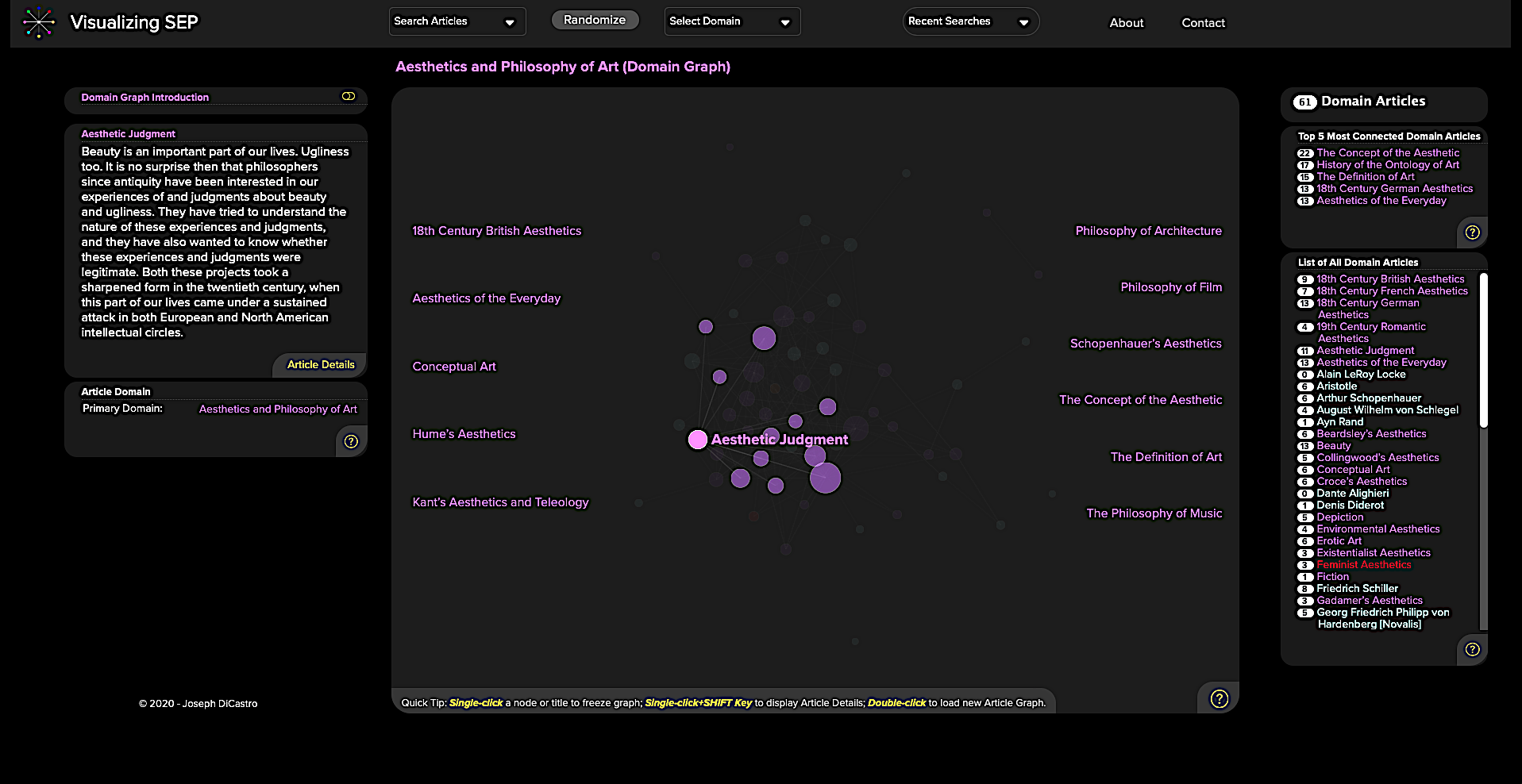
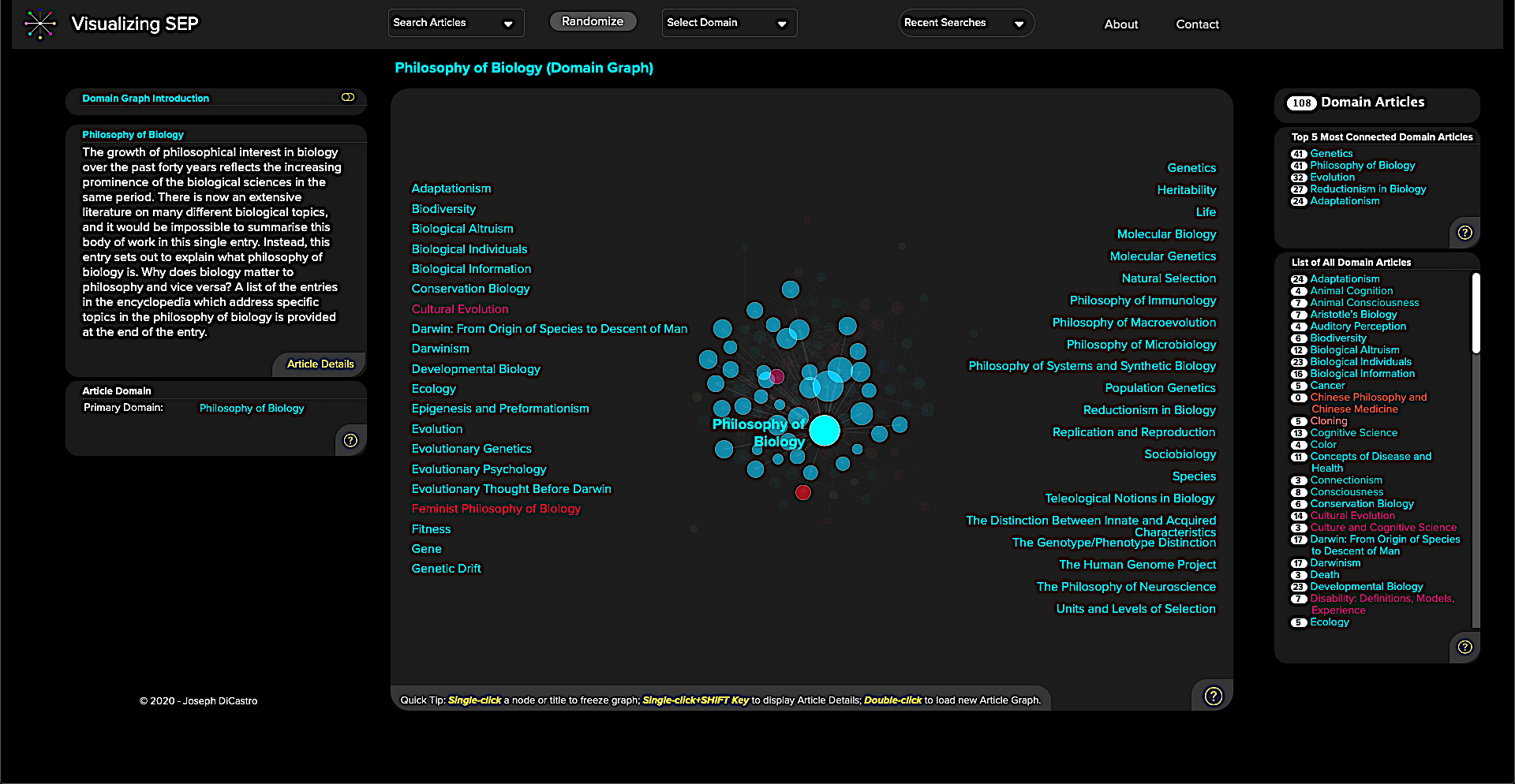
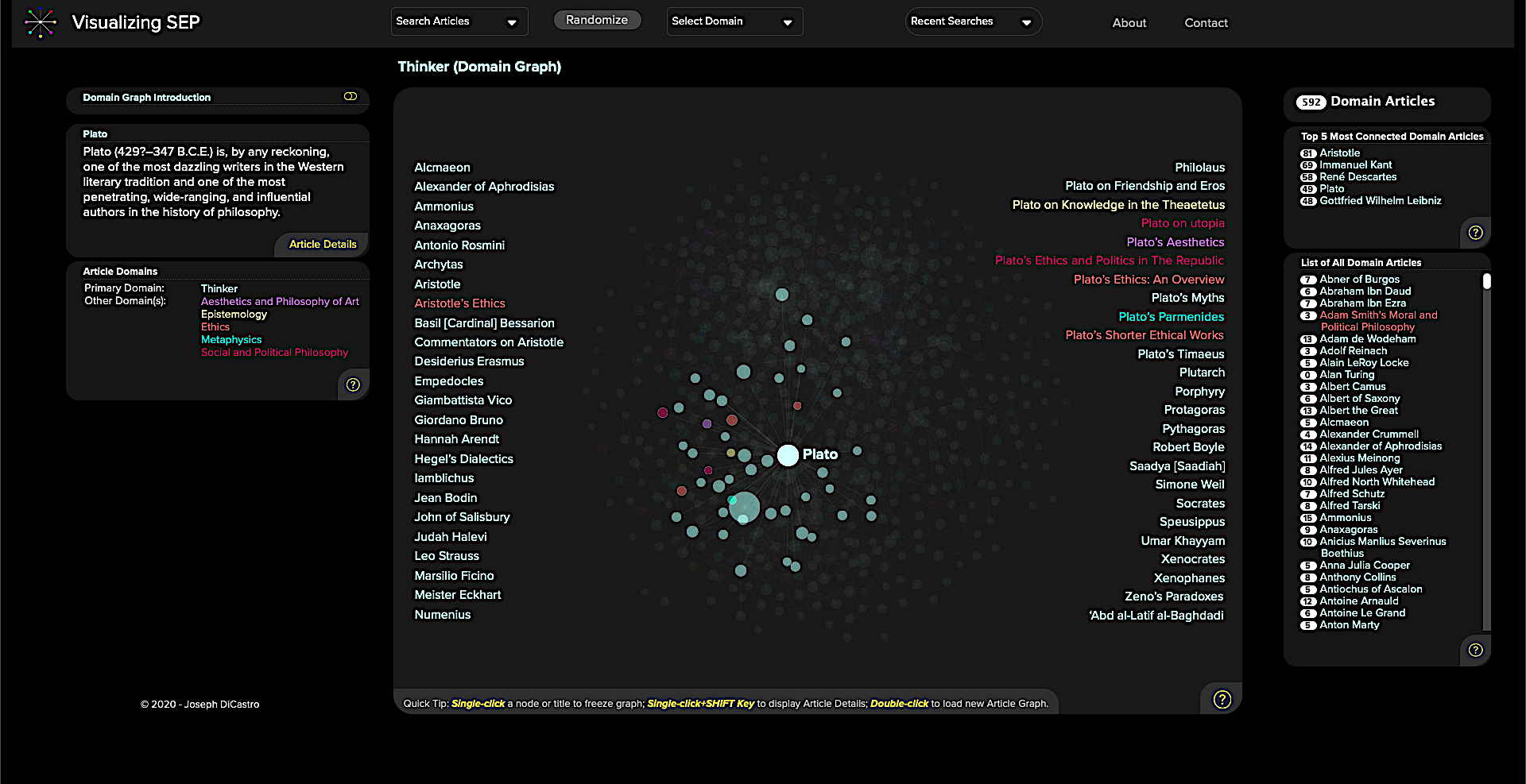
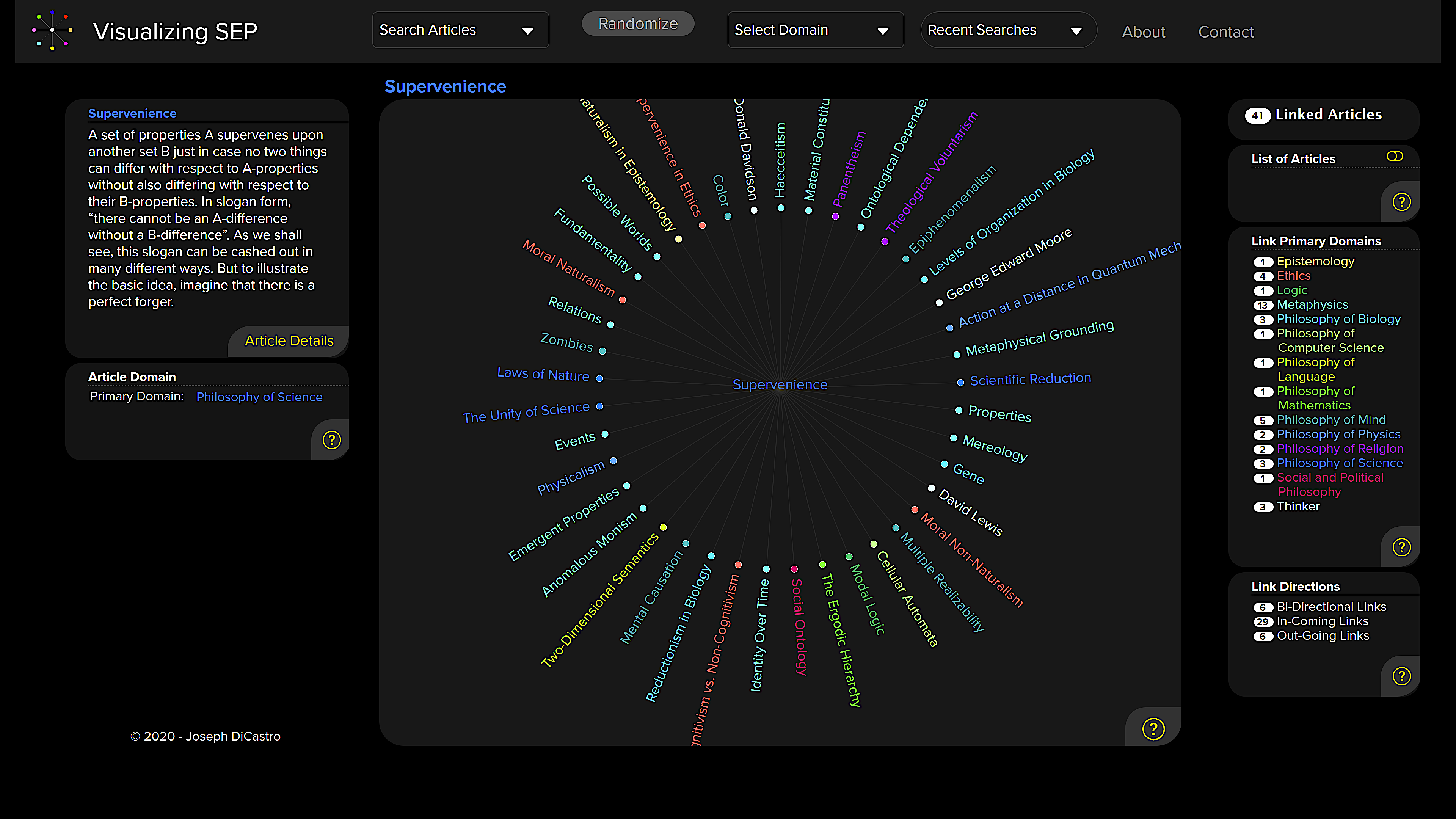
Visu­al­iz­ing SEP “pro­vides clear visu­al­iza­tions based on a philo­soph­i­cal tax­on­o­my that DiCas­tro adapt­ed from the one devel­oped by the Indi­ana Uni­ver­si­ty Phi­los­o­phy Ontol­ogy Project (InPhO),” Justin Wein­berg writes at Dai­ly Nous. “Type a term into the search box and sug­gest­ed SEP entries will be list­ed. Click on one of the entry titles, and a sim­ple visu­al­iza­tion will appear with your select­ed entry at the cen­ter and relat­ed entries sur­round­ing it.” At the top of the page, you can select from a series of “domains.” Each selec­tion pro­duces a sim­i­lar visu­al­iza­tion of var­i­ous-sized dots.

I found enough entries to keep me busy for hours in the very first domain graph, “Aes­thet­ics and Phi­los­o­phy of Art.” The last of these, sim­ply titled “Thinker,” links togeth­er all of the philoso­phers men­tioned in the Stan­ford Ency­clo­pe­dia of Phi­los­o­phy, from the most famous house­hold names to the most obscure and scholas­tic. Just skim­ming through these names and read­ing the brief biogra­phies at the left will leave read­ers with a broad­er con­tex­tu­al under­stand­ing than they could gain from a print ency­clo­pe­dia. (Click on the “Arti­cle Details” but­ton to expand the full arti­cle).

The visu­al­iz­er project car­ries forth into the data-obsessed 21st cen­tu­ry one of the best things about the Inter­net in its ear­li­est years: access to free, high qual­i­ty (and high­ly portable) infor­ma­tion with few bar­ri­ers for entry. Learn more about how to best nav­i­gate Visu­al­iz­ing SEP at Dai­ly Nous.

Relat­ed Con­tent:

Free Online Phi­los­o­phy Cours­es

A Data Visu­al­iza­tion of Mod­ern Phi­los­o­phy, 1950–2018

The His­to­ry of Phi­los­o­phy Visu­al­ized in an Inter­ac­tive Time­line

“The Philosopher’s Web,” an Inter­ac­tive Data Visu­al­iza­tion Shows the Web of Influ­ences Con­nect­ing Ancient & Mod­ern Philoso­phers

Josh Jones is a writer and musi­cian based in Durham, NC. Fol­low him at @jdmagness

The Surprising Reason Why Chinatowns Worldwide Share the Same Aesthetic, and How It All Started with the 1906 San Francisco Earthquake

Anti-Chi­nese racism runs deep in Amer­i­can cul­ture and law, begin­ning in the 19th cen­tu­ry as com­pe­ti­tion inten­si­fied in Cal­i­for­nia gold and land rush­es. Chi­nese immi­grants were pushed into teem­ing cities, then den­i­grat­ed for sur­viv­ing in over­crowd­ed slums. To get a sense of the scope of the prej­u­dice, we need only con­sid­er the 1882 law known as the Chi­nese Exclu­sion Act — the only leg­is­la­tion passed to explic­it­ly restrict immi­gra­tion by one eth­nic or nation­al group. The law actu­al­ly goes back to 1875, when the Page Act banned Chi­nese women from immi­grat­ing. It was only repealed in 1943.

Although rou­tine­ly evad­ed, the severe restric­tions and out­right bans on Chi­nese immi­gra­tion under the Exclu­sion Act drove and were dri­ven by racist ideas still vis­i­ble today in tropes of dan­ger­ous, exoti­cized “drag­on ladies” or sex­u­al­ly sub­mis­sive con­cu­bines: roles giv­en in ear­ly Hol­ly­wood films to the first Chi­nese-Amer­i­can movie star, Anna May Wong, who, after 1909 — despite being the most rec­og­niz­able Chi­nese-Amer­i­can in the world — had to car­ry iden­ti­fi­ca­tion at all times to prove her legal sta­tus.

Wong was born in Los Ange­les, a city that — like every oth­er major metrop­o­lis — became home to its own Chi­na­town, and a famous one at that. But the most famous of the seg­re­gat­ed urban areas orig­i­nat­ed in San Fran­cis­co, after the 1906 earth­quake that near­ly lev­eled the city and “came on the heels of decades of vio­lence and racist laws tar­get­ing Chi­nese com­mu­ni­ties in the US,” notes Vox. “The earth­quake dev­as­tat­ed Chi­na­town. But in the destruc­tion, San Francisco’s Chi­nese busi­ness­men had an idea for a fresh start” that would define the look of Chi­na­towns world­wide.

The new Chi­na­town was more than a new start; it was sur­vival. As often hap­pens after dis­as­ters, pro­pos­als for relo­cat­ing the unpop­u­lar immi­grant neigh­bor­hood appeared “before the dust had set­tled and smoke cleared,” notes 99 Per­cent Invis­i­ble. “The city’s may­or com­mis­sioned archi­tect and urban design­er Daniel Burn­ham to draw up plans aligned with the City Beau­ti­ful move­ment.” Feel­ing they had to cater to white Amer­i­can stereo­types to gain accep­tance, Chi­nese-Amer­i­can busi­ness lead­ers “hired archi­tect T. Pater­son Ross and engi­neer A.W. Bur­gren to rebuild—even though nei­ther man had been to Chi­na.”

The archi­tects “relied on cen­turies-old images, pri­mar­i­ly of reli­gious ver­nac­u­lar, to devel­op the look of the new Chi­na­town,” and the result was to cre­ate a gen­uine tourist attrac­tion — an “icon­ic look,” the Vox Miss­ing Chap­ter video explains, that bears lit­tle resem­blance to actu­al Chi­nese cities. The Chi­nese immi­grant com­mu­ni­ty in San Fran­cis­co “kept their cul­ture alive by invent­ing a new one,” a delib­er­ate co-opta­tion of Ori­en­tal­ist stereo­types for a city, its mer­chants decid­ed, that would be built of “ver­i­ta­ble fairy palaces.”

The New Chi­na­town was “not quite Chi­nese, not quite Amer­i­can”; safe for mid­dle-class tourism and con­sump­tion and safer for Chi­nese busi­ness­es to flour­ish. The mod­el spread rapid­ly. Now, in what­ev­er major city we might might vis­it — out­side of Chi­na, that is — the Chi­na­town we encounter is both a unique cul­tur­al hybrid and a mar­ket­ing tri­umph that offered a mea­sure of pro­tec­tion to belea­guered Chi­nese immi­grant com­mu­ni­ties around the world.

Relat­ed Con­tent: 

Learn the Untold His­to­ry of the Chi­nese Com­mu­ni­ty in the Mis­sis­sip­pi Delta

The Utopi­an, Social­ist Designs of Sovi­et Cities

The His­to­ry of West­ern Archi­tec­ture: A Free Online Course Mov­ing from Ancient Greece to Roco­co

Josh Jones is a writer and musi­cian based in Durham, NC. Fol­low him at @jdmagness

The Largest Free Kitchen in the World: Discover India’s Golden Temple Which Serves 100,000 Free Meals Per Day

If you find your­self hun­gry in Amrit­sar, a major city in the Indi­an state of Pun­jab, you could do worse than stop­ping into the Gold­en Tem­ple, the largest Sikh house of wor­ship in the world. It thus also oper­ates the largest com­mu­ni­ty kitchen, or lan­gar, in the world, which serves more than 100,000 free meals a day, 24 hours a day. Any­one famil­iar with Sikhism knows that, for its believ­ers, serv­ing food to the hun­gry con­sti­tutes an essen­tial duty: not just to the poor, and cer­tain­ly not just to fel­low Sikhs, but to all com­ers. Wher­ev­er in the world you may live, if there’s a Sikh tem­ple or shrine in the vicin­i­ty, there’s quite pos­si­bly a lan­gar you can vis­it as well.

Of course, no oth­er lan­gar match­es the scale of the Gold­en Tem­ple’s. As explained in the Food Insid­er video above, it oper­ates with a per­ma­nent staff of 300 to 350 employ­ees as well as a large num­ber of vol­un­teers, all of whom work in con­cert with machines around the clock to pro­duce an unend­ing stream of veg­e­tar­i­an meals, which include daal lentil stew and cha­p­ati bread. There’s always been a mar­ket for free food, but recent years have seen increas­es in demand great enough to neces­si­tate the con­struc­tion of addi­tion­al din­ing halls, and total oper­at­ing expens­es come to the equiv­a­lent of some US$4 mil­lion per year. (Every day, $5,000 goes to ghee, or Indi­an clar­i­fied but­ter, alone.)

Apart from the peo­ple of Amrit­sar and pil­grim­age-mak­ing devo­tees, the Gold­en Tem­ple lan­gar has also drawn the atten­tion of culi­nar­i­ly mind­ed trav­el­ers. Take the Cana­di­an Youtu­ber Trevor James, bet­ter known as the Food Ranger, to whose taste for extreme scale and quan­ti­ty the oper­a­tion no doubt appeals. His vis­it also affords him the oppor­tu­ni­ty, before his meal, to be out­fit­ted in tra­di­tion­al dress, up to and includ­ing a Sikh tur­ban. (The Gold­en Tem­ple requires its din­ers to wear a head-cov­er­ing of some kind.) James’ stock of trav­el-vlog­ger superla­tives is near­ly exhaust­ed by the splen­dor of the tem­ple itself before he steps into the kitchen to observe (and even lend a hand in) the cook­ing process. “Look at this,” he exclaims upon tak­ing his seat on the floor of the hall with a tray of his own. “This is an almost spir­i­tu­al meal” — an aura exud­ed whether you believe in Wahe­gu­ru, the gods of street food, or any­thing else besides.

via Metafil­ter

Relat­ed Con­tent:

Learn the His­to­ry of Indi­an Phi­los­o­phy in a 62 Episode Series from The His­to­ry of Phi­los­o­phy With­out Any Gaps: The Bud­dha, Bha­gavad-Gita, Non Vio­lence & More

Intro­duc­tion to Indi­an Phi­los­o­phy: A Free Online Course

Al Jazeera Trav­el Show Explores World Cities Through Their Street Food

When Al Capone Opened a Soup Kitchen Dur­ing the Great Depres­sion: Anoth­er Side of the Leg­endary Mobster’s Oper­a­tion

Based in Seoul, Col­in Mar­shall writes and broad­casts on cities, lan­guage, and cul­ture. His projects include the Sub­stack newslet­ter Books on Cities, the book The State­less City: a Walk through 21st-Cen­tu­ry Los Ange­les and the video series The City in Cin­e­ma. Fol­low him on Twit­ter at @colinmarshall or on Face­book.

What Karl Marx Meant by “Alienation”: Two Animated Videos Explain

A com­mon polit­i­cal dis­tor­tion claims that social­ists are lazy and want to live off oth­er people’s labor. Nev­er mind that this descrip­tion best applies to those who do not work but live off rents, div­i­dends, and tax breaks. A big­ger prob­lem with the idea lies in its def­i­n­i­tion of “work,” con­flat­ing labor-for-hire with labor for a pur­pose. In Karl Marx’s the­o­ries, work occu­pies a cen­tral posi­tion as a human val­ue. We all want to work, he thought. We are not born, how­ev­er, want­i­ng to max­i­mize share­hold­er val­ue.

Marx believed that “work, at its best, is what makes us human,” X‑Files star Gillian Ander­son tells us in the BBC Radio 4 ani­ma­tion above. “‘It ful­fills our species essence,’ as he put it. Work allows us “to live, to be cre­ative, to flour­ish.” Work in the indus­tri­al 19th cen­tu­ry, how­ev­er, did noth­ing of the kind. You only need to imag­ine for a moment the soot-filled fac­to­ries, child labor, com­plete lack of work­er pro­tec­tions and ben­e­fits to see the kinds of con­di­tions to which Marx wrote in response. “Work,” says Ander­son, in brief, “destroyed work­ers.”

Under cap­i­tal­ism, Marx main­tained, work­ers are “alien­at­ed” from their labor, a con­cept that does not just mean emo­tion­al­ly depressed or cre­ative­ly unful­filled. As ear­ly as 1844, over twen­ty years before the first vol­ume of Cap­i­tal appeared, Marx would elab­o­rate the con­cept of “estranged labor”  in an essay of the same name:

The work­er becomes all the poor­er the more wealth he pro­duces, the more his pro­duc­tion increas­es in pow­er and size. The work­er becomes an ever cheap­er com­mod­i­ty the more com­modi­ties he cre­ates. The deval­u­a­tion of the world of men is in direct pro­por­tion to the increas­ing val­ue of the world of things. Labor pro­duces not only com­modi­ties; it pro­duces itself and the work­er as a com­mod­i­ty.

In an econ­o­my where things mat­ter more than peo­ple, peo­ple become deval­ued things: the “real­iza­tion of labor appears as loss of real­iza­tion for the work­ers; objec­ti­fi­ca­tion as loss of the object and bondage to it; appro­pri­a­tion as estrange­ment, as alien­ation.” Work­ers are not only spir­i­tu­al­ly dis­sat­is­fied under cap­i­tal­ism, they are alien­at­ed from the fruit of their labor “to the point of starv­ing to death.” To be an alien­at­ed work­er means to be lit­er­al­ly kept from things one needs to live.

This is the kind of work Marx­ists and social­ists have opposed, that which gross­ly enrich­es a few at the expense of most every­one else. Whether or not we are con­tent with Marx­ist solu­tions or feel a need for new the­o­ries, every seri­ous stu­dent of his­to­ry, econ­o­my, and cul­ture has to come to grips with Marx’s for­mi­da­ble cri­tiques. In the video above, Alain de Botton’s School of Life, a self-described “pro-Cap­i­tal­ist insti­tu­tion,” attempts to do so in ten min­utes or less.

“Most peo­ple agree that we need to improve our eco­nom­ic sys­tem some­how,” says de Bot­ton. “It threat­ens our plan­et through exces­sive con­sump­tion, dis­tracts us with irrel­e­vant adver­tis­ing, leaves peo­ple hun­gry and with­out health­care, and fuels unnec­es­sary wars.” It per­pet­u­ates, in oth­er words, pro­found alien­ation on a mas­sive scale. Of course it does, Marx might respond. That’s exact­ly what the sys­tem is designed to do. Or as he actu­al­ly wrote, “the only wheels which polit­i­cal econ­o­my sets in motion are greed, and the war amongst the greedy — com­pe­ti­tion.”

Relat­ed Con­tent: 

Marx­ism by Ray­mond Geuss: A Free Online Course 

A Short Ani­mat­ed Intro­duc­tion to Karl Marx

5 Free Online Cours­es on Marx’s Cap­i­tal from Prof. David Har­vey

Josh Jones is a writer and musi­cian based in Durham, NC. Fol­low him at @jdmagness

Quantcast