What Makes Basquiat’s Untitled Great Art: One Painting Says Everything Basquiat Wanted to Say About America, Art & Being Black in Both Worlds

They wouldn’t have let Jean-Michel into a Tiffany’s if he want­ed to use the bath­room or if he went to buy an engage­ment ring and pulled a wad of cash out of his pock­et. 

– Stephen Tor­ton, Jean-Michel Basquiat’s stu­dio assis­tant

When Jean-Michel Basquiat’s Unti­tled (Skull) sold for $110.5 mil­lion in 2017 to Japan­ese bil­lion­aire Yusaku Mae­sawa, the artist joined the ranks of Da Vin­ci, De Koon­ing, and Picas­so as one of the top sell­ing painters in the world, sur­pass­ing a pre­vi­ous record set in 2013 by his men­tor Andy Warhol’s work. Unti­tled dates from 1982, dur­ing “the young Basquiat’s mer­cu­r­ial ear­ly years,” writes Ben Davis at Art­net, “even before his first gallery show at Anni­na Nosei, when he was still a Caribbean-Amer­i­can kid from Brook­lyn ener­get­i­cal­ly boot­strap­ping him­self into the lime­light of the down­town art scene.” It is this peri­od that most inter­ests col­lec­tors like Mae­sawa.

Basquiat’s tran­si­tion from graf­fi­ti artist to art world dar­ling was dra­mat­ic, cel­e­bra­to­ry, and self-destruc­tive, all char­ac­ter­is­tics of his work. But crit­i­cal prim­i­tivism reduced him to a token — an art world atti­tude saw Basquiats as objects to be stripped of con­text, turned into dec­o­ra­tive badges of authen­tic­i­ty and world­li­ness. “Maezawa’s head paint­ing pos­sess­es a loud, gnash­ing, and con­fi­dent aura,” Shan­non Lee writes at Art­sy. But the artist’s “use of skulls… is deeply root­ed in his iden­ti­ty as a Black artist in Amer­i­ca. They are strong­ly evoca­tive of African masks, which have been so fetishized by the art mar­ket since mod­ernists like Picas­so appro­pri­at­ed them from their native con­texts.”

But head/skull motifs in Basquiat’s work are not only state­ments of dias­poric Black iden­ti­ty — they emerge through his the­mat­ic play of human embod­i­ment, men­tal illness/health, the com­pe­ti­tions of the graf­fi­ti world and the headgames of the art world, which Basquiat both mas­tered and cri­tiqued as a can­ny out­sider. “No sub­ject is more pow­er­ful or more sought after in the oeu­vre of Jean-Michel Basquiat,” notes Christie’s New York, “than the sin­gu­lar skull.” Though maybe not the most repro­duced of Basquiat’s heads, 1982’s Unti­tled — argues the Great Art Explained video above — exem­pli­fies the themes.

At only 22 years old, Basquiat pro­duced “a sin­gle paint­ing” that said “every­thing he want­ed to say about Amer­i­ca, about art and about being black in both worlds.” So sin­gu­lar is Unti­tled that it became its own one-paint­ing show in 2018 when its new own­er sent it on a tour of the world, begin­ning in the artist’s home­town at the Brook­lyn Muse­um. Maesawa’s deci­sion to share the paint­ing presents a con­trast to the way Basquiat has been treat­ed dif­fer­ent­ly by oth­er own­ers of his work like Tiffany & Co., who explain their pur­chase and recent, con­tro­ver­sial com­mer­cial use of his Equals Pi by cit­ing his “affin­i­ty for the company’s state­ment blue col­or,” writes Tirhakah Love at Dai­ly Beast — a col­or they trade­marked ten years after Basquiat’s death.

The pro­pri­etary co-opta­tion of Basquiat’s life and work to sell sym­bols of colo­nial­ism like dia­monds, among oth­er lux­u­ry goods — and the turn­ing of his work into the ulti­mate lux­u­ry good — debas­es his pur­pos­es. Why show Equals Pi “as a prop to an ad?” asked his friend and for­mer room­mate Alex­is Adler. “Loan it out to a muse­um. In a time where there were very few Black artists rep­re­sent­ed in West­ern muse­ums, that was his goal: to get to a muse­um.” Find out in the Great Art Explained video how one of his most famous — and most expen­sive — works encap­su­lates that strug­gle through its vivid col­or and sym­bol­ic visu­al lan­guage.

Relat­ed Con­tent: 

Take a Close Look at Basquiat’s Rev­o­lu­tion­ary Art in a New 500-Page, 14-Pound, Large For­mat Book by Taschen

The Sto­ry of Jean-Michel Basquiat’s Rise in the 1980s Art World Gets Told in a New Graph­ic Nov­el

An Ani­mat­ed Intro­duc­tion to the Chaot­ic Bril­liance of Jean-Michel Basquiat: From Home­less Graf­fi­ti Artist to Inter­na­tion­al­ly Renowned Painter

Josh Jones is a writer and musi­cian based in Durham, NC. Fol­low him at @jdmagness


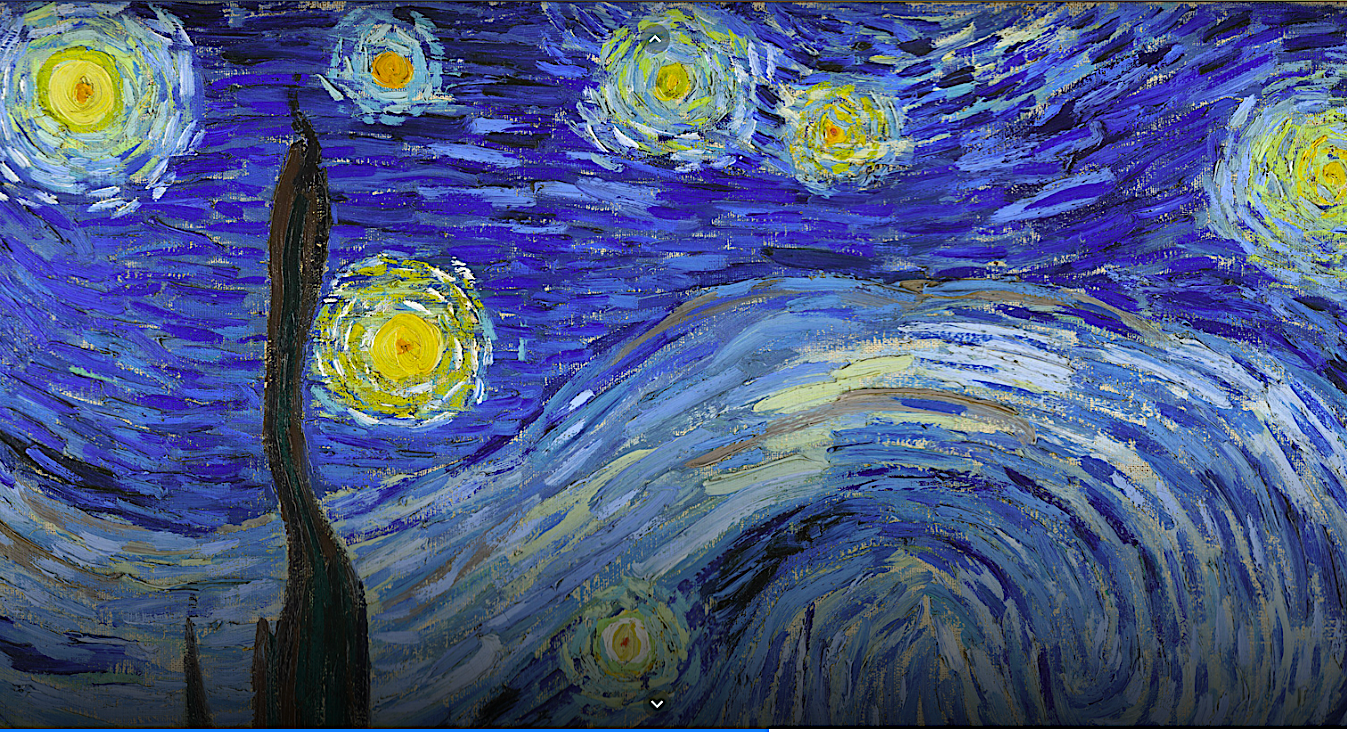
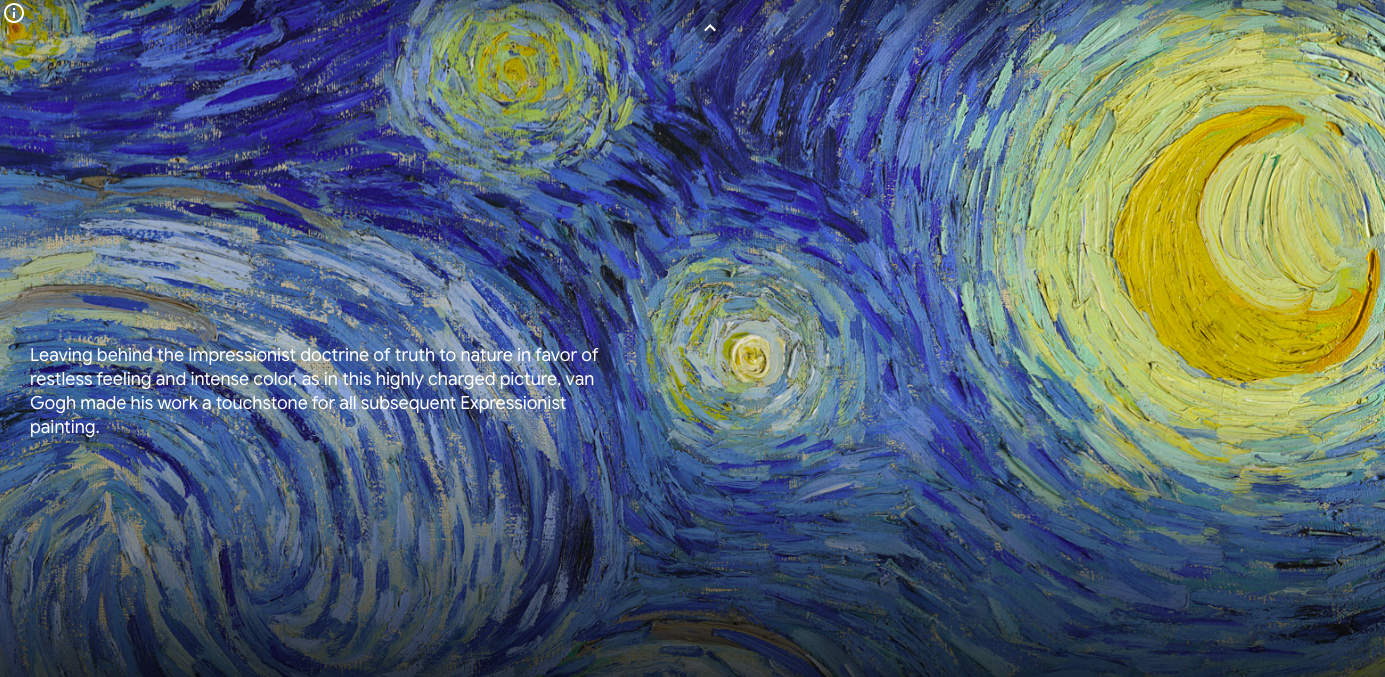
Zoom Into a Super High Resolution Photo of Van Gogh’s “The Starry Night”

“Just as we take the train to get to Taras­con or Rouen, we take death to reach a star,” Vin­cent Van Gogh wrote to his broth­er from Arles in the sum­mer of 1888:

What’s cer­tain­ly true in this argu­ment is that while alive, we can­not go to a star, any more than once dead we’d be able to take the train.

The fol­low­ing sum­mer, as a patient in the asy­lum of Saint-Paul-de-Mau­sole in Provence, he paint­ed what would become his best known work — The Star­ry Night.

The sum­mer after that, he was dead of a gun­shot wound to the abdomen, com­mon­ly believed to be self-inflict­ed.

Judg­ing from thoughts expressed in that same let­ter, Van Gogh may have con­ceived of such a death as a “celes­tial means of loco­mo­tion, just as steam­boats, omnibus­es and the rail­way are ter­res­tri­al ones”:

To die peace­ful­ly in old age would be to go there on foot.
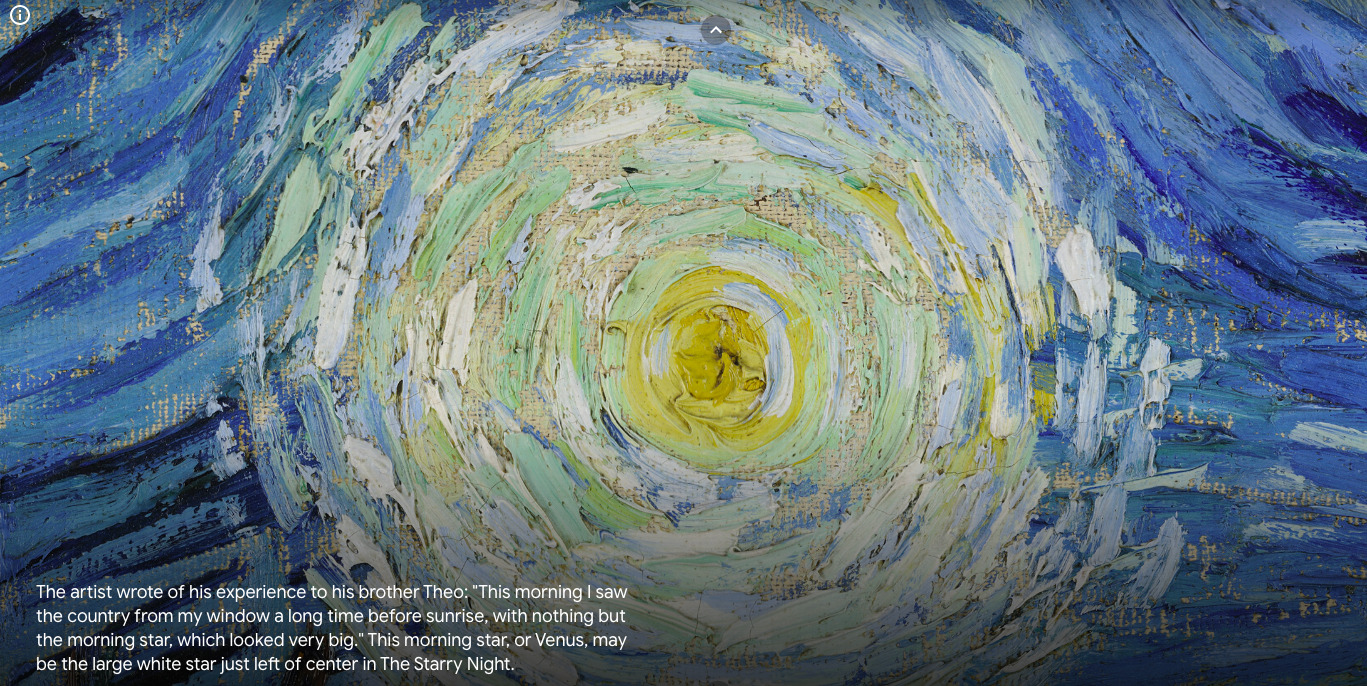
Although his win­dow at the asy­lum afford­ed him a sun­rise view, and a pri­vate audi­ence with the promi­nent morn­ing star he men­tioned in anoth­er let­ter to Theo, Star­ry Night’s vista is “both an exer­cise in obser­va­tion and a clear depar­ture from it,” accord­ing to 2019’s MoMA High­lights: 375 Works from The Muse­um of Mod­ern Art:

The vision took place at night, yet the paint­ing, among hun­dreds of art­works van Gogh made that year, was cre­at­ed in sev­er­al ses­sions dur­ing the day, under entire­ly dif­fer­ent atmos­pher­ic con­di­tions. The pic­turesque vil­lage nes­tled below the hills was based on oth­er views—it could not be seen from his window—and the cypress at left appears much clos­er than it was. And although cer­tain fea­tures of the sky have been recon­struct­ed as observed, the artist altered celes­tial shapes and added a sense of glow.
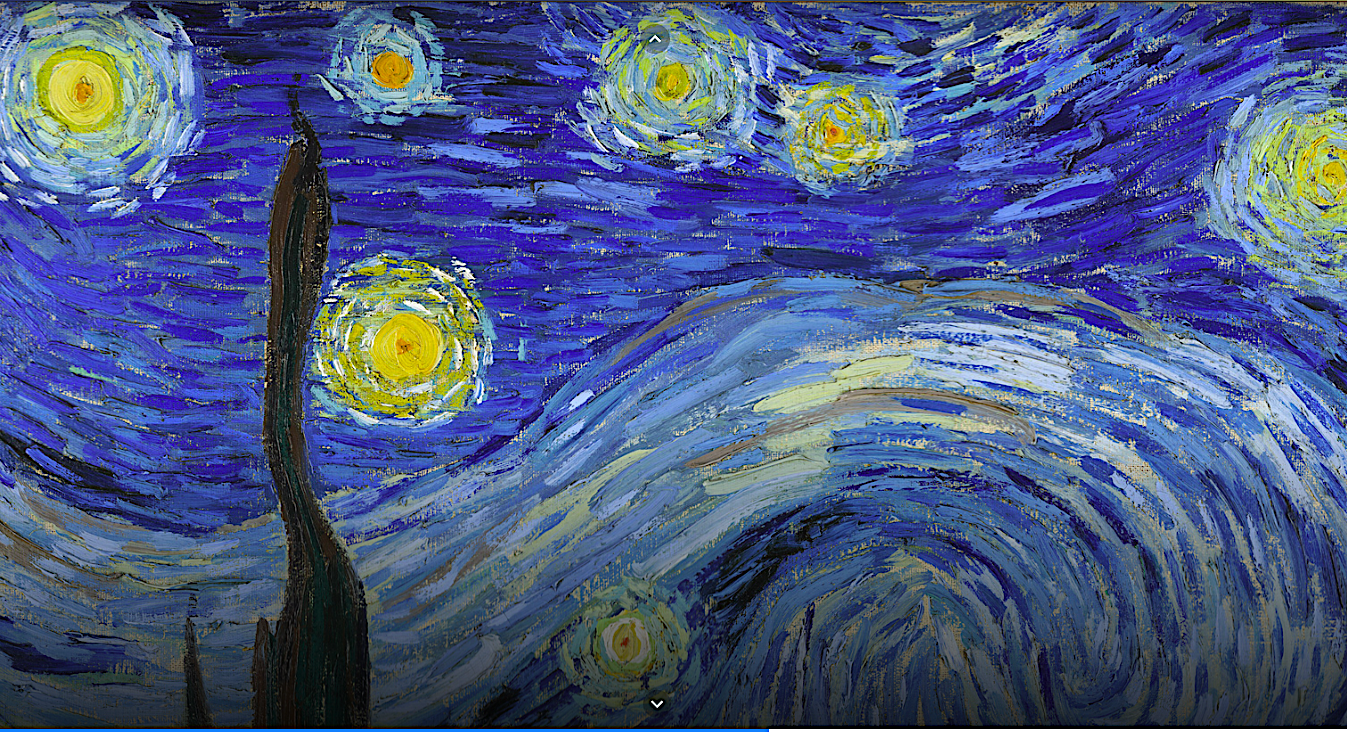
Those who can’t vis­it MoMA to see The Star­ry Night in per­son may enjoy get­ting up close and per­son­al with Google Arts and Cul­ture’s zoomable, high res dig­i­tal repro­duc­tion. Keep click­ing into the image to see the paint­ing in greater detail.

Before or after for­mu­lat­ing your own thoughts on The Star­ry Night and the emo­tion­al state that con­tributed to its exe­cu­tion, get the per­spec­tive of singer-song­writer Mag­gie Rogers in the below episode of Art Zoom, in which pop­u­lar musi­cians share their thoughts while nav­i­gat­ing around a famous can­vas.

Bonus! Throw your­self into a free col­or­ing page of The Star­ry Night here.

Relat­ed Con­tent: 

A Gallery of 1,800 Gigapix­el Images of Clas­sic Paint­ings: See Vermeer’s Girl with the Pearl Ear­ring, Van Gogh’s Star­ry Night & Oth­er Mas­ter­pieces in Close Detail

Vin­cent Van Gogh’s “The Star­ry Night”: Why It’s a Great Paint­ing in 15 Min­utes

1,000+ Art­works by Vin­cent Van Gogh Dig­i­tized & Put Online by Dutch Muse­ums: Enter Van Gogh World­wide

Rare Vin­cent van Gogh Paint­ing Goes on Pub­lic Dis­play for the First Time: Explore the 1887 Paint­ing Online

Ayun Hal­l­i­day is an author, illus­tra­tor, the­ater mak­er and Chief Pri­ma­tol­o­gist of the East Vil­lage Inky zine.  Fol­low her @AyunHalliday.

Art History School: Learn About the Art & Lives of Toulouse-Lautrec, Gustav Klimt, Frances Bacon, Edvard Munch & Many More

Artist and video­g­ra­ph­er Paul Priest­ly is an enthu­si­as­tic and gen­er­ous sort of fel­low.

His free online draw­ing tuto­ri­als abound with encour­ag­ing words for begin­ners, and he clear­ly rel­ish­es lift­ing the cur­tain to reveal his home stu­dio set up and self designed cam­era rig.

But we here at Open Cul­ture think his great­est gift to home view­ers are his Art His­to­ry School pro­files of well-known artists like Hen­ri de Toulouse-Lautrec and Vin­cent Van Gogh.

An avid sto­ry­teller, he’s drawn to those with trag­ic his­to­ries — the deci­sion to piv­ot from imper­son­at­ing the artist, as he did with Van Gogh, to serv­ing as a reporter inter­est­ed in how such details as syphilis and alco­holism informed lives and careers is a wise one.

Priest­ly makes a con­vinc­ing case that Lautrec’s aris­to­crat­ic upbring­ing con­tributed to his mis­ery. His short stature was the result, not of dwarfism, but Pykn­odysos­to­sis (PYCD) a rare bone weak­en­ing dis­ease that sure­ly owed some­thing to his par­ents’ sta­tus as first cousins.

His appear­ance made him a sub­ject of life­long mock­ery, and ensured that the free­wheel­ing artist scene in Mont­martre would prove more wel­com­ing than the blue­blood milieu into which he’d been born.

Priest­ly makes a meal of that Demi-monde, intro­duc­ing view­ers to many of the play­ers.

He height­ens our appre­ci­a­tion for Lautrec’s mas­ter­piece, At the Moulin Rouge, by briefly ori­ent­ing us to who’s seat­ed around the table: writer and crit­ic Édouard Dujardin, dancer La Mac­arona, pho­tog­ra­ph­er Paul Secau, and “cham­pagne sales­man and debauchee” Mau­rice Guib­ert, who ear­li­er posed as a lech­er­ous patron in Lautrec’s At the Café La Mie.

Queen of the Can­can La Goulue hangs out in the back­ground with anoth­er dancer, the won­der­ful­ly named La Môme Fro­mage.

Lautrec places him­self square­ly in the mix, look­ing very much at home.

Con­sid­er that these names, like those of fre­quent Lautrec sub­jects acro­bat­ic dancer Jane Avril and chanteuse Yvette Guil­bert were as cel­e­brat­ed in Belle Epoque Mont­martre as many of the painters Lautrec rubbed shoul­ders with — Degas, Pis­sar­ro, Cézanne, Van Gogh and Manet.

In an arti­cle in The Smith­son­ian, Paul Tra­cht­man recounts how Lautrec dis­cov­ered the mod­el for Manet’s famous nude Olympia, Vic­torine Meurent, “liv­ing in abject pover­ty in a top-floor apart­ment down a Mont­martre alley. She was now an old, wrin­kled, bald­ing woman. Lautrec called on her often, and took his friends along, pre­sent­ing her with gifts of choco­late and flow­ers — as if court­ing death itself.”

Mean­while Degas sniffed that Lautrec’s stud­ies of women in a broth­el “stank of syphilis.”

Per­haps Priest­ly will delve into Degas for an upcom­ing Art His­to­ry School episode … there’s no short­age of mate­r­i­al there.

Above are three more of Paul Priestly’s Art His­to­ry School pro­files that we’ve enjoyed on Frances Bacon, Edvard Munch and Gus­tav Klimt. You can sub­scribe to his chan­nel here.

Relat­ed Con­tent: 

The Art His­to­ry Web Book

Art His­to­ri­an Pro­vides Hilar­i­ous & Sur­pris­ing­ly Effi­cient Art His­to­ry Lessons on Tik­Tok

Free Art & Art His­to­ry Cours­es 

Ayun Hal­l­i­day is an author, illus­tra­tor, the­ater mak­er and Chief Pri­ma­tol­o­gist of the East Vil­lage Inky zine.  Fol­low her @AyunHalliday.

Sci-Fi Pioneer Hugo Gernsback Predicts Telemedicine in 1925

If you’ve ever won­dered why one of sci­ence fiction’s great­est hon­ors is called the “Hugo,” meet Hugo Gerns­back, one of the genre’s most impor­tant fig­ures, a man whose work has been var­i­ous­ly described as “dread­ful,” “tawdry,” “incom­pe­tent,” “grace­less,” and “a sort of ani­mat­ed cat­a­logue of gad­gets.” But Gerns­back isn’t remem­bered as a writer, but as an edi­tor, pub­lish­er (of Amaz­ing Sto­ries mag­a­zine), and pio­neer of sci­ence fact, for it was Gerns­back who first intro­duced the earth-shak­ing tech­nol­o­gy of radio to the mass­es in the ear­ly 20th cen­tu­ry.

“In 1905 (just a year after emi­grat­ing to the U.S. from Ger­many at the age of 20),” writes Matt Novak at Smith­son­ian, “Gerns­back designed the first home radio set and the first mail-order radio busi­ness in the world.” He would lat­er pub­lish the first radio mag­a­zine, then, in 1913, a mag­a­zine that came to be called Sci­ence and Inven­tion, a place where Gerns­back could print cat­a­logues of gad­gets with­out the both­er of hav­ing to please lit­er­ary crit­ics. In these pages he shone, pre­dict­ing futur­is­tic tech­nolo­gies extrap­o­lat­ed from the cut­ting edge. He was under­stand­ably enthu­si­as­tic about the future of radio. Like all self-appoint­ed futur­ists, his pre­dic­tions were a mix of the ridicu­lous and the prophet­ic.

Case in point: Gerns­back the­o­rized in a 1925  Sci­ence and Inven­tion arti­cle that com­mu­ni­ca­tions tech­nolo­gies like radio would rev­o­lu­tion­ize med­i­cine, in exact­ly the ways that they have in the 21st cen­tu­ry, though not quite through the device Gerns­back invent­ed: the “teledactyl,” which is not a robot­ic dinosaur but a telemed­i­cine plat­form that would allow doc­tors to exam­ine, diag­nose, and treat patients from a dis­tance with robot­ic arms, a hap­tic feed­back sys­tem, and “by means of a tele­vi­sion screen.” Nev­er mind that tele­vi­sion did­n’t exist in 1925. Sound­ing not a lit­tle like his con­tem­po­rary Buck­min­ster Fuller, Gerns­back insist­ed that his device “can be built today with means avail­able right now.”

It would require sig­nif­i­cant upgrades to radio tech­nol­o­gy before it could sup­port the wire­less inter­net that lets us meet with doc­tors on com­put­er screens. Per­haps Gerns­back was­n’t entire­ly wrong — tech­nol­o­gy may have allowed for some ver­sion of this in the ear­ly 20th cen­tu­ry, if med­i­cine had been inspired to move in a more sci-fi direc­tion. But the focus of the med­ical com­mu­ni­ty — after the dev­as­ta­tion of the 1918 flu epi­dem­ic — had under­stand­ably turned toward dis­ease cure and pre­ven­tion, not dis­tance diag­no­sis.

Gerns­back looked fifty years ahead, to a time, he wrote, when “the busy doc­tor… will not be able to vis­it his patients as he does now. It takes too much time, and he can only, at best, see a lim­it­ed num­ber today.” Home vis­its did not last anoth­er fifty years, but remote med­i­cine did­n’t take their place until almost 100 years after Gerns­back wrote. Indeed, the web­cams that now give doc­tors access to patients in the pan­dem­ic only came about in 1991 for the pur­pose of mak­ing sure the break room in the com­put­er sci­ence depart­ment at Cam­bridge had cof­fee.

Gerns­back even antic­i­pat­ed advances in space med­i­cine, which has spent the last sev­er­al years build­ing the tech­nol­o­gy he pre­dict­ed in order to per­form surg­eries on sick and injured astro­nauts stuck months or years away from Earth. He would have par­tic­u­lar­ly appre­ci­at­ed this usage, though he isn’t giv­en cred­it for the idea. Gerns­back also deserves cred­it for pok­ing fun at him­self, as he seemed to real­ize how hard it was for most peo­ple to take him seri­ous­ly.

To non-vision­ar­ies, the tech­nolo­gies of the future would all seem equal­ly ridicu­lous today, as in the pages of Gerns­back­’s satir­i­cal 1947 pub­li­ca­tion, Pop­u­lar Neck­an­ics Gagazine. Here, we find such objects as the Lam­pli­fi­er, “the lamp that has EVERYTHING.” Gerns­back­’s love of gad­gets blurred the bound­aries between sci­ence fic­tion and fact, always with the strong sug­ges­tion that — no mat­ter how use­ful or how ludi­crous — if a machine could be imag­ined, it could be built and put to work.

Relat­ed Con­tent: 

The Iso­la­tor: A 1925 Hel­met Designed to Elim­i­nate Dis­trac­tions & Increase Pro­duc­tiv­i­ty (Cre­at­ed by Sci­Fi Pio­neer Hugo Gerns­back)

A 1947 French Film Accu­rate­ly Pre­dict­ed Our 21st-Cen­tu­ry Addic­tion to Smart­phones

Enter a Huge Archive of Amaz­ing Sto­ries, the World’s First Sci­ence Fic­tion Mag­a­zine, Launched in 1926

Sci-Fi Author J.G. Bal­lard Pre­dicts the Rise of Social Media (1977)

Arthur C. Clarke Pre­dicts in 2001 What the World Will Look By Decem­ber 31, 2100

Josh Jones is a writer and musi­cian based in Durham, NC. Fol­low him at @jdmagness

The Evolution of Kandinsky’s Painting: A Journey from Realism to Vibrant Abstraction Over 46 Years

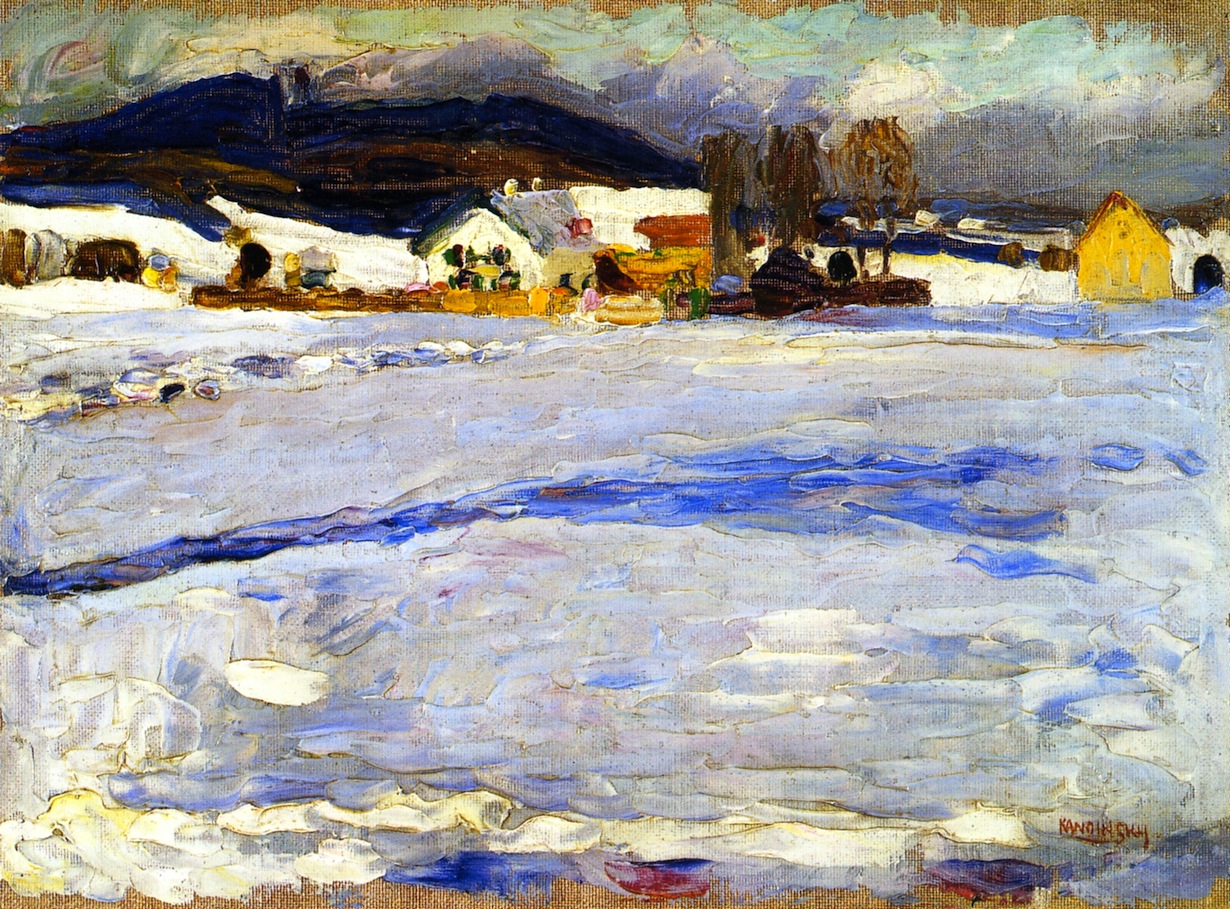
Like most renowned abstract painters, Wass­i­ly Kandin­sky could also paint real­is­ti­cal­ly. Unlike most renowned abstract painters, he only took up art in earnest after study­ing eco­nom­ics and law at the Uni­ver­si­ty of Moscow. He then found ear­ly suc­cess teach­ing those sub­jects, which seem to have proven too world­ly for his sen­si­bil­i­ties: at age 30 he enrolled in the Munich Acad­e­my to con­tin­ue the study of art that he’d left off while grow­ing up in Odessa. The sur­viv­ing paint­ings he pro­duced at the end of the 19th cen­tu­ry and the begin­ning of the 20th, dis­played on Wikipedi­a’s list of his works, include a vari­ety of land­scapes, most pre­sent­ing Ger­man and Russ­ian (or today Ukrain­ian) land­scapes undis­turbed by a sin­gle human fig­ure.

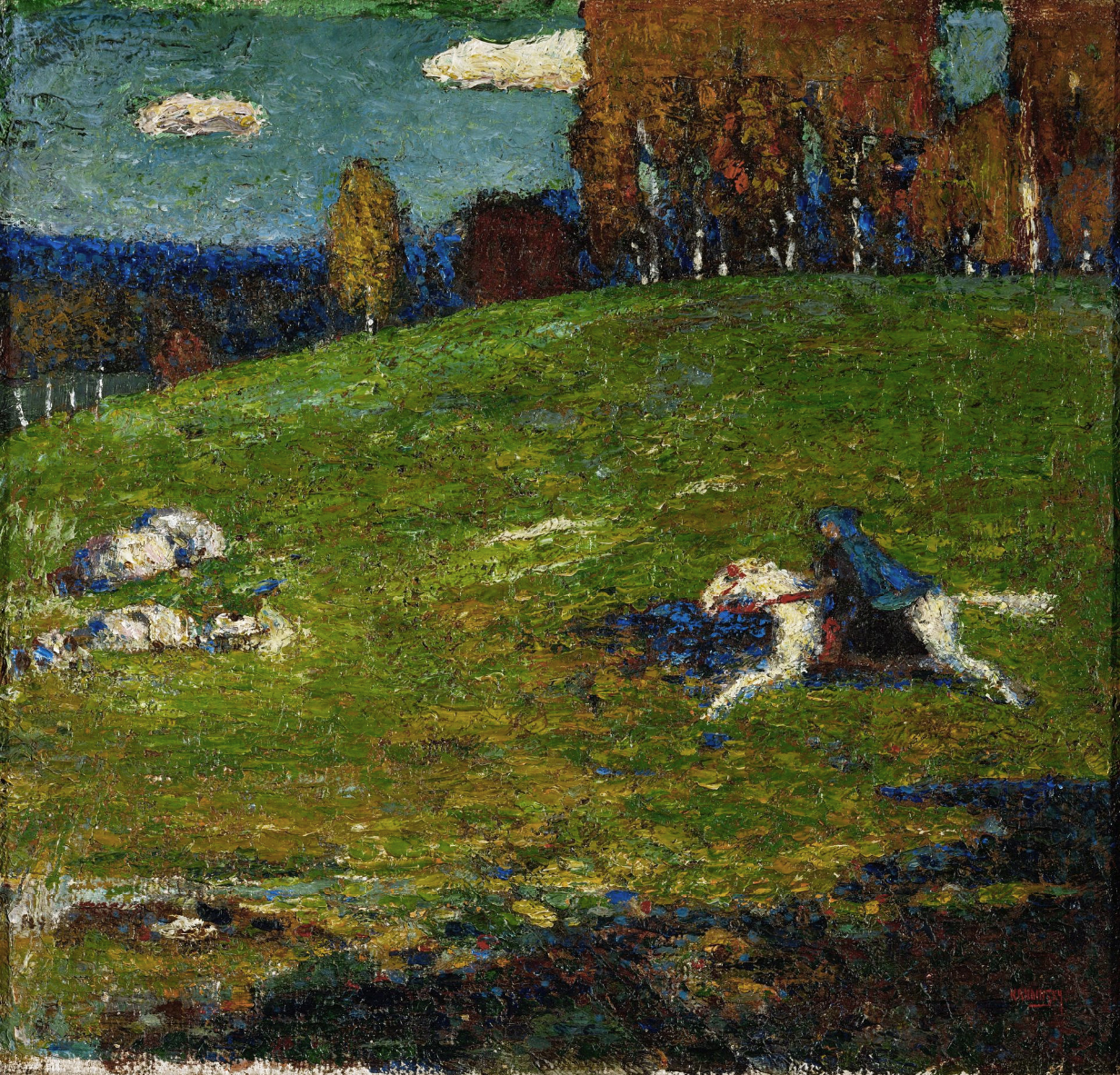
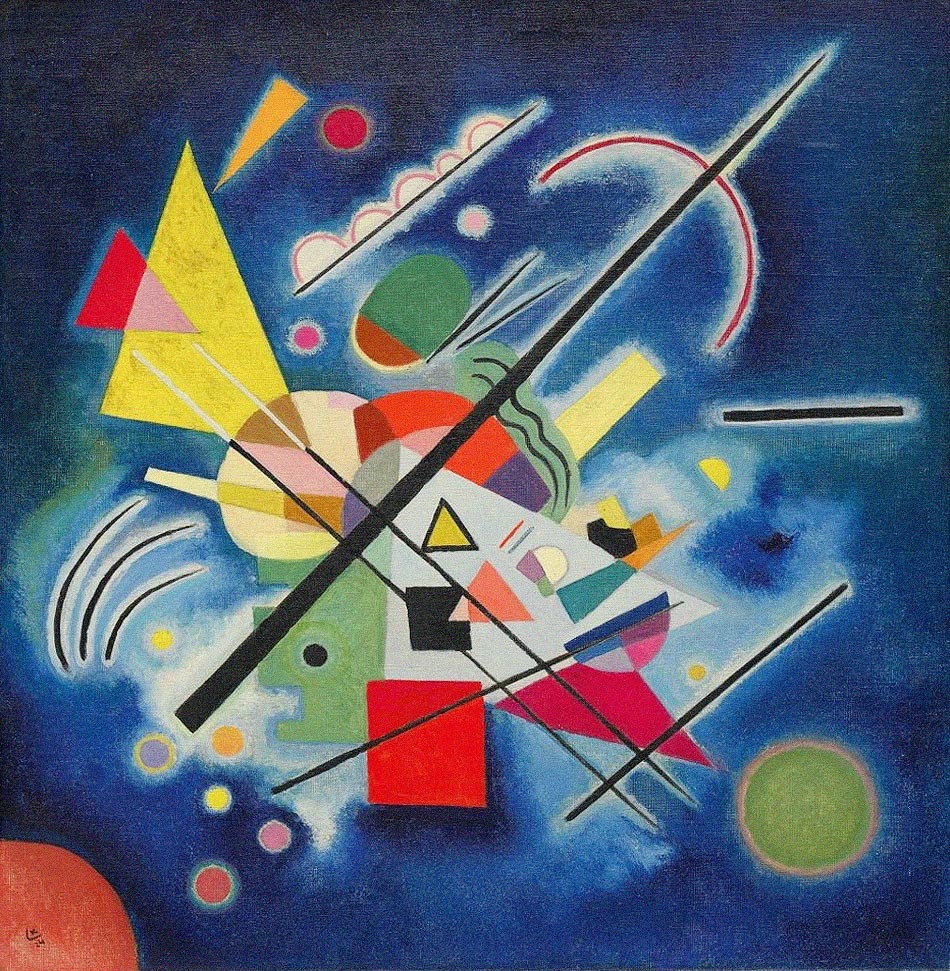
Kandin­sky made dra­mat­ic change come with 1903’s The Blue Rid­er (above). The pres­ence of the tit­u­lar fig­ure made for an obvi­ous dif­fer­ence from so many of the images he’d cre­at­ed over the pre­vi­ous half-decade; a shift in its very per­cep­tion of real­i­ty made for a less obvi­ous one.

This is not the world as we nor­mal­ly see it, and Kandin­sky’s track record of high­ly rep­re­sen­ta­tive paint­ings tells us that he must delib­er­ate­ly have cho­sen to paint it it that way. With fel­low artists like August Macke, Franz Marc, Albert Bloch, and Gabriele Mün­ter, he went on to form the Blue Rid­er Group, whose pub­li­ca­tions argued for abstract art’s capa­bil­i­ty to attain great spir­i­tu­al heights, espe­cial­ly through col­or.

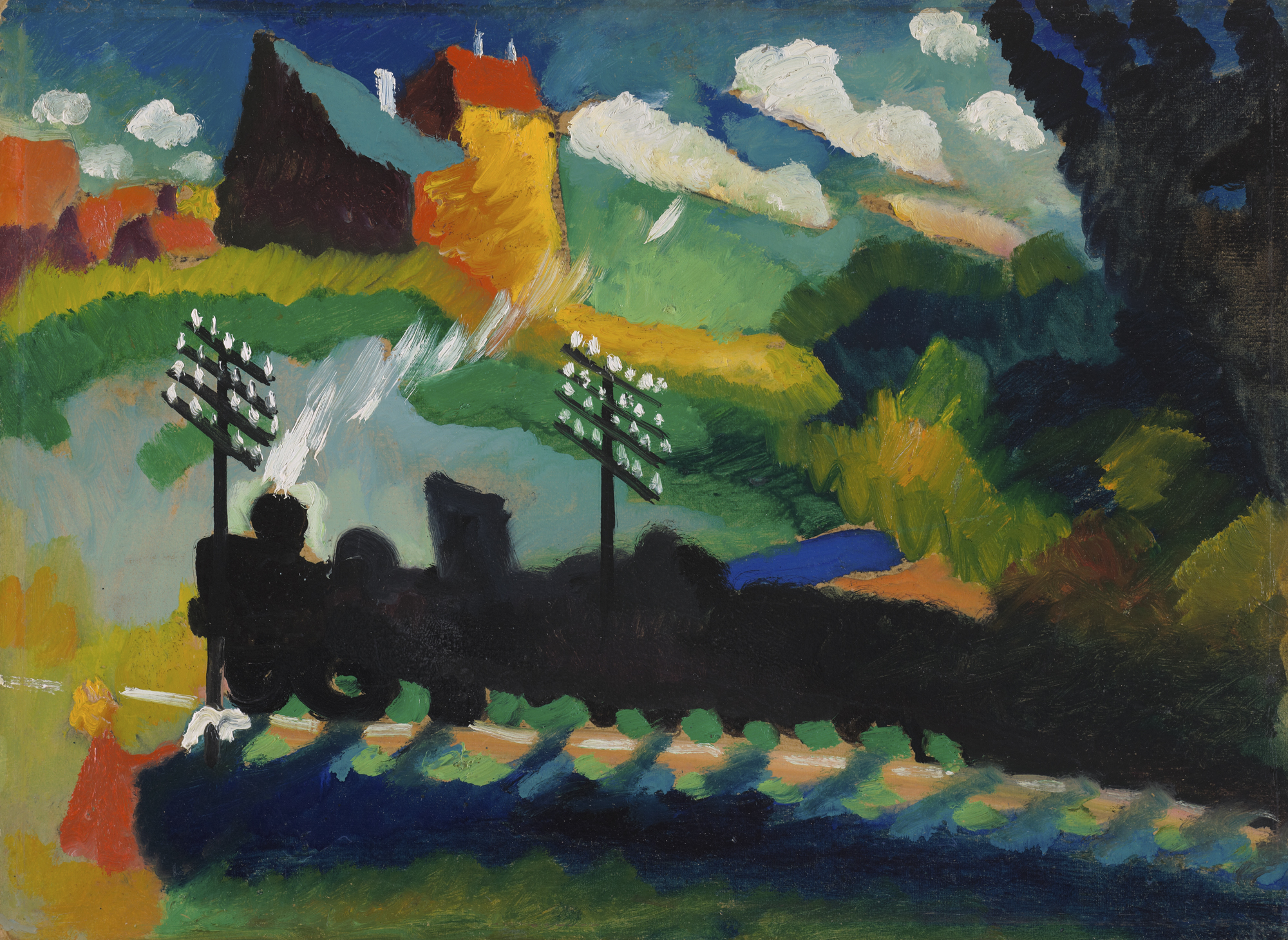
“Grad­u­al­ly Kandin­sky makes depar­tures from the exter­nal ‘world as a mod­el’ into the world of ‘paint as a thing in itself,’ ” writes painter Markus Ray. “Still depict­ing ‘world­ly scenes,’ these paint­ings start to take on pur­er col­ors and shapes. He reduces vol­umes into sim­ple shapes, and col­ors into bright and vibrant hues. One can still make out the scene, but the shapes and col­ors begin to take on a life of their own.” This is espe­cial­ly true of the scenes Kandin­sky paint­ed in Bavaria, such as 1909’s Rail­way near Mur­nau above. The out­break of World War I five years lat­er sent him back to Rus­sia, where he con­tin­ued his pio­neer­ing jour­ney toward a visu­al art equal in expres­sive pow­er to music, which he called his “ulti­mate teacher.” But by the ear­ly 1920s it had become clear that his increas­ing­ly indi­vid­u­al­is­tic and non-rep­re­sen­ta­tive ten­den­cies would­n’t sit well with the Sovi­et cul­tur­al pow­ers that be.

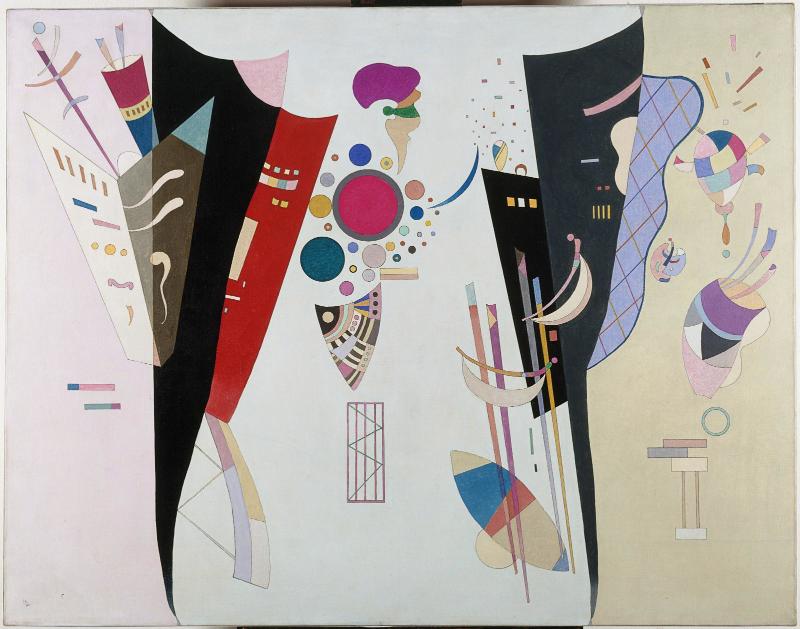
A return to Ger­many was in order. “In 1921, at the age of 55, Kandin­sky moved to Weimar to teach mur­al paint­ing and intro­duc­to­ry ana­lyt­i­cal draw­ing at the new­ly found­ed Bauhaus school,” says Christie’s. “There he worked along­side the likes of Paul Klee, Lás­zló Moholy-Nagy and Josef Albers,” and also expand­ed on Goethes the­o­ries of col­or. A true believ­er in the Bauhaus’ “phi­los­o­phy of social improve­ment through art,” Kandin­sky also wound up among the artists whose work was exhib­it­ed in the Nazi Par­ty’s “Degen­er­ate Art Exhi­bi­tion” of 1937. By that time the Bauhaus was dis­solved and Kandin­sky had reset­tled in Paris, where until his death in 1944 (as evi­denced by Wikipedi­a’s list of his paint­ings) he kept push­ing fur­ther into abstrac­tion, seek­ing ever-pur­er expres­sions of the human soul until the very end.

Relat­ed Con­tent:

Time Trav­el Back to 1926 and Watch Wass­i­ly Kandin­sky Make Art in Some Rare Vin­tage Video

Helen Mir­ren Tells Us Why Wass­i­ly Kandin­sky Is Her Favorite Artist (And What Act­ing & Mod­ern Art Have in Com­mon)

Wass­i­ly Kandin­sky Syncs His Abstract Art to Mussorgsky’s Music in a His­toric Bauhaus The­atre Pro­duc­tion (1928)

An Inter­ac­tive Social Net­work of Abstract Artists: Kandin­sky, Picas­so, Bran­cusi & Many More

How to Paint Like Kandin­sky, Picas­so, Warhol & More: A Video Series from the Tate

The Guggen­heim Puts Online 1700 Great Works of Mod­ern Art from 625 Artists

Take a Jour­ney Through 933 Paint­ings by Sal­vador Dalí & Watch His Sig­na­ture Sur­re­al­ism Emerge

Based in Seoul, Col­in Mar­shall writes and broad­casts on cities, lan­guage, and cul­ture. His projects include the Sub­stack newslet­ter Books on Cities, the book The State­less City: a Walk through 21st-Cen­tu­ry Los Ange­les and the video series The City in Cin­e­ma. Fol­low him on Twit­ter at @colinmarshall or on Face­book.

A 10-Course Introduction to Data Science from Johns Hopkins

Data is now every­where. And those who can har­ness data effec­tive­ly stand poised to inno­vate and make impact­ful deci­sions. This holds true in busi­ness, med­i­cine, health­care, edu­ca­tion and oth­er spheres of life.

Enter the 10-course Intro­duc­tion to Data Sci­ence from Johns Hop­kins. Offered on the Cours­era plat­form, this course sequence cov­ers “the con­cepts and tools you’ll need through­out the entire data sci­ence pipeline, from ask­ing the right kinds of ques­tions to mak­ing infer­ences and pub­lish­ing results.” The pro­gram includes cours­es cov­er­ing The Data Scientist’s Tool­box, R Pro­gram­ming, Get­ting and Clean­ing Data, Devel­op­ing Data Prod­ucts and more. There’s also a Cap­stone Project where stu­dents can build a data prod­uct using real-world data.

Stu­dents can for­mal­ly enroll in the Intro­duc­tion to Data Sci­ence spe­cial­iza­tion and receive a cer­tifi­cate for each course they complete–a cer­tifi­cate they can share with prospec­tive employ­ers and their pro­fes­sion­al net­works. They’ll also leave with a port­fo­lio demon­strat­ing mas­tery of the mate­r­i­al cov­ered in the sequence. Hop­kins esti­mates that most learn­ers can com­plete the sequence in 3–7 months, dur­ing which time stu­dents will be charged $49 per month.

Alter­na­tive­ly, stu­dents can audit indi­vid­ual cours­es for free. When you enroll in a course, look care­ful­ly for the Audit option. Note: Audi­tors can­not receive a cer­tifi­cate for each com­plet­ed course.

If would like to for­mal­ly enroll in the Intro­duc­tion to Data Sci­ence sequence, you can start a 7‑Day Free Tri­al and size things up here.

Open Cul­ture has a part­ner­ship with Cours­era. If read­ers enroll in cer­tain Cours­era cours­es and pro­grams, it helps sup­port Open Cul­ture.

Relat­ed Con­tent:

Google Data Ana­lyt­ics Cer­tifi­cate: 8 Cours­es Will Help Pre­pare Stu­dents for an Entry-Lev­el Job in 6 Months

Become a Project Man­ag­er With­out a Col­lege Degree with Google’s Project Man­age­ment Cer­tifi­cate

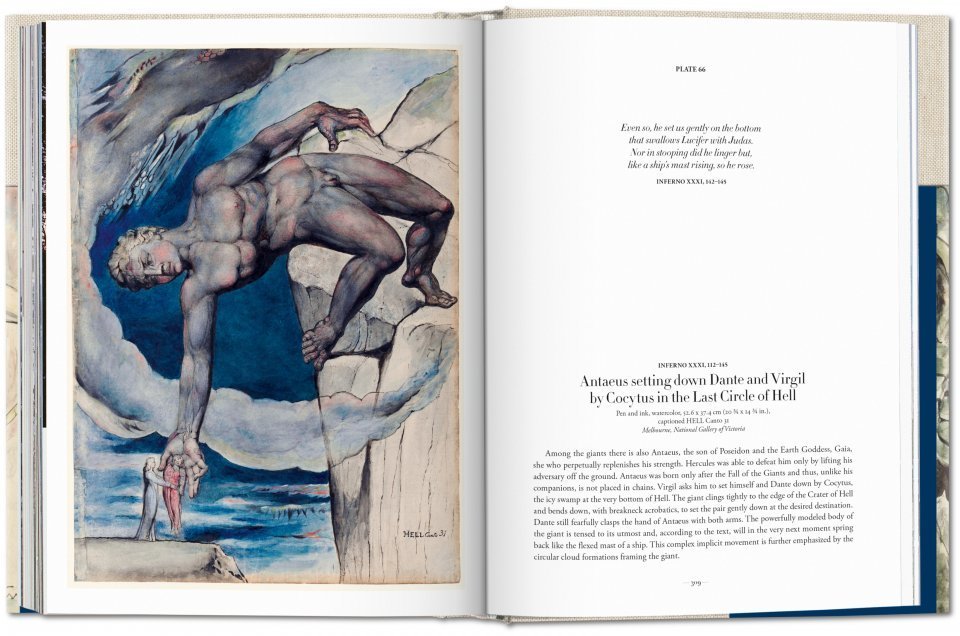
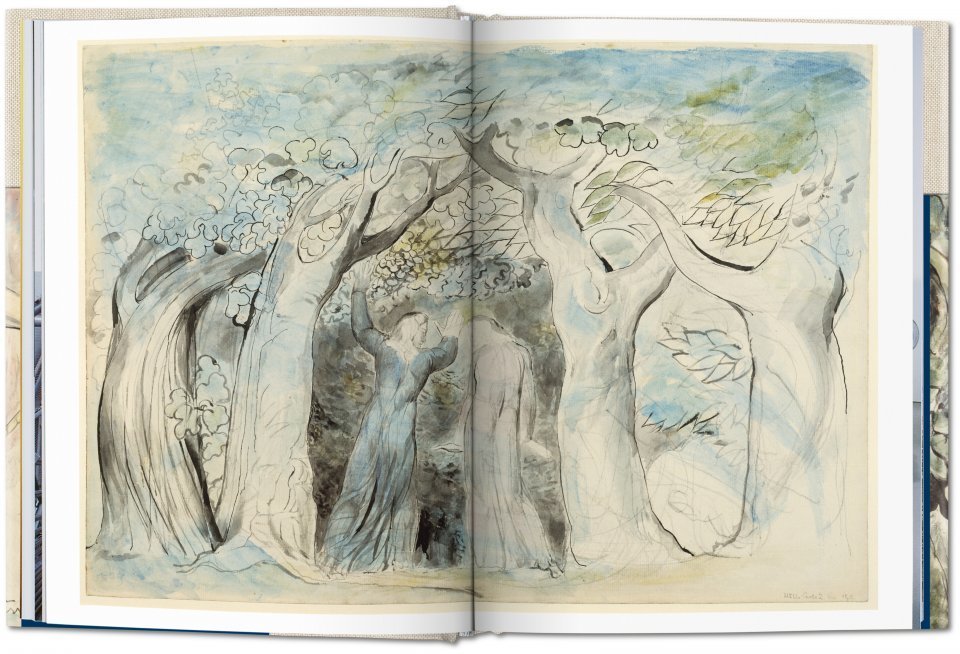
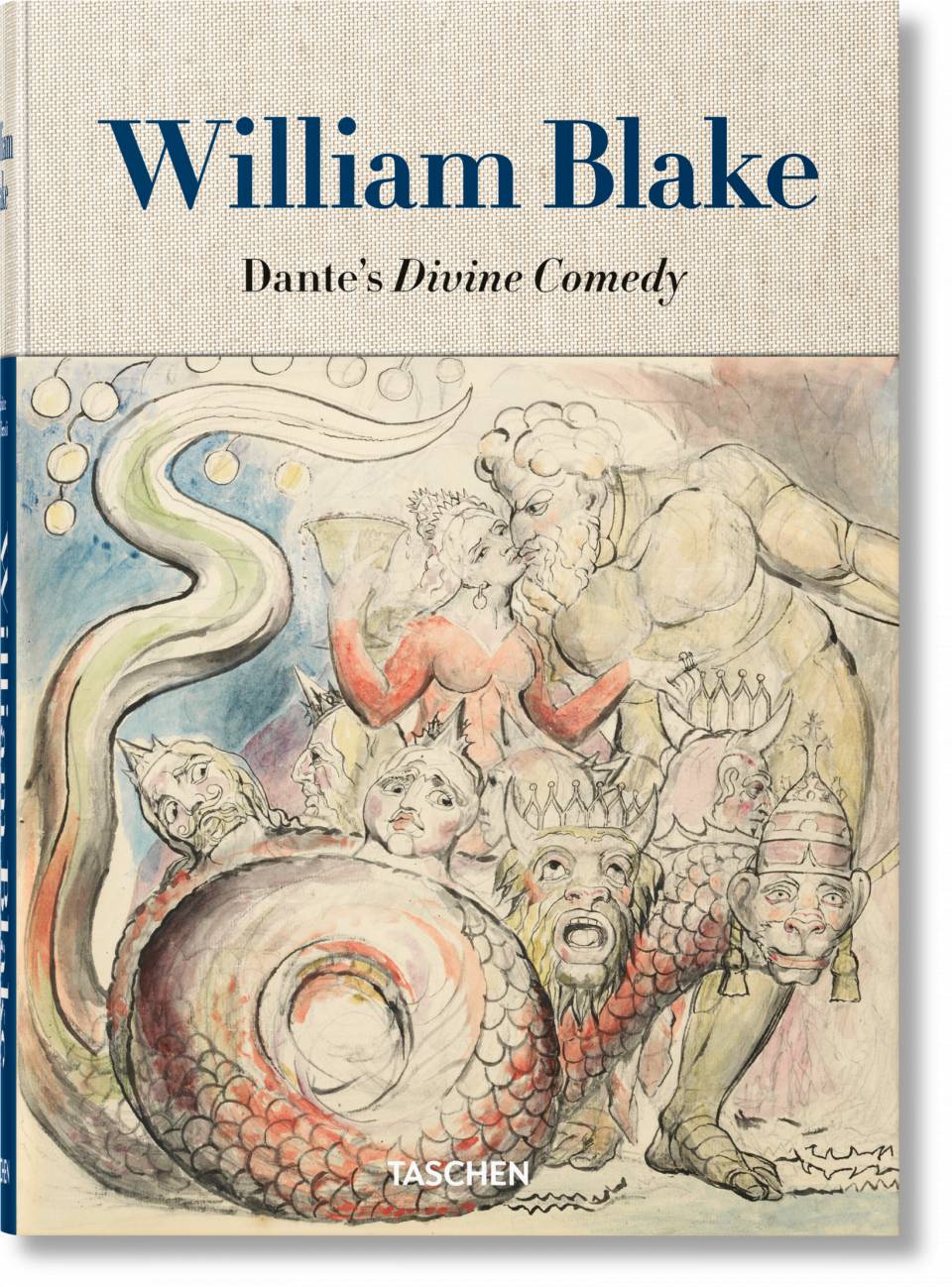
William Blake’s 102 Illustrations of The Divine Comedy Collected in a Beautiful Book from Taschen

In his book on the Tarot, Ale­jan­dro Jodor­owsky describes the Her­mit card as rep­re­sent­ing mid-life, a “pos­i­tive cri­sis,” a mid­dle point in time; “between life and death, in a con­tin­u­al cri­sis, I hold up my lit lamp — my con­scious­ness,” says the Her­mit, while con­fronting the unknown. The fig­ure recalls the image of Dante in the open­ing lines of the Divine Com­e­dy. In Mandelbaum’s trans­la­tion at Columbi­a’s Dig­i­tal Dante, we see evi­dent sim­i­lar­i­ties:

When I had jour­neyed half of our life’s way,
I found myself with­in a shad­owed for­est,
for I had lost the path that does not stray.

Ah, it is hard to speak of what it was,
that sav­age for­est, dense and dif­fi­cult,
which even in recall renews my fear:

so bitter—death is hard­ly more severe!

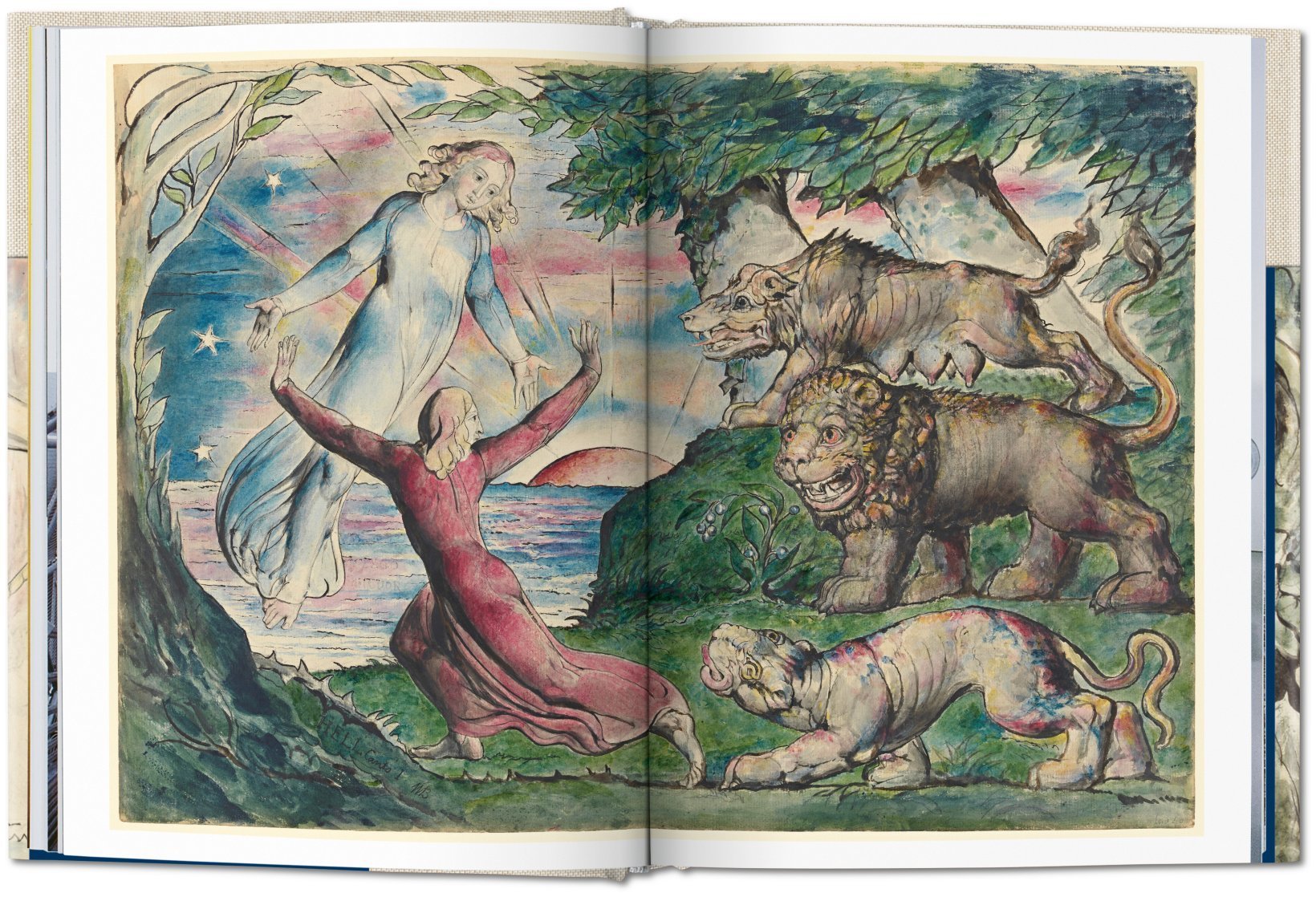
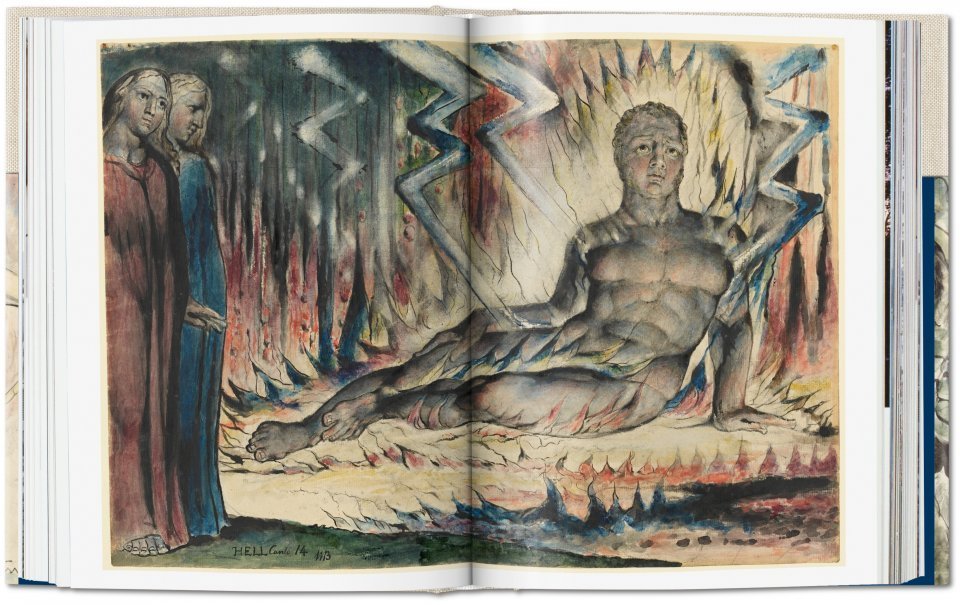
This is not to say the lit­er­ary Dante and occult Her­meti­cism are his­tor­i­cal­ly relat­ed; only they emerged from the same matrix, a medieval Catholic Europe steeped in mys­te­ri­ous sym­bols. The Her­mit is a por­tent, mes­sen­ger, and guide, an aspect rep­re­sent­ed by the poet Vir­gil, whom William Blake — in 102 water­col­or illus­tra­tions made between 1824 and 1827 — dressed in blue to rep­re­sent spir­it, while Dante wears his usu­al red — the col­or, in Blake’s sys­tem, of expe­ri­ence.

Blake did not read the Divine Com­e­dy as a medieval Catholic believ­er but as a vision­ary 18th and 19th cen­tu­ry Eng­lish artist and poet who invent­ed his own reli­gion. He “taught him­self Ital­ian in order to be able to read the orig­i­nal” and had a “ com­plex rela­tion­ship” with the text, writes Dante schol­ar Sil­via De San­tis.

His inter­pre­ta­tion drew from a “wide­spread ‘selec­tive use’” of the poet,” dat­ing from 16th cen­tu­ry Eng­lish Protes­tant read­ings which saw Dante’s satir­i­cal skew­er­ing of cor­rupt indi­vid­u­als as indict­ments of the insti­tu­tions they rep­re­sent — the church and state for which Blake had no love.

Approach­ing the project at the end of his life, not the mid­dle, Blake drew pri­mar­i­ly on themes that Dante schol­ar Robin Kil­patrick describes as a “search­ing analy­sis of all of the polit­i­cal and eco­nom­ic fac­tors that had destroyed Flo­rence .… Hell is a diag­no­sis of what, in so many ways, can prove to be divi­sive in human nature. Sin, for Dante, is not trans­gres­sion of an ordi­nary kind … against some law… it’s a trans­gres­sion against love.”

Blake died before he could fin­ish the series, com­mis­sioned by his friend John Lin­nell in 1824. He had intend­ed to engrave all 102 illus­tra­tions, con­ceived, he wrote, “dur­ing a fort­night’s ill­ness in bed.” You can see all of his stun­ning water­col­ors online here and find them lov­ing­ly repro­duced in a new book pub­lished by Taschen with essays by Blake and Dante experts, help­ing con­tex­tu­al­ize two poets who found a com­mon lan­guage across a span of 500 years. The book, orig­i­nal­ly priced at $150, now sells for $40. A beau­ti­ful XL edi­tion sells at a high­er price.

Relat­ed Con­tent:

Rarely-Seen Illus­tra­tions of Dante’s Divine Com­e­dy Are Now Free Online, Cour­tesy of the Uffizi Gallery

A Dig­i­tal Archive of the Ear­li­est Illus­trat­ed Edi­tions of Dante’s Divine Com­e­dy (1487–1568)

Explore Divine Com­e­dy Dig­i­tal, a New Dig­i­tal Data­base That Col­lects Sev­en Cen­turies of Art Inspired by Dante’s Divine Com­e­dy

Josh Jones is a writer and musi­cian based in Durham, NC. Fol­low him at @jdmagness.

Exercise Extreme Mindfulness with These Calming Zen Rock Garden Videos

The Inter­net is a place where the ancient past and the mod­ern and trend-dri­ven can col­lide and pro­duce won­drous things. The con­cept of ASMR (autonomous sen­so­ry merid­i­an response) took off in 2007, describ­ing the plea­sur­able tin­gling response from var­i­ous stim­uli, such as whis­per­ing, or qui­et­ly being read a sto­ry, or lis­ten­ing to the close­ly mic’d sounds of paper. There are cur­rent­ly some 13 mil­lion ASMR video chan­nels on YouTube.

Mean­while, the idea of the Zen gar­den is about 800 years old, and at the cen­ter of its care and upkeep is a qui­et, mind­ful prac­tice that mir­rors med­i­ta­tion. Unlike clas­sic West­ern gar­dens that brought sym­me­try and math­e­mat­ics into their design, Japan­ese gar­dens recre­at­ed a sort of curat­ed chaos. A Zen gar­den takes this idea fur­ther, mak­ing its cen­ter­piece a rock gar­den that is raked into pat­terns to mim­ic water. They are also small and meant for indi­vid­ual con­tem­pla­tion.

Artist-Design­er Yuki Kawae com­bines the two with his series of videos on his YouTube chan­nel. In close frames, he takes his rakes and cre­ates pat­terns and frac­tals in sand around a series of stones. The sound of sand and rake and ring­ing bowl make for a very med­i­ta­tive expe­ri­ence. The con­fi­dence and beau­ty of his steady hand are mes­mer­iz­ing, but you could also just lis­ten to the audio.

Kawae is based in the Bay Area and told Colos­sal that the prac­tice came out of the anx­i­ety of life in 2019:

I was quite over­whelmed with day-to-day tasks and what are the ‘expect­ed’ next steps in life…One day, I real­ized all of those thoughts were com­plete­ly gone when I was gar­den­ing, prun­ing, water­ing, and re-pot­ting the soil. That process let me be clear-mind­ed some­how, and it was very calm­ing and refresh­ing.

You don’t have to be a Zen monk to real­ize the calm­ing effects of gardening—-ask any­body who tends to their gar­den week­ly. But there is some­thing spe­cial in the min­i­mal­ism of the sand and the rake and the rock. Kawae’s “gar­den” is only cof­fee table sized.

Sand is also a good mate­r­i­al in which to prac­tice muta­bil­i­ty, says Kawae: “All the zen gar­den pat­terns are not per­ma­nent, and they get erased to start a new one. It is tem­po­rary like many things in life. It taught me about what not to over­think as what I am stress­ing about may also be tem­po­rary.”

Mean­while on YouTube there are oth­ers work­ing on Zen gar­dens. The Kikiyaya For­est Dwelling and Zen Gar­den is actu­al­ly locat­ed in the Nether­lands and the own­er posts her rak­ing adven­tures on YouTube.

And for those who would like to hear from an actu­al Zen mas­ter and gar­den­er, this hour-long pre­sen­ta­tion from Shun­myo Masuno—one of Japan’s lead­ing land­scape archi­tects and an 18th-gen­er­a­tion Zen Bud­dhist priest—will fill in the philo­soph­i­cal details.

I’ll leave the last word to 13th cen­tu­ry Japan­ese Zen mas­ter, writer, poet, and philoso­pher, Dogen Zen­ji: “Work­ing with plants, trees, fences, and walls, if they prac­tice sin­cere­ly they will attain enlight­en­ment.”

See you in the gar­den!

via Colos­sal

Relat­ed Con­tent:

What Is a Zen Koan? An Ani­mat­ed Intro­duc­tion to East­ern Philo­soph­i­cal Thought Exper­i­ments

Take a Break from Your Fran­tic Day & Let Alan Watts Intro­duce You to the Calm­ing Ways of Zen

The Zen of Bill Mur­ray: I Want to Be “Real­ly Here, Real­ly in It, Real­ly Alive in the Moment”

Ted Mills is a free­lance writer on the arts who cur­rent­ly hosts the Notes from the Shed pod­cast and is the pro­duc­er of KCR­W’s Curi­ous Coast. You can also fol­low him on Twit­ter at @tedmills, and/or watch his films here.

« Go BackMore in this category... »
Quantcast