The First Photograph of a Human Being: A Photo Taken by Louis Daguerre in 1838

You’ve like­ly heard the rea­son peo­ple nev­er smile in very old pho­tographs. Ear­ly pho­tog­ra­phy could be an excru­ci­at­ing­ly slow process. With expo­sure times of up to 15 min­utes, por­trait sub­jects found it impos­si­ble to hold a grin, which could eas­i­ly slip into a pained gri­mace and ruin the pic­ture. A few min­utes rep­re­sent­ed a marked improve­ment on the time it took to make the very first pho­to­graph, Nicéphore Niépce’s 1826 “heli­o­graph.” Cap­tur­ing the shapes of light and shad­ow out­side his win­dow, Niépce’s image “required an eight-hour expo­sure,” notes the Chris­t­ian Sci­ence Mon­i­tor, “long enough that the sun­light reflects off both sides of the build­ings.”

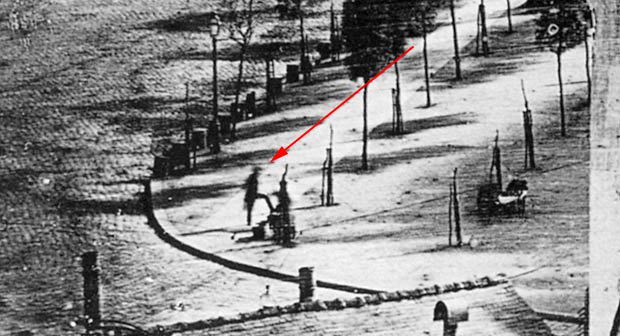
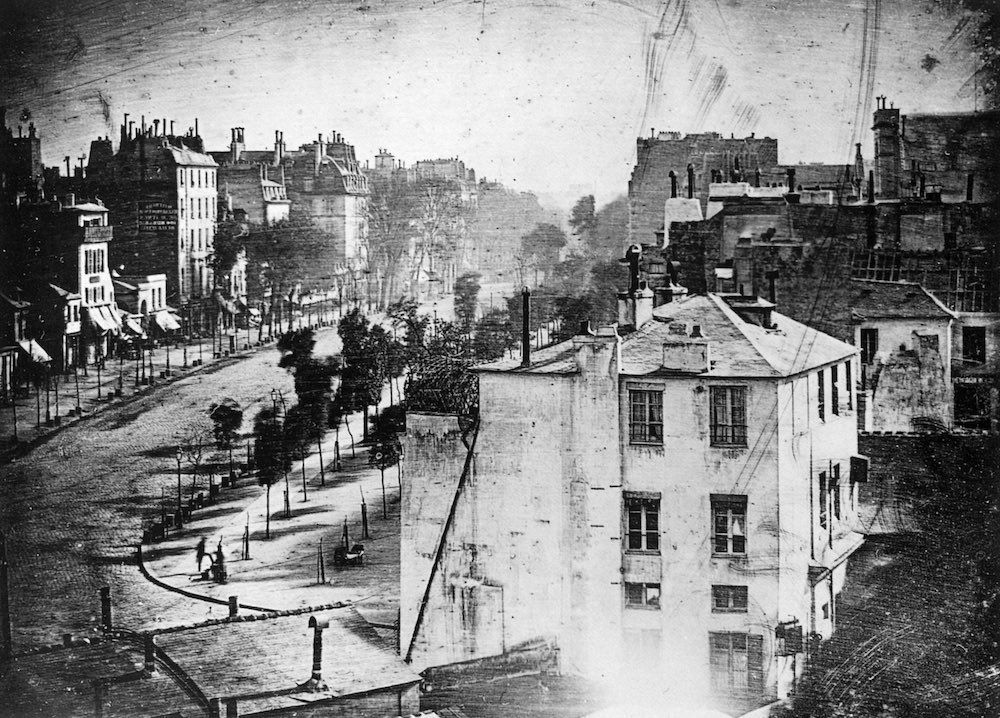
Niépce’s busi­ness and invent­ing part­ner is much more well-known: Louis Jacques Mandé Daguerre, who went on after Niépce’s death in 1833 to devel­op the Daguerreo­type process, patent­ing it in 1839. That same year, the first self­ie was born. And the year pri­or Daguerre him­self took what most believe to be the very first pho­to­graph of a human, in a street scene of the Boule­vard du Tem­ple in Paris. The image shows us one of Daguerre’s ear­ly suc­cess­ful attempts at image-mak­ing, in which, writes NPR’s Robert Krul­wich, “he exposed a chem­i­cal­ly treat­ed met­al plate for ten min­utes. Oth­ers were walk­ing or rid­ing in car­riages down that busy street that day, but because they moved, they didn’t show up.”

Vis­i­ble, how­ev­er, in the low­er left quad­rant is a man stand­ing with his hands behind his back, one leg perched on a plat­form. A clos­er look reveals the fuzzy out­line of the per­son shin­ing his boots. A much fin­er-grained analy­sis of the pho­to­graph shows what may be oth­er, less dis­tinct fig­ures, includ­ing what looks like two women with a cart or pram, a child’s face in a win­dow, and var­i­ous oth­er passers­by. The pho­to­graph marks a his­tor­i­cal­ly impor­tant peri­od in the devel­op­ment of the medi­um, one in which pho­tog­ra­phy passed from curios­i­ty to rev­o­lu­tion­ary tech­nol­o­gy for both artists and sci­en­tists.

Although Daguerre had been work­ing on a reli­able method since the 1820s, it wasn’t until 1838, the Met­ro­pol­i­tan Muse­um of Art explains, that his “con­tin­ued exper­i­ments pro­gressed to the point where he felt com­fort­able show­ing exam­ples of the new medi­um to select­ed artists and sci­en­tists in the hope of lin­ing up investors.” Photography’s most pop­u­lar 19th cen­tu­ry use—perhaps then as now—was as a means of cap­tur­ing faces. But Daguerre’s ear­li­est plates “were still life com­po­si­tions of plas­ter casts after antique sculp­ture,” lend­ing “the ‘aura’ of art to pic­tures made by mechan­i­cal means.” He also took pho­tographs of shells and fos­sils, demon­strat­ing the medium’s util­i­ty for sci­en­tif­ic pur­pos­es.

If por­traits were per­haps less inter­est­ing to Daguerre’s investors, they were essen­tial to his suc­ces­sors and admir­ers. Can­did shots of peo­ple mov­ing about their dai­ly lives as in this Paris street scene, how­ev­er, proved next to impos­si­ble for sev­er­al more decades. What was for­mer­ly believed to be the old­est such pho­to­graph, an 1848 image from Cincin­nati, shows what appears to be two men stand­ing at the edge of the Ohio Riv­er. It seems as though they’ve come to fetch water, but they must have been stand­ing very still to have appeared so clear­ly. Pho­tog­ra­phy seemed to stop time, freez­ing a sta­t­ic moment for­ev­er in phys­i­cal form. Blurred images of peo­ple mov­ing through the frame expose the illu­sion. Even in the stillest, stiffest of images, there is move­ment, an insight Ead­weard Muy­bridge would make cen­tral to his exper­i­ments in motion pho­tog­ra­phy just a few decades after Daguerre debuted his world-famous method.

Note: An ear­li­er ver­sion of this post appeared on our site in 2017.

Relat­ed Con­tent:

The First Pho­to­graph Ever Tak­en (1826)

The First “Self­ie” In His­to­ry Tak­en by Robert Cor­nelius, a Philadel­phia Chemist, in 1839

Ead­weard Muybridge’s Motion Pho­tog­ra­phy Exper­i­ments from the 1870s Pre­sent­ed in 93 Ani­mat­ed Gifs

Josh Jones is a writer and musi­cian based in Durham, NC. 
 

by | Permalink | Make a Comment ( 13 ) |

Beautiful, Color Photographs of Paris Taken a Century Ago—at the Beginning of World War I & the End of La Belle Époque

It may well be that the major piv­ot points of his­to­ry are only vis­i­ble to those around the bend. For those of us immersed in the present—for all of its deaf­en­ing sirens of vio­lent upheaval—the exact years future gen­er­a­tions will use to mark our epoch remain unclear. But when we look back, cer­tain years stand out above all oth­ers, those that his­to­ri­ans use as arrest­ing­ly sin­gu­lar book titles: 1066: The Year of Con­quest1492: The Year the World Began, 1776. The first such year in the 20th cen­tu­ry gets a par­tic­u­lar­ly grim sub­ti­tle in his­to­ri­an Paul Ham’s 1914: The Year the World End­ed.

It sounds like hyper­bol­ic mar­ket­ing, but that apoc­a­lyp­tic descrip­tion of the effects of World War I comes from some of the most elo­quent voic­es of the age, whether those of Amer­i­can expa­tri­ates like Gertrude Stein or T.S. Eliot, or of Euro­pean sol­dier-poets like Wil­fred Owen or Siegfried Sas­soon.

In France, the hor­rors of the war prompt­ed its sur­vivors to remem­ber the years before it as La Belle Epoque, a phrase—wrote the BBC’s Hugh Schofield in the cen­te­nary essay “La Belle Eqoque: Paris 1914,”—that appeared “much lat­er in the cen­tu­ry, when peo­ple who’d lived their gild­ed youths in the pre-war years start­ed look­ing back and rem­i­nisc­ing.”

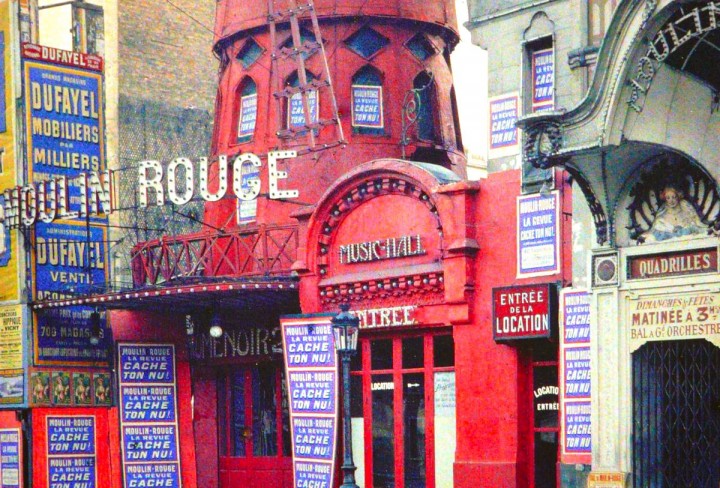
Moulin Rouge

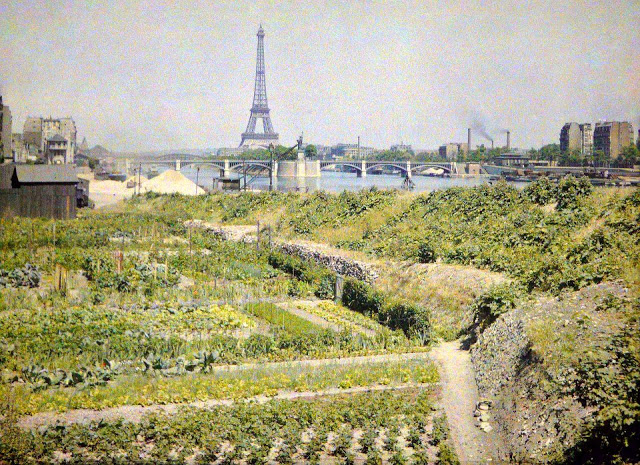
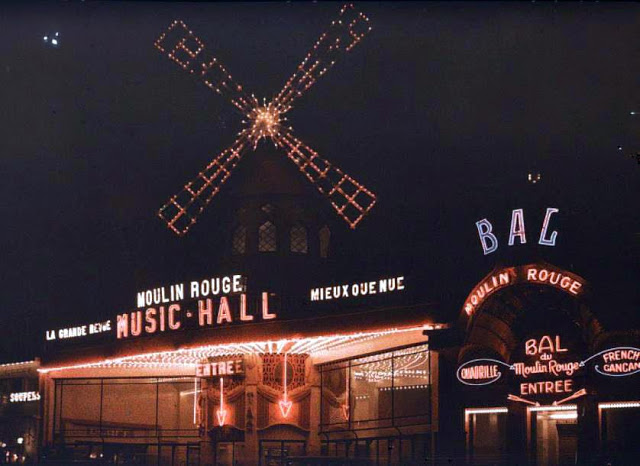
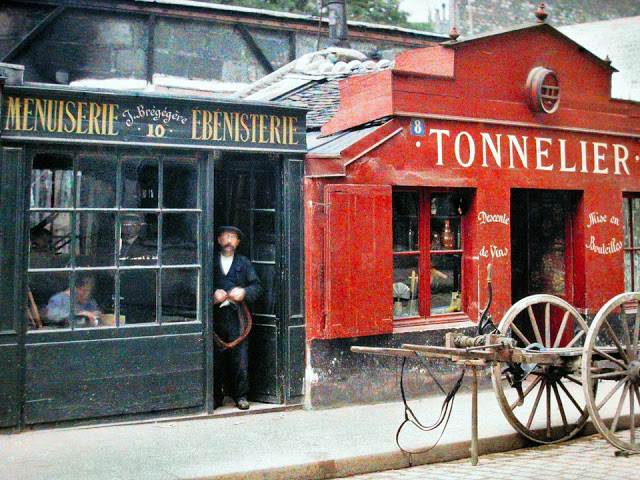
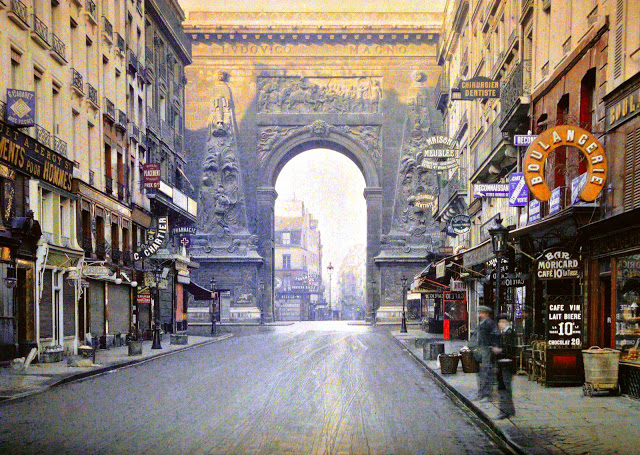
We’re used to see­ing the peri­od of 1914 in grainy, drea­ry black-and-white, and to see­ing nos­tal­gic cel­e­bra­tions of La Belle Epoque rep­re­sent­ed graph­i­cal­ly by the live­ly full-col­or posters and adver­tise­ments one finds in décor stores. But thanks to the full col­or pho­tos you see here, we can see pho­tographs of World War I‑era Paris in full and vibrant color—images of the city 110 years ago almost just as Parisians saw it at the time. Icons like the Moulin Rouge come to life in bright day­light, above, and light­ing up the night, below.

Moulin Rouge Night

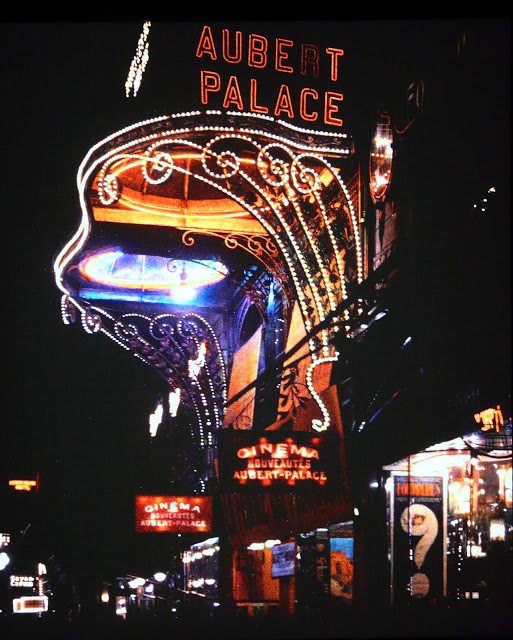
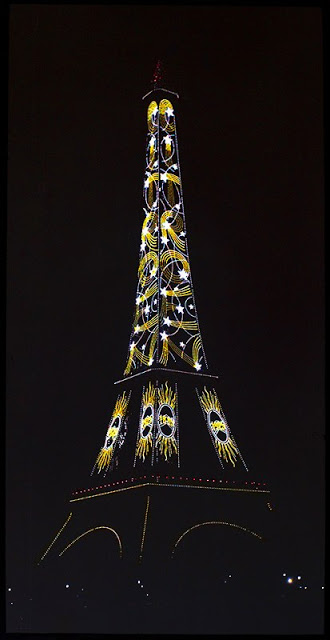
Ear­ly cin­e­ma Aubert Palace, below, in the Grands Boule­vards, shim­mers beau­ti­ful­ly, as does the art-deco light­ing of the Eif­fel Tow­er, fur­ther down.

Aubert Palace

Deco Eiffel

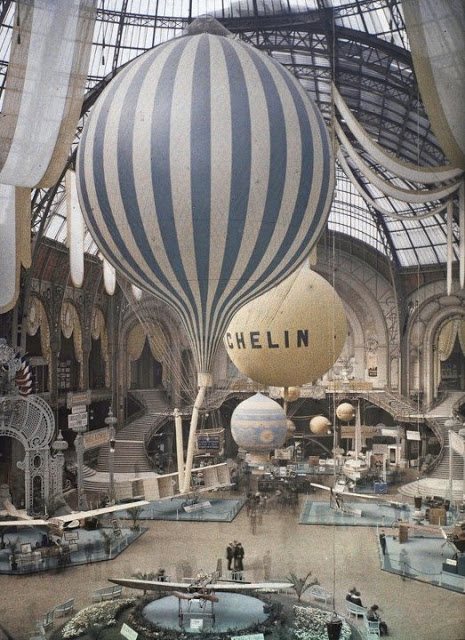
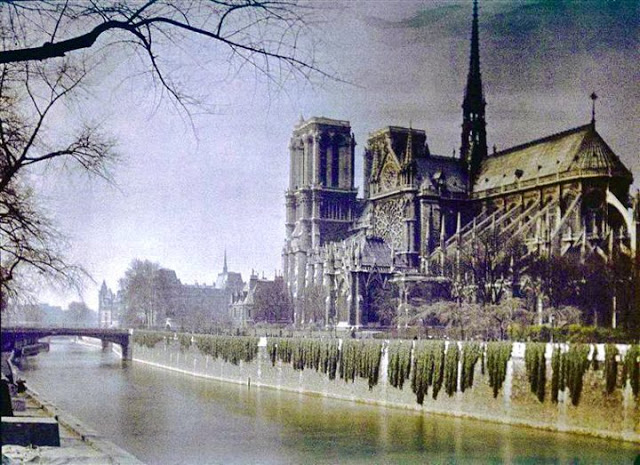
Below, hot air bal­loons hov­er in the enor­mous Grand Palais, and fur­ther down, a pho­to­graph of Notre Dame on a hazy day almost looks like a water­col­or.

Grand Palais

The pho­tographs were made, writes Messy N Chic, “using Autochrome Lumière tech­nol­o­gy between 1914 and 1918 [a tech­nique devel­oped in 1903 by the Lumière broth­ers, cred­it­ed as the first film­mak­ers]…. [T]here are around 72,000 Autochromes from the time peri­od of places all over the world, includ­ing Paris in its true col­ors.”

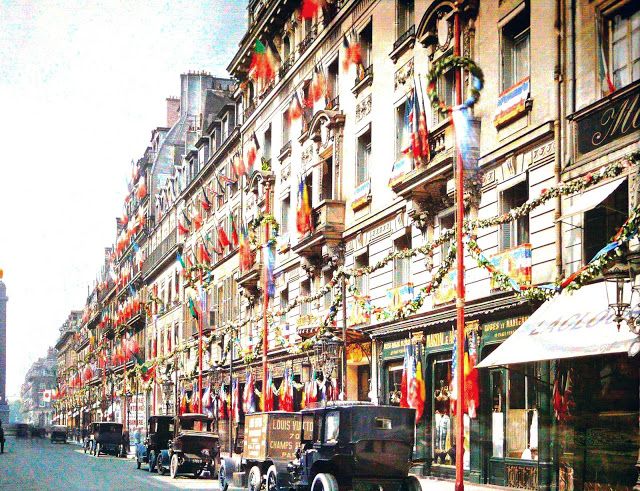
Paris Street

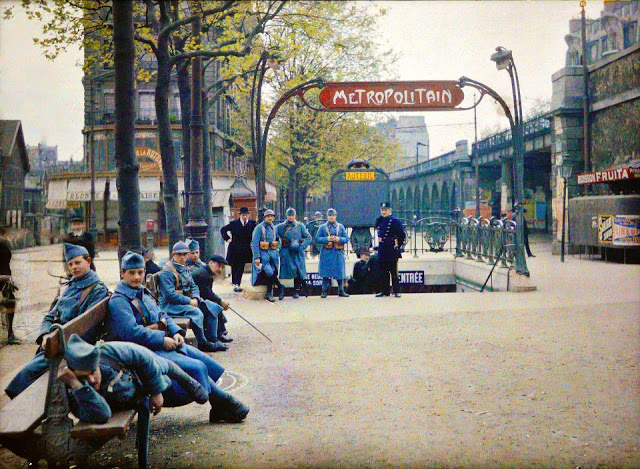
Paris Soldiers

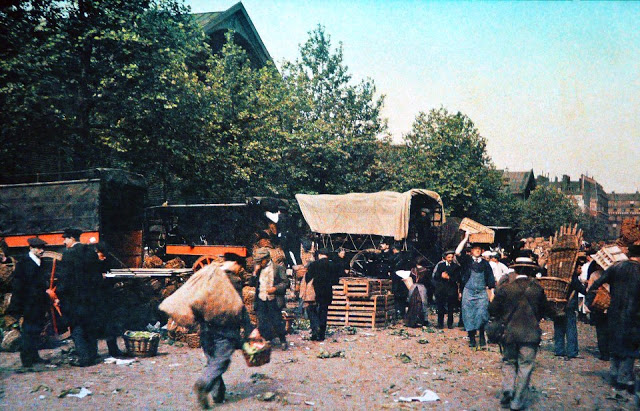
Not all of the pho­tographs are of famous archi­tec­tur­al mon­u­ments or nightlife des­ti­na­tions. Very many show ordi­nary street scenes, like those above, one depict­ing a num­ber of bored French sol­diers, pre­sum­ably await­ing deploy­ment.

Paris Street 2

The Paris of 1914 was a Euro­pean cap­i­tal in major tran­si­tion, in more ways than one. “Moder­ni­ty was the mov­ing spir­it,” writes Schofield; “It was the time of the machine. The city’s last horse-drawn omnibus made its way from Saint-Sulpice to La Vil­lette in Jan­u­ary 1913.”

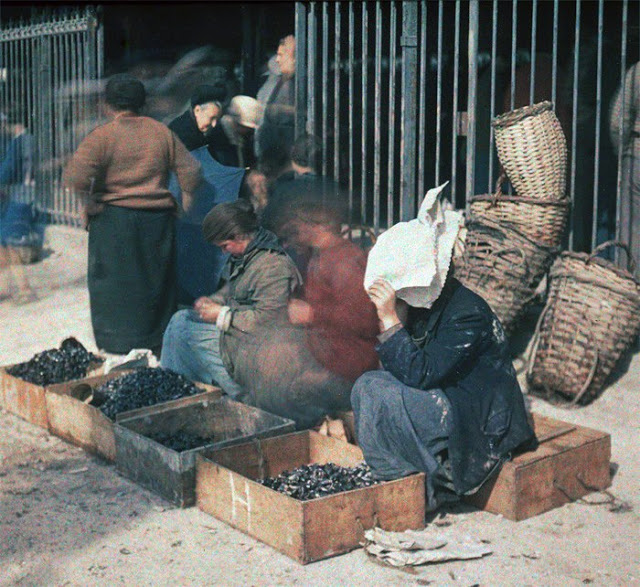
Parisian Coal vendors

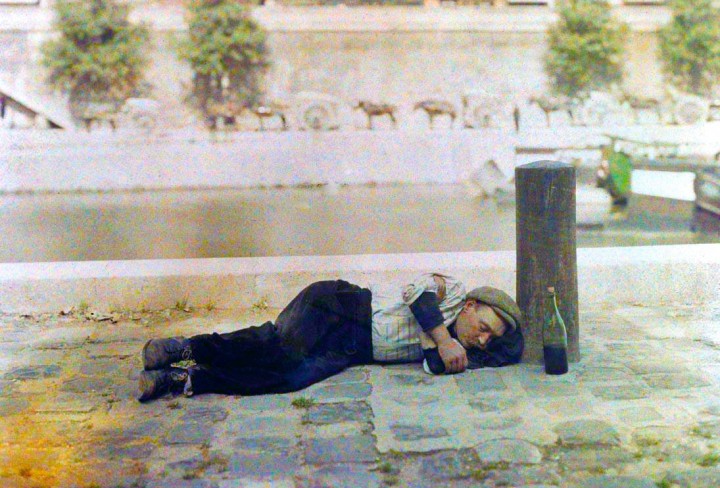
Paris Down and Out

Schofield also points out that, like Gild­ed Age New York, “the pub­lic image of Paris was the cre­ation of roman­tic cap­i­tal­ists. The real­i­ty for many was much more wretched… there were entire fam­i­lies liv­ing on the street, and decrepit, over­crowd­ed hous­ing with nonex­is­tent san­i­ta­tion.”

Moder­ni­ty was leav­ing many behind, class con­flict loomed in France as it erupt­ed in Rus­sia, even as the glob­al cat­a­stro­phe of World War I threat­ened French elites and pro­le­tari­at alike, who both served and who both died at very high rates.

Aeroplane

You can see many more of these aston­ish­ing­ly beau­ti­ful full-col­or pho­tographs of 1914 Paris—at the end of La Belle Epoque—at Vin­tage Every­day and Messy N Chic.

Arc de Triumph

Note: An ear­li­er ver­sion of this post appeared on our site in 2015.

Relat­ed Con­tent:

Paris Had a Mov­ing Side­walk in 1900, and a Thomas Edi­son Film Cap­tured It in Action

Pris­tine Footage Lets You Revis­it Life in Paris in the 1890s: Watch Footage Shot by the Lumière Broth­ers

Paris in Beau­ti­ful Col­or Images from 1890: The Eif­fel Tow­er, Notre Dame, The Pan­théon, and More (1890)

Josh Jones is a writer and musi­cian based in Durham, NC. 
The Groundbreaking Animation That Defined Pink Floyd’s Psychedelic Visual Style: Watch “French Windows” (1972)

You could argue that, of all rock bands, that Pink Floyd had the least need for visu­al accom­pa­ni­ment. Son­i­cal­ly rich and evoca­tive­ly struc­tured, their albums evolved to offer lis­ten­ing expe­ri­ences that verge on the cin­e­mat­ic in them­selves. Yet from fair­ly ear­ly in the Floy­d’s his­to­ry, their artis­tic ambi­tions extend­ed to that which could not be heard. Can you real­ly under­stand their enter­prise, it’s fair to ask, if you remain mere­ly one of their lis­ten­ers, nev­er enter­ing the visu­al dimen­sion — not just their album cov­ers, repro­duc­tions of which still grace many a dorm room wall, but also their elab­o­rate stage shows, music videos (which they were mak­ing before that form had a name), and films? One man had more respon­si­bil­i­ty for the devel­op­ment of the Floy­d’s visu­al style than any oth­er: Ian Emes.

In 1972, Emes took it upon him­self to ani­mate their song “One of These Days” from the pre­vi­ous year’s album Med­dle. When the fin­ished work, “French Win­dows,” aired on the BBC music show The Old Grey Whis­tle Test, it caught the eye of the Floy­d’s key­board play­er Rick Wright. The group then got in touch with Emes, ask­ing to use “French Win­dows” as a pro­jec­tion behind their con­certs.

They went on to com­mis­sion fur­ther work from him, for songs like “Speak to Me,” Time,” and “On the Run” from The Dark Side of the Moon. This pro­fes­sion­al con­nec­tion endured for decades. When Roger Waters put on his own per­for­mances of The Wall — includ­ing the enor­mous­ly scaled show in Berlin in 1990 — he had Emes direct its ani­mat­ed sequences. The post-Waters ver­sion of Pink Floyd even called up Emes in 2015 to ask him to make a film to accom­pa­ny their final album The End­less Riv­er.

It was, in a way, the com­ple­tion of a cir­cle: “One of These Days” is a most­ly instru­men­tal song, and The End­less Riv­er is a most­ly instru­men­tal album; “French Win­dows” uses roto­scop­ing, which involves trac­ing over live action footage to make more real­is­ti­cal­ly smooth ani­ma­tion, and the End­less Riv­er film presents its own live action footage in a man­ner that some­times verges on the abstract. Both works cre­ate their own visu­al envi­ron­ments, which dove­tails with what Emes, who died two years ago, once described as the appeal for him of the Floyd: “They went to archi­tec­ture col­lege and so I think their music cre­ates spaces. It cre­ates envi­ron­ments of sound and I was so stim­u­lat­ed that my mind would soar, and so I would see images that were stim­u­lat­ed by the music.” Their music takes a dif­fer­ent form before the mind’s eye of each fan, but it was Emes who made his visions a part of their lega­cy.

Relat­ed Con­tent:

Psy­che­del­ic Scenes of Pink Floyd’s Ear­ly Days with Syd Bar­rett, 1967

Pink Floyd Films a Con­cert in an Emp­ty Audi­to­ri­um, Still Try­ing to Break Into the U.S. Charts (1970)

Pink Floyd’s First Mas­ter­piece: An Audio/Video Explo­ration of the 23-Minute Track, “Echoes” (1971)

Down­load Pink Floyd’s 1975 Com­ic Book Pro­gram for The Dark Side of the Moon Tour

The First Pro­fes­sion­al Footage of Pink Floyd Gets Cap­tured in a 1967 Doc­u­men­tary (and the Band Also Pro­vides the Sound­track)

How Pink Floyd Built The Wall: The Album, Tour & Film

Based in Seoul, Col­in Marshall writes and broad­casts on cities, lan­guage, and cul­ture. His projects include the Sub­stack newslet­ter Books on Cities and the book The State­less City: a Walk through 21st-Cen­tu­ry Los Ange­les. Fol­low him on the social net­work for­mer­ly known as Twit­ter at @colinmarshall.

The Ambitious Engineering Behind the Golden Gate Bridge

As many as a mil­lion peo­ple crossed the Gold­en Gate Bridge on foot to cel­e­brate the 50th anniver­sary of its con­struc­tion in 1987. More than a few of them would have remem­bered San Fran­cis­co as it was before it had its most icon­ic struc­ture — and indeed, some would even remem­ber walk­ing across it once before, on its inau­gur­al “Pedes­tri­an Day” in 1937. Bar­ring the pos­si­bil­i­ty of unusu­al­ly vig­or­ous super­cente­nar­i­ans, that won’t be the case 12 years from now, on the Gold­en Gate Bridge’s 100th anniver­sary. But we’ll still be able to appre­ci­ate the enor­mous ambi­tion of its builders, not least its chief design engi­neer Joseph Strauss, who, along with Charles Alton Ellis, made pos­si­ble a project long assumed impos­si­ble.

The video from Sabin Civ­il Engi­neer­ing at the top of the post explains every stage of the Gold­en Gate Bridge’s design and con­struc­tion. Build­ing a sus­pen­sion bridge over the Gold­en Gate, the deep strait between San Fran­cis­co Bay and the Pacif­ic Ocean, posed for­mi­da­ble chal­lenges. The dis­tinc­tive shape we know from so many pho­tographs emerged in part from the need to anchor the bridge in such a way as to bal­ance out the mas­sive forces that would oth­er­wise bend its tow­ers inward, and the steel-on-steel con­struc­tion of its sus­penders and deck was nec­es­sary to pre­vent cat­a­stroph­ic crack for­ma­tion.

The deck hangs from 250 pairs of cables, and each of the main cables that run the length of the bridge actu­al­ly con­sists of 27,000 steel wires wound togeth­er. A sys­tem of ther­mal expan­sion joints accom­mo­dates reg­u­lar elon­ga­tion and shrink­age of near­ly four feet.

And we haven’t even got into the under­wa­ter blast­ing and ter­ri­fy­ing-look­ing drilling work required to put up the tow­ers in the first place. In any case, the painstak­ing efforts of the engi­neers and labor­ers alike have sure­ly been vin­di­cat­ed by the Gold­en Gate Bridge’s func­tion­al­i­ty and pop­u­lar­i­ty over the past 88 years. Nat­u­ral­ly, it’s had to under­go con­sid­er­able main­te­nance and retro­fitting in that time, and it would take a true roman­tic to ignore its lim­i­ta­tions entire­ly. (Take its lack of rail capac­i­ty, which was nei­ther tech­ni­cal­ly nor eco­nom­i­cal­ly fea­si­ble to incor­po­rate dur­ing the Great Depres­sion.) Still, when 300,000 peo­ple jammed them­selves onto its deck at once on its 50th anniver­sary, it may have bent in the mid­dle, but it did­n’t break. That was a tes­ta­ment to the civ­il engi­neer­ing acu­men of Strauss and com­pa­ny — but let’s hope the cen­te­nary fes­tiv­i­ties are bet­ter orga­nized.

Relat­ed con­tent:

“The Bay Lights,” the World’s Largest LED Light Sculp­ture, Debuts in San Fran­cis­co

The 5 Inno­v­a­tive Bridges That Make New York City, New York City

How the Brook­lyn Bridge Was Built: The Sto­ry of One of the Great­est Engi­neer­ing Feats in His­to­ry

A Mes­mer­iz­ing Trip Across the Brook­lyn Bridge: Watch Footage from 1899

Why There Isn’t a Bridge from Italy to Sici­ly – And Why the 2,000-Year-Old Dream of Build­ing the Bridge May Soon Be Real­ized

Built to Last: How Ancient Roman Bridges Can Still With­stand the Weight of Mod­ern Cars & Trucks

Based in Seoul, Col­in Marshall writes and broad­casts on cities, lan­guage, and cul­ture. His projects include the Sub­stack newslet­ter Books on Cities and the book The State­less City: a Walk through 21st-Cen­tu­ry Los Ange­les. Fol­low him on the social net­work for­mer­ly known as Twit­ter at @colinmarshall.

Dozens of M.C. Escher Prints Have Been Digitized & Put Online by the Boston Public Library

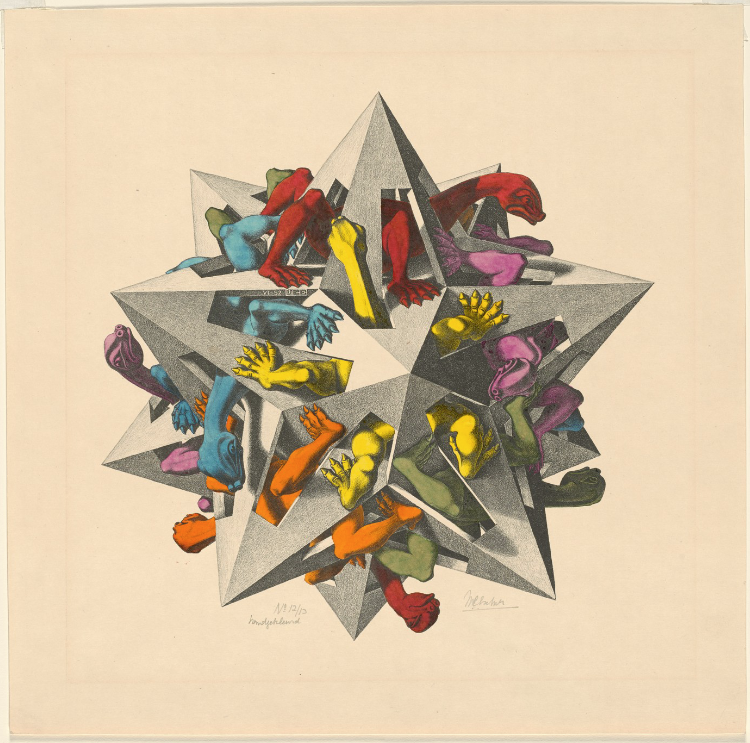
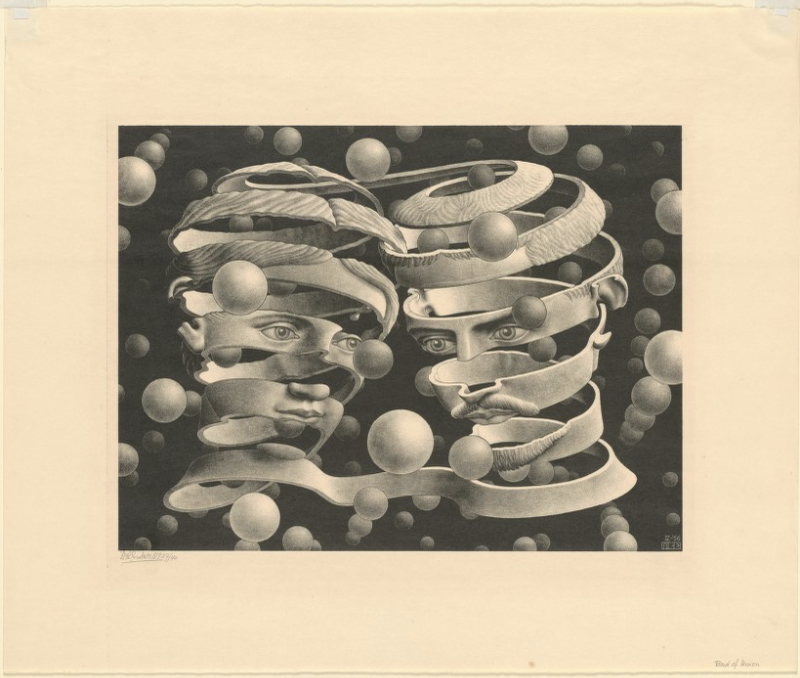
In addi­tion to the icon­ic scene in Jim Henson’s Labyrinth, or appear­ances in ani­mat­ed TV shows and video games, M.C. Esch­er’s work has adorned the cov­ers of albums like Mott the Hoople’s 1969 debut and the spec­u­la­tive fic­tion of Ita­lo Calvi­no and Jorge Luis Borges. A big hit with hip­pies and 1960s col­lege stu­dents, writes Heavy Music Art­work, his mind-bend­ing prints became asso­ci­at­ed with “ques­tion­ing accept­ed views of nor­mal expe­ri­ence and test­ing the lim­its of per­cep­tion with hal­lu­cino­genic drugs.” While he appre­ci­at­ed his cult fol­low­ing, Esch­er “did not encour­age their mys­ti­cal inter­pre­ta­tions of his images.” Reply­ing to one enthu­si­as­tic fan of his print Rep­tiles, who claimed to see in it an image of rein­car­na­tion, Esch­er replied, “Madame, if that’s the way you see it, so be it.”

Rather than illus­trate high­er states of con­scious­ness or meta­phys­i­cal enti­ties, Bruno Ernst writes in The Mag­ic Mir­ror of M.C. Esch­er, the artist intend­ed to cre­ate prac­ti­cal, “pic­to­r­i­al rep­re­sen­ta­tion of intel­lec­tu­al under­stand­ing.” Illus­tra­tions, that is, of philo­soph­i­cal and sci­en­tif­ic thought exper­i­ments. The son of a civ­il engi­neer, Esch­er began his stud­ies in archi­tec­ture before mov­ing to draw­ing and print­mak­ing.

The chal­lenge of cre­at­ing built environments—even seem­ing­ly impos­si­ble ones—always seemed to occu­py his mind. Along with themes from the nat­ur­al world, a high per­cent­age of his works cen­ter on buildings—inspired by for­ma­tive ear­ly years in Rome and his admi­ra­tion for Islam­ic art and Span­ish archi­tec­ture.

In the 50s and 60s Escher’s art piqued the inter­est of aca­d­e­mics and math­e­mati­cians, an audi­ence he found more con­ge­nial to his vision. He cor­re­spond­ed with sci­en­tists and incor­po­rat­ed their ideas into his work, mean­while claim­ing to be “absolute­ly inno­cent of train­ing or knowl­edge in the exact sci­ences.” In the 50s, Esch­er “daz­zled” the likes of math­e­mati­cians like Roger Pen­rose and HSM Cox­eter. In turn, notes Maev Kennedy, he “was inspired by Penrose’s per­spec­ti­val tri­an­gle and Coxeter’s work on crys­tal sym­me­try.”

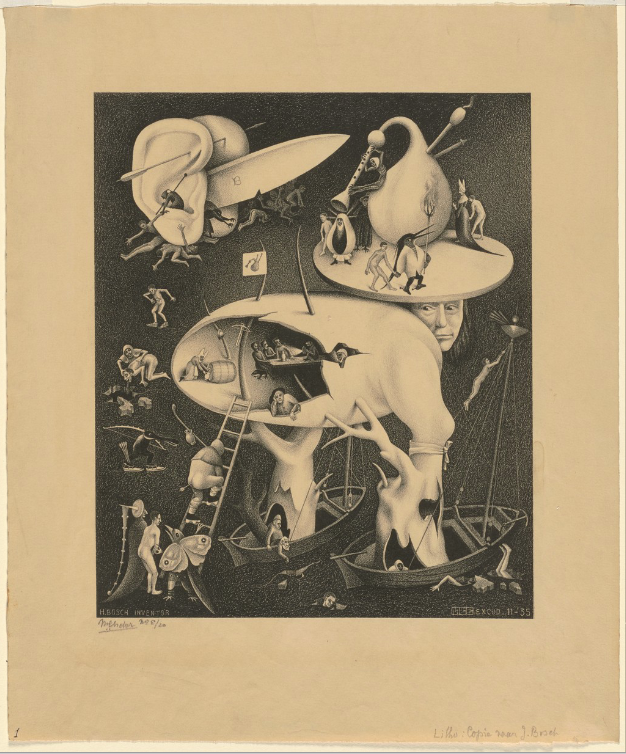
For all the excite­ment he cre­at­ed among math­e­mati­cians, it took a bit longer for Esch­er to get noticed in the art world. When Penrose’s uncle showed Escher’s ver­sion of the per­spec­ti­val tri­an­gle to Picas­so, “Picas­so had heard of the British math­e­mati­cian but not of the Dutch artist.” Escher’s fame spread out­side of the sci­ences in part through the inter­ests of the coun­ter­cul­ture. He may have shrugged off mys­ti­cal and psy­che­del­ic read­ings of his prints, but he had an innate pen­chant for the mar­velous­ly weird (see his copy of a scene, for exam­ple, from Hierony­mus Bosch, above, or his sur­re­al print Grav­i­ty, below).

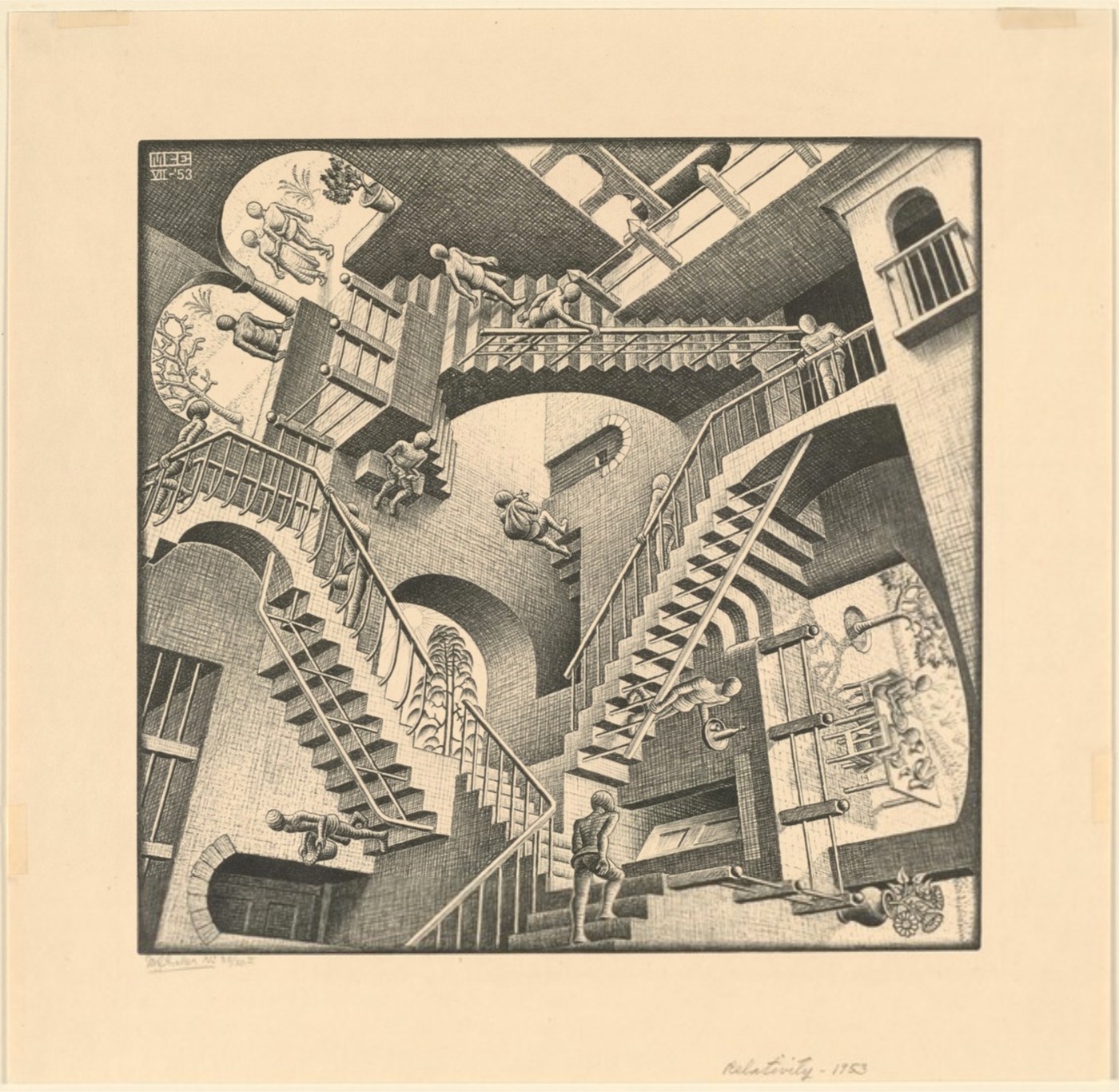
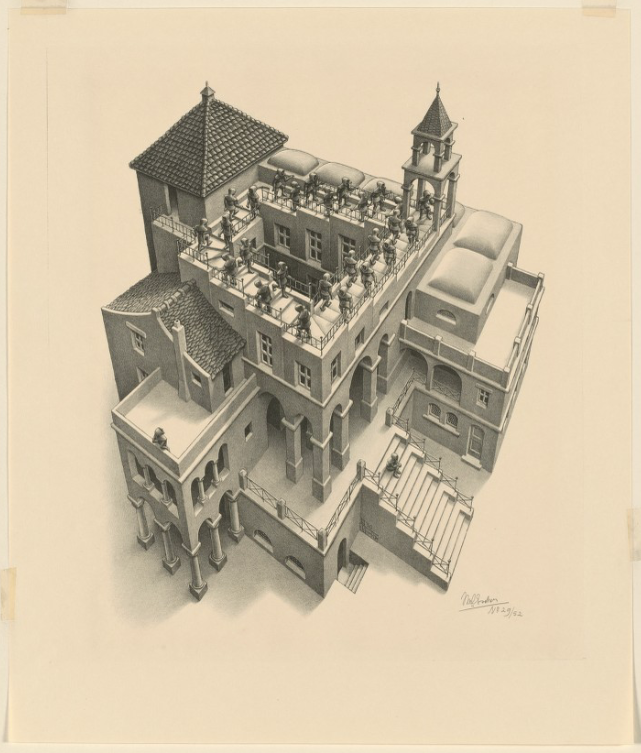
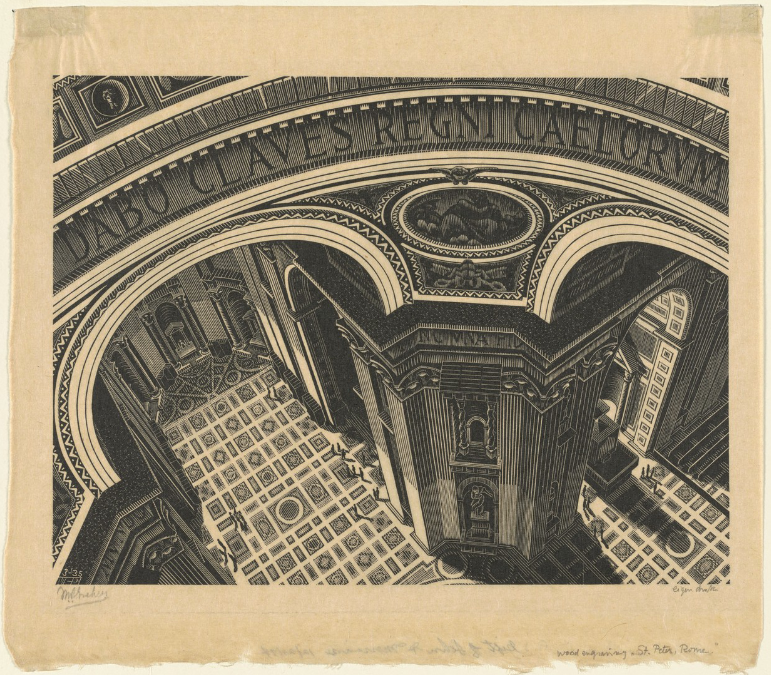
See the prints pic­tured here and a few dozen more dig­i­tized in high res­o­lu­tion at Dig­i­tal Com­mon­wealth, cour­tesy of Boston Pub­lic Library, who scanned their Esch­er col­lec­tion and made it avail­able to the pub­lic. Zoom into the fine details of prints like Inside Saint Peter’s, fur­ther up—a fine­ly ren­dered but oth­er­wise not-espe­cial­ly-Esch­er-like work—and the labyrinthine Ascend­ing and Descend­ing at the top. Whether—as Har­vard Library cura­tor John Over­holt confesses—you’re a “nerd who loves M.C. Esch­er” for his math­e­mat­i­cal mind, an artist with a mys­ti­cal bent who loves him for his hal­lu­ci­na­to­ry qual­i­ties, or some mea­sure of both, you’ll find exact­ly the Esch­er you’re look­ing for in this dig­i­tal gallery.

Note: An ear­li­er ver­sion of this post appeared on our site in 2018.

Relat­ed Con­tent:

Enter an Online Inter­ac­tive Doc­u­men­tary on M.C. Escher’s Art & Life, Nar­rat­ed By Peter Green­away

M.C. Esch­er Cov­er Art for Great Books by Ita­lo Calvi­no, George Orwell & Jorge Luis Borges

Watch M.C. Esch­er Make His Final Artis­tic Cre­ation in the 1971 Doc­u­men­tary Adven­tures in Per­cep­tion

Josh Jones is a writer and musi­cian based in Durham, NC. 
by | Permalink | Make a Comment ( 2 ) |

Skiing Down Mount Everest with No Oxygen: It’s a Wild Ride

From Red Bul­l’s YouTube Chan­nel: “Ski moun­taineer Andrzej Bargiel becomes the first per­son to climb Mount Ever­est and ski back to Ever­est Base Camp with­out sup­ple­men­tary oxy­gen. After near­ly 16 hours climb­ing in the high alti­tude “death zone” (above 8,000m where oxy­gen lev­els are dan­ger­ous­ly low), Bargiel clipped into his skis on the sum­mit of the tallest moun­tain on earth and start­ed his descent via the South Col Route. He reached Camp II that night and rest­ed — the sum­mit ridge and Hillary Step had tak­en longer than planned, mean­ing dark­ness made it dan­ger­ous and dif­fi­cult to nav­i­gate fur­ther that day. The next morn­ing, he skied through the treach­er­ous Khum­bu Ice­fall — guid­ed by a drone flown by his broth­er, Bartek — before safe­ly arriv­ing at Base Camp to become the first per­son to ascend and descend Mount Ever­est on skis with no sup­ple­men­tary oxy­gen.”

View­er be warned, it’s quite a ride!

The Roman Empire’s Vast Road Network—186,000 Miles of It—Has Just Been Mapped in a New Digital Atlas

Every­where you look, you can find traces of the ancient Roman civ­i­liza­tion from which the mod­ern West descends. That’s espe­cial­ly true if you hap­pen to be look­ing in Europe, though echoes of Latin make them­selves heard in major lan­guages used all over the world. Take, for exam­ple, the com­mon Eng­lish word itin­er­ary, mean­ing a planned route for trav­el, which descends from iter, the Latin word for a jour­ney, route, or path. The Romans even­tu­al­ly spoke of itin­er­aria, which meant more or less the same thing as we do when we speak of our trav­el itin­er­aries. Now, bridg­ing these dis­tant eras, we have Itiner‑e, a new online map of ancient Rome’s road net­work, the most com­pre­hen­sive yet.

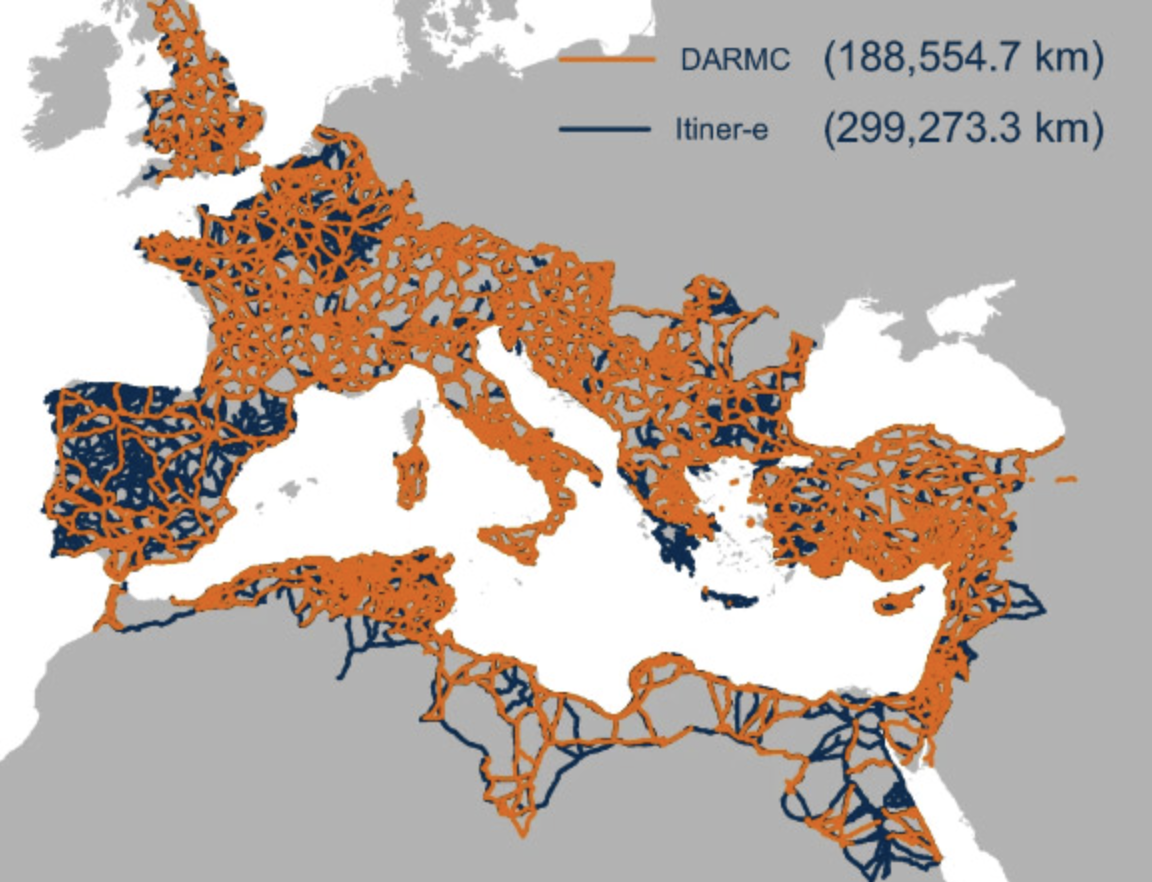
Orig­i­nal­ly envi­sioned as a kind of “Google Maps for Roman roads,” Itiner‑e is a project of Tom Brugh­mans of Aarhus Uni­ver­si­ty, and Pau de Soto Caña­mares and Adam Pažout of the Autonomous Uni­ver­si­ty of Barcelona. Its users can dig­i­tal­ly explore near­ly 300,000 kilo­me­ters of roads laid across the vast Roman Empire at its height in the mid-sec­ond cen­tu­ry — or at least as much of that net­work as edu­cat­ed guess­es can recon­struct.

Researchers can only be sure about less than three per­cent of the net­work, with anoth­er sev­en per­cent of ancient Roman roads doc­u­ment­ed in exis­tence if not in pre­cise loca­tion. Regard­less, Itiner‑e is based on an unprece­dent­ed­ly wide (and open) dataset, which incor­po­rates topo­graph­ic map­ping, satel­lite imagery and cen­turies of his­tor­i­cal records.

Among Itin­er-e’s many fea­tures is a con­fi­dence rat­ing, which shows just how con­fi­dent we can be that any giv­en road actu­al­ly looked like it does on the map. You can also view the whole thing in 3D to get a sense of the ele­va­tions involved in con­struc­tion and trav­el of the net­work; use a rout­ing tool to deter­mine sug­gest­ed routes around the empire “by foot, ox cart or don­key”; and even check satel­lite imagery to find still-extant parts of Roman roads and draw com­par­isons with the same parts of the world today. Though a fair few major Roman roads have evolved into cur­rent routes for trains and auto­mo­biles, we can’t exact­ly trav­el on them in the same way the Romans did. Still, when next you plan a Euro­pean itin­er­ary of your own, con­sid­er punch­ing it in to Itiner‑e and see­ing how the jour­ney most like­ly would’ve been made 1,875 years ago.

Relat­ed Con­tent:

How the Ancient Romans Built Their Roads, the Life­lines of Their Vast Empire

The Roads of Ancient Rome Visu­al­ized in the Style of Mod­ern Sub­way Maps

A Map Show­ing How the Ancient Romans Envi­sioned the World in 40 AD

Built to Last: How Ancient Roman Bridges Can Still With­stand the Weight of Mod­ern Cars & Trucks

The Roman Roads and Bridges You Can Still Trav­el Today

Plan Your Trip Across the Roads of the Roman Empire, Using Mod­ern Web Map­ping Tech­nol­o­gy

Based in Seoul, Col­in Marshall writes and broad­casts on cities, lan­guage, and cul­ture. His projects include the Sub­stack newslet­ter Books on Cities and the book The State­less City: a Walk through 21st-Cen­tu­ry Los Ange­les. Fol­low him on the social net­work for­mer­ly known as Twit­ter at @colinmarshall.

Leonardo da Vinci’s Visionary Inventions Rendered in 3D Animation: Helicopters, Robotic Knights, The First Ever Diving Suit & More

To imag­ine our­selves into the time of Leonar­do da Vin­ci, we must first imag­ine a world with­out such things as heli­copters, para­chutes, tanks, div­ing suits, robots. Yet those all exist­ed for Leonar­do him­self — or rather, they exist­ed in his imag­i­na­tion. What he did­n’t build in real life, he doc­u­ment­ed in his note­books, leav­ing behind mate­r­i­al for appre­ci­a­tions of his genius that would con­tin­ue half a mil­len­ni­um lat­er. One such appre­ci­a­tion appears above in a new video from Lost in Time, which ren­ders his inven­tions using the kind of 3D ani­ma­tion tech­nol­o­gy even the par­a­dig­mat­ic Renais­sance man couldn’t have begun to fore­see.

This helps us see Leonar­do’s work from the per­spec­tive of his con­tem­po­raries, and to feel how sur­prised they would’ve been to encounter a seat­ed knight who stands up, opens his visor, and reveals that there’s no one inside the armor. That sort of thing might even amuse us here in the twen­ty-first cen­tu­ry, but accus­tomed as we are to see­ing machines that move around under their own pow­er — and now, see­ing them take more cred­i­ble humanoid form every day — we would­n’t be inclined to cred­it it with any kind of life force.

In the four­teen-nineties, how­ev­er, man­pow­er was what peo­ple knew, so they instinc­tive­ly looked for the man. Leonar­do, too, con­ceived most of his inven­tions to employ human mus­cle, the study of whose inner work­ings enabled him to make the gears and pul­leys of his “robot­ic” knight move its limbs real­is­ti­cal­ly.

Accord­ing to the plans in one of Leonar­do’s note­books, his “aer­i­al screw,” involv­ing a linen sail wrapped around a wood­en mast, would need four men run­ning in cir­cles around a revolv­ing plat­form, which would the­o­ret­i­cal­ly cause the mast to rotate and the whole con­trap­tion to lift into the air. As designed, it would­n’t have been able to take off, but in 2019, Uni­ver­si­ty of Mary­land sci­en­tists mod­i­fied it to work suc­cess­ful­ly in minia­ture, as a kind of drone. As shown in the video, that’s not the only one of Leonar­do’s unre­al­ized inven­tions his intel­lec­tu­al descen­dants have tried out for them­selves. It seems that none have yet attempt­ed to con­struct his near­ly 80-foot-wide cross­bow, whose use on the bat­tle­field required the efforts of a dozen sol­diers, but then, that’s prob­a­bly all to the good.

via Laugh­ing Squid

Relat­ed Con­tent:

The Inge­nious Inven­tions of Leonar­do da Vin­ci Recre­at­ed with 3D Ani­ma­tion

Leonar­do da Vinci’s Inven­tions Come to Life as Muse­um-Qual­i­ty, Work­able Mod­els: A Swing Bridge, Scythed Char­i­ot, Per­pet­u­al Motion Machine & More

Leonar­do da Vin­ci Draws Designs of Future War Machines: Tanks, Machine Guns & More

A Com­plete Dig­i­ti­za­tion of Leonar­do da Vinci’s Codex Atlanti­cus, the Largest Col­lec­tion of His Draw­ings & Writ­ings

Explore the Largest Online Archive Explor­ing the Genius of Leonard da Vin­ci

Based in Seoul, Col­in Marshall writes and broad­casts on cities, lan­guage, and cul­ture. His projects include the Sub­stack newslet­ter Books on Cities and the book The State­less City: a Walk through 21st-Cen­tu­ry Los Ange­les. Fol­low him on the social net­work for­mer­ly known as Twit­ter at @colinmarshall.

« Go BackMore in this category... »
Quantcast