Thinking back to the many childhood grocery-store trips made with their parents, Americans of a certain age will remember nothing so vividly as the Weekly World News. It always stood out on the checkout stand’s impulse-buy rack, in part because of its adherence to stark yet jumbled black-and-white cover designs even as all the other magazines grew slicker and simpler. But what really caught our young and impressionable eyes had even more to do with the contrast between the surrounding publications’ mundane coverage of home, family, and celebrity and the WWN’s unfailingly, screamingly outlandish headlines: “I WAS BIGFOOT’S LOVE SLAVE!” “WILD WEST TOWN ON VENUS!” “BAT BOY LEADS COPS ON 3 STATE CHASE!”
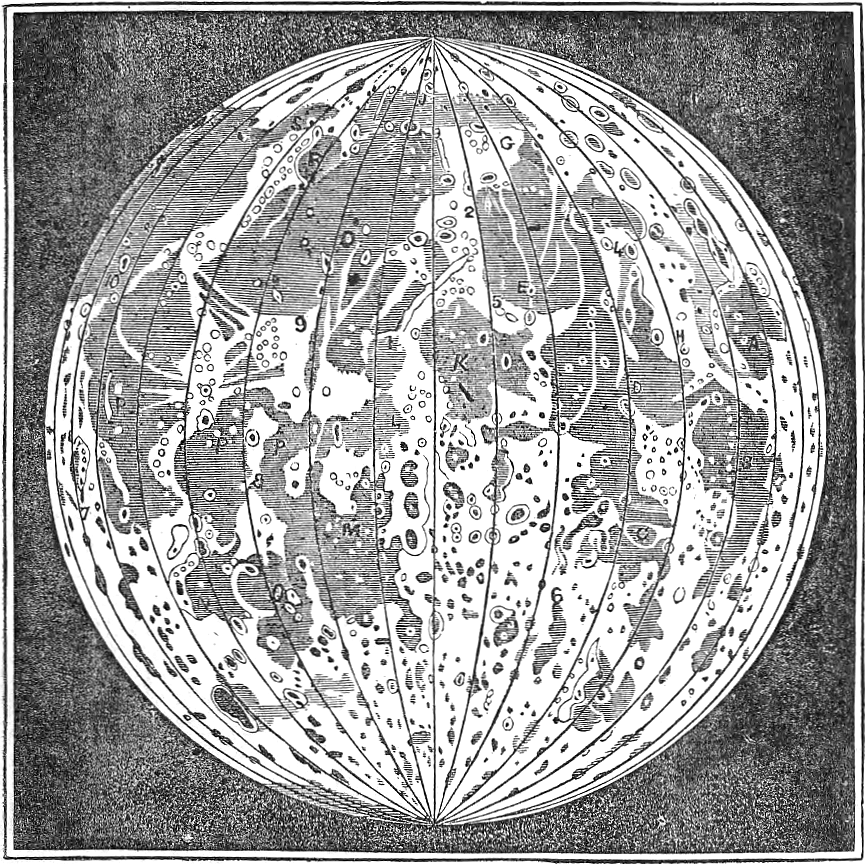
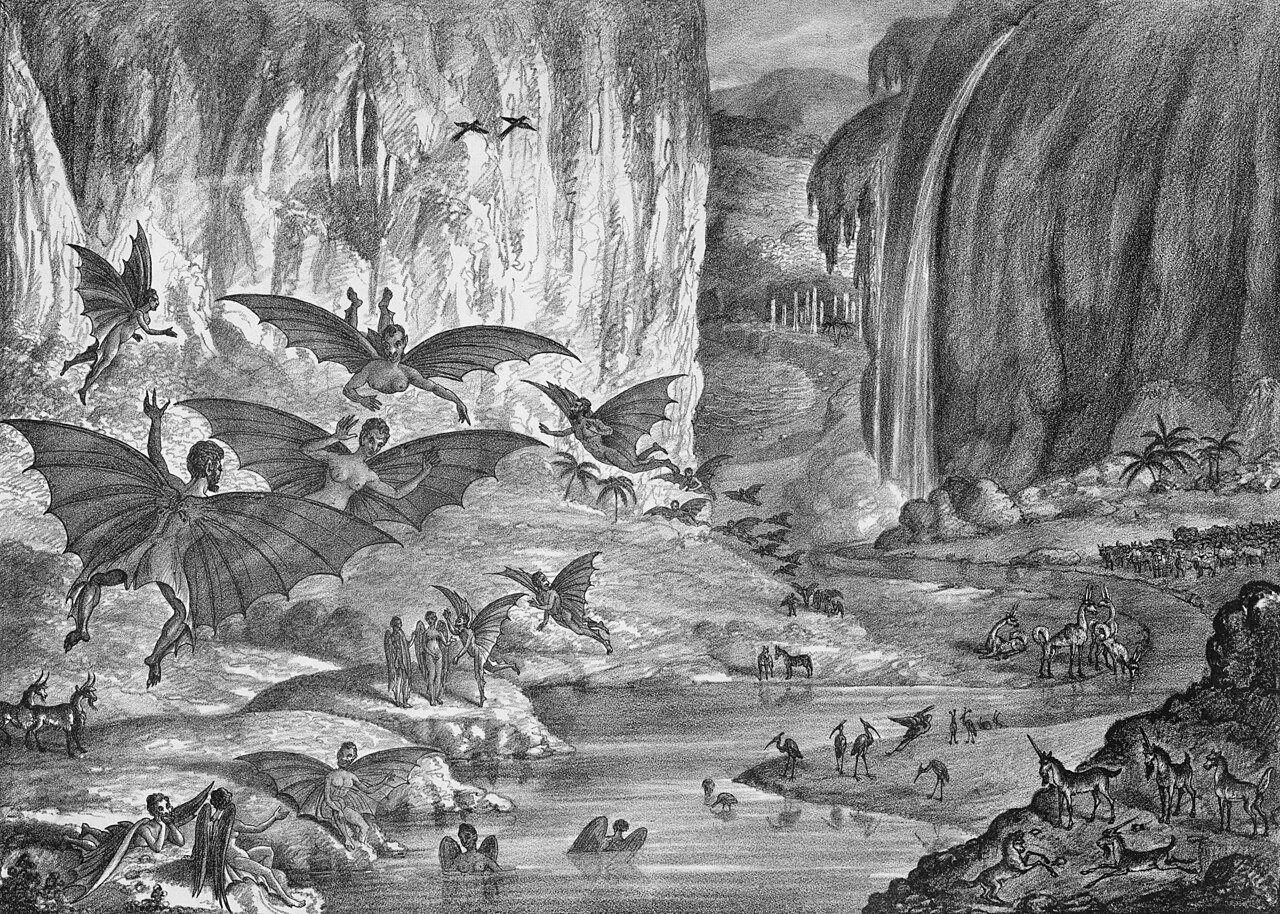
For many of us, the temptation to buy (or at least flip through) an issue of the WWN lay in keeping up with the exploits of Bat Boy, the most prominent of many fictional characters to which its extravagantly lurid yet oddly sober stories returned again and again. Though introduced only in 1992, he has notable ancestors in his industry: take the “Vespertilio-homo,” or “man-bat,” a race found to have made its home on the moon in 1835.
Or at least that’s what the readers of New York newspaper the Sun were told in a series of illustrated articles, later collected in book form, that credited the discovery to the astronomer Sir John Herschel. Herschel was real, but as the Sun admitted the following month, the Vespertilio-homo wasn’t — nor were the unicorn-goats, miniature zebras, and beavers walking on their hind legs reportedly also seen through his telescope.
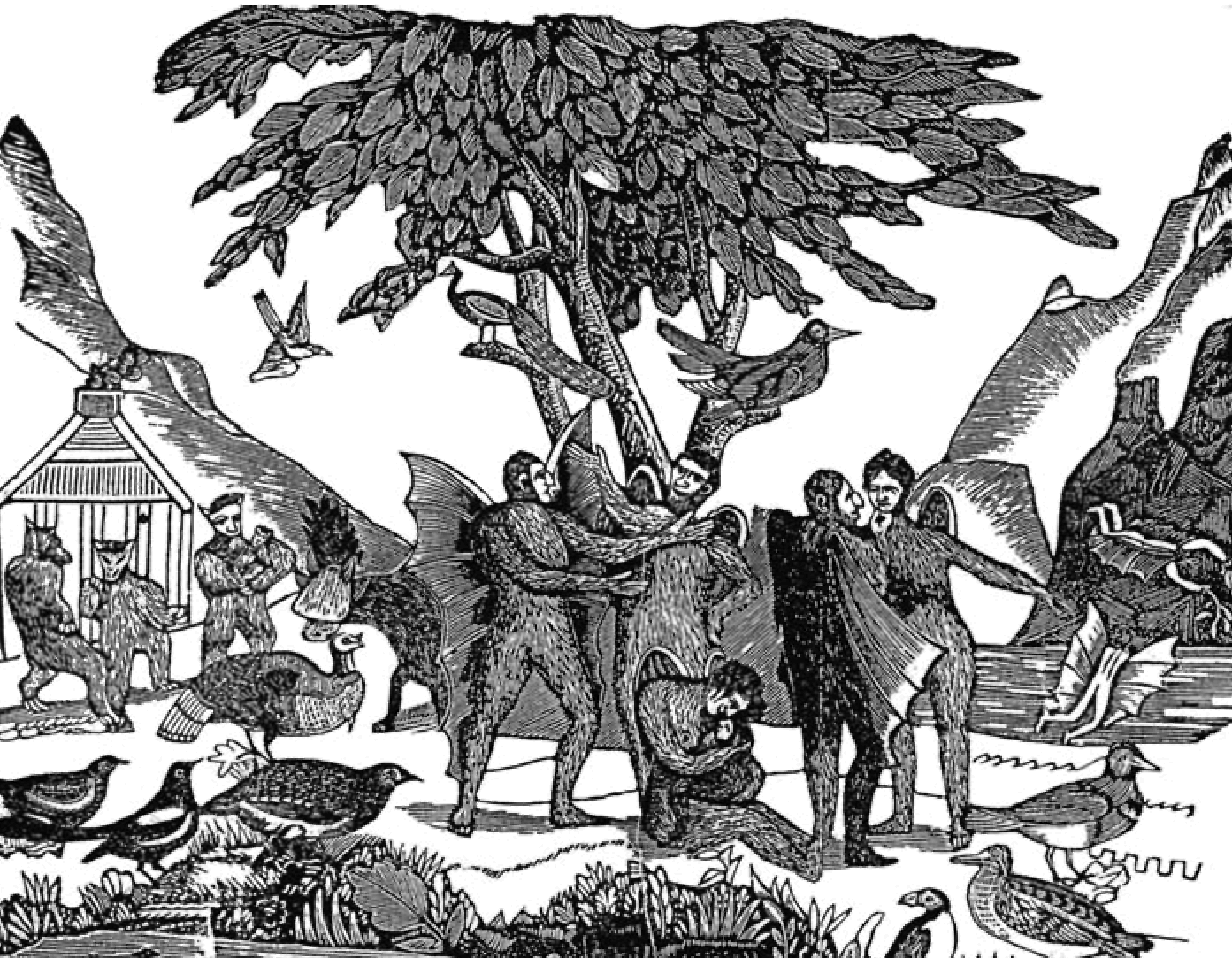
The “Great Moon Hoax,” as it’s now known, and about which you can learn more from the BBC video at the top of the post, wasn’t Herschel’s doing. A reporter called Richard Adams Locke admitted to the fabrication, seemingly motivated by a desire to boost the circulation of the Sun, one of the many “penny paper” tabloids of the day that lived and died by sensation and scandal, and also to make light of the extravagant astronomical claims then in the air. Much like the writers of the Weekly World News — or later, the Onion — Locke wanted less to fool readers than to entertain them by satirizing an over-credulous popular culture. Yet what he pioneered was, quite literally, “fake news,” though that label by now refers to media created with clear intent to deceive. The world has changed since the eighteen-thirties, and indeed, even since Bat Boy’s late twentieth-century heyday, when the WWN predicted his election as President of the United States in 2028. Stranger things have certainly happened.
via Boing Boing
Related content:
“Moon Hoax Not”: Short Film Explains Why It Was Impossible to Fake the Moon Landing
The 1957 “Spaghetti-Grows-on-Trees” Hoax: One of TV’s First April Fools’ Day Pranks
The Birth of the Moon: How Did It Get There in the First Place?
Based in Seoul, Colin Marshall writes and broadcasts on cities, language, and culture. He’s the author of the newsletter Books on Cities as well as the books 한국 요약 금지 (No Summarizing Korea) and Korean Newtro. Follow him on the social network formerly known as Twitter at @colinmarshall.




Leave a Reply