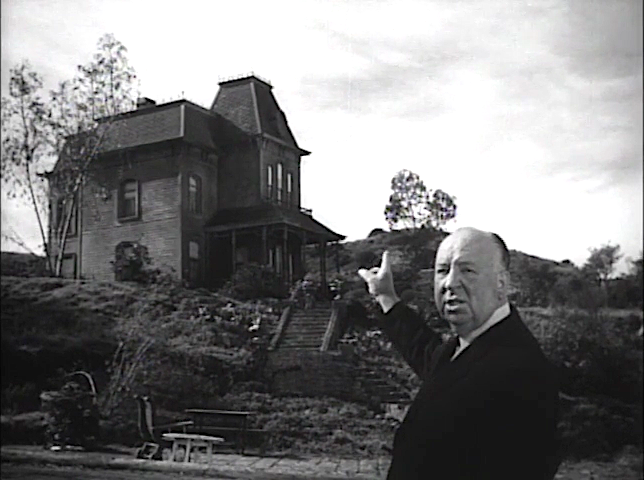
Alfred Hitchcock was not American, as even casual viewers of his television show could tell right away. He may have exaggerated his Englishness, but like more than a few high-profile outsiders, he also used his cultural position to render the United States all the more vividly in his work. Growing up, he amassed enough second-hand knowledge of the country in which he would one day live that he already knew his way around New York when first he set foot there. But it was some years after he relocated to Hollywood that his films began to feel American — and, eventually, more American than those made by domestic directors, thanks in part to his unconventional perspective on local sources of inspiration.
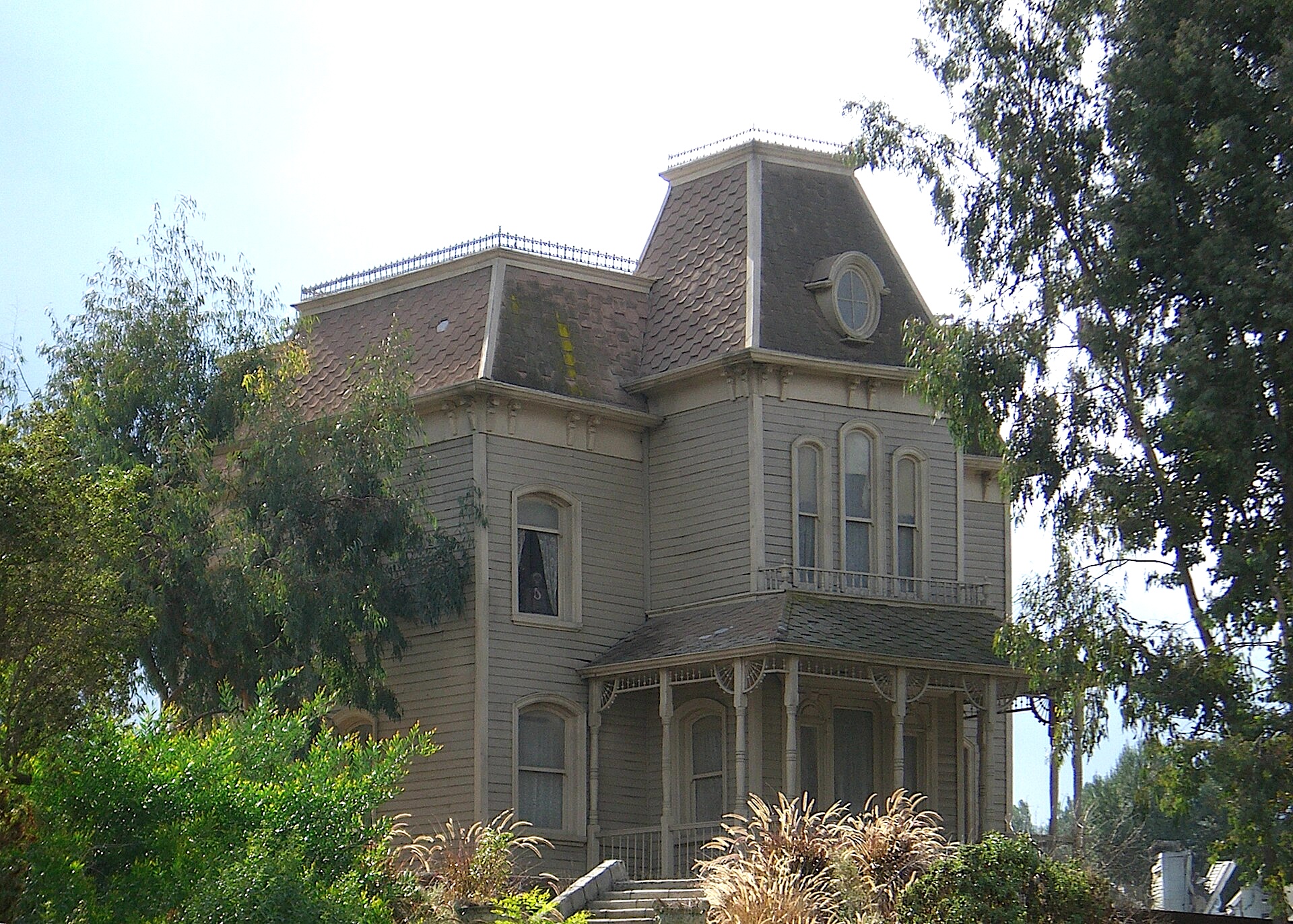
Image by Diego Delso, via Wikimedia Commons
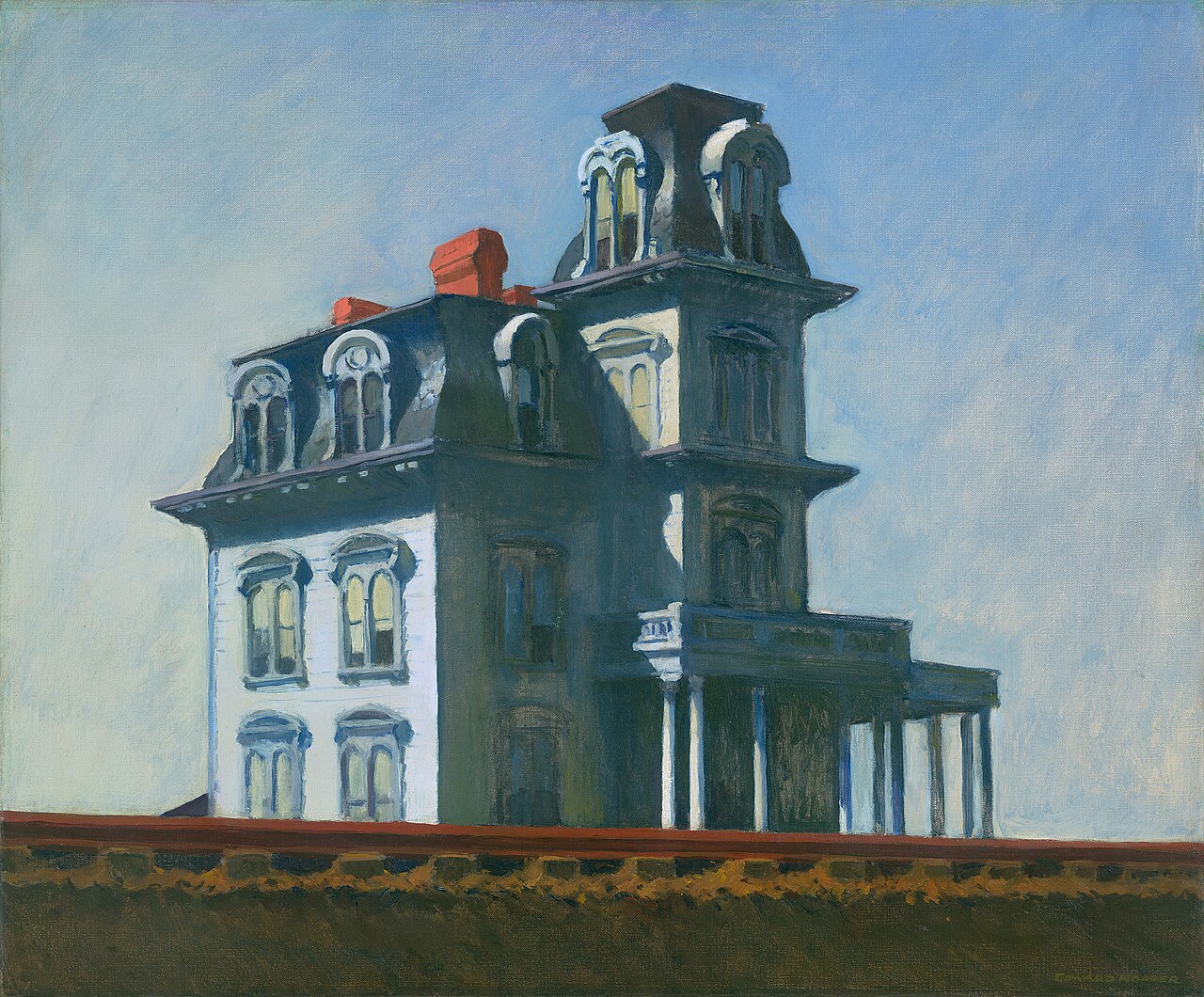
Take the architecture. Asked by François Truffaut about Norman Bates’ “ghostly house” in Psycho, he explained that “the mysterious atmosphere is, to some extent, quite accidental. For instance, the actual locale of the events is in northern California, where that type of house is very common.” He wasn’t trying to “reconstruct an old-fashioned Universal horror picture atmosphere,” but “simply wanted to be accurate.” Yet the house is reported to have been inspired by an east-coast model as well, and one found in art: Edward Hopper’s paintingHouse by the Railroad(top), from 1925, itself made with reference to a real Victorian mansion that still stands in Haverstraw, New York, between a railroad and a cemetery.
Hitchcock had already made use of Hopper, that most cinematic of American painters. Here on Open Culture, we’ve previously featured the visual influence of Hopper paintings from the nineteen-twenties and thirties like Automat, Night Windows, Hotel Room, and Room in New York on Rear Window. “Both artists explored the loneliness that results from modernization,” writes Tim Brinkhof at Artnet. “Hopper’s paintings and Hitchcock’s films explore the extent to which progress and urban modernization have made the world lonelier and, as a result, capable of acts of explosive, irrational violence,” a capability personified in the disturbed motel-keeper Norman Bates.
“The [Haverstraw] house was built in 1885, near the crest of a hill that rises steeply from the west bank of the Hudson River,” writes Paul Bochner in the Atlantic. “By the turn of the century it had been abandoned; neighborhood children called it haunted.” It was later purchased by the district attorney of Rockland County, whose eldest daughter remembered that, “when she was thirteen, she looked out her bedroom window and saw a man sitting across the road, painting.” The man was, of course, Edward Hopper. She wouldn’t have known, seventeen years before Nighthawks, that he was on his way to becoming one of the country’s most famous artists. As for what the house would one day become in the hands of Alfred Hitchcock, then just starting his career on the other side of the Atlantic, nobody could have imagined.
Related Content:
16 Free Hitchcock Movies Online
How Edward Hopper’s Paintings Inspired the Creepy Suspense of Alfred Hitchcock’s Rear Window
How Edward Hopper “Storyboarded” His Iconic Painting Nighthawks
Salvador Dalí Goes to Hollywood & Creates a Wild Dream Sequence for Alfred Hitchcock
Based in Seoul, Colin Marshall writes and broadcasts on cities, language, and culture. He’s the author of the newsletter Books on Cities as well as the books 한국 요약 금지 (No Summarizing Korea) and Korean Newtro. Follow him on the social network formerly known as Twitter at @colinmarshall.





Leave a Reply