Hear the Hagia Sophia’s Awe-Inspiring Acoustics Get Recreated with Computer Simulations, and Let Yourself Get Transported Back to the Middle Ages

The tech­nol­o­gy used to pro­duce, record, and process music has become ever more sophis­ti­cat­ed and awe-inspir­ing, espe­cial­ly in the capa­bil­i­ty of soft­ware to emu­late real instru­ments and acoustic envi­ron­ments. Dig­i­tal emu­la­tion, or “mod­el­ing,” as it’s called, doesn’t sim­ply mim­ic the sounds of gui­tar ampli­fiers, pianos, or syn­the­siz­ers. At its best, it repro­duces the feel of an aur­al expe­ri­ence, its tex­tures and son­ic dimen­sions, while also adding a seem­ing­ly infi­nite degree of flex­i­bil­i­ty.

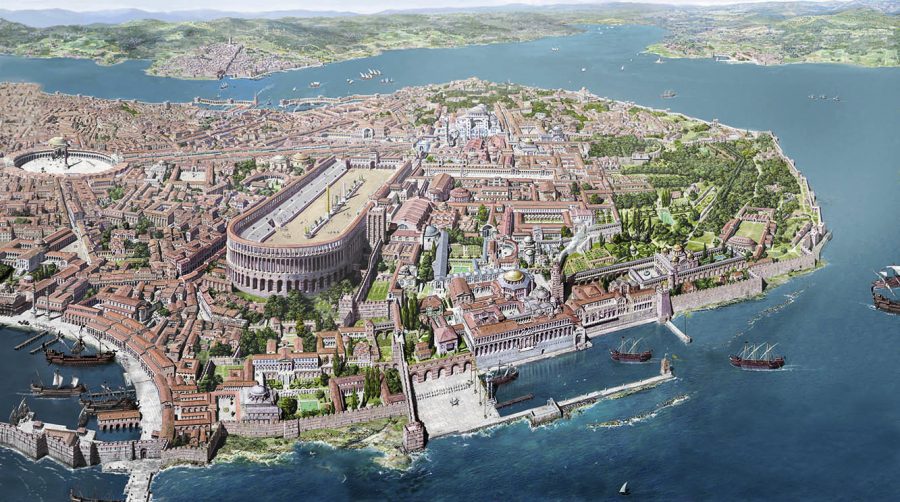
When it comes to a tech­nol­o­gy called “con­vo­lu­tion reverb,” we can vir­tu­al­ly feel the air pres­sure of sound in a phys­i­cal space, such that “lis­ten­ing in may be viewed as much as a spa­tial expe­ri­ence as it is a tem­po­ral one.” So notes Stanford’s Icons of Sound, a col­lab­o­ra­tion between the University’s Cen­ter for Com­put­er Research in Music and Acoustics (CCRMA) and the Depart­ment of Art & Art His­to­ry. The researchers in this joint project have com­bined resources to cre­ate a per­for­mance of Byzan­tine chant from the 6th cen­tu­ry CE, sim­u­lat­ed to sound like it takes place inside a prime acoustic envi­ron­ment designed for this very music, the Hagia Sophia in Istan­bul.

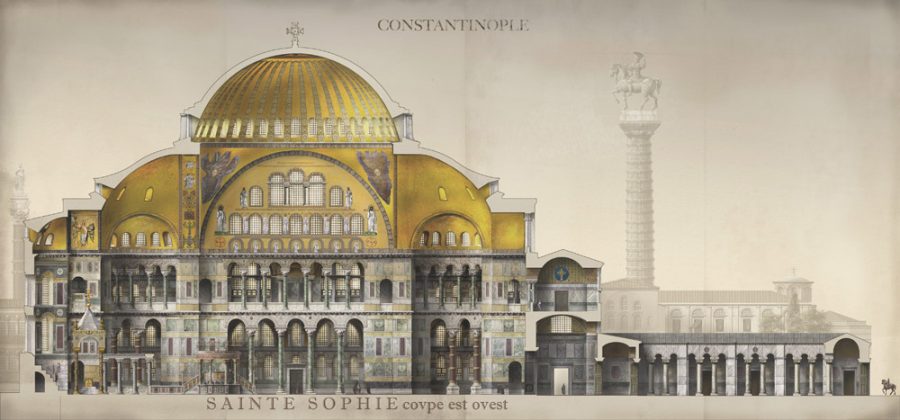
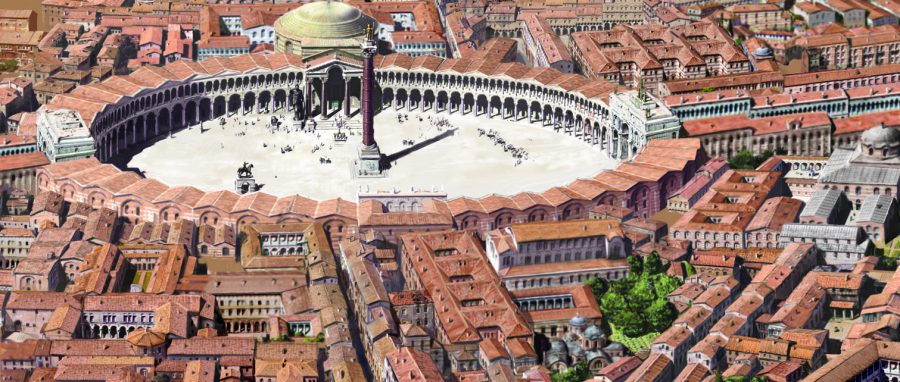
Built by the emper­or Jus­tin­ian between 532 and 537, when the city was Con­stan­tino­ple, the mas­sive church (lat­er mosque and now state-run muse­um) “has an extra­or­di­nar­i­ly large nave spread­ing over 70 meters in length; it is sur­round­ed by colon­nad­ed aisles and gal­leries. Mar­ble cov­ers the floor and walls.” Its cen­ter is “crowned by a dome glit­ter­ing in gold mosaics and ris­ing 56 meters above the ground.” The effect of the build­ing’s heavy, reflec­tive sur­faces and its archi­tec­tur­al enor­mi­ty “chal­lenges our con­tem­po­rary expec­ta­tion of the intel­li­gi­bil­i­ty of lan­guage.”

We are accus­tomed to hear the spo­ken or sung word clear­ly in dry, non-rever­ber­ant spaces in order to decode the encod­ed mes­sage. By con­trast, the wet acoustics of Hagia Sophia blur the intel­li­gi­bil­i­ty of the mes­sage, mak­ing words sound like ema­na­tion, emerg­ing from the depth of the sea. 

The Icons of Sound team has recon­struct­ed the under­wa­ter acoustics of the Hagia Sophia using con­vo­lu­tion reverb tech­niques and what are called “impulse responses”—recordings of the rever­ber­a­tions in par­tic­u­lar spaces, which are then loaded into soft­ware to dig­i­tal­ly sim­u­late the same psy­choa­coustics, a process known as “aural­iza­tion.” CCRMA describes an impulse response as an “imprint of the space,” which is then applied to sounds record­ed in oth­er envi­ron­ments. Typ­i­cal­ly, the process is used in stu­dio music pro­duc­tion, but Icons of Sound brought it to live per­for­mance at Stanford’s Bing Con­cert Hall last year, and made the group Cap­pel­la Romana sound like their voic­es had trans­port­ed from the Holy Roman Empire.

“To recre­ate the unique sound,” writes Kat Eschn­er at Smith­son­ian, “per­form­ers sang while lis­ten­ing to the sim­u­lat­ed acoustics of Hagia Sophia through ear­phones. Their singing was then put through the same acoustic sim­u­la­tor and played dur­ing the live per­for­mance through speak­ers in the con­cert hall.” As you can hear in these clips, the result is immer­sive and pro­found. One can only imag­ine what it must have been like live. To com­plete the effect, the pro­duc­tion used “atmos­pher­ic rein­force­ment,” notes Stan­ford Live, “via pro­ject­ed images and light­ing.” The audi­ence was “immersed in an envi­ron­ment where the unique inter­play of music, light, art, and sacred text has the poten­tial to induce a qua­si-mys­ti­cal state of rev­e­la­tion and won­der.”

The only sounds the researchers were able to record in the actu­al space of the ancient church were four pop­ping bal­loons. By lay­er­ing the rever­ber­a­tions cap­tured in these record­ings, and com­pen­sat­ing for the dif­fer­ent decay times inside the Bing, they were able to approx­i­mate the acoustic prop­er­ties of the build­ing. You can hear sev­er­al more audio sam­ples record­ed in dif­fer­ent places at this site. In the video above, asso­ciate pro­fes­sor of medieval art Bis­sera Pentche­va explains how and why the Hagia Sophia shapes sound and light the way it does. While purists might pre­fer to see a per­for­mance in the actu­al space, one must admit, the abil­i­ty to vir­tu­al­ly deliv­er a ver­sion of it to poten­tial­ly any con­cert hall in the world is pret­ty cool.

via The Smith­son­ian

Relat­ed Con­tent:

David Byrne: How Archi­tec­ture Helped Music Evolve

The Same Song Sung in 15 Places: A Won­der­ful Case Study of How Land­scape & Archi­tec­ture Shape the Sounds of Music

What Did Ancient Greek Music Sound Like?: Lis­ten to a Recon­struc­tion That’s ‘100% Accu­rate’

Josh Jones is a writer and musi­cian based in Durham, NC. Fol­low him at @jdmagness.

An Espresso Maker Made in Le Corbusier’s Brutalist Architectural Style: Raw Concrete on the Outside, High-End Parts on the Inside

From the 1950s through the 1970s, Bru­tal­ist archi­tec­ture flour­ished in North Amer­i­ca and Europe (both West and East) and many coun­tries beyond. Made out of raw con­crete, Bru­tal­ist buildings–usually munic­i­pal build­ings, cam­pus­es, and hous­ing projects–have an almost unfin­ished look to them. The first and most famous exam­ple of this archi­tec­tur­al style is the Unité d’habi­ta­tion, the hous­ing com­plex built by Le Cor­busier in Mar­seille between 1947 and 1952.

Though Bru­tal­ism has since fall­en out of fash­ion, it might be poised for a come­back, espe­cial­ly if this new espres­so machine is any indi­ca­tion. After a suc­cess­ful Kick­starter cam­paign this sum­mer (rais­ing $145k), the Nor­we­gian-Cal­i­forn­ian design firm Mon­taag Prod­ucts is putting the fin­ish­ing touch­es on a bru­tal­ist espres­so mak­er.

They want­ed to design a machine made out of “com­plete­ly hon­est mate­ri­als.” Hence the raw con­crete. Inside the espres­so mak­er, how­ev­er, they’ve used mate­ri­als typ­i­cal­ly found inside $1300 Ital­ian machines, accord­ing to Food & Wine. You can pre-order the machine at Indiegogo for $799. It should be ready in March (or there­abouts).

If you would like to sign up for Open Culture’s free email newslet­ter, please find it here. It’s a great way to see our new posts, all bun­dled in one email, each day.

If you would like to sup­port the mis­sion of Open Cul­ture, con­sid­er mak­ing a dona­tion to our site. It’s hard to rely 100% on ads, and your con­tri­bu­tions will help us con­tin­ue pro­vid­ing the best free cul­tur­al and edu­ca­tion­al mate­ri­als to learn­ers every­where. You can con­tribute through Pay­Pal, Patre­on, and Ven­mo (@openculture). Thanks!

Relat­ed Con­tent:

Wake Up & Smell the Cof­fee: The New All-in-One Cof­fee-Mak­er/Alarm Clock is Final­ly Here!

Cof­fee Entre­pre­neur Rena­to Bialet­ti Gets Buried in the Espres­so Mak­er He Made Famous

Life and Death of an Espres­so Shot: Choose Your Sound­track

Physics & Caf­feine: Stop Motion Film Uses a Cup of Cof­fee to Explain Key Con­cepts in Physics

by | Permalink | Make a Comment ( 1 ) |

China’s New Luminous White Library: A Striking Visual Introduction

MVRDV, a Dutch archi­tec­ture and urban design firm, teamed up with Chi­nese archi­tects to cre­ate the Tian­jin Bin­hai Library, a mas­sive cul­tur­al cen­ter fea­tur­ing “a lumi­nous spher­i­cal audi­to­ri­um around which floor-to-ceil­ing book­cas­es cas­cade.” Locat­ed not far from Bei­jing, the library was built quick­ly by any stan­dards. It took only three years to move from “the first sketch to the [grand] open­ing” on Octo­ber 1. Elab­o­rat­ing on the library, which can house 1.2 mil­lion books, MVRDV notes:

The building’s mass extrudes upwards from the site and is ‘punc­tured’ by a spher­i­cal audi­to­ri­um in the cen­tre. Book­shelves are arrayed on either side of the sphere and act as every­thing from stairs to seat­ing, even con­tin­u­ing along the ceil­ing to cre­ate an illu­mi­nat­ed topog­ra­phy. These con­tours also con­tin­ue along the two full glass facades that con­nect the library to the park out­side and the pub­lic cor­ri­dor inside, serv­ing as lou­vres to pro­tect the inte­ri­or against exces­sive sun­light whilst also cre­at­ing a bright and even­ly lit inte­ri­or.

The video above gives you a visu­al intro­duc­tion to the build­ing. And, on the MRDV web­site, you can view a gallery of pho­tos that let you see the library’s shape­ly design.

If you would like to sign up for Open Culture’s free email newslet­ter, please find it here. It’s a great way to see our new posts, all bun­dled in one email, each day.

If you would like to sup­port the mis­sion of Open Cul­ture, con­sid­er mak­ing a dona­tion to our site. It’s hard to rely 100% on ads, and your con­tri­bu­tions will help us con­tin­ue pro­vid­ing the best free cul­tur­al and edu­ca­tion­al mate­ri­als to learn­ers every­where. You can con­tribute through Pay­Pal, Patre­on, and Ven­mo (@openculture). Thanks!

Relat­ed Con­tent:

Watch 50+ Doc­u­men­taries on Famous Archi­tects & Build­ings: Bauhaus, Le Cor­busier, Hadid & Many More

A is for Archi­tec­ture: 1960 Doc­u­men­tary on Why We Build, from the Ancient Greeks to Mod­ern Times

A Vir­tu­al Tour of Japan’s Inflat­able Con­cert Hall

by | Permalink | Make a Comment ( 3 ) |

New Digital Archive Puts Online 4,000 Historic Images of Rome: The Eternal City from the 16th to 20th Centuries

The poet Tibul­lus first described Rome as “The Eter­nal City” in the first cen­tu­ry BC, and that evoca­tive nick­name has stuck over the thou­sands of years since. Or rather, he would have called it “Urbs Aeter­na,” which for Ital­ian-speak­ers would have been “La Cit­tà Eter­na,” but regard­less of which lan­guage you pre­fer it in, it throws down a daunt­ing chal­lenge before any his­to­ri­an of Rome. Each schol­ar has had to find their own way of approach­ing such a his­tor­i­cal­ly for­mi­da­ble place, and few have built up such a robust visu­al record as Rodol­fo Lan­ciani, 4000 items from whose col­lec­tion became avail­able to view online this year, thanks to Stan­ford Libraries.

As an “archae­ol­o­gist, pro­fes­sor of topog­ra­phy, and sec­re­tary of the Archae­o­log­i­cal Com­mis­sion,” says the col­lec­tion’s about page, Lan­ciani, “was a pio­neer in the sys­tem­at­ic, mod­ern study of the city of Rome.”

Hav­ing lived from 1845 to 1929 with a long and fruit­ful career to match, he “col­lect­ed a vast archive of his own notes and man­u­scripts, as well as works by oth­ers includ­ing rare prints and orig­i­nal draw­ings by artists and archi­tects stretch­ing back to the six­teenth cen­tu­ry.” After he died, his whole library found a buy­er in the Isti­tu­to Nazionale di Arche­olo­gia e Sto­ria dell’Arte (INASA), which made it avail­able to researchers at the 15th-cen­tu­ry Palaz­zo Venezia in Rome.

Enter a team of pro­fes­sors, archae­ol­o­gists, and tech­nol­o­gists from Stan­ford and else­where, who with a grant from the Samuel H. Kress Foun­da­tion, and in part­ner­ship with Italy’s Min­istry of Cul­tur­al Her­itage and Activ­i­ties and Tourism and the Nation­al Insti­tute, began dig­i­tiz­ing it all. Their efforts have so far yield­ed an exhi­bi­tion of about 4,000 of Lan­cian­i’s draw­ings, prints, pho­tographs and sketch­es of Rome from the 16th cen­tu­ry to the 20th. Not only can you exam­ine them in high-res­o­lu­tion in your brows­er as well as down­load them, you can also see the loca­tions of what they depict pin­point­ed on the map of Rome. That fea­ture might come in espe­cial­ly handy when next you pay a vis­it to The Eter­nal City, though for many of the fea­tures depict­ed in Lan­cian­i’s col­lec­tion, you hard­ly need direc­tions. Enter the dig­i­tal col­lec­tion here.

via Stan­ford News

Relat­ed Con­tent:

The His­to­ry of Rome in 179 Pod­casts

Ancient Rome’s Sys­tem of Roads Visu­al­ized in the Style of Mod­ern Sub­way Maps

How Did the Romans Make Con­crete That Lasts Longer Than Mod­ern Con­crete? The Mys­tery Final­ly Solved

Based in Seoul, Col­in Mar­shall writes and broad­casts on cities and cul­ture. His projects include the book The State­less City: a Walk through 21st-Cen­tu­ry Los Ange­les and the video series The City in Cin­e­ma. Fol­low him on Twit­ter at @colinmarshall or on Face­book.

2,000+ Architecture & Art Books You Can Read Free at the Internet Archive

Some­body once called writ­ing about music like danc­ing about archi­tec­ture, and the descrip­tion stuck. But what’s writ­ing about archi­tec­ture like? Even if you already know — espe­cial­ly if you already know — know that the Inter­net Archive makes it easy to binge on some of the finest archi­tec­ture writ­ing around and find out, and com­plete­ly for free at that. The site, as Arch­dai­ly’s Becky Quin­tal reports, has imple­ment­ed a “lend­ing fea­ture that allows users to elec­tron­i­cal­ly ‘bor­row’ books for 14 days. With over 2,000 bor­row­able books on archi­tec­ture, patrons from across the globe can read works by Reyn­er Ban­ham, Wal­ter Gropius, Ada Louise Huxtable and Jonathan Glancey. There are also help­ful guides, dic­tio­nar­ies and his­to­ry books.”

Quin­tal rec­om­mends a vari­ety of titles from Glancey’s The Sto­ry of Archi­tec­ture and Ban­ham’s The­o­ry and Design in the First Machine Age to Gropius’ The New Archi­tec­ture and the Bauhaus and Tom Wolfe’s famous jere­mi­ad From Bauhaus to Our Our House.

Oth­er bor­row­able books in the col­lec­tion can take you even far­ther around our built world: Boston Archi­tec­ture, French Archi­tec­ture, Japan­ese Archi­tec­ture, Moor­ish Archi­tec­ture in Andalu­sia, The Art and Archi­tec­ture of Chi­na, The Art and Archi­tec­ture of Medieval Rus­sia. As you can see, and as in a “real” library or book­store, writ­ing about archi­tec­ture at some point tran­si­tions into writ­ing about art, quite a few vol­umes of which — on art his­to­ry, art tech­nique, and even muse­um work — the Inter­net Archive also lets you check out.

But before you get your two weeks with any of these books from the Inter­net Archive’s vir­tu­al library, you’ll need your vir­tu­al library card. To get it, vis­it Archive.org’s account cre­ation page and come up with a screen name and pass­word. As soon as you’ve agreed to the site’s terms and con­di­tions, you’ve got a card. If you’d like to read these books on devices oth­er than your com­put­er, you’ll need to down­load Adobe’s free Dig­i­tal Edi­tions soft­ware. Out dig­i­tal cen­tu­ry has made bing­ing on all kinds of read­ing mate­r­i­al incom­pa­ra­bly eas­i­er than before, but just like brick-and-mor­tar libraries, the Inter­net Archive has only so many “copies” to lend out, so be warned that if you want an espe­cial­ly pop­u­lar book, you may have to get on a wait­list first. Me, I’m hop­ing Exper­i­men­tal Archi­tec­ture in Los Ange­les will come in any day now, but the art or archi­tec­ture book you most want to read may just be wait­ing for you to check it out. Scan the col­lec­tion here.

via Arch­dai­ly

Relat­ed Con­tent:

Down­load 200+ Free Mod­ern Art Books from the Guggen­heim Muse­um

Free: You Can Now Read Clas­sic Books by MIT Press on Archive.org

Watch 50+ Doc­u­men­taries on Famous Archi­tects & Build­ings: Bauhaus, Le Cor­busier, Hadid & Many More

Down­load 464 Free Art Books from The Met­ro­pol­i­tan Muse­um of Art

Based in Seoul, Col­in Mar­shall writes and broad­casts on cities and cul­ture. His projects include the book The State­less City: a Walk through 21st-Cen­tu­ry Los Ange­les and the video series The City in Cin­e­ma. Fol­low him on Twit­ter at @colinmarshall or on Face­book.

A Virtual Tour of Japan’s Inflatable Concert Hall

After the mas­sive Fukushi­ma earth­quake in 2011, archi­tect Ara­ta Isoza­ki and artist Anish Kapoor cre­at­ed the Ark Nova, an inflat­able mobile con­cert hall, designed to bring music to dev­as­tat­ed parts of Japan. Made of a stretchy plas­tic mem­brane, the Ark Nova can be inflat­ed with­in two hours. Add air in the after­noon. At night, enjoy a con­cert in a 500-seat per­for­mance hall. After­wards, deflate, pack on truck, and move the gift of music to the next city.

Marc Kush­n­er, author of The Future of Archi­tec­ture in 100 Build­ings, takes us on a vir­tu­al tour of the con­cert hall in the video above. Over on the web­site Dezeen, you can see an array of pho­tos, show­ing both the inte­ri­or and exte­ri­or of this inge­nious struc­ture.

via Swiss Miss

If you would like to sign up for Open Culture’s free email newslet­ter, please find it here. It’s a great way to see our new posts, all bun­dled in one email, each day.

If you would like to sup­port the mis­sion of Open Cul­ture, con­sid­er mak­ing a dona­tion to our site. It’s hard to rely 100% on ads, and your con­tri­bu­tions will help us con­tin­ue pro­vid­ing the best free cul­tur­al and edu­ca­tion­al mate­ri­als to learn­ers every­where. You can con­tribute through Pay­Pal, Patre­on, and Ven­mo (@openculture). Thanks!

Relat­ed Con­tent:

The World Con­cert Hall: Lis­ten To The Best Live Clas­si­cal Music Con­certs for Free

The His­to­ry of Clas­si­cal Music in 1200 Tracks: From Gre­go­ri­an Chant to Górec­ki (100 Hours of Audio)

Stan­ford Prof Makes Ukule­les from Wood Floor of New Con­cert Hall

by | Permalink | Make a Comment ( 2 ) |

Video Essayist Kogonada Makes His Own Acclaimed Feature Film: Watch His Tributes to Its Inspirations Like Ozu, Linklater & Malick

We’ve fea­tured the work of many cin­e­ma-lov­ing video essay­ists (myself includ­ed) here on Open Cul­ture, none of it more artis­tic than that of a man who goes by the name of Kog­o­na­da. Whether deal­ing with the films of auteurs like Stan­ley KubrickAndrei Tarkovsky, Alfred Hitch­cock, or Wes Ander­son, he finds new and strik­ing ways — often free of tra­di­tion­al nar­ra­tion, and some­times even free of spo­ken words alto­geth­er — to show us how their cin­e­mat­ic visions work, and in so doing to cre­ate new cin­e­mat­ic visions of his own. But when, we Kog­o­na­da fans have long won­dered, would this mys­te­ri­ous fel­low make a movie of his own?

The answer arrived at this year’s Sun­dance Film Fes­ti­val in the form of Colum­bus, Kog­o­nada’s fea­ture direc­to­r­i­al debut. “Colum­bus gets its title from the city where it’s set — Colum­bus, Indi­ana, home to a remark­able col­lec­tion of renowned works of mod­ern archi­tec­ture,” writes the New York­er’s Richard Brody, one of the many crit­ics to have already lav­ished praise on the new­ly released pic­ture.

“Those build­ings pro­vide an extra­or­di­nary premise for the dra­ma, which is a vision­ary trans­for­ma­tion of a famil­iar genre: a young adult’s com­ing-of-age sto­ry. For once, that trope doesn’t involve a sex­u­al awak­en­ing or a fam­i­ly rev­e­la­tion; it’s the tale of an intel­lec­tu­al blos­som­ing, thanks to a new friend­ship that aris­es amid trou­bled cir­cum­stances.”

Those trou­bled cir­cum­stances have to do with the par­ents of the two main char­ac­ters: Casey, a recent high-school grad­u­ate who’s stayed in town to care for a moth­er try­ing to kick a metham­phet­a­mine habit, and Jin, a fortysome­thing trans­la­tor who’s flown in from his home in Korea (birth­place of both the Mid­west-raised Kog­o­na­da and the film’s Los Ange­les-raised star John Cho) to watch over his father, an archi­tec­tur­al the­o­rist plunged into a coma by a stroke. “These par­al­lel lines meet when Casey offers to show the stranger her town,” writes Rolling Stone’s Peter Tra­vers in his review. “ ‘Meth and mod­ernism are real­ly big here,’ she tells Jin, as he becomes increas­ing­ly intrigued by this girl who sees the art and the human­i­ty in build­ings.”

Soon Jin and Casey take “baby steps toward a rela­tion­ship, in a man­ner that recalls Richard Lin­klater’s Before Sun­rise.” That film, and its suc­ces­sors Before Sun­set and Before Mid­night, fig­ure heav­i­ly into Kog­o­nada’s video essay on Lin­klater, “On Cin­e­ma & Time.” Oth­er influ­ences, cit­ed by crit­ics as well as Kog­o­na­da him­self, include Ter­ence Mal­ick, whose way with the ele­men­tal he exam­ined in “Fire & Water,” and Yasu­jiro Ozu, whose films got him think­ing about cin­e­ma in the first place. As he put it to Indiewire, he start­ed by think­ing he would “try to fig­ure out what it is about his films that ini­tial­ly felt very unim­pres­sive, but kept haunt­ing me,” to under­stand why Ozu “isn’t easy to just reduce to some­thing — he cer­tain­ly is not this sort of tra­di­tion­al­ist, he’s cer­tain­ly not a west­ern mod­ernist, he is some­thing else and what­ev­er he was explor­ing and offer­ing felt so rel­e­vant, even today.”

Kog­o­nada’s video essays “Way of Ozu” and “Pas­sage­ways” reveal not just the Japan­ese mas­ter’s use of archi­tec­tur­al spaces, but Kog­o­nada’s inter­est in such spaces. Colum­bus brings the depth of that inter­est to the fore: “The direc­tor pro­vokes aware­ness of the Mod­ernist Colum­bus by treat­ing it as one of the film’s char­ac­ters,” writes Archi­tec­tur­al Record’s Dante A. Ciampaglia. “It’s both pro­tag­o­nist and neme­sis for Casey and Jin as they wan­der the city, explore its archi­tec­tur­al boun­ty, and find it both reflect­ing inner strug­gles and inspir­ing epipha­nies.” As Kog­o­na­da him­self puts it, “I think that’s the thing that inter­ests me, the rela­tion­ship between emp­ty spaces and life itself.” May he find many more oppor­tu­ni­ties to explore it onscreen.

Relat­ed Con­tent:

The Per­fect Sym­me­try of Wes Anderson’s Movies

“Auteur in Space”: A Video Essay on How Andrei Tarkovsky’s Solaris Tran­scends Sci­ence Fic­tion

The Eyes of Hitch­cock: A Mes­mer­iz­ing Video Essay on the Expres­sive Pow­er of Eyes in Hitchcock’s Films

Cin­e­mat­ic Exper­i­ment: What Hap­pens When The Bicy­cle Thief’s Direc­tor and Gone With the Wind’s Pro­duc­er Edit the Same Film

How Richard Lin­klater (Slack­er, Dazed and Con­fused, Boy­hood) Tells Sto­ries with Time: Six Video Essays

Sig­na­ture Shots from the Films of Stan­ley Kubrick: One-Point Per­spec­tive

Based in Seoul, Col­in Mar­shall writes and broad­casts on cities and cul­ture. He’s at work on the book The State­less City: a Walk through 21st-Cen­tu­ry Los Ange­les, the video series The City in Cin­e­ma, the crowd­fund­ed jour­nal­ism project Where Is the City of the Future?, and the Los Ange­les Review of Books’ Korea Blog. Fol­low him on Twit­ter at @colinmarshall or on Face­book.

Watch Randy Newman’s Tour of Los Angeles’ Sunset Boulevard, and You’ll Love L.A. Too

“The longer I live here,” a Los Ange­les-based friend recent­ly said, “the more ‘I Love L.A.’ sounds like an uniron­ic trib­ute to this city.” That hit sin­gle by Randy New­man, a singer-song­writer not known for his sim­ple earnest­ness, has pro­duced a mul­ti­plic­i­ty of inter­pre­ta­tions since it came out in 1983, the year before Los Ange­les pre­sent­ed a sun­ny, col­or­ful, for­ward-look­ing image to the world as the host of the Sum­mer Olympic Games. Lis­ten­ers still won­der now what they won­dered back then: when New­man sings the prais­es — lit­er­al­ly — of the likes of Impe­r­i­al High­way, a “big nasty red­head,” Cen­tu­ry Boule­vard, the San­ta Ana winds, and bums on their knees, does he mean it?

“I Love L.A.“ ‘s both smirk­ing and enthu­si­as­tic music video offers a view of New­man’s 1980s Los Ange­les, but fif­teen years lat­er, he starred in an episode of the pub­lic tele­vi­sion series Great Streets that presents a slight­ly more up-to-date, and much more nuanced, pic­ture of the city. In it, the native Ange­leno looks at his birth­place through the lens of the 27-mile Sun­set Boule­vard, Los Ange­les’ most famous street — or, in his own words, “one of those places the movies would’ve had to invent, if it did­n’t already exist.”

His­to­ri­an Leonard Pitt (who appears along­side fig­ures like film­mak­er Alli­son Anders, artist Ed Ruscha, and Doors key­boardist Ray Man­zarek) describes Sun­set as the one place along which you can see “every stra­tum of Los Ange­les in the short­est peri­od of time.” Or as New­man puts it, “Like a lot of the peo­ple who live here, Sun­set is hum­ble and hard-work­ing at the begin­ning,” on its inland end. “Go fur­ther and it gets a lit­tle self-indul­gent and out­ra­geous” before it “straight­ens itself out and grows rich, fat, and respectable.” At its coastal end “it gets real twist­ed, so there’s noth­ing left to do but jump into the Pacif­ic Ocean.”

New­man’s west­ward jour­ney, made in an open-topped con­vert­ible (albeit not “I Love L.A.“ ‘s 1955 Buick) takes him from Union Sta­tion (Amer­i­ca’s last great rail­way ter­mi­nal and the ori­gin point of “L.A.‘s long, long-antic­i­pat­ed sub­way sys­tem”) to Aimee Sem­ple McPher­son­’s Angelus Tem­ple, now-gen­tri­fied neigh­bor­hoods like Sil­ver Lake then only in mid-gen­tri­fi­ca­tion, the hum­ble stu­dio where he laid tracks for some of his biggest records, the cor­ner where D.W. Grif­fith built Intol­er­ance’s ancient Baby­lon set, the sto­ried celebri­ty hide­out of the Chateau Mar­mont, UCLA (“almost my alma mater”), the Lake Shrine Tem­ple of the Self-Real­iza­tion Fel­low­ship, and final­ly to edge of the con­ti­nent.

More recent­ly, Los Ange­les Times archi­tec­ture crit­ic Christo­pher Hawthorne trav­eled the entire­ty of Sun­set Boule­vard again, but on foot and in the oppo­site direc­tion. The east-to-west route, he writes, “offers a way to explore an intrigu­ing notion: that the key to deci­pher­ing con­tem­po­rary Los Ange­les is to focus not on growth and expan­sion, those build­ing blocks of 20th cen­tu­ry South­ern Cal­i­for­nia, but instead on all the ways in which the city is dou­bling back on itself and get­ting denser.” For so much of the city’s his­to­ry, “search­ing for a metaphor to define Sun­set Boule­vard, writ­ers” — or musi­cians or film­mak­ers or any num­ber of oth­er cre­ators besides — “have described it as a riv­er run­ning west and feed­ing into the Pacif­ic. But the riv­er flows the oth­er direc­tion now.”

Los Ange­les has indeed plunged into a thor­ough trans­for­ma­tion since New­man first simul­ta­ne­ous­ly cel­e­brat­ed and sat­i­rized it, but some­thing of the dis­tinc­tive­ly breezy spir­it into which he tapped will always remain. “There‘s some kind of igno­rance L.A. has that I’m proud of. The open car and the red­head and the Beach Boys, the night just cool­ing off after a hot day, you got your arm around some­body,” he said to the Los Ange­les Week­ly a few years after tap­ing his Great Streets tour. ”That sounds real­ly good to me. I can‘t think of any­thing a hell of a lot bet­ter than that.”

Relat­ed Con­tent:

Glenn Gould Gives Us a Tour of Toron­to, His Beloved Home­town (1979)

Charles Bukows­ki Takes You on a Very Strange Tour of Hol­ly­wood

Join Clive James on His Clas­sic Tele­vi­sion Trips to Paris, LA, Tokyo, Rio, Cairo & Beyond

The City in Cin­e­ma Mini-Doc­u­men­taries Reveal the Los Ange­les of Blade Run­ner, Her, Dri­ve, Repo Man, and More

Based in Seoul, Col­in Mar­shall writes and broad­casts on cities and cul­ture. He’s at work on the book The State­less City: a Walk through 21st-Cen­tu­ry Los Ange­les, the video series The City in Cin­e­ma, the crowd­fund­ed jour­nal­ism project Where Is the City of the Future?, and the Los Ange­les Review of Books’ Korea Blog. Fol­low him on Twit­ter at @colinmarshall or on Face­book.

« Go BackMore in this category... »
Quantcast