Typed Portraits of Literary Legends: Kerouac, Saramago, Bukowski & More

Artists have used all sorts of odd media to cre­ate por­traits, every­thing from gui­tar picks to dice to wood­en eggs. Add to this list Brazil­ian type artist Álvaro Fran­ca, who uses the type­writer. Instead of com­pos­ing lit­er­ary por­traits of his heroes, Fran­ca types out lit­er­al por­traits. The prin­ci­ple of the pic­tures are the same grey-scale print­ing used in news­pa­pers or, if you spent time in the com­put­er lab in the 1990s, those dot matrix images that were such the rage among com­put­er nerds. Using a com­put­er, Fran­ca breaks the image down into dis­crete pix­els and adds one or more key­strokes to that pix­el. ‘I’ and ‘O’ seem to work for lighter greys while visu­al­ly dense let­ters like ‘x’and “m” are used for the dark­er end of the spec­trum.

As he writes in on his web­site:

Type­writ­ten Por­traits is an exper­i­men­tal art project. Dur­ing my exchange in the Cam­bridge School of Art, I devel­oped a tech­nique for imag­ing gray scale with the type­writer and, from there, I made por­traits of five of my favorite authors in lit­er­a­ture who worked on type­writ­ers. The series is still ongo­ing and there are plans for five more pic­tures.

You can see a time-lapse video of Fran­ca cre­at­ing a por­trait of beat icon Jack Ker­ouac above. And below you can see a few more pic­tures includ­ing Charles Bukows­ki and Jose Sara­m­a­go here.

bukowski typed


via Boing Boing

Jonathan Crow is a Los Ange­les-based writer and film­mak­er whose work has appeared in Yahoo!, The Hol­ly­wood Reporter, and oth­er pub­li­ca­tions. You can fol­low him at @jonccrow. And check out his blog Veep­to­pus, fea­tur­ing lots of pic­tures of vice pres­i­dents with octo­pus­es on their heads.  The Veep­to­pus store is here.

Relat­ed Con­tent:

The Draw­ings of Jean-Paul Sartre

James Joyce, With His Eye­sight Fail­ing, Draws a Sketch of Leopold Bloom (1926)

Jorge Luis Borges, After Going Blind, Draws a Self-Por­trait

The Adventures of Famed Illustrator Gustave Doré Presented in a Fantasic(al) Cutout Animation

When we fea­tured his illu­mi­na­tion of Edgar Allen Poe’s “The Raven,” we called Gus­tave Doré “one of the busiest, most in-demand artists of the 19th cen­tu­ry,” who “made his name illus­trat­ing works by such authors as Rabelais, Balzac, Mil­ton, and Dante.” His hand may have giv­en a visu­al dimen­sion to a num­ber of revered texts, but what of the man him­self? For the deep­est insight into an artist, we should look to the works of art he inspires. In the case of the cutout ani­mat­ed film above, Doré not only pro­vides the inspi­ra­tion but plays, in a sense, the star­ring role. L’imaginaire au pou­voir offers us a por­trait of the artist as a two-dimen­sion­al man, stum­bling into haunt­ing drawn-and-cut-out realms straight from his own imag­i­na­tion.

“The film was cre­at­ed by Vin­cent Piani­na and Loren­zo Papace of Le Petit Écho Malade and fea­tures music by Ödland,” writes EDW Lynch at Laugh­ing Squid (a site that pre­vi­ous­ly fea­tured Le Petit Écho Malade’s music video for Ödland’s “Øster­søen”) “It is a pro­mo, Lynch adds, for ‘Gus­tave Doré (1832–1883): Mas­ter of Imag­i­na­tion,’ an ongo­ing exhi­bi­tion of Doré’s work at Musée d’Orsay in Paris through May 11, 2014.” Though Doré, by all accounts, lived a fair­ly event­ful life, he had to have spent a great deal of it slav­ing painstak­ing­ly away with his wood engrav­ing tools. The same goes for any pro­duc­er of such vivid artis­tic visions—but I sus­pect that all of them have to go on this kind of har­row­ing jour­ney to the cen­ter of their soul now and again. Here, Piani­na and Papace have, with Doré’s very mate­ri­als, cre­at­ed a jour­ney into the inner realm that still gives them life today. And they’ve added a healthy dose of 21st-cen­tu­ry humor for good mea­sure.

via Laugh­ing Squid

Relat­ed Con­tent:

Ter­ry Gilliam Reveals the Secrets of Mon­ty Python Ani­ma­tions: A 1974 How-To Guide

Gus­tave Doré’s Splen­did Illus­tra­tions of Edgar Allan Poe’s “The Raven” (1884)

Vin­tage Film: Watch Hen­ri Matisse Sketch and Make His Famous Cut-Outs (1946)

Gus­tave Doré’s Dra­mat­ic Illus­tra­tions of Dante’s Divine Com­e­dy

Gus­tave Doré’s Exquis­ite Engrav­ings of Cer­vantes’ Don Quixote

Col­in Mar­shall hosts and pro­duces Note­book on Cities and Cul­ture and writes essays on cities, lan­guage, Asia, and men’s style. He’s at work on a book about Los Ange­les, A Los Ange­les Primer. Fol­low him on Twit­ter at @colinmarshall or on Face­book.

The Paintings of Miles Davis

Ask enough peo­ple to name their favorite artist of any kind, and soon­er rather than lat­er, some­one will name Miles Davis. The trum­peter and jazz auteur behind — or, strict­ly speak­ing, up in front of — such unchal­lenged mas­ter­pieces as Birth of the Cool, Kind of BlueSketch­es of Spain, and Bitch­es Brew has long since ascend­ed to the pan­theon of Amer­i­can music, but that doesn’t mean we should over­look his oth­er artis­tic achieve­ments. Achieve­ments as a painter, for instance: true fans know that Davis’ visu­al art appears on a few of his album cov­ers, such as that of 1989’s Amand­la right below.  “Paint­ing, long a Davis avo­ca­tion, is becom­ing a prof­itable side­line,” says a con­tem­po­rary Los Ange­les Times arti­cle. “In col­lab­o­ra­tion with his girl­friend, Jo Gel­bard, he did the art­work for his new album; the cov­er is an impres­sive self-por­trait using the reds and greens he seems to favor.”

You can see more of Davis’ visu­al art over at Dan­ger­ous Minds and The Dai­ly Beast. The so-called Prince of Dark­ness “didn’t begin to draw and paint in earnest until he was in his mid-fifties, dur­ing the ear­ly 1980s and a peri­od of musi­cal inac­tiv­i­ty,” writes Tara McGin­ley. ”

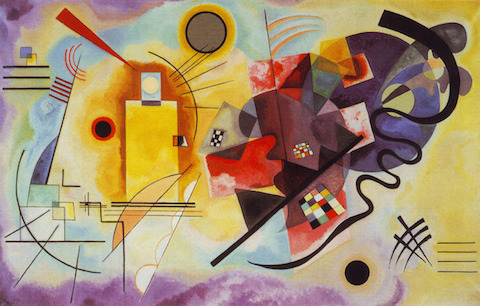
Miles being Miles, he didn’t mere­ly dab­ble, but made cre­at­ing art as much a part of his life as mak­ing music in his final decade,” result­ing in “a sharp, bold and mas­cu­line mix­ture of Kandin­sky, Jean-Michel Basquiat, Picas­so and African trib­al art.” Just last year, Insight Edi­tions pub­lished Miles Davis: The Col­lect­ed Art­work, final­ly bring­ing togeth­er the fruits of the cre­ativ­i­ty the trum­peter could com­mand even with­out his horn. Count­less young jazz play­ers claim Davis as an influ­ence to this day, and they’ll con­tin­ue to do so as long as jazz itself per­sists, but I do won­der how soon young painters will as well.

via Dan­ger­ous Minds

Relat­ed Con­tent:

Miles Davis Plays Music from Kind of Blue Live in 1959, Intro­duc­ing a Com­plete­ly New Style of Jazz

Watch Ani­mat­ed Sheet Music for Miles Davis’ “So What,” Char­lie Parker’s “Con­fir­ma­tion” & Coltrane’s “Giant Steps”

The Night When Miles Davis Opened for the Grate­ful Dead in 1970: Hear the Com­plete Record­ings

Miles Davis’ “South Side Chica­go Chili Mack” Recipe Revealed

Col­in Mar­shall hosts and pro­duces Note­book on Cities and Cul­ture and writes essays on cities, lan­guage, Asia, and men’s style. He’s at work on a book about Los Ange­les, A Los Ange­les Primer. Fol­low him on Twit­ter at @colinmarshall or on Face­book.

How Edward Hopper “Storyboarded” His Iconic Painting Nighthawks

Nighthawks1

Edward Hop­per’s Nighthawks (1942) does­n’t just evoke a cer­tain stripe of mid-cen­tu­ry, after-hours, big-city Amer­i­can lone­li­ness; it has more or less come to stand for the feel­ing itself. But as with most images that passed so ful­ly into the realm of icon­hood, we all too eas­i­ly for­get that the paint­ing did­n’t sim­ply emerge com­plete, ready to embed itself in the zeit­geist. Robin Cem­balest at ART­news has a post on how Edward Hop­per “sto­ry­board­ed” Nighthawks, find­ing and sketch­ing out mod­els for those three melan­cholic cus­tomers (one of whom you can see in an ear­ly ren­der­ing above), that whole­some young atten­dant in white, and the all-night din­er (which you can see come togeth­er in chalk on paper below) in which they find refuge.

Nighthawks2

These “19 stud­ies for Nighthawks,” writes Cem­balest, “reveal how Hop­per chore­o­graphed his voyeuris­tic scene of the night­time con­ver­gence of the man, a cou­ple, and a serv­er in the eerie Deco din­er, refin­ing every nuance of the coun­ter­top, the fig­ures, the archi­tec­ture, and the effects of the flu­o­res­cent light­ing.”

In each sketch, more pieces have fall­en into place: a din­er assumes their posi­tion, the light finds its angle, the per­spec­tive shifts to that of an out­sider on the dark­ened street. Cem­balest quotes Whit­ney cura­tor Carter Fos­ter describ­ing the final prod­uct as a “mar­velous demon­stra­tion of both extreme speci­fici­ty and near abstract com­po­si­tion­al sum­ma­tion on the same sur­face beguil­ing­ly [which] reflects how empir­i­cal obser­va­tion and imag­i­na­tion coex­ist­ed in Hopper’s head.”

Nighthawks3

Despite how many ele­ments of the real world Hop­per stud­ied to cre­ate Nighthawks, it ulti­mate­ly depicts no real place. The painter him­self posed for the male fig­ures, and his wife mod­eled for the female. As for the locale, seen in the final draw­ing just above, Cem­balest notes that “after years of research and schol­ar­ship, experts have deter­mined that Nighthawks was not inspired by one spe­cif­ic din­er. Rather, it was a com­pos­ite of wedge-shaped inter­sec­tions around Green­wich Avenue. Its curv­ing prow seems part­ly inspired by the Flat­iron Build­ing.” In a way, it almost seemed too real­is­ti­cal­ly New York to actu­al­ly exist in New York. Hop­per paint­ed a dis­til­la­tion of a sense of Amer­i­can place, and like many Amer­i­can places, I’ve nev­er quite known whether I’d love to drop in at the Nighthawks din­er (though I’d have to find a front door first), or whether I should count myself lucky that life has­n’t rel­e­gat­ed me to it. You can learn more about the fas­ci­nat­ing sto­ry­board­ing of Nighthawks at Art News and see many more sketch­es. Speak­ing of the sketch­es, they come cour­tesy of The Whit­ney Muse­um of Amer­i­can Art.

Nighthawks4

via ART­News

Relat­ed Con­tent:

Painters Paint­ing: The Defin­i­tive Doc­u­men­tary Por­trait of the New York Art World (1940–1970)

Jack­son Pol­lock 51: Short Film Cap­tures the Painter Cre­at­ing Abstract Expres­sion­ist Art

William S. Bur­roughs Shows You How to Make “Shot­gun Art”

Col­in Mar­shall hosts and pro­duces Note­book on Cities and Cul­ture and writes essays on cities, lan­guage, Asia, and men’s style. He’s at work on a book about Los Ange­les, A Los Ange­les Primer. Fol­low him on Twit­ter at @colinmarshall or on Face­book.

A Sneak Preview of Haruki Murakami’s Forthcoming Illustrated Novel, The Strange Library

illustrated murkami

Quick note: If you just fin­ished read­ing Col­or­less Tsuku­ru Taza­ki and His Years of Pil­grim­age, and if you’re now han­ker­ing for some more Muraka­mi, you won’t have to wait very long. In Decem­ber, his next book, a 96 page novel­la called The Strange Library, will be pub­lished by Knopf. And already, thanks to The Guardian, you can get a sneak pre­view of the illus­trat­ed edi­tion. When you enter the Guardian gallery, make sure you click the arrows in the top right cor­ner of the first image to see the illus­tra­tions in a larg­er for­mat. The book can be pre-ordered here.

In the mean­time, we have a few Muraka­mi items (sto­ries, music, film, etc.) to keep you busy this fall.

Relat­ed Con­tent:

Read 5 Sto­ries By Haru­ki Muraka­mi Free Online

A 56-Song Playlist of Music in Haru­ki Murakami’s Nov­els: Ray Charles, Glenn Gould, the Beach Boys & More

Pat­ti Smith Reviews Haru­ki Murakami’s New Nov­el, Col­or­less Tsuku­ru Taza­ki and His Years of Pil­grim­age

In Search of Haru­ki Muraka­mi: A Doc­u­men­tary Intro­duc­tion to Japan’s Great Post­mod­ernist Nov­el­ist

Haru­ki Murakami’s Pas­sion for Jazz: Dis­cov­er the Novelist’s Jazz Playlist, Jazz Essay & Jazz Bar

Henri Matisse Illustrates Baudelaire’s Censored Poetry Collection, Les Fleurs du Mal

Matisse-Baudelaire1

We pre­vi­ous­ly fea­tured Hen­ri Matis­se’s illus­tra­tions for a 1935 edi­tion of James Joyce’s Ulysses. If the Odyssey-themed etch­ings he did for that book sur­prised you, have a look at his illus­tra­tions for Charles Baude­laire’s poet­ry col­lec­tion Les Fleurs du mal, first pub­lished in 1857. Accord­ing to Henri-Matisse.net, the book (avail­able in French and Eng­lish in our col­lec­tion of 600 Free eBooks) had “been illus­trat­ed over the years by a vari­ety of major artists, includ­ing Emile Bernard, Charles Despi­au, Jacob Epstein, Gus­tave Rodin, Georges Rouault, and Pierre-Yes Tré­mois. Each inter­pret­ed select­ed poems more or less faith­ful­ly. Matisse took a dif­fer­ent approach in the 1947 edi­tion pub­lished by La Bib­lio­thèque Française.” As you can see from the exam­ples pro­vid­ed here, he went an even more uncon­ven­tion­al route this time, accom­pa­ny­ing Baude­laire’s poems with noth­ing but por­trai­ture.

Matisse-Baudelaire2

The edi­tion’s 33 por­traits, includ­ing one of Matisse him­self and one of Baude­laire, cap­ture a vari­ety of sub­jects, most­ly women — also a source of inspi­ra­tion for the poet. How­ev­er, as the site that bears his name makes clear, “Matisse did not indulge in the bio­graph­i­cal fal­lac­i­es of the lit­er­ary crit­ics of his day who attempt­ed to under­stand Baude­laire by asso­ci­at­ing each poem with the woman who may have inspired it. Thus, his gallery of facial por­traits pro­vides an accom­pa­ni­ment rather than an imi­ta­tive ren­di­tion of select­ed poems.” Would that more illus­tra­tors of lit­er­a­ture fol­low his exam­ple and make a break from pure lit­er­al­ism, allow­ing the mean­ing of the rela­tion­ship between text and image to cohere in the read­er-view­er’s mind. You might say that Matisse pio­neered, in oth­er words, the most poet­ic pos­si­ble method of illus­trat­ing poet­ry.

Matisse-Baudelaire3

Since it is Banned Books Week, it’s per­haps worth not­ing that Baude­laire’s Les Fleurs du Mal was quick­ly cen­sored in France. Yale’s Mod­ernism Lab web­site notes that, two months after its pub­li­ca­tion in 1857, a French court “banned six of Baudelaire’s erot­ic poems, two of them on les­bian themes and the oth­er four het­ero­sex­u­al but mild­ly sado-masochis­tic. The ban was not offi­cial­ly lift­ed until 1949, by which time Baude­laire had achieved ‘clas­sic’ sta­tus as among the most impor­tant influ­ences on mod­ern lit­er­a­ture in France and through­out Europe.” A sec­ond expur­gat­ed (or as Baude­laire called it “muti­lat­ed”) edi­tion was pub­lished in 1861. Pre­sum­ably Matisse illus­trat­ed that edi­tion in 1947. If you want to buy one of the 300 copies with Matis­se’s illus­tra­tions, you will have to shell out about $7500.

matisse portrait

Relat­ed Con­tent:

Hen­ri Matisse Illus­trates 1935 Edi­tion of James Joyce’s Ulysses

Hear Gertrude Stein Read Works Inspired by Matisse, Picas­so, and T.S. Eliot (1934)

Vin­tage Film: Watch Hen­ri Matisse Sketch and Make His Famous Cut-Outs (1946)

Col­in Mar­shall hosts and pro­duces Note­book on Cities and Cul­ture and writes essays on cities, lan­guage, Asia, and men’s style. He’s at work on a book about Los Ange­les, A Los Ange­les Primer. Fol­low him on Twit­ter at @colinmarshall or on Face­book.

Winston Churchill’s Paintings: Great Statesman, Surprisingly Good Artist

Marlborough Tapestries at Blenheim

Win­ston Churchill is one of those colos­sal fig­ures who read­i­ly qual­i­fies for that unfash­ion­able moniker of The Great Man of His­to­ry. This was a guy who warned of Hitler’s threat long before it seemed polite to do so. Through his polit­i­cal acu­men and bril­liant ora­to­ry skills, the two-time prime min­is­ter ral­lied his demor­al­ized coun­try to face down the mas­sive, seem­ing­ly unstop­pable Ger­man army. Beyond that, he won the 1953 Nobel Prize for Lit­er­a­ture, for, among oth­er works, his six vol­ume series on the Sec­ond World War. And, on top of all that, Churchill was also a pas­sion­ate painter. And unlike George W. Bush’s touch­ing­ly awk­ward attempts, Churchill’s paint­ings were actu­al­ly pret­ty good. You can see a few above and below and even more here. (Click on the images to view them in a larg­er for­mat.)

pont au gard

For Churchill, paint­ing was the best way to men­tal­ly step away from what had to be a titan­i­cal­ly stress­ful job. “Paint­ing is com­plete as a dis­trac­tion,” he wrote in 1948. “I know of noth­ing which, with­out exhaust­ing the body, more entire­ly absorbs the mind. What­ev­er the wor­ries of the hour or the threats of the future, once the pic­ture has begun to flow along, there is no room for them in the men­tal screen.”

Churchill turned to paint­ing at a low point in his life. After an inva­sion of Gal­lipoli, which he in part orches­trat­ed, went spec­tac­u­lar­ly wrong in 1915, he resigned from his gov­ern­ment posi­tion (First Lord of the Admi­ral­ty) in dis­grace. “I had great anx­i­ety and no means of reliev­ing it,” he wrote. Then he dis­cov­ered the joys of putting paint to can­vas. Over the next 48 years, he cranked out some 500 paint­ings, most­ly land­scapes. Oil was his pre­ferred medi­um and, judg­ing from his oeu­vre, Claude Mon­et, Vin­cent Van Gogh and William Turn­er were big influ­ences. “When I get to heav­en I mean to spend a con­sid­er­able por­tion of my first mil­lion years in paint­ing,” he wrote. “And so get to the bot­tom of the sub­ject.”

The Harbour at St. Jean Cap Ferrat

So how good was he? Not­ed Eng­lish artist and roy­al por­traitist Sir Oswald Bir­ley was quite impressed by the Prime Minister’s abil­i­ties. “If Churchill had giv­en the time to art that he has giv­en to pol­i­tics, he would have been by all odds the world’s great­est painter.” Of course, Bir­ley was also reg­u­lar­ly employed by Churchill, so you might want to take that state­ment with a grain of salt. David Coombs, who co-authored the book Sir Win­ston Churchill: His Life and His Paint­ings, offered a more even-hand­ed assess­ment. “When he’s very good, he’s very, very good, but some­times, he’s hor­rid.”

Top: Marl­bor­ough Tapes­tries at Blenheim

Mid­dle: Pont du Gard

Bot­tom: The Har­bour at St. Jean Cap Fer­rat

Relat­ed Con­tent:

Col­or Footage of Win­ston Churchill’s Funer­al in 1965

Ani­mat­ed: Win­ston Churchill’s Top 10 Say­ings About Fail­ure, Courage, Set­backs, Haters & Suc­cess

Jonathan Crow is a Los Ange­les-based writer and film­mak­er whose work has appeared in Yahoo!, The Hol­ly­wood Reporter, and oth­er pub­li­ca­tions. You can fol­low him at @jonccrowAnd check out his blog Veep­to­pus, fea­tur­ing one new draw­ing of a vice pres­i­dent with an octo­pus on his head dai­ly.  The Veep­to­pus store is here.

The Guggenheim Puts 109 Free Modern Art Books Online

fernandlegerfive00mess_0001

Back in Jan­u­ary, 2012, we men­tioned that the Guggen­heim (the Frank Lloyd Wright-designed mod­ern art muse­um in NYC) had put 65 art cat­a­logues on the web, all free of charge.

We’re hap­py to report that, between then and now, the num­ber of free texts has grown to 109. Pub­lished between 1937 and 1999, the art books/catalogues offer an intel­lec­tu­al and visu­al intro­duc­tion to the work of Alexan­der Calder, Edvard Munch, Fran­cis BaconGus­tav Klimt & Egon Schiele, Fer­nand Léger, and Kandin­sky. Plus there are oth­er texts (e.g., Mas­ter­pieces of Mod­ern Art and Abstract Expres­sion­ists Imag­ists) that tack­le meta move­ments and themes.

Any­one inter­est­ed in the his­to­ry of the Guggen­heim will want to spend time with a col­lec­tion called “The Syl­labus.” It con­tains five books by Hilla Rebay, the muse­um’s first direc­tor and cura­tor. Togeth­er, they let you take a close look at the art orig­i­nal­ly housed in the Guggen­heim when the muse­um first opened its doors in 1939.

To read any of these 109 free art books, you will just need to fol­low these sim­ple instruc­tions. 1.) Select a text from the col­lec­tion. 2.) Click the “Read Cat­a­logue Online” but­ton. 3.) Start read­ing the book in the pop-up brows­er, and use the con­trols at the very bot­tom of the pop-up brows­er to move through the book. 4.) If you have any prob­lems access­ing these texts, you can find alter­nate ver­sions on Archive.org.

You can find many more free art books from the Get­ty and the Met below.

Relat­ed Con­tent:

Down­load Over 250 Free Art Books From the Get­ty Muse­um

Down­load 397 Free Art Cat­a­logs from The Met­ro­pol­i­tan Muse­um of Art

800 Free eBooks for iPad, Kin­dle & Oth­er Devices

by | Permalink | Make a Comment ( 18 ) |

« Go BackMore in this category... »
Quantcast