Portraits of Vice Presidents with Octopuses on Their Heads — the Ones You’ve Always Wanted To See

24GarrettHobart_ResizeWM2

Last year, after part­ing ways with a pun­ish­ing, thank­less cor­po­rate job but before my wife gave birth to my first child, my friend invit­ed me to par­tic­i­pate in the From Dusk til Drawn fundrais­er at the Muse­um of Con­tem­po­rary Art in San­ta Bar­bara. Basi­cal­ly, it involved draw­ing for 24 straight hours. At that point in my life – i.e. before chil­dren – sleep depri­va­tion was a nov­el­ty. It sound­ed insane. I was in.

I knew I need­ed a sys­tem. The last thing I want­ed was to be strug­gling for ideas of some­thing to draw at four in the morn­ing. So after some debate, I decid­ed to draw por­traits of all 47 vice pres­i­dents of the Unit­ed States. With octo­pus­es on their heads. Why?

02ThomasJefferson_ResizedWM2

It prob­a­bly start­ed with Wal­ter Mon­dale. I was on the couch with my moth­er watch­ing the returns for the 1984 elec­tion. When it became clear that he was not going to become America’s next chief exec­u­tive, my moth­er, who spent her for­ma­tive years in Berke­ley dur­ing the thick of the ‘60s, stood up, pro­claimed “Well, shit!” and stormed upstairs. I was in sev­enth grade. This was the first elec­tion I cared about. Mon­dale had reached for glo­ry and failed spec­tac­u­lar­ly. Start­ing that night, I became fas­ci­nat­ed with those who aspired to his­to­ry but end­ed up a foot­note. So obvi­ous­ly, I became inter­est­ed in vice pres­i­dents.

The Con­sti­tu­tion is sur­pris­ing­ly vague on the veep. Vice Pres­i­dent Charles Dawes — a man who won a Nobel Peace Prize and who wrote a tune that would lat­er become a pop hit, all before becom­ing Calvin Coolidge’s num­ber two guy — summed up the job while talk­ing with sen­a­tor and future VP Alben W. Barkley like this: “I can do only two things here. One of them is to sit up here on this ros­trum [in the Sen­ate] and lis­ten to you birds talk with­out the abil­i­ty to reply. The oth­er is to look at the news­pa­pers every morn­ing to see how the Pres­i­den­t’s health is.”

Though the posi­tion bestows on it all of the author­i­ty and pomp of the U.S. Gov­ern­ment, vice pres­i­dents through­out his­to­ry have strug­gled to find pur­pose in a poor­ly defined role, all the while wait­ing for death. It’s a bit like life itself. A few, through ambi­tion, tal­ent and a lot of luck, ascend­ed to the top job. Most moldered in obscu­ri­ty. No won­der then that John Nance Gar­ner, one of FDR’s three VPs, called the job “not worth a buck­et of warm piss.” I added the octo­pus­es because I thought they were fun­ny. It takes a rare per­son to pull off an air of dig­ni­ty with a cephalo­pod on his head. It seems to fit with the absur­di­ty of the job.

04GeorgeClinton_resizedWM2

Dur­ing From Dusk til Drawn, I was a machine. I cranked out 22 por­traits of vice pres­i­dents in 24 hours. That’s one an hour, exclud­ing a 2am jaunt to get a rice bowl and a hand­ful of bath­room breaks. Over the next year, I drew and redrew them all from John Adams to Joe Biden and then, start­ing this past July, I began post­ing one pic­ture a day on my site Veep­to­pus. I’m up to Hubert H. Humphrey now. Dur­ing this time, I learned a lot about for­mer­ly impor­tant peo­ple who are now almost entire­ly unknown.  Peo­ple like William R. King, who died of tuber­cu­lo­sis three weeks after get­ting sworn in as VP, or John Breck­in­ridge, who fled to Cuba to avoid get­ting arrest­ed for trea­son. You can see the fruits of my crazy scheme here. I hope you enjoy.

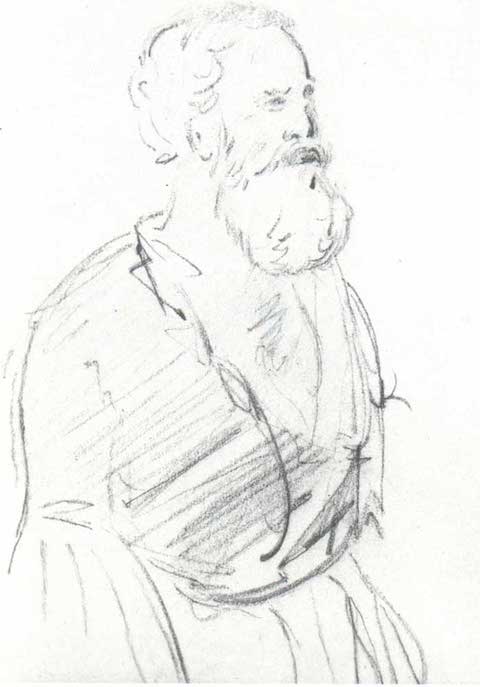
Above, in descend­ing order, you can find por­traits of 1) Gar­ret Hobart (1897–1899), the 24th Veep under William McKin­ley; 2) Thomas Jef­fer­son, who bucked the VP trend and made some­thing of him­self; and 3) George Clin­ton who served under Jef­fer­son and Madi­son. Don’t con­fuse him with the guy from Par­lia­ment Funkadel­ic.

Relat­ed Con­tent: 

Watch a Wit­ty, Grit­ty, Hard­boiled Retelling of the Famous Aaron Burr-Alexan­der Hamil­ton Duel

Jonathan Crow is a Los Ange­les-based writer and film­mak­er whose work has appeared in Yahoo!, The Hol­ly­wood Reporter, and oth­er pub­li­ca­tions. You can fol­low him at @jonccrow.  And you can check out his online Veep­to­pus store here.

Iraqi Artist Turns Saddam Hussein’s Propaganda Music into Pop, Jazz & Lounge-Style Love Songs

As ISIS car­ries out its reign of ter­ror in Syr­ia and Iraq, many diplo­mats prob­a­bly would­n’t mind rolling the cal­en­dar back to 2003 — to what now look like sim­pler times. If you’re feel­ing strange­ly nos­tal­gic for the Sad­dam era, you’ll want to check out videos from “Three Love Songs,” an art instal­la­tion staged in Doha (2010) and Lon­don (2013) by the Iraqi visu­al artist Adel Abidin. Here is how he describes the exhi­bi­tion:

 This piece exam­ines ter­ror and love, and how façades are played through song, specif­i­cal­ly Iraqi songs that were com­mis­sioned by Sad­dam Hus­sein, used to glo­ri­fy the regime dur­ing the decades of his rule. The instal­la­tion syncs three styl­ized music videos (lounge, jazz and pop) that each fea­tures an arche­typ­al west­ern chanteuse: young, blonde, and seduc­tive. Each video’s dra­mat­ic “look” cre­ates a dif­fer­ent atmos­phere but the songs ded­i­cat­ed to Sad­dam Hus­sein tie them togeth­er. The lyrics are sung by the per­form­ers in Ara­bic (Iraqi dialect) and are sub­ti­tled in Eng­lish and Ara­bic. The singers do not know what they are singing about, but they are direct­ed to per­form (though voice and ges­ture) as though the songs were tra­di­tion­al, pas­sion­ate love songs. It is this uncom­fort­able jux­ta­po­si­tion — between the lush visu­al roman­ti­cism and the harsh mean­ing of the lyrics, between the seduc­tion of the per­former and com­pre­hen­sion of the view­er — that forms the main con­cep­tu­al ele­ment of this work.

Above and below, you can see out­takes from the video instal­la­tions in “Three Love Songs.” You’ve got your lounge tune up top. Jazz and Pop below.

Jazz:

Pop:

via Hyper­al­ler­gic

Relat­ed Con­tent:

How the CIA Turned Doc­tor Zhiva­go into a Pro­pa­gan­da Weapon Against the Sovi­et Union

Win­sor McCay Ani­mates the Sink­ing of the Lusi­ta­nia in a Beau­ti­ful Pro­pa­gan­da Film (1918)

Titan­ic: The Nazis Cre­ate a Mega-Bud­get Pro­pa­gan­da Film About the Ill-Fat­ed Ship … and Then Banned It (1943)

Don­ald Duck’s Bad Nazi Dream and Four Oth­er Dis­ney Pro­pa­gan­da Car­toons from World War II

Dripped: An Animated Tribute to Jackson Pollock’s Signature Painting Technique

To make an excit­ing movie, do you real­ly need much more than an art thief and his capers? With Dripped, ani­ma­tor Léo Ver­ri­er sees that can’t-miss premise and rais­es it in an explo­ration of art his­to­ry. In its 1940s New York City set­ting, paint­ing-swip­ing pro­tag­o­nist Jack lives not just to make world-renowned can­vass­es his own, but a part of him. When he gets these works of art back to his apart­ment, he does­n’t even con­sid­er sell­ing them; instead, he chews and swal­lows them, thus enabling him to assume in body the forms and col­ors famous­ly expressed in paint on their sur­faces. We are what we eat, and Jack eats art, but even becom­ing the art of oth­ers ulti­mate­ly leaves him unsat­is­fied. Deter­mined to paint and eat a can­vas of his own, he finds his stom­ach can’t han­dle his work in progress. Thrown into a bout of frus­tra­tion, an angered Jack toss­es one of his paint­ings to the ground, ran­dom­ly splat­ter­ing it with every col­or at hand. And thus he dis­cov­ers, in this ani­mat­ed fan­ta­sy, the tech­nique that Jack­son Pol­lock would pio­neer in real­i­ty.

To see the real artist — one not known for his eat­ing, though his drink­ing did gain a rep­u­ta­tion of its own — in action have a look at Hans Namuth’s 1951 footage of Pol­lock paint­ing with his sig­na­ture “drip” method above. To learn more about the how and the why of it, see also the 1987 doc­u­men­tary Por­trait of an Artist: Jack­son Pol­lock, which we fea­tured in 2012; and below, see the Muse­um of Mod­ern Art’s short exam­i­na­tion and re-cre­ation of Pol­lock­’s “action paint­ing” tech­nique. Chance may have led him to dis­cov­er this prac­tice, but it hard­ly means he gave up con­trol. Film­mak­er Stan Brakhage liked to tell the fol­low­ing illus­tra­tive sto­ry, which came out of hang­ing out with var­i­ous artists and com­posers in Pol­lock­’s stu­dio in the late 40s:

They were, like, com­ment­ing, and they used the words “chance oper­a­tions” — which was no both­er to me because I was hear­ing it reg­u­lar­ly from John Cage — and the pow­er and the won­der of it and so forth. This real­ly angered Pol­lock very deeply and he said, “Don’t give me any of your ‘chance oper­a­tions.’ ” He said, “You see that door­knob?” and there was a door­knob about fifty feet from where he was sit­ting that was, in fact, the door that every­one was going to have to exit. Drunk as he was, he just with one swirl of his brush picked up a glob of paint, hurled it, and hit that door­knob smack-on with very lit­tle paint over the edges. And then he said, “And that’s the way out.”

via Jux­tapoz

Relat­ed Con­tent:

Watch Por­trait of an Artist: Jack­son Pol­lock, the 1987 Doc­u­men­tary Nar­rat­ed by Melvyn Bragg

Jack­son Pol­lock 51: Short Film Cap­tures the Painter Cre­at­ing Abstract Expres­sion­ist Art

MoMA Puts Pol­lock, Rothko & de Koon­ing on Your iPad

Col­in Mar­shall hosts and pro­duces Note­book on Cities and Cul­ture and writes essays on cities, lan­guage, Asia, and men’s style. He’s at work on a book about Los Ange­les, A Los Ange­les Primer. Fol­low him on Twit­ter at @colinmarshall or on Face­book.

The Art of Swimming, 1587: A Manual with Woodcut Illustrations

art of swimming 7

As the late great Robert Shaw remarked in Jaws, “here’s to swim­min’ with bow-legged women.”

Or fail­ing that, an extreme­ly bow-legged man, as fea­tured in Sir Ever­ard Dig­by’s 1587 trea­tise-cum-man­u­al, De Arte Natan­di (The Art of Swim­ming). Hub­ba hub­ba, who needs trunks?

There were no pools at the time. The male bathers pop­u­lat­ing Digby’s 40 plus wood­cut illus­tra­tions are riv­er swim­mers, like Ben Franklin, the inven­tor of swim fins and the only Found­ing Father to be induct­ed (posthu­mous­ly) into the Inter­na­tion­al Swim­ming Hall of Fame.

art of swimming 6

As Franklin would two cen­turies lat­er, Dig­by sought to bring both water safe­ty and prop­er form to the mass­es. Accord­ing to the BBC’s His­to­ry Mag­a­zine, the Cam­bridge Don’s goal was “to turn swim­ming from a dis­re­gard­ed skill of bargees and boat­men into an accom­plish­ment for gen­tle­men, to make them more like the Romans.”

To get clos­er to his goal, Dig­by breaks it down as deft­ly as an online swim instruc­tor in the era of youtube. When not deliv­er­ing the how to’s on back stroke, side stroke, and dog­gy pad­dle, he’s advis­ing absolute begin­ners on how to enter the water and steer clear of ani­mal-befouled holes, and help­ing more sea­soned stu­dents embell­ish their game with nifty tricks, (danc­ing, toe­nail cut­ting).

art of swimming 5

Pro­long the lazy days of sum­mer by brows­ing through more images from De Arte Natan­di at the Pub­lic Domain Review. Or see the text itself here.

Relat­ed Con­tent:

Won­der­ful­ly Weird & Inge­nious Medieval Books

Wear­able Books: In Medieval Times, They Took Old Man­u­scripts & Turned Them into Clothes

Dante’s Divine Com­e­dy Illus­trat­ed in a Remark­able Illu­mi­nat­ed Medieval Man­u­script (c. 1450)

Ayun Hal­l­i­day is an author, home­school­er, Chief Pri­ma­tol­o­gist of the East Vil­lage Inky zine, and extreme­ly enthu­si­as­tic swim­mer. Fol­low her @AyunHalliday

Extensive Archive of Avant-Garde & Modernist Magazines (1890–1939) Now Available Online

Surrealisme_1_Oct_1924

Hav­ing once been involved in the found­ing of an arts mag­a­zine, I have expe­ri­enced inti­mate­ly the ways in which such an endeav­or can depend upon a com­mu­ni­ty of equals pool­ing a diver­si­ty of skills. The process can be painful: egos com­pete, cer­tain ele­ments seek to dom­i­nate, but the suc­cess­ful prod­uct of such a col­lab­o­ra­tive effort will rep­re­sent a liv­ing com­mu­ni­ty of artists, writ­ers, edi­tors, and oth­er mas­ters of tech­nique who sub­or­di­nate their indi­vid­ual wills, tem­porar­i­ly, to the will of a col­lec­tive, cre­at­ing new gestalt iden­ti­ties from con­cep­tu­al atoms. As Mono­skop—“a wiki for col­lab­o­ra­tive stud­ies of art, media and the humanities”—points out, “the whole” of an arts mag­a­zine, “could become greater than the sum of its parts.” Often when this hap­pens, a pub­li­ca­tion can serve as the plat­form or nucle­us of an entire­ly new move­ment.

Mono­skop main­tains a dig­i­tal archive of print­ed avant-garde and mod­ernist mag­a­zines dat­ing from the late-19th cen­tu­ry to the late 1930s, pub­lished in locales from Arad to Bucharest, Copen­hagen to War­saw, in addi­tion to the expect­ed New York and Paris. From the lat­ter city comes the 1924 first issue of Sur­re­al­isme at the top of the post.

Periszkop_1_Mar_1925

From the much small­er city of Arad in Roma­nia comes the March, 1925 issue 1 of Periszkóp above, pub­lished in Hun­gar­i­an and fea­tur­ing works by Picas­so, Marc Cha­gall, and many less­er-known East­ern Euro­pean artists. Just below, see anoth­er Paris pub­li­ca­tion: the first, 1929 issue of Doc­u­ments, a sur­re­al­ist jour­nal edit­ed by Georges Bataille and fea­tur­ing such lumi­nar­ies as Cuban nov­el­ist Ale­jo Car­pen­tier and artists Georges Braque, Gior­gio De Chiri­co, Sal­vador Dali, Mar­cel Duchamp, Paul Klee, Joan Miro, and Pablo Picas­so. Fur­ther down, see the first, 1926, issue of the Bauhaus jour­nal, vehi­cle of the famous arts move­ment found­ed by Wal­ter Gropius in 1919.

Documents_Vol_1_1929_1991

The vari­ety of mod­ernist and avant garde pub­li­ca­tions archived at Mono­skop “pro­vide us with a his­tor­i­cal record of sev­er­al gen­er­a­tions of artists and writ­ers.” They also “remind us that our lens­es mat­ter.” In an age of “the relent­less lin­ear­i­ty of dig­i­tal bits and the UX of the glow­ing screen” we tend to lose sight of such crit­i­cal­ly impor­tant mat­ters as design, typog­ra­phy, lay­out, writ­ing, and the “tech­niques of print­ing and mechan­i­cal repro­duc­tion.” Any­one can build a web­site, fill it with “con­tent,” and prop­a­gate it glob­al­ly, giv­ing lit­tle or no thought to aes­thet­ic choic­es and edi­to­r­i­al fram­ing. But the mag­a­zines rep­re­sent­ed in Monoskop’s archive are spe­cial­ized cre­ations, the prod­ucts of very delib­er­ate choic­es made by groups of high­ly skilled indi­vid­u­als with very spe­cif­ic aes­thet­ic agen­das.

Bauhaus_1_1926

A major­i­ty of the pub­li­ca­tions rep­re­sent­ed come from the explo­sive peri­od of mod­ernist exper­i­men­ta­tion between the wars, but sev­er­al, like the jour­nal Rhythm: Art Music Lit­er­a­ture—first pub­lished in 1911—offer glimpses of the ear­ly stir­rings of mod­ernist inno­va­tion in the Anglo­phone world. Oth­ers like the 1890–93 Parisian Entre­tiens poli­tiques et lit­téraires show­case the work of pio­neer­ing ear­ly French mod­ernist fore­bears like Jules Laforgue (a great influ­ence upon T.S. Eliot) and also André Gide and Stéphane Mal­lar­mé. Some of the pub­li­ca­tions here are already famous, like The Lit­tle Review, many much less­er-known. Most pub­lished only a hand­ful of issues.

MAVO_1_Jul_1924

With a few exceptions—such as the 1923 Japan­ese pub­li­ca­tion MAVO shown above—almost all of the jour­nals rep­re­sent­ed at Monoskop’s archive hail from East­ern and West­ern Europe and the U.S.. While “only a few jour­nals had any sig­nif­i­cant impact out­side the avant-garde cir­cles in their time,” the rip­ples of that impact have spread out­ward to encom­pass the art and design worlds that sur­round us today. These exam­ples of the lit­er­ary and design cul­ture of ear­ly 20th cen­tu­ry mod­ernist mag­a­zines, like those of late 20th cen­tu­ry post­mod­ern ‘zines, pro­vide us with a dis­til­la­tion of minor move­ments that came to have major sig­nif­i­cance in decades hence.

via Hyper­al­ler­gic

Relat­ed Con­tent:

The ABCs of Dada Explains the Anar­chic, Irra­tional “Anti-Art” Move­ment of Dadaism

The Pulp Fic­tion Archive: The Cheap, Thrilling Sto­ries That Enter­tained a Gen­er­a­tion of Read­ers (1896–1946)

William S. Burrough’s Avant-Garde Movie ‘The Cut Ups’ (1966)

Josh Jones is a writer and musi­cian based in Durham, NC. Fol­low him at @jdmagness

Download for Free 2.6 Million Images from Books Published Over Last 500 Years on Flickr

flickr archive globe

Thanks to Kalev Lee­taru, a Yahoo! Fel­low in Res­i­dence at George­town Uni­ver­si­ty, you can now head over to a new col­lec­tion at Flickr and search through an archive of 2.6 mil­lion pub­lic domain images, all extract­ed from books, mag­a­zines and news­pa­pers pub­lished over a 500 year peri­od. Even­tu­al­ly this archive will grow to 14.6 mil­lion images.

This new Flickr archive accom­plish­es some­thing quite impor­tant. While oth­er projects (e.g., Google Books) have dig­i­tized books and focused on text — on print­ed words — this project con­cen­trates on images. Lee­taru told the BBC, “For all these years all the libraries have been dig­i­tiz­ing their books, but they have been putting them up as PDFs or text search­able works.”  “They have been focus­ing on the books as a col­lec­tion of words. This inverts that.”

flicker reo speedwagon

The Flickr project draws on 600 mil­lion pages that were orig­i­nal­ly scanned by the Inter­net Archive. And it uses spe­cial soft­ware to extract images from those pages, plus the text that sur­rounds the images. I arrived at the image above when I searched for “auto­mo­bile.” The page asso­ci­at­ed with the image tells me that the image comes from an old edi­tion of the icon­ic Amer­i­can news­pa­per, The Sat­ur­day Evening Post. A relat­ed link puts the image in con­text, allow­ing me to see that we’re deal­ing with a 1920 ad for an REO Speed­wag­on. Now you know the ori­gin of the band’s name!

venice flickr

I should prob­a­bly add a note about how to search through the archive, because it’s not entire­ly obvi­ous. From the home page of the archive, you can do a key­word search. As you’re fill­ing in the key­word, Flickr will autopop­u­late the box with the words “Inter­net Archive Book Images’ Pho­to­stream.” Make sure you click on those autopop­u­lat­ed words, or else your search results will include images from oth­er parts of Flickr.

Or here’s an eas­i­er approach: sim­ply go to this inte­ri­or page and con­duct a search. It should yield results from the book image archive, and noth­ing more.

In case you’re won­der­ing, all images can be down­loaded for free. They’re all pub­lic domain.

More infor­ma­tion about the new Flickr project can be found at the Inter­net Archive.

In the relat­eds below, you can find oth­er great image archives that recent­ly went online.

flicker gall

via the BBC and Peter Kauf­man

Relat­ed Con­tent:

Fol­ger Shake­speare Library Puts 80,000 Images of Lit­er­ary Art Online, and They’re All Free to Use

The Met­ro­pol­i­tan Muse­um of Art Puts 400,000 High-Res Images Online & Makes Them Free to Use

New York Pub­lic Library Puts 20,000 Hi-Res Maps Online & Makes Them Free to Down­load and Use

The British Library Puts 1,000,000 Images into the Pub­lic Domain, Mak­ing Them Free to Reuse & Remix

The Rijksmu­se­um Puts 125,000 Dutch Mas­ter­pieces Online, and Lets You Remix Its Art

Where to Find Free Art Images & Books from Great Muse­ums, and Free Books from Uni­ver­si­ty Press­es

by | Permalink | Make a Comment ( 10 ) |

Charles Schulz Draws Charlie Brown in 45 Seconds and Exorcises His Demons

Would that we had a dime for every car­toon­ist whose course was chart­ed hap­pi­ly copy­ing Charles Schulz’s sem­i­nal strip, Peanuts, while oth­er, more ath­let­ic chil­dren played togeth­er in the fresh air and sun­shine.

Such admis­sions pro­lif­er­ate in inter­views and blog posts. They’re near­ly as numer­ous as the online tuto­ri­als on draw­ing such beloved Peanuts char­ac­ters as Wood­stock, Linus Van Pelt, and Schulz’ sad sack stand-in Char­lie Brown.

The short video above melds the edu­ca­tion­al ease of a YouTube how-to with the self-direct­ed, per­haps more artis­ti­cal­ly pure aspects of the pre-dig­i­tal expe­ri­ence, as Charles Schulz him­self pen­cils Char­lie Brown seat­ed at Schroeder’s toy piano in well under a minute.

You’ll have to watch close­ly if you want to pick up Sparky’s step-by-step tech­nique. There are no geo­met­ric point­ers, only a spir­i­tu­al dis­clo­sure that “poor old Char­lie Brown” was a scape­goat whose suf­fer­ing was com­men­su­rate with that of his cre­ator.

His voiceover down­grades the psy­chic pain to the lev­el of lost golf and bridge games, but as car­toon­ist and for­mer Peanuts copy­ist Bill Wat­ter­son, cre­ator of Calvin and Hobbes, point­ed out in a 2007 review of David Michaelis’ Schulz biog­ra­phy, Schulz’s unhap­pi­ness was deep seat­ed:

Schulz always held his par­ents in high regard, but they were emo­tion­al­ly remote and strange­ly inat­ten­tive to their only child. Schulz was shy and alien­at­ed dur­ing his school years, retreat­ing from near­ly every oppor­tu­ni­ty to reveal him­self or his gifts. Teach­ers and stu­dents con­se­quent­ly ignored him, and Schulz nursed a life­long grudge that so few attempt­ed to draw him out or rec­og­nized his tal­ent…

Once he final­ly achieved his child­hood dream of draw­ing a com­ic strip, how­ev­er, he was able to expose and con­front his inner tor­ments through his cre­ative work, mak­ing inse­cu­ri­ty, fail­ure and rejec­tion the cen­tral themes of his humor. Know­ing that his mis­eries fueled his work, he resist­ed help or change, appar­ent­ly pre­fer­ring pro­fes­sion­al suc­cess over per­son­al hap­pi­ness. Des­per­ate­ly lone­ly and sad through­out his life, he saw him­self as “a noth­ing,” yet he was also con­vinced that his artis­tic abil­i­ty made him spe­cial.

Good grief. I have a hunch none of this found its way into the life­long workaholic’s own guide to draw­ing Peanuts char­ac­ters. It’s not a secret, how­ev­er, that a dark side often comes with the ter­ri­to­ry as a slew of recent auto­bi­o­graph­i­cal graph­ic nov­els from those drawn to the pro­fes­sion will attest.

Via Kot­tke

Relat­ed Con­tent:

Watch the First Ani­ma­tions of Peanuts: Com­mer­cials for the Ford Motor Com­pa­ny (1959–1961)

The Con­fes­sions of Robert Crumb: A Por­trait Script­ed by the Under­ground Comics Leg­end Him­self (1987)

New York­er Car­toon Edi­tor Bob Mankoff Reveals the Secret of a Suc­cess­ful New York­er Car­toon

23 Car­toon­ists Unite to Demand Action to Reduce Gun Vio­lence: Watch the Result

Ayun Hal­l­i­day is an author, home­school­er, and Chief Pri­ma­tol­o­gist of the East Vil­lage Inky zine. Fol­low her @AyunHalliday

Folger Shakespeare Library Puts 80,000 Images of Literary Art Online, and They’re All Free to Use

TheLondonStage

Has a writer ever inspired as many adap­ta­tions and ref­er­ences as William Shake­speare? In the four hun­dred years since his death, his work has pat­terned much of the fab­ric of world lit­er­a­ture and seen count­less per­mu­ta­tions on stage and screen. Less dis­cussed are the visu­al rep­re­sen­ta­tions of Shake­speare in fine art and illus­tra­tion, but they are mul­ti­tude. In one small sam­pling, Richard Altick notes in his exten­sive study Paint­ings from Books, that “pic­tures from Shake­speare account­ed for about one fifth—some 2,300—of the total num­ber of lit­er­ary paint­ings record­ed between 1760 and 1900” among British artists.

FolgerMidsummer

In the peri­od Altick doc­u­ments, a rapid­ly ris­ing mid­dle class drove a mar­ket for lit­er­ary art­works, which were, “in effect, exten­sions of the books them­selves: they were detached forms of book illus­tra­tion, in which were con­stant­ly assim­i­lat­ed the lit­er­ary and artis­tic tastes of the time.”

These works took the form of humor­ous illustrations—such as the As You Like It-inspired satir­i­cal piece at the top from 1824—and much more seri­ous rep­re­sen­ta­tions, like the undat­ed Cur­ri­er & Ives Midsummer-Night’s Dream lith­o­graph above. Now, thanks to the Fol­ger Shake­speare Library, these images, and tens of thou­sands more from their Dig­i­tal Image Col­lec­tion, are avail­able online. And they’re free to use under a CC BY-SA Cre­ative Com­mons license.

RichardIIICostume

As Head of Col­lec­tion Infor­ma­tion Ser­vices Erin Blake explains, “basi­cal­ly this means you can do what­ev­er you want with Fol­ger dig­i­tal images as long as you say that they’re from the Fol­ger, and as long a you keep the cycle of shar­ing going by freely shar­ing what­ev­er you’re mak­ing.” The Folger’s impres­sive repos­i­to­ry has been called “the world’s finest col­lec­tion of Shakespere­an art.” As well as tra­di­tion­al paint­ings and illus­tra­tions, it includes “dozens of cos­tumes and props used in nine­teenth-cen­tu­ry Shake­speare pro­duc­tions,” such as the embroi­dered vel­vet cos­tume above, worn by Edwin Booth as Richard III, cir­ca 1870. You’ll also find pho­tographs and scans of “’extra-illus­trat­ed’ books filled with insert­ed engrav­ings, man­u­script let­ters, and play­bills asso­ci­at­ed with par­tic­u­lar actors or pro­duc­tions; and a great vari­ety of sou­venirs, com­ic books, and oth­er ephemera asso­ci­at­ed with Shake­speare and his works.”

FolgerFuseli

In addi­tion to illus­tra­tions and mem­o­ra­bil­ia, the Fol­ger con­tains “some 200 paint­ings” and draw­ings by fine artists like “Hen­ry Fuseli, Ben­jamin West, George Rom­ney, and Thomas Nast, as well as such Eliz­a­bethan artists as George Gow­er and Nicholas Hilliard.” (The strik­ing print above by Fuseli shows Mac­beth’s three witch­es hov­er­ing over their caul­dron.) Great and var­ied as the Folger’s col­lec­tion of Shake­speare­an art may be, it rep­re­sents only a part of their exten­sive hold­ings. You’ll also find in the Dig­i­tal Images Col­lec­tion images of antique book­bind­ings, like the 1532 vol­ume of a work by Agrip­pa von Nettescheim (Hein­rich Cor­nelius), below.

Folger1532Binding

The col­lec­tion’s enor­mous archive of 19th cen­tu­ry prints is an espe­cial treat. Just below, see a print of that tow­er of 18th cen­tu­ry learn­ing, Samuel John­son, who, in his famous pref­ace to an edi­tion of the Bard’s works declared, “Shake­speare is above all writ­ers.” All in all, the immense dig­i­tal col­lec­tion rep­re­sents, writes The Pub­lic Domain Review, “a huge injec­tion of some won­der­ful mate­r­i­al into the open dig­i­tal com­mons.” Already, the Fol­ger has begun adding images to Wiki­me­dia Com­mons for use free and open use in Wikipedia and else­where on the web. And should you some­how man­age, through some vora­cious feat of dig­i­tal con­sump­tion, to exhaust this trea­sure hold of images, you need not fear—they’ll be adding more and more as time goes on. Enter the col­lec­tion here.

FolgerDrJohnson

via The Pub­lic Domain Review

Relat­ed Con­tent:

Read All of Shakespeare’s Plays Free Online, Cour­tesy of the Fol­ger Shake­speare Library

The Met­ro­pol­i­tan Muse­um of Art Puts 400,000 High-Res Images Online & Makes Them Free to Use

Down­load 35,000 Works of Art from the Nation­al Gallery, Includ­ing Mas­ter­pieces by Van Gogh, Gau­guin, Rem­brandt & More

Free Online Shake­speare Cours­es: Primers on the Bard from Oxford, Har­vard, Berke­ley & More

Josh Jones is a writer and musi­cian based in Durham, NC. Fol­low him at @jdmagness

« Go BackMore in this category... »
Quantcast