John Lennon Illustrates Two of His Books with Playful Drawings (1964–1965)

LennonVicar

Upon his trag­ic ear­ly death at 40, John Lennon left behind a body of work few pop­u­lar artists could hope to equal. And that’s only the pub­lished stuff. As we point­ed out in a recent post on his home demos, the for­mer Bea­t­le also left hun­dreds of hours of tape record­ings for his fans to sift through, and, as if that weren’t enough, Sotheby’s recent­ly auc­tioned off a store­house of orig­i­nal man­u­scripts and auto­graphed draw­ings for two books Lennon wrote in the mid-six­ties, In His Own Write (1964) and A Spaniard in the Works (1965), a Sher­lock Holmes par­o­dy.

LennonParty

Lennon’s play­ful sense of humor and sur­re­al imag­i­na­tion shine through the sto­ries and poems in both books, as does his more moody broody side. If any­thing, Lennon’s word­play and out-there line draw­ings close­ly resem­ble the work of Shel Sil­ver­stein, who was prob­a­bly not an influ­ence but cer­tain­ly a kin­dred spir­it. Sotheby’s spe­cial­ist Gabriel Heaton cites as Lennon’s influ­ence “the non­sense tra­di­tion of Eng­lish lit­er­a­ture,” and indeed Lewis Car­roll comes to mind when read­ing his work. See, for exam­ple, “About The Awful,” his author’s state­ment for In His Own Write:

I was bored on the 9th of Octover 1940 when, I believe, the Nas­ties were still boom­ing us led by Madolf Heatlump (who only had one). Any­way they did­n’t get me. I attend­ed to vari­cous schools in Lid­dy­pol. And still did­n’t pass — much to my Aun­ties sup­plies. As a mem­ber of the most pub­li­fied Bea­t­les my (P, G, and R’s) records might seem fun­nier to some of you than this book, but as far as I’m con­ceived this cor­rec­tion of short writ­ty is the most won­der­foul larf I’ve every ready.
God help and breed you all.

And then there’s the art­work. At the top, see an unti­tled ink draw­ing of a vic­ar leer­ing at a nude cou­ple (and hold­ing in his hand “That Book”). The draw­ing above shows a clique of naked partiers, with the cap­tion “Puff­ing and glob­ber­ing they drugged they­selves ram­pling or danc­ing with wild abdomen, stub­bing in wild pos­tumes amon­st them­selves…”

LennonBelonely

Recall­ing the art­work in Silverstein’s The Giv­ing Tree, direct­ly above we have a sim­ple illus­tra­tion for a poem called “I Sat Belone­ly,” cap­tioned with the poem’s first two lines: “I Sat Belone­ly Down a Tree, Hum­bled Fat and Small” (read the full poem here).

LennonFlies

Anoth­er Sil­ver­stein­ian draw­ing is titled “A Lot of Flies on His Wife” from a short sto­ry called “No Flies on Frank,” whose title char­ac­ter speaks in an argot right out of James Joyce: “I carn’t not believe this incred­i­ble fact of truth about my very body which has not gained fat since moth­er begat me at child­burn. Yea, though I wart through the valet of thy shad­owy hut I will feed no nor­man. What grate qualm­sy hath tak­en me thus into such a fat­ty hard­buck­le.”

LennonGuitar

Just above, Lennon sketch­es a Picas­so-like four-eyed gui­tarist in this unti­tled draw­ing (notice the tiny cyclist at his feet)—estimated by Sotheby’s between $15,000 and $25,000. The eighty nine lots that went up for auc­tion includ­ed many oth­er draw­ings (see more here) and some hand­writ­ten notes from Paul McCart­ney. All told, the sale net­ted close to $3 mil­lion, though for Lennon devo­tees, these arti­facts are price­less. .

via The Dai­ly Beast

Relat­ed Con­tent:

Hear John Lennon Sing Home Demo Ver­sions of “She Said, She Said,” “Straw­ber­ry Fields For­ev­er,” and “Don’t Let Me Down”

John Lennon Plays Bas­ket­ball with Miles Davis and Hangs Out with Allen Gins­berg & Friends

The Last Time Lennon & McCart­ney Played Togeth­er Cap­tured in the Boot­leg A Toot And a Snore in ’74

Josh Jones is a writer and musi­cian based in Durham, NC. Fol­low him at @jdmagness.

Botticelli’s 92 Surviving Illustrations of Dante’s Divine Comedy (1481)


Every true Renais­sance man need­ed a wealthy patron, and many Ital­ian artist-inven­tor-schol­ar-poets found theirs in Loren­zo de’Medici, scion of a Flo­ren­tine dynasty and him­self a schol­ar and poet. Loren­zo either spon­sored direct­ly or helped secure com­mis­sions for such 15th cen­tu­ry art stars as Michelan­ge­lo Buonaroti and Leonar­do da Vin­ci.

Among Lorenzo’s many artist friends was a painter who most­ly dis­ap­peared from his­to­ry until the late nine­teenth cen­tu­ry, when the redis­cov­ery of his Pri­mav­era and Birth of Venus made him one of the most pop­u­lar of Renais­sance artists. I’m refer­ring of course, to San­dro Bot­ti­cel­li, por­traitist of Loren­zo de’Medici, his father, and grand­fa­ther and also, it turns out, illus­tra­tor of Dante Alighieri’s Divine Com­e­dy.

In 1550, the so-called “father of art his­to­ry” Gior­gio Vasari record­ed that “since Bot­ti­cel­li was a learned man, he wrote a com­men­tary on part of Dan­te’s poem, and after illus­trat­ing the Infer­no, he print­ed the work.”  The painter also made a por­trait of Dante, Vasari tells us, and drew sketch­es for engrav­ings in the first Flo­ren­tine edi­tion of The Divine Com­e­dy in 1481.

It seems, how­ev­er, that Botticelli’s inter­est in Dante went much fur­ther than even Vasari knew. Some­time late in his career—after he had already achieved local renown in Florence—Botticelli promised his patron Loren­zo an illus­trat­ed Divine Com­e­dy on sheep­skin with a sep­a­rate image for each Can­to, some­thing no artist had yet attempt­ed. 92 of those illus­tra­tions sur­vive, in var­i­ous stages of com­ple­tion, such as the two above, “Pan­der­ers, Flat­ter­ers” (top–the only draw­ing in col­or) and “Giants” (above), both from the Infer­no.

These are two of the most ful­ly real­ized of the col­lec­tion. Accord­ing to art his­to­ri­an Jonathan K. Nel­son, “Bot­ti­cel­li com­plet­ed the out­line draw­ings for near­ly all the can­tos, but only added col­ors for a few. The artist shows his ‘learn­ing’ and artis­tic skill by rep­re­sent­ing each of the three realms each in a dis­tinc­tive way.” Many of Botticelli’s draw­ings for the Pur­ga­to­rio and Par­adiso sur­vive as well, but—like the books themselves—these are increas­ing­ly less detailed (and arguably less inter­est­ing). See “Dan­te’s Con­fes­sion” from the Pur­ga­to­rio above, his “Map of Hell” at the top, “Jacob’s Lad­der” from the Par­adiso below, and the remain­ing 88 illus­tra­tions at World of Dante.

Relat­ed Con­tent:

Gus­tave Doré’s Dra­mat­ic Illus­tra­tions of Dante’s Divine Com­e­dy

Alber­to Martini’s Haunt­ing Illus­tra­tions of Dante’s Divine Com­e­dy (1901–1944)

Sal­vador Dalí’s 100 Illus­tra­tions of Dante’s The Divine Com­e­dy

Josh Jones is a writer and musi­cian based in Durham, NC. Fol­low him at @jdmagness.

Illustrations of The Lord of the Rings in Russian Iconography Style (1993)

russian LOTR 1

Giv­en the detail with which J.R.R. Tolkien describes his fan­tas­ti­cal yet earth­i­ly ground­ed char­ac­ters and land­scapes, you’d think illus­tra­tors would have an easy time putting pic­tures to the words. You might even assume that any artist who tried his or her hand at the job would pro­duce more or less the same visu­al inter­pre­ta­tion. And yet the his­to­ry of illus­trat­ed edi­tions of The Hob­bit and the Lord of the Rings tril­o­gy has­n’t gone that way at all. Dif­fer­ent pub­lish­ers at dif­fer­ent times and dif­fer­ent places have com­mis­sioned very styl­is­ti­cal­ly dif­fer­ent things. We have shown you exam­ples of Tolkien’s Per­son­al Book Cov­er Designs for The Lord of the Rings Tril­o­gy as well as what Where the Wild Things Are author Mau­rice Sendak could come up with. And, in March, we fea­tured a play­ful­ly visu­al­ized Sovi­et LOTR edi­tion from 1976. Now, take a look at the large set of images here, pulled from a 1993 edi­tion illus­trat­ed by Sergey Yuhi­mov (more infor­ma­tion, albeit in Russ­ian, here and here), and you’ll get the sense that the Rus­sians may have a knack for visu­al­iz­ing the goings-on of Mid­dle-Earth.

russian LOTR2

Still, the illus­tra­tions from Rus­si­a’s Hob­bit and almost 30-years-new­er Lord of the Rings could hard­ly share less of a sen­si­bil­i­ty. A Metafil­ter post on the lat­ter draw a num­ber of attempt­ed descrip­tions by Tolkien fans: “LOTR trans­lat­ed almost as Chris­t­ian iconog­ra­phy.” “They leap around about 1000 years of art his­to­ry.” “Mad, but also charm­ing.” “They would make great tarot cards.”

LOTR 6
Objec­tions may arise to the accu­ra­cy of the char­ac­ters por­trayed — as always — as well as the artist’s adher­ence (or lack there­of) to the traits of one peri­od of art or anoth­er, but we can hard­ly ignore what an aes­thet­ic impact these illus­tra­tions make even just on first glance. Some of the Metafil­ter com­menters express their wish­es for The Adven­tures of Huck­le­ber­ry Finn (“used in Russ­ian pri­ma­ry school cur­ric­u­la, or was dur­ing the Com­mu­nist era”) illus­trat­ed this way, or maybe a Lord of the Rings “in the style of Hierony­mus Bosch.” But from these vivid, styl­is­ti­cal­ly Medieval, reli­gious-icon-sat­u­rat­ed images, I per­son­al­ly take away one con­clu­sion: when the idea first came to find a direc­tor to bring Tolkien to the screen, they real­ly should’ve hired Andrei Tarkovsky.

You can see a gallery of images in four parts: Part 1 — Part 2Part 3, Part 4.

Our thanks go to @zeljka8 for help­ing find back­ground infor­ma­tion for these illus­tra­tions.

LOTR 4.1

Relat­ed con­tent:

Sovi­et-Era Illus­tra­tions Of J. R. R. Tolkien’s The Hob­bit (1976)

Dis­cov­er J.R.R. Tolkien’s Per­son­al Book Cov­er Designs for The Lord of the Rings Tril­o­gy

The Only Draw­ing from Mau­rice Sendak’s Short-Lived Attempt to Illus­trate The Hob­bit

Two Beau­ti­ful­ly-Craft­ed Russ­ian Ani­ma­tions of Chekhov’s Clas­sic Children’s Sto­ry “Kash­tan­ka”

Watch Sovi­et Ani­ma­tions of Win­nie the Pooh, Cre­at­ed by the Inno­v­a­tive Ani­ma­tor Fyo­dor Khitruk

Col­in Mar­shall hosts and pro­duces Note­book on Cities and Cul­ture and writes essays on cities, lan­guage, Asia, and men’s style. He’s at work on a book about Los Ange­les, A Los Ange­les Primer. Fol­low him on Twit­ter at @colinmarshall or on Face­book.

Free: Download 30,000 Images from The Museum of New Zealand (All in High Resolution)

new zealand images

Last month, The Met­ro­pol­i­tan Muse­um of Art announced some­thing we all wel­comed. They made more than 400,000 images of art in the Museum’s col­lec­tion free to down­load. Before that, we also wit­nessed oth­er major art muse­ums launch­ing their own open art ini­tia­tives: 87,000 images from the Get­ty in L.A., 125,000 Dutch mas­ter­pieces from the Rijksmu­se­um in the Nether­lands35,000 artis­tic images from the Nation­al Gallery in Wash­ing­ton, D.C., and 57,000 works of art put on vir­tu­al dis­play by Google Art Project

new zealand cats3

Now comes anoth­er 30,000 images from the Muse­um of New Zealand. On their blog, they write: “Today we are extreme­ly hap­py to let you know about our lat­est devel­op­ment; over 30,000 images down­load­able, for free, in the high­est res­o­lu­tion we have them.” “Over 14,000 images are avail­able under a Cre­ative Com­mons licence CC BY-NC-ND,” (which means you can make non-com­mer­cial use of these images, so long as you give attri­bu­tion to the artist.) “But even bet­ter are the 17,000 images that are down­load­able for any use, any use at all. These images have no known copy­right restric­tions.” Find more infor­ma­tion on this open art ini­tia­tive here. Or enter the col­lec­tions right here.

Up top, you will find the pho­to­graph called “Cleopa­tra in Domain Crick­et Ground,” tak­en in Auck­land, by Robert Wal­rond, in 1914.

The sec­ond image is from a series called “Five cats,” made in Chi­na dur­ing the late 18th cen­tu­ry, by an unknown artist.

Relat­ed Con­tent:

Free: The Guggen­heim Puts 99 Mod­ern Art Books Online

Down­load Hun­dreds of Free Art Cat­a­logs from The Met­ro­pol­i­tan Muse­um of Art

LA Coun­ty Muse­um Makes 20,000 Artis­tic Images Avail­able for Free Down­load

Patti Smith Presents Top Webby Award to Banksy; He Accepts with Self-Mocking Video

Pre­sent­ing at the 18th annu­al Web­by Awards last week, God­moth­er of Punk Pat­ti Smith man­aged to Adele Dazeem street art provo­ca­teur Banksy not once, but twice. Banksky? Ban-ski? It’s a mea­sure of the lady’s august stand­ing that emcee Pat­ton Oswalt passed on the com­ic oppor­tu­ni­ties of this giant blun­der. He did call her “fuck­ing adorable,” but I like to think he did so with the kind­est of inten­tions.

As to why an artist famous for using the real world as his can­vas should be dubbed “Per­son of the Year” by an out­fit that rec­og­nizes excel­lence on the Inter­net, Smith was noth­ing short of elo­quent. The imper­ma­nence of his oft-ille­gal­ly installed cre­ations make them the per­fect can­di­date “to be archived, shared and stored … through the World Wide Web.” (Appar­ent­ly, she only just real­ized this is a syn­onym for the Inter­net, but no mat­ter. I’m with Oswalt! It would be a cringe­wor­thy admis­sion in just about any­body else, but from her, it’s pret­ty dang cute.)

The nec­es­sar­i­ly low-pro­file hon­oree sur­prised no one by fail­ing to accept his award in per­son. Rather than send­ing Sacheen Lit­tle­feath­er as his proxy, he prof­fered a delight­ful, self-mock­ing short film, which you can see above.

The short revis­its some of the high points of Bet­ter In Than Out, last fal­l’s month-long, piece-a-day takeover of New York City. Keep your eyes peeled for Sirens of the Lambs, a truck haul­ing a load of squeak­ing, osten­si­bly doomed plush farm ani­mal toys and Queens, an inflat­able tag thrown up on his final day as “Artist in Res­i­dence for the City of New York.”

My favorite work from his autum­nal siege of my city was Art Sale, in which he stocked a Cen­tral Park ven­dor table with half a mil­lion dol­lars’ worth of uncred­it­ed sten­cil art, then installed a decid­ed­ly unhip-look­ing senior cit­i­zen to man it. The day’s receipts totaled $420 from a hand­ful of tourists, one of whom suc­cess­ful­ly bar­gained her way into a 2‑for‑1 deal.

I want to know more about these peo­ple who unwit­ting­ly lucked into such a lucra­tive role in 21st-cen­tu­ry art his­to­ry, but to my con­ster­na­tion, they seem to be fly­ing incog­ni­to, just like the artist who so increased their val­ue. You know, the guy who’s all over the inter­net, with­out reveal­ing his iden­ti­ty? The Web­by Awards’ Per­son of the Year!?

Maybe if I spend anoth­er hour pok­ing around online… (A bad use of time, for all but Pat­ti Smith, who claimed it took her 48 min­utes to unsuc­cess­ful­ly down­load the video we can click with such ease, above.)

Relat­ed Con­tent:

Banksy Cre­ates a Tiny Repli­ca of The Great Sphinx Of Giza In Queens

Watch Pat­ti Smith Read from Vir­ginia Woolf, and Hear the Only Sur­viv­ing Record­ing of Woolf’s Voice

Hear Pat­ti Smith Read 12 Poems From Sev­enth Heav­en, Her First Col­lec­tion (1972)

Ayun Hal­l­i­day occa­sion­al­ly tears her­self  free of the Inter­net to labor over The East Vil­lage Inky, an entire­ly hand­writ­ten, illus­trat­ed zine. Fol­low her @AyunHalliday

19th Century Caricatures of Charles Darwin, Mark Twain, H.M. Stanley & Other Famous Victorians (1873)

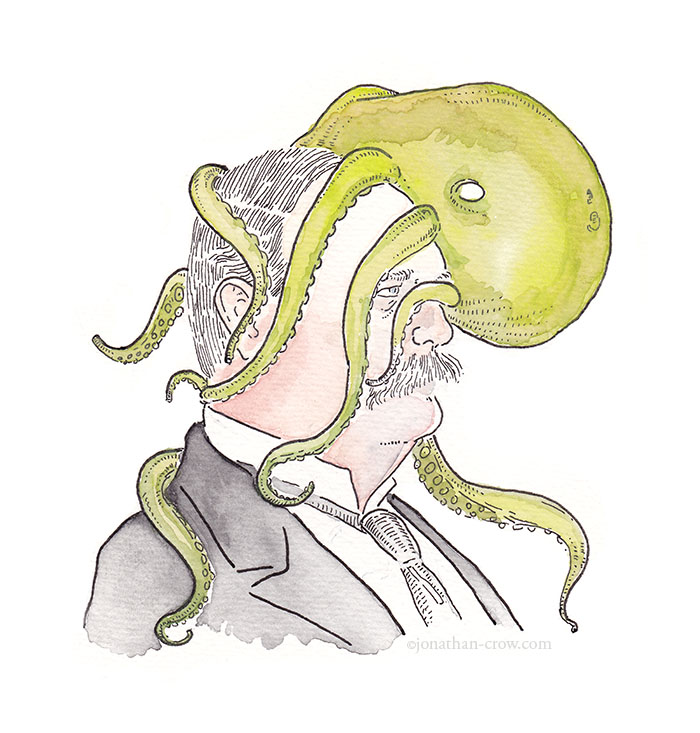
Stu­dents and lovers of Vic­to­ri­ana, we have a treat for you. The 1873 book above, Car­toon Por­traits and Bio­graph­i­cal Sketch­es of Men of the Day, offers car­i­ca­tures of forty-nine promi­nent men, and one woman, of the 19th cen­tu­ry, some of them less-than-famous now and some still ver­i­ta­ble giants of their respec­tive fields.

DarwinPortrait

Accom­pa­nied by live­ly biogra­phies, the por­traits were all drawn by illus­tra­tor Fred­er­ick Wad­dy, who is per­haps best known for the draw­ing on page six of a white-beard­ed Charles Dar­win (above) enti­tled “Nat­ur­al Selection”—often repro­duced in col­or and found hang­ing on the office walls of biol­o­gy teach­ers. Dar­win appears sec­ond in Car­toon Por­traits, pre­ced­ed only by Sir Edward Bul­w­er-Lyt­ton of “It was a dark and stormy night” fame.

TwainPortrait

In addi­tion to professor’s offices, you may also encounter some of Waddy’s work at the Nation­al Por­trait Gallery in Lon­don. In his time, Wad­dy was one of the fore­most car­i­ca­tur­ists of the day—an impor­tant posi­tion in peri­od­i­cal pub­lish­ing before the advent of cheap­ly mass-repro­ducible pho­tog­ra­phy. All of the por­traits orig­i­nal­ly appeared in a mag­a­zine called Once a Week, found­ed in a split between Charles Dick­ens and his pub­lish­er Brad­bury and Evans, who start­ed the jour­nal with edi­tor Samuel Lucas in 1859 to com­pete with Dick­ens’ All the Year Round. Once a Week ran until 1880, pub­lish­ing pieces on his­to­ry and cur­rent affairs and occa­sion­al poems by Ten­nyson, Swin­burne, Dante Ros­set­ti and oth­ers. Its pop­u­lar­i­ty was buoyed by Waddy’s draw­ings and the detailed illus­tra­tions of sev­er­al oth­er graph­ic artists. Above, see Mark Twain rid­ing his cel­e­brat­ed jump­ing frog, and just below, poet and crit­ic Matthew Arnold does a high-wire act between two trapezes labelled “Poet­ry” and “Phi­los­o­phy.” Twain’s por­trait is titled “Amer­i­can Humour”— and he is the only Amer­i­can in the series—and Arnold’s is called “Sweet­ness and Light.”

MatthewArnold

Though the book’s title promis­es only “Men of the Day,” it does include one woman, Dr. Eliz­a­beth Gar­rett Ander­son (below, sim­ply titled “M.D.”), the first Eng­lish­woman to offi­cial­ly work as a physi­cian. Her bio­graph­i­cal sketch begins with a long and some­what tor­tu­ous his­tor­i­cal defense for female doc­tors, stat­ing that “social prej­u­dices are almost as hard to erad­i­cate as those of reli­gion. It was not till quite late­ly that the feel­ing against woman’s rights as regard edu­ca­tion was suc­cess­ful­ly com­bat­ed.” Once a Week was a pro­gres­sive-lean­ing mag­a­zine, its edi­tor a not­ed abo­li­tion­ist, and it reg­u­lar­ly pub­lished the work of women writ­ers like Har­ri­et Mar­tineau, Isabel­la Blag­den, and Mary Eliz­a­beth Brad­don, though one won­ders why they didn’t war­rant car­i­ca­tures as well.

DrGarretAnderson

Below, see Wad­dy’s por­trait of cen­tral African explor­er Hen­ry Mor­ton Stan­ley, stand­ing twice the height of the native African next to him. It’s a fit­ting image of colo­nial ego, though the scene may be drawn after a pho­to of Stan­ley with his adopt­ed son Kalu­lu. The title refers to his search for—and famous excla­ma­tion upon discovering—Scottish mis­sion­ary David Liv­ing­stone. All in all, Car­toon Por­traits gives us a fas­ci­nat­ing look at Vic­to­ri­an visu­al media and a rep­re­sen­ta­tive sam­ple of the most pop­u­lar lit­er­ary, sci­en­tif­ic, and polit­i­cal fig­ures in Eng­land dur­ing the mid­dle of the cen­tu­ry. While the names of Wad­dy and his fel­low com­ic artists are hard­ly remem­bered now, the authors of The Smil­ing Muse: Vic­to­ri­ana in the Com­ic Press assert that in their day, “they were the ones who had their fin­gers on the pulse of what we now call the ‘pop­u­lar cul­ture’ of the time.” See The Pub­lic Domain Review for more high­lights from the book.

H.M.Stanley

via The Pub­lic Domain Review

Relat­ed Con­tent:

The British Library Puts Online 1,200 Lit­er­ary Trea­sures From Great Roman­tic & Vic­to­ri­an Writ­ers

Explor­er David Livingstone’s Diary (Writ­ten in Berry Juice) Now Dig­i­tized with New Imag­ing Tech­nol­o­gy

Mark Twain Writes a Rap­tur­ous Let­ter to Walt Whit­man on the Poet’s 70th Birth­day (1889)

Josh Jones is a writer and musi­cian based in Durham, NC. Fol­low him at @jdmagness.

Visit The Museum of Online Museums (MoOM): A Mega Collection of 220 Online Exhibitions

MOOM rijks

It is my habit, when trav­el looms, to case the Inter­net for obscure muse­ums my des­ti­na­tion might have to offer. Once loaded, I fix­ate. Chat me up about my itin­er­ary, and you will def­i­nite­ly come away with the impres­sion that these off­beat locales are the trip’s pri­ma­ry rai­son d’être.

It’s shock­ing how rarely I actu­al­ly make it to one of these off-the-beat­en path gems. Time flies and I rarely trav­el alone these days.

Take a recent fam­i­ly trip to Lon­don. Every time I brought up the Muse­um of Brands, my hus­band expressed reser­va­tions. “But what is it, exact­ly, oth­er than a bunch of old labels?” he’d press.

I hemmed and hawed, real­iz­ing on the cel­lu­lar lev­el that nei­ther he nor the kids could see the beau­ty in old labels. Dinosaurs, maybe. Ves­pas, no doubt. But old labels? This is how I found myself giv­ing the British Muse­um near­ly three times the Muse­um of Brand’s admis­sion charge to join a mighty throng of pen­sion­ers, squint­ing at a hand­ful of bor­ing but­ton frag­ments and a chunk of wood that no longer resem­bled a Viking Ship.

Next time, I swear…

01-1926-Hahn--Albert-alcohol-increases-risk-of-accidents

How for­tu­nate for me and my ilk that Chica­go design firm Coudal Part­ners is com­mit­ted to labor­ing far out­side its expect­ed scope. In addi­tion to cham­pi­oning Stan­ley Kubrick and poet­ry, they’ve tak­en it upon them­selves to con­sol­i­date a panoply of dig­i­tal col­lec­tions into the Muse­um of Online Muse­ums. (The pre­ferred acronym is MoOM, FYI.)

Unlike that of cer­tain of my trav­el­ing com­pan­ions, Coudal Part­ners’ def­i­n­i­tion of what con­sti­tutes a muse­um is demo­c­ra­t­ic. Gen­er­ous, even. The Met­ro­pol­i­tan Muse­um of Art, the Rijksmu­se­um, and the Musée d’Or­say share space with such non-brick-and-mor­tar com­pan­ions as the Busy Beaver But­ton Muse­um, the Gro­cery List Col­lec­tion, and Toast­er Cen­tral.

Raincoat

Like any major insti­tu­tion, MoOM touts their cur­rent exhi­bi­tions, a sea­son­al sam­pling of five. This spring brings togeth­er the Rijksmu­se­um’s Stu­dio Project, NASA’s Space Food Hall of Fame, a col­lec­tion of Dutch safe­ty posters from 50 Watts, 40 retro-groovy Japan­ese ads com­pli­ments of Voic­es of East Anglia, and a pho­to­graph­ic sur­vey of eggnog car­tons. (That last one real­ly deserves a brick and mor­tar home. Loca­tion is imma­te­r­i­al. I’d just like to fan­ta­size about vis­it­ing it some­day.)

egg nog

Mean­while, the talk of the town here in New York City is the reap­pear­ance of Mmu­se­umm, an eclec­tic, non-prof­it housed in a 60-square-foot Tribeca ele­va­tor shaft. MoOM, take note.

Find more online exhi­bi­tions at the Muse­um of Online Muse­ums.

Relat­ed Con­tent:

The Met­ro­pol­i­tan Muse­um of Art Puts 400,000 High-Res Images Online & Makes Them Free to Use

LA Coun­ty Muse­um Makes 20,000 Artis­tic Images Avail­able for Free Down­load

Down­load Over 250 Free Art Books From the Get­ty Muse­um

Ayun Hal­l­i­day wrote about her expe­ri­ences as a muse­um guard in her 3rd book, Job Hop­per. Fol­low her @AyunHalliday

Andy Warhol Interviews Alfred Hitchcock (1974)

warhol hitchcock

Few mid­cen­tu­ry cul­tur­al fig­ures would at first seem to have as lit­tle in com­mon as Andy Warhol and Alfred Hitch­cock. Sure, they both made films, but how straight a line can even the far­thest-reach­ing cin­e­ma the­o­rists draw between, say, Hitch­cock­’s Psy­cho (1960) and Warhol’s Vinyl (1965)? Hitch­cock­’s The Birds (1963) and Warhol’s Empire (1964)? Yet not only did both of them direct many motion pic­tures, each began as a visu­al artist: “Warhol had start­ed his career work­ing as a com­mer­cial illus­tra­tor, Hitch­cock had start­ed out cre­at­ing illus­tra­tions for title cards in silent movies,” says Film­mak­er IQ’s post on their encounter in the Sep­tem­ber 1974 issue of Warhol’s Inter­view mag­a­zine. Yet in the brief con­ver­sa­tion print­ed, they dis­cuss not draw­ing, and not film­mak­ing, but mur­der:

Andy Warhol: Since you know all these cas­es, did you ever fig­ure out why peo­ple real­ly mur­der? It’s always both­ered me. Why.

Alfred Hitch­cock: Well I’ll tell you. Years ago, it was eco­nom­ic, real­ly. Espe­cial­ly in Eng­land. First of all, divorce was very hard to get, and it cost a lot of mon­ey.

[ … ]

Andy Warhol: But what about a mass mur­der­er.

Alfred Hitch­cock: Well, they are psy­chotics, you see. They’re absolute­ly psy­chot­ic. They’re very often impo­tent. As I showed in “Fren­zy.” The man was com­plete­ly impo­tent until he mur­dered and that’s how he got his kicks. But today of course, with the Age of the Revolver, as one might call it, I think there is more use of guns in the home than there is in the streets. You know? And men lose their heads?

Andy Warhol: Well I was shot by a gun, and it just seems like a movie. I can’t see it as being any­thing real. The whole thing is still like a movie to me. It hap­pened to me, but it’s like watch­ing TV. If you’re watch­ing TV, it’s the same thing as hav­ing it done to your­self.

“Warhol open­ly pro­claimed that he was ner­vous upon meet­ing the leg­endary direc­tor,” adds Film­mak­er IQ, “and posed with Hitch­cock by kneel­ing at his feet,” result­ing in the pho­to you see at the top of the post. They also include three por­traits Warhol made of Hitch­cock, the best known of which Christie’s Auc­tion House describes as “a vari­a­tion on the dou­bled self-image that Hitch­cock played with in his title sequence, lay­er­ing his own expres­sive line-draw­ing over the director’s sil­hou­ette, sug­gest­ing the mis­chie­vous deface­ment of graf­fi­ti as much as the can­on­iza­tion of a hero through the time­less­ness of the inscribed pro­file.” These images and the brief inter­view excerpt leave us won­der­ing: can one call a work — on film, in a frame, in a mag­a­zine — both Hitch­cock­ian and Warho­lian? A ques­tion, per­haps, best left to the the­o­rists.

Relat­ed Con­tent:

Watch Andy Warhol’s 1965 Film, Vinyl, Adapt­ed from Antho­ny Burgess’ A Clock­work Orange

Three “Anti-Films” by Andy Warhol: Sleep, Eat & Kiss

Lis­ten to François Truffaut’s Big, 12-Hour Inter­view with Alfred Hitch­cock (1962)

36 Hitch­cock Mur­der Scenes Cli­max­ing in Uni­son

Alfred Hitchcock’s 50 Ways to Kill a Char­ac­ter (and Our Favorite Hitch Resources on the Web)

Col­in Mar­shall hosts and pro­duces Note­book on Cities and Cul­ture and writes essays on cities, lan­guage, Asia, and men’s style. He’s at work on a book about Los Ange­les, A Los Ange­les Primer. Fol­low him on Twit­ter at @colinmarshall or on Face­book.

« Go BackMore in this category... »
Quantcast