James Joyce completed his novel, Ulysses, on October 30, 1921. Ninety years later, on October 30, 2011, Charlene Matthews, the Los Angeles-based book artist and bookbinder recently the subject of a profile in Studios magazine, began work on an extraordinary edition of the book, based upon Sylvia Beach’s true first edition with all its typos included.
Two years later, on October 30, 2013, she completed it: the entire text of Ulysses — all of its approximately 265,000 words in eighteen episodes — transcribed by hand onto thirty-eight seven-foot tall, two-inch diameter poles: Ulysses as a landscape to physically move through; the novel as literary grove, Ulysses as trees of of life with language as fragrant, hallucinatory bark, and trunks reaching toward the sky.
Head over to Booktryst to look over a gallery of images and learn more about Matthews’ grand undertaking. And if you’d like a nice introduction to Ulysses, please see some of the instructive material we’ve listed below.
Don’t miss anything from Open Culture. Sign up for our Daily Email orRSS Feed. And we’ll send quality culture your way, every day.
We have released over a million images onto Flickr Commons for anyone to use, remix and repurpose. These images were taken from the pages of 17th, 18th and 19th century books digitised by Microsoft who then generously gifted the scanned images to us, allowing us to release them back into the Public Domain. The images themselves cover a startling mix of subjects: There are maps, geological diagrams, beautiful illustrations, comical satire, illuminated and decorative letters, colourful illustrations, landscapes, wall-paintings and so much more that even we are not aware of.
The librarians behind the project freely admit that they don’t exactly have a great handle on the images in the collection. They know what books the images come from. (For example, the image above comes from Historia de las Indias de Nueva-España y islas de Tierra Firme, 1867.) But they don’t know much about the particulars of each visual. And so they’re turning to crowdsourcing for answers. In fairly short order, the Library plans to release tools that will let willing participants gather information and deepen our understanding of everything in the Flickr Commons collection.
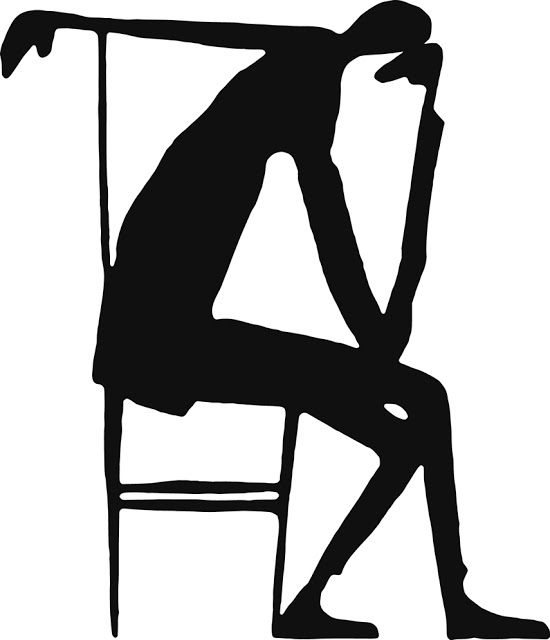
You can jump into the entire collection here, or view a set of highlights here. The latter happens to include a curious image. (See below.) It’s from an 1894 book called The United States of America. A study of the American Commonwealth, its natural resources, people, industries, manufactures, commerce, and its work in literature, science, education and self-government. And the picture features, according to the text, a “Typical figure, showing tendency of student life–stooping head, flat chest, and emaciated limbs.” It’s hard to know what to say about that.
To learn more about this British Library initiative, read this other Open Culture post which takes a deeper dive into the image collection.
Michael Shainblum released a new timelapse film this week called “Into the Atmosphere,” which is his visual tribute to California’s beautiful deserts, mountains and coastlines. Even if you’ve seen your fair share of timelapse films before, as I’m sure many of you have, you might be interested in this other newly-released film called “The Art of The Timelapse.” Produced by The Creators Project, the short film gives you a glimpse of what goes into making a timelapse — the requisite gear, the favorable lighting conditions, the ideal landscape, and more. Shainblum is your guide. You can find an archive of his films here.
If you’d like to dig deeper into the art of making timelapse films, we’d recommend checking out The Basics of Time Lapse Photography with Vincent Laforet, a four-part video series, on Canon’s education web site. The first episode appears below.
The season of giving can be an unseemly time for nonprofits. As New Year’s approaches, every charitable institution down in Charitable Institutionville must bang its tar-tinker and blow its hoo-hoover, in hope of donations.
No doubt they’re all deserving, but the onslaught of requests can leave supporters feeling a bit Grinchy. When that happens, I recommend the video above, which documents a hoax of Borat-like proportions. The perpetrator is the Mimi Foundation, a Belgium-based group that offers psychological counseling, beauty treatments, and hairstyle tips to people with cancer.
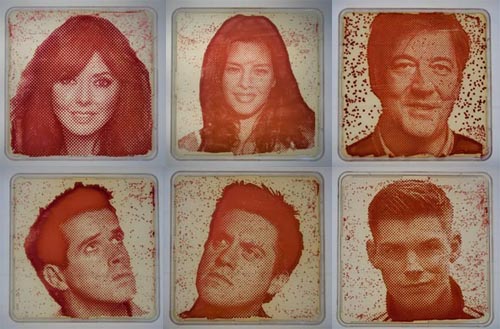
The unsuspecting victims? Twenty cancer patients who took it on good faith that they were being treated to standard makeovers, the sort of professional artistry that creates an illusion of health, what many think passes for normalcy. All the Mimi Foundation asked for in return was that the recipients keep their eyes closed as the magic was being worked.
Meanwhile, photographer Vincent Dixon crouched behind a one-way mirror, poised to capture each sitters’ reaction to his or her transformation.
One doesn’t want to say too much. The end results are not what you think, unless you were thinking of one of those over-the-top bizarre America’s Next Top Model photo challenges.
Dixon’s images record the shock and involuntary spontaneity. The video, called “If Only for a Second, shows those initial responses blossoming into …well, let’s just say the Mimi Foundation, assisted by a phalanx of stylists, achieved their goal.
In a now defunct listing from Bauman Rare Books for an 1868 edition of Miguel de Cervantes’ Don Quixote with illustrations by Gustave Doré, we find the following unattributed quotation: “in every English-speaking home where they can spell the word ‘art,’ you will find Doré editions.” It’s odd that the homes should be “English-speaking” when Doré’s illustrations were originally an 1860 French commission, but the quote at least demonstrates the enormous popularity of Doré’s Quixote. His renderings were so influential they determined the look of Quixote and Sancho Panza in many subsequent illustrated versions, stage and film productions, and readers’ imaginations.
Perhaps the most successful illustrator of the 19th century, the dapper Doré was also at work on a momentous commission—this time from an English publisher—to illustrate the Bible. He went on to editions of Rime of the Ancient Mariner, Paradise Lost, The Divine Comedy, Poe’s The Raven, and many other famous works of literature. But his Don Quixote may be the literary commission for which he’s best remembered.
Doré apparently entered a crowded field when he took on Cervantes’ foundational text. For a little context, Bauman Rare Books also quotes a certain scholar surnamed “Ray,” who offers this précis of the edition’s creation:
Don Quixote was a text calculated to test even Doré. He was matching himself against Coypel and Tony Johannot, not to mention the Spanish illustrators of the great Ibarra edition published in Madrid in 1780. He met the challenge superbly… At first he intended only 40 designs, but Cervantes’ book captured his imagination, and he arranged for a major work… Don Quixote and Sancho Panza reached their definitive rendering in Doré’s designs.
Leonardo da Vinci’s Mona Lisa has been called “the best known, the most visited, the most written about, the most sung about, the most parodied work of art in the world.” (Did you catch the Lego Mona Lisa that made the rounds on the web last week?) Completed in the early 16th century, the painting offers a portrait of Lisa Gherardini, wife of a Florentine cloth merchant named Francesco del Giocond. (Hence why the painting is sometimes called La Gioconda or La Joconde.) Today, the Renaissance masterpiece hangs in the Louvre in Paris, where it’s visited by an estimated six million people each year.
There’s no shortage of debates surrounding the Mona Lisa. Was it completed in 1506? Or is 1517 a more accurate date? Does the portrait actually feature Lisa Gherardini? (Most art historians think so, but scholars have speculated about other figures, including Leonardo’s own mother, Caterina.) And then there’s this bigger question. Was da Vinci’s Mona Lisa his first Mona Lisa? That debate starts with a tantalizing piece of text written by the artist/art historian Giorgio Vasari in his 16th century book, The Lives of the Most Excellent Painters, Sculptors, and Architects. In a section called “Life of Leonardo da Vinci: Painter and Sculptor of Florence,” Vasari wrote: “Leonardo undertook to execute, for Francesco del Giocondo, the portrait of Monna Lisa, his wife; and after toiling over it for four years, he left it unfinished.…” And then Vasari attributed to the portrait some characteristics that don’t quite line up with the famous painting hanging in the Louvre today — “rosy and pearly tints,” eyes that had a “lustre and watery sheen which are always seen in life,” a nose “with its beautiful nostrils, rosy and tender,” etc. All of this left some to wonder: Was Vasari talking about another painting? Perhaps an earlier, unfinished version of the Mona Lisa?
Enter The Mona Lisa Foundation, a non-profit based in Switzerland, that claims they’ve perhaps found an earlier Mona Lisa. In an essay appearing on their website, and in a 20 minute video (top), the Foundation makes the case that “Isleworth Mona Lisa” (right above) was probably painted by da Vinci around 1505, though never completed. Centuries later the portrait ended up in the hands of an English collector Hugh Blaker, only to be then locked away in a Swiss vault for 40 years. It was finally brought out, and made available to the public for the first time, in 2012.
Skeptics have been quick to point out problems with the “Isleworth Mona Lisa.” Some note that it was painted on canvas, whereas Leonardo typically painted on wood. Others claim that x‑rays of the painting call its authenticity into doubt. And then others suggest that the “Isleworth Mona Lisa” is merely a late 16th century copy of the painting now hanging in the Louvre. (The Mona Lisa Foundation web site documents the skeptical claims and offers a rebuttal for reach.)
To be sure, the Isleworth Mona Lisa has its critics, but it also has some supporters. In September 2012, the Swiss Federal Institute of Technology in Zurich carried out carbon-dating tests on the canvas and confirmed that it was likely manufactured between 1410 and 1455, which helped refute claims that the painting was a late 16th century copy. Meanwhile, John Asmus, a UCSD physics professor who “introduced the use of holography, lasers, ultrasonic imaging, digital image processing, and nuclear magnetic resonance to art-conservation practice,” carried out a brushstroke analysis and concluded that “the same construction principles” were used in the design of both Mona Lisas, increasing the likelihood that they were created by the same artist. And finally, Joe Mullins, a forensic specialist trained at the FBI, “age regressed” the original Mona Lisa to see what she would have looked like at an earlier point in time. His conclusion? “Everything lined up perfectly.” “This is Mona Lisa, two different images at two different times in her life.”
For the first half of the twentieth century, pulp magazines were a quintessential form of American entertainment. Printed on cheap, wood pulp paper, the “pulps” (as opposed to the “glossies” or “slicks,” such as The New Yorker) had names like The Black Mask and Amazing Stories, and promised readers supposedly true accounts of adventure, exploitation, heroism, and ingenuity. Such outlets offered a steady stream of work for stables of fiction writers, with content ranging from short stories about intrepid explorers saving damsels from Nazis/Communists (depending on the precise time of publication) to novel-length man vs. beast accounts of courage and cunning. This, incidentally, gave birth to the term “pulp fiction,” popularized in the 1990s by Quentin Tarantino’s eponymous film.
In the 1950s, the pulps went into a steep decline. In addition to television, paperback novels, and comic books, the pulps were overtaken by the more explicit, and even lower brow men’s adventure magazines (readers of Truman Capote’s In Cold Blood may remember Perry Smith, the sociopathic misfit who murdered the Clutter family, being an enthusiastic reader of these early lads’ mags). Thanks to The Pulp Magazines Project, however, many of the most famous publications remain accessible today through a well-designed online interface. Hundreds of issues have been archived in the database that spans from 1896 through to 1946. It includes large magazines, such as The Argosy and Adventure, and smaller, more specialized fare, such as Air Wonder Stories and Basketball Stories. Although good writing occasionally made its way into the pulps, don’t expect these magazines to mirror the literary depth of serialized publications of the 19th century; rather, the archive provides a terrifically entertaining look at the popular reading of early 20th century America.
If you would like to sign up for Open Culture’s free email newsletter, please find it here. It’s a great way to see our new posts, all bundled in one email, each day.
If you would like to support the mission of Open Culture, consider making a donation to our site. It’s hard to rely 100% on ads, and your contributions will help us continue providing the best free cultural and educational materials to learners everywhere. You can contribute through PayPal, Patreon, and Venmo (@openculture). Thanks!
Voluminously well-read author and amateur librarian Alberto Manguel opens The Library at Night, a compendious treatise on the role of the library in human culture, with a startlingly bleak question. “Why then do we do it?” He asks, why do we “continue to assemble whatever scraps of information we can gather in scrolls and books and computer chips, on shelf after library shelf” when “outside theology and fantastic literature, few can doubt that the main features of our universe are its dearth of meaning and lack of discernible purpose.” Manguel goes on—in beautifully illustrated chapter after themed chapter—to list in fine detail the host of virtues each of his favorite libraries possesses, answering his own question by reference to the beautiful microcosmic orders great libraries manifest.
A new book, The Library: A World History by author James Campbell and photographer Will Pryce, takes a more workmanlike approach to the subject, steering clear of Manguel’s metaphysics. Even so, the book will deeply move lovers of libraries and historians alike, perhaps even to ecstasy. One Amazon reviewer put it simply: “Book Porn at its best.”
Boing Boing calls Pryce’s photographs “the centerpiece of the book,” and you can see why in a couple of selections here. Even without his eyesight, this is a project that would have delighted that rhapsodist of the library, Jorge Luis Borges. At the top, see the Strahov Abbey library in Prague. Halfway across the world, we have the Tripitaka Koreana library in South Korea (above). CNN has a gallery of Pryce’s photographic tributes to the world’s greatest libraries, and find here a critical review of the book by The Guardian’s Tom Lamont, who laments that the book solely “focuses on institutions created for the privileged.”
We're hoping to rely on loyal readers, rather than erratic ads. Please click the Donate button and support Open Culture. You can use Paypal, Venmo, Patreon, even Crypto! We thank you!
Open Culture scours the web for the best educational media. We find the free courses and audio books you need, the language lessons & educational videos you want, and plenty of enlightenment in between.