On January 16th, the Sandy River flooded, spilling over its banks in Oregon, and Tyler Malay and Alexandra Erickson captured it all. Nature’s torrent rendered beautiful with a Canon 60d and Canon 7d…
The Photography of The Sartorialist & Musings on the Creative Life
In the latest video appearing in Intel’s Visual Life series, we get a look inside the creative approach of Scott Schuman, the editor of the very popular fashion photography blog The Sartorialist. On the surface, this is all about how an influential fashion photographer goes about his craft. But the message – it’s more about doing and refining your personal approach, than formal schooling – easily extends to most any other artistic endeavor. Along similar lines, if you’re looking for insight into the creative process, you will want to revisit comedian John Cleese talking about The Origins of Creativity itself…
Beyond the Still: The Largest Online Collaborative Film Contest
A year ago, Canon launched a contest called “The Story Beyond the Still,” which encouraged photographers to become filmmakers, and help viewers see “beyond the still” image. Fast forward twelve months and we have the final result: A collaborative film, now being premiered at the Sundance Film Festival, that stitches together “chapters” (or film sequences) created by six contest-winning artists, all under the direction of Vincent Laforet. Each chapter ends with a still image that creates the jumping-off point for the next chapter, giving one artist the chance to pick up where a previous artist left off. The complete collaborative film (above) runs 37 minutes. You can find more contest-winning video on Vimeo right here.
Watch Alexander Calder Perform His “Circus,” a Toy Theatre Piece Filled With Amazing Kinetic Wire Sculptures
Alexander “Sandy” Calder (1898 – 1976) was one of America’s foremost modern artists, internationally recognized for his invention of the mobile and his large-scale sculptures. At the age of eight, he started working with wire to make kinetic sculpture (one of his first was a small duck that would rock when pushed, done at the age of 11). Although he became an engineer and worked a variety of jobs, he eventually enrolled in The Art Students League of New York. While there, he worked for the National Police Gazette, covering, among other things, the Ringling Brothers and Barnum & Bailey Circuses.
Calder had a lifelong fascination with the circus and, upon moving to Paris in 1926, he created the Cirque Calder, a collection of wire sculptures with complex mechanisms allowing them to move and do various tricks. His first showing of his circus was to family and friends, but his popularity grew and he was soon giving shows lasting two hours in Paris and New York. It was then that his artistic recognition spread, and he enjoyed a prolific career until his death in 1976. The video above comes to us via The Whitney Museum in NYC, which presented an exhibition called “Alexander Calder: The Paris Years, 1926–1933” in 2008-09. And we also recommend watching the 1961 short film, Le Cirque de Calder, where he talks about his toy-like creations.
This is the first of hopefully many guest posts by Adrienne Rumsey.
If you would like to support the mission of Open Culture, consider making a donation to our site. It’s hard to rely 100% on ads, and your contributions will help us continue providing the best free cultural and educational materials to learners everywhere. You can contribute through PayPal, Patreon, and Venmo (@openculture). Thanks!
The Poetry of Photographer Milton Rogovin
Before the week comes to an official close, we wanted to remember and celebrate the life of Milton Rogovin, a social documentary photographer who, in the tradition of Walker Evans, used his camera to champion the underprivileged — the working poor and the underclasses living in the United States and beyond. He died this past week at the old age of 101. The New York Times revisits his work in this obituary, and the short video above gives you a glimpse of the man and his body of work.
Alcohol in its Microscopic Splendor

Who knew that alcohol could take on such beauty? What looks like abstract art above is actually your everyday Cosmopolitan. And, within this larger collection, you will discover the microscopic beauty of The Bloody Mary, Dry Martini, Pina Colada, Sake, Tequila, Vodka Tonic, Whiskey, and White Russian. For more micro photography, check out the winner of the 2010 Nikon International Small World Photomicrography Competition, and our post earlier this week, The First Snowflake Photos (1885).
Want more Open Culture? Follow us on Facebook and Twitter!
The First Snowflake Photos (1885)
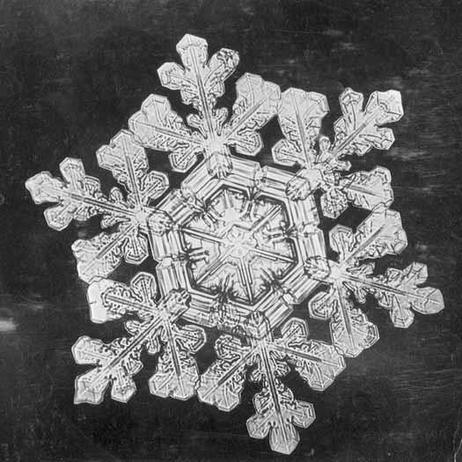
Back on a Vermont farm in 1885, Wilson A. Bentley attached a microscope to a bellows camera and became the first person to photograph an individual snowflake. Two decades later, he sent 500 prints of his snowflakes to the Smithsonian, where they still remain. (View some here.) And then, yet another two decades later, he published a book packed with 2,400 snowflake images. NPR’s web site has more of Bentley’s work on display. And, of course, you can find an entire tribute site dedicated to his wintery work…
Winter in Yosemite National Park
Henry Jun Wah Lee captured this beautiful scene over the 2011 New Year weekend when a winter storm drifted into Yosemite National Park (California/Nevada). You will definitely want to check out his collection videos on Vimeo, which includes more scenes from Yosemite, Joshua Tree and beyond…
via @zeitonline_vid
Support Us
We're hoping to rely on loyal readers, rather than erratic ads. Please click the Donate button and support Open Culture. You can use Paypal, Venmo, Patreon, even Crypto! We thank you!

About Us

Open Culture scours the web for the best educational media. We find the free courses and audio books you need, the language lessons & educational videos you want, and plenty of enlightenment in between.
Advertise With Us


