Bertrand Russell’s ABC of Relativity: The Classic Introduction to Einstein (Free Audio)

“Every­body knows that Ein­stein did some­thing aston­ish­ing,” writes Bertrand Rus­sell in the open­ing pas­sage of ABC of Rel­a­tiv­i­ty, “but very few peo­ple know exact­ly what it was. It is gen­er­al­ly rec­og­nized that he rev­o­lu­tion­ized our con­cep­tion of the phys­i­cal world, but the new con­cep­tions are wrapped up in math­e­mat­i­cal tech­ni­cal­i­ties. It is true that there are innu­mer­able pop­u­lar accounts of the the­o­ry of rel­a­tiv­i­ty, but they gen­er­al­ly cease to be intel­li­gi­ble just at the point where they begin to say some­thing impor­tant.”

Eighty-sev­en years after it was writ­ten, ABC of Rel­a­tiv­i­ty still stands as one of the most intel­li­gi­ble intro­duc­tions to Albert Ein­stein’s the­o­ries. Rus­sell wrote the book in 1925 as a com­pan­ion to his ear­li­er vol­ume, ABC of Atoms. The project of writ­ing books for a gen­er­al read­er­ship was born of neces­si­ty. Rus­sell had no aca­d­e­m­ic appoint­ment, and need­ed the mon­ey. But as Peter Clark explains in his intro­duc­tion to the Rout­ledge fifth edi­tion to ABC of Rel­a­tiv­i­ty, the ear­ly 1920s were also a time when Rus­sell was becom­ing increas­ing­ly pre­oc­cu­pied with social and polit­i­cal issues. He believed that many of the social ills of the peri­od, includ­ing the rise of nation­al­ism, were con­se­quences of a wide­spread and entrenched irra­tional­i­ty, born of igno­rance and a lack of edu­ca­tion. Writes Clark:

It was cer­tain­ly a hero­ic peri­od in Rus­sel­l’s life, when he earnest­ly believed that the sort of blind unthink­ing prejudice–which he con­ceived to be fun­da­men­tal­ly respon­si­ble for the hor­rors of the First World War–could be tran­scend­ed by the dis­sem­i­na­tion of knowl­edge and the exer­cise in crit­i­cal rea­son­ing pow­er by all class­es of soci­ety. His huge out­put in this peri­od was designed to bring with­in, as far as pos­si­ble, every­one’s grasp the free­dom of thought and action which knowl­edge and learn­ing brings. That spir­it of enlight­en­ment cer­tain­ly per­vades the ABC of Rel­a­tiv­i­ty.

Thanks to UbuWeb, you can lis­ten to an abridged audio ver­sion of ABC of Rel­a­tiv­i­ty online. The book is read by Eng­lish actor Derek Jaco­bi (who also starred in the film we fea­tured last week on Alan Tur­ing: Break­ing the Code). Jaco­bi reads one of the lat­er edi­tions of ABC of Rel­a­tiv­i­ty. In 1959, and again in 1969, Rus­sell con­sent­ed to revi­sions by physi­cist Felix Pirani. Chap­ter 11 was rewrit­ten by Pirani to incor­po­rate the expan­sion of the uni­verse, which was­n’t announced by Edwin Hub­ble until four years after the first edi­tion of Rus­sel­l’s book. The one trou­bling thing about the text, as it now stands, is that Pirani did­n’t lim­it him­self to the revi­sions made under Rus­sel­l’s super­vi­sion. He made more changes in 1985, fif­teen years after Rus­sel­l’s death.

Stel­lar cours­es focus­ing on Ein­stein’s physics can also be found in our big col­lec­tion of Free Cours­es Online. Just scroll down to the Physics sec­tion.

In Search of Haruki Murakami: A Documentary Introduction to Japan’s Great Postmodernist Novelist

Haru­ki Muraka­mi holds the titles of both the most pop­u­lar nov­el­ist in Japan and the most pop­u­lar Japan­ese nov­el­ist in the wider world. After pub­lish­ing Nor­we­gian Wood in 1987, a book often called “the Japan­ese Catch­er in the Rye,” Murakami’s noto­ri­ety explod­ed to such an extent that he felt forced out of his home­land, a coun­try whose tra­di­tion­al ways and — to his mind — con­formist mind­set nev­er sat right with him in the first place. Though he returned to Japan in the after­math of the Kobe earth­quake and the Tokyo under­ground gas attacks, he remained an author shaped by his favorite for­eign cul­tures — espe­cial­ly Amer­i­ca’s. This, com­bined with his yearn­ing to break from estab­lished Japan­ese lit­er­ary norms, has gen­er­at­ed enough inter­na­tion­al demand for his work to sell briskly in almost every lan­guage in which peo­ple read nov­els.

I myself once spent a month doing noth­ing but read­ing Murakami’s work, and this BBC doc­u­men­tary Haru­ki Muraka­mi: In Search of this Elu­sive Writer makes a valiant attempt to cap­ture what about it could raise such a com­pul­sion. Rupert Edwards’ cam­era fol­lows vet­er­an pre­sen­ter Alan Yen­tob through Japan, from the mid­night Tokyo of After Hours to the snowed-in Hokkai­do of A Wild Sheep Chase, in a quest to find arti­facts of the supreme­ly famous yet media-shy novelist’s imag­i­nary world. Built around inter­views with fans and trans­la­tors but thick with such Murakami­ana as laid-back jazz stan­dards, grim school hall­ways, six­ties pop hits, women’s ears, vinyl records, marathon run­ners, and talk­ing cats, the broad­cast strives less to explain Murakami’s sub­stance than to sim­ply reflect it. If you find your curios­i­ty piqued by all the fuss over 1Q84, Murakami’s lat­est, you might watch it as some­thing of an aes­thet­ic primer.

Relat­ed con­tent:

An Intro­duc­tion to the World of Haru­ki Muraka­mi Through Doc­u­men­taries, Sto­ries, Ani­ma­tion, Music Playlists & More

A 96-Song Playlist of Music in Haru­ki Murakami’s Nov­els: Miles Davis, Glenn Gould, the Beach Boys & More

Read 5 Sto­ries By Haru­ki Muraka­mi Free Online (For a Lim­it­ed Time)

A Pho­to­graph­ic Tour of Haru­ki Murakami’s Tokyo, Where Dream, Mem­o­ry, and Real­i­ty Meet

Col­in Mar­shall hosts and pro­duces Note­book on Cities and Cul­ture. Fol­low him on Twit­ter at @colinmarshall.

Famous Literary Characters Visualized with Police Composite Sketch Software

In his 1955 clas­sic, Loli­ta, Vladimir Nabokov described the facial fea­tures of his scan­dalous pro­tag­o­nist, Hum­bert Hum­bert, in small bits. When tak­en togeth­er, here’s what you get:

Gloomy good looks… Clean-cut jaw, mus­cu­lar hand, deep sonorous voice… broad shoul­ders … I was, and still am, despite mes mal­heurs, an excep­tion­al­ly hand­some male; slow-mov­ing, tall, with soft dark hair and a gloomy but all the more seduc­tive cast of demeanor. Excep­tion­al viril­i­ty often reflects in the subject’s dis­playable fea­tures a sullen and con­gest­ed some­thing that per­tains to what he has to con­ceal. And this was my case… But instead I am lanky, big-boned, wooly-chest­ed Hum­bert Hum­bert, with thick black eye­brows… A cesspool­ful of rot­ting mon­sters behind his slow boy­ish smile… aging ape eyes… Humbert’s face might twitch with neu­ral­gia.

In a rather bril­liant move, Bri­an Joseph Davis has run these descrip­tions through law enforce­ment com­pos­ite sketch soft­ware and brought Hum­bert Hum­bert almost to life. (See above.) And he has done the same for a cast of oth­er lit­er­ary char­ac­ters on his Tum­blr, called The Com­pos­ites. Oth­er char­ac­ters get­ting the perp treat­ment include Emma Bovary (Gus­tave Flaubert’s Madame Bovary), Edward Rochester (Char­lotte Bron­të’s Jane Eyre), and Kei­th Tal­ent (Mar­tin Amis’ Lon­don Fields), among oth­ers. Find them all here. h/t Metafil­ter

Relat­ed Con­tent:

Vladimir Nabokov on Loli­ta: Just Anoth­er Great Love Sto­ry?

Vladimir Nabokov Mar­vels Over Dif­fer­ent “Loli­ta” Book Cov­ers

Nabokov Reads Loli­ta, Names the Great Books of the 20th Cen­tu­ry

by | Permalink | Make a Comment ( 2 ) |

Celebrate the 200th Birthday of Charles Dickens with Free Movies, eBooks and Audio Books

Today is the 200th birth­day of Charles Dick­ens. He was born in Portsmouth, Eng­land on Feb­ru­ary 7, 1812, the sec­ond of eight chil­dren. When he was 12 years old his father was sent to debtors’ prison, along with most of his fam­i­ly, and Charles went to live with a friend of the fam­i­ly, an impov­er­ished old lady. He was forced to quit school and work in a black­ing fac­to­ry, where he past­ed labels on jars of shoe pol­ish.

Dick­ens nev­er for­got those ear­ly trau­mas. He incor­po­rat­ed his expe­ri­ences and obser­va­tions of social injus­tice into his works, includ­ing David Cop­per­field, Oliv­er Twist and A Christ­mas Car­ol. (Find free nov­els below.) He was the most pop­u­lar writer of Vic­to­ri­an Eng­land, a vir­tu­al rock star in the days before record­ed music and movies. His sto­ries, pub­lished seri­al­ly in mag­a­zines, were eager­ly await­ed by the pub­lic. Most have remained in print ever since.

The Dick­ens bicen­te­nary is being cel­e­brat­ed with spe­cial events around the world, includ­ing a wreath-lay­ing cer­e­mo­ny this morn­ing at Poets’ Cor­ner in West­min­ster Abbey, where actor and film­mak­er Ralph Fiennes, author Claire Toma­lin, and two of Dick­en­s’s descen­dants are sched­uled to give read­ings. For a list­ing of events today and through­out the year, go to Dickens2012.org. Also take a look at the short ret­ro­spec­tive of Dick­ens-inspired movies (above) from the British Film Insti­tute.

To help cel­e­brate, we have gath­ered togeth­er some of the best Dick­ens mate­r­i­al from across the Web:

Films (see our com­plete list of Free Movies):

  • Oliv­er Twist: Anoth­er clas­sic by David Lean, this 1948 film stars John Howard Davies as Oliv­er and Alec Guin­ness as Fagin. In 1999 it was ranked 46th on the BFI’s list of the top 100 British films of all time.
  • A Tale of Two Cities: The 1958 film by Ralph Thomas, star­ring Dirk Bog­a­rde as Syd­ney Car­ton and Dorothy Tutin as Lucie Manette. The film was shot in France’s Loire Val­ley, with sev­er­al thou­sand U.S. sol­diers, post­ed in near­by Orleans, cast as extras.
  • A Christ­mas Car­ol: George C. Scott gives an excel­lent per­for­mance as Ebenez­er Scrooge in this crit­i­cal­ly acclaimed 1984 film direct­ed by Clive Don­ner. It pre­miered in Amer­i­ca on CBS tele­vi­sion, and was released the­atri­cal­ly in Great Britain.
  • David Cop­per­field: A 2000 U.S.-Irish tele­vi­sion adap­ta­tion star­ring Hugh Dan­cy as David Cop­per­field, Michael Richards as Wilkins Micaw­ber and Sal­ly Field as Bet­sey Trot­wood.
  • The Pick­wick Papers: A 1952 film, adapt­ed and direct­ed by Noel Lan­g­ley and star­ring James Hayter as Samuel Pick­wick.

eBooks (see our com­plete list of Free eBooks)

Audio Books (see our com­plete list of Free Audio Books)

Relat­ed Con­tent:

Down­load 20 Pop­u­lar High School Books Avail­able as Free eBooks & Audio Books

James Joyce Reads ‘Anna Livia Plurabelle’ from Finnegans Wake

Today is the birth­day of James Joyce, who was born in Dublin on Feb­ru­ary 2, 1882, and wrote in A Por­trait of the Artist as a Young Man: “Wel­come, O life! I go to encounter for the mil­lionth time the real­i­ty of expe­ri­ence and to forge in the smithy of my soul the uncre­at­ed con­science of my race.”

To cel­e­brate his life, we present an August 1929 record­ing of Joyce read­ing a melo­di­ous pas­sage from the “Anna Livia Plura­belle” chap­ter of his Work in Progress, which would be pub­lished ten years lat­er as Finnegans Wake. The record­ing was made in Cam­bridge, Eng­land, at the arrange­ment of Joyce’s friend and pub­lish­er Sylvia Beach. “How beau­ti­ful the ‘Anna Livia’ record­ing is,” wrote Beach in her mem­oir, Shake­speare and Com­pa­ny, “and how amus­ing Joyce’s ren­der­ing of an Irish wash­er­wom­an’s brogue!”

If you would like to sign up for Open Culture’s free email newslet­ter, please find it here. It’s a great way to see our new posts, all bun­dled in one email, each day.

If you would like to sup­port the mis­sion of Open Cul­ture, con­sid­er mak­ing a dona­tion to our site. It’s hard to rely 100% on ads, and your con­tri­bu­tions will help us con­tin­ue pro­vid­ing the best free cul­tur­al and edu­ca­tion­al mate­ri­als to learn­ers every­where. You can con­tribute through Pay­Pal, Patre­on, and Ven­mo (@openculture). Thanks!

Relat­ed Con­tent:

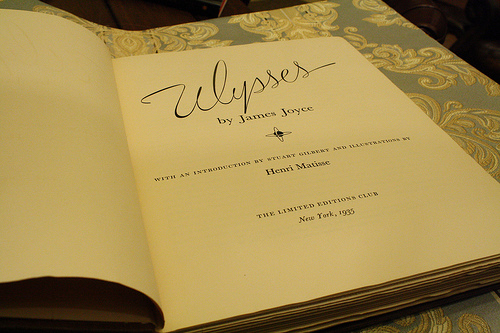
Mar­i­lyn Mon­roe Reads Joyce’s Ulysses at the Play­ground (1955)

James Joyce’s Ulysses: Down­load the Free Audio Book

Death Masks: From Dante to James Joyce and Friedrich Niet­zsche

Writing Tips by Henry Miller, Elmore Leonard, Margaret Atwood, Neil Gaiman & George Orwell

Image by Austin Kleon

Here’s one way to become a bet­ter writer. Lis­ten to the advice of writ­ers who earn their dai­ly bread with their pens. Dur­ing the past week, lists of writ­ing com­mand­ments by Hen­ry Miller, Elmore Leonard (above) and William Safire have buzzed around Twit­ter. (Find our Twit­ter stream here.) So we decid­ed to col­lect them and add tips from a few oth­er vet­er­ans — name­ly, George Orwell, Mar­garet Atwood, and Neil Gaiman. Here we go:

Hen­ry Miller (from Hen­ry Miller on Writ­ing)

1. Work on one thing at a time until fin­ished.
2. Start no more new books, add no more new mate­r­i­al to “Black Spring.”
3. Don’t be ner­vous. Work calm­ly, joy­ous­ly, reck­less­ly on what­ev­er is in hand.
4. Work accord­ing to the pro­gram and not accord­ing to mood. Stop at the appoint­ed time!
5. When you can’t cre­ate you can work.
6. Cement a lit­tle every day, rather than add new fer­til­iz­ers.
7. Keep human! See peo­ple; go places, drink if you feel like it.
8. Don’t be a draught-horse! Work with plea­sure only.
9. Dis­card the Pro­gram when you feel like it–but go back to it the next day. Con­cen­trate. Nar­row down. Exclude.
10. For­get the books you want to write. Think only of the book you are writ­ing.
11. Write first and always. Paint­ing, music, friends, cin­e­ma, all these come after­wards.

George Orwell (From Why I Write)

1. Nev­er use a metaphor, sim­i­le, or oth­er fig­ure of speech which you are used to see­ing in print.
2. Nev­er use a long word where a short one will do.
3. If it is pos­si­ble to cut a word out, always cut it out.
4. Nev­er use the pas­sive where you can use the active.
5. Nev­er use a for­eign phrase, a sci­en­tif­ic word, or a jar­gon word if you can think of an every­day Eng­lish equiv­a­lent.
6. Break any of these rules soon­er than say any­thing out­right bar­barous.

Mar­garet Atwood (orig­i­nal­ly appeared in The Guardian)

1. Take a pen­cil to write with on aero­planes. Pens leak. But if the pen­cil breaks, you can’t sharp­en it on the plane, because you can’t take knives with you. There­fore: take two pen­cils.
2. If both pen­cils break, you can do a rough sharp­en­ing job with a nail file of the met­al or glass type.
3. Take some­thing to write on. Paper is good. In a pinch, pieces of wood or your arm will do.
4. If you’re using a com­put­er, always safe­guard new text with a ­mem­o­ry stick.
5. Do back exer­cis­es. Pain is dis­tract­ing.
6. Hold the read­er’s atten­tion. (This is like­ly to work bet­ter if you can hold your own.) But you don’t know who the read­er is, so it’s like shoot­ing fish with a sling­shot in the dark. What ­fas­ci­nates A will bore the pants off B.
7. You most like­ly need a the­saurus, a rudi­men­ta­ry gram­mar book, and a grip on real­i­ty. This lat­ter means: there’s no free lunch. Writ­ing is work. It’s also gam­bling. You don’t get a pen­sion plan. Oth­er peo­ple can help you a bit, but ­essen­tial­ly you’re on your own. ­Nobody is mak­ing you do this: you chose it, so don’t whine.
8. You can nev­er read your own book with the inno­cent antic­i­pa­tion that comes with that first deli­cious page of a new book, because you wrote the thing. You’ve been back­stage. You’ve seen how the rab­bits were smug­gled into the hat. There­fore ask a read­ing friend or two to look at it before you give it to any­one in the pub­lish­ing busi­ness. This friend should not be some­one with whom you have a ­roman­tic rela­tion­ship, unless you want to break up.
9. Don’t sit down in the mid­dle of the woods. If you’re lost in the plot or blocked, retrace your steps to where you went wrong. Then take the oth­er road. And/or change the per­son. Change the tense. Change the open­ing page.
10. Prayer might work. Or read­ing ­some­thing else. Or a con­stant visual­isation of the holy grail that is the fin­ished, pub­lished ver­sion of your resplen­dent book.

Neil Gaiman (read his free short sto­ries here)

1. Write.
2. Put one word after anoth­er. Find the right word, put it down.
3. Fin­ish what you’re writ­ing. What­ev­er you have to do to fin­ish it, fin­ish it.
4. Put it aside. Read it pre­tend­ing you’ve nev­er read it before. Show it to friends whose opin­ion you respect and who like the kind of thing that this is.
5. Remem­ber: when peo­ple tell you some­thing’s wrong or does­n’t work for them, they are almost always right. When they tell you exact­ly what they think is wrong and how to fix it, they are almost always wrong.
6. Fix it. Remem­ber that, soon­er or lat­er, before it ever reach­es per­fec­tion, you will have to let it go and move on and start to write the next thing. Per­fec­tion is like chas­ing the hori­zon. Keep mov­ing.
7. Laugh at your own jokes.
8. The main rule of writ­ing is that if you do it with enough assur­ance and con­fi­dence, you’re allowed to do what­ev­er you like. (That may be a rule for life as well as for writ­ing. But it’s def­i­nite­ly true for writ­ing.) So write your sto­ry as it needs to be writ­ten. Write it ­hon­est­ly, and tell it as best you can. I’m not sure that there are any oth­er rules. Not ones that mat­ter.

William Safire (the author of the New York Times Mag­a­zine col­umn “On Lan­guage”)

1. Remem­ber to nev­er split an infini­tive.
2. The pas­sive voice should nev­er be used.
3. Do not put state­ments in the neg­a­tive form.
4. Verbs have to agree with their sub­jects.
5. Proof­read care­ful­ly to see if you words out.
6. If you reread your work, you can find on reread­ing a great deal of rep­e­ti­tion can be by reread­ing and edit­ing.
7. A writer must not shift your point of view.
8. And don’t start a sen­tence with a con­junc­tion. (Remem­ber, too, a prepo­si­tion is a ter­ri­ble word to end a sen­tence with.)
9. Don’t overuse excla­ma­tion marks!!
10. Place pro­nouns as close as pos­si­ble, espe­cial­ly in long sen­tences, as of 10 or more words, to their antecedents.
11. Writ­ing care­ful­ly, dan­gling par­tici­ples must be avoid­ed.
12. If any word is improp­er at the end of a sen­tence, a link­ing verb is.
13. Take the bull by the hand and avoid mix­ing metaphors.
14. Avoid trendy locu­tions that sound flaky.
15. Every­one should be care­ful to use a sin­gu­lar pro­noun with sin­gu­lar nouns in their writ­ing.
16. Always pick on the cor­rect idiom.
17. The adverb always fol­lows the verb.
18. Last but not least, avoid clich­es like the plague; seek viable alter­na­tives.

Relat­ed Con­tent:

Ray Brad­bury Gives 12 Pieces of Writ­ing Advice to Young Authors (2001)

John Steinbeck’s Six Tips for the Aspir­ing Writer and His Nobel Prize Speech

Elmore Leonard’s Ulti­mate Guide for Would-Be Writ­ers

by | Permalink | Make a Comment ( 35 ) |

Richard Brautigan’s Story, ‘One Afternoon in 1939,’ Read From a Wooden Spool

Today is the birth­day of Richard Brauti­gan, whose fun­ny and imag­i­na­tive books were a touch­stone for the 1960s coun­ter­cul­ture and have remained an inspi­ra­tion to free spir­its ever since. He would have been 77.

In this video, uploaded to the Inter­net exact­ly a year ago, Ianthe Brauti­gan Swensen reads her father’s sto­ry, “One After­noon in 1939,” from his col­lec­tion Revenge of the Lawn. Ianthe was one year old in 1961 when her father sat down with a portable type­writer on a fam­i­ly camp­ing trip to write his most famous work, Trout Fish­ing in Amer­i­ca, and she was 24 when he took his own life in 1984. Now she’s a writer and a teacher.

In 2001 Brauti­gan Swensen pub­lished You Can’t Catch Death: A Daugh­ter’s Mem­oir about her life with a dif­fi­cult but lov­ing father who liked to take her with him to his favorite San Fran­cis­co haunts dur­ing the 60s. “When I’m here,” she told the San Fran­cis­co Chron­i­cle on a vis­it to the city in 2000, “I still feel my father walk­ing the streets, I still feel my hand in his. And that’s a very hap­py feel­ing.”

If you would like to sign up for Open Culture’s free email newslet­ter, please find it here. It’s a great way to see our new posts, all bun­dled in one email, each day.

If you would like to sup­port the mis­sion of Open Cul­ture, con­sid­er mak­ing a dona­tion to our site. It’s hard to rely 100% on ads, and your con­tri­bu­tions will help us con­tin­ue pro­vid­ing the best free cul­tur­al and edu­ca­tion­al mate­ri­als to learn­ers every­where. You can con­tribute through Pay­Pal, Patre­on, and Ven­mo (@openculture). Thanks!

30 Renowned Writers Speaking About God & Reason

This past sum­mer, Jonathan Parara­jas­ing­ham, a neu­ro­sur­geon in Lon­don, cre­at­ed a mon­tage of 100 renowned aca­d­e­mics, most­ly all sci­en­tists, talk­ing about their thoughts on the exis­tence of God. (Find it in two parts here and here.) Now’s he back with a new video, 30 Renowned Writ­ers Speak­ing About God. It runs 25 min­utes, and it offers as much a cri­tique of ortho­dox reli­gious belief as it does a lit­er­ary trib­ute to human­ism and ratio­nal­ism. Isaac Asi­mov, Arthur C. Clarke, Salman Rushdie (who kind­ly tweet­ed us this week­end), Mar­garet Atwood, Philip Roth — they all make an appear­ance. The full list of writ­ers appears below the jump.

And, before we close, let me say this. When­ev­er we post videos like these, we get the ques­tion. Why the occa­sion­al focus on atheism/rationalism/humanism? And the sim­ple answer comes down to this: If you cov­er writ­ers, aca­d­e­mics and sci­en­tists, the think­ing skews in that direc­tion. Yes, there are excep­tions, but they are in short­er sup­ply. But if some­one pulls them togeth­er and makes a mon­tage, we’ll like­ly fea­ture it too. H/T RichardDawkins.net

Note: As you may have noticed, we have been expe­ri­enc­ing inter­mit­tent out­ages over the past cou­ple of days. Our host, Dreamhost, has been stum­bling more than we’d like. So we’re fig­ur­ing out alter­na­tives and hope­ful­ly mak­ing a move soon. Our apolo­gies for the incon­ve­nience!

(more…)

by | Permalink | Make a Comment ( 13 ) |

« Go BackMore in this category... »
Quantcast