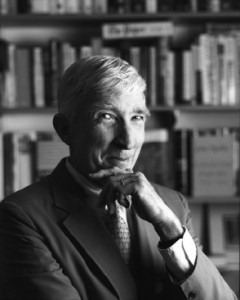
Philip Roth’s latest is out. And, as one reviewer described it, the novel, like his last two, is “ruthlessly economical and relentlessly deathbound.” You can read the first chapter of Indignation here for free. Or, buy the novel here.
The news of David Foster Wallace’s suicide came as a shock. 46, supremely talented, and gone. We’re not left with much. His books, his essays, and the understandable desire to find some link between his writing and his end. Here’s a line that caught my attention from David Streitfeld’s blog. (He’s a former books editor at The Boston Globe, and now a reporter for The New York Times.)
Fiction, [DFW once said], is “one of the few experiences where loneliness can be both confronted and relieved. Drugs, movies where stuff blows up, loud parties — all these chase away loneliness by making me forget my name’s Dave and I live in a one-by-one box of bone no other party can penetrate or know. Fiction, poetry, music, really deep serious sex, and, in various ways, religion — these are the places (for me) where loneliness is countenanced, stared down, transfigured, treated.” Maybe he asked too much of fiction. Maybe it failed him in the end, and there was nothing left.
Horrible story and loss. Apparently suicide. Obit here. More extensive NY Times look back at DFW’s career here.
Below, we have a clip of him reading a piece that he wrote for Harper’s. Also see our previous item: David Foster Wallace: Deciderization 2007 Online, which includes a link to the essay he wrote for Best American Essays 2007. You can get yet another piece of short fiction online here as well.
In the latest installment of The New Yorker Fiction podcast (iTunes Feed Web Site), Tobias Wolff (author of Old School) reads Stephanie Vaughn’s short story “Dog Heaven.” If you’ve never heard him before, Wolff gives his own work and others a very good read (see our earlier piece.).
Though the podcast is not yet available on iTunes, you can listen to the mp3 right here. Also, I’d encourage you to check out the various New Yorker podcasts found in our Ideas & Culture Podcast Collection.
A quick fyi: BoingBoing blogger Cory Doctorow has released a new collection of essays called Content: Selected Essays on Technology, Creativity, Copyright, and the Future of the Future. As he summarizes it, the book features “28 essays about everything from copyright and DRM to the layout of phone-keypads, the fallacy of the semantic web, the nature of futurism, the necessity of privacy in a digital world, the reason to love Wikipedia, the miracle of fanfic, and many other subjects.” You can download a free PDF version here, or purchase a hard copy here. Also don’t miss the free tech/copyright writings by Larry Lessig below.
Related Content:
Download a Free Copy of Cory Doctorow’s Bestseller, Little Brother
Free Download of Cory Doctorow’s Graphic Novels
Lawrence Lessig’s Free Culture: Available in Text or Audio (For Free)
The Future of Ideas: Download Your Free Copy (and More)
Thomas Friedman’s new book has finally hit the stands. Initially, it was going to be titled “Green is the New Red, White and Blue.” But somehow it got released with the far less artful — though more descriptive — title, Hot, Flat, and Crowded: Why We Need a Green Revolution–and How It Can Renew America. When Friedman came to Stanford last year, he previewed many of his arguments in a talk that you can catch on iTunes. But, to boil it down, his argument is that a “green revolution” makes for smart economic, national security and environmental policy, and it’s an argument that gets fleshed out in a fair amount of depth in the new work. Despite the unwieldy title, it’s virtually a given that millions of copies will be sold. And I wouldn’t be surprised if it brings about a real shift in the national debate — that is, if it helps define what a green revolution really means and demonstrates how it can make national strategic sense on multiple levels. That’s a gift that Friedman has. For more on this, check out Friedman’s talk today on NPR’s Fresh Air, where he goes into more depth and offers some candid thoughts on the presidential candidates and their environmental policies. You can listen here: iTunes — RSS Feed — Stream Here.
Here’s a quick quote from the interview: The opponents have called Green “liberal, tree hugging, girly man, sissy, unpatriotic, vaguely French, and basically what I’m out to do in this book is to rename Green — it’s geopolitical, geostrategic, geoeconomic, innovative, competitive, patriotic: Green is the new Red, White, and Blue.” …
Related Content:
The World is Flat: The #1 Free Podcast on iTunesU
Here’s a good item that came out of yesterday’s book giveaway — Benjamin L called our attention to the fact that you can download a free copy of Little Brother, the new novel by Cory Doctorow, who writes for the popular BoingBoing blog and has consistently backed the whole idea of “open culture.” Released in late April, the novel spent six weeks on the NY Times bestseller list, and, as Benjamin notes, the main themes of technology and freedom are very relevant to the readers of our own blog. As you will see, the official downloads come in several formats: Plain text, HTML, and PDF. But, you can also snag copies in other versions that fans have put together. Take for example a version that you can read on an iPhone, or one that you can access via a Sony e‑Reader. You can find all formats here, or buy the book in print (which I did) here.
As a last note, I want to thank everyone who participated in the book giveaway. I was really pleased with your contributions (you have good taste) and wish that I had more books to give away. In the next day, I will contact those first ten contributors, and next week I will post all of your pieces of open culture. Many thanks to all. And, any time that you want to recommend a good piece of media for the benefit of your fellow readers, don’t hesitate to do so.
What if we disappeared from the face of the earth tomorrow? All of us, just like that? What would happen? How would the remaining world survive or thrive without us? That’s the scenario that gets examined by science writer Alan Weisman (who we interviewed last year) in his non-fiction eco-thriller, The World Without Us.
Now out in paperback, the book, which spent 26 weeks on The New York Times bestseller list, sees things playing out like this:
With no one left to run the pumps, New York’s subway tunnels would fill with water in two days. Within 20 years, Lexington Avenue would be a river. Fire- and wind-ravaged skyscrapers would eventually fall like giant trees. Within weeks of our disappearance, the world’s 441 nuclear plants would melt down into radioactive blobs, while our petrochemical plants, ‘ticking time bombs’ even on a normal day, would become flaming geysers spewing toxins for decades to come… After about 100,000 years, carbon dioxide would return to prehuman levels. Domesticated species from cattle to carrots would revert back to their wild ancestors. And on every dehabitated continent, forests and grasslands would reclaim our farms and parking lots as animals began a slow parade back to Eden.
The World Without Us is a great read. And now some of our readers can get their hands on a free copy. We have 10 copies to give away, and here’s how we propose doing it. We’ll give a copy to the first 10 readers (living in North America) who add a quality piece of “open culture” in the comments section of this post. That is, you will need to post a link to an enriching video, podcast or mp3 that fellow readers will enjoy, and tell us a little about why. When we get ten quality clips, we will then package them in a post and share them with the larger community. In short, think of it as you get as you give. How nice. Very Kumbaya. (Watch Joan Baez sing it). Now let’s see what you’ve got.
NOTE: We can only ship to readers in North America. And, yes, that includes Canada this time, and Mexico too. To our many international readers, I apologize for the geographical limitation. And we’ll try to make things up to you down the line. We do appreciate you.
Also please note that if you’re selected, I will also eventually need your name and mailing address.