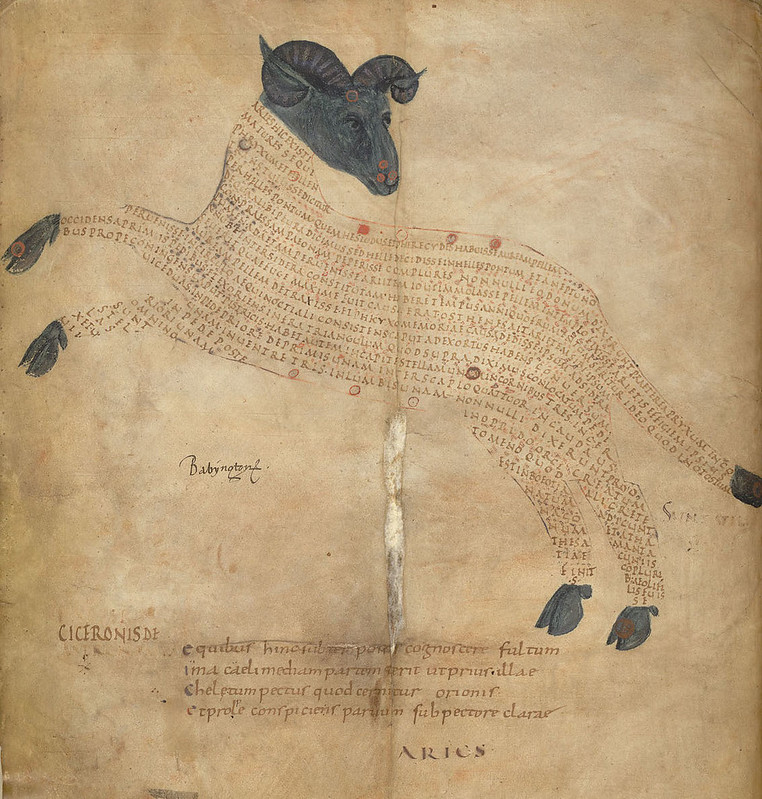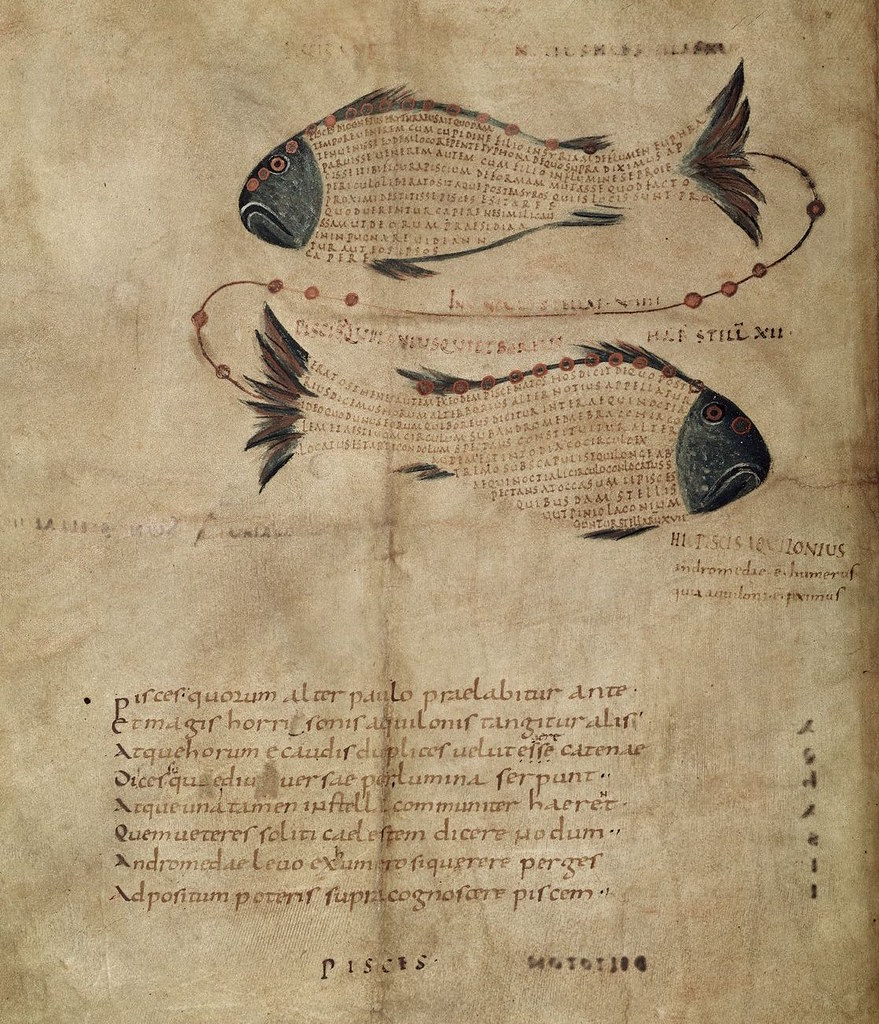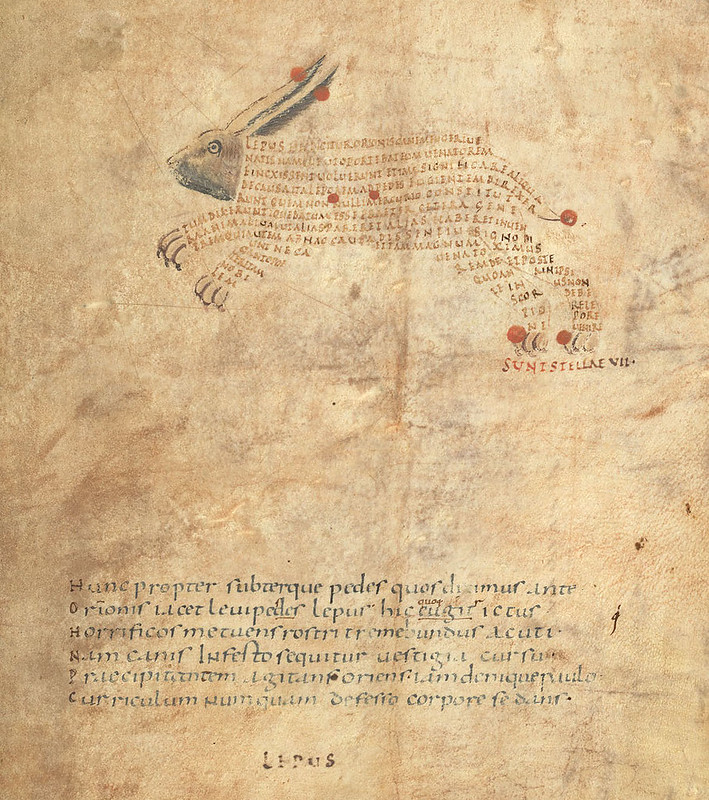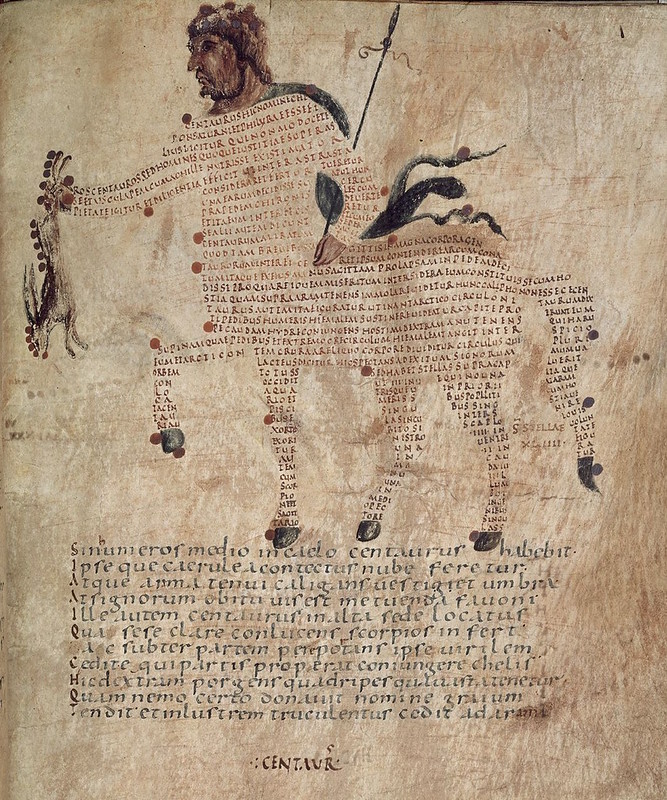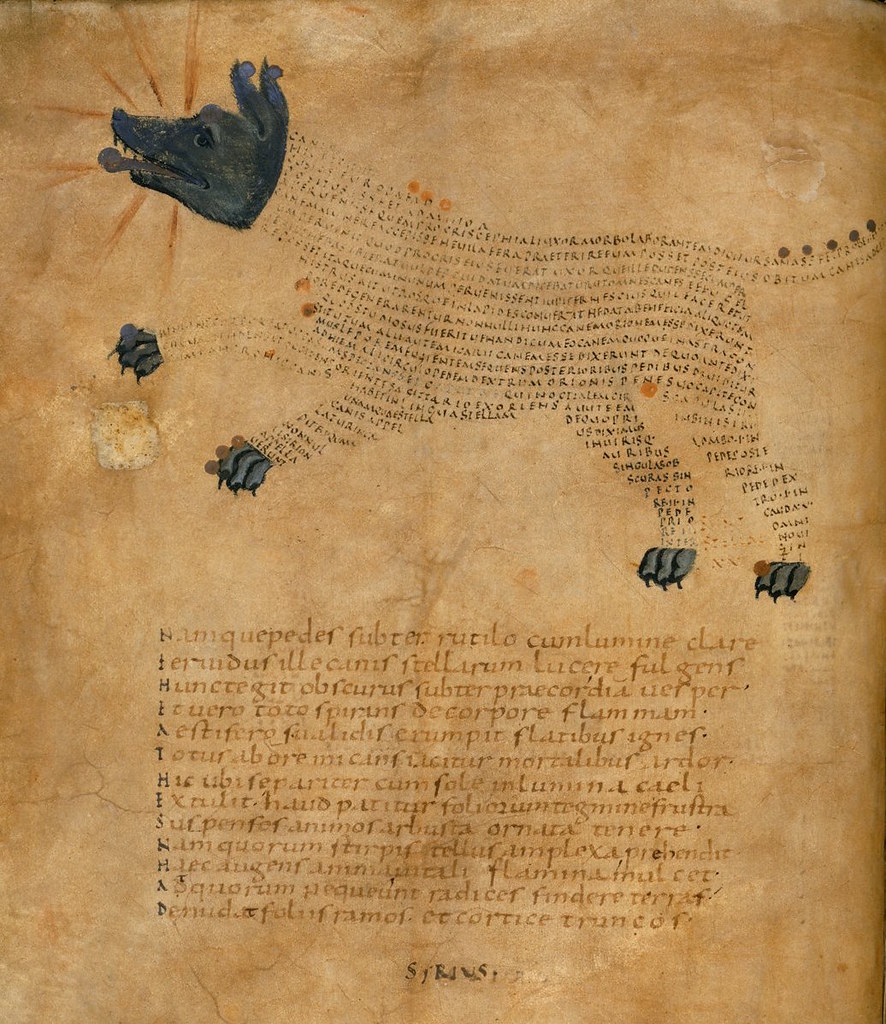
Western civilization may fast be going digital, but it still retains its roots in Ancient Greece. And so it makes a certain circle-closing sense to digitize the legacy left us by our Ancient Greek forebears and the medieval scholars who preserved it. Cambridge and Heidelberg, two of Europe’s oldest universities, this month announced their joint intention to embark upon just such a project. It will take two years and cost £1.6 million, reports the BBC, but it will digitize “more than 800 volumes featuring the works of Plato and Aristotle, among others.” As the announcement of the project puts it, the texts will then “join the works of Charles Darwin, Isaac Newton, Stephen Hawking and Alfred Lord Tennyson on the Cambridge Digital Library.”
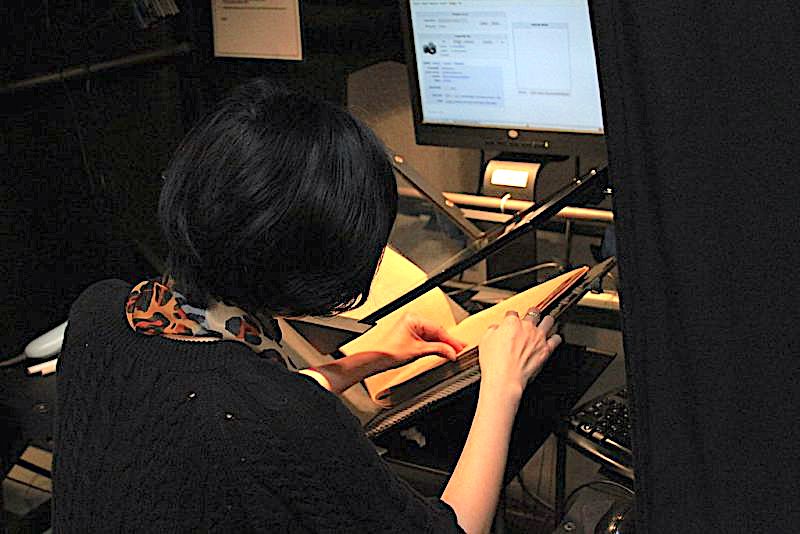
These medieval and early modern Greek manuscripts, which date more specifically “from the early Christian period to the early modern era (about 1500 — 1700 AD),” present their digitizers with certain challenges, not least the “fragile state” of their medieval binding.
But as Heidelberg University Library director Dr. Veit Probst says in the announcement, “Numerous discoveries await. We still lack detailed knowledge about the production and provenance of these books, about the identities and activities of their scribes, their artists and their owners – and have yet to uncover how they were studied and used, both during the medieval period and in the centuries beyond.” And from threads including “the annotations and marginalia in the original manuscripts” a “rich tapestry of Greek scholarship will be woven.”
This massive undertaking involves not just Cambridge and Heidelberg but the Vatican as well. Together Heidelberg University and the Vatican possess the entirety of the Bibliotheca Palatina, split between the libraries of the two institutions, and the digitization of the “mother of all medieval libraries” previously featured here on Open Culture, is a part of the project. This collected wealth of texts includes not just the work of Plato, Aristotle, and Homer as they were “copied and recopied throughout the medieval period,” in the words of Cambridge University Library Keeper of Rare Books and Early Manuscripts Dr. Suzanne Paul, but a great many other “multilingual, multicultural, multifarious works, that cross borders, disciplines and the centuries” as well. And with luck, their digital copies will stick around for centuries of Western civilization to come.
Based in Seoul, Colin Marshall writes and broadcasts on cities, language, and culture. His projects include the book The Stateless City: a Walk through 21st-Century Los Angeles and the video series The City in Cinema. Follow him on Twitter at @colinmarshall or on Facebook.
Cat antics and awe have always been a very online phenomenon, but the mysterious and ridiculous, diminutive beasts of prey have also always been inseparable from art and culture. As further evidence, we bring you Millions of Cats, likely the “first truly American picture book done by an American author/artist,” explains a site devoted to it.
“Prior to its publication in 1928, there were only English picture books for the children’s perusal.” The book “sky rocketed Wanda Gág into instant fame and set in stone her reputation as a children’s author and illustrator.”
It set a standard for Caldecott-winning children’s literature for close to a hundred years since its appearance, though the award did not yet exist at the time. The book’s creator was “a fierce idealist and did not believe in altering her own aestheticism just because she was producing work for children. She liked to use stylized human figures, asymmetrical compositions, strong lines and slight spatial distortion.” She also loved cats, as befits an artist of her independent temperament, one shared by the likes of other cat-loving artists like T.S. Eliot and Charles Dickens.
Millions of Cats’ author and illustrator may not share in the fame of so many other artists who took pictures with their cats, but she and her cat Noopy were as photogenic as any other feline/human artistic duo, and she was a peer to the best of them. The book’s editor, Ernestine Evans, wrote in the Nation that Millions of Cats “is as important as the librarians say it is. Not only does it bring to book-making one of the most talented and original of American lithographers… but it is a marriage of picture and tale that is perfectly balanced.”
Gág (rhymes with “jog”) was “a celebrated artist… in the Greenwich Village-centic Modernist art scene in the 1920s,” writes Lithub, “a free-thinking, sex-positive leftist who also designed her own clothes and translated fairy tales.” She adapted the text from “a story she had made up to entertain her friends’ children,” with the millions of cats modeled on Noopy. Gág is the founding mother of children’s book dynasties like The Cat in the Hat and Pete the Cat, an artist whom millions of cat lovers can discover again or for the first time in a Newbery-winning 2006 collector’s edition.
Read a summary of the charming story of Millions of Cats at Lithub and learn more about her, the talented Gág family of artists, and her charming, very cat-friendly house here.
In all the kingdom of nature, does any creature threaten us less than the gentle rabbit? Though the question may sound entirely rhetorical today, our medieval ancestors took it more seriously — especially if they could read illuminated manuscripts, and even more so if they drew in the margins of those manuscripts themselves. “Often, in medieval manuscripts’ marginalia we find odd images with all sorts of monsters, half man-beasts, monkeys, and more,” writes Sexy Codicology’s Marjolein de Vos. “Even in religious books the margins sometimes have drawings that simply are making fun of monks, nuns and bishops.” And then there are the killer bunnies.
Hunting scenes, de Vos adds, also commonly appear in medieval marginalia, and “this usually means that the bunny is the hunted; however, as we discovered, often the illuminators decided to change the roles around.”
Jon Kaneko-James explains further: “The usual imagery of the rabbit in Medieval art is that of purity and helplessness – that’s why some Medieval portrayals of Christ have marginal art portraying a veritable petting zoo of innocent, nonviolent, little white and brown bunnies going about their business in a field.” But the creators of this particular type of humorous marginalia, known as drollery, saw things differently.
“Drolleries sometimes also depicted comedic scenes, like a barber with a wooden leg (which, for reasons that escape me, was the height of medieval comedy) or a man sawing a branch out from under himself,” writes Kaneko-James.
This enjoyment of the “world turned upside down” produced the drollery genre of “the rabbit’s revenge,” one “often used to show the cowardice or stupidity of the person illustrated. We see this in the Middle English nickname Stickhare, a name for cowards” — and in all the drawings of “tough hunters cowering in the face of rabbits with big sticks.”
Then, of course, we have the bunnies making their attacks while mounted on snails, snail combats being “another popular staple of Drolleries, with groups of peasants seen fighting snails with sticks, or saddling them and attempting to ride them.”
Given how often we denizens of the 21st century have trouble getting humor from less than a century ago, it feels satisfying indeed to laugh just as hard at these drolleries as our medieval forebears must have — though many more of us surely get to see them today, circulating as rapidly on social media as they didn’t when confined to the pages of illuminated manuscripts owned only by wealthy individuals and institutions.
Based in Seoul, Colin Marshall writes and broadcasts on cities, language, and culture. His projects include the book The Stateless City: a Walk through 21st-Century Los Angeles and the video series The City in Cinema. Follow him on Twitter at @colinmarshall or on Facebook.
Everyone should read the Bible, and—I’d argue—should read it with a sharply critical eye and the guidance of reputable critics and historians, though this may be too much to ask for those steeped in literal belief. Yet fewer and fewer people do read it, including those who profess faith in a sect of Christianity. Even famous atheists like Christopher Hitchens, Richard Dawkins, and Melvyn Bragg have argued for teaching the Bible in schools—not in a faith-based context, obviously, but as an essential historical document, much of whose language, in the King James, at least, has made major contributions to literary culture. (Curiously—or not—atheists and agnostics tend to score far higher than believers on surveys of religious knowledge.)
There is a practical problem of separating teaching from preaching in secular schools, but the fact remains that so-called “biblical illiteracy” is a serious problem educators have sought to remedy for decades. Prominent Shakespeare scholar G.B. Harrison lamented it in the introduction to his 1964 edited edition, The Bible for Students of Literature and Art. “Today most students of literature lack this kind of education,” he wrote, “and have only the haziest knowledge of the book or of its contents, with the result that they inevitably miss much of the meaning and significance of many works of past generations. Similarly, students of art will miss some of the meaning of the pictures and sculptures of the past.”
Though a devout Catholic himself, Harrison’s aim was not to proselytize but to do right by his students. His edited Bible is an excellent resource, but it’s not the only book of its kind out there. In fact, no less a luminary, and no less a critic of religion, than scientist and sci-fi giant Isaac Asimov published his own guide to the Bible, writing in his introduction:
The most influential, the most published, the most widely read book in the history of the world is the Bible. No other book has been so studied and so analyzed and it is a tribute to the complexity of the Bible and eagerness of its students that after thousands of years of study there are still endless books that can be written about it.
Of those books, the vast majority are devotional or theological in nature. “Most people who read the Bible,” Asimov writes, “do so in order to get the benefit of its ethical and spiritual teachings.” But the ancient collection of texts “has a secular side, too,” he says. It is a “history book,” though not in the sense that we think of the term, since history as an evidence-based academic discipline did not exist until relatively modern times. Ancient history included all sorts of myths, wonders, and marvels, side-by-side with legendary and apocryphal events as well as the mundane and verifiable.
Asimov’s Guide to the Bible, originally published in two volumes in 1968–69, then reprinted as one in 1981, seeks to demystify the text. It also assumes a level of familiarity that Harrison did not expect from his readers (and did not find among his students). The Bible may not be as widely-read as Asimov thought, even if sales suggest otherwise. Yet he does not expect that his readers will know “ancient history outside the Bible,” the sort of critical context necessary for understanding what its writings meant to contemporary readers, for whom the “places and people” mentioned “were well known.”
“I am trying,” Asimov writes in his introduction, “to bring in the outside world, illuminate it in terms of the Biblical story and, in return, illuminate the events of the Bible by adding to it the non-Biblical aspects of history, biography, and geography.” This describes the general methodology of critical Biblical scholars. Yet Asimov’s book has a distinct advantage over most of those written by, and for, academics. Its tone, as one reader comments, is “quick and fun, chatty, non-academic.” It’s approachable and highly readable, that is, yet still serious and erudite.
Asimov’s approach in his guide is not hostile or “anti-religious,” as another reader observes, but he was not himself friendly to religious beliefs, or superstitions, or irrational what-have-yous. In the interview above from 1988, he explains that while humans are inherently irrational creatures, he nonetheless felt a duty “to be a skeptic, to insist on evidence, to want things to make sense.” It is, he says, akin to the calling believers feel to “spread God’s word.” Part of that duty, for Asimov, included making the Bible make sense for those who appreciate how deeply embedded it is in world culture and history, but who may not be interested in just taking it on faith. Find an old copy of Asimov’s Guide to the Bible at Amazon.
In 1919, German architect Walter Gropius founded Bauhaus, the most influential art school of the 20th century. Bauhaus defined modernist design and radically changed our relationship with everyday objects. Gropius wrote in his manifesto Programm des Staatlichen Bauhauses Weimar that “There is no essential difference between the artist and the artisan.” His new school, which featured faculty that included the likes of Paul Klee, László Moholy-Nagy, Josef Albers and Wassily Kandinsky, did indeed erase the centuries-old line between applied arts and fine arts.
Bauhaus architecture sandblasted away the ornate flourishes common with early 20th century buildings, favoring instead the clean, sleek lines of industrial factories. Designer Marcel Breuer reimagined the common chair by stripping it down to its most elemental form.
13. Albert Gleizes, Kubismus, Munich: Albert Langen, 1928.
14. László Moholy-Nagy, Von Material zur Architektur, Munich: Albert Langen, 1929, 241 pp; facsimile repr., Mainz and Berlin: Florian Kupferberg, 1968.
The New Vision: From Material to Architecture, trans. Daphne M. Hoffman, New York: Breuer Warren and Putnam, 1930; exp.rev.ed. as The New Vision and Abstract of an Artist, New York: George Wittenborn, 1947, 92 pp. (in English)
And here are some key Bauhaus journals:
bauhaus 1 (1926). 5 pages, 42 cm. Download (23 MB).
bauhaus: zeitschrift für bau und gestaltung 2:1 (Feb 1928). Download (17 MB).
bauhaus: zeitschrift für gestaltung 3:1 (Jan 1929). Download (17 MB).
bauhaus: zeitschrift für gestaltung 3:2 (Apr-Jun 1929). Download (15 MB).
bauhaus: zeitschrift für gestaltung 3:3 (Jul-Sep 1929). Download (16 MB).
bauhaus: zeitschrift für gestaltung 2 (Jul 1931). Download (15 MB).
Note: An earlier version of this post appeared on our site in 2015. We’re bringing it back to celebrate the founding of the Bauhaus school 100 years ago–on April 1, 1919.
Jonathan Crow is a Los Angeles-based writer and filmmaker whose work has appeared in Yahoo!, The Hollywood Reporter, and other publications. You can follow him at @jonccrow. And check out his blog Veeptopus, featuring lots of pictures of vice presidents with octopuses on their heads. The Veeptopus store is here.
The Boy Scouts of America have faced some deserved criticism, undeserved ridicule, and have been cruelly used as props, but I think it’s safe to say that they still bear a pretty wholesome image for a majority of Americans. That was probably no less the case and perhaps a good deal more so in 1969, but the end of the sixties was not by any stretch a simpler time. It was a period, writes Scott McLemee, “when the My Lai Massacre, the Manson Family and the Weather Underground were all in the news.” The Zodiac Killer was on the loose, a general air of bleakness prevailed.
William S. Burroughs responded to this madness with a counter-madness of his own in “The Revised Boy Scout Manual,” “an impassioned yet sometimes incoherent rebuke to ossified political ideologies,” writes Kirkus. We can presume Burroughs meant his instructions for overthrowing corrupt governments to satirically comment on the outdoorsy status quo youth cult. But we can also see the manual taking as its starting point certain values the Scouts champion, at their best: obsessive attention to detail, MacGyver-like ingenuity, and good old American self-reliance.
Want to bring down the government? You can do it yourself… with fake news.
Boing Boing quotes a long passage from the book that shows Burroughs as a comprehensive, if not quite wholesome, Scout advisor, describing how one might use mass media’s methods to disrupt its message, and to transmit messages of your own. We might think he is foreseeing, even recommending, techniques we now see used to a no-longer-shocking degree.
You have an advantage which your opposing player does not have. He must conceal his manipulations. You are under no such necessity. In fact you can advertise the fact that you are writing news in advance and trying to make it happen by techniques which anybody can use.
And that makes you NEWS. And a TV personality as well, if you play it right.
You construct fake news broadcasts on video camera… And you scramble your fabricated news in with actual news broadcasts.
We might read in Burroughs’ instructions the methods of YouTube propagandists, social media manipulators, and some of the most powerful people in the world. Burroughs does not recommend taking over the media apparatus by seizing its power, but rather using technology to make “cutup video tapes” and ham radio broadcasts featuring documentary media spliced together with fabrications. These “techniques could swamp the mass media with total illusion,” he writes. “It will be seen that the falsifications in syllabic Western languages are in point of fact actual virus mechanisms.”
Burroughs is not simply writing a reference for making fearmongering propaganda. Even when it comes to the subject of fear, he sometimes sounds as if he is revising Sergei Eisenstein’s montage theory for his own similarly violent times. “Let us say the message is fear. For this we take all the past fear shots of the subject we can collect or evoke. We cut these in with fear words and pictures, with threats, etc. This is all acted out and would be upsetting enough in any case. Now let’s try it scrambled and see if we get an even stronger effect.”
What would this effect be? One “comparable to post-hypnotic suggestion”? Who is the audience, and would they be, a la Clockwork Orange, a captive one? Did Burroughs see people on street corners screening their cut-up videos, despite the fact that consumer-level video technology did not yet exist? Is this a cinematic experiment, mass media-age occult ritual, compendium of practical magic for insider media adepts?
See what you can make of Burroughs’ “The Revised Boy Scout Manual” (subtitled “an electronic revolution”). The book has been reissued by the Ohio State Press, with an afterword (read it here) by V. Vale, publisher of the legendary, radical magazine RE/Search, who excerpted a part of the “Revised Manual” in the early 1980s and planned to publish it in full before “a personal relationship blowup” put an end to the project.
McLemee titles his review of Burrough’s rediscovered manifesto “Distant Early Warning,” and much of it does indeed sound eerily prophetic. But we should also bear in mind the book is itself a countercultural pastiche, designed to scramble minds for reasons only Burroughs truly knew. He was a “practicing Scientologist at the time” of the book’s composition, “albeit not for much longer,” and he does prescribe use of the e‑meter and makes scattered references to L. Ron Hubbard. But as a practitioner of his own precepts, Burroughs would not have written a monograph uncritically promoting one belief system or another. (Well, maybe just the once.) He also quotes Hassan‑I Sabbah, discusses Mayan hieroglyphics, and talks General Semantics.
“The Revised Boy Scout Manual”“has elements of libertarian manifesto, paramilitary handbook, revenge fantasy and dark satire,” McLemee writes, “and wherever the line between fiction and nonfiction may be, it’s never clear for long.” In this, Burroughs only scrambles elements already in abundance at the end of the sixties and in the early seventies, during which he revised and recorded the work several times as he transitioned himself out of an organization that maintained total control through mass media. Like Marshall McLuhan, Noam Chomsky and others, he was beginning to see this phenomenon everywhere he looked. Burroughs’ most lasting influence may be that, like the late-60s Situationists, he devised a cunning and effective way to turn mass media in on itself, one with perhaps more sinister implications.
In the mid-20th century, the two big dogs in the American literary scene were William Faulkner and Ernest Hemingway. Both were internationally revered, both were masters of the novel and the short story, and both won Nobel Prizes.
Born in Mississippi, Faulkner wrote allegorical histories of the South in a style that is both elliptical and challenging. His works were marked by uses of stream-of-consciousness and shifting points of view. He also favored titanically long sentences, holding the record for having, according to the Guinness Book of Records, the longest sentence in literature. Open your copy of Absalom! Absalom!to chapter 6 and you’ll find it. Hemingway, on the other hand, famously sandblasted the florid prose of Victorian-era books into short, terse, deceptively simple sentences. His stories were about rootless, damaged, cosmopolitan people in exotic locations like Paris or the Serengeti.
If you type in “Faulkner and Hemingway” in your favorite search engine, you’ll likely stumble upon this famous exchange — Faulkner on Hemingway: “He has never been known to use a word that might send a reader to the dictionary.” Hemingway: “Poor Faulkner. Does he really think big emotions come from big words?” Zing! Faulkner reportedly didn’t mean for the line to come off as an insult but Hemingway took it as one. The incident ended up being the most acrimonious in the two authors’ complicated relationship.
While Faulkner and Hemingway never formally met, they were regular correspondents, and each was keenly aware of the other’s talents. And they were competitive with each other, especially Hemingway who was much more insecure than you might surmise from his macho persona. While Hemingway regularly called Faulkner “the best of us all,” marveling at his natural abilities, he also hammered Faulkner for resorting to tricks. As he wrote to Harvey Breit, the famed critic for TheNew York Times, “If you have to write the longest sentence in the world to give a book distinction, the next thing you should hire Bill Veek [sic] and use midgets.”
Faulkner, on his end, was no less competitive. He once told the New York Herald Tribune, “I think he’s the best we’ve got.” On the other hand, he bristled when an editor mentioned getting Hemingway to write the preface for The Portable Faulkner in 1946. “It seems to me in bad taste to ask him to write a preface to my stuff. It’s like asking one race horse in the middle of a race to broadcast a blurb on another horse in the same running field.”
When Breit asked Faulkner to write a review of Hemingway’s 1952 novella The Old Man and the Sea, he refused. Yet when a couple months later he got the same request from Washington and Lee University’s literary journal, Shenandoah, Faulkner relented, giving guarded praise to the novel in a one paragraph-long review. You can read it below.
His best. Time may show it to be the best single piece of any of us, I mean his and my contemporaries. This time, he discovered God, a Creator. Until now, his men and women had made themselves, shaped themselves out of their own clay; their victories and defeats were at the hands of each other, just to prove to themselves or one another how tough they could be. But this time, he wrote about pity: about something somewhere that made them all: the old man who had to catch the fish and then lose it, the fish that had to be caught and then lost, the sharks which had to rob the old man of his fish; made them all and loved them all and pitied them all. It’s all right. Praise God that whatever made and loves and pities Hemingway and me kept him from touching it any further.
Jonathan Crow is a Los Angeles-based writer and filmmaker whose work has appeared in Yahoo!, The Hollywood Reporter, and other publications. You can follow him at @jonccrow.
“Could you imagine a world without access to reading, to learning, to books?” Helen Fagin, who poses that question, doesn’t have to imagine it: she experienced that grim reality, and worse besides. “At twenty-one,” she continues, “I was forced into Poland’s World War II ghetto, where being caught reading anything forbidden by the Nazis meant, at best, hard labor; at worst, death.” There she operated a school in secret where she taught Jewish children Latin and mathematics, soon realizing that “what they needed wasn’t dry information but hope, the kind that comes from being transported into a dream-world of possibility.”
That hope, in Fagin’s wartime experience, came from books. “I had spent the previous night reading Gone with the Wind — one of a few smuggled books circulated among trustworthy people via an underground channel, on their word of honor to read only at night, in secret.”
The next day she retold the story of Margaret Mitchell’s novel in her clandestine classroom, where the students had expressed their desire for her to “tell us a book,” and one young girl expressed a special gratitude, thanking Fagin “for this journey into another world.” To hear how her story, and Fagin’s, turned out, you can listen to the 100-year-old Fagin herself read the letter that tells the tale in the video above, and you can follow along with the text at Brain Pickings.
Brain Pickings founder Maria Popova has included Fagin’s letter in the new collection A Velocity of Being: Illustrated Letters to Children about Why We Read by 121 of the Most Inspiring Humans in Our World. The book contains “original illustrated letters about the transformative and transcendent power of reading from some immensely inspiring humans,” Popova writes, from Jane Goodall and Marina Abramović to Yo-Yo Ma and David Byrne to Judy Blume and Neil Gaiman — the last of whom, as Fagin’s cousin, offered Popova the connection to this centenarian living testament to the power of reading. There are times when dreams sustain us more than facts,” writes Fagin, one suspects as much to the adult readers of the world as to the children. “To read a book and surrender to a story is to keep our very humanity alive.”
Based in Seoul, Colin Marshall writes and broadcasts on cities, language, and culture. His projects include the book The Stateless City: a Walk through 21st-Century Los Angeles and the video series The City in Cinema. Follow him on Twitter at @colinmarshall or on Facebook.

We're hoping to rely on loyal readers, rather than erratic ads. Please click the Donate button and support Open Culture. You can use Paypal, Venmo, Patreon, even Crypto! We thank you!
Open Culture scours the web for the best educational media. We find the free courses and audio books you need, the language lessons & educational videos you want, and plenty of enlightenment in between.