Out with the Coke cans, potato chips, Twix bars and other junk foods.
In with the Haruki Murakami novels.
That’s what happened last year when Muzu, a publisher in Poland, created three vending machines stocked with copies of Murakami’s Colourless Tsukuru Tazaki and the Year of His Pilgrimageand then placed them in Polish train stations located in Warsaw, Poznan, and Wroclaw. It seemed like a natural thing to do, seeing that (notes the fan blog Haruki Murakami Stuff) Tsukuru Tazaki, the main character of the novel, “likes train stations and works as a train station designer for a Tokyo railway company.” Let’s cross our fingers and hope this is the start of a healthy trend.
Last year, a Slate essay called “Against YA” by Ruth Graham irked thousands of readers who took offense at her argument that although grown-ups “brandish their copies of teen novels with pride…. [a]dults should feel embarrassed about reading literature written for children.” Whether we label her article an instance of shaming, trolling, or just the expression of a not-especially consequential, “fuddy-duddy opinion,” what it also served to highlight—as so many other thoughtful and not-so-thoughtful online essays have done—is the huge sales numbers of so-called YA, a literary boom that shows no signs of slowing. Young adult fiction, along with children’s books in general, saw double digit growth in 2014, a phenomenon in part driven by those supposedly self-infantilizing adults Graham faults.
The grown-ups reading teen books do so, Graham writes, because “today’s YA, we are constantly reminded, is worldly and adult-worthy.” Maybe, maybe not, but there is another question to ask here as well, wholly apart from whether the age 30–44 cohort who account for 28 percent of YA sales “should” be buying and reading YA books. And that question is: should young adults read Young Adult fiction? And what counts as Young Adult fiction anyway? A 2012 NPR list of the “100 Best-Ever Teen Novels” includes the expected Harry Potter and Hunger Games series (at numbers one and two, respectively), as well as more “literary,” but still obvious, choices like John Green’s The Fault in Our Stars and S.E. Hinton’s classic The Outsiders.
It also includes Douglas Adams’ The Hitchhiker’s Guide to the Galaxy series, William Golding’s Lord of the Flies, Frank Herbert’s Dune, Ursula K. Le Guin’s Earthsea series, and Ray Bradbury’s Fahrenheit 451. It what sense do all of these very different kinds of books—some very complex and challenging, some very much less so—qualify as “teen novels”? Perhaps some of the fuzziness about quality and appropriateness comes from the fact that many “Top-whatever” lists like NPR’s are compiled by readers, of all ages. And enjoyment, not edification, usually tops a general readership’s list of criterion for “top”-ness. However, what would such a list look like if strictly compiled by educators?
You can find out in another top 100 list: the 100 Fiction Books All Children Should Read Before Leaving Secondary School – According to 500 English Teachers (created at the request of Britain’s National Association for the Teaching of English and TES magazine). There’s a good bit of crossover with the reader-chosen NPR list; the Harry Potter books come in at sixth place. Both lists feature classics like Harper Lee’s To Kill a Mockingbird. But the teacher-chosen list also includes more “adult” writers like Jane Austen, Thomas Hardy, and Toni Morrison. One teacher quoted in an Express article describes his own criteria: “It’s always a balancing act in the books that teachers select. Do you go for something that students will enjoy and lap up and read, or do you go for something that will help them cut their teeth?”
There seems to be a good balance of both here. You can see the first ten titles below, with links to free online versions where available. The complete list of 100 books for teenagers is here.
1 Nineteen Eighty-Four, by George Orwell (Amazon)
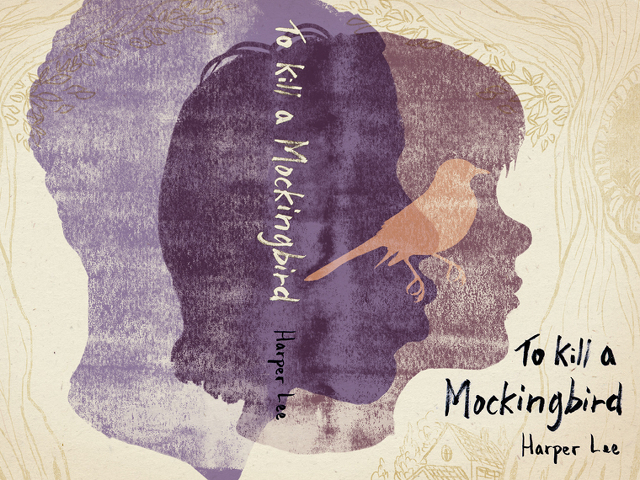
2 To Kill A Mockingbird, by Harper Lee (free eBook)
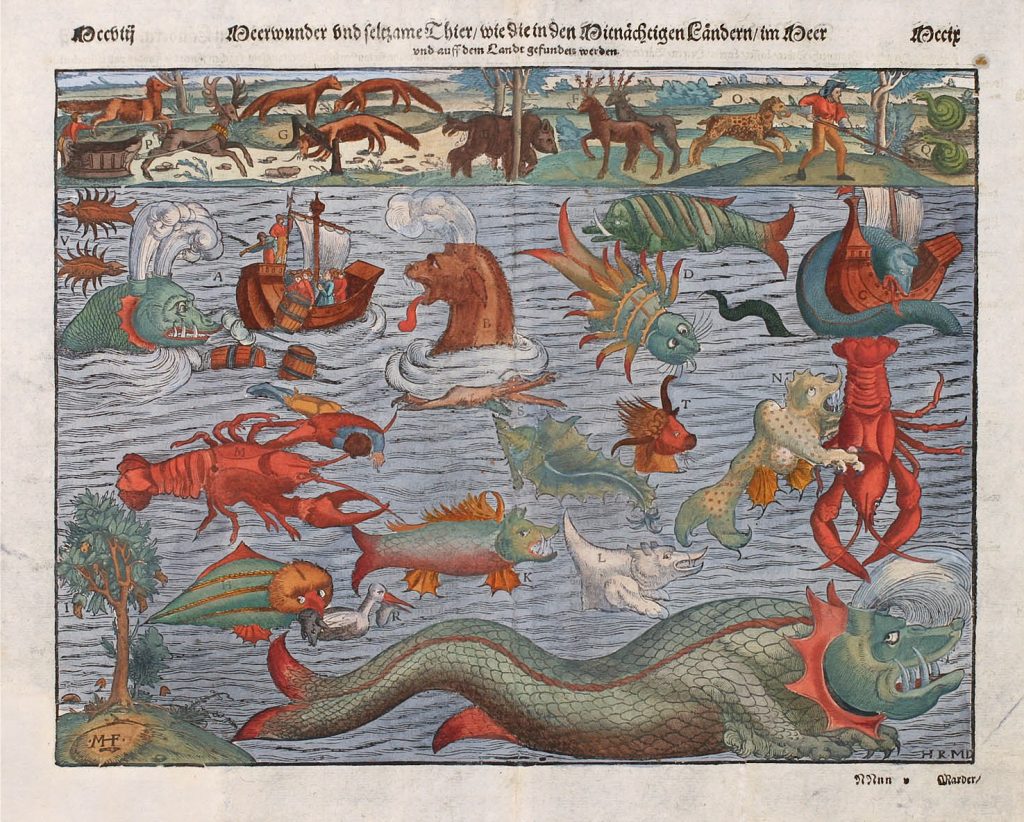
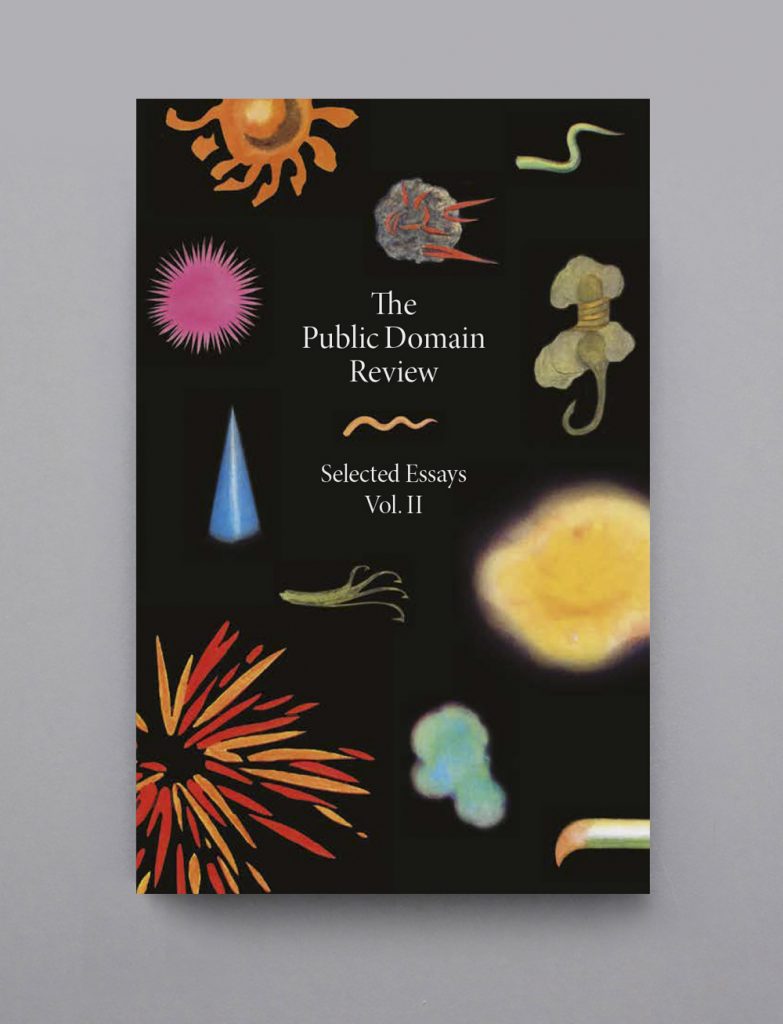
The image above is a version of Sebastian Münster’s 16th-century chart of sea monsters, starring all kinds of fantastical denizens of the deep: from ship-eating serpents and giant lobsters to some kind of seal-octopus hybrid. Featured in the opening essay on the history of sea serpents, the image is one of ninety-nine illustrations to adorn the pages of The Public Domain Review’s wonderful new book of selected essays.
That the collection should begin with this most elusive of snakes is perhaps particularly appropriate. Representing as it does the very idea of terra incognita, the sea serpent is a figure which echoes on in so many of the essays which follow, if we see these “lands unknown” to be not merely geographical but to refer also to the lesser known realms of knowledge. All manner of oft-overlooked histories are explored in the book. We learn of the strange skeletal tableaux of Frederik Ruysch, pay a visit to Humphry Davy high on laughing gas, and peruse the pages of the first ever picture book for children (which includes a wonderful table of Latin animal sounds). There’s also fireworks in art, petty pirates on trial, brainwashing machines, truth-revealing diseases, synesthetic auras, Byronic vampires, and Charles Darwin’s photograph collection of asylum patients. Together the fifteen essays chart a wonderfully curious course through the last five hundred years of history, taking us on a journey through some of the darker, stranger, and altogether more intriguing corners of the past.
You can find out more about the book through The Public Domain Review’s website. If you want it before Christmas (and we think it’d make an excellent present for that history-loving relative!), then make sure to order by midnight on Wednesday 18th November. Orders before this date will also benefit from a special reduced price.
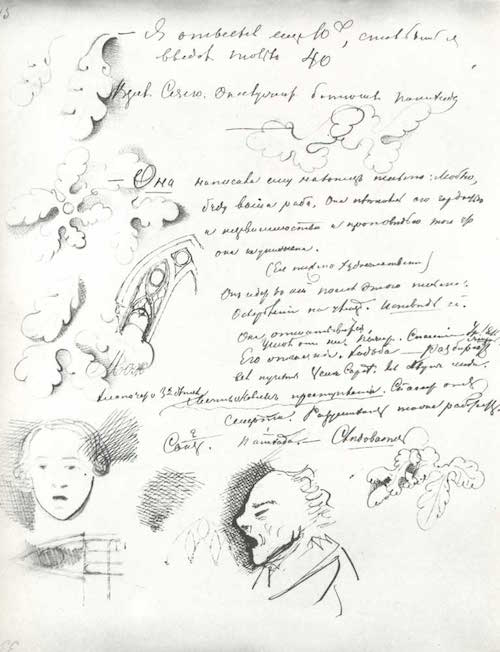
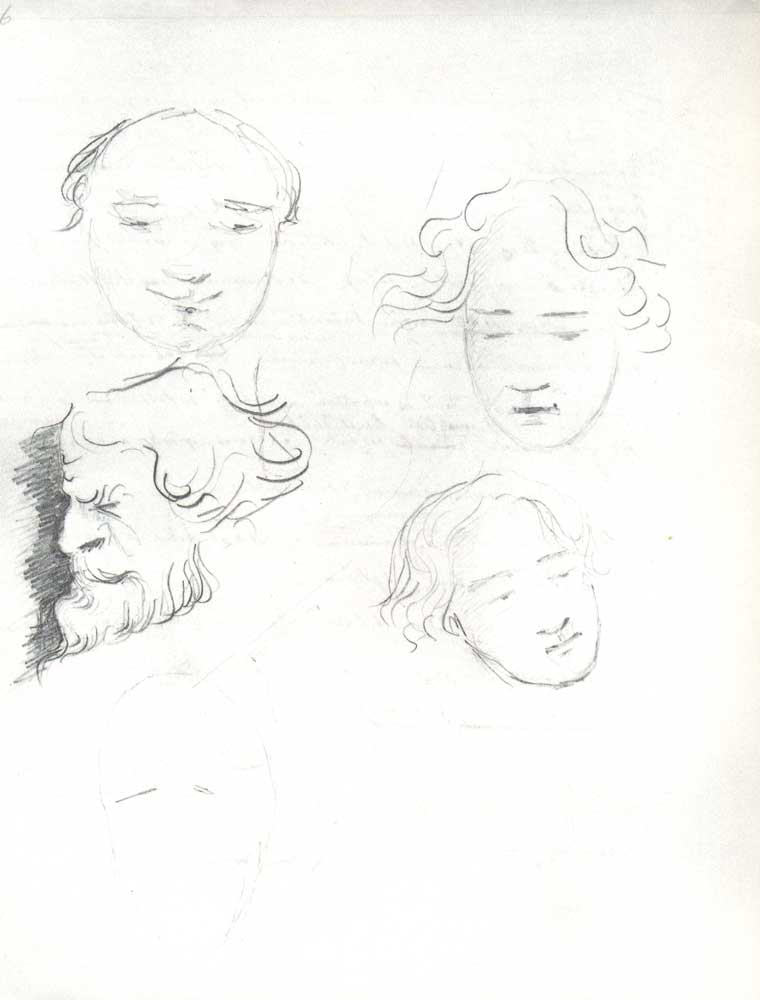
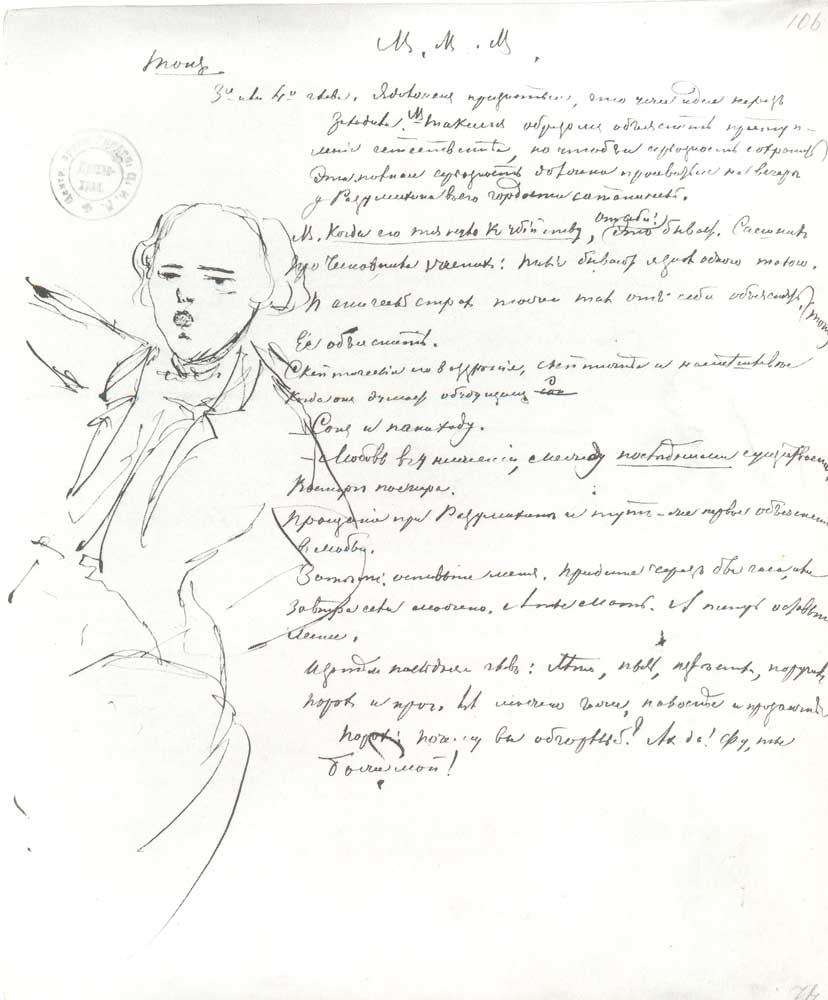
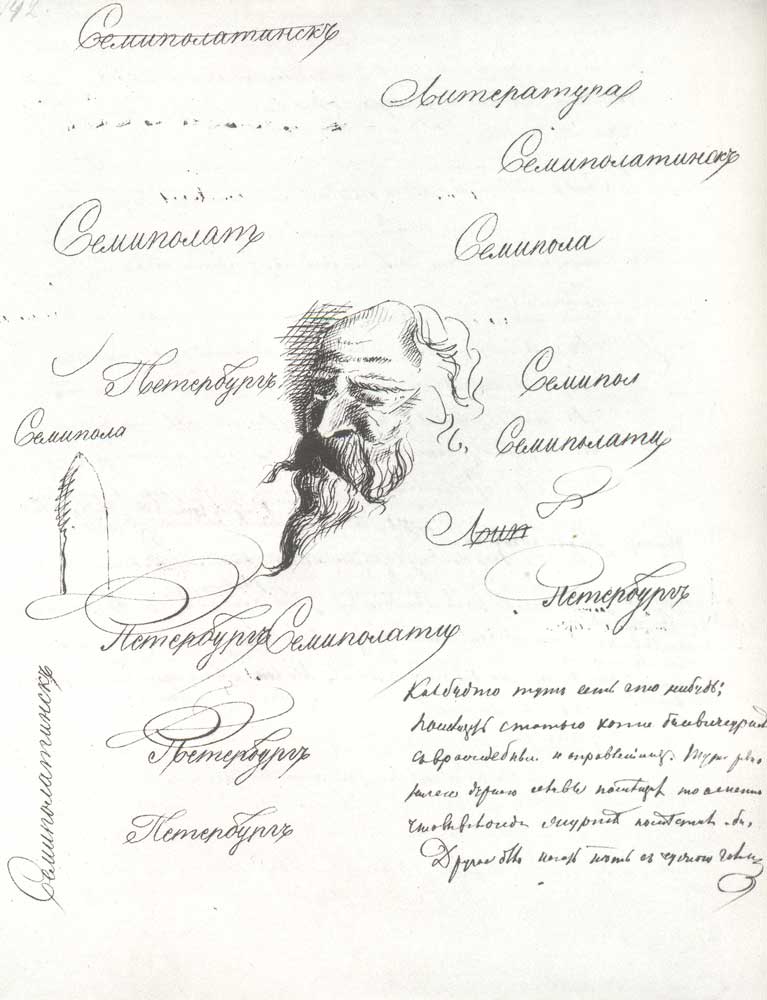
Like many of us, Russian literary great Fyodor Dostoevsky liked to doodle when he was distracted. He left his handiwork in several manuscripts—finely shaded drawings of expressive faces and elaborate architectural features. But Dostoevsky’s doodles were more than just a way to occupy his mind and hands; they were an integral part of his literary method. His novelistic imagination, with all of its grand excesses, was profoundly visual, and architectural.
“Indeed,” writes Dostoevsky scholar Konstantin Barsht, “Dostoevsky was not content to ‘write’ and ‘take notes’ in the process of creative thinking.” Instead, in his work “the meaning and significance of words interact reciprocally with other meanings expressed through visual images.” Barsht calls it “a method of work specific to the writer.” We’ve shared a few of those manuscript pages before, including one with a doodle of Shakespeare.
Now we bring you a few more pages of doodles from the author of Crime and Punishment, a novel that, perhaps more so than any of his others, offers such vivid descriptions of its characters that I can still clearly remember the pictures I had of them in my mind the first time I read it in high school.
My visualizations of the angry, desperate student Raskolnikov and the sleazy sociopathic Svidrigailov do not exactly resemble the faces doodled at the the top of the post, but that is how their author saw them, at least in this early, manuscript stage of the novel.
The other faces here may be those of Sonya, police investigator Porfiry Petrovich, recidivist alcoholic father Semyon Marmelodov, and other characters in the novel, though it’s not clear exactly who’s who.
Dostoevsky had much in common with his novel’s protagonist when he began the novel in 1865. Reduced to near-destitution after gambling away his fortune, the writer was also in desperate straits. The story, writes literary critic Joseph Franks, was “originally conceived as a long short story or novella to be written in the first person,” like the feverish novella Notes From the Underground. In Dostoevsky’s manuscript notebooks, “extensive fragments of this original work are to be found here intact.”
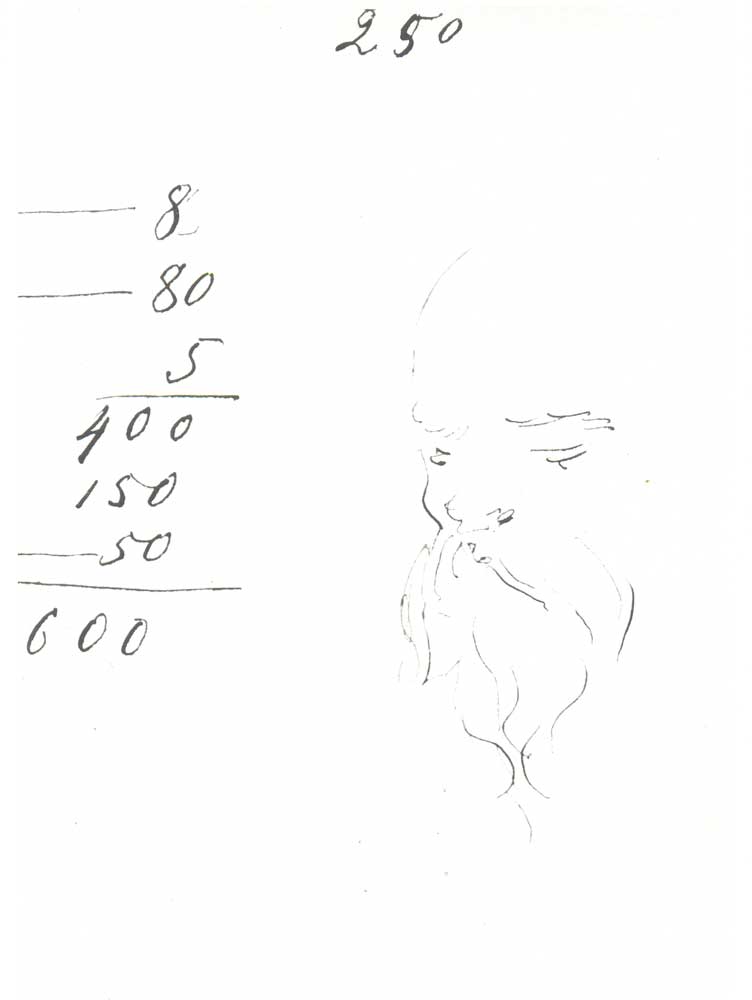
Franks quotes scholar Edward Wasiolek, who published a translation of the notebooks in 1967: “They contain drawings, jottings about practical matters, doodling of various sorts, calculations about pressing expenses, sketches, and random remarks.” In short, “Dostoevsky simply flipped his notebooks open any time he wished to write,” or to practice his calligraphy, as he does on many pages.
The pages of the Crime and Punishment notebooks resemble all of the manuscript pages of his novels in their ornamental haphazardness. You can see many more examples from novels like The Idiot, The Possessed, and A Raw Youth at the Russian site Culture, including the sketchy self portrait below, next to a few sums that indicate the author’s perpetual preoccupation with his troubled economic affairs.
Did Bram Stoker’s world-famous Dracula character—perhaps the most culturally unkillable of all horror monsters—derive from Irish folklore? Search the Gaelic “Droch-Fhoula” (pronounced droc’ola) and, in addition to the requisite metal bands, you’ll find references to the “Castle of the Blood Visage,” to a blood-drinking chieftain named Abhartach, and to other possible native sources of Irish writer Bram Stoker’s 1897 novel. These Celtic legends, the BBC writes, “may have shaped the story as much as European myths and Gothic literature.”
Despite all this intriguing speculation about Dracula’s Irish origins, the actors playing him have come from a variety of places. One recent incarnation, TV series Dracula, did cast an Irish actor, Jonathan Rhys Meyers, in the role.
Hungarian Bela Lugosi comes closest to the fictional character’s nationality, as well as that of another, perhaps dubious source, Romanian warlord Vlad the Impaler. Protean Brit Gary Oldman played up the character as Slavic aristocrat in Francis Ford Coppola’s somewhat more faithful take. But one too-oft-overlooked portrayal by another English actor, Christopher Lee, deserves much more attention than it receives.
The audio here was also recorded in 1966 by the book’s editor Russ Jones. Comics blogger Steven Thompson remarks that “since Dracula is made up of a series of letters, journal and diary entries, the writers here logically take a more straightforward route of telling the tale while maintaining the episodic feel quite well.” Rather than the voice of Count Dracula, Lee reads as the novel’s epistolary narrator Jonathan Harker, and the Dracula in the artwork, drawn by artist Al McWilliams, “bears more than a passing resemblance here to actor John Carradine,” a notable American actor who played the character in Universal’s House of Frankenstein and House of Dracula. Nonetheless, Lee’s voice is enough to conjure his many exceptional performances as the prototypical vampire, a character and concept that will likely never die.
Scholar and writer Bob Curran, a proponent of the Irish origins of Dracula, argues in his book Vampires that legends of undead, blood-drinking ghouls are found all over the world, which goes a long way toward explaining the enduring popularity of Dracula in particular and vampires in general. We’ll probably see another actor inherit the role of Stoker’s seductively creepy count in the near future. Whoever it is will have to measure himself against not only the performances of Lugosi, Carradine, Oldman, and Meyers, but also against the debonair Christopher Lee. He would do well, wherever he comes from, to study Lee’s Dracula films closely, and listen to him read the story in the adaptation above.
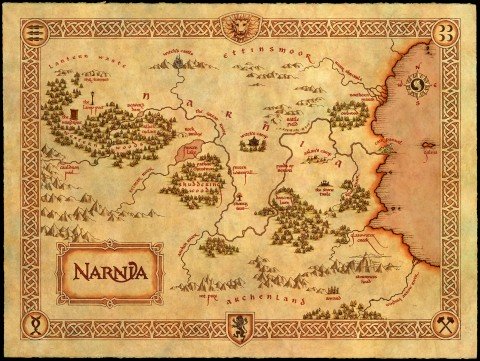
I have not seen the second two of a promised seven films based on the novels in C.S. Lewis’ The Chronicles of Narniaseries. But I tend to agree with several critics of the first filmed adaptation, The Lion, the Witch and the Wardrobe: “The PG-rated movie feels safe and constricted,” Peter Travers observed, “in a way the story never does on the page.” Although Lewis “did nothing to hide his devout Christianity” in his allegorical Narnia books for young adults, nor in his grown-up sci-fi fantasy series, The Space Trilogy, Lewis on the page comes across as a rigorous writer first and a Christian apologist second. Except, I’d argue, for his work of explicitly populist, and rather facile, apologetics, Mere Christianity (originally a series of radio lectures), his fiction and popular non-fiction alike present readers—whatever their beliefs—with challenging, inventive, witty, and moving ways to think about the human condition.
Lewis’ immersion in European Medieval and Renaissance literature in his day-job role as an Oxford don—and his ecumenical, almost Jungian, approach to literature generally—gives his fiction a serious archetypal depth that most modern religious novelists lack, making him, along with fellow “Inkling” J.R.R. Tolkien, something of a literary saint in modern Christianity. Though it may offend the orthodox to say so, Lewis’ novels capture a “deep magic” at the heart of all mythological and literary traditions. And they do so in a way that makes exploring heavy, grown-up themes exciting for both children and adults. Though I’ve personally left behind the beliefs that animated my first readings of his books, I can still return to The Chronicles of Narnia and find in them deep magic and mystery.
There’s no denying the enormous influence these books have had on children’s fantasy literature, from Harry Potter to Lewis’ atheist antagonist Philip Pullman. I look forward to sharing his books with my daughter, whatever she ends up making of their religiosity. I’ve still got my tattered paperback copies, and I’ll gladly read them to her before she can tackle them herself, but I’m also grateful for the complete audio recordings of The Chronicles of Narnia, available free online and read by English child psychologist and author Chrissi Hart. In installments of two chapters at a time, Hart reads all seven of the Narnia books, The Lion, the Witch and the Wardrobe, Prince Caspian, The Voyage of the Dawn Treader, The Silver Chair, The Horse and His Boy, The Magician’s Nephew, and The Last Battle.
And it should be noted that CS Lewis Pte. Ltd. granted permission to put these recordings online, according to the Ancient Faith web site. The recordings are therefore listed in our collection, 1,000 Free Audio Books: Download Great Books for Free. Enjoy.
Stephen King has given writers a lot to think about these past few years in his numerous interviews and in his statement of craft, On Writing. He deems one of his most salient pieces of advice on writing so important that he repeats it twice in his Top 20 Rules for Writers: writers, he says, “learn best by reading a lot…. If you don’t have time to read, you don’t have the time (or the tools) to write.” To help his readers discover the right tools, King attached a list of 96 books at the end of On Writing, of which he said, “In some way or other, I suspect each book in the list had an influence on the books I wrote…. a good many of these might show you some new ways of doing your work.”
In this list, the spectrum of accessibility is a little narrower. We have fewer classic writers like Dickens or Conrad and fewer commercial novelists like Nelson DeMille. Instead the list is mostly twentieth century literary fiction by mostly living contemporaries, with little genre fiction save perhaps sci-fi/fantasy writer Neal Stephenson’s Quicksilver, thriller author Lee Child’s Jack Reacher series, hugely popular mystery writer Stieg Larsson’s The Girl With the Dragon Tattoo, and Patrick O’Brian’s adventure series. Below, we’ve excerpted a list of 15 books King recommends—books, he says, “which entertained and taught me.”
King almost shrugs in his short introduction, writing, “you could do worse.” I expect many readers of this post might have suggestions for how they think you could also do better, especially given the five years that have passed since this list’s compilation and some of the blind spots that seem to persist in King’s reading habits. I doubt he would object much to any of us adding to, or subtracting from, his lists—or ignoring them altogether. It seems clear he thinks that like him, we should read what we like, as long as we’re always reading something. See the full list of 82 titles here.
We all know that toys come alive at night, but what about mid-century vintage paperback covers, such as you might find in the psychology or philosophy sections of a dimly-lit used bookstore?
Watching 55 minimalist covers from graphic and motion designer Henning M. Lederer’s 2200 title-strong collection begin to spin, drift, and seethe in the short animation above, I got the impression that they were the ones dictating the terms. Or perhaps Lederer is the vessel through which the intentions of the original designers—Rudolph de Harak and John + Mary Condon to name a few—flow. Covers is not an act of reimagination or crowd-pleasing irreverence, but rather one logical motion, elegantly applied.
Habitués of used bookstores may find their usual browsing habits slightly altered by the hypnotic results.
Lederer makes no bones about judging books by their covers. Strong graphics, not content, are the primary determining factor as to which titles he acquires. The stately geometrics set in motion here are relics from another age, but the uncluttered abstracts so favored by 60s era publishers are not the only genre to catch his eye.
Ayun Halliday is an author, illustrator, and Chief Primatologist of the East Village Inky zine. Her post-digital, pre apocalyptic dark comedy, Fawnbook, is now playing in New York City. Follow her @AyunHalliday
We're hoping to rely on loyal readers, rather than erratic ads. Please click the Donate button and support Open Culture. You can use Paypal, Venmo, Patreon, even Crypto! We thank you!
Open Culture scours the web for the best educational media. We find the free courses and audio books you need, the language lessons & educational videos you want, and plenty of enlightenment in between.