Back in April, we highlighted for you a trove of 110 illustrations by J.R.R. Tolkien, offering a rare glimpse of the author’s artistic talents. Tolkien didn’t just like to write books, as we saw. He also liked to draw illustrations for these books, which helped him to conceptualize the fantasy worlds he was creating.
Just this month, Houghton Mifflin released a new book called The Art of The Lord of the Rings by J.R.R. Tolkien, which brings together more than 180 drawings, inscriptions, maps, and plans–all drawn by Tolkien as part of his worldbuilding creative process. Most were never published until now.
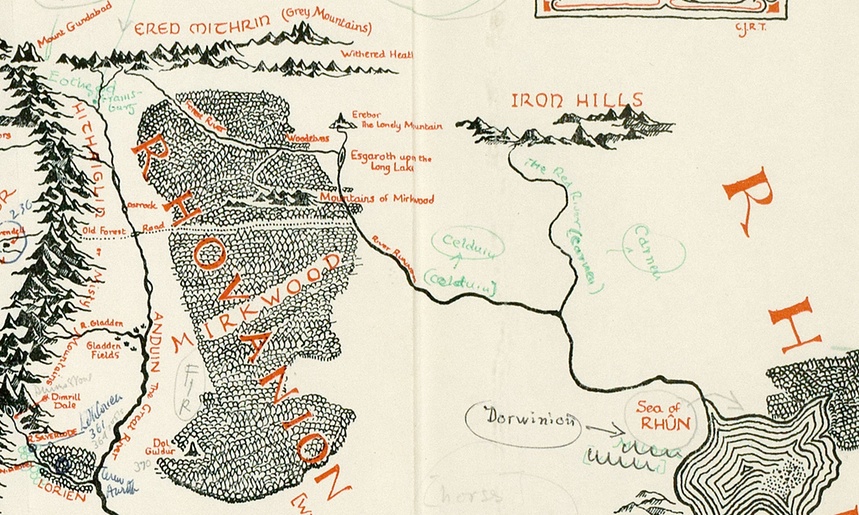
And then we get this: a newly-discovered map annotated by Tolkien. Found in a copy of The Lord of the Rings thatoriginallybelonged to Pauline Baynes (the artist who illustrated Tolkien’s novels in print), the map intriguingly connects Tolkien’s fantasy world to real places on our globe. According to The Guardian, annotations on the map (click here to view the materials in a larger format) suggests that “Hobbiton is on the same latitude as Oxford [where Tolkien taught], and implies that the Italian city of Ravenna could be the inspiration behind the fictional city of Minas Tirith.” Belgrade, Cyprus, and Jerusalem also get listed as reference points. Discovered by Blackwell’s Rare Books, the rare map will be put on the market for an asking price of £60,000.
You can learn more about this map, considered “perhaps the finest piece of Tolkien ephemera to emerge in the last 20 years,” over at The Guardian.
We’ve all been to a museum with that friend or family member who just doesn’t “get” modern art and suggests it’s all a con. Conceptual art? Abstract expressionism? What is that?! Impressionism? Who wants blurry, poorly drawn paintings?! Arrgh!
Hey, maybe some of us are that friend or family member. Maybe our complaints are even more specific—maybe some of us are members of a “cultural justice” movement called “Renoir Sucks at Painting.” Maybe we show up at the Boston Museum of Fine Arts with signs parodying the cartoonishly terrible Westboro Baptist Church (“God Hates Renoir”) and demanding, with as much force as one can with a parody sign, that the Renoirs be removed from the company of worthier objets d’art.
One critical difference between the typical art hater and the Renoir Sucks crew: the latter do not object to Pierre-Auguste Renoir because his work is too hard to “get,” but because it’s too easy. Renoir, they say, painted “treacle” and “deformed pink fuzzy women.” As art critic Peter Schjeldahl writes in The New Yorker, “Renoir’s winsome subjects and effulgent hues jump in your lap like a friendly puppy.” Renoir is so far from avant-garde that Schjeldahl can peg his “exaggerated blush and sweetness” as an example of the “popular appeal” that “advanced the bourgeois cultural revolution that was Impressionism.” Ouch.
This kind of assessment gets no help from the painter’s great-great granddaughter, Genevieve, who responds to critics by quoting sales figures: “It is safe to say,” she writes, “that the free market has spoken and Renoir did NOT suck at painting.” By this measure, Thomas Kinkade and Sister Maria Innocentia Hummel were also artistic geniuses. The charges of “aesthetic terrorism” against Renoir come right out of the iconoclasm that functions in the art world as both meaningful dissent and successful gimmick (cf. Marcel Duchamp, or Ai Weiwei’s controversial, gallery-filling attacks on revered cultural artifacts.) But perhaps the honest question remains: does Renoir Suck at Painting?
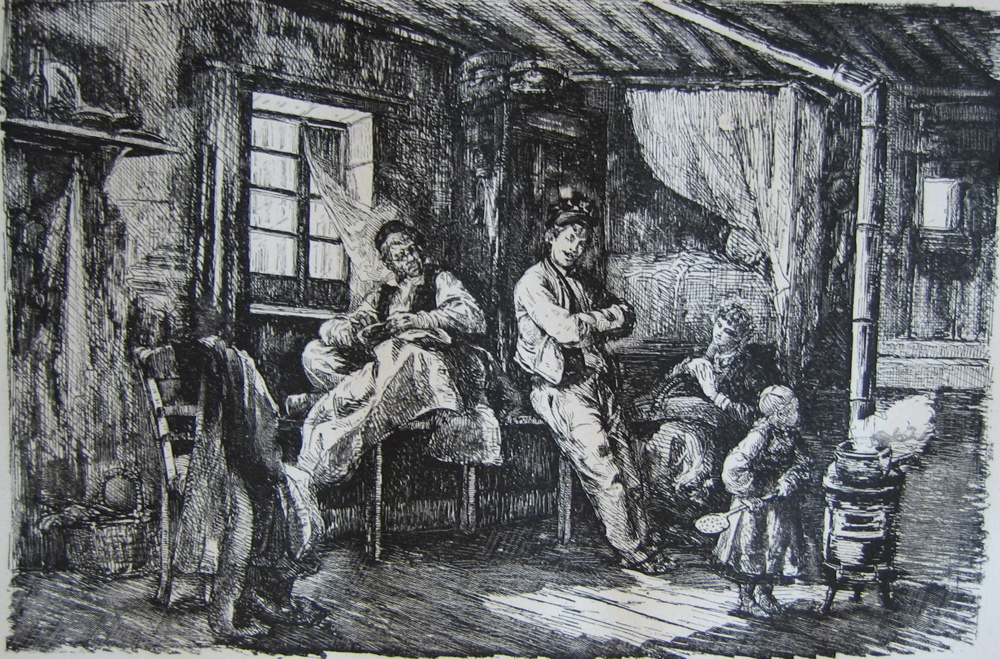
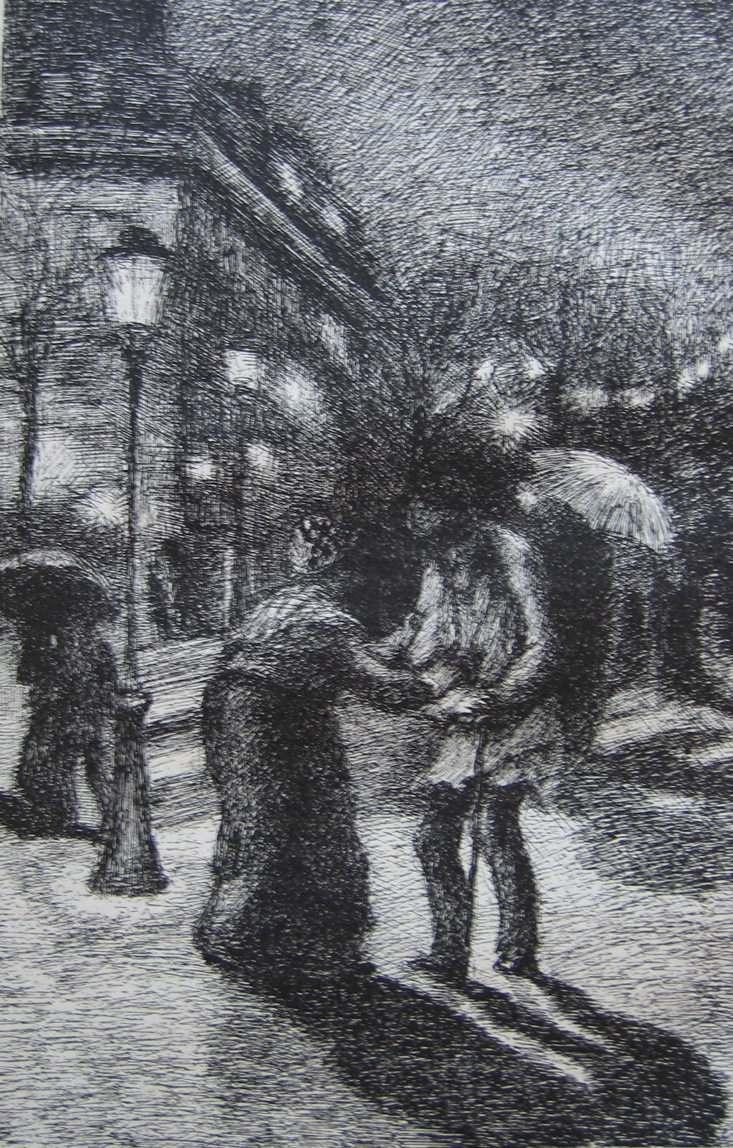
Let us reserve judgment and take a look at another side of Renoir, a rarely seen excursion into book illustration—specifically the four illustrations he made for an 1878 edition of Emile Zola’s novel L’Assommoir (“The Dram Shop”). Described by the Art Institute of Chicago as “grittily realistic,” Zola’s naturalist depiction of what he called “the inevitable downfall of a working-class family in the polluted atmosphere of our urban areas” provoked many of its readers, who regarded the book as “an unforgivable lapse of taste on the part of its author.” It showed Parisians “an aspect of current life that most found frightening and repulsive.” Nonetheless, the novel became a popular success.
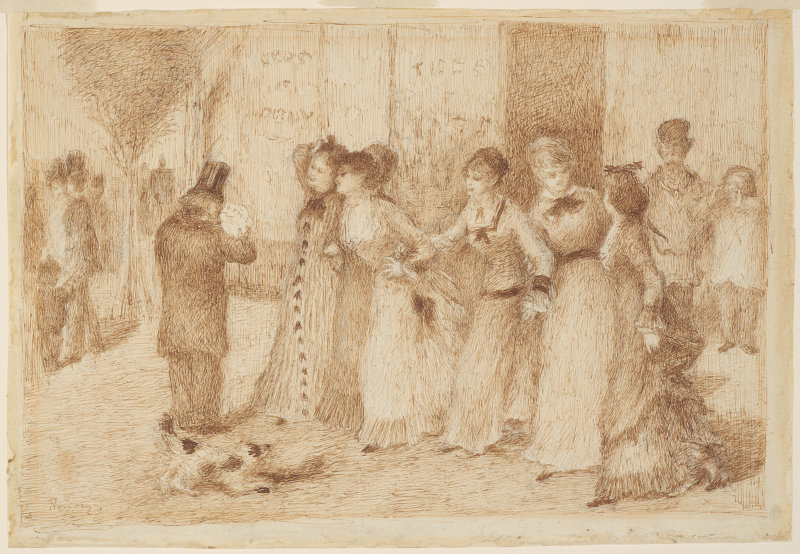
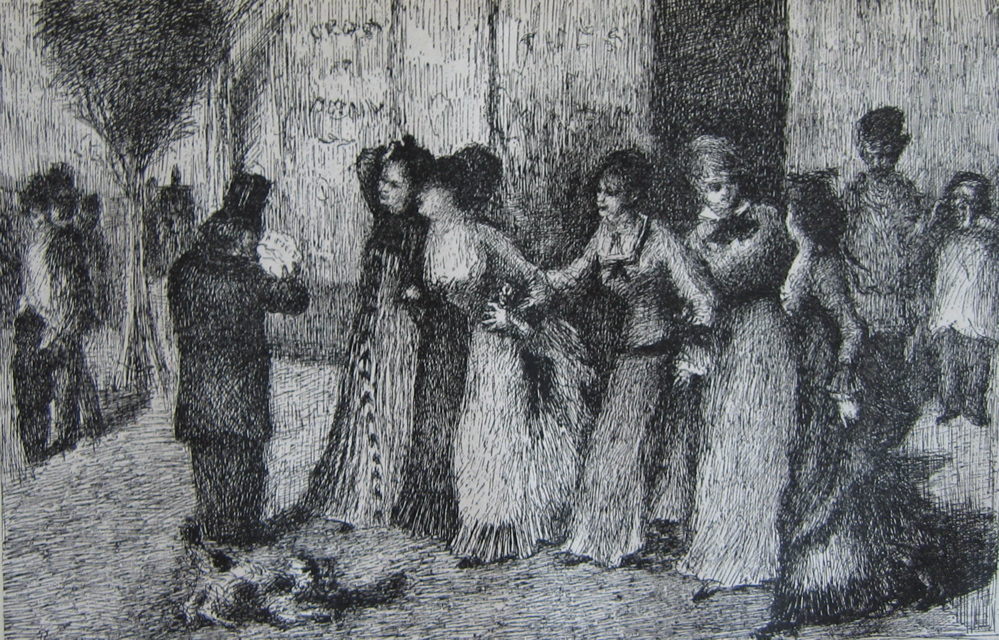
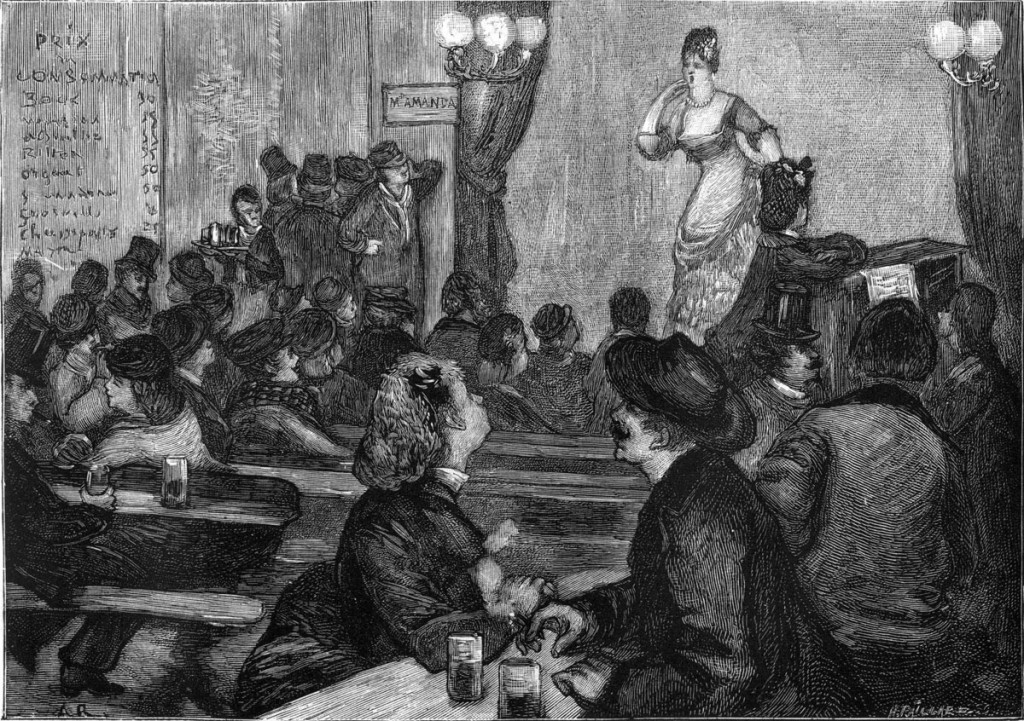
The four black-and-white engravings here—made from Renoir’s original drawings—are the impressionist’s contribution to Zola’s illlustrated novel. The choice of Renoir as one of several artists for this edition seems an odd one. (Zola, a friend of the painter’s, approached him personally.) Then, as now, Renoir had a reputation for sunny optimism: “he always looks on the bright side,” remarked one contemporary. Renoir’s “preference for creating images of beauty,” writes The Art Institute of Chicago, “made the illustration of the particularly seedy passages of the novel problematic, and some of the resulting drawings lack conviction.”
Instead of succumbing to the novel’s grim tone, Renoir’s original renderings, like the “loose wash drawing” in “warm, brown ink” at the top of the post, “gently subverted the dark undertones of Zola’s text.” Below the original drawing, see the engraving that appeared in the book. Book blog Adventures in the Print Trade concedes the plates “are of varying quality” and singles out the illustration just above as the most successful one, since “the subject-matter is perfect for Renoir, and the whole scene is brimming with life.”
As you can see from the two images at the top of the post, the translation from Renoir’s drawings to the final book engravings left many of his figures blurred and obscured, and introduce a dark heaviness to work undertaken with a much softer, lighter touch. Do these illustrations add anything to our understanding of whether Renoir Sucks at Painting? Who can say. It’s true that here, as in many of his well-known paintings, “the compositions tend to be slack,” as Schjeldahl writes. Nonetheless, the Art Institute of Chicago audaciously judges the brown ink wash drawing at the top of the post “one of the most important drawings the artist produced during the years of high Impressionism.”
They only add to my appreciation of Renoir, who does not, I think, suck. Even if his work can be, as Schjeldahl says, “high glucose,” I would argue that his sweetness and light provide just the right approach to Zola, whose novels, like those of other naturalists such as Theodore Dreiser or Thomas Hardy, contain much more than a hint of sentimentality.
Everyone in the spotlight has at least one damning incident to live down, and sometimes a whole damning period. There’s David Bowie’s brief fascism controversy, for example, or Eric Clapton’s more substantive, and much more disturbing, far-right political views, which he broadcast from the stage in 1976, then repeated to the magazines shortly after. Clapton’s racist invective and support for Enoch Powell and the National Front was particularly appalling given that he rode in on the shoulders of blues artists and scored a huge hit just two years earlier with his version of Bob Marley’s “I Shot the Sheriff.” As photographer Red Saunders would write in a published letter to Clapton after the guitar god’s bizarre onstage rant: “Half your music is black. You’re rock music’s biggest colonist.” At least for a time, Clapton fell decidedly on the wrong side of a dichotomy Eric Lott called “Love and Theft.”
One might make similar accusations against punk troubadour Elvis Costello, who took his look from Buddy Holly, his name from The King, and has also drawn heavily from black music for the better part of thirty years. And Costello once had his own brief racist outburst in 1979 during a tour stop in Columbus, Ohio, dropping a couple n‑bombs in reference to James Brown and Ray Charles, and getting a beating from one of Stephen Stills’ backing singers. Costello maintained the outrage was a deliberately nasty way to troll the hated old guard Stills represented, but he thereafter received death threats and continued his tour under armed guard. Ironically, the previous year he had appeared with The Clash and reggae bands Misty in Roots and Aswad at a festival concert in London sponsored by Rock Against Racism, who formed in response to Enoch Powell, the National Front, and Clapton—and whose American chapter picketed Costello after the Ohio brawl.
Costello addresses the incident in his new memoir Unfaithful Music & Disappearing Ink, writing “whatever I did, I did it to provoke a bar fight. Surely this was all understood. Didn’t they know the love I had for James Brown and Ray Charles, whose record of ‘The Danger Zone’ I preferred to watching men walk on the moon?” (He’s made several other comments over the years, and even Ray Charles weighed in afterwards with something of a forgiving statement.) Stephen Deusner at Vulture writes, “you somehow never doubt the sincerity of that love, just as you don’t doubt that Costello could be a raving bastard when he’s drunk.” Unlike so many other examples of the genre, Unfaithful Music doesn’t peddle contrition or controversy for their own sake. On the contrary, The Quietus calls the book “without doubt, one of the greatest self-penned appraisals of a popular entertainer’s life and work.”
That greatness, Deusner argues, comes in large part from Costello’s “nerdishly prodigious” knowledge of, and love for—mostly American—music: “There are nearly 400 songs Costello name-checks as influences within the pages of Unfaithful Music, and hundreds more he refers to in passing.” These include songs from James Brown and Ray Charles, and also Billie Holiday, Aretha Franklin, David Bowie, Doc Watson, The Drifters, his namesake Elvis Presley, Fleetwood Mac, huge helpings of The Beatles, Burt Bacharach… even CSNY’s “Ohio.” Based on Costello’s encyclopedic devotion to country, pop, R&B, punk, reggae, and nearly every other genre under the sun, Vulture compiled the 300-song Spotify playlist above, “by no means complete,” writes Deusner, “due in large part to Spotify’s scarcity of Beatles, Bacharach, and Neil Young albums.” (If you need Spotify’s software, download it for free here.)
The playlist serves as an audio accompaniment to Costello’s almost 700-page reminiscence; taken together, both explain how “the angry young man of the late 70s,” with a “reputation as one of the smartest and bristliest figures in the London punk scene” became “a revered troubadour craftsman playing the White House, jamming with various Beatles, and composing ballet scores.” Just above, you can hear Costello himself read a brief excerpt from the book, a story about hanging out with David Bowie. The Quietus has another exclusive extract from Unfaithful Music. (Note that you can download the entire book, narrated by Costello himself, for free if you join Audible.com’s Free Trial program.) And if you need to hear more about what he now calls that “f***** stupid” fracas in ’79, see him talk about his angry young man persona and tell other “war stories” of his life in music in an interview with ?uestlove. Of his fierce devotion to so much of the music above, Costello tells The Roots’ drummer, “English musicians have such this weird outside love for American music, particularly rhythm and blues as we grew up to know it, that we sort of felt we had possession of it in some weird way.”
Once upon a time, avant-garde composers, surrealist painters, and Gonzo journalists made guest appearances on the most mainstream American game shows. It doesn’t happen much anymore.
If you’re not familiar with the show, To Tell the Truth works like this:
The show features a panel of four celebrities whose object is the correct identification of a described contestant who has an unusual occupation or experience. This central character is accompanied by two impostors who pretend to be the central character; together, the three persons are said to belong to a “team of challengers.” The celebrity panelists question the three contestants; the impostors are allowed to lie but the central character is sworn “to tell the truth”. After questioning, the panel attempts to identify which of the three challengers is telling the truth and is thus the central character.
Given the whole premise of the show, Thompson, only 30 years old, was still an unrecognizable face on America’s cultural scene. But, with the publication of Fear and Loathing in Las Vegas just around the corner, all of that was about to change.
If you would like to support the mission of Open Culture, consider making a donation to our site. It’s hard to rely 100% on ads, and your contributions will help us continue providing the best free cultural and educational materials to learners everywhere. You can contribute through PayPal, Patreon, and Venmo (@openculture). Thanks!
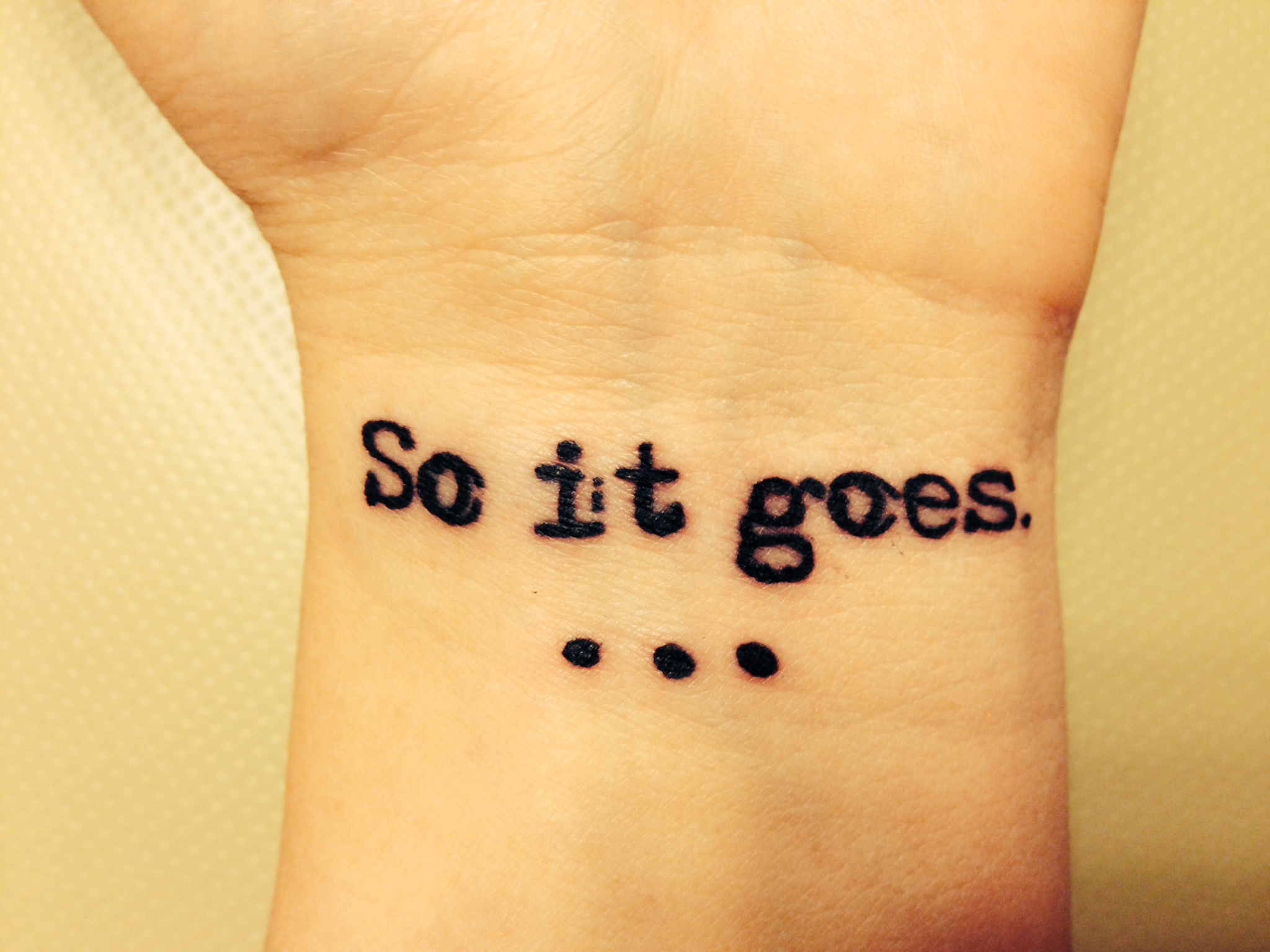
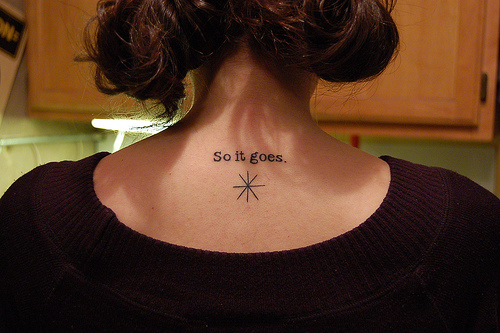
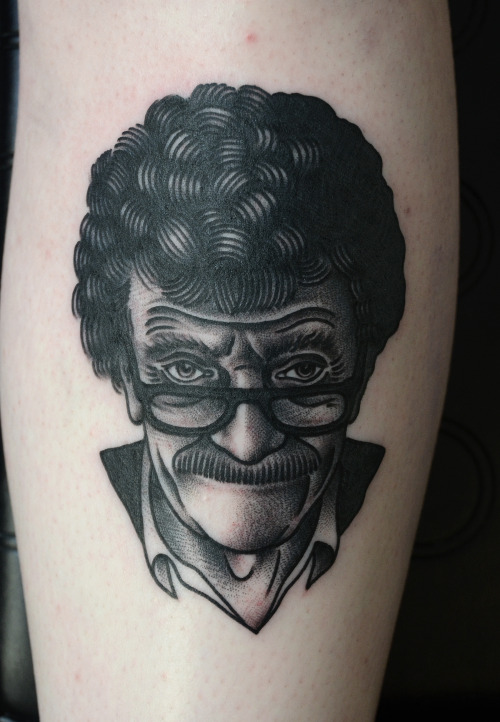
It’s not surprising. Vonnegut’s humor and concision make him one of the most quotable authors of all time, perfectly suited to the task.
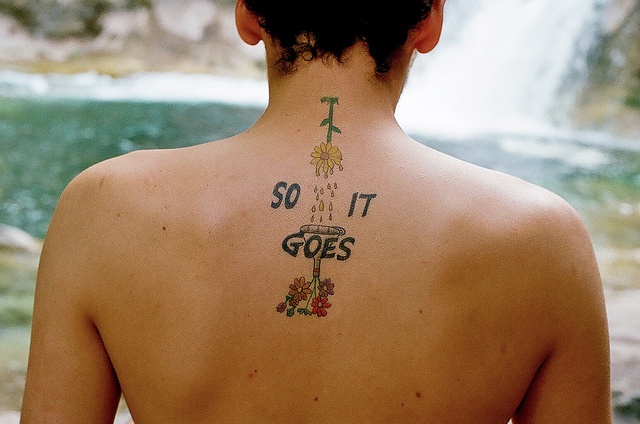
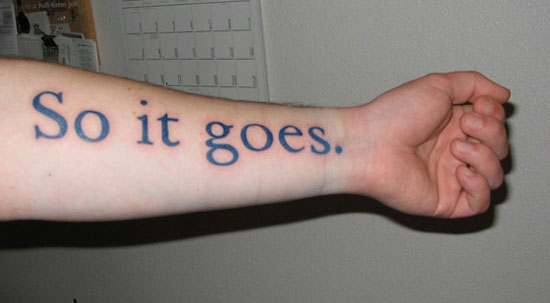
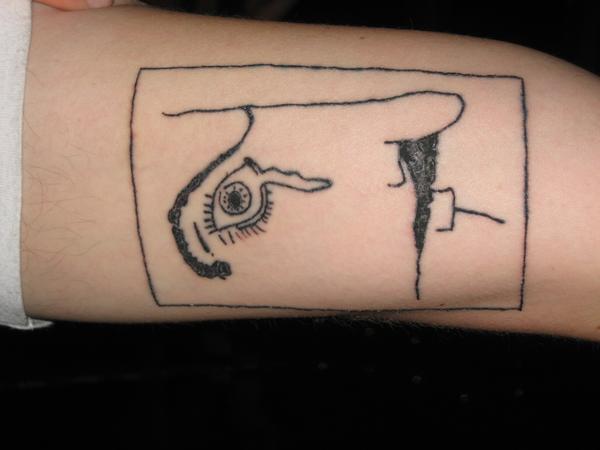
Repetition is the price Vonnegut tattoo enthusiasts must pay for such enduring popularity.
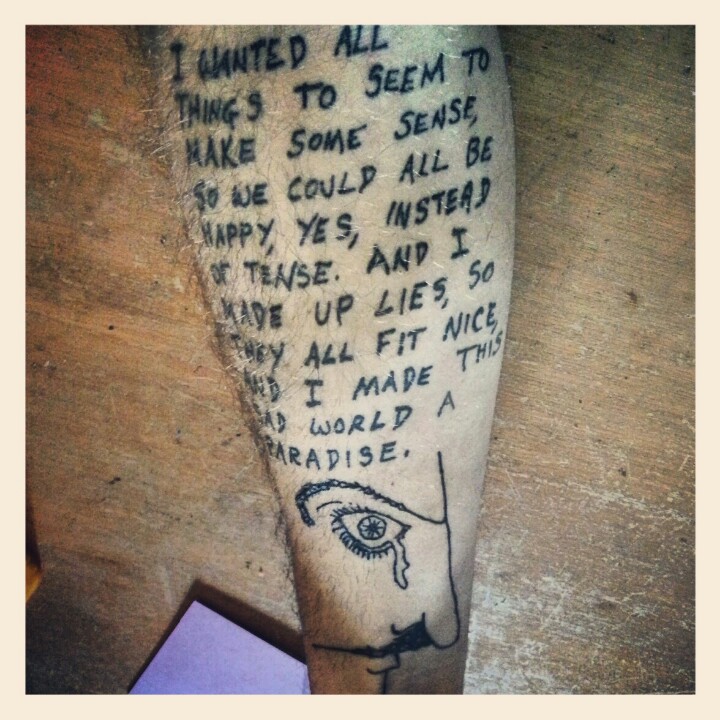
The phrase “so it goes” occurs 106 times in Slaughterhouse-Five, a figure dwarfed many times over by the number of hides upon which it is permanently inked. Recurrence is so frequent that the literary tattoo blog, Contrariwise, recently hosted a round of So It Goes Saturdays. So it goes.
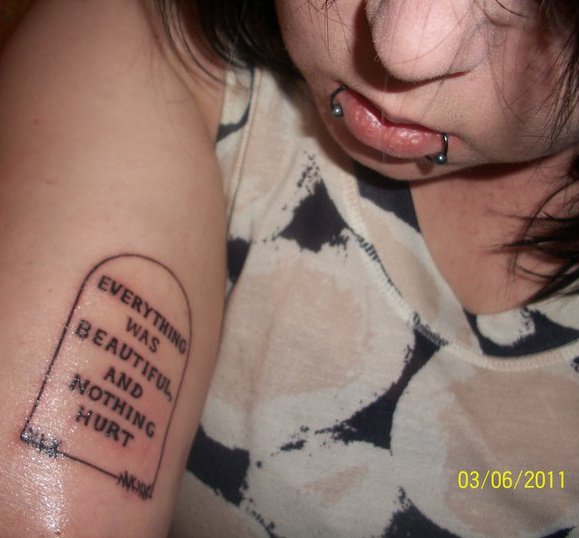
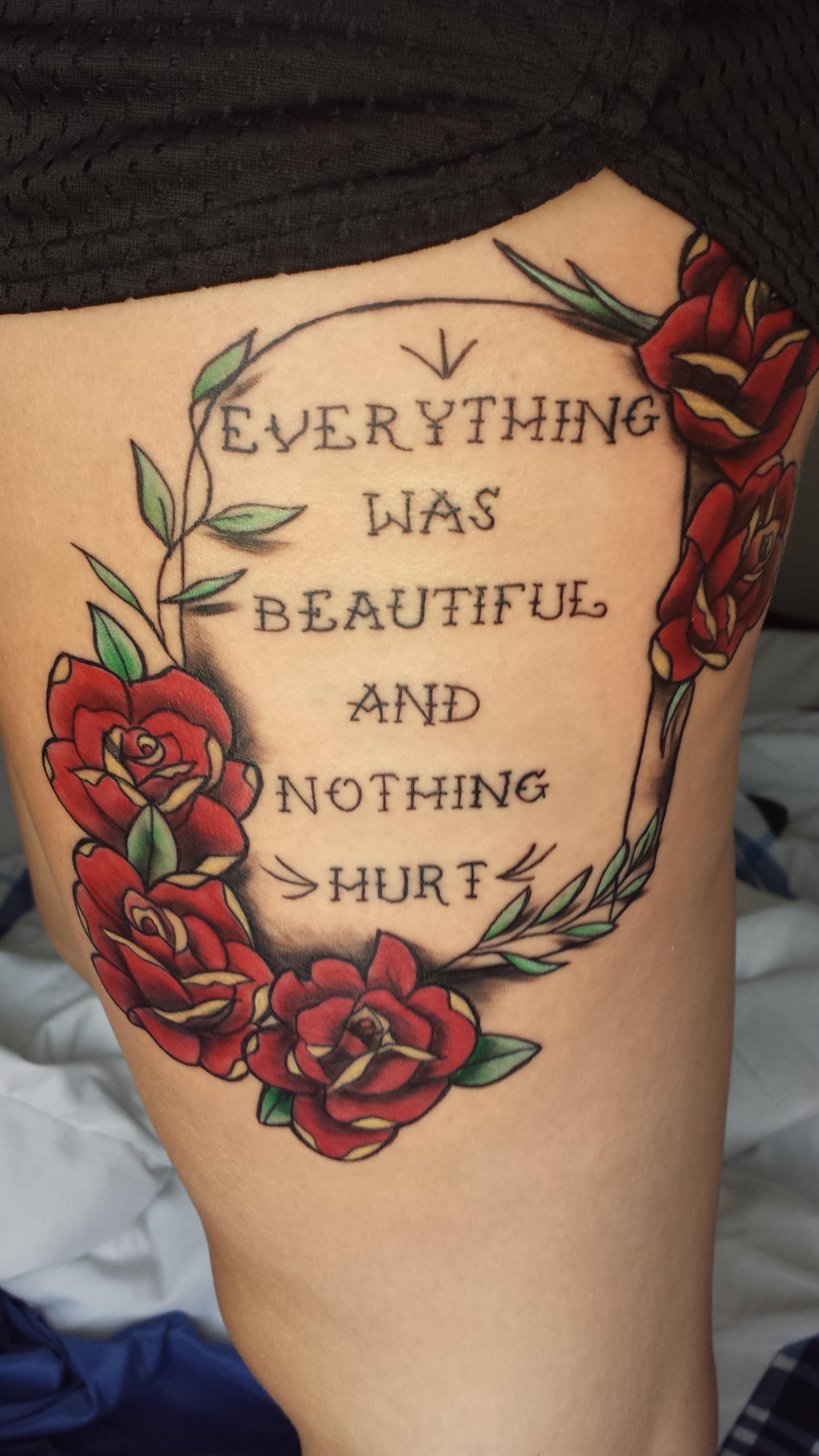
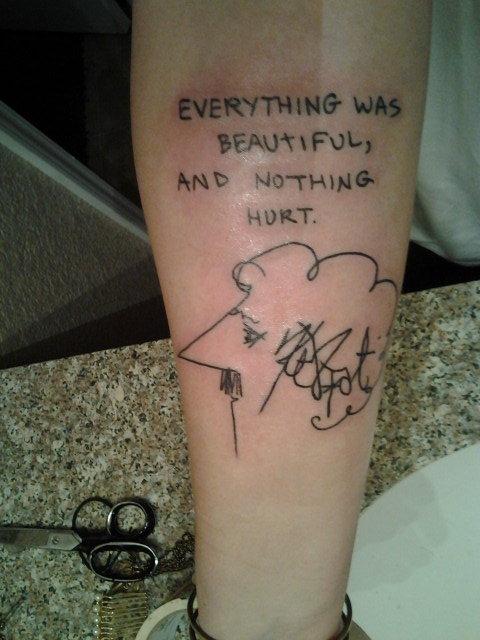
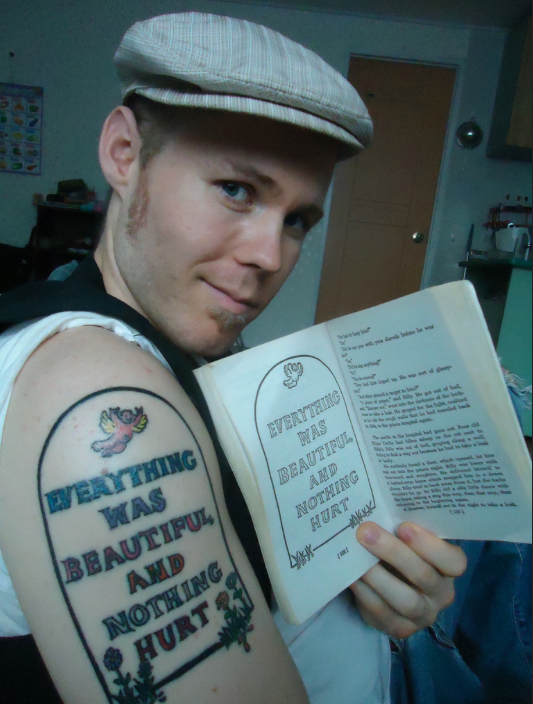
The second runner up, also from Slaughterhouse-Five, is the painfully ironic “Everything was Beautiful and Nothing Hurt.”
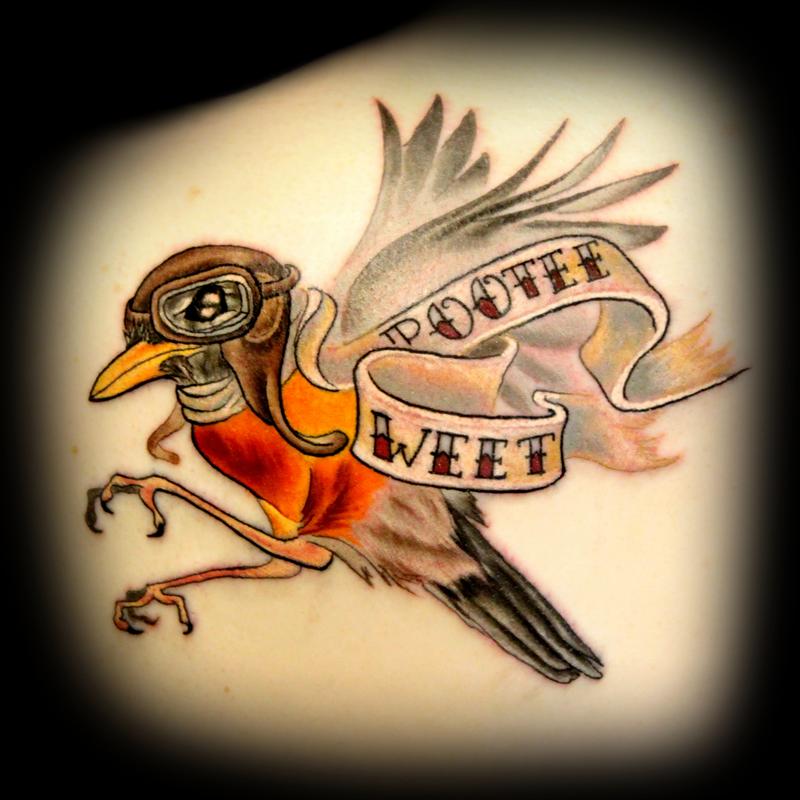
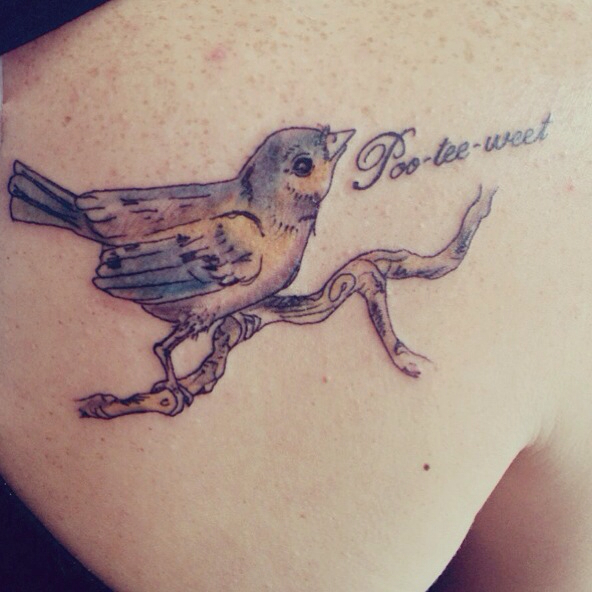
Those who’d rather put a bird on it than present an accessible sentiment to the uninitiated can opt for “poo-tee-weet,” the catchphrase of a bird who’s a witness to war. Certain to confound the folks staring at your triceps in the grocery line.
Slaughterhouse Five is not Vonnegut’s only tattoo-friendly novel, of course.
Ayun Halliday is an author, illustrator, and Chief Primatologist of the East Village Inky zine. Her play, Fawnbook, opens in New York City later this month. Follow her @AyunHalliday
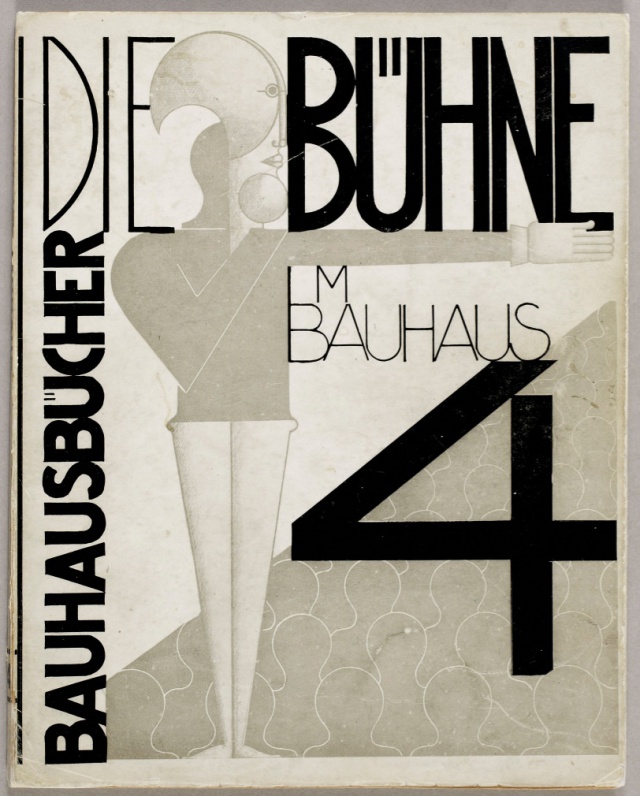
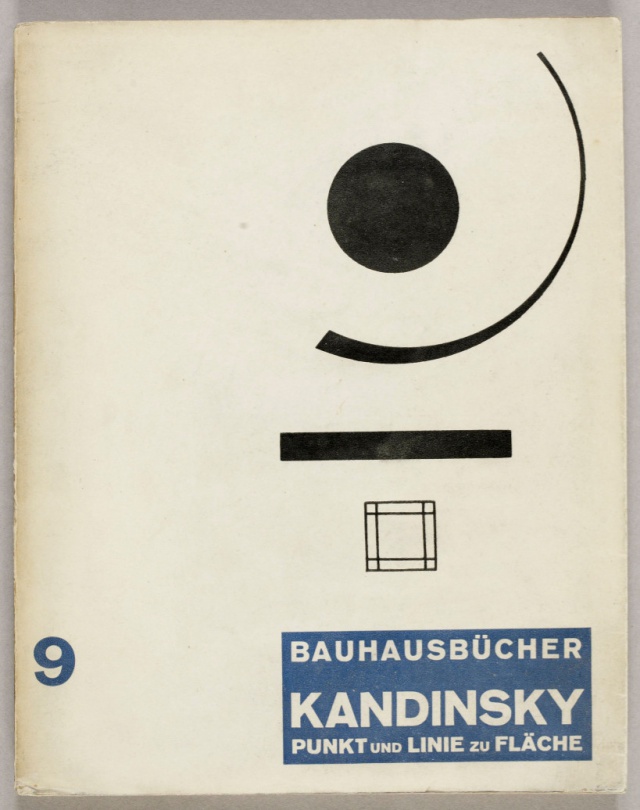
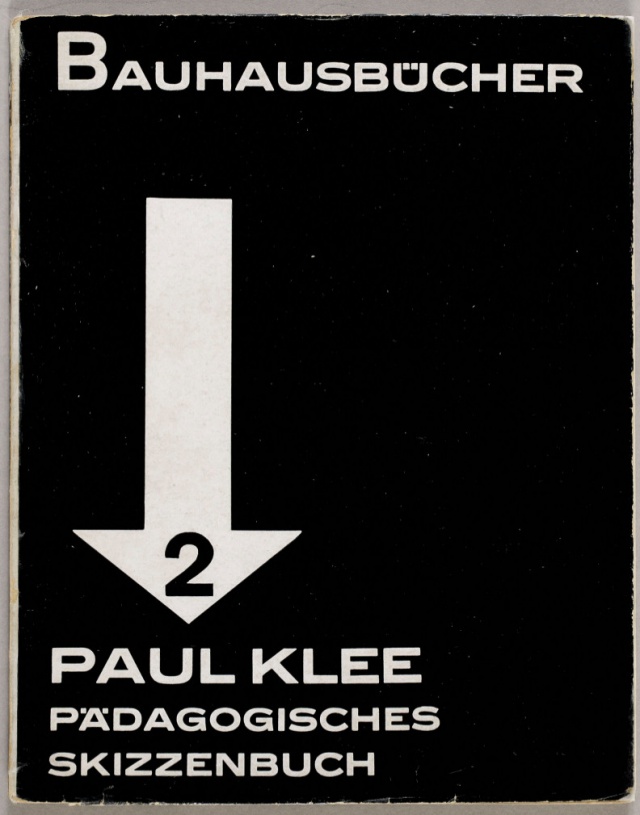
In 1919, German architect Walter Gropius founded Bauhaus, the most influential art school of the 20th century. Bauhaus defined modernist design and radically changed our relationship with everyday objects. Gropius wrote in his manifesto Programm des Staatlichen Bauhauses Weimar that “There is no essential difference between the artist and the artisan.” His new school, which featured faculty that included the likes of Paul Klee, László Moholy-Nagy, Josef Albers and Wassily Kandinsky, did indeed erase the centuries-old line between applied arts and fine arts.
Bauhaus architecture sandblasted away the ornate flourishes common with early 20th century buildings, favoring instead the clean, sleek lines of industrial factories. Designer Marcel Breuer reimagined the common chair by stripping it down to its most elemental form. Herbert Bayer reinvented and modernized graphic design by focusing on visual clarity. Gunta Stölzl, Marianne Brandt and Christian Dell radically remade such diverse objects as fabrics and tea kettles.
13. Albert Gleizes, Kubismus, Munich: Albert Langen, 1928.
14. László Moholy-Nagy, Von Material zur Architektur, Munich: Albert Langen, 1929, 241 pp; facsimile repr., Mainz and Berlin: Florian Kupferberg, 1968.
The New Vision: From Material to Architecture, trans. Daphne M. Hoffman, New York: Breuer Warren and Putnam, 1930; exp.rev.ed. as The New Vision and Abstract of an Artist, New York: George Wittenborn, 1947, 92 pp. (in English)
And here are some key Bauhaus journals:
bauhaus 1 (1926). 5 pages, 42 cm. Download (23 MB).
bauhaus: zeitschrift für bau und gestaltung 2:1 (Feb 1928). Download (17 MB).
bauhaus: zeitschrift für gestaltung 3:1 (Jan 1929). Download (17 MB).
bauhaus: zeitschrift für gestaltung 3:2 (Apr-Jun 1929). Download (15 MB).
bauhaus: zeitschrift für gestaltung 3:3 (Jul-Sep 1929). Download (16 MB).
bauhaus: zeitschrift für gestaltung 2 (Jul 1931). Download (15 MB).
Jonathan Crow is a Los Angeles-based writer and filmmaker whose work has appeared in Yahoo!, The Hollywood Reporter, and other publications. You can follow him at @jonccrow. And check out his blog Veeptopus, featuring lots of pictures of vice presidents with octopuses on their heads. The Veeptopus store is here.
According to Ruth Graham in Slate, Banned Books Week is a “crock,” an unnecessary public indulgence since “there is basically no such thing as a ‘banned book’ in the United States in 2015.” And though the awareness-raising week’s sponsor, the American Library Association, has shifted its focus to book censorship in classrooms, most of the challenges posed to books in schools are silly and easily dismissed. Yet, some other cases, like that of Persepolis—Marjane Satrapi’s graphic novel memoir of her Iranian childhood during the revolution—are not. The book was pulled from Chicago Public School classrooms (but not from libraries) in 2013.
Even now, teachers who wish to use the book in classes must complete “supplemental training.” The ostensibly objectionable content in the book is no more graphic than that in most history textbooks, and it’s easy to make the case that Persepolis and other challenged memoirs and novels that offer perspectives from other countries, cultures, or political points of view have inherent educational value. One might be tempted to think that school officials pulled the book for other reasons. Perhaps we need Banned Books Week after all.
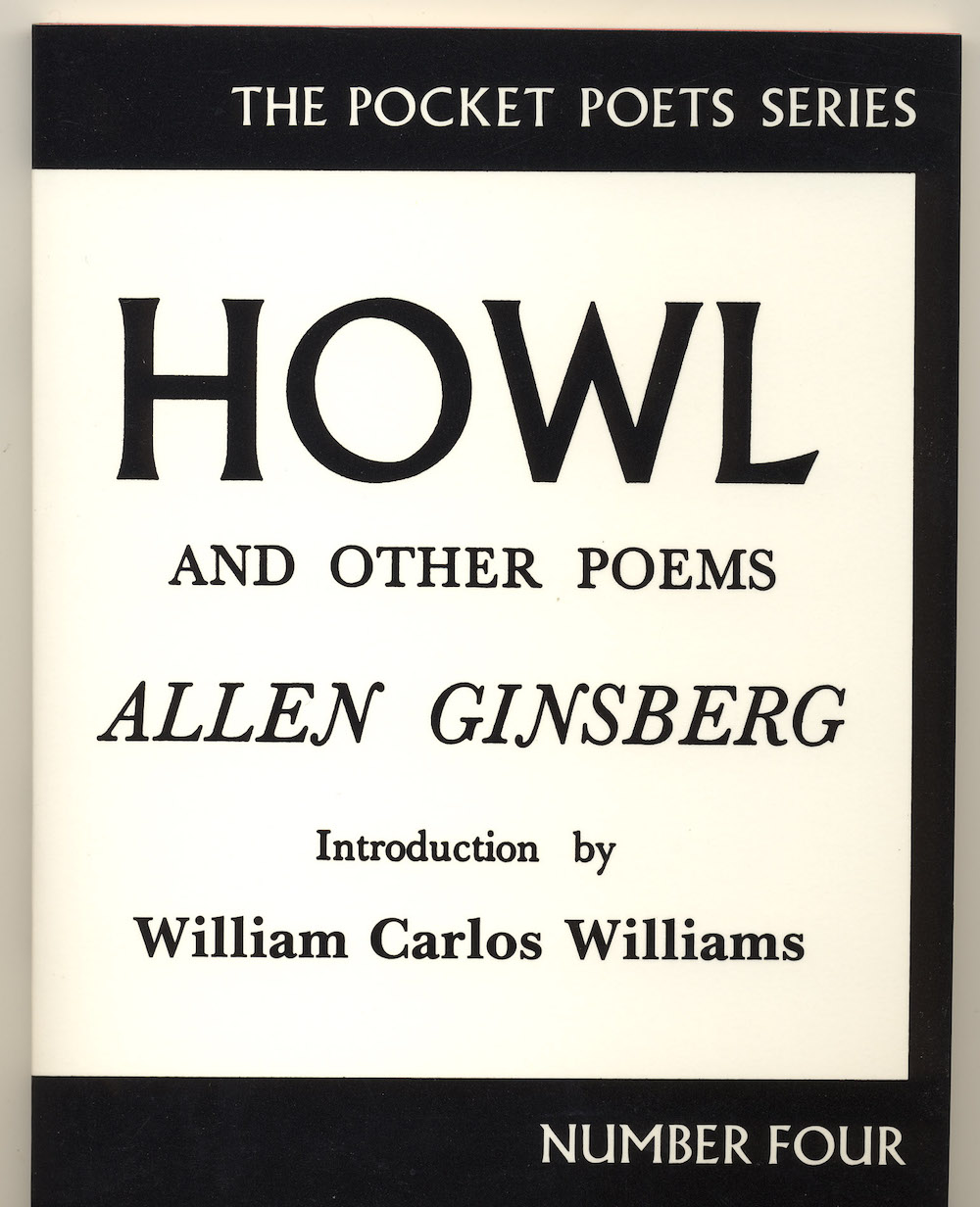
Another, perhaps fuzzier, case of a “banned” book—or poem—from this year involves a high school teacher’s firing over his classroom reading of Allen Ginsberg’s pornographic poem “Please Master.” The case of “Please Master” should put us in mind of a once banned book written by Ginsberg: epic Beat jeremiad “Howl.” When the poem’s publisher, Lawrence Ferlinghetti, attempted to import British copies of the poem in 1957, the books were seized by customs, then he and his business partner were arrested and put on trial for obscenity. After writers and academics testified to the poem’s cultural value, the judge vindicated Ferlinghetti, and “Howl.”
But the trial demonstrated at the time that the government reserved the right to seize books, stop their publication and sale, and keep material from the reading public if it so chose. As with this year’s dust-up over “Please Master,” the agents who confiscated “Howl” supposedly objected to the sexual content of Ginsberg’s poem (and likely the homosexual content especially). But that reasoning could also have been cover for other objections to the poem’s political content. “Howl,” after all, was very subversive in its day, and in a way served as a kind of manifesto against the status quo. It had a “cataclysmic impact,” writes Fred Kaplan, “not just on the literary world but on the broader society and culture.”
We’ve featured various readings of “Howl” in the past, and if you’ve somehow missed hearing those, never heard the poem read at all, or never read the poem yourself, then consider during this Banned Books Week taking the time to read it and hear it read—by the poet himself. You can hear the first recorded reading by Ginsberg, in 1956 at Portland’s Reed College. You can hear another impassioned Ginsberg reading from 1959. And above, hear Ginsberg read the poem in 1956, in San Francisco, where it was first published and where it stood trial.
You can also hear Ginsberg fan James Franco—who played the poet in a film called Howl—read the poem over a visually striking animation of its vivid imagery. And if Ginsberg isn’t your thing, consider checking out the ALA’s list of challenged or banned books for 2014–2015. (I could certainly recommend Persepolis.) While prohibiting books from the classroom may seem a far cry from government censorship, Banned Books Week reminds us that many people still find certain kinds of books deeply threatening, and should push us to ask why that is.
As a writer, a thinker, and a human being, James Baldwin knew few boundaries. The black, gay, expatriate author of such still-read books as Go Tell it on the Mountainand The Fire Next Timeset an example for all who have since sought to break free of the strictures imposed upon them by their society, their history, or even their craft. Baldwin wrote not just novels but essays, plays, poetry, and even a children’s book, which you see a bit of here today.
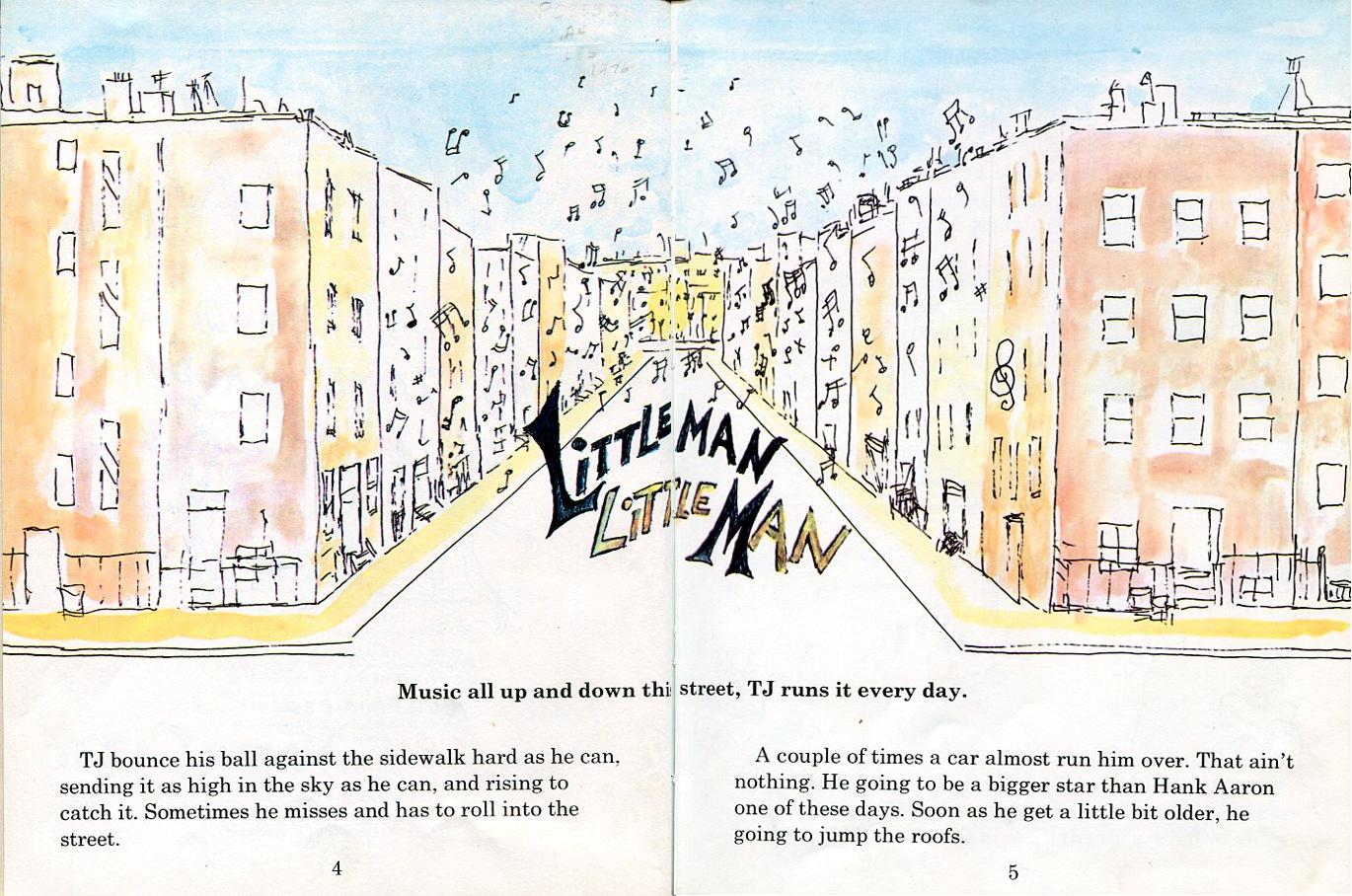
Little Man Little Man: A Story of Childhoodcame out in 1976, a productive year for Baldwin which also saw the publication of The Devil Finds Work, a book of writing on film (yet another form on which he exerted his own kind of socially critical mastery). In Little Man, he writes not about a highly visual medium, but in a highly visual medium: young children delight in lively illustrations, and they must have especially delighted in the ones here (more of which you can see in this gallery), drawn by French artist Yoran Cazac with a kind of mature childishness.
Those same adjectives might apply to Baldwin’s writing here as well, since he aims his story toward children, talking not down at them but straight at them, in their very own language: “TJ bounce his ball as hard as he can, sending it as high in the sky as he can, and rising to catch it.” So goes the introduction to the main character, a four-year-old boy living in Harlem whom Baldwin based on his nephew. “Sometimes he misses and has to roll into the street. A couple of times a car almost run him over. That ain’t nothing.”
TJ and WT, his older pal from the neighborhood, take their scrapes throughout the course of this short book, but they also have a rich experience — and thus provide, for their readers young and old, a rich experience — of the unique time and place in which they find themselves growing up. Their working-class Harlem childhood obviously has its pains, but it has its joys too. “TJ’s Daddy try to act mean, but he ain’t mean,” Baldwin writes. “Sometime take TJ to the movies and he take him to the beach and he took him to the Apollo Theatre, so he could see blind Stevie Wonder. ‘I want you to be proud of your people,’ TJ’s Daddy always say.”
At We Too Were Children, Ariel S. Winter highlights the book’s dedication “to the eminent African-American artist Beauford Delaney. Baldwin met Delaney when he was fourteen, the first self-supporting artist he had ever met, and like Baldwin, Delaney was black and homosexual. Delaney became a mentor to Baldwin, who often spoke of him as a ‘spiritual father,’ ” and “it was Delaney who introduced Baldwin to Yoran Cazac in Paris.” Baldwin became godfather to Cazac’s third child, and Cazac, of course, became the man who gave artistic life to Baldwin’s vision of childhood itself.
We're hoping to rely on loyal readers, rather than erratic ads. Please click the Donate button and support Open Culture. You can use Paypal, Venmo, Patreon, even Crypto! We thank you!
Open Culture scours the web for the best educational media. We find the free courses and audio books you need, the language lessons & educational videos you want, and plenty of enlightenment in between.